2026: The Silence in Barkley Canyon
Almost one thousand meters beneath the surface of the Pacific Ocean, the cameras attached to the NEPTUNE observatory have been watching a graveyard. Off the coast of British Columbia, in the crushing darkness of Barkley Canyon, researchers from Ocean Networks Canada (ONC) and the University of Victoria deposited the heavy, calcified bones of a humpback whale onto the seafloor over a decade ago. The objective of this long-term experiment was simple: monitor the biological succession of the deep-sea scavengers that inevitably colonize marine carcasses. Biologists expected a predictable cascade of life, ending with a localized explosion of bizarre, specialized organisms.
Instead, early in 2026, the research team, co-led by Fabio De Leo and Craig Smith, released a deeply unsettling finding: nothing happened.
Thousands of hours of high-resolution underwater camera footage yielded a complete negative result. The most critical agents of deep-ocean decomposition—the bone-devouring Osedax, widely known as zombie worms—never arrived. This total absence has triggered immediate alarm among marine biologists. A negative result of this magnitude in a decade-long observation is highly unusual and points to a systemic environmental collapse rather than a localized anomaly.
Barkley Canyon sits within a naturally occurring low-oxygen zone, positioned directly beneath the migration routes of gray and humpback whales. When these massive mammals die and sink, they create "whale falls"—nutrient-dense islands in the otherwise starved abyssal plains. But the ocean is warming, and as global temperatures rise, water loses its ability to hold dissolved oxygen. The resulting expansion of Oxygen Minimum Zones (OMZs) along the northeast Pacific margin appears to have crossed a lethal threshold. The waters enveloping the humpback bones simply lacked the oxygen required to sustain aerobic life.
Without the intervention of these specific worms, the heavy whale bones remain sealed fortresses. The massive reserves of fats, lipids, and collagen trapped inside the skeletal matrix are locked away from the rest of the ecosystem. The biological engine of the seafloor stalls. To understand why the sudden disappearance of this specific genus is triggering such severe warnings regarding potential species loss, one must trace the escalating history of how these organisms were discovered, how they accomplish the seemingly impossible biological feat of eating solid bone without a mouth, and why they act as the irreplaceable load-bearing pillars of the abyssal ecosystem.
1841–1987: The Myth of the Lifeless Abyss
For the vast majority of human history, the scientific consensus regarding the deep ocean was stark: it was a dead zone. In 1841, British naturalist Edward Forbes dredged the Aegean Sea and formulated the "Azoic hypothesis." Forbes postulated that the extreme cold, crushing hydrostatic pressure, and absolute lack of sunlight made life impossible below 550 meters. The deep sea was viewed as a cold, static desert, devoid of biological complexity.
This paradigm began to crack during the voyage of the HMS Challenger in the 1870s, which pulled up modest signs of life from the depths, but the reigning assumption remained that deep-sea biology was severely limited. Biologists believed the abyss was sustained entirely by "marine snow"—a slow, sparse drizzle of organic detritus, dead plankton, and fecal matter drifting down from the sunlit photic zone. Life at the bottom was presumed to be a sparse, starved existence.
The narrative experienced a violent rupture in 1977 with the discovery of hydrothermal vents along the Galápagos Rift, revealing entire ecosystems powered by chemosynthesis rather than photosynthesis. Yet, the deep plains between these volcanic vents remained poorly understood. If hydrothermal vents were isolated oases, how did species migrate across thousands of miles of empty, muddy seafloor to populate new vents?
The missing puzzle piece materialized in 1987. During an expedition utilizing a submersible off the coast of Santa Catalina Island, biological oceanographer Craig Smith stumbled across the skeletal remains of a 20-meter blue whale resting at a depth of 1,240 meters. This was the first natural "whale fall" ever observed by modern science. The sheer volume of biomass was staggering. A single mature blue whale delivers approximately two tons of organic carbon to the seafloor in a matter of hours—an amount of food that would normally take two millennia to accumulate via marine snow.
Smith’s discovery fundamentally altered the understanding of abyssal energy distribution. The seafloor was not just relying on a gentle snowstorm of dust; it was occasionally bombarded by massive, localized packets of highly concentrated energy. The Santa Catalina whale fall was teeming with specialized life: blind crabs, sleeper sharks, hagfish, and thick mats of sulfur-oxidizing bacteria. Yet, even as researchers cataloged the scavengers stripping the blubber and flesh, the fate of the massive skeleton itself remained an open question. The bones of large cetaceans are intensely dense and heavily calcified. Stripped of external meat, they should conceptually sit on the ocean floor as inert rocks for centuries. Instead, researchers noticed that older whale bones appeared thoroughly degraded, porous, and seemingly dissolved from the inside out.
The mechanism behind this rapid skeletal degradation remained entirely hidden from science until a breakthrough in the early twenty-first century.
2002: A Macabre Discovery in Monterey Bay
The timeline escalated rapidly on a cold day in February 2002. A team of researchers from the Monterey Bay Aquarium Research Institute (MBARI), led by Robert Vrijenhoek, was exploring the dark topography of Monterey Canyon off the coast of California. Utilizing the remotely operated vehicle (ROV) Tiburon, the team navigated the steep, muddy slopes at a crushing depth of 2,891 meters.
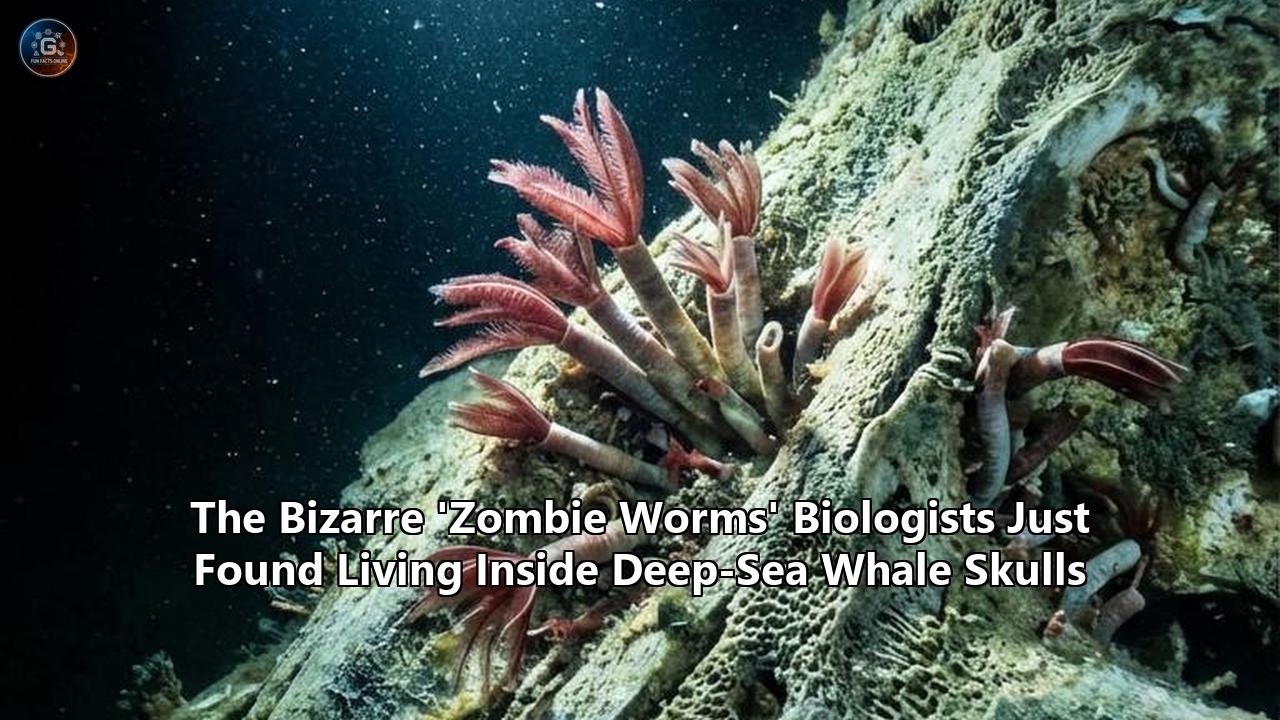
The ROV’s halogen lights cut through the gloom, illuminating the decayed remains of a juvenile gray whale. The flesh was long gone, consumed by the initial wave of mobile scavengers. But as the cameras zoomed in on the bare, white ribs protruding from the sediment, the monitors in the control room displayed something entirely unprecedented. The bones were covered in a dense carpet of what looked like reddish-pink, feathery tufts. They swayed gently in the deep-sea current, resembling a microscopic forest of alien flora taking root directly in the calcium phosphate matrix.
The MBARI team used the ROV’s robotic manipulators to carefully extract a heavily colonized bone fragment and bring it to the surface. Under the bright lights of the laboratory, the true strangeness of the organisms became apparent. They were marine polychaete worms, but they matched no known taxonomic description. They possessed soft, translucent trunks topped with the red, oxygen-harvesting plumes the cameras had captured, but the lower halves of their bodies vanished seamlessly into the solid bone.
When researchers carefully fractured the whale bone to extract the organisms whole, they found that the base of each worm flared out into a sprawling, bulbous mass of green, root-like tendrils. These fleshy roots had aggressively bored deep into the cortical exterior of the bone, navigating the microscopic porous network of the marrow cavity.
It took two years of rigorous genetic and anatomical analysis to properly classify the creatures. In 2004, the team published their findings in the journal Science, officially introducing a new genus to the scientific community. They named it Osedax, derived from Latin, translating literally to "bone devourer". The initial publication detailed two distinct species: Osedax rubiplumus and Osedax frankpressi.
The media immediately dubbed them "zombie worms," a moniker that stuck despite its slight biological inaccuracy—they do not reanimate the dead, nor do they consume brains; they systematically dismantle the skeletal infrastructure of the deep ocean. But the most perplexing aspect of the 2004 publication was an anatomical paradox that defied basic zoology.
Under immense microscopic scrutiny, researchers realized that Osedax worms possessed absolutely no mouth, no stomach, no digestive tract, and no anus. The fundamental mechanics of their existence seemed impossible. To understand the ecological role of zombie worms, deep sea biologists had to answer a baffling question: how does a soft-bodied, gutless invertebrate chew through solid vertebrate bone?
2004–2013: Anatomy of an Impossible Organism
The answer to the Osedax paradox required a deep dive into cellular biochemistry. Because the worms could not bite or chew, they had to dissolve their food chemically.
By analyzing the root-like structures anchoring the worms into the whale ribs, researchers from the Scripps Institution of Oceanography, including Martin Tresguerres, uncovered the highly specialized bioerosion mechanism at play. In a study published in 2013, the team revealed that the epidermal cells of the Osedax roots express extraordinary concentrations of an enzyme known as vacuolar-H+-ATPase (VHA).
VHA acts as a microscopic proton pump. The worms use aerobic respiration—pulling oxygen from the icy water using their red, feathery plumes—to generate energy and carbon dioxide. Another heavily expressed enzyme, carbonic anhydrase (CA), catalyzes the hydration of this carbon dioxide, transforming it into protons (H+) and bicarbonate. The VHA pumps then forcefully eject these protons out of the root cells and directly onto the surface of the bone.
In highly simplified terms: Osedax secretes pure, concentrated acid.
This acid rapidly drops the localized pH level, causing the rigid, inorganic calcium phosphate (hydroxyapatite) of the whale bone to demineralize and melt away. The worms quite literally sweat acid to carve perfectly hemi-ellipsoidal boreholes into the skeleton, advancing their fleshy roots deeper into the marrow.
What stunned evolutionary biologists was the sheer convergence of this mechanism. The biochemical pathway Osedax uses to melt bone is remarkably identical to the process used by mammalian osteoclasts—the specialized cells inside our own bodies that break down and remodel bone tissue during natural growth and healing. In a spectacular display of parallel evolution, a gutless deep-sea invertebrate repurposed the exact same chemical machinery used by vertebrates, weaponizing it to dissolve the vertebrates from the outside in.
However, dissolving the inorganic mineral matrix is only the first half of the equation. Melting the calcium simply clears the path. The actual caloric prize lies locked inside the bone: highly concentrated deposits of structural collagen and fat-rich lipids. Once the acid eats away the hard exterior, the root epithelium of the worm absorbs the freed collagen and cholesterol.
But without a stomach or digestive enzymes of their own, the worms still cannot metabolize these complex proteins. The carbon and energy remain biologically inaccessible. To survive, the zombie worm relies on a shadow workforce hidden within its own flesh.
2005–2022: The Microbial Engine
When biologists sliced the green roots of Osedax into microscopic cross-sections, they found that the tissue was not uniformly solid. The subepidermal connective tissue is packed with specialized, swollen cells called bacteriocytes. Inside these cells lives a dense, thriving monoculture of endosymbiotic bacteria belonging to the order Oceanospirillales.
This relationship is the biological engine of the bone-eater. The worm provides the heavy machinery—secreting acid to mine the bone and using its vascular roots to absorb the raw collagen and lipids. It then funnels these raw, undigested materials directly to the bacteria living inside its roots. The Oceanospirillales bacteria possess the complex metabolic pathways that the worm lacks.
Recent genomic sequencing of Osedax species has revealed a phenomenon known as genomic streamlining. Over millions of years of evolutionary history, the worm has discarded vast segments of its own genetic code. The genome of Osedax frankpressi, for example, is remarkably small and entirely missing the specific gene families required for lipid and carbohydrate metabolism. The worm has outsourced its digestion completely to the bacteria.
The symbionts utilize specialized metabolic processes, such as the glyoxylate cycle, to break down the complex whale fats and collagen chains. They convert these raw materials into simple carbohydrates and amino acids, which they then leak back into the host worm's tissues. The worm effectively farms the bacteria inside its own body, absorbing the metabolic byproducts to sustain its growth and reproduction.
This symbiotic relationship is not passed down directly from mother to offspring. Researchers mapping the lifecycle of Osedax discovered that the microscopic, free-floating larvae do not contain the Oceanospirillales bacteria. Instead, the larvae must acquire the symbionts horizontally from the surrounding environment. When a larva lands on a fresh bone, it somehow detects and absorbs the correct strain of bacteria from the ambient seawater, trapping them in its developing root tissue before beginning the long, slow process of acid secretion.
2010–2015: The Harem in the Tube
While the feeding mechanism of Osedax redefined invertebrate physiology, its reproductive strategy proved to be equally bizarre.
When the MBARI team collected their first specimens in 2002, every single worm they pulled from the gray whale skeleton possessed the red plumes and the green, bone-boring roots. Upon closer inspection, researchers realized every single one of these heavily engineered organisms was female.
For several years, the location and anatomy of the male zombie worm remained a total mystery. They were not found on the bones, in the sediment, or in the surrounding water column. The answer was finally discovered hiding in plain sight, requiring extreme magnification to spot.
Osedax exhibits one of the most extreme examples of sexual dimorphism in the animal kingdom. The females can grow up to several centimeters in length, anchoring into the bone and projecting their gills into the water. The males, however, are paedomorphic—meaning they never mature past their larval, microscopic stage. A male zombie worm is roughly 20,000 times smaller than the female.They do not bore into bone, they do not secrete acid, and they do not feed. Instead, the microscopic males live entirely inside the gelatinous mucus sheath that surrounds the female's trunk. They exist purely as microscopic, mobile sperm-delivery vehicles, surviving off tiny reserves of yolk remaining from their larval phase. A single female Osedax can host a "harem" of over a hundred microscopic dwarf males wriggling inside her protective tube, ensuring a constant, localized supply of genetic material for fertilization.
The mechanism that determines whether a drifting larva becomes a giant, acid-spitting female or a microscopic, parasitic male is not hard-wired into its DNA. It is entirely determined by the environment. If an Osedax larva drifting in the abyssal current happens to land on a patch of bare, unoccupied whale bone, the chemical cues trigger it to develop into a female. It sprouts roots, acquires bacteria, and begins boring. If, however, the larva lands on a piece of bone that is already heavily colonized, or if it physically lands on an existing female, the chemical contact halts its physical development. It remains microscopic, migrating into the female's tube to join the harem.
This environmental sex determination is a highly efficient evolutionary adaptation for the deep sea. When searching for zombie worms, deep sea researchers note that finding a whale fall is statistically equivalent to finding a needle in a planetary haystack. A drifting larva cannot afford to spend energy searching for a mate once it has found food. By turning late-arriving larvae into microscopic males that take up residence inside the females, Osedax guarantees massive reproductive success the moment a new carcass is discovered.
2015–2023: Global Conquest and Evolutionary Time Travel
Initially, scientists believed Osedax was a highly specialized anomaly restricted to the deep canyons off the coast of California, explicitly evolved to consume the skeletons of modern whales. The escalation of deep-sea research over the next decade aggressively dismantled this assumption.
Marine biologists began conducting global deployment experiments. They strapped heavy iron weights to the carcasses of cows, pigs, turkeys, and even fish, dropping them to the seafloor to see if Osedax would respond. To their astonishment, the zombie worms colonized almost everything. They bored into cow femurs, fish skulls, and the calcified shells of marine turtles.
The geographical range of the genus exploded. Expeditions utilizing advanced ROVs found new species of Osedax off the coast of Japan, beneath the ice of Antarctica, along the margins of Brazil, and in the deep waters of the North Atlantic. In 2023, Dr. Elena Kupriyanova and a team from the Australian Museum published the discovery of several new species in Australian waters, confirming that the zombie worm was a globally distributed phenomenon. When analyzing the biodiversity of zombie worms, deep sea surveys have now cataloged over thirty distinct species. Some live at crushing depths of 4,000 meters, while others have been found in surprisingly shallow waters only 50 meters below the surface.
This global ubiquity raised a massive evolutionary question: whales have only existed for roughly 50 million years. If Osedax is so heavily adapted to bone degradation, what did they eat before cetaceans evolved?
Paleontologists began scanning the fossil record, looking for the telltale signs of the zombie worm's acid secretion. Because Osedax leaves perfectly hemi-ellipsoidal boreholes with a distinct, undercut profile, its trace fossils are unmistakable. In 2015, researchers analyzing the fossilized bones of a plesiosaur—a massive marine reptile that swam the oceans during the Cretaceous period, nearly 100 million years ago—found exactly that. The bones were riddled with Osedax borings.
This revelation meant the zombie worm did not evolve to eat whales; it evolved to eat marine reptiles. When the asteroid impact wiped out the plesiosaurs and mosasaurs at the end of the Cretaceous, Osedax likely survived by feeding on the bones of giant sea turtles and large fish until early whales evolved and provided a massive, new caloric resource. They are ancient, apocalyptic survivors, uniquely engineered to squeeze the last drops of energy from the ocean’s dead.
The Ultimate Ecosystem Engineers
The true value of Osedax lies not just in its bizarre anatomy, but in its role as a fundamental load-bearing species for the entire abyssal biome.
A natural whale fall progresses through three distinct successional stages. The first is the mobile scavenger stage, where hagfish, sleeper sharks, and swarms of amphipods strip the soft blubber and muscle from the carcass over a period of months to years.
The second is the enrichment opportunist stage. The sediment surrounding the bones, heavily fertilized by rotting organic tissue and blubber runoff, becomes colonized by dense mats of polychaete worms, rare snails, and specialized crustaceans.
The third, and longest, is the sulfophilic stage. As anaerobic bacteria in the sediment break down the fats leaking from the carcass, they produce hydrogen sulfide—a highly toxic chemical that smells like rotten eggs. Specialized chemosynthetic organisms, including giant tube worms and deep-sea mussels, use this hydrogen sulfide as an energy source, creating a thriving, complex ecosystem that can persist for up to a century.
Osedax is the critical bridge that makes the third stage possible. Without the zombie worm, the massive reservoirs of fats and lipids trapped deep inside the cortical bone would remain locked away, inaccessible to the anaerobic bacteria. By aggressively boring into the skeleton with their acid-secreting roots, Osedax cracks the vault open. They physically dismantle the calcified barrier, allowing the deeply buried lipids to slowly seep out into the surrounding sediment.Biologists categorize Osedax as "ecosystem engineers." By actively altering the physical structure of their environment, they create the necessary conditions for other species to survive. The localized, century-long oases created by whale falls act as vital "stepping stones" across the barren ocean floor. These stepping stones allow diverse communities of chemosynthetic organisms to slowly migrate across ocean basins, jumping from one carcass to the next.
If the zombie worms fail to break down the bone, the lipids remain trapped, the sulfophilic stage is aborted, and the stepping stones disappear. The connectivity of the deep ocean shatters.
2024–2026: The Suffocating Ocean
This brings the timeline back to the eerie silence of Barkley Canyon.
When Fabio De Leo and the Ocean Networks Canada team reviewed their decade-long footage of the humpback whale bones in 2025 and early 2026, the absence of Osedax provided a terrifying confirmation of a theoretical climate model.
The deep ocean is vast, but it is not immune to the atmospheric physics of anthropogenic climate change. As the surface layers of the ocean absorb excess heat from the atmosphere, the water becomes more buoyant. This thermal stratification prevents the heavily oxygenated surface water from circulating and mixing with the deeper, colder layers. Simultaneously, warmer water intrinsically holds less dissolved gas. The result is the rapid expansion of Oxygen Minimum Zones (OMZs)—vast, mid-water layers where oxygen concentrations plummet to near-zero levels.
Barkley Canyon happens to sit directly within the crosshairs of an expanding OMZ in the northeast Pacific. While the exact tolerance limits of Osedax are still being mapped, their biochemical machinery has a fatal flaw. The very process that allows them to eat bone—the generation of protons via carbonic anhydrase—relies entirely on the carbon dioxide produced by aerobic respiration. The zombie worm must breathe oxygen through its red plumes to synthesize the acid in its roots.
As the oxygen levels in Barkley Canyon dropped below the crucial threshold, the Osedax larvae drifting through the currents likely suffocated before they could colonize the humpback bones, or they found themselves unable to generate enough acid to bore into the matrix. The environment had become too toxic even for an organism that thrives on decay.
The ONC study corroborated its findings by noting the parallel disappearance of Xylophaga—a wood-boring bivalve that performs a similar ecosystem engineering role by breaking down sunken timber. The entire guild of deep-sea decomposers was being pushed out of the region.
"Basically, we're talking about potential species loss," De Leo stated during the dissemination of the findings. The adult Osedax rely on ocean currents to disperse their microscopic larvae over hundreds of kilometers to find the next whale fall. If expansive hypoxic zones sever these migration routes, the isolated populations cannot interbreed. The genetic diversity of the genus will plummet, leading to localized extinctions.
The Fractured Network: What Happens Next?
The 2026 revelations from Barkley Canyon have violently shifted the focus of deep-sea biology. The narrative is no longer solely about discovering new species; it is a frantic race to map the shifting boundaries of habitability before the ecosystems collapse entirely.
Technological escalation is attempting to match the pace of environmental degradation. Expeditions led by the CSIRO in Australia utilizing the RV Investigator are increasingly moving away from purely physical sampling, instead embedding continuous autonomous eDNA (environmental DNA) sampling into the vessel's underway systems. By constantly filtering seawater, researchers can detect the genetic trace of Osedax larvae in the water column without needing to locate a physical whale fall, allowing them to map the exact geographical borders where the worms are surviving versus where they are suffocating.
There are still pockets of resilience. In late 2025, the Ocean Census expeditions operating in the extreme, remote waters of the Southern Ocean—the frigid ring of currents circling Antarctica—successfully verified thirty new deep-sea species. Alongside a bizarre, carnivorous "death-ball" sponge (Chondrocladia sp. nov.) equipped with microscopic hooks to capture prey, researchers confirmed active sightings of Osedax utilizing their symbiotic bacteria to break down vertebrate fats. The highly oxygenated, freezing waters of the Antarctic currently provide a safe haven for the bone-devourers, sheltered from the immediate expansion of the Pacific OMZs.
But the Southern Ocean cannot act as a universal refuge. To maintain the ecological balance of the global seafloor, to track zombie worms, deep sea submersibles must continuously monitor the Pacific, the Atlantic, and the Indian Oceans. The unresolved question shadowing marine biology today is whether Osedax can adapt its vertical migration. If the deep trenches lose their oxygen, can the zombie worms migrate to shallower, more highly oxygenated continental shelves? Or will the increased temperatures of the shallow waters kill their symbiotic bacteria, trapping them in a fatal squeeze between suffocating depths and boiling surfaces?
The timeline of Osedax—from a phantom organism completely unknown to science at the turn of the millennium, to a biological marvel redefining invertebrate evolution, to a highly vulnerable canary in the coal mine of climate change—serves as a brutal reminder of the ocean's interconnected fragility. The deep sea is not an isolated realm of invincible monsters. The disappearance of a bizarre, mouthless worm off the coast of British Columbia is not an isolated biological curiosity; it is a distress signal. If the bone-eaters vanish, the massive, silent machinery that recycles the ocean's dead will grind to a halt, leaving a fractured, suffocating abyss in their wake.
Reference:
- https://www.sciencedaily.com/releases/2025/12/251227082736.htm
- https://news.uvic.ca/media-release/where-are-the-zombie-worms/
- https://www.oceannetworks.ca/news-and-stories/stories/where-are-the-zombie-worms/
- https://www.sciencedaily.com/releases/2025/12/251227082736.htm
- https://nelsonstar.com/2025/10/30/zombie-worms-have-vanished-off-the-b-c-coast-and-thats-a-bad-thing/
- https://www.watercanada.net/missing-zombie-worms-raise-concerns-about-deep-sea-ecosystem-health-uvic-researchers-say/
- https://www.sciencedaily.com/releases/2013/05/130501091900.htm
- https://australian.museum/get-involved/amri/amri-seminars-and-lectures/zombie-worms/
- https://microbialmenagerie.com/osedax-zombie-worms-microbe-endosymbiont/
- https://en.wikipedia.org/wiki/Osedax
- https://www.researchgate.net/publication/237199542_How_to_get_into_bones_Proton_pump_and_carbonic_anhydrase_in_Osedax_boneworms
- https://www.biorxiv.org/content/10.1101/2022.08.04.502725.full
- https://journals.asm.org/doi/10.1128/msystems.01218-20
- https://www.csiro.au/en/news/all/articles/2026/april/memorable-new-species-from-rv-investigator
- https://www.sciencealert.com/zombie-worms-have-mysteriously-vanished-troubling-scientists
- https://www.theweathernetwork.com/en/news/nature/animals/scientists-alarmed-zombie-worms-missing-from-b-c-waters
- https://www.csiro.au/en/news/All/Articles/2026/April/Memorable-new-species-from-RV-Investigator
- https://www.futura-sciences.com/en/deadly-sponge-zombie-worms-these-creatures-discovered-in-the-depths-of-the-ocean-are-fascinating_28804/
- https://oceancensus.org/press-release-carnivorous-death-ball-sponge-among-30-new-deep-sea-species-from-the-southern-ocean/