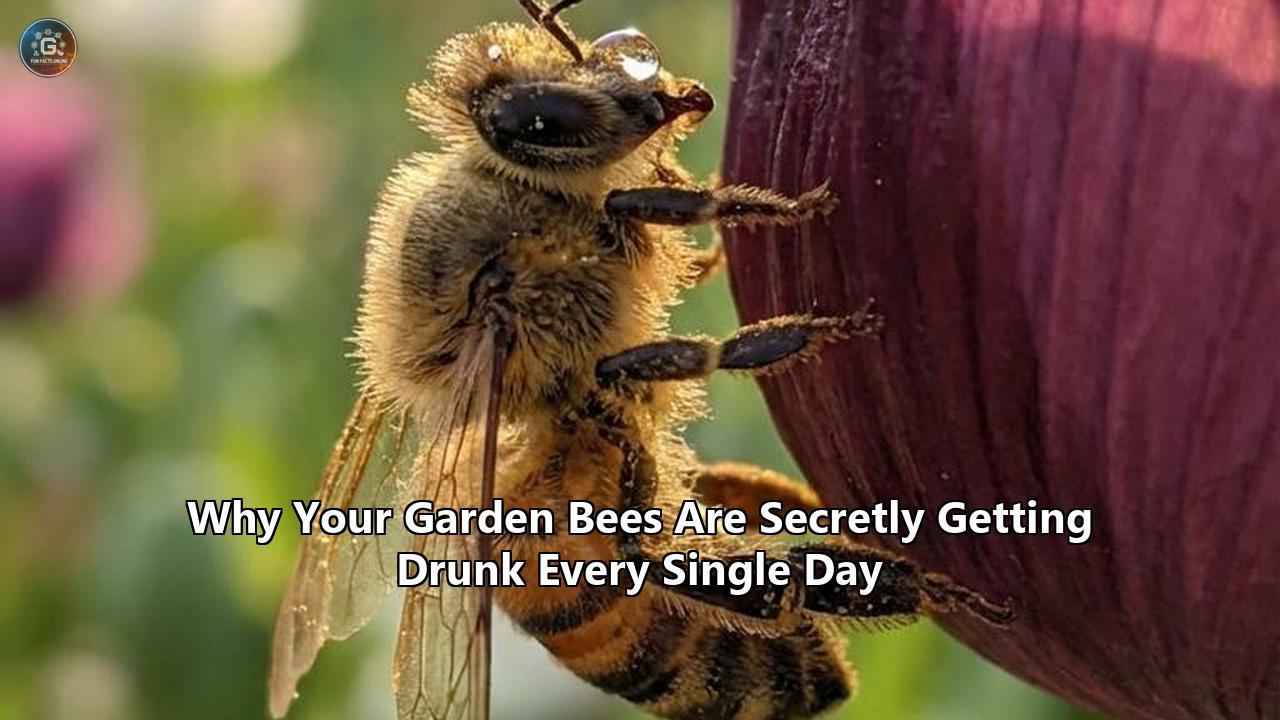
Researchers walking through the University of California Botanical Garden this spring were not looking for pristine, untouched flower blossoms. Armed with thin glass capillary tubes, the biologists were hunting for something far more specific: a silent, microscopic fermentation process occurring right under our noses. Their findings, published on March 25, 2026, reveal a hidden reality of the natural world. The pollinators keeping global agriculture afloat are effectively day-drinking.
In the most expansive survey of floral nectar alcohol content ever conducted, the UC Berkeley team detected ethanol in 26 out of the 29 plant species they tested. While most samples contained only trace amounts of alcohol, one floral sample registered at 0.056 percent ethanol by weight—roughly equivalent to 0.1 proof. For a human, that concentration is negligible. For an insect consuming up to its own body weight in nectar daily, it represents a steady, unavoidable influx of booze.
The UC Berkeley researchers calculated that European honeybees ingest roughly 0.05 grams of ethanol per kilogram of body weight every single day, while hummingbirds take in an even higher dose of 0.2 grams per kilogram.
"The laboratory experiment was showing that yes, they will drink ethanol in their nectar, though they have some aversion to it if it gets too high," said Ammon Corl, a researcher on the UC Berkeley team. The animals are constantly exposed to low-level alcohol, setting up a continuous loop of ingestion and metabolization.
This discovery fundamentally rewrites our understanding of pollinator diets. Alcohol in the garden is not a rare accident caused by a piece of rotting fruit falling from a tree; it is a constant, structural component of the food web. To trace exactly how this happens, we have to follow the biological evidence trail from the yeast in the flower to the guard bees stationed at the hive entrance.
The Chemistry of the Secret Tavern
Flowers do not naturally produce alcohol. They produce sugar. The conversion of that sugar into ethanol requires a third party, and in the intricate ecosystem of a blossom, that third party is usually yeast.
When people ask, do bees get drunk, the answer lies in the microscopic fungi hitching a ride on their legs and mouthparts. Nectar yeasts, particularly a highly specialized genus known as Metschnikowia, lack their own dispersal mechanisms. They cannot fly, and they cannot crawl. To reach new habitats, they rely on insects to carry them from flower to flower. Once deposited into a fresh pool of sugary nectar, the yeast goes to work.
Metschnikowia reukaufii, a common nectar yeast isolated frequently in wild bramble bushes and commercial crops alike, actively ferments the sugars present in the flower. As it feeds, it produces enzymes like glucosidases that break down secondary metabolites, subtly altering the chemical profile of the nectar. The byproduct of this feast is ethanol.But the yeast is not just passively making alcohol; it is actively marketing its presence. As M. reukaufii ferments the nectar, it emits distinct volatile organic compounds (VOCs). Behavioral field trials have shown that these specific olfactory cues are highly attractive to foraging bees. The insects follow the scent of the yeast, drink the spiked nectar, and inadvertently gather more yeast cells on their bodies to transport to the next flower.
"Somehow they are metering their intake, so maybe zero to one percent is a more likely concentration that they would find in the wild than anything higher," noted Robert Dudley, a UC Berkeley biology professor involved in the March 2026 study. While the bees seek out the VOCs produced by the yeast, they demonstrate a hard limit. Laboratory data confirms that when nectar hits a 2 percent alcohol concentration, insect visitation drops by roughly half.
The Hemolymph Highway: Anatomy of an Insect Buzz
When a bee consumes fermented nectar, the ethanol does not sit idle. It is rapidly absorbed into the insect's hemolymph, the clear, watery fluid that functions as "bee blood" and circulates nutrients throughout their bodies. Because an insect's open circulatory system bathes their internal organs directly in hemolymph, the ethanol reaches the nervous system almost immediately.
To understand exactly how do bees get drunk on a physiological level, researchers at Ohio State University previously designed a highly specific testing apparatus. Using tiny harnesses fashioned from pieces of drinking straws, entomologists secured honeybees and fed them sucrose solutions laced with varying concentrations of ethanol, ranging from 10 percent up to 100 percent grain alcohol.
The results mirrored human intoxication with striking biological accuracy. "Alcohol affects bees and humans in similar ways—it impairs motor functioning along with learning and memory processing," explained Julie Mustard, a postdoctoral researcher involved in the Ohio State trials. "On the molecular level, the brains of honey bees and humans work the same".
As the blood alcohol level in the bees' hemolymph rose, their behavior deteriorated in predictable stages. At lower doses, the bees began to stagger, walk into objects, and exhibited decreased grooming behaviors. As the dosage increased, their motor control failed entirely. The bees developed "rubbery" legs and eventually fell onto their backs. Because their coordination was severely compromised, they were entirely unable to execute the specific leg movements required to flip themselves upright, leaving them stranded upside down until the alcohol was metabolized.
The neurological impact extends beyond mere clumsiness. A drunken bee suffers severe memory impairment and loses the ability to learn new navigational routes. If a forager becomes intoxicated in the wild, she often cannot remember the geographic coordinates of the high-yield flower patch she just visited, nor can she recall the complex flight path required to return to her hive.
The 80-Proof Hornet: A Genetic Anomaly
While honeybees suffer the debilitating effects of alcohol, not all insects share this vulnerability. A stark contrast emerged in October 2024, when an investigative team at Tel Aviv University discovered a bizarre genetic anomaly in the Oriental hornet (Vespa orientalis).
Led by Professor Eran Levin and Dr. Sofia Bouchebti, the researchers found that Oriental hornets are the only known animals on Earth capable of consuming incredibly high concentrations of alcohol on a chronic basis with zero negative health effects. To test the absolute limits of this tolerance, the team fed the hornets a diet consisting solely of an 80 percent ethanol solution.
"We were astonished at the rapid rate at which these hornets metabolized the alcohol," Bouchebti reported. To track the chemical breakdown, the researchers tagged the alcohol with a heavy carbon isotope. As the hornets processed the ethanol, they exhaled carbon dioxide containing the distinct isotope marker, essentially serving as a tiny, highly accurate breathalyzer.
The hornets demonstrated no behavioral shifts, no staggering, no loss of nest-building capability, and no reduction in their three-month lifespan, even when surviving exclusively on 80-proof equivalent liquid. "To the best of our knowledge, Oriental hornets are the only animal in nature adapted to consuming alcohol as a metabolic fuel," Levin stated.
The secret to the hornet's absolute immunity lies deep in its genetic code. Genomic analysis revealed that the Oriental hornet possesses multiple, highly active copies of the alcohol dehydrogenase (NADP+) gene, which synthesizes the enzyme responsible for breaking down alcohol before it can accumulate in the hemolymph and reach the nervous system. Evolutionary biologists suspect this trait developed because these hornets naturally carry brewer’s yeast (Saccharomyces cerevisiae) in their digestive tracts, depositing it onto rotting fruit. Having lived alongside high-volume alcohol producers for millennia, the wasps evolved a biological incinerator to burn the ethanol away.
Bees, lacking these extra genetic copies, are forced to process alcohol at a much slower, more dangerous pace. When a bee drinks too much, it cannot simply burn it off as fuel. It must suffer the consequences.
Social Justice in the Hive: The Ruthless Bouncers
For a honeybee, the physical symptoms of intoxication are only the beginning of the problem. The real danger awaits them when they attempt to return home.
A honeybee colony is a fortress of eusocial organization, guarded by specific worker bees assigned to security duty at the landing board. These guard bees operate as strict, uncompromising bouncers, tasked with identifying threats, preventing robberies from competing hives, and maintaining the internal hygiene of the colony. To do this, they rely heavily on chemical communication, using their antennae to "smell" the cuticular hydrocarbons (CHCs) coating the bodies of returning foragers.
If a forager arrives exhibiting erratic flight patterns and reeking of fermented nectar, the guard bees immediately intercept her. The hive functions strictly on efficiency and precise communication, primarily through the complex "waggle dance" used to transmit spatial coordinates for food sources. An intoxicated bee returning with bad directions, failing motor skills, and tainted nectar is viewed not as a sister, but as a biological threat.
When guard bees detect an inebriated forager, they block her entry. If the drunk bee attempts to force her way inside, the response escalates to violence. Guards will aggressively tackle the intoxicated bee, physically dragging her to the edge of the landing board and pushing her off. In severe cases, particularly if the bee is a repeat offender or highly combative, the guards will bite off the legs of the drunken bee, permanently neutralizing her ability to enter the hive or perform the waggle dance.
This brutal security protocol serves a critical evolutionary purpose. If foragers were permitted to unload highly fermented nectar into the honeycomb cells, the yeast could continue to multiply within the warm, humid environment of the hive. This could theoretically spoil the colony's winter food stores, leading to mass starvation. The guards sacrifice the individual to ensure the survival of the collective.
Those foragers who are merely pushed away must wait outside the hive, exposed to predators and the elements, until their hemolymph clears the ethanol. Only when they sober up and can pass the rigorous antennation checks at the entrance are they allowed to return to the colony.
The Climate Catalyst: Why Fermentation is Accelerating
The occasional drunken bee has always been a localized oddity, but recent data indicates the frequency of fermented nectar encounters is shifting due to systemic environmental changes.
The equation is basic biology: yeast plus sugar plus heat equals rapid fermentation. As global surface temperatures continue to rise, the delicate micro-ecosystems inside floral nectaries are experiencing unprecedented thermal stress. Research conducted at KU Leuven, focusing on the nectar microbiomes of oilseed rape (Brassica rapa) and the foraging preferences of bumblebees (Bombus impatiens), provides direct evidence of this acceleration.
When the Leuven researchers incubated natural nectar microbial communities at elevated temperatures simulating modern heatwaves, they documented a massive spike in bacterial and yeast abundance. The warmer the environment, the faster the Fructobacillus and Metschnikowia populations multiplied. This microbial population boom rapidly depleted the sucrose in the nectar, replacing it with fermentation byproducts, including ethanol.
Climate change is effectively turning the volume up on natural fermentation. Unusually warm spring nights prevent the nectar from cooling down, allowing yeast to work around the clock. Increased precipitation and shifting wet periods also contribute, causing nectar to spoil faster inside the blossoms before foragers have a chance to collect it.
The implications are highly visible in the field. The Leuven study revealed that while bumblebees preferred nectar inoculated with microbes at normal, ambient temperatures, their preferences fractured when the nectar was subjected to warming. The heat-induced microbial overgrowth fundamentally altered the nectar chemistry to a point where it disrupted normal pollinator choices.
As the environment heats up, bees are being forced to navigate a floral landscape where their primary food source spoils faster, forcing them to either consume higher concentrations of ethanol or abandon traditional food sources entirely.
The Trehalose Defense: Are They Adapting?
Faced with a rapidly changing, increasingly fermented food supply, the critical question is whether honeybees possess any biological mechanisms to adapt. While they lack the Oriental hornet's absolute genetic immunity, emerging research suggests bees are not entirely defenseless.
A June 2025 study published in the journal Ecotoxicology attempted to map the long-term physiological response of honeybees exposed to continuous, low-level alcohol. Over a 14-day trial, researchers divided bees into three cohorts: a control group fed pure sucrose, a group fed a 0.5 percent ethanol-sucrose blend, and a final group given a 1.5 percent ethanol-sucrose mixture.
The researchers were looking for signs of "hormesis"—a biological phenomenon where low doses of a toxin actually stimulate a beneficial, adaptive response in an organism, even if high doses are lethal. They measured flight endurance, survivorship, lipid content, and hemolymph chemistry.
While the continuous alcohol exposure did not make the bees fly faster or live longer, the blood work revealed a highly specific defensive reaction. The bees chronically exposed to the highest levels of ethanol displayed significantly elevated levels of trehalose in their hemolymph.
Trehalose is a unique blood sugar found in insects that serves as a rapid energy source, but it also functions as a powerful stress protectant. High levels of trehalose help stabilize proteins and cellular membranes against environmental stressors, including extreme temperatures, dehydration, and oxidative damage. The Ecotoxicology researchers hypothesize that the surge in trehalose is an active, systemic defense mechanism—the bee's internal chemistry shifting to shield its cellular structures from ethanol-induced toxicity.
This suggests that while high doses of alcohol will still incapacitate a bee and result in banishment by the hive guards, the continuous background hum of low-level floral ethanol triggers a measurable physiological armor.
The Ecological Domino Effect
If individual bees are busy synthesizing trehalose and getting tossed off landing boards by their sisters, the broader agricultural system faces a compounding threat. The intersection of increasing floral fermentation and pollinator impairment creates a distinct ecological domino effect.
Approximately 35 percent of all global crops rely directly on insect pollinators for fruit and seed production. The efficiency of this massive biological supply chain requires focused, communicative, and physically capable foragers. When people ask do bees get drunk, they rarely consider the secondary economic consequences of an inebriated workforce.
Drunk bees take significantly longer to complete foraging tasks. They visit fewer flowers per flight, and their impaired memory means they frequently fail to return to high-yield agricultural targets, wandering aimlessly instead. Furthermore, if a significant percentage of a colony's foragers are grounded outside the hive waiting to sober up, the daily caloric intake of the entire colony drops, reducing the queen's brood production and weakening the hive over time.
The presence of the yeast itself presents a paradox for farmers. Studies examining pear orchards inoculated with Metschnikowia reukaufii demonstrate that the yeast's VOCs successfully attract higher numbers of honeybees and hoverflies to the trees. However, despite the increased insect traffic, researchers recorded no significant increase in actual fruit or seed set. The yeast brings the bees to the orchard, but the resulting fermentation and altered nectar chemistry may disrupt the mechanical efficiency of the pollination itself.
We are witnessing an invisible tug-of-war. The yeast needs the bees for transport, the bees need the nectar for survival, and the plants need the bees for reproduction. As environmental pressures alter the chemical balance of the nectar, the rules of this three-way transaction are rapidly shifting.
The Future of the Fermented Garden
The UC Berkeley survey proving the sheer ubiquity of ethanol in floral nectar has opened an entirely new frontier in entomology and climate science. We now know that alcohol is not a fringe anomaly, but a standard ingredient in the diets of billions of crucial insects.
Moving forward, the scientific community is racing to map the exact threshold where this natural exposure transitions from an evolutionary quirk into a systemic agricultural crisis. At KU Leuven, ongoing PhD projects running through 2029 are deploying robotic flowers alongside living oilseed rape plants to isolate exactly how heat-stressed nectar microbiomes alter specific pollinator flight patterns and feeding durations. By manipulating the precise levels of yeast and bacterial VOCs in a controlled robotic setting, researchers hope to decode the tipping point where a bee decides a flower is too fermented to touch.
Further genomic sequencing of the Metschnikowia yeast strains will likely reveal how these microbes are adapting their own fermentation rates in response to modern climate metrics. There is also intense interest in the genetic divide between bees and wasps. If the Oriental hornet successfully evolved extra copies of the alcohol dehydrogenase gene to handle its yeast-heavy environment, evolutionary biologists are closely monitoring commercial honeybee populations to see if similar genetic pressures might eventually force a long-term adaptation in the hive.
For now, the ecosystem relies on a delicate balance of biology and brutal hive enforcement. The next time you walk past a blooming garden on a warm afternoon, consider the unseen chemistry unfolding inside the petals. The nectar is quietly fermenting, the microbes are multiplying, and the guard bees are waiting at the gates, ready to enforce the strict, sober laws of the colony.
Reference:
- https://www.sciencedaily.com/releases/2026/03/260325005908.htm
- https://vcresearch.berkeley.edu/news/birds-do-it-bees-do-it-sip-alcohol
- https://www.theregister.com/2026/03/29/bees_hummingbirds_alcohol/
- https://www.aftau.org/news_item/oriental-hornets-can-drink-unlimited-amounts-of-alcohol-without-damage/
- https://scifaqs.com/natural-science/
- https://www.researchgate.net/publication/392830163_Two_Metschnikowia_nectar_yeast_species_have_similar_volatile_profiles_but_elicit_differential_foraging_in_bee_pollinators
- https://academic.oup.com/femsec/article/88/2/250/468377
- https://www.beeradvocate.com/community/threads/yeast-bay-and-metschnikowia-reukaufii.586410/
- https://www.sciencedaily.com/releases/2023/06/230622142345.htm
- https://royalsocietypublishing.org/rstb/article/377/1853/20210155/108990/Potential-effects-of-nectar-microbes-on-pollinator
- https://www.honeybeesuite.com/one-for-the-road-bees-with-a-buzz/
- https://news.osu.edu/latest-buzz-in-research--intoxicated-honey-bees-may-clue-scientists-into-drunken-human-behavior/
- https://beeshaven.com/when-nectar-turns-boozy-inside-the-world-of-drunk-bees/
- https://www.youtube.com/watch?v=ZhUKLsSjUZs
- https://www.sciencealert.com/one-animal-species-has-a-shockingly-high-tolerance-for-alcohol
- https://nocamels.com/2024/10/taus-drunk-proof-hornets-could-help-research-into-alcoholism/
- https://tps.co.il/articles/israeli-scientists-discover-secret-to-alcohol-tolerance-in-hornets/
- https://theapiarist.org/you-are-what-you-eat/
- https://www.youtube.com/shorts/TPa5nmwA2CQ
- https://a-z-animals.com/articles/why-drunk-bees-arent-allowed-back-in-the-hive-until-they-sober-up/
- https://www.reddit.com/r/todayilearned/comments/1kvi29k/til_bees_can_get_drunk_guard_bees_will_notice_it/
- https://www.theguardian.com/science/2001/dec/13/research.highereducation1
- https://pmc.ncbi.nlm.nih.gov/articles/PMC9436853/
- https://research.kuleuven.be/portal/en/project/3E250943
- https://pubmed.ncbi.nlm.nih.gov/34596711/
- https://pubmed.ncbi.nlm.nih.gov/40461878/
- https://pubmed.ncbi.nlm.nih.gov/33886638/
- https://journals.plos.org/plosone/article/figures?id=10.1371/journal.pone.0250203