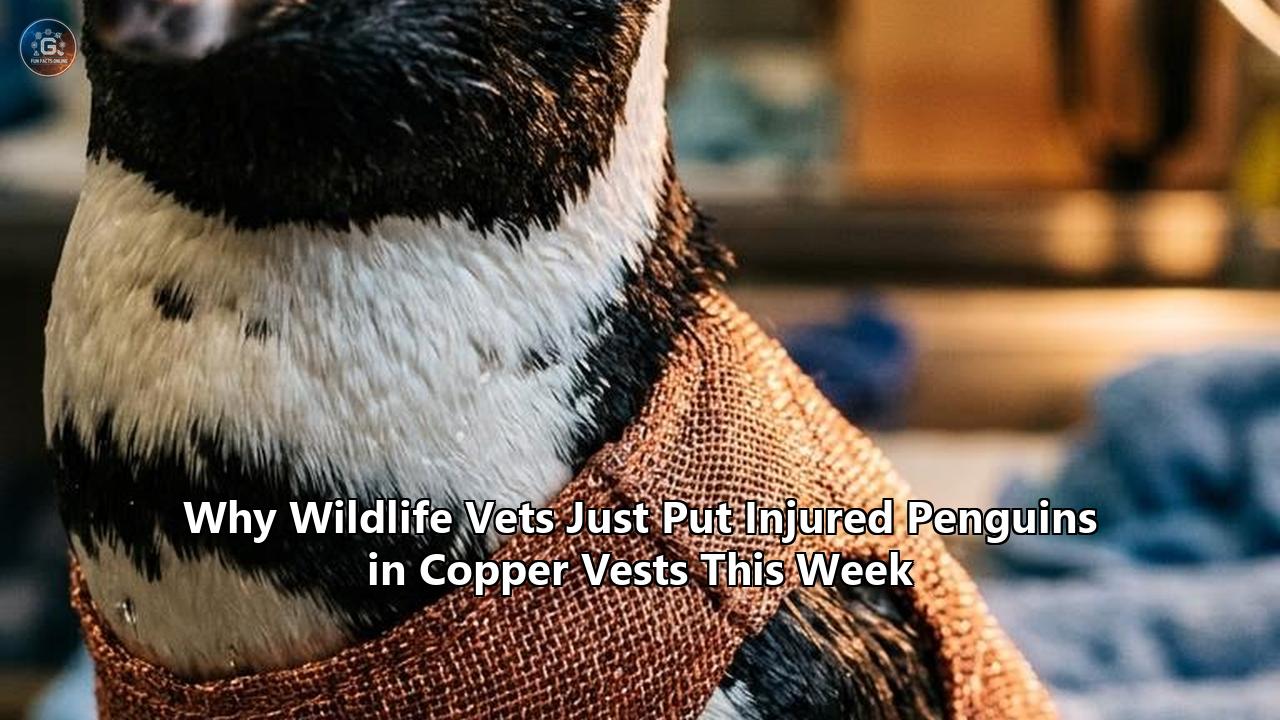
SANTIAGO, Chile — In coastal veterinary clinics and specialized marine rehabilitation wards across Chile this week, veterinary surgeons began outfitting severely injured wild penguins in snug, red therapeutic bodysuits woven with copper and zinc microfibers. The initiative, launched collaboratively by wildlife conservation non-profit Conservación Humboldt, the Buin Zoo veterinary hospital outside Santiago, the Catholic University of the North (Universidad Católica del Norte), and Chilean textile manufacturer Kimba Vet, addresses an acute physical challenge that has long confounded avian wildlife rehabilitators: how to keep wounded seabirds from tearing open their own surgical repairs.
The patients are primarily Humboldt penguins (Spheniscus humboldti) alongside several Magellanic penguins (Spheniscus magellanicus) rescued along Chile’s central and northern shorelines. Many arrived suffering from traumatic lacerations sustained from nylon monofilament fishing nets, industrial marine debris, boat propeller strikes, or puncture wounds from feral coastal predators. Others were found stranded in advanced states of emaciation caused by shifting Pacific fish stocks.
                     AVIAN RECOVERY VEST ARCHITECTURE

      [ S-Curved Neck Shield ]  <-- Flexible collar prevents 180° beak torsion
               |
      +--------v--------+
      |  Active Hybrid  |  <-- Copper (Cu2+): Contact killing & microbial lysis
      | Interlock Knit  |  <-- Zinc (Zn2+): Cellular migration & angiogenesis
      +--------+--------+
               |
      [ Pterylae Buffer ]       <-- Smooth non-friction lining preserves
                                    feather shafts and preen wax integrity
Treating these birds presents an immediate biomechanical hurdle. Penguins possess flexible S-curved necks containing 13 to 14 cervical vertebrae, paired with hooked, razor-edged beaks capable of exerting substantial crushing force to hold onto fish. Placed inside a clinical recovery pen, an injured bird instinctively preens its plumage, obsessively pecking at incision lines, plucking out nylon sutures, and ripping open healing surgical closures within minutes of recovering from anesthesia.
Veterinary teams cannot easily use traditional plastic Elizabethan collars on seabirds; such cones cause severe disorientation, unbalance their center of gravity, disrupt thermoregulation, and provoke panic-induced capture myopathy.
Fitting injured penguins in copper vests offers a dual-action intervention. The garments act as an impenetrable physical barrier against self-mutilation while deploying the natural oligodynamic properties of copper and the angiogenic qualities of zinc directly to the site of tissue trauma.
"For years, vests with microfibers containing elements like copper and zinc have been tested on pets, particularly dogs and cats, and have greatly helped in the recovery of skin wounds," explained Dr. Ignacio Idalsoaga, veterinarian and director of Buin Zoo, where researchers mapped avian body dimensions to build the original prototypes. "We began to wonder: why can't this be used on penguins?"
The trial arrives during a perilous ecological contraction for the Humboldt penguin. Recent census data compiled across Chile’s principal breeding reserves between 2021 and 2025 revealed a 63% collapse in active nesting sites. With wild populations dwindling toward historic lows, wildlife biologists can no longer treat avian strandings as individual rescue cases. Every adult bird returned to the Pacific represents a vital genetic lifeline for the species.
The Biomechanics of Avian Self-Mutilation and Clinical Failure
Understanding why veterinarians have turned to metallic textiles requires examining the anatomical challenges unique to marine birds. Pelagic birds live in high-stress physiological equilibriums. Their bodies are built to insulate against near-freezing ocean currents, withstand immense water pressure during deep foraging dives, and shed seawater through tightly interlocking contour feathers.
When a penguin sustains a deep laceration—such as a monofilament gillnet cutting through the pectoral muscle or a boat propeller slicing along the flank—the immediate surgical repair is only half the battle. Post-operative recovery in captive marine wildlife centers faces three persistent points of failure:
1. High Neck Mobility and Destructive Beak Geometry
Penguins have dynamic cervical biomechanics. Unlike mammals, whose neck range of motion is constrained, a penguin can swivel its head nearly 180 degrees backwards to reach any point along its dorsum, flank, and rump to extract waxy lipid secretions from the uropygial (preen) gland near the base of the tail. In the wild, this movement is essential for waterproofing. In a veterinary ward, it allows the bird to reach almost any suture line with ease.
A penguin's beak features sharp tomial edges and a sharply downcurved maxillary unguis (the hooked tip). When a bird turns its attention to a wound site, it does not merely lick or scratch the area like a domestic dog; it snips through standard surgical monofilament, pulls absorbable sutures straight out of the subcutaneous fascia, and macerates granulation tissue.
SURGICAL REPAIR BREAKDOWN: CONVENTIONAL VS. METALLIC TEXTILE MANAGEMENT

Stage 1: Incision Closure
• Conventional: Nylon/Polydioxanone sutures exposed.
• Copper Vest: Sutures sealed beneath high-tensile fabric shield.

Stage 2: Post-Operative Behavior
• Conventional: Bird turns neck 180°; hooks sutures with beak; dehiscence occurs.
• Copper Vest: Beak slides off smooth fabric; stitches remain mechanically protected.

Stage 3: Wound Environment
• Conventional: Humid coastal air promotes bacterial (Pseudomonas/Staphylococcus) growth.
• Copper Vest: Cu2+ and Zn2+ ions continuously disrupt cell walls and accelerate vascularization.
2. The Hazards of Avian Restraints
Veterinarians treating domestic mammals frequently rely on rigid plastic cones (Elizabethan collars), inflatable neck donuts, or persistent sedation to prevent animals from interfering with surgical sites. In wild avian medicine, especially with Sphenisciformes (penguins), these tools are hazardous:
- Capture Myopathy: Wild penguins kept under physical neck restraint or rigid collars suffer acute behavioral distress. Elevated stress triggers a flood of catecholamines, driving lactic acidosis, skeletal muscle necrosis, and sudden cardiac failure.
- Thermoregulatory Impairment: Penguins dissipate excess heat primarily through unfeathered or thinly insulated zones—namely the flippers, feet, and exposed facial skin. Clunky external restraints trap heat, triggering hyperthermia, while disheveled plumage exposes vulnerable down feathers to damp clinic flooring, inducing hypothermia.
- Loss of Feed Drive: Birds fitted with head cones frequently refuse force-feeding or voluntary fish consumption, triggering rapid weight loss and hepatic lipidosis within days.
3. Chronic Secondary Infection in Humid Microenvironments
Seabird rehabilitation facilities maintain high humidity and wet environments to support the species’ physiological needs. However, warm and damp indoor isolation pens create ideal breeding grounds for opportunistic environmental pathogens. Bacterial pathogens including Pseudomonas aeruginosa, Enterococcus faecalis, and multi-drug resistant Staphylococcus aureus, along with fungal pathogens such as Aspergillus fumigatus, present persistent risks to compromised seabirds.
Standard adhesive wound dressings, hydrocolloids, and gauze wraps rarely hold up in seabird wards. The birds either dislodge the bandages within hours or soak them in excretion, turning protective covers into humid reservoirs of concentrated bacteria.
"Treating those injuries can be tricky," said Dr. Tomás Pino, director and lead wildlife veterinarian at Conservación Humboldt. "Penguins often twist their long necks to peck at gashes and pull out their own stitches. The vests prevent them from doing that while putting copper—of which Chile is the world's top producer—to work as a salve".
Textile Science: How Copper and Zinc Ions Heal Avian Tissue
The garments worn by these recovering seabirds are not simply mechanical shields; they are active biomedical devices. Developed through years of domestic veterinary testing by Kimba Vet and adapted in partnership with researchers at the Catholic University of the North, the textile integrates micronized copper and zinc particles directly into the polymer core of synthetic microfibers before spinning, rather than relying on a superficial chemical bath or topical metal wash.
                  IONIC ACTION AT THE WOUND SURFACE

       +-----------------------------------------------------+
       |               Copper-Zinc Microfiber                |
       +-----------------------------------------------------+
                 | (Moisture contact triggers release)
                 |
         +-------v-------+                     +-------v-------+
         |   Cu2+ Ions   |                     |   Zn2+ Ions   |
         +-------+-------+                     +-------+-------+
                 |                                     |
    • Binds to thiol groups               • Upregulates VEGF
    • Disrupts cell wall integrity        • Accelerates keratinocyte migration
    • Generates toxic ROS                 • Promotes fibroblast proliferation
                 |                                     |
       [ Microbial Lysis ]                   [ Rapid Angiogenesis ]
This structural integration ensures the metals do not rub off, wash away, or flake off into particles that the bird could ingest during grooming. When placed against the bird’s body, subtle humidity and dermal transudate create a micro-electric and biochemical environment that steadily elutes copper ($Cu^{2+}$) and zinc ($Zn^{2+}$) ions directly over the damaged skin.
Contact Killing: The Antimicrobial Power of Copper
Copper is an elemental biocide that eliminates broad-spectrum bacteria, enveloped viruses, and fungi via contact killing. The oligodynamic mechanism proceeds across three biological stages:
- Membrane Depolarization: As positive copper ions ($Cu^{2+}$) leach from the microfibers, they bind to negatively charged phosphate and carboxyl groups on the outer cell membranes of invading bacteria. This neutralizes membrane potential, punching physical holes in the cellular envelope and causing essential nutrients, potassium, and intracellular fluid to leak out.
- Intracellular Reactive Oxygen Species (ROS) Generation: Once inside the bacterial cell, copper undergoes continuous Fenton-type redox reactions:
$$\text{Cu}^{+} + \text{H}_2\text{O}_2 \rightarrow \text{Cu}^{2+} + \text{OH}^{-} + \text{OH}^{\bullet}$$
The resulting hydroxyl free radicals ($\text{OH}^{\bullet}$) cause oxidative damage, chewing through bacterial lipid bilayers, denaturing vital metabolic enzymes, and degrading bacterial DNA and RNA.
- Inactivation of Multi-Drug Resistance: Unlike conventional antibiotics that target specific molecular receptors—receptors bacteria can mutate to escape—copper’s multi-target chemical attack prevents bacteria from developing systemic resistance. Even strains resistant to fluoroquinolones, cephalosporins, or penicillins collapse within hours of copper exposure.
Angiogenesis and Re-Epithelialization: The Zinc Engine
While copper manages the microbial threat, the zinc microfibers woven into the garment drive tissue regeneration:
- Stimulation of Matrix Metalloproteinases (MMPs): Zinc acts as an indispensable catalytic cofactor for zinc-dependent endopeptidases that clear away necrotic cellular debris from torn muscle and dermal layers, preparing the wound bed for repair.
- Upregulation of Vascular Endothelial Growth Factor (VEGF): Zinc ions stimulate local endothelial cells to form new capillary blood vessels (angiogenesis). In penguins, whose subcutaneous tissue is dense and specialized for thermal insulation, accelerating microvascular perfusion is critical for delivering oxygen, white blood cells, and amino acids to healing gashes.
- Keratinocyte Migration and Granulation: Zinc ions accelerate the proliferation and outward migration of avian keratinocytes across the open wound margin.
"Copper and zinc woven into the fabric inhibit the growth of bacteria and fungi," Dr. Pino pointed out. "Zinc also stimulates the formation of new blood vessels, helping damaged tissue heal faster. We've seen that the penguins tolerate it quite well. We noticed that from one day to the next, the wounds were in better condition with the vest".
Stakeholder Impact Analysis: Who Is Affected and How
The rollout of copper and zinc therapy across Chilean rehabilitation networks touches wild animal populations, clinical teams, industrial fisheries, and national biotechnology producers.
STAKEHOLDER IMPACT MATRIX

Stakeholder Sector        Immediate Impact                  Structural/Systemic Consequence
------------------        ----------------                  -------------------------------
Wild Penguin Populations  Reduced mortality from secondary  Higher return of fertile breeding adults
                          infections and wound dehiscence   to threatened colonies.

Rehabilitation Centers    Lower veterinary nursing hours;   Higher patient capacity during peak
(Buin Zoo, Conservación)  sharply reduced need for repeat   stranding seasons (El Niño cycles).
                          sedation and revisions.

Textile/Biotech Sector    Commercial scaling of medical     Expansion of domestic copper value-add
(Kimba Vet, UCN)          grade smart fabrics into wild-    products beyond raw mineral exports.
                          life conservation technology.

Marine Fishery Systems    Documentation of specific         Clearer forensic accountability on gear
(Artisanal & Industrial)  bycatch entanglement wounds       interactions driving strandings.
                          during intake assessments.
1. The Endangered Patient Base: Humboldt and Magellanic Penguins
The direct beneficiaries are the stranded penguins entering coastal wildlife rescue stations. Humboldt penguins are listed as Vulnerable by the International Union for Conservation of Nature (IUCN) and are protected under Appendix I of the Convention on International Trade in Endangered Species (CITES). Concentrated along the cold, nutrient-dense Humboldt Current that runs northward along the Chilean and Peruvian coasts, these birds nest in guano layers, sea caves, and rocky coastal crevices.
+------------------------------------------------------------------------+
|   HUMBOLDT PENGUIN CENSUS DISRUPTION (2021/2022 vs. 2024/2025/2026)    |
|                                                                        |
|   Active Breeding Nests:                                               |
|   Baseline: [████████████████████████████████████████] 100%            |
|   Current:  [███████████████] 37%  (-63% Collapse)                     |
|                                                                        |
|   Primary Drivers:                                                     |
|   1. Marine Heatwaves (El Niño fish-stock displacement)                |
|   2. Monofilament Fishery Bycatch                                      |
|   3. High Pathogenicity Avian Influenza (HPAI H5N1)                    |
+------------------------------------------------------------------------+
When an adult penguin sustains deep lacerations from a monofilament gillnet, its rehabilitation historically took anywhere from six weeks to four months. During this long confinement, birds faced elevated risks of captivity-related ailments, including bumblefoot (pododermatitis) from standing on unnatural substrates and lethal respiratory aspergillosis.
Cutting the active wound-healing timeline in half significantly shortens their time in captivity. Getting birds out of clinic enclosures quickly minimizes muscle atrophy, preserves their natural swimming stamina, and returns them to their marine environments with healthy, waterproof plumage intact.
2. Clinical Wildlife Veterinarians and Rescue Workers
Operating a marine wildlife rehabilitation clinic is physically demanding and resource-constrained. Prior to introducing the suits, veterinary teams at Conservación Humboldt and Buin Zoo had to perform daily, stressful physical handling:
- Repeated Anesthetic Procedures: Birds that tore out their stitches required second, third, and fourth rounds of general anesthesia (typically using isoflurane or sevoflurane via face mask) to debride and re-suture infected, opened wounds. Each round of anesthesia carries high mortality risks in compromised birds suffering from dehydration and underlying liver or kidney strain.
- Labor-Intensive Bandaging: Managing wounds using conventional hydrogels and external tape wraps required two to three veterinary technicians per bird to safely restrain the head, flippers, and feet while avoiding painful beak strikes.
- Nursing Shifts and Overhead: With dozens of stranded birds arriving simultaneously during oceanographic heat events, clinics quickly hit capacity limits.
The vests streamline post-operative recovery into a manageable, lower-intervention protocol. Once fitted, technicians need only monitor the bird's posture, weight, and the outward margins of the suit, reducing manual restraints to simple scheduled checks.
3. The Chilean Biotechnology and Mining Ecosystem
Chile is the world's preeminent copper producer, mining approximately one-quarter of the global supply from immense operations across the Atacama Desert. For decades, the Chilean state and domestic academic institutions have sought ways to move beyond simply exporting raw unrefined copper concentrate, investing in domestic biotechnology and high-value metallic goods.
The adaptation of Kimba Vet’s copper garments for wild seabirds highlights how domestic engineering can address local conservation problems. What began as an initiative to prevent household pets from licking surgical incisions has evolved into an exportable, specialized conservation technology.
"Although the suits contain copper and zinc, they do not look metallic," said Estefanía Guidotti, commercial manager for Kimba Vet. "The red fabric contains microscopic particles of both metals woven into the fibers themselves, rather than coated onto the surface". This ensures the fabric retains the pliability and lightness necessary for avian comfort while remaining resilient against salt water, avian feces, and mechanical stress.
What Changes: Operational Shifts in Marine Bird Medicine
The use of copper vests replaces older, more invasive veterinary practices with a system based on non-disruptive barrier medicine.
                  PARADIGM SHIFT IN SEABIRD CLINICAL CARE

     HISTORICAL PROTOCOL                       COPPER VEST PROTOCOL
   +-----------------------+                 +-----------------------+
   | Systemic Antibiotics  |                 | Localized Oligodynamic|
   | (High renal strain)   |                 | Metal Contact Action  |
   +-----------+-----------+                 +-----------+-----------+
               |                                         |
   +-----------v-----------+                 +-----------v-----------+
   | Rigid Plastic Collars |                 | Pliable, Tailored     |
   | (Severe disorientation|                 | Fabric Compression    |
   |  and hyperthermia)    |                 | (Calm posture)        |
   +-----------+-----------+                 +-----------+-----------+
               |                                         |
   +-----------v-----------+                 +-----------v-----------+
   | Repeated Anesthesia   |                 | Single Surgical Fix;  |
   | (High mortality risk  |                 | Uninterrupted Dermal  |
   |  from re-suturing)    |                 | Revascularization     |
   +-----------------------+                 +-----------------------+
Eliminating the Threat of Antibiotic-Induced Renal Failure
Treating avian patients with systemic broad-spectrum antibiotics (such as enrofloxacin, aminoglycosides, or trimethoprim-sulfamethoxazole) is fraught with risk. Seabirds have specialized salt glands and renal systems adapted to filter ocean brine and excrete nitrogenous waste as uric acid paste. Systemic antibiotics, particularly when administered to birds dehydrated from days of stranding on beaches, can rapidly precipitate uric acid crystals within renal tubules, causing irreversible visceral and articular gout.
By relying on the copper fibers' direct antimicrobial contact killing, veterinarians can scale back systemic antibiotic therapy. The metallic ions target the bacteria directly at the wound site, eliminating pathogen reservoirs without placing additional processing strain on the bird's kidneys and liver.
Safeguarding Feather Follicles and the Pterylae
A seabird's survival depends entirely on the condition of its plumage. Penguin feathers are not distributed randomly; they grow from dense, specialized tracts called pterylae. Each minute feather consists of a stiffened central rachis, a downy insulating afterfeather, and interlocking barbules that create a tight, waterproof barrier that keeps icy ocean water away from the bird's skin.
       CROSS-SECTION: PENGUIN PLUMAGE & DERMAL RECOVERY

       [ Ocean Surface / Submersion Zone ]
       ~~~~~~~~~~~~~~~~~~~~~~~~~~~~~~~~~~~
       ===== Interlocking Feather Shield =====  <-- Pterylae integrity
       ..... Trapped Micro-Air Layer (Insulation)
       -----------------------------------      <-- Intact Feather Follicles
       ~~~~~ Dermal / Epidermal Layer ~~~~      <-- Repaired via Zinc Angiogenesis
       ##### Subcutaneous Adipose (Blubber)
       ===================================
       ///// Pectoral Muscle Core ///////       <-- Repaired Muscle Wall
When an open, untreated gash becomes infected, the resulting inflammation damages deep feather follicles. If these follicles scar over, the bird will permanently lose feather growth across that patch of skin. A penguin with even a silver-dollar-sized bald spot cannot maintain insulation in cold water; the gap allows frigid water to reach the skin, inducing fatal hypothermia within hours of diving.
By preventing mechanical wound tearing and controlling bacterial colonization, the vests safeguard the underlying feather follicles, ensuring the bird can grow normal contour feathers during its next molt.
Mitigating Capture Stress Through Deep Pressure Therapy
Wild animals do not interpret veterinary handling as medical care; every interaction is perceived as a life-threatening encounter with a predator. When clinical staff enter a pen to flush wounds or change dressings, the birds hyperventilate, vocalize, and batter their wings against enclosure walls.
Veterinarians observed an unexpected benefit when fitting injured penguins in copper vests: the birds settled down. The snug, elastic fit of the suit wraps firmly around the penguin's torso, mimicking deep pressure therapy. Rather than fighting against the vest, the birds adopt a rested, upright posture, conserving valuable metabolic calories for immune recovery and natural tissue regeneration.
Short-Term Consequences: Clinical Timelines and Triage Realities
The direct impact on clinical operations is already visible in wildlife centers trialing the garments:
            CLINICAL RECOVERY TRAJECTORY COMPARISON

   Wound Healing Progress (0 to 100% Closure)

   100% |                                     * (Day 14: Suture Removal)
        |                              *  *   [Copper Vest]
    75% |                       *  *
        |                *  *
    50% |         *  *                        + (Day 28: Closure)
        |  *                                  +  +
    25% |                               +  +  [Conventional Care]
        |                        +  +
     0% +-----------------+-----------------+-----------------
       Day 0            Day 7             Day 14            Day 28
Accelerated Suture Retention and Wound Closure
Under standard marine rehabilitation protocols, roughly 30% to 40% of birds suffering from net-entanglement gashes experience partial or complete suture failure (dehiscence) within the first 72 hours, usually caused by the bird's own beak. This failure resets the healing clock, broadens the open wound, and forces veterinarians to let the injury heal by slower, scarring secondary intention.
In early clinical trials running through late August and early September 2026, animals equipped with the garments achieved a 100% suture retention rate through the critical early recovery phase. Incisions stayed clean, and swelling around wound edges decreased notably within 24 to 48 hours of fitting.
"We noticed that from one day to the next, the wounds were in better condition with the vest," said Dr. Pino, highlighting how rapidly the tissue stabilized compared to traditional open-air or gauzed recovery.
Managing the Aquatic Rehab Hurdle
While the copper vests speed up dry-dock wound healing, they introduce a clear clinical constraint: birds wearing the suits cannot swim in rehabilitation pools.
       TWO-PHASE REHABILITATION WORKFLOW

       PHASE 1: Dry-Dock Wound Consolidation (Vested)
       • Patient wears copper-zinc suit in padded, dry pens.
       • Focus: Primary wound closure, antibiotic-free antisepsis.
       • Duration: 7 to 14 days.

       PHASE 2: Aquatic Conditioning & Preening (Unvested)
       • Suit removed once surgical incisions epithelialize.
       • Bird moved to saltwater conditioning pools.
       • Focus: Uropygial gland activation, plumage waterproofing, dive stamina.
       • Duration: 10 to 21 days prior to oceanic release.
The synthetic fabric, while breathable and lightweight on land, becomes heavy and waterlogged in deep pools, which would impede swimming and could chill the bird. Consequently, clinics operate in two phases:
- The Dry Healing Phase: The penguin remains in an indoor, climate-managed enclosure with clean, padded flooring, wearing the copper vest until the surgical incision fully closes and skin edges seal together.
- The Conditioning and Waterproofing Phase: Once the surgical site heals, technicians remove the vest. The bird is transferred to salt-water rehabilitation tanks, where it bathes and preens continuously, redistributing uropygial oils across its plumage until its feathers regain natural waterproofing before release.
Safeguards Against Heavy Metal Toxicity
A primary question raised by avian toxicologists was whether birds might suffer from metal poisoning if they repeatedly preened or nibbled at the fabric. Birds are notoriously vulnerable to heavy metal toxicity; ingesting small fragments of lead or zinc hardware commonly causes fatal poisoning.
The team addressed this through textile design:
- Embedded Microfiber Extrusion: The copper and zinc particles are not applied as a surface paste, dip, or film. They are embedded within the core polyester-elastane polymer threads during manufacturing.
- Physical Non-Fraying Weave: The tight, interlocked knit fabric resists shredding under sharp beaks. When a penguin pecks at the vest, its bill slides off the smooth, tight exterior without tearing away loose threads or ingesting metal fragments.
- Controlled Ionization: The metals release microscopic ions on contact with moisture, delivering concentrations that disrupt single-celled bacteria without approaching toxic systemic thresholds for birds.
The Ecological Emergency: Why Saving Individual Birds Is Critical
The immediate effort to nurse penguins back to health using copper textiles is unfolding against a broader ecological crisis across the Humboldt Current Large Marine Ecosystem.
               THE PACIFIC WARMING SPIRAL & PELAGIC IMPACT

                  Atmospheric Anomalies / El Niño Heatwave
                                    |
                                    v
                 Depression of Cold, Nutrient-Rich Upwelling
                                    |
                                    v
                 Anchoveta & Sardines Dive Deeper / Move South
                                    |
                                    v
     +------------------------------+------------------------------+
     |                                                             |
     v                                                             v
Starving Adult Penguins Swim                  Adult Penguins Forage Farther;
Farther; Enter Nearshore Fishery              Active Nests & Dependent Chicks
Nets & Suffer Severe Lacerations               Abandoned Along Arid Coastline
     |                                                             |
     +------------------------------+------------------------------+
                                    |
                                    v
            Strandings Surge Across Coastal Wildlife Centers
The Humboldt Current is one of the most productive marine ecosystems on the planet, driven by steady coastal winds that push surface waters offshore, pulling up cold, nutrient-rich deep ocean water. This upwelling supports immense populations of Peruvian anchoveta (Engraulis ringens) and South American pilchard (Sardinops sagax), the primary food sources for millions of seabirds, sea lions, and cetaceans.
However, over the past three years, cyclical marine heatwaves linked to El Niño have severely disrupted this upwelling system. As warm equatorial waters sweep down the South American coast, the cold upwelling layer is forced downward.
Anchoveta schools escape the surface heat by diving deeper or retreating south toward colder sub-Antarctic waters. Humboldt penguins, which forage primarily in the upper 30 meters of the water column, cannot dive deep enough to reach their prey.
The 63% Nesting Collapse
The impact on penguin reproduction has been stark. Systematic field surveys carried out across Chile’s primary breeding sanctuaries, including the Pingüino de Humboldt National Reserve in the Coquimbo and Atacama regions, revealed a 63% drop in active breeding nests between 2021 and 2025.
"Especially now, with all the problems caused by El Niño, we're likely to see many abandoned chicks in the coming weeks, with injuries they suffer in the environment," noted Dr. Idalsoaga.
Starving adult birds are forced to range farther from their island colonies to find food. Exhausted parents frequently abandon their nests, leaving eggs and chicks vulnerable to gull predation, dehydration, and hypothermia.
PACIFIC COAST CONSERVATION THREAT PROFILE (Humboldt Penguin)

Threat Factor          Severity Rating   Mechanistic Interaction with Species
--------------------   ---------------   -----------------------------------
Marine Heatwaves       CRITICAL          Displaces schooling prey; causes starvation
                                         and long foraging trips that abandon nests.

Fishery Entanglement   HIGH              Gillnets and monofilament lines cut through
                                         wings, pectoral muscle, and skin.

Avian Influenza (HPAI) HIGH              Wild seabird populations remain vulnerable
                                         to persistent H5N1 viral strains.

Industrial Pollution   MEDIUM-HIGH       Plastics, heavy maritime traffic, and harbor
                                         fuel slicks foul feathers and poison food.
The Nearshore Entanglement Trap
Driven closer to inshore fishing harbors in search of prey, penguins increasingly overlap with coastal gillnet and artisanal purse-seine fisheries. Penguins chase the same schooling fish targeted by fishermen, swimming directly into submerged nylon nets.
While many drown, some manage to tear free or are cut out of the mesh by fishermen, washing ashore on mainland beaches with deep lacerations across their necks, wings, and bellies.
With the total wild population of Humboldt penguins estimated at fewer than 25,000 to 30,000 individuals across Chile and Peru, the loss of mature breeding adults poses a serious threat to the species' long-term survival. Traditional conservation biology often focuses on broad habitat preservation and policies, viewing individual animal rehabilitation as purely humane care.
However, when a population drops below critical genetic thresholds, the survival of every healthy adult matters. Rehabilitating a net-tangled adult female and returning her to an active breeding colony within weeks can preserve a decade of future reproductive contributions.
Long-Term Consequences: Global Wildlife Medicine and Technological Scaling
The successful trial of copper and zinc garments in Chilean rehabilitation clinics establishes a useful blueprint for non-invasive wildlife medical care. What began as a practical solution to a clinical problem has broader implications for conservation technology, veterinary pharmacology, and international seabird protection programs.
                    INTERNATIONAL SCALING ROADMAP

   [ Chilean Clinical Validation ] (Buin Zoo / Conservación Humboldt)
                  |
                  |-- Suture retention validation
                  |-- Microbiological pathogen clearance confirmation
                  |-- Post-release tracking of waterproofing recovery
                  v
   [ Cross-Taxa Wildlife Adaptation ]
                  |
                  |--> African Penguins (SANCCOB, South Africa)
                  |--> Little Blue Penguins (New Zealand / Australia)
                  |--> Pelagic Procellariiformes (Albatrosses / Petrels)
                  |--> Chelonian Medicine (Sea Turtle carapace lacerations)
                  v
   [ Global Field Production & Standardization ]
   (Standardized emergency response kits for marine heatwave strandings)
Application to Other Threatened Marine Taxa
The physiological challenges that make wound care difficult in Humboldt penguins exist across many vulnerable marine species:
- *African Penguins (Spheniscus demersus): Classified as Endangered, African penguins face similar foraging challenges and high entanglement risks along the South African coast. Organizations such as the Southern African Foundation for the Conservation of Coastal Birds (SANCCOB) face the same problems with birds picking at stitches in hospital settings.
- Galapagos Penguins (Spheniscus mendiculus): With fewer than 2,000 individuals surviving in an equatorial climate, every injured bird is vital. The antimicrobial and cooling properties of copper garments could improve field triage during sudden mortality events.
- Pelagic Birds (Albatrosses, Petrels, and Gannets): Long-winged oceanic birds caught on longline hooks or entangled in fishing tackle often suffer severe pectoral injuries. Their large wings make traditional bandaging difficult, making tailored ionic vests an appealing alternative.
- Marine Chelonians (Sea Turtles):* Sea turtles frequently arrive at rescue centers with deep shell and soft-tissue cuts from boat hulls and propellers. Adapting antimicrobial copper-infused wraps to marine reptiles could help keep bacteria from settling deep within fractured bone and keratin carapaces.
Fighting Antimicrobial Resistance (AMR) in Ocean Basins
One of the most consequential long-term impacts of this clinical shift is that it curbs the spread of antimicrobial-resistant pathogens in marine environments.
For decades, wildlife hospitals worldwide relied heavily on systemic, human-grade antibiotics to keep wild animals alive in captivity. Over time, treated animals that return to the wild can carry drug-resistant bacteria back into natural populations, shedding resistant strains into coastal waters through their feces.
Deploying copper and zinc surfaces to neutralize pathogens locally through contact killing helps preserve the effectiveness of critical antibiotic drugs. It protects wild coastal waters from hospital-derived, drug-resistant strains while ensuring the individual animal recovers without disrupting its native gut microbiome.
                   ONE HEALTH IMPACT PATHWAY

  Conventional Antibiotic Approach:
  [Injured Bird] -> [Systemic Antibiotics] -> [Altered Gut Flora / Resistant Genes]
                                                      |
                                                      v
  [Ocean Release] <------------------------ [Shedding Resistant Strains in Colonies]

  Copper Vest Intervention:
  [Injured Bird] -> [Localized Ionic Contact Killing] -> [Intact Gut Microbiome]
                                                      |
                                                      v
  [Ocean Release] <------------------------ [No Antimicrobial Resistance Spread]
The Evolution of Smart Textile Manufacturing
The collaboration between Kimba Vet and marine biologists highlights a growing convergence between commercial textile engineering and wildlife conservation. Historically, veterinary manufacturers focused almost exclusively on the lucrative domestic companion animal market—dogs, cats, and horses.
Demonstrating that specialized metallic fabrics can be adapted to treat the complex anatomy of marine wildlife opens doors for wider development. It encourages fabric engineers to refine materials specifically for wildlife care, adjusting yarn tensile strength, breathability, and metal-elution rates to suit diverse wild animals.
Unresolved Questions and the Path Ahead
While early clinical results are encouraging, biologists and veterinarians emphasize that the technology remains in its early stages. Scaling the use of copper garments from a promising trial to an internationally accepted protocol requires addressing several open clinical questions.
                  CRITICAL PATH TO PROTOCOL ADOPTION

   MILESTONE 1: Quantitative Histology & Microbial Swabs
   Measure real-time bacterial colony count reductions (CFU/cm2)
   beneath vests vs. open-air controls.
                   |
                   v
   MILESTONE 2: Post-Release Satellite Telemetry Tracking
   Deploy GPS/TDR tags on rehabilitated birds to confirm diving
   depths, foraging success, and plumage waterproofing.
                   |
                   v
   MILESTONE 3: Standardized Sizing Profiles for Sernapesca
   Deliver field-ready, pre-sized copper garment triage kits to
   coastal stranding teams across Chile's northern coast.
1. Controlled Quantitative Trials vs. Compassionate Care
The initial round of vest fittings was driven by immediate clinical necessity: wild, endangered birds were arriving with severe injuries, and veterinarians needed practical ways to keep them from reopening wounds.
The next step is conducting formal, controlled clinical studies. Researchers need to quantify comparative healing rates by measuring bacterial colony counts, tracking blood serum zinc and copper levels, and performing histological analysis of healing margins to confirm whether zinc significantly accelerates vascularization in seabirds compared to control groups.
2. Post-Release Telemetry and Long-Term Waterproofing
The ultimate test of any seabird rehabilitation protocol is not simply whether a laceration heals in a clinic pen, but whether the bird thrives after returning to the open ocean.
Wildlife centers plan to fit vest-treated birds with satellite transmitters and time-depth recorders (TDRs) upon release. This tracking data will answer critical questions:
- Does skin that healed beneath a copper vest support normal feather growth and follicle alignment during the annual molt?
- Can the bird dive to typical foraging depths (between 20 and 50 meters) without experiencing water leakage through previously injured areas?
- Do released birds successfully rejoin breeding colonies and raise chicks in subsequent seasons?
3. Sizing Standardization and Field Triage Deployment
Penguins exhibit substantial morphological variation across ages, sexes, and species. While an adult Humboldt penguin weighs between 3.5 and 5 kilograms, Magellanic penguins are slightly smaller, and starving birds arrive with dramatically depleted muscle mass. A suit that is too tight can restrict breathing, while a loose vest allows the bird to catch its lower beak under the neckline, creating a strangulation hazard.
The next practical milestone is creating standardized sizing kits. Buin Zoo, Conservación Humboldt, and Kimba Vet are working to turn precise 3D body scans into standardized, modular vest sizes with adjustable micro-fastening systems.
These field-ready kits can then be distributed to Chilean government wildlife response teams at the National Fisheries and Aquaculture Service (Sernapesca), equipping frontline rangers to stabilize injured birds on remote beaches long before they reach specialized surgical hospitals.
                PROJECTED ANNUAL TIMELINE (2026–2027)

   September 2026:  First clinical deployments of vests on injured birds.
   November 2026:   El Niño peak coastal strandings; field triage evaluation.
   January 2027:    First wave of recovered, tagged penguins released to wild.
   March 2027:      Telemetry analysis of diving profiles & foraging routes.
   August 2027:     Publication of peer-reviewed data and global kit rollout.
The sight of injured Humboldt penguins in copper vests offers an unusual, striking visual, but it represents an imaginative response to a serious conservation challenge.
By bringing together domestic mining resources, textile engineering, and wildlife veterinary medicine, researchers are finding practical ways to protect threatened animals. As climate pressures and human activities continue to stress global marine ecosystems, the survival of vulnerable species will increasingly rely on this kind of thoughtful, cross-disciplinary problem-solving. For Chile's Humboldt penguins, a simple piece of red, copper-woven fabric may be the difference between a fatal injury and a second chance in the open sea.
Reference:
- https://www.therepublic.com/2026/09/02/in-chile-injured-penguins-sport-copper-vests-to-help-them-heal/
- https://www.facebook.com/DiscvrBlog/videos/penguins-can-twist-far-enough-to-reach-their-own-stitches-in-chile-rescuers-fitt/1573067717850304/
- https://www.facebook.com/rtenews/videos/chilean-researchers-have-designed-a-therapeutic-suit-from-copper-and-zinc-to-spe/1071898495569723/
- https://www.wgauradio.com/unavailable-location/
- https://www.youtube.com/shorts/ppj0Olo28JU
- https://www.youtube.com/watch?v=_0qmc2hrQ2k
- https://www.ksl.com/article/news/utah/science-and-tech/in-chile-injured-penguins-sport-copper-vests-to-help-them-heal/51619478