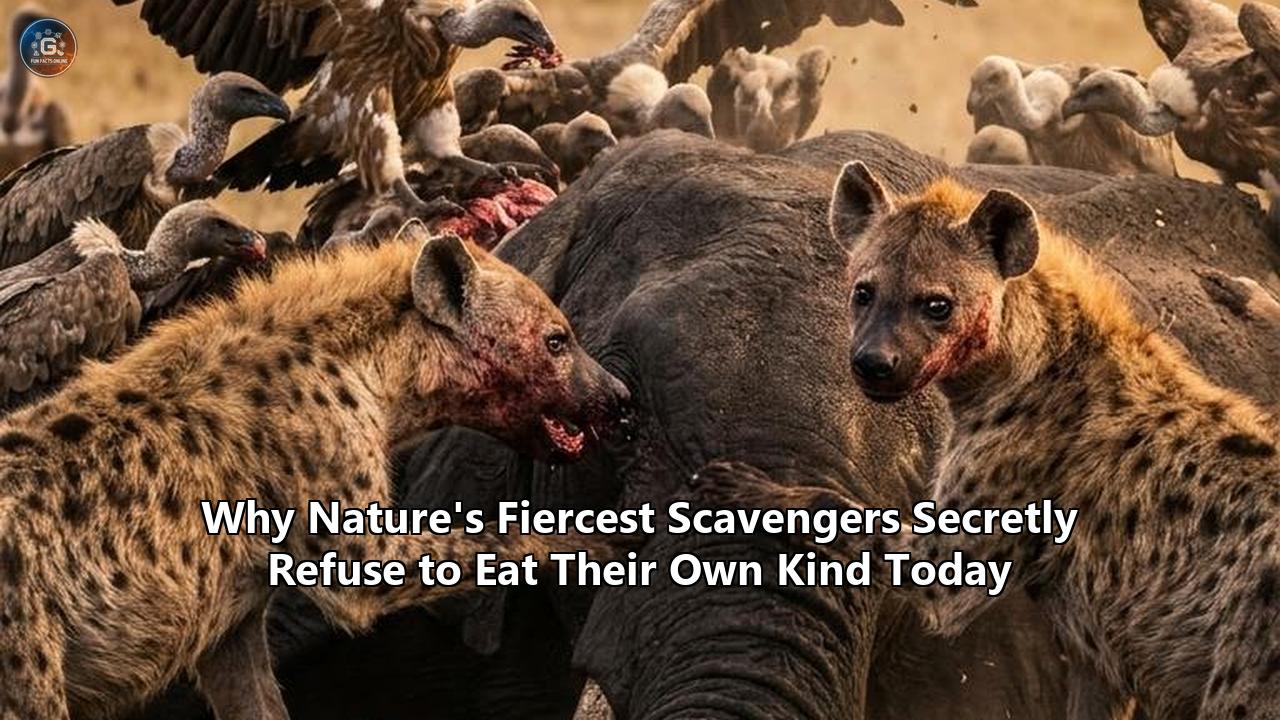
Across remote arid ridges in southern Spain, the pine scrub of the American Southeast, and the vast expanses of the southern African savannah, hundreds of motion-triggered field cameras have documented an unsettling pattern in the natural world: the kings of carrion are walking away from meals.
For decades, ecological doctrine held that obligate and facultative scavengers—from spotted hyenas and red foxes to coyotes and golden eagles—operated as biological vacuums. Armed with gastrointestinal systems capable of neutralizing anthrax, liquefying bone shards, and terminating lethal pathogens like botulism, these creatures were assumed to view biomass simply as fuel, regardless of where that fuel originated.
A wave of multi-continent field experiments and camera-trap assessments published across The Journal of Animal Ecology, Applied Animal Behaviour Science, and PLOS ONE has permanently unsettled that assumption. When ecologist Marcos Moleón of the University of Granada, alongside researchers Carlos Martínez-Carrasco, Carlos Muñoz-Lozano, and Adrián Colino-Barea, deployed monitored carcasses of both herbivores and carnivores into wild ecosystems, the divergence was swift and dramatic. Herbivore carcasses—such as mountain aoudads, white-tailed deer, and impala—were located within hours and stripped to the bone inside of two to three days by ravenous scavenger guilds.
When the exact same scavengers encountered a dead member of their own species or a phylogenetically close carnivore, their demeanor transformed entirely.
Coyotes approached dead coyotes, sniffed them, displayed signs of distress or aggression, and backed away. Red foxes paced nervously around deceased conspecifics for weeks, actively refusing to touch the meat. Spotted hyenas, known to demolish entire zebra skeletons in minutes, repeatedly circled dead clan rivals before leaving the bodies intact. Across hundreds of recorded field interactions, the conclusion has become inescapable: Nature’s fiercest carrion eaters harbor a pervasive, instinctual aversion to cannibalism.
This refusal, formally articulated in ecology as the "Carnivore Carrion Avoidance Hypothesis," reveals that dead predators and fellow scavengers are treated not as food, but as biological landmines. The emergence of this data has rewritten the fundamentals of scavenger animal behavior, proving that the food chain does not merely loop back on itself; it possesses a hard, genetically wired circuit breaker designed to save species from their own diseases.
The Biological Paradox: Ironclad Bellies with Rigid Boundaries
To understand the shock this behavior caused among wildlife biologists, one must first appreciate the evolutionary weaponry that defines apex scavengers.
Consider the spotted hyena (Crocuta crocuta). A hyena’s jaw can exert a bite force exceeding 9,000 newtons—enough to shatter the femur of a giraffe or splinter the horn of an African buffalo. Its gastric juices possess a pH balance hovering between 1.0 and 1.5, an environment acidic enough to dissolve heavy minerals, kill virulent parasitic cysts, and digest dense bone matrix down to white, powdered calcium droppings.
Avian scavengers, such as the griffon vulture (Gyps fulvus) and turkey vulture (Cathartes aura), operate with even more defensive chemistry. Their digestive tracts are internal sterilization chambers. The vulture stomach runs at near-zero pH levels, capable of destroying Bacillus anthracis (anthrax), Clostridium botulinum (the causative agent of botulism), and swine erysipelas. Their lower intestines are colonised by dense colonies of lethal anaerobic bacteria, specifically Clostridia and Fusobacteria, which actively wipe out incoming microbial invaders through intense competitive exclusion.
Yet despite these adaptations, when presented with the flesh of a fallen conspecific, these creatures step back.
┌────────────────────────────────────────────────────────┐
│             THE SCAVENGER CONSUMPTION MATRIX           │
├────────────────────────┬───────────────────────────────┤
│ Carcass Origin         │ Behavioral Response           │
├────────────────────────┼───────────────────────────────┤
│ Herbivore / Distant    │ Rapid detection (< 24 hrs)     │
│ Phylogeny              │ Immediate full-guild feeding  │
│ (Deer, Sheep, Zebra)   │ Stripped in 48–72 hours       │
├────────────────────────┼───────────────────────────────┤
│ Carnivore / Intraspecific│ Delayed detection/avoidance │
│ Guild                  │ Cautious pacing, marking only │
│ (Fox, Coyote, Hyena)   │ Persists 60–120+ days         │
│                        │ Abandoned to invertebrates    │
└────────────────────────┴───────────────────────────────┘
The biological explanation for this refusal rests on an asymmetry between physiological digestion and parasite evolution. When a vulture or hyena ingests an herbivore, it processes tissue from an animal separated from itself by hundreds of millions of years of evolutionary divergence. The bacteria and viruses that infect an impala or an aoudad are adapted specifically to breach the physiology of an ungulate. To an avian or carnivoran stomach, those specialized pathogens are simply raw proteins waiting to be denatured by corrosive hydrochloric acid.
Intraspecific carrion presents the exact opposite profile. If a red fox died of an infectious illness, the pathogens running through its bloodstream, liver, and brain are tailored to exploit red fox biology. Their surface antigens, surface-docking mechanisms, and immune evasion strategies have evolved specifically to conquer red fox defenses. For a live fox, eating that dead competitor bypasses every ecological filter, delivering a lethal dose of tailored pathogens directly into an ideal host.
The gastric acid that dissolves an herbivore’s parasites cannot guarantee protection against pathogens that specialize in bypassing the carnivore's exact cellular barriers. Consequently, natural selection has favored the emergence of "behavioral immunity"—an instinctive disgust that overrides hunger and prevents cannibalistic carrion feeding under all but the most catastrophic starvation conditions.
Who Is Affected: Shifting the Trophic Ledger
The refusal of carnivores to scavenge their own kind ripples throughout the ecosystem, altering life and death calculations across multiple tiers of biodiversity.
                    ┌────────────────────────┐
                    │ CONSPECIFIC CARCASS    │
                    │ (Avoided by Mammals)   │
                    └───────────┬────────────┘
                                │
        ┌───────────────────────┴───────────────────────┐
        ▼                                               ▼
┌────────────────────────┐                    ┌────────────────────────┐
│  MAMMALIAN CARNIVORES  │                    │      NECROBIOME        │
│  - Disease firebreak   │                    │  - Invertebrate feast  │
│  - Short-term calorie  │                    │  - Massive insect boom │
│    deficit             │                    │  - Altered soil pulse  │
└────────────────────────┘                    └────────────────────────┘
The Scavengers: Caloric Sacrifices for Evolutionary Insurance
For individual animals, the decision to leave a carcass untouched carries an immediate metabolic penalty. In harsh winters or blistering dry seasons, a 15-kilogram coyote carcass or an 8-kilogram fox carcass represents hundreds of thousands of calories. Yet studies tracking radio-collared scavengers in North America and Western Europe reveal that predators routinely pass by these intact meat packages, even when their body condition indices indicate moderate to severe caloric deficits.
The animals pay an upfront energetic cost to avoid long-term mortality. Evolutionary modeling conducted by Wayne M. Getz and Oliver C. Muellerklein at the University of California, Berkeley, in collaboration with Moleón’s team, showed that even a miniscule rate of parasite-induced mortality (less than 2%) is enough to select for complete cannibalism avoidance in a carnivore lineage. Natural selection ruthlessly penalizes the scavenger that feeds indiscriminately on its kin.
The Invertebrates: The Great Carrion Windfall
Because vertebrate scavengers abandon these carcasses, the primary beneficiaries are carrion-dwelling insects—the invertebrate necrobiome.
Under normal ecological conditions, an herbivore carcass is quickly monopolized by dominant vertebrates. Vultures, eagles, wolves, and wild boars tear off muscle tissue, consume internal organs, and crack open bones within hours. Invertebrate decomposers, such as blowflies (Calliphoridae), carrion beetles (Silphidae), and skin beetles (Dermestidae), must scramble to lay eggs and complete larval feeding cycles before the entire resource is ingested.
When a carnivore carcass drops, the vertebrate competition disappears. In a comparative field study conducted across the Sierra Espuña Regional Park in Murcia, Spain, research led by Carlos Muñoz-Lozano showed that carnivore carcasses sustained an insect community that was radically richer, more diverse, and significantly more stable than the insect assemblages found on herbivore carcasses.
Insects colonized the red fox carcasses through a long, multi-month ecological succession. Initial colonization was dominated by necrophagous blowflies (Lucilia sericata, Calliphora vicina), followed by predatory rove beetles (Staphylinidae) that feed on fly larvae, and finished weeks later by dermestid beetles and keratin-feeding moth larvae that broke down dried fur, skin, and cartilage.
The carnivore carcass functions as an uninterrupted nursery for invertebrate life. By stepping away from the dinner table, vertebrate predators preserve a seasonal reservoir for insect biodiversity that would otherwise be eradicated inside a scavenger’s stomach.
The Soil Microbiome: Long-Burning Necro-Islands
The avoidance of conspecific carrion profoundly changes soil chemistry. When a vertebrate scavenger guild consumes an herbivore, between 80% and 95% of the animal’s biomass is physically removed from that specific square meter of earth. It is metabolized, transported across miles of territory, and deposited in diffuse excrement across the landscape.
Conspecific carcasses, by contrast, become what soil scientists classify as persistent "Cadaver Decomposition Islands" (CDIs). Because vertebrate scavengers leave the tissue in place, the entire nutrient mass of the dead carnivore drains into the localized soil profile.
Recent field data tracked by soil ecologist Adrián Colino-Barea demonstrated that soils beneath slowly decaying red fox carcasses experienced profound, long-term biochemical alterations that differed markedly from the short-lived spikes seen beneath herbivore remains:
- Ammonium and Nitrate Pulses: Soil beneath intact carnivore carrion experienced an intense, prolonged ammonium ($NH_4^+$) saturation that lasted for more than five months, preventing typical bacterial nitrification until the carcass fully skeletonized.
- Electrical Conductivity: Soil salinity and electrical conductivity surged, creating localized "zones of inhibition" where plant seed germination was completely suppressed for an entire seasonal cycle.
- Fungal Proliferation: Slow-decomposing carnivore corpses nurtured specialised saprophytic fungal mats capable of processing dense lipid and collagen layers, restructuring the micro-arthropod and nematode communities in the immediate rhizospheric layer for years to come.
What Changes: Rewriting the Ecology of the Scavenger Guild
The realization that scavengers actively avoid their own kind has triggered three major shifts in modern ecological theory, upending textbook models that have stood for more than a century.
1. From Caloric Indiscrimination to Phylogenetic Disgust
Until recently, classical optimal foraging theory treated a gram of protein as fundamentally interchangeable with any other gram of protein, minus the energetic cost of securing it. Scavengers were modeled as opportunistic automatons whose dietary selections were governed strictly by availability, visual detection, and dominance hierarchies.
The documentation of cannibalism avoidance establishes that phylogenetic distance is a primary variable governing foraging decisions. An animal evaluates not just how much food a carcass provides, but what branch of the evolutionary tree that carcass occupies. Carrion is stratified:
- Low Risk (Distantly Related): Herbivores, ungulates, birds, and amphibians provide maximum safety. Pathogen transfer risks are minimal; digestion is rapid and near-total.
- Moderate Risk (Heterospecific Carnivores): Feeding across predatory families (e.g., a wolf eating a bobcat, or a buzzard eating a stoat) occurs occasionally, but carries measured delays. Parasite transmission is possible, yet partially dampened by inter-family immunological divergence.
- Lethal Risk (Conspecifics): Feeding on one's own species is an evolutionary taboo. The likelihood of transferring fatal, species-specific pathogens approaches unity.
This dynamic explains anomalies long observed by field rangers: a lone leopard will gladly scavenge a rotting Thomson's gazelle that has baked in the sun for four days, but will leave a freshly killed leopard carcass to decompose undisturbed.
2. The Decoupling of Sight and Scent: How Scavengers Read the Dead
The second major shift concerns sensory biology: how does a scavenger instantly know that a lump of decaying meat belongs to its own kind?
To answer this question, researchers with the Savannah River Ecology Laboratory in South Carolina constructed an exhaustive field trial involving 136 carcasses. Led by wildlife biologist James Beasley, researchers deployed intact coyotes (Canis latrans) alongside feral pigs (Sus scrofa), but introduced a critical experimental variable: an "altered" cohort where the skins, heads, paws, and distinctive phenotypic features of both coyotes and pigs were entirely removed.
If scavengers relied on visual recognition—spotting the fur, snout, or canine teeth of a fallen pack member—the skinned carcasses should have fooled them into feeding.
The experiment produced a definitive result: coyotes completely bypassed the skinned coyote meat. While they eagerly ate altered feral pig tissue, they treated the skinned conspecific tissue with identical revulsion as an intact body.
The animals were not reading the carcass with their eyes; they were reading it with their noses. Analysis of decaying tissue volatilomes shows that every animal group releases an olfactory fingerprint composed of unique balances of volatile organic compounds (VOCs)—including cadaverine, putrescine, dimethyl disulfide, and complex fatty acids. More critically, apex carnivores carry species-specific sebums, lipid-oxidation profiles, and glandular chemicals that linger in rotting tissue long after death.
Mammalian scavengers possess vomeronasal and olfactory receptors tuned precisely to detect these conspecific biochemical markers. The scent does not stimulate appetite; it triggers acute sensory aversion.
┌────────────────────────────────────────────────────────┐
│      SENSORY SCREENING: THE AVERSION CASCADE           │
├────────────────────────────────────────────────────────┤
│ 1. DETECTION: Volatile organic compounds (VOCs) drift  │
│    across kilometers. Scavenger locates the carcass.   │
├────────────────────────────────────────────────────────┤
│ 2. RECOGNITION: Olfactory receptors bind to species-   │
│    specific lipid-oxidation profiles & pheromones.    │
├────────────────────────────────────────────────────────┤
│ 3. TRIAGE:                                             │
│    • Conspecific Markers Detected ➔ Rejection circuit  │
│      fires; animal backs away or urine-marks.          │
│    • Heterospecific/Herbivore Markers ➔ Feeding starts; │
│      stomach prepares massive acid production.         │
└────────────────────────────────────────────────────────┘
3. The Re-evaluation of the "Delayed Feeding" Strategy
The third conceptual revision deals with delayed consumption. In historical camera trap studies, researchers occasionally recorded a red fox or jackal feeding on a dead member of its own species, leading early naturalists to claim that carnivores practice occasional cannibalism without penalty.
Modern telemetry and time-stamped video have revealed the true nature of this interaction: delayed scavenging.
When a fox encounters a dead fox, it almost never consumes the carcass while it is fresh. Instead, the body is left completely undisturbed for days, weeks, or sometimes months. During this delay, two critical survival barriers manifest:
- Tissue Mummification: Over time, desiccation, UV solar radiation, and microbial colonization deplete and denature the softer, water-rich muscular tissues where bacteria and encysted parasite larvae (Trichinella britovi) thrive.
- Starvation Pressure: The scavenger only returns to touch that carcass when ambient prey bases have collapsed so severely that the immediate threat of starving to death outweighs the statistical risk of acquiring a lethal infection.
Cannibalistic scavenging is not a regular feeding strategy; it is an act of desperate triage taken when the mathematical risk of starving reaches 100%.
Short-Term Consequences: Local Pathogen Traps and Guild Friction
In the near term, the refusal of vertebrate scavengers to consume conspecific carrion generates sharp ecological frictions that affect both wildlife management and disease transmission.
The Creation of Environmental Disease Reservoirs
When scavengers process an herbivore, they sanitize the habitat. An impala carcass hosting anthrax spores (Bacillus anthracis) is rendered dramatically less infectious if a flock of vultures and a clan of hyenas consume every trace of muscle, organ meat, and hide within six hours of death. The spores are broken down in acidic stomachs, preventing the bacteria from sporulating in the open air, entering the soil, and persisting in vegetation for the next fifty years.
When an apex carnivore dies of a deadly infection, this natural sterilization service shuts down.
Because other predators refuse to touch the body, the carcass remains in the open environment for an extended period. If a wolf dies of canine distemper or a coyote dies of parvovirus, the intact body sits exposed to the elements. Insects crawl through the infected fluids, birds step in the liquefying tissues, and rainfall washes infectious viral particles directly into localized puddles and groundwater networks.
The conspecific avoidance mechanism—while protective for the individual scavenger—converts the dead carnivore into an open-air biological hazard for surrounding wildlife. The carcass becomes a localized pathogen reservoir precisely because the ecosystem's cleaners refuse to touch it.
┌───────────────────────────────────────────────────────────────┐
│              EPIDEMIOLOGICAL TRANSMISSION VECTORS             │
├───────────────────────────────┬───────────────────────────────┤
│ Immediate Consumption         │ Avoidance & Lingering         │
│ (Herbivore Carrion Model)     │ (Conspecific Carrion Model)   │
├───────────────────────────────┼───────────────────────────────┤
│ • Tissue vanished in hours    │ • Tissue sits for 60+ days    │
│ • Pathogens destroyed in gut  │ • Rain leaches fluid to soils │
│ • Air transmission stopped    │ • Flies mechanically vector   │
│ • Soil remains clean          │ • Ground becomes hot spot     │
└───────────────────────────────┴───────────────────────────────┘
Alterations in Mesopredator Competition
The presence of a lingering carnivore carcass creates behavioral dead-zones across the landscape. Subordinate mesopredators navigate ecosystems by constantly monitoring the territories of their apex competitors. When a dominant predator dies, its carcass should theoretically signal an open opportunity.
Instead, camera trap deployments reveal that subordinate carnivores approach dead apex predators with elevated stress postures. A red fox approaching the carcass of an Eurasian lynx (Lynx lynx) or a coyote approaching a grey wolf (Canis lupus) kill exhibits raised hackles, scanning behaviors, and flight readiness.
Rather than exploiting the massive caloric reward, the scavenger views the dead apex predator as an indicator of extreme territorial danger. The carcass acts as a behavioral scarecrow, exerting a lingering landscape of fear that suppresses mesopredator foraging activity in the immediate vicinity for weeks after the dominant animal’s heart has stopped beating.
Long-Term Consequences: Prions, Parasites, and Ecosystem Collapse
Examined across evolutionary and continental timescales, this strict refusal to consume conspecifics explains how species survive the most terrifying pathogens in existence—and what happens when humans force those boundaries to collapse.
The Evolutionary Shield Against Prion Pandemics
No threat illustrates the evolutionary necessity of cannibalism avoidance quite like prion diseases—transmissible spongiform encephalopathies (TSEs).
Prions are not viruses or bacteria; they are misfolded, pathologically stable conformers of native cellular prion proteins. They possess no genetic material, cannot be neutralized by the immune system, and are almost impervious to traditional sterilization. They withstand dry heat temperatures exceeding 600°C, exposure to heavy ionizing radiation, and immersion in concentrated hydrochloric acid.
                                  PRION TRANSMISSION RISK

      [ Conspecific Tissue Ingestion ] ──────► [ Direct Cellular Compatibility ]
                    │                                            │
                    ▼                                            ▼
      [ High Intraspecific Consumption ] ────► [ Exponential Epizootic Cascade ]
                    │                                            │
                    ▼                                            ▼
           [ Kuru / BSE Collapse ]                     [ Population Extinction ]
When an animal consumes the neural or lymph tissues of an infected conspecific, the transmission rate of prion diseases reaches catastrophic efficiency. Because the misfolded protein shares an identical or near-identical amino acid sequence with the host's own cellular proteins, it induces immediate structural misfolding without encountering any species-barrier resistance.
The human species learned this lesson through the tragic tragedy of Kuru among the Fore people of Papua New Guinea, where ritualistic mortuary cannibalism caused a sweeping fatal neurodegenerative epidemic. The modern agricultural world witnessed it during the Bovine Spongiform Encephalopathy (BSE, or "Mad Cow Disease") crisis in the United Kingdom during the late 20th century, which was sparked when livestock feed was deliberately formulated using processed meat-and-bone meal derived from slaughtered cattle.
If apex scavengers practiced habitual conspecific scavenging, every carnivore guild on Earth would have been vulnerable to terminal prion cascades. The hyper-potent gastric juices of a spotted hyena or a red fox, so effective against anthrax and rabies, have zero effect on infectious prions. The only defense a carnivore possesses against prions, and against complex multi-host nematodes like Trichinella spiralis, is behavioral immunity: the refusal to take the first bite.
Species that developed an unshakeable instinctual disgust survived; species that viewed their dead brothers as an easy meal were pruned from the evolutionary tree by their own pathogens.
The Human-Induced Breakdown: When Ecosystems Lose Their Filters
While this evolutionary boundary has held for millions of years, human interference is driving profound disruptions in scavenger animal behavior, breaking the ecological firewalls that prevent widespread disease cross-overs.
Three distinct anthropogenic pressures are testing this ancient behavioral protection:
1. Urbanization and Anthropogenic Food Subsidies
In urban and peri-urban interfaces worldwide, human waste has flooded ecosystems with easily accessible, energy-dense trash. Raccoons in North America, red foxes in Europe, and feral dogs throughout Asia and Africa are increasingly congregating around concentrated landfills, open dumpsters, and industrial farms.
This human food subsidy does two things: it causes predator population densities to skyrocket far beyond the natural carrying capacity of the land, and it severely alters baseline foraging selectivity.
In hyper-dense urban populations, the sheer frequency of contact with conspecific carrion rises exponentially. Starvation stresses caused by winter freezes or sudden disruptions in human food waste force urban mesoscavengers to breach the cannibalism barrier.
When urban red foxes or stray canines begin feeding on conspecifics, ancient parasitic cycles that were once rare spikes suddenly evolve into persistent endemics. The prevalence of Sarcoptes scabiei (the mite causing sarcoptic mange), canine parvovirus, and Trichinella rises drastically in suburban carnivore populations, dramatically increasing the risk of zoonotic spillover into domestic dogs and cats.
2. The Poisoning of the True Cleaners
The global crisis facing obligate scavengers—specifically vultures—has removed the primary actors who can safely consume carrion without triggering intra-mammalian contagion.
Over the last three decades, vulture populations have faced near-total collapse across vast swathes of the globe. In South Asia, vulture numbers dropped by over 97% to 99% following the agricultural use of diclofenac, a non-steroidal anti-inflammatory drug administered to cattle that proves fatal to vultures when they consume livestock remains. Across Africa, poachers and pastoralists regularly lace carcasses with carbamate pesticides to eliminate apex predators, killing hundreds of vultures in single poisoning incidents.
A landmark global analysis led by Rodolfo Dirzo of Stanford University, evaluating 1,376 vertebrate species known to eat carrion, documented that more than one-third of the planet’s scavenger species are threatened or sharply declining. Obligate scavengers are the hardest hit: 50% of the world's 17 obligate scavenger species are now threatened with extinction.
           THE VICIOUS CYCLE OF SCAVENGER COLLAPSE

               [ Vulture Populations Plunge ]
                             │
                             ▼
               [ Carcasses Linger in Habitat ]
                             │
                             ▼
            [ Mesoscavengers (Dogs/Rats) Surge ]
                             │
                             ▼
         [ Mammalian Cannibalism & Contact Rises ]
                             │
                             ▼
            [ Zoonotic Epizootics Leap to Humans ]
When vultures are removed from an ecosystem, the sky-high sanitation crew disappears. Herbivore carcasses linger, and the void is filled not by clean-eating birds, but by terrestrial mesoscavengers: feral dogs, jackals, rats, and wild boars.
Unlike vultures, these mammalian mesoscavengers do not possess gastrointestinal tracts capable of destroying high-tier pathogens. Furthermore, because these mammals belong to the same taxonomic orders as the livestock and pets that live directly alongside human populations, their scavenging habits create direct transmission bridges for rabies, leptospirosis, and brucellosis.
In India alone, the decline of vultures directly triggered a population explosion of millions of feral dogs feeding indiscriminately on livestock carcases, resulting in an estimated 38.5 million additional dog bites and tens of thousands of fatal human rabies infections between 1992 and 2006.
3. Carcass Management and Sanitary Mandates
Modern human legislation has historically misunderstood carnivore carrion mechanics, occasionally triggering deep conservation crises.
Following the European Union’s BSE crisis in the late 1990s, stringent sanitary mandates (such as Regulation EC 1774/2002) forced farmers to immediately incinerate and remove all livestock carcasses from agricultural lands. This abruptly eliminated hundreds of thousands of tons of herbivore carrion that had sustained Europe’s apex scavengers for millennia.
Starving raptors and carnivores were left with depleted food webs. In response, larger predators were forced into riskier foraging behaviors, increasing predation on live livestock and radically altering the dynamics of scavenger animal behavior around wild carcasses.
Only after years of dedicated lobbying by conservation biologists did the European Commission adopt new directives allowing the controlled reintroduction of carrion feeding stations—known as "vulture restaurants"—restoring the essential nutritional base that allows scavengers to maintain their natural feeding selectivity.
What to Watch Next: The Unresolved Frontiers of Carrion Science
The revelation that scavengers deliberately enforce boundaries against eating their own kind has opened critical new avenues for wildlife conservation, forensic ecology, and epidemiologic modeling. Over the coming years, field biologists are turning their attention to several urgent questions:
- Olfactory Chemistry and Artificial Repellents: Now that scientists understand that scavengers use specific volatile organic compounds to identify and avoid conspecific corpses, biochemists are working to synthesize these exact chemical bouquets. If wildlife managers can identify the specific volatile compounds that trigger immediate disgust in coyotes, wolves, or foxes, these benign odorants could be deployed to protect livestock herds, deter predators from highways, or keep scavengers away from poisoned areas without firing a shot.
- Climate Change and Thermal Devaluation: How will skyrocketing global temperatures disrupt behavioral immunity? As heat accelerates microbial fermentation, the volatile profile of a carcass alters rapidly. Ecologists are deploying thermal imaging and chemical sensors to determine whether extreme heat waves accelerate the breakdown of conspecific olfactory warnings, inadvertently causing starving scavengers to ingest deadly, heat-degraded conspecific tissues they would otherwise recognize and reject.
- The Tasmanian Devil Precedent: The wildlife world is watching whether conspecific avoidance can be reinforced in populations where it has dangerously degraded. In Australia, the Tasmanian devil (Sarcophilus harrisii) was pushed to the edge of extinction not by scavenging, but by an aggressive biting behavior during feeding and mating that transfers a contagious, fatal clone of cancer cells: Devil Facial Tumor Disease (DFTD). Researchers are studying whether surviving devils are developing novel olfactory avoidance strategies that mirror the carnivore carrion avoidance seen in European and American ecosystems.
- High-Resolution Necrobiome Monitoring: New cross-disciplinary programs are combining motion-activated field networks, real-time drone hyperspectral imaging, and environmental DNA (eDNA) metabarcoding of soils beneath long-lingering carnivore carcasses. These initiatives aim to map out the entire sub-surface microbial succession triggered by conspecific avoidance, tracing how the death of a single predator reorganizes the unseen fungal and insect universe around it.
The picture emerging from the world’s wild places is far more sophisticated than the simple image of a hungry scavenger tearing into meat. Nature’s most specialized consumers do not just possess stomachs of steel; they are guided by an ancient, chemical compass honed over millions of years of evolutionary trial and fatal error.
By walking away from their dead, these creatures are not showing weakness, confusion, or hesitation. They are executing one of the most vital survival algorithms on Earth: letting the dead rest, so the species may live.
Reference:
- https://journals.plos.org/plosone/article/file?id=10.1371/journal.pone.0221890&type=printable
- https://digitum.um.es/items/bc3ef353-e599-4db1-9981-1610b45b63ea
- https://pubmed.ncbi.nlm.nih.gov/28609555/
- https://pmc.ncbi.nlm.nih.gov/articles/PMC6715269/
- https://animalecologyinfocus.com/2026/02/23/when-death-hits-the-ground-how-carnivore-and-herbivore-carcasses-shape-mediterranean-soils/
- https://eastfoundation.net/wp-content/uploads/2024/09/sleivers-2023.pdf
- https://pmc.ncbi.nlm.nih.gov/articles/PMC9640519/
- https://www.smithsonianmag.com/smart-news/scavenger-animals-are-in-trouble-and-that-could-spell-bad-news-for-human-health-180986845/
- https://blog.londolozi.com/2022/05/02/hyenas-vs-vultures-who-are-the-better-scavengers/
- https://pmc.ncbi.nlm.nih.gov/articles/PMC6715269/
- https://www.frontiersin.org/journals/ecology-and-evolution/articles/10.3389/fevo.2024.1481290/full
- https://www.facebook.com/groups/2118472764926881/posts/9292548904185862/
- https://www.earth.com/animals/scavenger-decline-is-a-threat-to-ecosystems-and-human-health/
- https://www.pnas.org/doi/10.1073/pnas.2605120123
- https://news.mongabay.com/short-article/as-large-scavengers-decline-disease-risk-soars-study-finds/
- https://www.silvansafari.com/blog/why-hyenas-and-vultures-matter