British Columbia marine researchers examining benthic samples collected off the Pacific Northwest coast recently brought a miniature creature under their laboratory lenses and watched it perform an unexpected mechanical feat. Clamped in a specimen dish, a tiny, newly identified sea spider curled a pair of specialized limbs around its own walking legs, raking a series of microscopic, comb-like teeth along its cuticle with surgical precision.
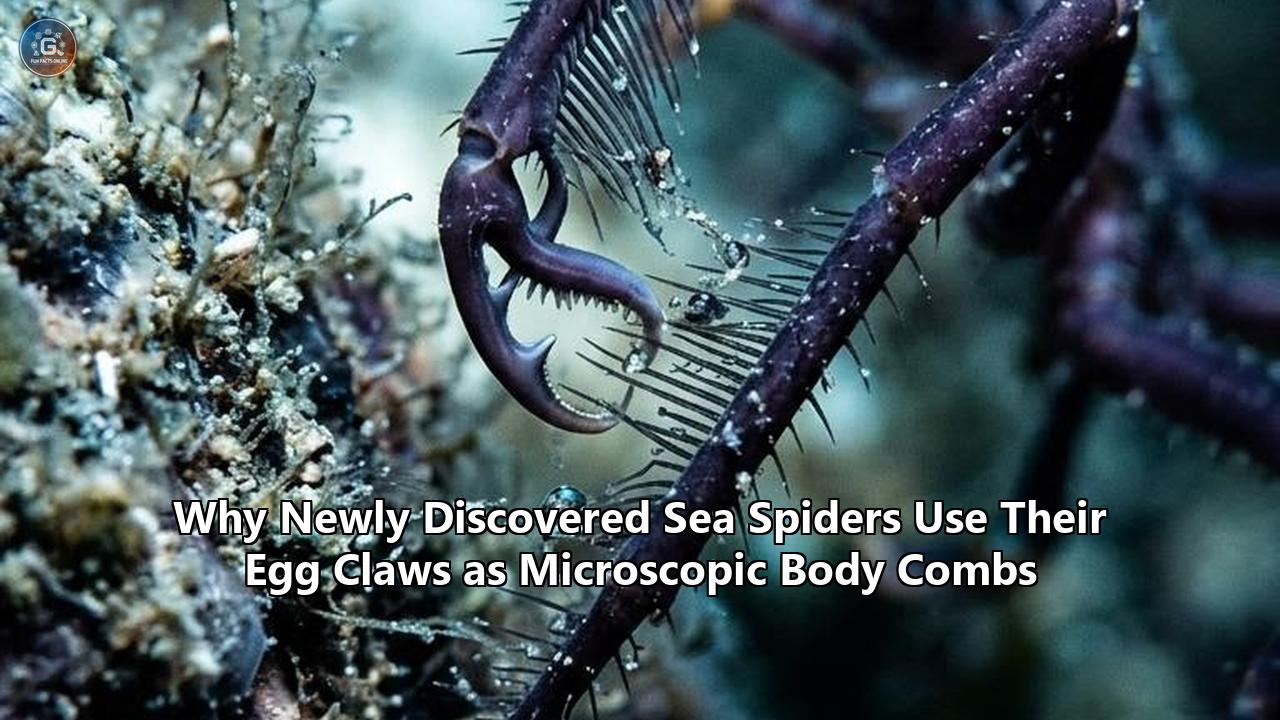
The limbs performing this deep clean were not walking legs, nor were they ordinary feeding mouthparts. They were the creature’s ovigers—appendages historically classified almost exclusively as brood-carrying structures, often colloquially termed sea spider egg claws.
The observation, detailed in a study published in Organisms Diversity & Evolution by University of British Columbia (UBC) zoologist Cormac Toler-Scott and colleagues, provides a direct look at how a marine invertebrate repurposes reproductive anatomy into an essential life-support apparatus. The researchers formally described two new species from the Salish Sea—the dynamic network of coastal waterways between southwestern British Columbia and Washington state. The discovery marks the first formal taxonomic descriptions of new sea spider species in this marine basin in nearly a century.
The two species could hardly look—or behave—more differently. The first, named Callipallene pilosuspedes (Latin for "hairy feet"), sports bright red eyes, legs lined with long, curved spines, and a three-lipped, tendril-fringed triangular mouth resembling a miniature Sarlacc pit. It is also the master groomer, possessing hyper-dexterous ovigers that it uses as microscopic body combs.
The second species, Tanystylum kiixin—named after the ancient Huu-ay-aht First Nation village site Kiix-in near Bamfield, British Columbia—tells the opposite ecological story. Its egg claws are stunted, reduced, and comparatively rigid. Lacking the anatomical dexterity to scrape its limbs clean, Tanystylum kiixin was recovered caked in marine sediment, detritus, and microscopic hitchhikers.
"Its egg-carrying limbs are much smaller and less dexterous, leaving the animal unable to groom itself effectively," Toler-Scott observed. As a result, the team found microscopic parasites living on the sea spider, creating what Toler-Scott described as "an ecosystem within an ecosystem within an ecosystem".
The divergence between these two Pacific neighbors solves a biological mystery that extends far beyond casual hygiene. In the marine realm, cleanliness is not an aesthetic preference; it is a strict physiological requirement for survival. Unpacking why Callipallene pilosuspedes combs itself—and what happens to Tanystylum kiixin when it cannot—reveals an evolutionary interplay between respiration, parental care, biomechanics, and parasite defense that dates back roughly 500 million years.
           ANATOMY OF A PYCNOGONID GROOMING APPARATUS

              [ Cephalon / Head ]
                     │
         ┌───────────┴───────────┐
         ▼                       ▼
    [ Proboscis ]        [ Ovigers / Egg Claws ]
    (Feeding Siphon)             │
                         [ Podomeres 1 - 6 ]
                         (Articulated Shaft)
                                 │
                         [ Podomeres 7 - 10: Strigilis ]
                         (Curved Functional Terminal)
                                 │
                         [ Microscopic Denticles ]
                         (Serrated Comb Spines)
                                 │
                                 ▼
                    [ Sweeps Walking Legs ]
                    • Clears Settling Diatoms
                    • Strips Parasite Larvae
                    • Preserves Cuticular Respiration
The Microscopic Architecture of the Strigil
To understand how an egg-carrying limb functions as a body comb, one must look at the mechanical architecture of the oviger under high-magnification scanning electron and light microscopy.
Pycnogonids (class Pycnogonida), commonly called sea spiders, are marine chelicerates distantly related to terrestrial arachnids and horseshoe crabs. Their bodies are dramatically reduced, consisting of little more than a segmented head (cephalon), a narrow central trunk, and an insignificant stub of an abdomen. Radiating outward from this skeletal core are four to six pairs of elongated walking legs, which account for the vast majority of the animal's mass and volume.
Suspended immediately beneath the cephalon, forward of the first walking legs, sits the pair of ovigers. In general pycnogonid morphology, an oviger consists of up to ten individual skeletal segments, known as podomeres. In Callipallene pilosuspedes, these segments form a flexible whip that can bend at extreme angles.
The primary action occurs at the far distal end of the appendage. Podomeres seven through ten curve inward into a specialized terminal arch known to invertebrate morphologists as the strigilis.
The underside of each segment in the strigilis is lined with a row of specialized cuticle outgrowths called denticulate spines. These are not simple hairs or passive bristles. Under magnification, each spine reveals an intricate shape resembling a tiny oak leaf, a miniature comb, or a serrated saw blade, flanked by minute lateral teeth measuring fractions of a micrometer in width.
  TYPICAL STRIGILIS COMB SPINE (DENTICULATE STRUCTURE)

                 /\  <-- Terminal Tooth Point
               /    \
      Tooth -> | () |
               |    | <- Lateral Serration
      Tooth -> \    /
                \  /
                 ||  <- Flexible Basal Socket
              ════════  <- Epicuticle Surface (Podomere)
When Callipallene pilosuspedes grooms, it executes a stereotypic sequence of movements:
- Flexion and Anchoring: The base of the oviger rotates outward, arching backward until the strigilis can wrap around the base (coxa) of an adjacent walking leg.
- Looping: The distal four segments curl completely around the cylindrical circumference of the leg, creating a snug collar of micro-teeth.
- Distal Sweeping: Internal flexor muscles draw the strigilis down the entire length of the limb, dragging the serrated spines across the outer cuticle.
- Mechanical Shearing: As the comb glides over the leg surface, the micro-teeth act as tiny chisels and scrapers, severing the attachment holdfasts of settling micro-organisms and dragging accumulated marine silt out toward the claws at the leg tip.
The clearance tolerances of these combs are microscopic. The spacing between the lateral serrations on the spines corresponds precisely to the physical scale of marine diatoms, larval encystments, and filamentous bacteria. By running this mechanical comb over its legs, the animal shears away biological films before they can establish mature colonies.
Suffocating in Place: Why Cuticle Hygiene Means Survival
Why would an animal invest significant metabolic energy and morphological real estate into specialized body-grooming combs? For terrestrial animals, grooming often serves social functions, parasite removal, or plumage conditioning. For sea spiders, it is directly tied to their method of respiration.
Pycnogonids are unique among complex marine arthropods because they possess no gills, no lungs, no tracheae, and no specialized respiratory organs whatsoever. They do not have dedicated branchial chambers like crabs, nor do they possess the book lungs or tracheal tubes found in land spiders and scorpions.
Instead, sea spiders breathe entirely via passive diffusion across their skin—specifically through their thin, chitinous exoskeleton.
               THE MECHANICS OF CUTICULAR GAS EXCHANGE

      Dissolved Oxygen in Ambient Seawater [High pO2]
                       │  │  │  │  │
                       ▼  ▼  ▼  ▼  ▼
   ═══════════════════════════════════════════════════ Epicuticle
   ─────────────────────────────────────────────────── Exocuticle
   ═══════════════════════════════════════════════════ Endocuticle
                       │  │  │  │  │
                       ▼  ▼  ▼  ▼  ▼
            Hemolymph in Circulating Cavity [Low pO2]
                       ▲           ▲
                       │           │
          [ Peristaltic Gut Contractions Pump Hemolymph ]
Because their bodies are essentially all limbs, their major organ systems cannot fit inside their miniature central trunks. Long lateral branches of the animal's midgut—known as digestive caeca or diverticula—extend down the entire length of their walking legs, reaching all the way to the penultimate limb segments. The gonads are likewise housed inside the leg cavities rather than in the abdomen.
In landmark physiological work conducted by ocean researchers, including H. Arthur Woods and Shulamit Lane, scientists discovered that sea spiders move oxygen through their bodies using an unusual mechanism: gut peristalsis. The muscular walls of their intestines contract in sweeping waves that travel back and forth inside the legs. These contractions do not simply churn food; they physically displace the surrounding hemolymph (the arthropod equivalent of blood), driving circulation throughout the appendages and trunk in lieu of a powerful localized heart.
Oxygen diffuses from the ambient seawater directly across the cuticular layers of the legs into the hemolymph, which is then propelled through the limbs by the undulating digestive tract.
This physiological architecture makes sea spiders uniquely vulnerable to a common marine phenomenon: biofouling, or epibiosis.
In coastal oceans, every submerged, non-shedding surface is quickly targeted by colonizers. Within minutes of immersion, a dissolved organic conditioning film forms on exposed surfaces. Within hours, free-floating bacteria attach themselves. Within days, this film is settled by:
- Single-celled photosynthetic diatoms that secrete sticky mucilage pads.
- Sessile peritrich ciliates (such as Zoothamnium and Vorticella) that build rooted stalks.
- Spores of macroalgae and creeping stolons of hydroids and bryozoans.
- Microscopic parasitic larvae seeking a stable biological substrate.
For a heavily calcified crab with internal gills protected inside a sub-branchial cavity, an external layer of algae or barnacles is often a harmless inconvenience or even useful camouflage. For a sea spider, a coat of biological growth is a physical barrier to respiration.
The rate of oxygen diffusion across a biological membrane is governed by Fick’s First Law:
$$J = -D \frac{\Delta C}{\Delta x}$$
Where $J$ represents the diffusion flux of oxygen, $D$ is the diffusion coefficient of the gas through the medium, $\Delta C$ is the oxygen concentration gradient between the open seawater and the internal hemolymph, and $\Delta x$ is the thickness of the barrier.
When an epibiotic biofilm forms over the sea spider’s cuticle, it alters these variables in dangerous ways:
- Increasing the Barrier Thickness ($\Delta x$): Even a microbial and diatom layer measuring only 20 to 50 micrometers thick can double or triple the effective diffusion distance through which dissolved oxygen molecules must travel before reaching the epicuticle.
- Depleting the Concentration Gradient ($\Delta C$): Living biofilms consume oxygen. Heterotrophic bacteria and settling micro-fauna respire continuously, creating an oxygen-depleted boundary layer directly adjacent to the skin. During nighttime hours, when photosynthetic diatoms cease oxygen production and switch to net cellular respiration, the oxygen tension at the cuticle surface plummets.
- Disrupting the Hydrodynamic Boundary Layer: Sea spiders rely on ambient water currents and their own slow walking motions to replenish the water layer surrounding their legs. Epibiotic growth introduces micro-scale surface roughness that thickens the stagnant boundary layer of water clinging to the animal, slowing passive gas exchange.
The mechanical action of sea spider egg claws prevents the accumulation of this suffocating blanket. By methodically dragging their strigilis combs across the epicuticle, species like Callipallene pilosuspedes strip away settling spores, break up bacterial mats, and keep the gas-exchange surface clean. In sea spiders, grooming is breathing.
A Tale of Two Spiders: The Clean Hunter vs. The Parasite-Ridden Outpost
The contrast between the two species documented by Toler-Scott’s team off the British Columbia coast provides a natural experiment on the importance of oviger functionality. Both animals live in similar marine waters, yet their morphological designs reflect opposing strategies for dealing with environmental biofouling.
┌──────────────────────────────────────┬──────────────────────────────────────┐
│     Callipallene pilosuspedes        │          Tanystylum kiixin           │
├──────────────────────────────────────┼──────────────────────────────────────┤
│ • 10-segmented, elongated ovigers    │ • Reduced, compact, stunted ovigers  │
│ • Highly articulated, dexterous      │ • Limited range of motion            │
│ • Fully armed strigilis combs        │ • Reduced, blunt, or absent denticles│
│ • Active, predatory grooming habit   │ • Sedentary, cryptic hydroid dweller │
│ • Clean, polished cuticular surface  │ • Encrusted in debris and epibionts  │
│ • Free of hyper-parasitic loads      │ • Hosts micro-parasites & detritus   │
└──────────────────────────────────────┴──────────────────────────────────────┘
Callipallene pilosuspedes: The Clean Machine
Collected from shallow subtidal waters down to 18 meters depth near Vancouver and Quadra Island, Callipallene pilosuspedes is built for active movement. Its Latin name highlights the long, curved spines projecting from its walking legs—structures thought to function both as sensory mechanoreceptors and as physical deterrents against small benthic predators.
Its feeding apparatus is equally active. Rather than relying on a long, passive straw, it possesses a short, muscular proboscis fronted by sharp chelifores (pincer-like claws). The mouth itself is triangular, divided into three movable lips rimmed with sensory tendrils. This anatomy allows it to seize hydroid polyps, hold them in place, and suck down their tissue juices.
Because Callipallene pilosuspedes operates as an active suctorial predator, it requires a high metabolic rate relative to its size. Its ovigers are proportionally long, comprising ten distinct segments that fold like an articulated mechanical crane. Under the microscope, researchers observed that the creature can reach virtually every part of its body, including the dorsal surfaces of its walking limbs.
The result of this grooming ability was evident in the physical condition of the recovered specimen: its cuticle was clean, showing clear integument free of microbial mats, fungal hyphae, or protozoan stalks.
         CALLIPALLENE PILOSUSPEDES GROOMING ACTION

             [ Cephalon ]
                 │
           (Oviger Base)
                 │ \
                 │  \  <-- Flexible Joints (Podomeres 1-6)
                 │   \
                 │    [ Strigilis Loops Around Walking Leg ]
                 │         │
                 │      (====) <- Leg Segment (Femur/Tibia)
                 │         │
                 │    [ Comb Spines Scrape Epibionts ]
                 │         │
                 ▼         ▼
             (Clean Cuticle Surface Preserves Oxygen Diffusion)
Tanystylum kiixin: The Mobile Reef
In contrast, Tanystylum kiixin, discovered in samples collected near Bamfield on Vancouver Island's rugged outer coast, has taken an entirely different evolutionary path.
Tanystylum is a genus recognized for anatomical reduction. While typical sea spiders have elongated, spread-eagled bodies, Tanystylum kiixin has a compact, circular trunk where the bases of the walking legs are crowded tightly together. Its ovigers are significantly smaller, shorter, and consist of fewer functional joints than those of Callipallene.Most critically, its ovigers lack the length, articulation, and fine denticulate comb geometry required to circle its walking limbs. It simply cannot reach its own legs to groom them.
The biological consequence is visible on its body. When Toler-Scott’s team placed Tanystylum kiixin under high magnification, the animal's cuticle was obscured beneath a layer of trapped silt, flocculent organic debris, and thriving micro-organisms. Microscopic colonial ciliates sprouted from its joints, diatoms blanketed its dorsal plates, and tiny parasitic organisms clung to its skin.
This specimen lived as an obligate associate of Plumularia setacea, a delicate, feather-like hydroid that forms dense colonies on rocky subtidal reefs. Rather than roaming in search of meals, Tanystylum kiixin nests directly among the stinging plumes of its host, feeding on hydroid tissue while remaining largely stationary.
This sedentary, cryptic lifestyle explains how it survives despite being covered in fouling organisms:
- Reduced Metabolic Oxygen Demand: By moving rarely and sheltering within a host colony, Tanystylum kiixin operates at a fraction of the metabolic rate of an active predator like Callipallene pilosuspedes. It simply requires less oxygen per hour, meaning it can tolerate a lower diffusion flux through its encrusted skin.
- Hydrodynamic Camouflage: The dirt, debris, and epibionts covering its cuticle blur its physical silhouette, making it nearly indistinguishable from the detritus-laden branches of the Plumularia hydroid colonies where it lives.
- Host Boundary Dynamics: The ambient water movement driven by waves sweeping through hydroid fronds helps push oxygenated water through the animal's fouling layer, partially compensating for its inability to clean its own cuticle.
Yet this trade-off comes with severe costs. By relinquishing its grooming tools, Tanystylum kiixin has left its body open to true parasitism. Toler-Scott noted that the microscopic hitchhikers found on the specimens were not merely harmless commensal travelers using the spider as mobile real estate; some were actively tapping into the spider's hemolymph, creating a nested parasitic hierarchy where a sea spider feeding parasitically on a hydroid was simultaneously being fed upon by smaller internal and external parasites.
The 500-Million-Year Enigma: Grooming Brush or Nursery Cradle?
The dual role of the oviger points to a classic evolutionary puzzle: which function came first?
In male sea spiders across nearly all known families, the ovigers serve an essential reproductive purpose: paternal brood care. Male-only parental care is exceedingly rare in the animal kingdom, occurring in less than one percent of animal species, yet it is nearly universal among pycnogonids.
                 PYCNOGONID REPRODUCTIVE CYCLE

       FEMALE                            MALE
   Ovaries in Legs                 Cement Glands in Legs
         │                                   │
         ▼                                   ▼
   Eggs released via                 Collects eggs using
   Femoral Gonopores                   Ovigers / Egg Claws
         │                                   │
         └───────────────┬───────────────────┘
                         ▼
             [ Male Fertilizes Eggs ]
                         │
                         ▼
        [ Dabs with Secreted Leg Cement ]
                         │
                         ▼
         [ Glues Clutches onto His Ovigers ]
                         │
                         ▼
        [ Carries & Cleans Developing Embryos ]
The reproductive choreography of sea spiders is unusual:
- Internal Egg Maturation: Female sea spiders do not produce eggs in a central body cavity. Because their bodies are too small, their ovaries run along the interior of their walking legs. As the breeding season approaches, large developing eggs become visible through the semi-translucent cuticle of the female’s femora (thigh segments).
- Spawning Alignment: During mating, the male climbs onto the female’s back or positions himself venter-to-venter beneath her. The female releases mature eggs through dedicated reproductive openings, known as gonopores, located on the undersides of her leg joints.
- Collection and Cementation: As the eggs emerge, the male uses his ovigers to gather them. He secretes an adhesive cement compound from specialized glands located inside his own walking legs. Dabbing this glue over the harvested clutch, he wraps his ovigers around the mass, sticking dozens, hundreds, or even thousands of eggs securely to his appendages in spherical balls or bracelets.
- Paternal Gestation: The male carries these developing egg masses for weeks or months, through embryonic development, until they hatch into protonymphon larvae. In some families, the young continue to cling to their father's ovigers long after hatching.
For centuries, naturalists assumed that these limbs were purely reproductive adaptations, leading to their anatomical name: oviger, derived from the Latin roots ovum (egg) and gerere (to carry).
Yet females of many species—including Callipallene pilosuspedes—also possess fully articulated, denticle-armed ovigers, despite never carrying egg clutches. Furthermore, even in males carrying heavy egg masses, the distal strigilis segments remain free, capable of flexing and reaching outward.
This anatomical distribution raises a fundamental question: did sea spider egg claws evolve primarily to carry and protect eggs, or were they originally grooming appendages that were subsequently co-opted for paternal duty?
               TWO COMPETING EVOLUTIONARY HYPOTHESES

   HYPOTHESIS A: Grooming First (Exaptation for Parental Care)

   Ancestral Walking Leg
           │
           ▼
   Repurposed into Cephalic Grooming Limb (Strigilis Comb)
   [Function: Prevents Biofouling & Maintains Cuticle Diffusion]
           │
           ▼
   Male Co-opts Grooming Appendage to Scoop Up Sticky Eggs
   [Function: Brood Carrying & Embryo Aeration Added]

   ─────────────────────────────────────────────────────────────

   HYPOTHESIS B: Parenting First (Brood Care Preceded Grooming)

   Ancestral Male Appendage
           │
           ▼
   Evolves Exclusively for Brood Attachment (Cementing Eggs)
           │
           ▼
   Evolves Micro-Spines to Comb & Oxygenate Egg Masses
   [Function: Cleans Embryos, Prevents Clutch Fungal Infection]
           │
           ▼
   Comb Spines Later Extended to Clean Adult Legs & Adopted by Females
The Evidence from Deep Time
Pycnogonids are among the oldest surviving arthropod lineages on Earth, appearing in the fossil record during the Cambrian Period, over 500 million years ago. In exceptional fossil deposits, such as the Silurian Herefordshire Lagerstätte of England (dating to approximately 425 million years ago), paleontologists discovered Haliestes dasos, a sea spider preserved in volcanic ash.
Three-dimensional digital reconstructions of Haliestes dasos revealed fully formed ovigers complete with clustered egg masses, confirming that male brood-carrying was already established during the early Paleozoic Era.
Homology analyses provide key clues to the appendage's origin. Developmental genetics and neuroanatomical mapping show that ovigers are modified walking limbs. They are innervated by the third post-oral neuromere of the central nervous system, making them evolutionary homologs of the first walking leg pair of arachnids (true spiders and scorpions) or the second maxillae of crustaceans.
Early marine arthropods faced continuous biofouling in nutrient-rich Paleozoic waters. Maintaining clean sensory hairs and gas-exchange surfaces was a fundamental challenge from the moment arthropods evolved hardened exoskeletons.
Many comparative morphologists believe that ovigers originated as specialized cephalic cleaning limbs—an adaptation that allowed ancient sea spiders to keep their long walking limbs free of fouling crusts without sacrificing the mobility of their primary walking legs.
Once these flexible appendages evolved their reach, jointed dexterity, and comb-like denticles, they were pre-adapted (exapted) for another task: manipulating delicate, sticky objects. When ancestral males began harvesting fertilized eggs to prevent them from falling into benthic sediment—where low oxygen levels and bacterial decay would destroy them—the grooming oviger was already positioned to serve as an ideal carrying cradle.
Furthermore, the comb-like denticles of the strigilis retain a dual cleaning role even during brood care. Developing egg masses require constant aeration and cleaning. By flexing its ovigers and working its strigilis spines gently between the glued eggs, a brooding male:
- Strips away invading aquatic fungal hyphae (Saprolegnia-like pathogens).
- Dislodges boring micro-parasites that target nutrient-rich yolk.
- Loosens the egg cluster to allow oxygenated seawater to circulate through the core of the mass.
In species like Callipallene pilosuspedes, this ancient dual function is preserved in full utility. In other lineages, such as Tanystylum, evolutionary trade-offs led to the reduction of the oviger, demonstrating that when a species settles into a sedentary lifestyle where passive survival outcompetes active mobility, the mechanical grooming comb can be lost.
The Broader Arthropod Playbook: Convergent Evolution of the Body Comb
The sea spider’s strigilis is an example of an evolutionary principle: convergent evolution of micro-scale grooming tools. Because the arthropod exoskeleton is a rigid non-living cuticle embedded with living sensory receptors and diffusion ports, independent arthropod lineages have evolved specialized mechanical combs across millions of years.
       CONVERGENT GROOMING STRUCTURES ACROSS ARTHROPODA

   ┌────────────────────────────────────────────────────────────────┐
   │ Pycnogonida (Sea Spider)                                       │
   │ Structure: Oviger Strigilis Denticles                          │
   │ Function: Cuticular gas exchange & brood cleaning              │
   ├────────────────────────────────────────────────────────────────┤
   │ Hymenoptera (Honeybee / Ant)                                   │
   │ Structure: Antenna Cleaner (Tibial Spur & Basitarsal Notch)    │
   │ Function: Clears pollen, dust, & keeps sensilla functional     │
   ├────────────────────────────────────────────────────────────────┤
   │ Decapoda (Crabs / Shrimps)                                     │
   │ Structure: Setobranchs & Multidenticulate Gill Cleaners        │
   │ Function: Sweeps silt and fouling algae from internal gills    │
   ├────────────────────────────────────────────────────────────────┤
   │ Araneae (Cribellate Land Spiders)                              │
   │ Structure: Calamistrum (Comb on 4th Leg Metatarsus)            │
   │ Function: Carding silk threads and grooming sensory hairs      │
   └────────────────────────────────────────────────────────────────┘
Consider the honeybee (Apis mellifera). On each front leg, bees possess an antenna cleaner: a semicircular notch lined with a comb of fine, stiff cuticular teeth, closed off by a movable spine (the tibial spur). When the bee draws its antenna through this notch, the comb strips away microscopic pollen grains and dust that would otherwise blind the chemical receptors (sensilla) on its antennae.
Similarly, decapod crustaceans that breathe using true internal gills—such as deep-sea squat lobsters and shallow intertidal crabs—frequently possess specialized grooming limbs called setobranchs or modified maxillipeds. These appendages bear complex brushes tipped with multidenticulate setae. The crustacean repeatedly sweeps these brushes through its gill chambers, scraping away sediment, fungal spores, and settling barnacle larvae that would otherwise choke its respiratory surfaces.
The mechanical similarities between a crab’s gill brush, a bee’s antenna comb, and a sea spider’s strigilis are striking. All three rely on:
- Cantilevered Spine Arrays: Flexible micro-teeth attached to rigid structural bases.
- Tapered Clearance Gaps: Teeth that narrow toward their bases, allowing them to wedgingly seize and dislodge particles across a range of particle diameters.
- Elastic Cuticular Sockets: Hinges at the base of each comb spine that allow the tooth to yield slightly under high shear stress, preventing the comb from breaking off when it strikes an immovable obstacle on the body wall.
However, the sea spider’s mechanism carries an added layer of biomechanical complexity. Unlike a bee grooming a single antenna or a crab sweeping an enclosed chamber, Callipallene pilosuspedes must wrap its cleaning appendage completely around its own load-bearing walking limbs. It is the functional equivalent of an animal using its forearms to reach backward and slide a series of flexible, motorized ring-scrapers down the full length of its own legs.
Microscopic Antifouling: Engineering and Biomimetic Implications
The mechanics uncovered in Callipallene pilosuspedes extend into engineering, materials science, and marine technology.
Biofouling is one of the most expensive and persistent challenges in marine industry and oceanographic monitoring. From the hulls of commercial shipping vessels to offshore wind platforms, desalination intake screens, and subsea optical sensors, biological colonization incurs billions of dollars in maintenance, drag-induced fuel consumption, and sensor failure annually.
                  THE CHRONIC PROBLEM OF MARINE BIOFOULING

           Time Elapsed            Fouling Stage
           ────────────            ─────────────
           0 to 1 Hour     ───>    Organic Conditioning Film
           1 to 24 Hours   ───>    Bacterial Colonization (Slime)
           1 to 7 Days     ───>    Diatom & Protozoan Mats
           1 to 4 Weeks    ───>    Macroalgae & Sessile Larvae
           1+ Months       ───>    Hard Crust (Barnacles, Bryozoans)
Historically, human maritime industries solved this problem using chemical biocides. Formulations such as tributyltin (TBT) and copper-infused antifouling paints leach toxic heavy metals into the surrounding water column, killing settling larvae on contact. However, the environmental consequences of these chemicals—including endocrine disruption in shellfish, bioaccumulation through marine food webs, and persistent sediment contamination—led to international bans and heavy regulatory restrictions.
Modern marine engineering is racing to develop non-toxic, purely physical and mechanical antifouling solutions. These systems aim to prevent biofilm formation through surface topography, elasticity, and autonomous micro-cleaning mechanisms.
In this context, studying the comb geometries found on sea spider egg claws reveals new pathways for bio-inspired micro-cleaning systems:
1. Subsea Optical and Biochemical Sensors
Oceanographic monitoring networks (such as NOAA's coastal buoys and regional ocean observing systems) deploy expensive dissolved-oxygen optodes, pH sensors, and hyperspectral camera lenses into marine waters for months at a time. Within days, biofilms cloud the optical windows and exhaust local dissolved oxygen, corrupting sensor baselines.
Current cleaning systems often rely on bulky mechanical rubber wipers that smear soft biofilms across the glass or get jammed by mineral sand grains.
The micro-denticulate geometry of the pycnogonid strigilis demonstrates how a multi-tiered comb can systematically disrupt biofilm architecture. Instead of applying blunt shearing force across a continuous surface (like a flat wiper blade), the comb's individual teeth create localized stress concentrations that slice through the extracellular polymeric substances (EPS) holding biofilms together, dislodging the micro-colonies with minimal frictional torque.
2. Microfluidic and Biomedical Filtration
Inside microfluidic channels used for environmental DNA (eDNA) sampling, clinical blood screening, and automated water-quality analysis, microscopic suspended debris routinely clogs delicate flow channels.
The flexible, interlocking teeth of the sea spider strigilis provide an architectural model for self-cleaning, micro-comb filtration gates. By integrating articulated micro-actuators that mimic the sweeping motion of Callipallene’s ovigers, microfluidic engineers can design internal filters that clear their own pore networks without requiring high-pressure backflushing.
3. Soft Robotics for Extreme Environments
Soft-bodied robotic probes designed to explore delicate deep-sea ecosystems or navigate through silt-laden benthic zones face persistent mechanical jamming at their articulation points.
Understanding how a sea spider articulates an eight-to-ten-segmented appendage to encircle and clean a neighboring cylinder provides an elegant biological blueprint for soft-robotic manipulation. The oviger is effectively a biological manipulator arm capable of variable-radius grasping, surface following, and controlled shear application—all executed at a physical scale of less than a millimeter.
Salish Sea Baselines: Piercing a Century-Old Taxonomic Blind Spot
The discovery of Callipallene pilosuspedes and Tanystylum kiixin is not merely an anatomical curiosity; it highlights an ongoing crisis in marine ecological management: the neglect of small, cryptic invertebrate taxonomy.
The Salish Sea is one of the most thoroughly studied bodies of coastal water in the world. Bordered by major research hubs—including the University of British Columbia, Simon Fraser University, the University of Washington, and the Friday Harbor Laboratories—its waters have been trawled, dredged, mapped, and monitored for over a century.
Yet, as Cormac Toler-Scott discovered when he set out to research coastal pycnogonids for his master's thesis in zoology at UBC, no new sea spider species had been formally described from this entire marine basin in nearly 100 years.
                 THE SALISH SEA TAXONOMIC DIVIDE

        HIGHLY VISIBLE / WELL FUNDED      CRYPTIC / SYSTEMATICALLY OVERLOOKED
        ════════════════════════════      ═══════════════════════════════════
        • Southern Resident Orcas         • Pycnogonids (Sea Spiders)
        • Pacific Salmon (Chinook, Coho)  • Interstitial Polychaetes
        • Dungeness Crabs                 • Meiofaunal Nematodes & Copepods
        • Kelp Canopy Forests             • Benthic Hydroid Commensals
"I was interested in understanding how sea spiders are impacted by climate change and human disturbance, because marine invertebrates in the Salish Sea are particularly at-risk, and I couldn't find anything," Toler-Scott explained. "That's largely because people don't know much about what species exist here and what their lifestyle is. In order to understand how marine invertebrates are being impacted by things like climate change and how we can better protect these key elements of the ecosystem, we have to be able to identify them".
This taxonomic deficit creates systemic blind spots in marine conservation:
The Problem of Cryptic Biodiversity
Shallow-water sea spiders are small. Both Callipallene pilosuspedes and Tanystylum kiixin measure around one centimeter across their entire leg spans, with central bodies scarcely larger than a sesame seed. In routine environmental surveys, such animals are routinely overlooked, categorized as generic "unidentified arthropods," or misidentified as juvenile life stages of well-known species.
Without formal morphological descriptions and published genetic sequences, these species remain ecologically invisible. An environmental disturbance could eradicate an endemic sea spider population entirely without researchers ever realizing the species existed.
Vulnerability to Ocean Hypoxia and Warming
The coastal waters of the Salish Sea are undergoing rapid chemical and physical changes. Driven by shifting atmospheric patterns, rising ocean temperatures, and altered upwelling dynamics along the Pacific shelf, the region is experiencing intensified seasonal hypoxia (low-oxygen zones) and ocean acidification events.
For an animal like Callipallene pilosuspedes, which relies entirely on passive oxygen diffusion across its cuticular skin, a drop in ambient dissolved oxygen levels is an existential threat.
As summer water temperatures rise:
- Seawater Holds Less Dissolved Oxygen: The physical solubility of oxygen in coastal waters decreases as temperature increases.
- Arthropod Metabolic Demands Accelerate: Sea spiders are ectotherms. As ambient temperatures rise, their basal metabolic rates increase exponentially, demanding significantly more oxygen per minute simply to maintain basic homeostasis.
- Biofouling Pressures Escalate: Bacterial reproduction rates and algal growth accelerate in warmer, nutrient-rich coastal waters, increasing the rate at which suffocating epibiotic films develop on submerged surfaces.
Under these conditions, a sea spider with functional, dexterous sea spider egg claws may retain a fighting chance of keeping its skin clear and its respiratory diffusion rates high enough to survive. A species like Tanystylum kiixin, already living on the respiratory margins with its encrusted, parasite-laden cuticle, may be pushed past its physiological limits when oxygen levels plummet.
                WARMING WATER TRIPLE-WHAMMY EFFECT

                   Rising Water Temperature
                              │
         ┌────────────────────┼────────────────────┐
         ▼                    ▼                    ▼
   [ Lower Dissolved ]  [ Higher Metabolic ]  [ Faster Epibiotic ]
   [ Oxygen Capacity ]  [ Respiration Rate ]  [ Biofilm Growth  ]
         │                    │                    │
         └────────────────────┼────────────────────┘
                              ▼
               Severe Physiological Stress
               on Diffusion-Limited Cuticle
Future Research Directions: What Remains Unresolved
The identification of these two contrasting Salish Sea pycnogonids settles an immediate taxonomic question, but it opens an array of unresolved physiological, genetic, and evolutionary lines of inquiry. Over the coming years, researchers across marine biology, functional morphology, and genomics will focus on several milestones:
1. High-Speed Kinematic Analysis of Oviger Mechanics
Toler-Scott’s team made initial observations of grooming behavior under light microscopy. The next step involves capturing high-speed, multi-angle confocal and synchrotron video of living sea spiders as they manipulate their ovigers.
Key mechanical questions remain:
- How do the muscles inside podomeres one through six coordinate the three-dimensional looping motion required to encircle a leg without pinching the main walking joints?
- What is the precise contact angle of the denticulate comb spines against the epicuticle?
- How does the animal remove accumulated debris from the teeth of the strigilis once a cleaning pass is complete? Does it pass the strigilis through its three-lipped mouthparts to ingest the scraped-off material, or does it flick the debris into the water column?
2. Sequencing the "Parasites on Parasites"
The hitchhikers found encrusting Tanystylum kiixin represent an unmapped micro-ecosystem. Researchers plan to deploy environmental DNA (eDNA) metabarcoding and high-throughput targeted sequencing on individual encrusted specimens to identify the protozoans, bacteria, and parasitic micro-arthropods living on the sea spider's cuticle.
Determining whether these organisms are generalist benthic opportunists or specialized, obligate parasites unique to Tanystylum will shed light on the co-evolution of host-parasite dynamics within coastal hydroid beds.
3. The Biochemistry of Leg Cement
The adhesive compounds produced by male pycnogonid leg glands to glue egg clusters to their ovigers remain poorly understood from a biochemical standpoint. This natural bio-adhesive cures and maintains structural integrity underwater in high-salinity, variable-temperature marine environments—a property that biomedical engineers have long sought for surgical glues and underwater structural adhesives.
Isolating the proteins and curing mechanisms behind this paternal glue will illuminate how males securely carry hundreds of eggs without permanently sticking their grooming combs to their broods.
4. Controlled Hypoxia Testing
With living colonies of both species now accessible in coastal laboratories, comparative physiological experiments can measure the exact respiratory thresholds of groomed versus fouled sea spiders.
By placing Callipallene pilosuspedes and Tanystylum kiixin into closed respirometry chambers with modulated dissolved oxygen and temperature profiles, researchers can quantify the precise energetic cost of cuticular biofouling.
These tests will answer an essential ecological question: how much does grooming improve an animal’s critical oxygen partial pressure ($P_{\text{crit}}$)—the threshold below which an organism can no longer regulate its oxygen consumption and begins to suffocate?
The Broader Lessons of a Microscopic Comb
The discovery of Callipallene pilosuspedes and Tanystylum kiixin serves as a reminder that natural selection rarely leaves specialized anatomy with a single function. What began in early textbooks as an appendage assumed to serve exclusively as a paternal nursery cradle has proven to be an adaptable, multi-purpose mechanical grooming tool.
In the oxygen-dependent world of coastal invertebrates, where breathing requires an unblemished skin and ambient waters are teeming with organisms ready to colonize any bare surface, having the dexterity to comb your own legs can be the difference between a long predatory life and becoming a dirt-encrusted haven for hitchhiking parasites.
As research teams continue to turn their microscopes toward overlooked marine habitats, the Salish Sea’s newly described sea spiders show that even in well-traveled waters, some of the ocean's most intricate mechanical adaptations are operating in plain sight—measured in micrometers, joint by joint, comb by comb.
Reference:
- https://www.sflorg.com/2026/09/zoo09232601.html
- https://timesofindia.indiatimes.com/science/wildlife/nightmare-fuel-from-the-deep-scientists-identify-two-bizarre-new-sea-spider-species-in-the-salish-sea-one-has-hairy-legs-and-red-eyes-while-the-other-is-often-covered-in-debris/articleshow/134533901.cms
- https://www.zmescience.com/ecology/animals-ecology/scientists-found-two-bizarre-new-sea-spiders-one-has-three-lips-and-red-eyes/
- https://www.earth.com/animals/two-newly-discovered-sea-spider-species-are-filling-key-knowledge-gaps-about-an-obscure-animal-family/
- https://scitechdaily.com/scientists-found-a-hairy-legged-sea-spider-with-a-nightmare-mouth/
- https://news.ubc.ca/2026/09/new-sea-spiders-discovered-salish-sea/
- https://gizmodo.com/this-newly-discovered-sea-spider-is-a-parasite-with-its-own-parasites-2000816879
- https://en.wikipedia.org/wiki/Sea_spider
- https://pmc.ncbi.nlm.nih.gov/articles/PMC7826184/
- https://www.vliz.be/imisdocs/publications/ocrd/262803.pdf
- https://www.montereybayaquarium.org/animals-the-ocean/animals-a-to-z/sea-spider
- https://www.encyclopedia.com/environment/encyclopedias-almanacs-transcripts-and-maps/pycnogonida-sea-spiders
- http://www.australasian-arachnology.org/arachnology/pycnogonida/
- https://davisinvertebrates.wordpress.com/2016/03/15/sea-spiders-self-grooming-sloths-of-the-sea-by-cameron-clay/
- https://www.sciencedaily.com/releases/2026/09/260925005412.htm
- https://animaldiversity.org/accounts/Pycnogonida/