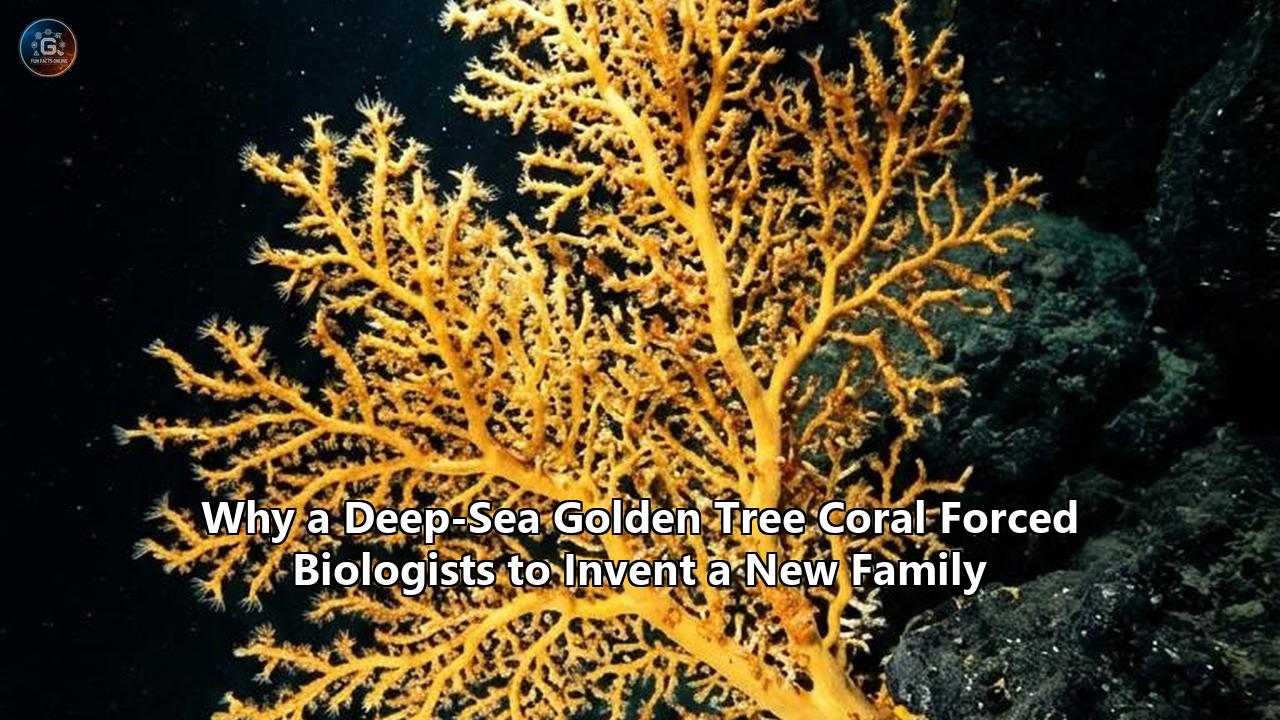
At a depth of 529 meters beneath the surface of the Eastern Tropical Pacific, hydrostatic pressure exceeds 53 atmospheres, ambient water temperatures register between 8.12°C and 10.8°C, and dissolved oxygen concentrations drop to a lethal minimum of 0.5 to 3.0 micromoles per kilogram. In this suboxic zone off the coast of Costa Rica, where oceanic waters retain less than 2% of standard surface oxygen saturation, an autonomous robotic arm aboard the remotely operated vehicle (ROV) SuBastian retrieved a brilliant yellow octocoral colony standing over 100 centimeters in height.
The specimen did not conform to any established branch of marine life. A multi-institutional research team led by the Universidad de Costa Rica and the Smithsonian Institution subjected the organism to genetic barcoding across three standard taxonomic loci. The result was an unprecedented three-way conflict: each individual gene linked the coral to an entirely different, unrelated biological group.
Only through comprehensive phylogenomic target capture—sequencing hundreds of ultraconserved genomic elements (UCEs) and protein-coding exons—could researchers establish the organism's true evolutionary placement. The data revealed an ancient, isolated lineage divergent enough to break existing taxonomic boundaries.
The resulting study, published in the journal ZooKeys by Dr. Odalisca Breedy and her co-authors, formally established the species Laurinque elenya, the genus Laurinque, and the new deep sea coral family Laurinqueidae.
Establishing a family-level rank is exceptionally uncommon in modern zoology. While taxonomists describe thousands of new species every year, creating a family denotes the identification of a deep evolutionary split that has developed in isolation for tens of millions of years. The discovery confirms that the unexplored volcanic seamounts of the Eastern Pacific harbor high-order biodiversity hidden within some of the most chemically hostile aquatic environments on Earth.
================================================================================
TAXONOMIC AND MORPHOLOGICAL PROFILE: LAURINQUEIDAE FAM. NOV.
================================================================================
Scientific Name:           Laurinque elenya (Breedy et al., 2026)
Higher Classification:     Class Octocorallia, Order Malacalcyonacea
Type Locality:             Las Gemelas II Seamount (5.0717° N, 87.6512° W)
Observed Bathymetric Range: 359.87 m to 529.00 m
Colony Architecture:       Irregular-flabellate; branching dense, anastomosing
Maximum Observed Height:   >100 cm (holotype fragment: 50 cm height, 60 cm width)
Polyp Dimensions:          Tubular, elongated, up to 5 mm extended height
Sclerome Anatomy:          Tuberculate rods and spindles (0.10 to 0.45 mm length)
Internal Axis Core:        Cross-chambered, hollow proteinaceous core with gorgonin
Living Coloration:         Intense yellow; drying to pale brownish-ochre
Symbiosis:                 Azooxanthellate (devoid of photosynthetic endosymbionts)
================================================================================
The Physical and Chemical Baseline of the Seamount Fleet
The specimens underpinning this discovery were gathered across two oceanographic research cruises conducted in 2019 and 2023. The expeditions deployed the ROV SuBastian from the Schmidt Ocean Institute’s research vessels Falkor and Falkor (too). Operations focused on the submerged flanks of the Cocos Ridge and isolated tectonic elevations along the Costa Rican Pacific continental margin.
+------------------+---------------------+-------------------+---------------------+--------------------+
| Sampling Site    | Latitude / Longitude| Depth Recorded (m)| Ambient Temp (°C)   | Dissolved O2 (μM)  |
+------------------+---------------------+-------------------+---------------------+--------------------+
| Las Gemelas I    | 4.9944°N, 87.4481°W | 359.87 – 404.77   | 9.40 – 10.80        | 0.80 – 2.40        |
| Las Gemelas II   | 5.0717°N, 87.6512°W | 362.53 – 412.18   | 8.85 – 10.15        | 0.50 – 1.95        |
| Seamount 6       | 7.6799°N, 85.9116°W | 529.00            | 8.12 – 8.60         | 1.10 – 3.00        |
+------------------+---------------------+-------------------+---------------------+--------------------+
Hydrographic data gathered via the ROV's onboard Conductivity, Temperature, and Depth (CTD) sensor package showed that Laurinque elenya occupies a narrow environmental envelope. Salinity remains constant between 34.6 and 34.7 practical salinity units (psu).
The most extreme variable is dissolved oxygen. The Eastern Tropical Pacific contains one of the thickest, most intense Oxygen Minimum Zones (OMZs) on the planet. Surface waters host typical oxygen concentrations of 200 to 250 μmol/kg, but microbial degradation of descending biological matter strips oxygen from the water column between 200 and 1,000 meters depth.
At the Las Gemelas seamounts, oxygen concentrations drop to 0.5 μmol/kg. In practical terms, this constitutes an operational value of 0.01 mL of dissolved oxygen per liter of seawater. Most vertebrate and invertebrate species experience severe physiological stress or mortality at oxygen levels below 45 to 60 μmol/kg.
Laurinque elenya thrives in this hypoxic environment. Dense stands of the organism form towering thickets across basaltic ridges.The colonies do not rely on photosynthetic microalgae. As azooxanthellate filter feeders, their nutrition is derived entirely from capturing suspended organic particles, micro-zooplankton, and marine snow directed toward them by intermediate ocean currents.
Anatomy of an Evolutionary Orphan
The establishment of a new family requires distinct morphological divergence alongside clear genetic separation. Octocorals (subclass Octocorallia) possess polyps with eight-fold radial symmetry and eight pinnate tentacles. Historically, taxonomists categorized them by macroscopic growth forms, skeletal axes, and the morphology of their calcitic sclerites—microscopic calcium carbonate structures embedded throughout their tissue.
Microscopic and histological dissections performed by Dr. Breedy at the Universidad de Costa Rica and Dr. Andrea Quattrini at the Smithsonian’s National Museum of Natural History uncovered a unique anatomical architecture:
1. Colony Framework and Branching Metrics
Colonies display an irregular-flabellate (fan-like) profile reaching 100 cm in height and up to 120 cm in lateral width. Branching is irregularly lateral and exceptionally dense. Unlike classic sea fans whose branches align along a flat plane, Laurinque branches twist and anastomose (re-fuse together upon contact), creating a complex, semi-reticulate scaffold. Longitudinal furrows track along the primary stem and major branches.
================================================================================
ANATOMICAL COMPARISON: LAURINQUEIDAE VS. RELATED GORGONIAN FAMILIES
================================================================================
Feature              Laurinqueidae        Eunicellidae         Incrustatidae
--------------------------------------------------------------------------------
Axial Architecture   Hollow, chambered    Solid proteinaceous  Membranous / absent
                     central core         or calcified axis    (encrusting stolons)
--------------------------------------------------------------------------------
Sclerite Form        Rods and spindles;   Balloon club         Irregular scales,
                     prominent tubercles  sclerites dominant   radiates, plates
--------------------------------------------------------------------------------
Polyp Retractility   Partially retractile Fully retractile     Retractile into
                     into raised domes    into flat coenenchyme individual verrucae
--------------------------------------------------------------------------------
Polyp Length         Up to 5.0 mm         0.8 to 1.5 mm        1.0 to 2.0 mm
--------------------------------------------------------------------------------
Living Coloration    Vibrant gold/yellow  White, cream, pink   White, red, tan
================================================================================
2. Axial Skeletal Composition
The axial skeleton provides mechanical support against currents without relying on a solid calcified stony base. Dissection reveals a dark brown proteinaceous axis supported by concentric layers of gorgonin, a structural protein related to keratin.
The core of this axis is cross-chambered and hollow, an architecture that maximizes shear resistance while conserving metabolic energy during protein deposition. The surrounding living skin—the coenenchyme—is remarkably thin, measuring under 0.3 millimeters in cross section, and detaches cleanly from the axis upon ethanol preservation.
3. Polyp Structure and Dimorphism
The polyps are monomorphic (identical in feeding and reproductive functions) and measure up to 5 mm in length when fully extended. This extended length gives living colonies an unusually fuzzy appearance in deep-sea footage.
The polyps are arranged around the full circumference of smaller terminal branches. On the main trunk and base, they organize into distinct longitudinal rows.
The polyps are only partially retractile. Rather than disappearing into the coenenchyme, they withdraw into dome-shaped or short cylindrical mounds that project outward from the branch surface.
                POLYP ULTRASTRUCTURE: LAURINQUE ELENYA

                     Tentacles (8 pinnate tentacles with
                    /   micro-rods measuring 0.05–0.10 mm)
                   /
                 |\|/|
                 | | |  <-- Anthocodia (extended head)
                 | | |
                 \___/  <-- Inconspicuous Collaret ring
                 |   |
                 |   |  <-- Long tubular column (up to 5.0 mm extended)
                 |   |      protected by tuberculate spindles
                /     \
            ___/       \___
           /               \  <-- Basal mound (dome-shaped verruca)
  ========|                 |================================== [Branch Axis]
          \_________________/
                 |||||
                 |||||  <-- Cross-chambered, hollow protein core
                 |||||      enclosed in gorgonin layers
4. Sclerite Ultrastructure
Researchers cleaned tissue fragments using a 5% sodium hypochlorite solution to dissolve cellular matrices, isolating microscopic calcitic sclerites for imaging. Under Field Emission Scanning Electron Microscopy (FESEM), the sclerome displayed distinct variations:
- Anthocodial sclerites: Tuberculate rods and spindles measuring 0.15 to 0.30 mm, arranged in converging points around the base of the tentacles. The transverse collaret ring is present but poorly developed.
- Coenenchymal sclerites: Elongated spindles reaching up to 0.45 mm, ornamented with both simple conical and complex branching tubercles.
- Axial sheath sclerites: Compact, symmetrical rods and tiny radiates (0.05 to 0.12 mm) that seat directly against the protein core.
The Genetic Impasse: A Breakdown of Classical Barcoding
The need for a new deep sea coral family became apparent after standard genetic analysis produced conflicting results.
For decades, zoologists have relied on targeted DNA barcoding to classify octocorals. This process uses polymerase chain reaction (PCR) amplification to isolate two mitochondrial markers—the mismatch repair gene mtMutS (msh1) and Cytochrome c Oxidase Subunit I (COI)—as well as the nuclear 28S ribosomal RNA gene (28S rDNA).
When Dr. Breedy’s team processed Laurinque elenya across these three standard loci, the phylogenetic trees failed to reach consensus. Each gene pointed toward an independent, mutually exclusive lineage:
+----------------+--------------------------+-----------------------+-----------------------+
| Genetic Marker | Target Genome            | Inferred Placement    | Bootstrap Support (%) |
+----------------+--------------------------+-----------------------+-----------------------+
| mtMutS (msh1)  | Mitochondrial (~800 bp)  | Incrustatidae         | 78%                   |
| COI            | Mitochondrial (~750 bp)  | Eunicellidae          | 84%                   |
| 28S rDNA       | Nuclear Locus (~900 bp)  | Basal Malacalcyonacea | Unresolved (<50%)     |
+----------------+--------------------------+-----------------------+-----------------------+
This degree of conflict highlights a recurring issue in octocoral taxonomy. Unlike other Metazoans, octocorals possess a functional mismatch repair gene (mtMutS) within their mitochondrial genome. This unique protein repairs mitochondrial replication errors, depressing nucleotide substitution rates.
As a consequence, anthozoan mitochondrial genes mutate much more slowly than their nuclear counterparts. This slow mutation rate produces short evolutionary branch lengths, high homoplasy, and incomplete lineage sorting across related genera.
Single-marker trees can lead researchers to erroneous classifications. If the researchers had evaluated only the mtMutS gene, Laurinque elenya might have been classified under Incrustatidae, an encrusting family of non-branching corals.
If they had evaluated only COI, the specimen would have been placed inside Eunicellidae, despite stark contradictions in internal axis structure, polyp morphology, and sclerite shape. The conflicting data made it impossible to assign the species using single-gene methods.
               THE TRI-LOCUS CONFLICT

                [Laurinque elenya]
                  /     |     \
                 /      |      \
        (mtMutS)/     (COI)     \(28S rDNA)
               /        |        \
              v         v         v
      Incrustatidae  Eunicellidae  Unresolved Polytomy
      [Disagreement between standard taxonomic barcoding markers]
Phylogenomics and the Resolution of Laurinqueidae
To resolve the impasse, the team used target-capture phylogenomics.
Rather than relying on single genes, this technique captures hundreds of conserved genomic regions spread across the entire nuclear genome.
The research team deployed custom synthetic RNA baits designed to bind and enrich thousands of Ultraconserved Elements (UCEs) and protein-coding exons shared across anthozoans.
The library preparations yielded millions of sequence reads. The scientists passed these raw reads through quality-trimming algorithms (fastp, trimmomatic) before assembling them into contiguous DNA segments with the SPAdes genome assembler.
The resulting matrices spanned hundreds of unlinked genomic loci, providing thousands of informative nucleotide positions:
================================================================================
PHYLOGENOMIC PIPELINE AND BIOINFORMATIC METRICS
================================================================================
Target-Capture Probe Set:   Octo-1K probe suite (focusing on anthozoan loci)
Target Sequences:           UCEs (Ultraconserved Elements) + Conserved Exons
Raw Reads Per Specimen:     3.2 million to 7.8 million paired-end reads
Total Loci Extracted:       642 high-confidence genomic markers
Aligned Matrix Length:      >210,000 concatenated base pairs
Phylogenetic Models:        Maximum Likelihood (IQ-TREE 2 / RAxML-NG)
Evolutionary Models:        GTR + G4 + I across partitioned subsets
Node Support Metric:        100% Ultrafast Bootstrap / 100% Gene Concordance
================================================================================
The phylogenomic reconstruction provided an unambiguous answer.
Laurinque elenya formed an isolated, highly supported monophyletic sister lineage to the family Eunicellidae.The branch length separating Laurinque from Eunicellidae was comparable to—or exceeded—the divergence times between other recognized octocoral families.
Eunicellidae corals are characterized by balloon-club sclerites and encrusting or candelabra-like forms with solid, unchambered axes. In contrast, Laurinque possesses a cross-chambered, hollow axis, tubular elongated polyps up to 5 mm long, and exclusively spindle- and rod-dominated sclerites.
                     CONCATENATED NUCLEAR GENOMIC TREE

Root (Order Scleralcyonacea)
  |
  +--- Family Tubiporidae
  |
  +--- Order Malacalcyonacea
         |
         +--- Incrustatidae
         |
         +--- Cladiellidae
         |
         +--- Pseudothelogorgiidae
         |
         +--- CLADE X (Sister lineage divergence)
                |
                +=== FAMILY LAURINQUEIDAE fam. nov.
                |    |-- Genus Laurinque gen. nov.
                |         \-- Laurinque elenya sp. nov.
                |
                +--- Family Eunicellidae
                     |-- Genus Eunicella
                     \-- Genus Swiftia
Because the coral could not be placed in Eunicellidae without breaking the morphological and genetic definition of that family, taxonomists took the step of establishing Laurinqueidae.
The taxon was integrated into the order Malacalcyonacea, an evolutionary group formalized in 2022 by McFadden, van Ofwegen, and Quattrini that restructured octocoral classification.
The Ophiuroid Carpet: Ecosystem Ecology at Las Gemelas
The discovery of the new deep sea coral family also revealed a remarkable community dynamic on the seafloor.
At Las Gemelas I and Las Gemelas II, Laurinque elenya did not grow on bare rock.
High-definition visual surveys performed by ROV SuBastian documented that the rocky volcanic seafloor was covered by a dense, living layer of brittle stars (phylum Echinodermata, class Ophiuroidea).
================================================================================
BENTHIC COVERAGE SURVEY: LAS GEMELAS II (DEPTH: 362–412 METERS)
================================================================================
Benthic Substrate Component                         Percentage Surface Area
--------------------------------------------------------------------------------
Ophiuroid Mat Density (Brittle stars)               68% – 84%
Bare Basaltic Outcrop / Pavement                    8% – 15%
Laurinque elenya Holdfast Footprint                  3% – 6%
Demosponges / Encrusting Sponges                    2% – 5%
Other Octocorals (Paragorgia, Isididae fragments)   1% – 3%
Unconsolidated Pelagic Sediment Pockets             2% – 4%
================================================================================
Image analysis of the benthic pavement documented ophiuroid densities ranging from 120 to over 350 individuals per square meter.
Their writhing, intertwined arms carpeted the rocky terrain. From this moving substrate, the bright yellow colonies of Laurinque elenya grew upward like illuminated trees.
This appearance inspired the researchers to look to Quenya, an Elvish language developed by J.R.R. Tolkien.
They named the genus Laurinque (meaning "golden tree") and the species elenya (meaning "stellar" or "of the stars").
                  THE "CORAL AMONG STARS" MICRO-COMMUNITY

                         ( *Laurinque elenya* )
                           \  |  /  /
                            \ | /  /    <-- Height: Up to 1.2 meters
                             \|/  /         Colony: Bright yellow
                              |  /                  Azooxanthellate filter-feeding
                              | /                   Benthic current baffling
                              |/
     /\      /\      /\      _|_      /\      /\      /\      /\      /\
    /  \    /  \    /  \    [###]    /  \    /  \    /  \    /  \    /  \
  ~(    )~~(    )~~(    )~~(     )~~(    )~~(    )~~(    )~~(    )~~(    )~
  =========================================================================
      Dense Ophiuroid Carpet (120–350 brittle stars / sq meter)
      Basaltic Seamount Ridge (Las Gemelas II - 362 meters depth)
The interaction between Laurinque elenya and the brittle star carpet illustrates how deep-sea foundation species structure their environment.
Laurinque colonies act as structural engineers.Their physical skeletons slow incoming bottom currents, transforming laminar horizontal flows into micro-turbulent eddies around their branches.
This current baffling increases the residence time of passing particulate organic matter, enabling both the coral polyps and the surrounding carpet of benthic brittle stars to feed more efficiently on suspended nutrients.
Dissections of the collected colonies also yielded mature oocytes within the internal mesenteries of paratype specimens (such as MZUCR 4022).
The presence of reproductive cells confirms that these seamounts support self-sustaining, actively reproducing populations adapted to an environment with near-zero oxygen.
Seamount Bathymetry and the Global Exploration Deficit
The discovery of a new deep sea coral family in waters off Costa Rica underscores the broad data deficit that characterizes deep benthic marine science.
The open ocean covers approximately 71% of Earth's surface, and environments deeper than 200 meters constitute over 95% of the total biosphere by volume.
Seamounts—underwater mountains of volcanic origin rising at least 1,000 meters above the abyssal plain—are key focal points for high-density deep-sea biodiversity.
================================================================================
GLOBAL SEAMOUNT AND DEEP-SEA EXPLORATION STATISTICS
================================================================================
Estimated Global Seamounts (height >1,000 m):        ~100,000 to >200,000
Estimated Smaller Knolls / Hills (height 100-1,000m): >30,000,000
Seamounts Biologically Sampled with Modern Submersibles: <0.5% (approx. 400)
Total Area of Seamount Biomes Globally:              ~28,800,000 km²
Costa Rica Sovereign Terrestrial Land Area:          51,100 km²
Costa Rica Pacific Exclusive Economic Zone (EEZ):    ~574,000 km²
Ocean-to-Land Area Ratio for Costa Rica:             11.2 to 1
Total Named Species of Gorgonian Octocorals:        ~3,500 species
================================================================================
Satellite altimetry and hydrographic acoustic surveys identify tens of thousands of seamounts across the world's oceans, yet fewer than 500 have been surveyed using modern ROVs capable of targeted specimen collection.
In Costa Rica, maritime territory outstrips terrestrial land by an order of magnitude. The country covers 51,100 km² of land, while its Pacific Exclusive Economic Zone (EEZ) spans over 574,000 km²—meaning marine ecosystems account for roughly 92% of the nation's territory.
  Costa Rica Geographic Makeup:

  [=====] Land Area: 51,100 km² (8.2%)
  [============================================================]
  Pacific Exclusive Economic Zone (EEZ): 574,000 km² (91.8%)
Much of this territory remains unmapped at fine resolution.
Before the 2019 and 2023 Schmidt Ocean Institute expeditions, the Las Gemelas seamounts had never been surveyed with high-definition deep-water imaging systems.
The discovery of a distinct family-level lineage at depths readily accessible to modern commercial offshore infrastructure emphasizes the gap between deep-ocean industrial capability and basic biological inventory.
Vulnerable Marine Ecosystems and Conservation Metrics
Deep-water octocoral aggregations meet the international criteria for Vulnerable Marine Ecosystems (VMEs), as defined by the United Nations General Assembly (UNGA Resolution 61/105) and the Food and Agriculture Organization (FAO).
Under FAO guidelines, a habitat qualifies as a VME if it demonstrates five core properties: uniqueness or rarity, functional significance, fragility, structural complexity, and life-history traits that limit recovery.
Laurinque elenya qualifies under all five criteria.================================================================================
EVALUATION OF LAURINQUEIDAE AGAINST FAO CRITERIA FOR VMES
================================================================================
FAO Metric Field Evidence for Laurinqueidae
--------------------------------------------------------------------------------
1. Uniqueness or Rarity Represents a monospecific genus and monotypic family
currently known from only three discrete seamounts.
--------------------------------------------------------------------------------
2. Functional Acts as a major habitat builder; provides three-dimensional
Significance canopies that baffle currents and enhance food intake.
--------------------------------------------------------------------------------
3. Fragility Erect colonies exceeding 1 m in height with thin tissues
are susceptible to bottom-contact fishing and gear.
--------------------------------------------------------------------------------
4. Structural Complexity Large, branching colonies add multi-layered architecture
to barren basaltic seafloors.
--------------------------------------------------------------------------------
5. Life-History Fragility Deep-sea octocorals exhibit slow linear growth rates
(often <0.5 to 2.0 cm/year) and long recovery timelines.
================================================================================Deep-water octocorals build structural frameworks over decades or centuries.
While tropical shallow-water stony corals grow rapidly—often depositing 5 to 20 cm of calcium carbonate per year—deep-water gorgonians grow at a fraction of that pace.
Studies of related deep-sea calcaxonian and holaxonian corals measure radial axial growth at 0.05 to 0.35 mm per year, and linear vertical growth at 0.5 to 2.5 cm annually.
A Laurinque elenya colony standing 1.2 meters tall likely represents an investment of 50 to 150 years of growth in a low-oxygen, cold-water setting.
                     LINEAR ANNUAL GROWTH COMPARISON

  Shallow-Water Acropora (Staghorn):
  [==================================================] Up to 15.0 cm/yr

  Temperate Mesophotic Gorgonian:
  [===========] 3.5 cm/yr

  Deep-Sea Gorgonian (e.g., Laurinqueidae / Chrysogorgiidae):
  [===] 0.5 – 1.8 cm/yr
Because of their brittle proteinaceous axes and elevated branching structures, these corals have zero resilience to bottom-contact disturbance.
A single pass of a benthic bottom trawl, longline groundline, or seabed mining collector vehicle can shred a coral garden that took centuries to mature.
Once destroyed, recovery can take generations, or fail entirely if altered hydrodynamics prevent new larvae from settling on damaged substrates.
Oceanographic Pressures: The Impact of Expanding OMZs and Acidification
The discovery of Laurinque elenya comes as the chemical conditions of the Eastern Tropical Pacific are shifting under climate pressures.
Because Laurinqueidae colonies inhabit the boundary between the upper thermocline and the core of the regional oxygen minimum zone, they are vulnerable to the ongoing expansion and shallowing of low-oxygen waters.
================================================================================
OCEANOGRAPHIC CHANGE PROJECTIONS: EASTERN TROPICAL PACIFIC SEAMOUNTS
================================================================================
Environmental Variable       Current Baseline (2026)      Projected Change (2050–2100)
--------------------------------------------------------------------------------
OMZ Upper Boundary Depth     ~200 meters                 Shallower by 20 to 50 meters
Core Dissolved O2 Level      0.5 to 3.0 μmol/kg          Decrease of 0.2 to 0.8 μmol/kg
Aragonite Saturation (Ωarag) 0.8 to 1.1 (Undersaturated) Shallower saturation horizon
Calcite Saturation (Ωcalc)   1.2 to 1.4 (Marginal)       Decline toward undersaturation
Seawater Temperature (400m)  8.5°C to 10.5°C             Projected warming of 0.4°C–0.9°C
--------------------------------------------------------------------------------
Over the past five decades, the global volume of fully oxygen-depleted ocean waters has quadrupled, while intermediate-depth oxygen minimum zones have expanded by several million square kilometers.
As the upper boundary of the OMZ creeps toward the surface, benthic species on seamount crests face changing physiological conditions.
While Laurinque elenya tolerates oxygen levels as low as 0.5 μmol/kg, further oxygen drops could exceed its cellular limits, particularly if water temperatures rise at the same time.
Higher temperatures elevate basal metabolic rates, forcing organisms to demand more oxygen for respiration even as ambient concentrations fall.
                       THE SQUEEZE: TEMPERATURE VS OXYGEN

   Shallowing OMZ Boundary
        ^
        |  Higher O2 demand due to warming
        |  +-------------------------------------------------------+
        |  | Metabolic Stress Zone                                 |
        |  | Respiration rate accelerates while O2 availability drops |
        |  +-------------------------------------------------------+
        |  Lower ambient dissolved O2 (0.5 – 3.0 μmol/kg baseline)
        v
Concurrently, the oceanic uptake of anthropogenic carbon dioxide is lowering carbonate ion concentrations.
In the Eastern Tropical Pacific, the Calcite and Aragonite Saturation Horizons (the bathymetric depths below which calcium carbonate structures dissolve) are shallower than in any other major ocean basin.
Octocoral sclerites are composed of high-magnesium calcite, a mineral form more soluble than standard calcite.
As the Calcite Saturation Horizon shallows, Laurinque elenya must expend more metabolic energy to deposit and maintain its microscopic sclerites, drawing on limited resources under low oxygen.
Expanding Protected Areas: The Costa Rican Conservation Matrix
The naming of Laurinque elenya provides direct scientific backing for marine protection policies in the region.
In December 2021, Costa Rica issued Executive Decree No. 43368-MINAE, which expanded the borders of Cocos Island National Park (Parque Nacional Isla del Coco) and the Bicentennial Marine Management Area (Área Marina de Manejo Bicentenario).
================================================================================
COSTA RICA PACIFIC MARINE PROTECTED AREA (MPA) EXPANSION METRICS
================================================================================
Conservation Unit                Pre-2021 Area (km²)      Post-2021 Area (km²)
--------------------------------------------------------------------------------
Cocos Island National Park        2,034 (Fully No-Take)    54,844 (Fully No-Take)
Bicentennial Marine Area          9,649 (Management Area) 477,348 (Multiple Use)
Total Protected Footprint        11,683 km²               532,192 km²
Proportion of Total EEZ:         ~2.0%                    ~92.7%
--------------------------------------------------------------------------------
The expansion increased the fully protected, no-take zone of Cocos Island National Park by a factor of 27, safeguarding the benthic biodiversity of Las Gemelas and the surrounding seamounts from industrial longlining, purse-seine fishing, and exploratory mining operations.
The discovery confirms that this protection reaches beyond charismatic pelagic animals like hammerhead sharks, leatherback sea turtles, and pelagic billfish.
It preserves endemic benthic ecosystems and distinct evolutionary lineages whose functional roles in deep-sea nutrient cycling and ecosystem structure are only beginning to be understood.
         COSTA RICA PACIFIC EEZ CONSERVATION BREAKDOWN

  [###] Pre-2021 No-Take: 2,034 km² (0.35%)
  [==================] Post-2021 Cocos Park No-Take: 54,844 km² (9.5%)
  [===================================================================]
  Post-2021 Total Protected Waters (Park + MMA): 532,192 km² (92.7%)
Technical Benchmarks and Diagnostic Identifiers
To assist marine biologists and ROV survey teams working in the Eastern Tropical Pacific, researchers established clear diagnostic criteria to differentiate Laurinque elenya from other golden or yellow gorgonians during deep-sea surveys:
================================================================================
TAXONOMIC IDENTIFICATION MATRIX: FIELD AND LABORATORY DIAGNOSTICS
================================================================================
Observation Tier          Diagnostic Criteria for Laurinqueidae
--------------------------------------------------------------------------------
Field / ROV Imagery:      * Vibrant, bright yellow branches arranged in a dense,
                            irregularly flabellate, multi-planar fan.
                          * Colony reaches 50 to 120 cm across.
                          * Branches frequently anastomose.
                          * Polyps appear prominently elongated (up to 5 mm),
                            giving branches a fuzzy texture.
                          * Base of the main stem anchored to exposed hard rock,
                            frequently amid dense brittle star aggregations.
--------------------------------------------------------------------------------
Stereomicroscopy:         * Axis is proteinaceous and dark brown.
                          * Core of axis is distinctly cross-chambered and hollow.
                          * Thin coenenchyme that detaches easily upon drying.
                          * Longitudinal grooves run along the stem and branches.
--------------------------------------------------------------------------------
Scanning Electron         * Sclerites are exclusively rods and spindles.
Microscopy (SEM):         * Surface ornamentation includes simple and complex tubercles.
                          * Sclerites measure between 0.10 and 0.45 mm long.
                          * Completely lacks scales, radiates, or balloon clubs.
--------------------------------------------------------------------------------
Genomics:                 * Nuclear UCE marker alignment forms a monophyletic clade
                            sister to Eunicellidae, with strong sequence divergence.
================================================================================
Future Research Milestones and Unresolved Questions
The description of Laurinqueidae marks the start of a broader investigation into this lineage and its surrounding environment.
The research team and independent deep-sea biologists have outlined four priorities for upcoming expeditions to the Cocos Ridge and the Central American Pacific Margin:
1. Cellular Adaptations to Extreme Hypoxia
How Laurinque elenya maintains protein synthesis, skeletal deposition, and cellular repair at dissolved oxygen levels of 0.5 μmol/kg remains an open question.
Upcoming efforts aim to assemble a chromosome-level nuclear genome for the species.
This will enable comparative genomic screens targeting hypoxia-inducible factor (HIF) signaling pathways, cytochrome oxidase modifications, and novel metabolic pathways that may allow cellular respiration under near-anoxic conditions.
================================================================================
PROJECTED DEEP-SEA BIODIVERSITY WORKFLOW: 2026–2030
================================================================================
Phase     Target Milestone                          Methodology / Tools
--------------------------------------------------------------------------------
Phase 1   Whole-Genome PacBio HiFi Sequencing       Long-read genomic extraction from
          (Laurinque elenya reference genome)       cryopreserved voucher tissue
--------------------------------------------------------------------------------
Phase 2   High-Resolution Environmental DNA (eDNA)  Deploy Niskin rosettes along seamount
          Cross-Seamount Detection Surveys          transects to map water-column DNA
--------------------------------------------------------------------------------
Phase 3   In Situ Respirometry Profiling            Chamber deployments on ROV SuBastian
          (Measuring real-time oxygen draw)         to record metabolic rates at 400m
--------------------------------------------------------------------------------
Phase 4   Regional Population Genetics              RAD-seq and UCE processing across
          (Gene flow across Cocos Ridge)            specimens from multiple seamount peaks
================================================================================
2. Reproductive Phenology and Larval Dispersal Models
The discovery of mature eggs inside paratype MZUCR 4022 confirms seasonal or continuous gametogenesis, but its reproductive cycle remains uncharacterized.
Do colonies broadcast spawn gametes into the water column, or do they brood planula larvae internally?
Hydrodynamic models will simulate larval transport under prevailing deep currents (0.05 to 0.25 meters per second) along the Costa Rican Pacific margin.
These simulations will help determine whether the colonies at Las Gemelas and Seamount 6 function as an isolated, self-recruiting population, or trade recruits with other seamounts across the wider Galápagos-Cocos tectonic corridor.
                     LARVAL RECRUITMENT PATHWAY MODEL

    [ Las Gemelas I & II ]                  [ Seamount 6 ]
     Source Populations                      Daughter Aggregation
           |                                       |
           |====== Intermediate Ridge Currents ====>|
           |       (Flow: 0.05 – 0.25 m/s)         |
           |                                       |
           v                                       v
     Local Self-Recruitment                  Potential Sink Population
     (Substrate: Basaltic Outcrops)          (Substrate: Solitary Outcrops)
3. Broad-Scale Environmental DNA (eDNA) Screening
Shipboard ROV dives are resource-intensive, costing $45,000 to $80,000 per day.
To map the geographic footprint of Laurinqueidae without requiring physical collection on every dive, teams are designing species-specific environmental DNA (eDNA) primers.
By filtering deep-water samples gathered with Niskin bottles mounted on CTD rosettes, scientists can test for the presence of Laurinque elenya across dozens of unsurveyed seamounts along the Central American trench.
4. Re-Evaluating Museum Collections
The establishment of this new family will likely trigger a systematic review of existing natural history archives.
Many deep-sea coral collections contain historical specimens categorized as "unidentified gorgonian" or misassigned to families like Incrustatidae or Eunicellidae based on incomplete morphological assessments.
Target-capture sequencing of historical museum specimens will determine whether representatives of Laurinqueidae were collected decades ago and remained unrecognized in archive jars.
      ARCHIVAL RETROSPECTIVE PIPELINE: IDENTIFYING HIDDEN TAXA

      [ Historical Museum Archives ]
      Unidentified Malacalcyonacea specimens (1950–2020)
                     |
                     v
      [ Non-Destructive Micro-CT & Sclerite SEM ]
      Screen for cross-chambered axis + tuberculate spindles
                     |
                     v
      [ Ancient / Degraded DNA Target-Capture (UCEs) ]
      Sequence hundreds of nuclear loci from ethanol-preserved tissue
                     |
                     v
      [ Revised Geographic Distribution of Laurinqueidae ]
      Expanding historical range across the wider Pacific Basin
Measuring What Remains Unknown
The formal naming of Laurinque elenya marks a major step forward in deep-sea biology, demonstrating that the global ocean inventory remains incomplete even at fundamental taxonomic levels.
Finding a new species is routine, and discovering a new genus is common during deep-sea expeditions.
Encountering an organism whose anatomical architecture and genomic divergence require the erection of a new family demonstrates how much of the ocean floor has escaped systematic study.
          THE TAXONOMIC PYRAMID OF MARINE LIFE

                         /\
                        /  \     Phylum: Cnidaria
                       /    \
                      /      \    Class: Octocorallia
                     /        \
                    /          \   Order: Malacalcyonacea
                   /------------\
                  / NEW FAMILY:  \  <-- Laurinqueidae (Extremely Rare Event)
                 /  Laurinqueidae \
                /------------------\
               /    NEW GENUS:      \ <-- Laurinque (Uncommon)
              /      Laurinque       \
             /------------------------\
            /       NEW SPECIES:       \ <-- Laurinque elenya (Routine)
           /      Laurinque elenya      \
          /------------------------------\
The data gathered at Las Gemelas and Seamount 6 provide a clear baseline.
Life in the deep ocean is not sparsely distributed across barren mud flats.
Under severe conditions of sub-zero light, crushing hydrostatic pressure, and near-total hypoxia, dynamic ecosystems continue to flourish.
These golden tree corals rise above fields of brittle stars, building three-dimensional oases in one of the most chemically hostile habitats on Earth.
As deep-sea operations, climate shifts, and ocean acidification encroach on the deep benthos, the survival of these deep-sea habitats depends on our ability to map, quantify, and protect them before their baseline conditions disappear.
The identification of this lineage underscores a central reality of modern marine science: we have barely scratched the surface of cataloging the diversity of our own planet.
Reference:
- https://www.earth.com/earth-science/a-newly-discovered-coral-species-is-so-genetically-unique-that-scientists-had-to-create-an-entirely-new-family-to-classify-it/
- https://treatment.plazi.org/id/B977A774-E3C5-54CD-8D24-77D0E33B2899
- https://www.eurekalert.org/news-releases/1139251
- https://www.sciencedaily.com/releases/2026/10/261007042116.htm
- https://ticotimes.net/2026/08/11/new-coral-species-costa-rica-tolkien-elvish-name
- https://www.the-microbiologist.com/news/tolkien-inspired-coral-among-the-stars-new-species-discovered-on-costa-ricas-deep-sea-seamounts/9743.article
- https://www.thebrighterside.news/post/golden-deep-sea-coral-off-costa-rica-adds-a-new-branch-to-the-tree-of-life/
- https://www.researchgate.net/publication/408257406_A_coral_among_stars_A_new_octocoral_family_Anthozoa_Octocorallia_Malacalcyonacea_from_seamounts_in_the_tropical_eastern_Pacific
- https://www.discoverwildlife.com/animal-facts/marine-animals/laurinque-elenya-costa-rica
- https://collections.museumsvictoria.com.au/species/17475
- https://connectsci.au/is/article-lookup/doi/10.1071/is20066
- https://tb.plazi.org/GgServer/html/1443D733F0A257AB8D8AFAF7764D52C5
- https://www.researchgate.net/publication/408257406_A_coral_among_stars_A_new_octocoral_family_Anthozoa_Octocorallia_Malacalcyonacea_from_seamounts_in_the_tropical_eastern_Pacific
- https://pmc.ncbi.nlm.nih.gov/articles/PMC12680942/
- https://www.researchgate.net/publication/367411635_An_enigmatic_new_octocoral_species_Anthozoa_Octocorallia_Malacalcyonacea_from_Isla_del_Coco_National_Park
- https://pmc.ncbi.nlm.nih.gov/articles/PMC3377635/
- https://connectsci.au/is/article/40/3/IS25068/271568/Phylogenomics-guided-revision-of-the-genus
- https://connectsci.au/is/article/39/11/IS25014/265833/A-new-family-of-stoloniferous-coral-Octocorallia
- https://pmc.ncbi.nlm.nih.gov/articles/PMC10795068/
- https://www.iflscience.com/stunning-golden-trees-of-coral-found-growing-from-carpet-of-brittle-stars-get-lord-of-the-rings-inspired-name-84464
- https://timesofindia.indiatimes.com/world/rest-of-world/scientists-found-a-strange-golden-coral-deep-beneath-the-pacific-it-was-so-different-they-created-a-new-family-for-it/articleshow/133793815.cms
- https://ticotimes.net/2026/08/11/new-coral-species-costa-rica-tolkien-elvish-name