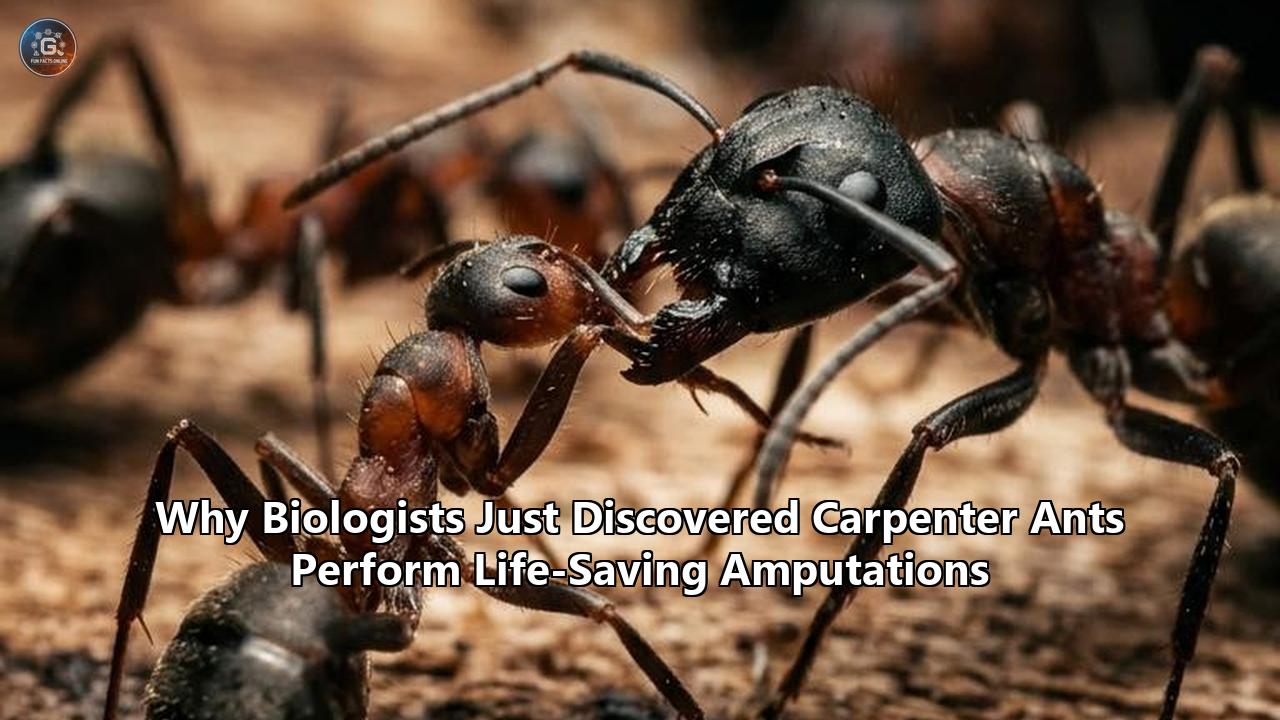
When a soldier or worker of the Florida carpenter ant (Camponotus floridanus) suffers a severe leg injury on the forest floor, it does not limp away to die in isolation, nor do its nestmates abandon it as expendable biomass. Instead, the colony mobilizes an organized, peer-administered medical response. Nestmates pull the injured ant into a sterile chamber, examine the wound, clean away foreign debris, and—if the damage is located high on the leg—pin down the limb and systematically saw it off at the joint.
This deliberate surgical intervention was detailed by an international research team led by behavioral ecologist Erik Frank of the University of Würzburg and evolutionary biologist Laurent Keller of the University of Lausanne, publishing their findings in the journal Current Biology. Until this discovery, intentional, life-saving amputations performed by one individual upon another were considered entirely unique to human medicine.
The data gathered across hundreds of controlled trials reveals an astonishing survival rate. When infected femur injuries were left unattended, only 40 percent of the ants survived. When fellow workers performed amputations, survival surged to between 90 and 95 percent.
Yet the most scientifically startling aspect of the study is not merely that these insects amputate limbs; it is that they do not always do so. When an injury occurs farther down the limb, on the shin-like tibia, nestmates completely refuse to amputate. Instead, they apply intensive, long-duration oral debridement, cleaning the cut with their mouthparts and lifting survival from 15 percent to roughly 75 percent.
Using high-resolution micro-computed tomography (micro-CT) scans and fluid dynamic analysis, the researchers uncovered the mechanical logic driving this behavioral divergence. The ants are not making arbitrary decisions. They are conducting triage based directly on how insect blood, known as hemolymph, circulates through different muscle compartments, balancing the ticking clock of bacterial dissemination against the physical time required to saw through insect cuticle.
The Discovery: An Unexpected Encounter Under the Microscope
The realization that carpenter ants perform amputations emerged from a serendipitous observation in a Würzburg laboratory. In late 2020, graduate researcher Dany Buffat was reviewing video footage of Camponotus floridanus colonies kept in artificial plaster nests. He observed two worker ants engaged in an unusually prolonged, rhythmic interaction. One worker held out a badly mangled hind leg, remaining motionless while a sister worker used its sharp mandibles to chew relentlessly through the base of the damaged limb.
"When we're talking about amputation behavior, this is literally the only case in which a sophisticated and systematic amputation of an individual by another member of its species occurs in the animal kingdom," said lead author Erik Frank.
Initial hypotheses treated the behavior with skepticism. Biologists had long documented autotomy—the reflex where an animal sheds its own limb to escape a predator, seen in geckos, spiders, and harvestmen. Similarly, social insects are notorious for cannibalizing dying or dead nestmates to recover proteins and nitrogen before a corpse rots. Some social insects chew off dead limbs to tidy up the nest interior or dismantle obstacles.
To determine whether the behavior was cannibalistic scavenging, aggressive grooming, or genuine surgical care, Frank and his colleagues designed a sequence of controlled trials. They introduced precise mechanical lacerations to worker ants at two distinct anatomical locations: the upper leg segment (femur) and the lower leg segment (tibia).
To simulate natural bacterial sepsis—the primary threat an ant faces when punctured by a competitor’s mandible or a sharp grain of sand—the researchers coated the wounds with Pseudomonas aeruginosa, a virulent, opportunistic bacterium that thrives in moist soil, leaf litter, and wood.
The experimental treatments split the insects into distinct observation groups:
- Isolated ants with untreated sterile wounds
- Isolated ants with untreated pathogen-infected wounds
- Injured ants placed in artificial observation arenas alongside nestmates
- Isolated ants subjected to manual, human-administered surgical amputation using micro-scalpels at varying intervals post-infection
The results drew an unambiguous line between opportunistic cannibalism and collaborative medicine. The nestmates did not consume the removed limbs as sustenance, nor did they attack the injured individual. The recipient ant actively cooperated, adopting a specialized, docile posture while the "surgeon" worked. When the surgery ended, the newly three- or five-legged ant did not bleed to death; it rejoined the workforce within hours, resuming maintenance and foraging duties inside the nest.
Inside the Operating Theater: How Carpenter Ants Carry Out the Procedure
The mechanical execution of an ant-administered amputation is a multi-stage physical process. It is neither quick nor casual. An amputation carried out by Camponotus floridanus workers requires anywhere from 40 to over 70 minutes of continuous, labor-intensive gnawing.
+----------------------------------------------------------------------------+
|                       THE 4-STAGE SURGICAL SEQUENCE                        |
+----------------------------------------------------------------------------+
|                                                                            |
|   1. RECOGNITION & SUBMISSION                                              |
|      Injured worker signals distress via cuticular hydrocarbons (CHCs);    |
|      adopts an immobile, passive posture to allow physical manipulation.   |
|                                                                            |
|   2. MECHANICAL DEBRIDEMENT                                                |
|      Treating ant holds the limb with forelegs and mandibles; executes     |
|      extended oral cleaning to clear surface dirt, exudate, and pathogens. |
|                                                                            |
|   3. ANATOMICAL TARGETING                                                  |
|      Regardless of where the femur was injured, the surgeon moves up to    |
|      the proximal trochanter-femur joint at the base of the leg.           |
|                                                                            |
|   4. SYSTEMATIC EXCISION & POST-OPERATIVE CARE                             |
|      Mandibles apply rhythmic shearing forces to cut cuticle and muscle;   |
|      after complete severance, intensive oral licking seals the stump.     |
|                                                                            |
+----------------------------------------------------------------------------+
Stage 1: Recognition and Presentation
When an injured worker returns to the nest, it displays an altered demeanor. In ants, chemical communication is governed by cuticular hydrocarbons—a waxy layer of long-chain lipids covering the exoskeleton. When tissues rupture, hemolymph spills onto the cuticle, volatilizing and alerting nearby workers through olfactory receptors on their antennae.
The injured ant does not pull away or defend itself. Instead, it assumes an atypical, submissive stance, curling its healthy appendages close to its thorax or flattening itself against the substrate. It extends the damaged limb upward and outward, offering it to the investigating sister ant.
Stage 2: Mechanical Debridement
The treating ant initiates contact by tapping the limb rapidly with its antennae, mapping the exact boundary of the lesion. It then grasps the injured leg with its own front tarsi and begins an exhaustive mechanical cleaning. Using its glossae (the ant equivalent of a tongue), the treating ant repeatedly licks the wound margins.
This behavior cleans out environmental debris and removes foreign spores and bacterial colonies, functioning much like irrigation and mechanical debridement in a human emergency bay.
Stage 3: Anatomical Positioning at the Trochanter
If the ant evaluates the injury as one that requires amputation, it shifts position. It does not cut through the wound site itself. Even if the laceration is positioned halfway down the length of the femur, the surgeon ant systematically works its way up toward the body wall until it reaches the trochanter—the small, hinge-like skeletal segment connecting the coxa (the hip) to the broad femur.
By operating directly at the trochanteric joint, the ant exploits a natural anatomical point of articulation where the cuticular wall narrows, rather than attempting to slice through the thicker, reinforced chitin sheath of the mid-femur shaft.
Stage 4: Sustained Excision and Hemostasis
The surgical act itself is a feat of raw mandibular force. The surgeon ant anchors its mandibles across the joint, exerting rhythmic shearing forces. The worker bites through the outer layer of hardened exocuticle, shears across internal tendon attachments, cuts through the underlying striated muscle fibers, and severs the main tracheal tubes and neural bundles.
Throughout this 40-to-70-minute operation, the treating ant periodically stops biting to lick the joint, clearing away oozing hemolymph and dislodged tissue fragments. Once the limb is completely severed, the surgeon does not leave the stump open. It spends several more minutes licking the surgical margin.
In insects, hemolymph contains coagulating proteins and hemocytes (the functional analogue of platelets and white blood cells). The mechanical action of the ant’s mouthparts, combined with exposure to air and specific salivary enzymes, accelerates the formation of a melanized clot—a dark, hardened plug of melanin that seals the wound against further hemolymph loss and environmental contamination.
The Anatomical Paradox: Why Femurs Are Cut, but Tibias Are Spared
The central evolutionary puzzle confronting Frank, Keller, and their collaborators was the rigid locational specificity of the treatment.
From an intuitive standpoint, if an ant’s shin (tibia) is infected, it is farther away from the vital organs of the thorax and abdomen than the thigh (femur). In human medicine, a distal infection on the ankle or foot gives surgeons more time to act and offers a less invasive amputation than an infection high on the thigh.
Yet Camponotus floridanus reverses this human logic entirely:
- Femur injury: The ants execute an amputation in the vast majority of cases.
- Tibia injury: The ants never perform an amputation, choosing exclusively to lick and groom the wound.
+-----------------------------------------------------------------------------------------+
|                  COMPARATIVE SURVIVAL RATES: FEMUR VS. TIBIA INJURIES                   |
+-----------------------------------------------------------------------------------------+
|                                                                                         |
|   FEMUR INJURY (Thigh)                                                                  |
|   --------------------                                                                  |
|   Untreated Infected:  [████████] 40%                                                   |
|   Nestmate Amputation: [███████████████████] 90 - 95%                                   |
|   Mechanism: Muscle swelling chokes hemolymph flow; bacteria spread slowly.             |
|                                                                                         |
|   TIBIA INJURY (Shin)                                                                   |
|   -------------------                                                                   |
|   Untreated Infected:  [███] 15%                                                        |
|   Intensive Licking:   [███████████████] 75%                                            |
|   Forced Amputation:   [████] 20%                                                       |
|   Mechanism: Fast hemolymph flow rushes bacteria to thorax within 40 minutes.           |
|                                                                                         |
+-----------------------------------------------------------------------------------------+
To resolve this contradiction, the research team partnered with Evan P. Economo and Lazzat Aibekova at the Okinawa Institute of Science and Technology (OIST). The OIST team utilized advanced micro-computed tomography to create high-resolution 3D reconstructions of the interior architecture of the Florida carpenter ant's leg segments.
The scans laid bare the internal hydraulic and muscular realities governing the insect's circulatory system.
+-------------------------------------------------------------------------------+
|                    MICRO-CT INTERNAL LEG ARCHITECTURE                         |
+-------------------------------------------------------------------------------+
|                                                                               |
|   FEMUR CROSS-SECTION:                                                        |
|   +-----------------------------------------------------------------------+   |
|   | Cuticle:   [=====================================================]    |   |
|   | Interior:  [##### Dense Striated Muscle Bundles (Edema Prone) #####]  |   |
|   | Hemolymph: Narrow, restricted channels between packed tissue fibers   |   |
|   | Dynamics:  Damage induces swelling -> Hemolymph stops moving ->       |   |
|   |            Bacteria are physically trapped in the limb for hours.     |   |
|   +-----------------------------------------------------------------------+   |
|                                                                               |
|   TIBIA CROSS-SECTION:                                                        |
|   +-----------------------------------------------------------------------+   |
|   | Cuticle:   [=====================================================]    |   |
|   | Interior:  [  Slender Apodeme Tendons  |   Open Hemolymph Lumen   ]   |   |
|   | Hemolymph: Wide, unimpeded hydraulic flow                             |   |
|   | Dynamics:  No muscle mass to swell -> Hemolymph circulates rapidly ->  |   |
|   |            Bacteria reach the central body cavity in under an hour.   |   |
|   +-----------------------------------------------------------------------+   |
|                                                                               |
+-------------------------------------------------------------------------------+
The Femur: A High-Resistance, Muscle-Choked Chamber
The femur of an ant is its power generator. It houses massive, pennate striated muscle groups—specifically the flexor and extensor muscles of the tibia. These muscle fibers consume the majority of the internal volume of the femur shaft.
When a carpenter ant's femur is punctured or torn, two physiological events occur in rapid succession:
- Mechanical Obstruction: The tightly packed muscle fibers rupture and fray, physically occluding the narrow circulatory pathways through which hemolymph typically trickles.
- Cellular Edema: The localized trauma provokes structural swelling inside the rigid cuticular tube. This pressure buildup pinches shut the microscopic sinuses that connect the leg's circulatory path back into the body.
Because of this intense structural resistance, the flow of hemolymph inside an injured femur slows down dramatically. When Frank’s team inoculated a femur wound with Pseudomonas aeruginosa, the bacteria found themselves physically trapped in a stagnant biological cul-de-sac. The pathogen could not easily drift against the choked flow toward the thorax.
Measurements showed that it took several hours for bacteria introduced into the femur to spread into the main body cavity.
This latency period provides the ant surgeons with a temporal safety window. Since an amputation requires at least 40 minutes of mandibular work, the surgeon ants have plenty of time to discover the injured worker, complete the debridement, chew through the trochanter, and drop the limb before the localized bacterial colony has bypassed the hip.
The limb is severed ahead of the advancing microbial wave front. Bacterial counts taken from the thoraxes of femur-amputated ants confirmed this: their systemic bacterial load remained virtually identical to that of healthy, uninfected ants.
The Tibia: A Low-Resistance, High-Velocity Conduit
The structural profile of the tibia is the exact opposite. The tibia contains almost no heavy muscle bodies. Its primary internal occupants are long, slender cuticular tendons (apodemes) that transmit mechanical force from the femoral muscles downward to actuate the tarsal claws (the ant's foot).
The rest of the tibia is essentially an open channel filled with freely flowing hemolymph.
When a tibia is lacerated, there are no dense muscle blocks to swell or obstruct the channel. Hemolymph continues to pulse back and forth via internal diaphragm contractions and movement of the insect’s body. Consequently, when Pseudomonas bacteria penetrate a tibia wound, they do not stall. They enter the circulating hemolymph and can be detected in the ant's thorax in under 40 minutes.
This timing difference creates a biological barrier for the surgical strategy.
Because carpenter ants amputations require 40 to 70 minutes to physically complete, an ant attempting to amputate a tibia-injured leg faces a lost cause. By the 40-minute mark, the bacteria have already evacuated the leg and invaded the heart (the dorsal vessel), the central nervous system, and the abdominal fat body.
To confirm this, Frank and his team conducted a counter-experiment: they used fine microsurgical blades to amputate the legs of tibia-injured ants 40 to 60 minutes after infection—mimicking what would happen if the ants attempted a surgical intervention.
The result was disastrous. The manual amputation did nothing to halt the infection. In fact, it caused survival rates to drop to around 20 percent. The ants died because they had to endure the massive physiological trauma and hemolymph loss of a late-stage amputation on top of a bacterial infection that had already established itself systemically.
+------------------------------------------------------------------------------------+
|                         THE TIME-TO-SEPSIS EQUATION                                |
+------------------------------------------------------------------------------------+
|                                                                                    |
|   TIBIA INJURY TIMELINE:                                                           |
|   0 min: Infection occurs at the lower leg.                                        |
|   15 min: Bacteria move unimpeded through the open hemolymph channel.             |
|   30 min: Microbes reach the central hemocoel and thoracic organs.                 |
|   40-70 min: [Time required for ants to chew off a leg]                           |
|   --> Amputation at 40+ min is FATAL: Sepsis is systemic, and trauma accelerates   |
|       death. Surgical intervention is abandoned in favor of intensive cleaning.    |
|                                                                                    |
|   FEMUR INJURY TIMELINE:                                                           |
|   0 min: Infection occurs at the upper leg.                                        |
|   30 min: Ruptured muscle fibers swell, stopping internal circulatory flow.        |
|   40-70 min: [Surgical window: Ant nestmates sever the limb at the trochanter]     |
|   120+ min: Bacteria would otherwise breach the hip joint.                         |
|   --> Amputation succeeds: Limb is dropped before the pathogen enters the thorax.  |
|                                                                                    |
+------------------------------------------------------------------------------------+
The selective nature of carpenter ants amputations is therefore a finely calibrated triage response. Evolution has shaped these insects to perform a swift biomechanical cost-benefit calculation:
- If the injury sits in a high-resistance muscular zone where hemolymph flow is arrested, amputate the leg to save the ant's life.
- If the injury sits in a low-resistance conduit where surgery is too slow to outrun the pathogen, do not waste energy or inflict useless surgical trauma. Instead, allocate all available care into intensive oral debridement, cleaning away as much surface bacterial inoculum as possible.
"Thus, because they are unable to cut the leg sufficiently quickly to prevent the spread of harmful bacteria, ants try to limit the probability of lethal infection by spending more time cleaning the tibia wound," explained Laurent Keller.
The Missing Gland: Why Evolution Favored the Scalpel Over Chemistry
To understand why Camponotus floridanus evolved surgical interventions, one must compare them to other social insects that take a radically different path to medicine.
In 2023, Erik Frank led a separate investigation into Megaponera analis, the African Matabele ant. Matabele ants are specialized predators of termites. During raids on termite mounds, soldier termites regularly bite and tear at the soft tissues of the attacking ants.
When Matabele ants return to their subterranean nests wounded, their nestmates do not chew off their legs. Instead, they produce a rich chemical cocktail directly from their metapleural gland—a specialized pair of exocrine glands located at the rear of the insect’s thorax.
+-------------------------------------------------------------------------------+
|                      TWO APPROACHES TO INSECT MEDICINE                        |
+-------------------------------------------------------------------------------+
|                                                                               |
|   CHEMICAL DEFENSE (*Megaponera analis*)                                      |
|   * Weapon: Metapleural gland secretions                                      |
|   * Mechanism: Chemical pharmacy containing over 100 antimicrobial compounds  |
|   * Triage: Inoculates open wounds with topical antiseptics                   |
|   * Anatomy: Retains functional thoracic chemical reservoir                   |
|                                                                               |
|   BIOMECHANICAL DEFENSE (*Camponotus floridanus*)                             |
|   * Weapon: Mandibles and tongue                                              |
|   * Mechanism: Mechanical debridement, targeted limb excision                 |
|   * Triage: Diagnoses wound location and fluid dynamics to dictate treatment  |
|   * Anatomy: Lost the metapleural gland; relies on mechanical surgery         |
|                                                                               |
+-------------------------------------------------------------------------------+
The secretions of the metapleural gland in Megaponera analis contain more than 100 distinct chemical constituents, including potent antimicrobial peptides, fatty acids, and alkaloids. The ants gather this chemical elixir with their front tarsi and paint it into the open wounds of their sisters, killing bacterial invaders chemically without sacrificing the limb.
This raises an obvious question: Why do Florida carpenter ants resort to the extreme measure of limb amputation instead of simply dousing the cut with their own biological antibiotics?
The answer lies in evolutionary loss.
The genus Camponotus is one of the most species-rich and ecologically successful groups of insects on Earth, encompassing well over 1,000 species inhabiting dead timber, forest canopies, and soil. Yet somewhere along their evolutionary trajectory, the ancestor of the Camponotus clade lost the functional metapleural gland.
A few hypotheses explain why carpenter ants lost this organ:
- The Formic Acid Trade-off: Camponotus ants, belonging to the subfamily Formicinae, possess an acidopore—a specialized nozzle at the tip of their abdomen that sprays high concentrations of formic acid for both defense and external nest hygiene. The intense reliance on formic acid production may have rendered the energy-expensive metapleural gland redundant for general nest cleanliness, leading to its evolutionary atrophy.
- The Chemistry of Formic Acid on Raw Wounds: While formic acid is an effective external disinfectant, applying it directly into an open, hemolymph-leaking body wound can be toxic. Formic acid induces severe cellular lysis, drops internal hemolymph pH, and can kill the ant.
- Arboreal Ecological Shifts: Many ancestral Camponotus species shifted their nesting habits from deep, subterranean soil—a space teeming with pathogenic fungi and soil bacteria—into drier, elevated wood and arboreal structures. The selective pressure to maintain a costly chemical factory inside their thorax likely dropped, and the gland was lost to genetic drift or natural selection.
However, an ant living in wood or foraging across the forest floor still faces ubiquitous bacterial pathogens like Pseudomonas, Serratia, and Staphylococcus. When an aggressive territorial battle erupts between neighboring Camponotus colonies over foraging rights, hundreds of workers suffer crushed, punctured, and torn legs.
Lacking the chemical pharmacy of the metapleural gland, Camponotus floridanus faced an evolutionary fork in the road: either let wounded workers succumb to sepsis or develop an alternative mechanism to stop infection.
The surgical protocols seen in carpenter ants amputations represent a biomechanical solution to an evolutionary loss. Natural selection redirected behavioral subroutines—using their mandibles, grooming habits, and social cooperation—to create an effective, non-chemical medical intervention.
Sensory Diagnostics: How an Insect "Reads" an Open Wound
One of the most challenging concepts for evolutionary biologists to explain to the public is how an organism with a brain no larger than a grain of sand can execute such nuanced triage.
Ants do not attend medical school, nor do they pass down cultural traditions of surgical theory.
"It's really all innate behavior," explains Laurent Keller. "Ant behaviors change based on the age of an individual, but there is very little evidence of any learning".
+-------------------------------------------------------------------------------+
|                       THE CHEMORECEPTIVE DIAGNOSTIC PATH                      |
+-------------------------------------------------------------------------------+
|                                                                               |
|   [ Wounded Leg Exudate ]                                                     |
|              |                                                                |
|              v                                                                |
|   1. CHEMICAL COMPOSITION:                                                    |
|      Antennae contact chemoreceptors sense hemolymph proteins and oxidized     |
|      lipids, triggering immediate investigative behavior.                     |
|              |                                                                |
|              v                                                                |
|   2. PATHOGEN DETECTION:                                                      |
|      Volatiles from bacterial cell walls (PAMPs) and volatile organic          |
|      compounds (VOCs) indicate infection status.                              |
|              |                                                                |
|              v                                                                |
|   3. SPATIAL SENSORY MAPPING:                                                 |
|      Antennae trace the leg. Tactile inputs verify whether damage is           |
|      located on the femur (proximal) or the tibia (distal).                   |
|              |                                                                |
|              +-----------------------+-----------------------+                |
|              |                                               |                |
|              v                                               v                |
|   [ FEMUR: Muscle swelling detected ]       [ TIBIA: Open fluid channel ]    |
|              |                                               |                |
|              v                                               v                |
|   BEHAVIORAL PROGRAM:                       BEHAVIORAL PROGRAM:               |
|   Lick -> Climb to trochanter -> Excision   Intensive oral debridement only   |
|                                                                               |
+-------------------------------------------------------------------------------+
If the behavior is innate, the triage decisions must be encoded as behavioral heuristics—rule-based neurobiological algorithms triggered by specific chemical, tactile, and spatial signals.
1. Olfactory and Gustatory Chemoreception
An ant's antennae are packed with sensilla—hair-like sensory organs packed with olfactory and gustatory receptor neurons. When a worker encounters an injured sister, its antennae immediately detect:
- Damage-Associated Molecular Patterns (DAMPs): Ruptured cellular membranes release intracellular enzymes, structural proteins, and hemocyanin-like fractions that are never present on an intact exoskeleton.
- Oxidized Cuticular Hydrocarbons: Hemolymph leaking across the surface of the exoskeleton alters the physical conformation and volatility of the hydrocarbons that define colony odor, acting as an involuntary distress signal.
- Pathogen-Associated Volatile Organic Compounds (VOCs): Proliferating bacterial colonies produce distinct metabolic byproducts. When Pseudomonas aeruginosa infects a wound, it releases volatile molecules such as 2-aminoacetophenone and hydrogen cyanide in minute concentrations that are readily detected by insect antennae.
2. Proprioception and Spatial Geometry
The deciding factor—whether to amputate or merely debride—relies on spatial feedback. When the treating ant grooms the wounded leg, it traces the limb from the body wall down to the tarsal claws.
The ant’s mechanoreceptors allow it to map whether the disruption lies along the femur or the tibia:
- If the structural rupture is detected in the femur segment, the sensory feedback interacts with innate motor circuits in the ant's subesophageal ganglion, driving the ant upward toward the trochanter to initiate mandibular biting.
- If the sensory feedback places the trauma in the tibia segment, the motor circuits for amputation remain inhibited. The ant is instead locked into an extended loop of repetitive oral grooming, using glossal friction to clear the bacteria.
Evolutionary natural selection functions as an offline designer: individual ants that carried genetic predispositions to chew off tibia-injured legs lost their nestmates to surgical shock, weakening colony strength.
Conversely, colonies whose workers carried mutations prompting them to sever femur-injured legs saved 90 to 95 percent of those individuals. Over millions of generations, these biomechanical rules became hardwired into the behavioral program of Camponotus floridanus.
The Colony's Operating Room: Who Serves as the Surgeon?
Following the 2024 publication on surgical mechanics, a critical question remained: Does an ant colony maintain a specialized caste of "physicians," or can any worker perform surgery?
In July 2026, Erik Frank, Laurent Keller, Alba Motes-Rodrigo, and Ebi Antony George published an extensive study in the Proceedings of the National Academy of Sciences (PNAS) that answered this question.
Using automated, computerized tracking systems, the researchers monitored hundreds of individually barcode-tagged worker ants across six colonies of the closely related carpenter ant species Camponotus fellah to trace social networks, spatial routines, and caregiving behaviors.
+---------------------------------------------------------------------------------+
|                   TEMPORAL POLYETHISM & THE SURGICAL ROSTER                     |
+---------------------------------------------------------------------------------+
|                                                                                 |
|   1. NURSE WORKERS (Youngest: 0-30 Days)                                        |
|      Location: Deep inside the brood chamber.                                   |
|      Duties: Tending eggs, larvae, and the queen.                               |
|      Medical Role: None. Too valuable to risk microbial exposure.               |
|                                                                                 |
|   2. TRANSITIONAL WORKERS (Middle-Aged: ~30-50 Days)  <-- THE PRIMARY SURGEONS  |
|      Location: Nest periphery, moving between brood chambers and exit gates.    |
|      Duties: Waste disposal, nest defense, and food processing.                 |
|      Medical Role: Perform over 70% of surgical amputations and deep cleanings. |
|                                                                                 |
|   3. FORAGERS (Oldest: 50+ Days)                                                |
|      Location: Outside the nest in hazardous foraging arenas.                   |
|      Duties: Gathering nectar, sap, and insect prey.                            |
|      Medical Role: The primary victims of injury, rarely perform surgery.       |
|                                                                                 |
+---------------------------------------------------------------------------------+
The PNAS findings revealed that there is no dedicated caste of professional insect doctors. Instead, medical duties are mediated by two primary social variables: temporal polyethism (age-based division of labor) and spatial affinity.
The Role of Transitional Workers
In an ant society, an individual’s tasks evolve as it ages:
- Young workers (nurses) remain sequestered in the deepest, most protected chambers of the nest, caring for the queen and raising the brood.
- The oldest workers become foragers, taking on the dangerous duties outside the nest where predators, heat, and territorial skirmishes pose daily risks.
The 2026 study identified that wound care and amputations are carried out primarily by worker ants passing through a transitional stage—a roughly 20-day window where they are stepping down from brood-tending duties but have not yet ventured outside as full-time foragers.
"There are no specialised 'medics' in the colonies. Instead, this task is carried out by worker ants that are in the process of transitioning from brood care to foraging," noted Erik Frank regarding the follow-up work.
From an evolutionary standpoint, this transitional caste is ideally positioned to handle medical care:
- They are older and more expendable than the delicate nurses tending the brood, meaning that if an infected patient exposes them to pathogens, the colony’s reproductive core is not compromised.
- They spend their time near the nest entrances and along interior transit corridors, making them the first individuals to intercept injured foragers returning from the field.
Spatial Affinity and Social Bonds
The 2026 data also demonstrated that surgery is guided by social and spatial connections. An injured ant is not operated on by just any passing worker.
Surgeons are consistently individuals that shared high spatial overlap and frequent tactile interactions with the injured ant prior to the trauma.
Ants that rest in the same clusters, share food via trophallaxis (mouth-to-mouth liquid exchange), and patrol the same chambers are significantly more likely to invest the necessary 40 to 70 minutes required to perform an amputation.
Colony Economics: Why Saving an Amputee Makes Evolutionary Sense
To human observers, spending over an hour of intense physical labor to saw off the limb of an ant might look like an excessive expenditure of energy on an expendable individual. In the popular imagination, worker ants are often viewed as replaceable cogs in an endless superorganism.
However, evolutionary biology reveals that an ant colony operates under strict economic constraints. Producing an adult worker ant is an expensive metabolic investment for the queen and the colony. It requires consuming precious proteins, fats, and water to guide an egg through the larval and pupal stages until it emerges as a fully chitinized, functional adult.
+-----------------------------------------------------------------------------+
|                      THE ALTRUISTIC BALANCE SHEET                           |
+-----------------------------------------------------------------------------+
|                                                                             |
|   COST OF RAISING A NEW WORKER:                                             |
|   * High caloric investment: Proteins, lipids, and royal reserves.          |
|   * Long development window: 30 to 60 days from egg to functional worker.   |
|   * Constant labor: Daily feeding, grooming, and moving by nurses.          |
|                                                                             |
|   COST OF A SURGICAL AMPUTATION:                                            |
|   * Low caloric investment: ~40-70 minutes of mechanical mandibular work.   |
|   * Immediate workforce recovery: Injured ant returns to work in hours.     |
|   * High functionality: A 5-legged ant retains 80-90% walking velocity      |
|     and full cognitive capacity for inside-nest tasks.                      |
|                                                                             |
|   ECONOMIC VERDICT: Retaining an existing worker via surgery is far more   |
|   metabolically efficient for the colony than raising a replacement.        |
|                                                              -------------+
Hamilton's Rule of kin selection ($rB > C$) provides the mathematical foundation:
- $r$ is the genetic relatedness between the individuals (in an ant colony, full sisters share up to 75 percent of their genes due to their haplodiploid sex-determination system).
- $B$ is the benefit gained by the recipient of the altruistic act.
- $C$ is the cost incurred by the actor.
When carpenter ants amputations elevate survival from 40 percent to over 90 percent, the benefit $B$ to the recipient is massive.
The cost $C$ to the surgeon ant is simply 40 to 60 minutes of labor and a negligible caloric loss.
Furthermore, behavioral tracking shows that a worker ant missing one of its six legs is far from useless. While a five-legged or four-legged ant may suffer a slight reduction in maximum sprinting speed on open terrain, it can still navigate nest corridors, dig through rotting timber, groom larvae, and share food with the same efficiency as an intact worker.
Saving an existing, adult-sized worker saves the colony days of metabolic manufacturing, keeping the collective workforce running at peak operational capacity.
Lessons for Human Technology and Medicine
The discovery of mechanical surgery in carpenter ants carries implications that extend well beyond the boundaries of myrmecology and entomology. It provides functional blueprints for cross-disciplinary problems in human medical engineering, robotics, and antimicrobial strategies.
+----------------------------------------------------------------------------+
|                       CROSS-DISCIPLINARY TAKEAWAYS                         |
+----------------------------------------------------------------------------+
|                                                                            |
|   1. ANTIMICROBIAL RESISTANCE ALTERNATIVES:                                |
|      Demonstrates that targeted mechanical debridement, precise physical   |
|      excision, and timing can control fatal sepsis without chemical        |
|      antibiotics, providing insights for antibiotic-free medicine.         |
|                                                                            |
|   2. AUTONOMOUS SWARM ROBOTICS:                                            |
|      Provides an algorithmic model for decentralized drone and rover       |
|      networks to diagnose physical damage and decouple compromised limbs   |
|      in the field without requiring human intervention.                    |
|                                                                            |
|   3. MICROVASCULAR SEPSIS FLUID DYNAMICS:                                  |
|      Reveals how compartment-specific fluid resistance and tissue edema    |
|      dictate the speed of pathogen spread, informing localized human       |
|      emergency surgical protocols.                                         |
|                                                                            |
+----------------------------------------------------------------------------+
1. Reassessing Mechanical Medicine Amid Antibiotic Resistance
Modern human clinical medicine has operated for nearly a century on a pharmaceutical-first paradigm: when a wound becomes infected, clinicians administer broad-spectrum chemical antibiotics.
However, with the rise of multidrug-resistant pathogens—such as methicillin-resistant Staphylococcus aureus (MRSA) and pan-drug-resistant Pseudomonas aeruginosa—human medicine is running up against biological limits.
The carpenter ant’s surgical success reminds us that physics and timing can sometimes accomplish what chemistry cannot.
By relying strictly on mechanical debridement and targeted structural excision, the ants suppress bacterial pathogens without exposing the microbes to chemical compounds that drive evolutionary resistance.
Studying the saliva, glossal friction, and shear forces carpenter ants apply to open wounds could aid in developing new mechanical wound-clearing devices that lift bacterial biofilms off human skin without depending on heavy systemic antibiotic therapy.
2. Autonomous Swarm Robotics and Physical Triage
In aerospace engineering, deep-sea exploration, and disaster response, engineers deploy autonomous swarm robotics—hundreds of small, inexpensive robots working cooperatively without centralized control.
A persistent problem in these fleets is physical damage: when a rover or drone gets a mechanical limb crushed or jammed in a cave collapse or Martian sand drift, the damaged limb can drain the entire system's battery or physically immobilize the machine.
The algorithmic logic governing carpenter ants amputations offers a blueprint for autonomous repair protocols:
- Swarm units can be programmed to run local diagnostics on a damaged peer.
- If a sensor reads that a motor compartment has seized (analogous to the femur's muscle swelling), the peer can deploy cutting tools to detach the appendage, freeing the unit to complete its mission on its remaining running gear.
- If the damage is superficial (analogous to the tibia injury), the peers can work cooperatively to clean and clear debris rather than wasting the time and energy required for a mechanical amputation.
3. Understanding Pathogen Dynamics in Low-Circulation Tissues
The discovery of how hemolymph flow is choked by muscle rupture in insect legs offers a fresh comparative lens for microvascular researchers.
In human patients suffering from compartment syndrome or traumatic crush injuries, localized tissue swelling restricts blood flow, creating oxygen-depleted zones where anaerobic pathogens thrive.
The micro-CT fluid dynamic models developed by Frank, Keller, and Economo highlight how structural tissue architecture dictates the spread velocity of bacteria, providing new modeling parameters for localized sepsis management in field trauma medicine.
What Biologists Are Watching Next
The revelation that Camponotus floridanus executes life-saving amputations opens up new avenues of inquiry in insect sociobiology.
Several key questions remain unresolved as researchers look ahead:
- *How Broad Is Surgical Behavior Across the Genus Camponotus? The genus includes over a thousand species worldwide. Researchers are running comparative experiments across European, Asian, and Neotropical carpenter ants to see if amputation behavior is universal among all species that lost the metapleural gland, or if it evolved only in specific lineages.
- Can Ants Distinguish Between Different Pathogen Species? In the Current Biology trials, researchers focused primarily on Pseudomonas aeruginosa. Scientists are currently testing whether carpenter ants alter their surgical strategies when confronted with slower-growing fungal pathogens, such as Metarhizium or Cordyceps*, compared to rapidly spreading bacterial strains.
- The Neurobiology of the Ant Surgeon: Neurobiologists are working to isolate the precise neural circuits that govern the amputation reflex. Using calcium imaging and neuro-chemical mapping, researchers hope to determine the threshold of sensory inputs—the exact mix of cuticular hydrocarbons, bacterial volatiles, and mechanosensory feedback—that triggers the transition from gentle oral licking to mandibular cutting.
- The Role of Salivary Chemistry: While carpenter ants lack a metapleural gland, they possess postpharyngeal, labial, and mandibular glands. Biochemical assays are underway to investigate whether their saliva contains novel peptide compounds or immune factors that aid the melanization and clotting process during post-operative grooming.
The discovery that a creature as small as a carpenter ant can diagnose trauma, evaluate fluid mechanics, and perform life-saving surgery dismantles long-standing assumptions about the cognitive boundaries of the animal kingdom.
It shows that when driven by intense evolutionary pressures, the combination of social cooperation, chemical communication, and natural selection can arrive at solutions once thought to belong only to modern human medicine.
Reference:
- https://www.sciencealert.com/these-ants-perform-life-saving-operations-on-injured-nestmates-similar-to-humans
- https://www.zmescience.com/science/news-science/ants-amputate-infected-limbs/
- https://www.sciencedaily.com/releases/2024/07/240702135415.htm
- https://www.ynetnews.com/environment/article/rjvagfxva
- https://www.thesoundofevolution.com/en/post/ant-amputation-surgery-how-camponotus-floridanus-helps-nestmates-stop-infection
- https://thenaturalhistorian.com/2024/07/04/tiny-surgeons-how-ants-use-amputation-to-protect-their-colony/
- https://www.sci.news/biology/carpenter-ant-life-saving-amputations-13075.html
- https://www.youtube.com/watch?v=gCeJDOSFXRA&vl=en-US
- https://www.biologie.uni-wuerzburg.de/en/aktuelles/news-archive/detail/news/ants-who-looks-afte-injured-colony-1/