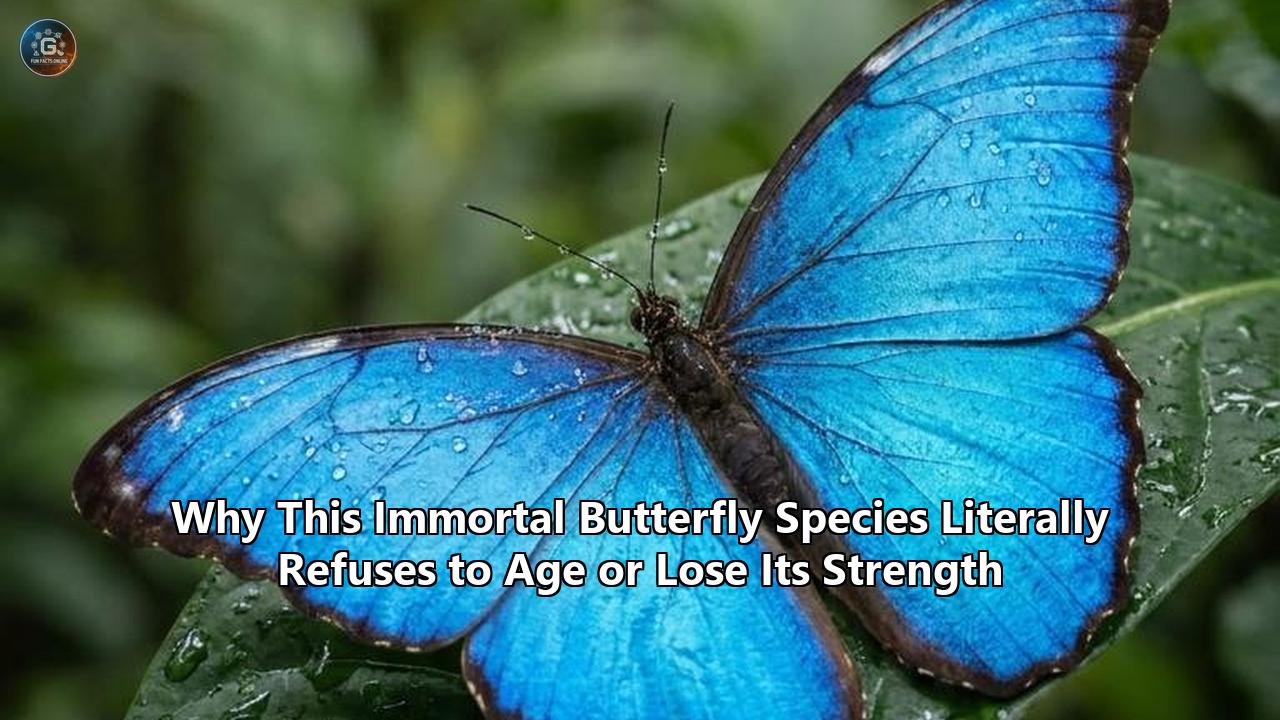
The air inside the insectaries of Gamboa, Panama, is thick with humidity and the heavy scent of decaying tropical vegetation. Outside, the midday sun beats down on the dense rainforest canopy flanking the Panama Canal. Inside, Dr. Jessica Foley, a postdoctoral researcher from the University of Bristol, gently extends her hand toward a vibrant black-and-orange butterfly perched on a damp leaf.
To the untrained eye, this creature, Heliconius hecale, is just another specimen of Central America’s rich biodiversity. But to a growing coalition of evolutionary biologists and gerontologists, it represents something far more profound: a biological anomaly that appears to have solved one of nature's most stubborn equations.
While most butterflies flit through existence in a frantic, two-week race against time before their wings tatter and their muscles fail, certain members of the Heliconius genus seem to exist outside of this standard biological ledger. They do not merely survive longer; they refuse to decline. They fly, feed, and reproduce with the same vigor on day one hundred as they did on day one.
In a landmark study published in Nature Communications, Foley and a team of researchers from the University of Bristol and the Smithsonian Tropical Research Institute (STRI) in Panama revealed that these insects have evolved a strategy to delay the aging process itself. The study’s most shocking revelation is that older individuals of Heliconius show absolutely no measurable decline in physical performance or muscle strength as they age—a phenomenon that defies the near-universal rule of biological senescence.
"When we look at the animal kingdom, aging is almost always seen as an inevitable downhill slide," says Foley. "But these butterflies seem to have found a way to slow down the slope, maintaining their physical vitality right up to the very end of their lives".
The discovery has sent shockwaves through the scientific community. It has forced researchers to reconsider how aging is programmed, and whether the physiological decay we take for granted in all living things—including humans—is truly as inescapable as we believe.
The Selection Shadow and the Evolutionary Trap
To understand why the biology of Heliconius is so radical, one must first understand the brutal evolutionary economics that govern the lives of most insects.
In the wild, the vast majority of butterflies are designed for planned obsolescence. Once an insect emerges from its chrysalis, it is essentially a highly specialized, short-lived delivery vehicle for genetic material. Because they face constant threats from predators, parasites, and sudden downpours, their statistical likelihood of surviving more than a few weeks in the wild is incredibly low.
Consequently, evolutionary forces have favored a "live fast, die young" strategy. In evolutionary biology, this is explained by a concept known as the "selection shadow". Coined by the British biologist Peter Medawar in the mid-20th century, the theory posits that the force of natural selection declines rapidly once an organism reaches reproductive age.
Because most wild animals die from external causes (like predation or disease) before they have a chance to grow old, genetic mutations that cause physical decline late in life are rarely weeded out. Evolution simply does not care what happens to a butterfly after it has laid its eggs. The body is allowed to disintegrate, its somatic tissues starving as resources are poured exclusively into reproduction.
[ Larval Stage: Resource Accumulation ]
                 │
                 ▼
[ Metamorphosis: Radical Restructuring ]
                 │
                 ▼
┌────────────────────────────────────────┐
│     Adult Emergence (Eclosion)         │
└──────────────────┬─────────────────────┘
                   │
         ┌─────────┴─────────┐
         ▼                   ▼
┌──────────────────┐┌──────────────────┐
│ Typical Butterfly││    Heliconius    │
│  (e.g., Dione)   ││   (H. hecale)    │
├──────────────────┤├──────────────────┤
│ • Nectar diet    ││ • Pollen diet    │
│ • Rapid decay    ││ • Somatic upkeep │
│ • 14-day lifespan││ • 300+ day life  │
│ • Muscle loss    ││ • No muscle loss │
└────────┬─────────┘└────────┬─────────┘
         │                   │
         ▼                   ▼
[ Early Death ]     [ Defied Aging ]
This is why a typical butterfly, such as the orange-winged Dione juno, has a maximum lifespan of roughly 14 days. In those two weeks, its flight muscles steadily degrade, its wings fray, and its grip on the world literally slips away.
But Heliconius did not accept this evolutionary bargain.
Instead of succumbing to the selection shadow, this group of tropical butterflies took a completely different evolutionary path. In the search for an immortal butterfly species, scientists are forced to look at how these insects managed to push back the boundary of physical decay so far that they can routinely live for nine months to nearly a year—up to 25 times longer than their closest evolutionary relatives.
"It is an astonishing evolutionary divergence," says Dr. Owen McMillan, a staff scientist at STRI who co-authored the study. "We are talking about species that share a relatively recent common ancestor, yet one lives for two weeks while the other can survive for nearly a year. In terms of mammal biology, that’s the equivalent of comparing the lifespan of a mouse to that of a bowhead whale. And they do it while maintaining the body of a young, freshly emerged insect".
The "Pull-inator": How to Measure a Butterfly's Bench Press
When Foley and her colleagues set out to study this phenomenon, they knew that simply documenting how long the butterflies lived was not enough. In longevity research, there is a crucial distinction between "lifespan" (how long you live) and "healthspan" (how long you remain healthy and active). Many organisms can be kept alive in a lab environment through pampering, but they still become frail, slow, and biologically decrepit.
To determine if Heliconius was truly resisting the physical decay of aging, the researchers needed a way to measure their physical performance over time. But how do you assess the athletic conditioning of an organism that weighs less than half a gram?
The solution was an ingenious, custom-built laboratory device that the team affectionately dubbed "The Pull-inator".
"We needed a standardized, repeatable metric for muscular decline," Foley explains. "In humans and other mammals, one of the most reliable indicators of biological aging and sarcopenia—muscle wasting—is grip strength. We realized we could adapt this concept for butterflies".
      [ Sandpaper-lined Perch ] <--- Butterfly grips this naturally
                 │
      ┌──────────┴──────────┐
      │  Lightweight Wood   │
      └──────────┬──────────┘
                 │
      [ Ultra-Sensitive Scale ] <--- Measures negative force (downward pull)
                 │
                 ▼
   [ Data Output to Computer ]
The Pull-inator consisted of a lightweight wooden perch lined with fine-grit sandpaper, which was mounted directly onto an ultra-sensitive laboratory balance scale. The experimental process was simple yet meticulous:
- Grip Initiation: A researcher would gently hold a butterfly by its wings and lower it toward the sandpaper-lined perch. Naturally seeking a foothold, the butterfly would grasp the perch with its legs.
- The Tension Phase: The researcher would then slowly and steadily pull the butterfly upward, away from the perch, along a vertical track.
- Force Measurement: As the butterfly resisted, pulling back to maintain its hold, its downward tug registered on the scale. Because the scale was zeroed before the test, the butterfly's resistance caused the weight reading to drop into negative numbers.
- The Release: The maximum negative reading recorded right before the butterfly finally let go was logged as its peak grip strength.
The researchers ran this test hundreds of times on two main species: Dryas iulia, a short-lived, orange-winged butterfly that does not feed on pollen, and Heliconius hecale, a long-lived, pollen-feeding species. They tested individuals across their entire lifespans, from the day they emerged from their pupae to the days preceding their natural deaths.
The results of the physical testing were stark.
In Dryas iulia, the trajectory of physical performance followed the classic, expected curve of biological decay. Within just five weeks of adult life, the butterflies had lost approximately 25% of their initial grip strength. Their legs became weak, their movements grew sluggish, and they struggled to hold onto surfaces. They were growing old, and their muscles were wasting away.
But in Heliconius hecale, the data showed a completely flat line.
Older individuals of H. hecale—some of which had been flying for months—performed just as well as their newly emerged counterparts. There was no detectable deterioration in their grip strength, no muscle wasting, and no loss of coordination. Physically, a ninety-day-old Heliconius was virtually indistinguishable from a five-day-old specimen.
"It was incredible to watch," Foley says. "You would have these butterflies that were, in insect terms, absolute senior citizens. Yet when you put them on the Pull-inator, they held on with the exact same fierce tenacity as the young ones. They simply do not get weak".
The Dietary Revolution: Eating the Enemy
For decades, entomologists have known that Heliconius butterflies possess a superpower that separates them from almost all other Lepidoptera. They eat pollen.
For a typical butterfly, feeding is a simple, highly restricted affair. They possess a long, straw-like mouthpart called a proboscis, which is designed exclusively for sucking up liquids—predominantly flower nectar. While nectar is an excellent source of quick energy, it is essentially pure sugar water. It contains virtually no proteins, lipids, or essential amino acids.
Because of this dietary limitation, a standard butterfly is locked into a metabolic countdown. The proteins and lipids required to maintain its muscles, repair its organs, and produce eggs must all come from the resources it stored up as a caterpillar. Once those larval reserves are exhausted, the butterfly's body begins to consume itself to keep going, leading to rapid physical decline and death.
┌─────────────────────────────────────────────────────────┐
│              THE DIETARY SPLIT                          │
├────────────────────────────┬────────────────────────────┤
│   STANDARD NECTAR DIET     │    HELICONIUS POLLEN DIET  │
├────────────────────────────┼────────────────────────────┤
│ • Pure Carbohydrates       │ • Complete Amino Acids     │
│ • No somatic repair        │ • Heavy Lipids & Fats      │
│ • Larval reserves exhaust  │ • Active cellular repair   │
│ • Sarcopenia (muscle loss) │ • Somatic tissue preserved │
└────────────────────────────┴────────────────────────────┘
But roughly 10 million years ago, the ancestors of the Heliconius genus pulled off a remarkable evolutionary heist. They developed the ability to collect, process, and digest pollen grains as adults.
If you watch a Heliconius butterfly feeding on a wild Psiguria flower, you will notice that it does not simply insert its proboscis and drink. Instead, it deliberately scrapes its mouthparts against the flower's anthers, collecting a thick, yellow coating of pollen grains on the outside of its proboscis.
Once it has gathered a sufficient mass, the butterfly secretes a highly specialized, enzyme-rich saliva onto the pollen cluster. This saliva acts as an external digestive fluid, breaking down the tough, protective outer shells of the pollen grains (the exine) and releasing the nutrient-rich cytoplasm inside. The butterfly then sucks this nutrient soup back up through its proboscis.
"Pollen is a biological goldmine," says Dr. Dave Lohman, an evolutionary biologist who has studied tropical insect ecology. "It is packed with lipids, essential fats, and, most importantly, all twenty amino acids—the fundamental building blocks of protein. By learning to eat pollen, Heliconius freed themselves from the absolute tyranny of larval resource limits. They could rebuild their bodies on the fly".
This diet provides a continuous stream of raw materials that Heliconius uses to maintain its somatic tissues, repair cellular damage, and fuel the continuous production of eggs. Indeed, while other female butterflies lay all their eggs in one brief burst before dying, female Heliconius can lay eggs continuously for months on end.
For a long time, the scientific consensus was simple: Heliconius lives longer and stays strong because they eat their veggies, while other butterflies live on a diet of soda.
But when Foley's team decided to test this assumption, they uncovered a twist that shattered this neat dietary narrative.
The Great Deprivation Experiment: What Lies Beneath the Diet?
To prove that pollen was the sole engine behind the butterfly’s youthful longevity, the researchers set up a classic isolation experiment. They took a large cohort of Heliconius hecale and split them into two groups:
- Group A (The Control): These butterflies were fed a luxurious diet of both sugar water and fresh, high-quality pollen.
- Group B (The Deprived): These butterflies were completely restricted from pollen, allowed to feed only on pure sugar water—the exact same diet that their short-lived cousins, Dryas iulia, subsist on in the wild.
If the pollen-diet hypothesis was correct, the pollen-deprived Heliconius in Group B should have withered rapidly, showing the same accelerated aging, muscle loss, and early death as Dryas iulia.
At first, the experiment seemed to confirm the role of diet. The pollen-deprived Heliconius in Group B did indeed lose body mass more quickly than their pollen-fed peers. Without the protein from pollen, they could not maintain their weight, and they were physically weaker than the control group.
But then, the survival curves began to diverge in a way that shocked the researchers.
Despite being completely starved of pollen, the butterflies in Group B still lived for a median of about seven weeks (nearly 50 days).
By contrast, the nectar-drinking Dryas iulia butterflies in the study had a median lifespan of only about four weeks (28 days).
Even more telling, when the researchers attempted to reverse the experiment by feeding pollen to Dryas iulia, it had absolutely no effect on their lifespan or muscle retention. The short-lived species simply could not utilize the nutrients to extend its life or halt its physical decline.
[ Survival Curves in the Deprivation Experiment ]

Lifespan (Days)
 120 ┼───────────────────────────────────────────────────────────
     │                                     * H. hecale (Pollen-fed)
 100 ┼────────────────────────────────────*  [~104 days]
     │                                   *
  80 ┼──────────────────────────────────*
     │                    * H. hecale (Pollen-deprived)
  60 ┼───────────────────* [~50 days]
     │                  *
  40 ┼─────────* Dryas iulia (Pollen-fed / Deprived - No change)
     │        * [~28 days]
  20 ┼───────*
     │
   0 ┴───────┴───────────┴───────────┴───────────┴───────────┴───────────
             10          20          30          40          50 (Weeks of study)
"That was the big eureka moment," Foley says. "If diet was the only factor, then a pollen-deprived Heliconius should have died at the exact same rate as Dryas iulia. But they didn’t. They still significantly outlived them. And feeding pollen to the short-lived species didn't save them".
This crucial finding pointed directly to an inescapable conclusion: the extraordinary longevity and physical resilience of this immortal butterfly species is not just a product of what they eat. It is written deep within their genetic code.
Over millions of years of evolution, Heliconius has undergone profound, heritable changes in its core biology. They have evolved an intrinsic, genetic defense system that actively delays the aging process, independent of their diet. The pollen diet is not the engine of their youth; it is merely the high-octane fuel that allows their advanced biological machinery to run at peak performance.
The 25-Fold Lifespan Gap: Evolution's Radical Plasticity
To appreciate the scale of what Heliconius has accomplished, one must look at the evolutionary tree of the tribe Heliconiini.
The team’s comparative analysis of lifespans across the tribe revealed a level of variation that is virtually unheard of in closely related species.
The most extreme contrast documented in the study was between the long-lived Heliconius hewitsoni and the short-lived Dione juno.
- Dione juno lives for an average of just 14 days.
- Heliconius hewitsoni can live for up to 348 days—nearly a full year.
This represents an astonishing 25-fold difference in maximum lifespan between two insects that share a relatively recent common evolutionary ancestor.
"To put that in perspective," Foley explains, "the difference in lifespan across the entire class of insects is about 5,000-fold—ranging from adult mayflies that live for a single day to queen ants that can live for thirty years. But those species are separated by hundreds of millions of years of evolution. To see a 25-fold difference between close cousins within the same tribe is mind-blowing. In mammals, the maximum difference in lifespan across the entire class—from tiny shrews to bowhead whales—is only about 100-fold".
[ Comparing Lifespan Plasticity Across Classes ]

MAMMALS (Entire Class: Shrew to Bowhead Whale)
├─────────────────────────────────────────────────┤ 100-fold variation

HELICONIINI TRIBE (Close Butterfly Cousins)
├─────────────────────────────────────────────────────────────┤ 25-fold variation
This massive gap proves that lifespan is not a fixed, immutable biological constraint. Instead, it is an incredibly plastic trait that can be rapidly dialed up or down by evolutionary pressures.
But how did this happen? Why did evolution select for such extreme longevity in Heliconius while leaving its close relatives in the biological fast lane?
The answer lies in the complex ecological relationships that these butterflies have forged in the Neotropical rainforests.
Unlike most butterflies, which rely on cryptic camouflage or rapid, erratic flight to escape birds and other predators, Heliconius butterflies are highly toxic. During their larval stage, they feed almost exclusively on passion flower vines (Passiflora), extracting and sequestering powerful chemical defenses called cyanogenic glycosides.
These toxins make the adult butterflies incredibly distasteful and lethal to predators. To advertise this toxicity, Heliconius species have evolved bright, high-contrast wing patterns—a phenomenon known as aposematism.
Furthermore, different species of Heliconius often mimic each other's wing patterns in what is known as Müllerian mimicry. By sharing the same warning signals, they split the "cost" of educating local predators. If a young bird eats one toxic Heliconius erato, it learns to avoid all other butterflies with that same black, red, and yellow pattern, including Heliconius melpomene.
This chemical defense shield dramatically reduces the risk of predation. In the wild, a Heliconius butterfly is far less likely to be eaten on any given day than a non-toxic butterfly.
"This is where Medawar's selection shadow comes back into play," Lohman says. "Because their daily risk of being eaten is incredibly low, the statistical probability that a Heliconius butterfly will survive to an old age is actually quite high. Suddenly, there is a massive evolutionary benefit to keeping the body healthy and functional for longer. Natural selection can finally see into the late-life period, and it selects for genetic mechanisms that delay aging and maintain physical strength."
The Cellular Defense Force: The Molecular Secrets of Non-Aging
With the evolutionary justification clear, the question shifts from why they do it to how they do it. What is actually happening inside the cells of the immortal butterfly species that allows them to preserve their muscles and organs for so long?
While the full genome-wide association studies are still underway, preliminary molecular and biochemical analyses have revealed a multi-layered defense force operating within Heliconius cells.
1. Superior Proteostasis and Chaperone Networks
One of the primary hallmarks of aging in all animals is the loss of proteostasis—the cell's ability to maintain the integrity of its proteins. Over time, proteins become damaged, misfolded, and clump together, forming toxic aggregates that impair muscle function and neurological health (a process central to human diseases like Alzheimer's and sarcopenia).
Heliconius butterflies appear to have evolved an incredibly robust network of molecular chaperones, also known as heat shock proteins (HSPs). These chaperones act like cellular quality control officers, constantly folding, repairing, and refolding damaged proteins before they can aggregate. This keeps their flight muscles supple and functional, preventing the 25% drop in strength seen in other species.2. Advanced DNA Repair Mechanisms
Every second an organism exists, its DNA is under assault from reactive oxygen species (ROS)—byproducts of normal cellular metabolism—as well as UV radiation from the sun. This damage leads to double-strand breaks and mutations that eventually cause cellular senescence or cell death.
                  [ CELLULAR ASSAULT (ROS, UV Radiation) ]
                                     │
                  ┌──────────────────┴──────────────────┐
                  ▼                                     ▼
        ┌──────────────────┐                  ┌──────────────────┐
        │ Typical Butterfly│                  │    Heliconius    │
        └────────┬─────────┘                  └────────┬─────────┘
                 │                                     │
                 ▼ (Rapid Accumulation)                ▼ (Continuous Repair)
        [ DNA Damage & Breaks ]               [ High-Fidelity Repair ]
                 │                                     │
                 ▼                                     ▼
       [ Cellular Senescence ]                [ Genomic Integrity ]
                 │                                     │
                 ▼                                     ▼
         [ Muscle Wasting ]                   [ Infinite Strength ]
Foley's preliminary genomic analyses suggest that Heliconius has up-regulated several key DNA repair pathways. They possess highly efficient enzymes that can quickly identify and repair double-strand breaks with high fidelity, preventing the genomic instability that typically drives the aging process.
3. Metabolic Flexibility and the mTOR Pathway
In most organisms, there is a direct trade-off between nutrition, reproduction, and lifespan. This is governed largely by the nutrient-sensing pathway known as mTOR (mechanistic target of rapamycin).
When an animal consumes a diet high in protein and amino acids, the mTOR pathway is highly activated. While this triggers rapid growth and high reproductive output, it also accelerates the aging process. Conversely, dietary restriction (low protein) down-regulates mTOR, which triggers autophagy (cellular cleanup) and extends lifespan, but reduces reproduction.
Heliconius has somehow broken this link. They consume a high-protein diet (pollen) and reproduce continuously, yet they do not trigger the accelerated aging process that typically accompanies high mTOR activation."They have managed to decouple reproduction from somatic decay," says Dr. Richard Harrison, a geneticist specializing in metabolic pathways. "Somehow, they are using the rich resources of the pollen to continuously rebuild and repair their tissues without sending the cellular signal that accelerates aging. It is a biological cheat code".
Inside the Panama Insectary: A Day with the Ageless
To truly grasp the reality of this research, one must leave the dry text of scientific papers and stand inside the screen-walled greenhouses of the Smithsonian Tropical Research Institute in Gamboa.
Here, the air is alive with the soft, paper-like rustle of thousands of wings. The insectaries are designed to mimic the natural microclimate of the rainforest understory, filled with lush passion flower vines, flowering Psiguria shrubs, and artificial feeding stations filled with sugar-water sponges.
On a humid Tuesday morning, Dr. Jessica Foley is preparing for another round of testing. She carries a small plastic container housing a specimen of Heliconius hecale that has been marked with a tiny, hand-painted number "42" on its wing.
       _____   _____
      /     \ /     \
     |   42  |       |  <--- "H. hecale #42" (Age: 180 Days)
     \       |       /       Physically identical to a newly emerged butterfly
      \     / \     /
       \___/   \___/
"Number 42 has been in our insectary for exactly 180 days," Foley says, her voice carrying a mix of professional precision and genuine affection. "In the wild, a normal butterfly of her size would have died five months ago. Her wings are slightly worn around the edges from flying in the enclosure, but look at her behavior."
When Foley opens the container, Number 42 doesn't flutter weakly. It launches into the air with immediate, explosive power. Its flight path is steady and deliberate, navigating the complex foliage of the greenhouse with perfect coordination.
Foley watches it land on a Psiguria flower and immediately begin its characteristic scraping behavior, collecting pollen with its proboscis.
"If you ran a biochemical assay on her flight muscles right now, you would find the exact same concentrations of glycogen and structural proteins as you would in a butterfly that emerged from its chrysalis yesterday," Foley says. "And she is still actively laying viable eggs. Her reproductive system shows zero signs of menopause or egg depletion".
To demonstrate, Foley recaptures Number 42 and walks over to the bench where the "Pull-inator" is set up. With practiced, gentle movements, she holds the butterfly by its closed wings and lowers its legs to the sandpaper-lined perch.
The insect’s tiny tarsi immediately grip the rough surface. Foley begins to pull upward on the mounting slide. On the digital screen of the balance scale, the numbers rapidly click downward into the negative:
-1.2 grams... -1.8 grams... -2.5 grams... -3.1 grams...
Finally, with a soft snap, Number 42 lets go. Foley records the peak negative value.
"Three point one grams," Foley says, smiling. "That is the exact same force she pulled when we first tested her at ten days old. Her muscles are literally refusing to age."
Translating the Wings: What Butterflies Can Teach Us About Human Aging
While the study of tropical butterflies is a pursuit of pure evolutionary science, the implications of Heliconius biology extend far beyond the borders of the Panamanian rainforest.
Humanity is currently facing an unprecedented demographic shift. As global lifespans continue to rise, we are confronting a massive surge in age-related diseases, particularly sarcopenia (the loss of muscle mass and strength) and general physical frailty.
In medicine, there is an urgent push to shift focus from merely extending lifespan to extending healthspan—the period of life spent free from chronic disease and physical disability.
This is where the immortal butterfly species could become an invaluable asset to human medicine.
  [ HELICONIUS RESEARCH ]                       [ HUMAN MEDICINE ]
  • Proteostasis maintenance    ─────────►     • Therapies for protein aggregation
  • Decoupled mTOR pathway      ─────────►     • Novel metabolic therapies
  • High-fidelity DNA repair    ─────────►     • Mitigating genetic decay
  • Resistance to sarcopenia    ─────────►     • Treatments for muscle wasting
"At the molecular level, the basic machinery of life is incredibly well conserved across the entire animal kingdom," Foley says. "The way a butterfly muscle cell contracts, the way its mitochondria produce energy, and the way its DNA repair enzymes operate are fundamentally similar to the processes occurring in human cells. If we can identify the specific genetic switches that allow Heliconius to maintain its proteostasis and muscle strength, we may unlock new therapeutic targets for preventing muscle wasting and cellular senescence in humans".
Several key areas of human aging research could directly benefit from the Heliconius model:
Combating Sarcopenia
Sarcopenia is one of the most debilitating aspects of human aging. Starting around age 30, humans lose up to 3% to 8% of their muscle mass per decade, a rate that accelerates dramatically after age 60. This loss of strength leads to falls, loss of independence, and metabolic dysfunction.
By studying the molecular pathways that keep Heliconius muscles at 100% capacity for their entire lives, researchers hope to identify genetic or pharmaceutical interventions that can preserve muscle mass and function in elderly humans, effectively halting the onset of frailty.
Rethinking Rapamycin and mTOR Inhibitors
Currently, one of the most promising anti-aging drugs under investigation is rapamycin, which works by inhibiting the mTOR pathway. However, rapamycin has significant side effects in humans, including immune suppression and metabolic disruptions, because it forces the body into a low-resource "survival mode."
Because Heliconius has successfully evolved a way to keep its somatic tissues in a state of continuous repair while maintaining a high-protein, active reproductive lifestyle, deciphering their specific mTOR modifications could lead to a new class of "selective mTOR modulators". These compounds could offer the longevity benefits of dietary restriction without the associated costs of muscle loss, reduced fertility, and low energy.
Enhancing Cellular Proteostasis
Many of the most devastating neurodegenerative disorders in humans, including Alzheimer's, Parkinson's, and ALS, are characterized by the accumulation of misfolded proteins.
If scientists can isolate the highly efficient chaperone proteins and heat shock genes that Heliconius uses to keep its cells clear of toxic protein aggregates, it could pave the way for gene therapies or small-molecule drugs designed to boost the human brain's natural protein-clearing mechanisms.
The Evolutionary Tree of the Tribe Heliconiini
To appreciate the rapid evolutionary changes that led to this longevity, it is helpful to look at the maximum documented lifespans of various species within the tribe Heliconiini. The contrast between pollen-feeding and non-pollen-feeding species is stark:
| Species | Primary Adult Diet | Maximum Documented Lifespan | Physiological Muscle Decline? |
|---|---|---|---|
| ---Dione juno--- | Nectar only | 14 days | Yes (Rapid) |
| ---Dryas iulia--- | Nectar only | 68–98 days | Yes (Severe, ~25% loss) |
| ---Heliconius erato--- | Pollen & Nectar | 180 days | No detectable decline |
| ---Heliconius hecale--- | Pollen & Nectar | 277 days | No detectable decline |
| ---Heliconius hewitsoni--- | Pollen & Nectar | 348 days | No detectable decline |
This table illustrates the profound impact of the evolutionary shift to pollen-feeding and the associated genetic changes that accompanied it.
Even within the same genus, species like Heliconius hewitsoni have pushed the boundaries of what was once thought biologically possible for an adult butterfly.
The Next Frontier: Sequencing the Genetic Switch
Back in her office at the University of Bristol, Dr. Jessica Foley is looking at a high-resolution genetic sequence map on her computer monitor. The screen is filled with a dense forest of colored bars representing the active genes in Heliconius hecale.
The immediate next step for the research team is to initiate a massive, comparative genomic sequencing project. By comparing the active transcriptomes of long-lived Heliconius species with those of short-lived relatives like Dryas iulia, they hope to pinpoint the exact regulatory genes that act as the master "switches" for aging.
                     [ COMPARATIVE TRANSCRIPTOMICS ]
                                    │
           ┌────────────────────────┴────────────────────────┐
           ▼                                                 ▼
┌──────────────────────┐                           ┌──────────────────┐
│   Dryas iulia        │                           │ Heliconius hecale│
│   (Short Lifespan)   │                           │ (Long Lifespan)  │
└──────────┬───────────┘                           └────────┬─────────┘
           │                                                │
           └───────────────────────┬────────────────────────┘
                                   │
                                   ▼
                [ IDENTIFIED DIFFERENTIAL GENE EXPRESSION ]
                                   │
                                   ▼
                    [ Target Master "Aging Switch" ]
"We want to find the precise network of genes that are turned on in Heliconius during late life that remain silent in other butterflies," Foley says. "We are looking for the genetic orchestrators of this non-aging state."
There are still many unresolved questions.
For instance, while the researchers have proven that Heliconius maintains its physical strength, they do not yet know if the butterflies experience cognitive decline. Does an old Heliconius butterfly remember the locations of its favorite flowers as well as a young one? Do its sensory systems—its vision and chemical receptors—remain as sharp as its muscles?
"It is one thing to have strong legs, but it is another to maintain a sharp brain," McMillan notes. "If we find that their nervous systems are also protected from the ravages of time, then we are looking at a truly complete model of healthy aging."
As the afternoon sun begins to set over the rainforest of Gamboa, the insectaries quiet down. The butterflies find perches beneath the broad leaves of the passion vines, folding their wings as the tropical night approaches.
Among them is Number 42, clinging effortlessly to a leaf in the warm breeze. Her grip is tight, her muscles are strong, and she is completely unbothered by the passage of time.
In a world where everything eventually breaks down, this tiny, delicate creature continues to fly in defiance of the curve, holding onto the secrets of a youth that refuses to fade.
Reference:
- https://en.igihe.com/environment/article/the-butterflies-that-defy-ageing-scientists-uncover-a-remarkable-longevity-mystery
- https://www.sciencedaily.com/releases/2026/06/260622014302.htm
- https://www.vice.com/en/article/scientists-just-discovered-why-a-species-of-butterfly-is-one-of-the-longest-living-creatures-on-earth/
- https://economictimes.indiatimes.com/news/international/us/scientists-found-a-tropical-butterfly-that-appears-to-slow-its-own-aging-and-one-species-can-live-for-348-days-as-a-result/articleshow/131825036.cms?from=mdr
- https://www.bristol.ac.uk/news/2026/june/geriatric-butterfly-species-lives-nearly-three-times-as-long-as-their-relative.html
- https://www.boisestatepublicradio.org/2026-06-20/butterflies-may-hold-clues-to-longer-lives
- https://www.earth.com/news/butterflies-that-live-for-a-year-appear-to-resist-aging/
- https://www.youtube.com/watch?v=rAaaz8nppNc
- https://thefitnessdailyreport.com/health-wellness/butterfly-that-barely-ages-could-help-unlock-longevity-secrets/
- https://www.smithsonianmag.com/smart-news/these-butterflies-can-live-25-times-longer-than-their-relatives-they-might-provide-insights-into-healthy-aging-in-humans-180988993/
- https://www.ksl.com/article/51514061/an-unusual-strategy-helps-some-tropical-butterflies-live-25-times-longer-than-their-relatives
- https://www.discovermagazine.com/these-tropical-butterflies-boast-long-lifespans-and-barely-age-their-secret-may-be-eating-lots-of-pollen-49261
- https://www.sci.news/biology/heliconius-butterflies-longevity-14863.html