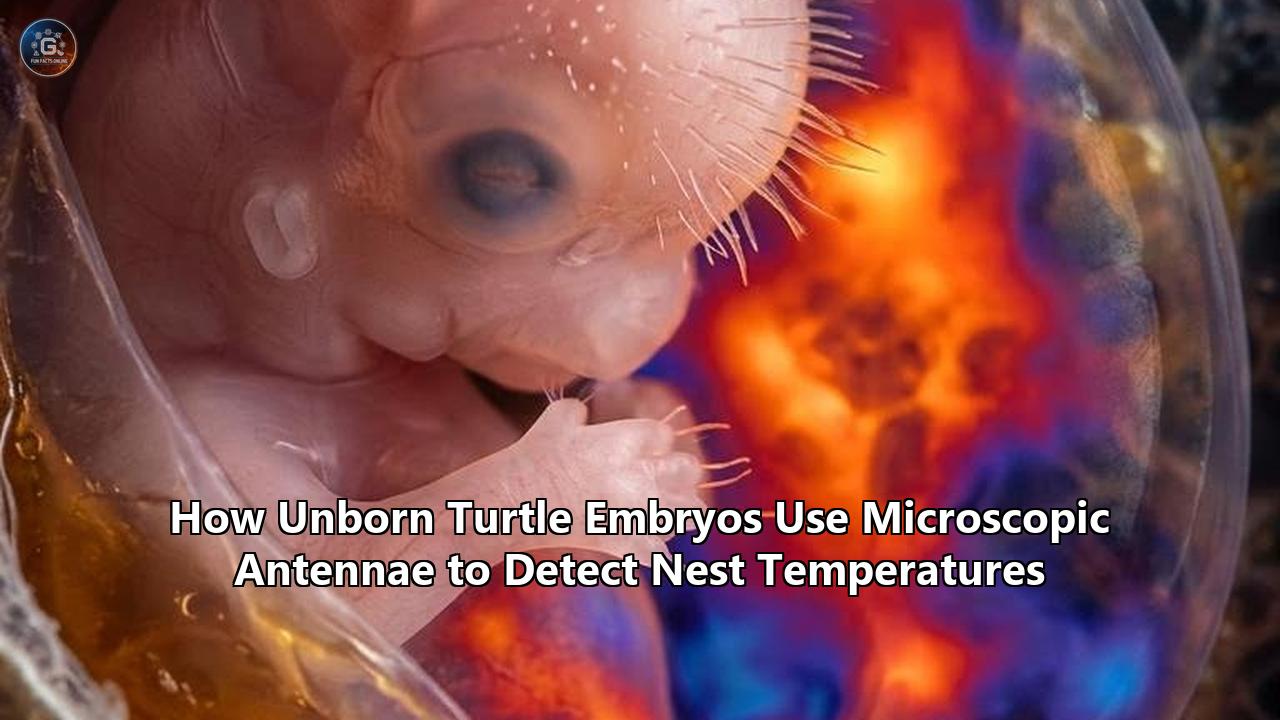
Deep inside an incubator at Iowa State University in Ames, row after row of plastic containers hold painted turtle eggs nestled in damp vermiculite. To the naked eye, the white, leathery spheres appear completely inert. They do not twitch, peep, or roll. Yet within these shells, a silent, microscopic calculus is taking place—one that has dictated the survival and sex ratios of reptiles for over 200 million years.
For decades, developmental biologists knew that turtles lack the sex chromosomes that define male or female in mammals. Instead, their fate hinges entirely on ambient heat. A nest resting at 26 degrees Celsius will produce a clutch of all-male hatchlings; nudge that temperature up to 31 degrees Celsius, and every egg hatches as female. But a fundamental biological paradox left researchers stumped: how does an unborn embryo, lacking a mature central nervous system, physically detect a fraction-of-a-degree temperature variation through a calcified shell and translate that physical thermal cue into a permanent genetic destiny?
A research team led by evolutionary biologist Dr. Nicole Valenzuela at Iowa State University unveiled the missing link: microscopic, hair-like cellular extensions known as primary cilia. Functioning as miniature antenna arrays on the surface of embryonic gonadal cells, these tiny organelles appear to directly sense thermal fluctuations in the nest, triggering the molecular cascade that turns genes on or off to determine sex.
The discovery reframes our understanding of turtle embryo temperature detection, offering a mechanistic explanation for how environmental signals penetrate living cells during early development. It also arrives at a critical moment in conservation biology, as warming global temperatures threaten to push reptile populations toward single-sex extinction.
The Enigma of the Hidden Sensor
To understand why the discovery of ciliary thermosensing matters, one must first look at the history of temperature-dependent sex determination (TSD). First documented in reptiles during the late 1960s by French paleontologist Madeleine Charnier, TSD defied the classic Mendelian view of genetics. Rather than inheriting sex chromosomes—like the X and Y pair in humans—embryonic turtles rely on environmental signals during a critical developmental window known as the Thermosensitive Period (TSP).
During the TSP, which spans the middle third of embryonic incubation, the embryonic gonad remains bi-potential. It can become either a testis or an ovary. If the nest is cool, the tissue differentiates into testes. If it is warm, it becomes an ovary.
                 NEST AMBIENT TEMPERATURE
                            │
            ┌───────────────┴───────────────┐
            ▼                               ▼
       COOL NEST                       WARM NEST
   (e.g., <27.7°C)                 (e.g., >31.0°C)
            │                               │
            ▼                               ▼
Primary Cilia TRP Channels     Primary Cilia TRP Channels
Remain Inactive / Low Ca²⁺     Activated / High Ca²⁺ Influx
            │                               │
            ▼                               ▼
     KDM6B Demethylase             pSTAT3 Represses KDM6B
      Remains Active                      Expression
            │                               │
            ▼                               ▼
  DMRT1 Transcription On         Aromatase (CYP19A1) On
            │                               │
            ▼                               ▼
    TESTIS FORMATION                 OVARY FORMATION
         (MALE)                          (FEMALE)
For decades, the search for the underlying "thermostat" focused almost exclusively on chemical pathways inside the cell nucleus. Researchers isolated key enzymes, such as aromatase (which converts testosterone into estrogen), and epigenetic regulators like KDM6B, a histone demethylase that acts as an engine for male development.
When incubation temperatures are cool, KDM6B removes repressive methyl marks from the promoter region of DMRT1, a master gene that drives male organ formation. Warm temperatures inhibit KDM6B through a pathway involving the phosphorylated signaling protein pSTAT3, shutting down male development and permitting ovary growth.
Yet a critical piece of the puzzle was always missing from these genetic models.
"We knew all the players inside the nucleus—the transcription factors, the histone modifiers, the hormone enzymes," said Dr. Valenzuela. "What we did not know was the receiving antenna. How does the cell surface register that the surrounding sand is 28.5°C versus 30.0°C? A gene sitting in chromatin cannot directly feel heat; something on the outside of the cell has to act as the transducer."
The Antenna Hidden in Plain Sight
For over a century, primary cilia were dismissed by cellular biologists as evolutionary junk—vestigial remnants left over from ancestral single-celled organisms that used motile cilia to swim through primeval seas. Unlike their motile counterparts, which beat in rhythmic waves to clear mucus from human lungs or push fluid through tissues, primary cilia are completely motionless. Most cells in the vertebrate body possess exactly one primary cilium, projecting outward like a lone flag pole.
By the early 2000s, biomedical researchers began realizing that these cellular appendages were far from useless. In mammals, primary cilia were discovered to harbor dense clusters of sensory receptors. They act as cellular radar, detecting fluid flow in human kidney tubules, chemical signals in olfactory tissue, and photon energy in the retina.
                     PRIMARY CILIUM STRUCTURE

                  ┌────────────────────────┐
                  │    Ciliary Membrane    │
                  │  (Loaded with TRP      │
                  │   Ion Channels)        │
                  └───────────┬────────────┘
                              │
                    ┌─────────┴─────────┐
                    │ Microtubule Axoneme│
                    │   (9+0 Pattern)   │
                    └─────────┬─────────┘
                              │
                    ┌─────────┴─────────┐
                    │   Basal Body      │
                    │ (Centriole Origin)│
                    └───────────────────┘
When Valenzuela's lab embarked on a comparative genomic and transcriptomic investigation of two distinct turtle species—the painted turtle (Chrysemys picta), which relies on nest heat for sex determination, and the spiny softshell turtle (Apalone spinifera), which uses sex chromosomes—they were not looking for primary cilia.
"We set out to do a broad, unbiased sweep of gene expression across embryonic tissues during the thermosensitive window," Valenzuela explained. "We wanted to contrast a species whose sex responds to thermal shifts with one whose sex is locked in by genetics from the moment of fertilization."
When the transcriptomic datasets were compiled and mapped, the results yielded a clear surprise. In the painted turtle gonads, the developmental window that determines sex was accompanied by a massive, localized surge in the expression of genes responsible for ciliogenesis—the assembly and maintenance of primary cilia. Transcripts encoding intraflagellar transport (IFT) proteins, which act as biological motorized carts hauling building blocks up and down the cilium stem, were operating at maximum capacity.
In contrast, the spiny softshell turtle, whose embryos develop inside identical thermal environments but rely on sex chromosomes, showed no such surge in ciliary genetic activity. Their primary cilia assembly pathways remained at quiet, baseline levels.
"It was a stark contrast," Valenzuela recalled. "One species was actively constructing and tuning cellular antennae right at the precise moment it needed to read the temperature of the nest, while the genetic species ignored the thermal signal altogether. That was the moment we realized we had hit upon a fundamental mechanism of turtle embryo temperature detection."
Unraveling the Biophysical Machinery
To understand how a primary cilium converts heat into cellular action, Valenzuela’s team, alongside structural biologists and electrophysiologists, began examining the molecular architecture studded along the ciliary membrane.
The primary cilium provides a unique compartment within the cell. Because its internal fluid volume is tiny compared to the main cytoplasm, even a small influx of ions through its surface membrane causes a rapid, dramatic spike in internal ion concentration.
Embedded within the membrane of these embryonic turtle cilia are specialized proteins called Transient Receptor Potential (TRP) ion channels. TRP channels are known across the animal kingdom as biological thermometers. In human skin, for instance, TRPV1 registers burning heat above 43°C, while TRPM8 detects icy cold.
               THE THERMAL TRANSDUCTION CASCADE

 [ Nest Heat Energy ] ──► [ Flexing of Ciliary Lipid Membrane ]
                                      │
                                      ▼
                       [ Opening of TRPV4/TRPA1 Channels ]
                                      │
                                      ▼
                       [ Micro-Influx of Ca²⁺ Ions ]
                                      │
                                      ▼
                       [ Signal Transduction to Nucleus ]
                                      │
                                      ▼
                       [ Epigenetic Shift: KDM6B / pSTAT3 ]
                                      │
                                      ▼
                       [ Gonadal Fate: Male or Female ]
In embryonic turtles, two primary channels—TRPV4 and TRPA1—are concentrated directly along the primary cilia of gonadal and mesonephric cells. These channels operate within tight temperature boundaries:
- TRPA1 Activation Threshold: Responds to mild thermal shifts around 28°C to 30°C.
- TRPV4 Activation Threshold: Opens across the mid-to-high 20s°C, exhibiting high sensitivity to ambient physical changes.
When nest temperatures cross critical thresholds, the heat alters the physical fluid dynamics of the cilia's lipid bilayer membrane. This physical stretch opens the TRPV4 and TRPA1 channels. Calcium ions ($\text{Ca}^{2+}$) flood through the ciliary pore, generating a rapid electrical and chemical signal that travels down the axoneme into the cell body.
This sudden micro-spike of calcium alters the intracellular activity of enzymes that control gene transcription. In warm conditions, the continuous calcium flux activates pSTAT3 signaling, which represses the male-producing KDM6B gene. Deprived of KDM6B, the embryonic gonad stops testis development and activates female pathways, switching on aromatase (CYP19A1) to synthesize estrogen.
In cooler nest conditions, the ciliary ion channels remain largely closed, keeping intracellular calcium low. KDM6B remains fully active, clearing the repressive marks off DMRT1 and committing the tissue to male development.
"The primary cilium is essentially acting as an amplifier," said Dr. Anthony Breitenbach, a developmental physiologist who has researched thermal responses in turtle embryos. "Because the volume inside a cilium is tiny, opening just a few ion channels causes a huge localized change in calcium concentration. It allows an unborn embryo to detect thermal shifts that would otherwise be lost as background noise inside the larger cell body."
Active Passengers: Thermotaxis Within the Egg
The discovery of ciliary thermosensing also helps solve a behavioral puzzle that has intrigued biologists for over a decade: turtle embryos are not passive passengers inside their eggs; they move toward heat.
In 2011, ecologist Wei-Guo Du and his colleagues at the Chinese Academy of Sciences published observations showing that freshwater turtle embryos actively reposition themselves inside the eggshell during incubation. If one side of an egg is warmed by sunlit soil, the tiny embryo shifts its body toward the warmer pole, a behavior termed embryonic thermotaxis.
                 EMBRYONIC THERMOTAXIS IN THE EGG

               Direct Sunlight / Warm Top Soil
                         (31.0°C)
                     │ │ │ │ │ │ │ │
                     ▼ ▼ ▼ ▼ ▼ ▼ ▼ ▼
             ┌─────────────────────────────┐
             │   Upper Shell Zone (Warm)   │
             │       \                     │
             │        \  Embryo Moves      │
             │         \  Toward Heat      │
             │          ▼                  │
             │   Lower Shell Zone (Cool)   │
             └─────────────────────────────┘
                         (27.5°C)
               Cool Subsurface Sand/Mud
By moving across a thermal gradient inside a single egg—which can vary by up to 4.7°C from top to bottom—an embryo can select its own micro-environment, moving to a spot that accelerates its growth or alters its developmental fate.
To test whether this movement was an active biological choice rather than simple physical gravity, Du’s team treated a subset of eggs with capsazepine, a pharmacological compound known to block thermal TRP channels. When the thermal sensors were chemically blocked, the embryos stopped moving toward warm spots. They sat motionless, developing as whatever sex matched the average temperature of the whole egg.
The identification of primary cilia provides the exact cellular machinery that drives this movement. Peripheral sensory neurons in the embryo’s dorsal root ganglia express TRP channels along their primary cilia. These ciliary neural sensors give the embryo a localized "sense of touch" for heat, enabling its neuromuscular system to navigate toward thermal comfort zones inside its shell long before it hatches.
"When you put together ciliary sensing in the gonads with ciliary sensing in the nervous system, you realize the embryo is a fully active participant in its own development," said Dr. Rosario Marroquín-Flores, a specialist in reptile developmental biology. "It isn't just sitting there being cooked into a male or female by the soil. It is reading its environment via these microscopic antennae and adjusting both its internal genetics and its physical position in real time."
Comparative Evidence Across Turtle Lineages
To test the universal reach of this mechanism, Valenzuela’s lab expanded their investigation across diverse reptile lineages. They analyzed evolutionary divergence across species that split over 200 million years ago.
| Turtle Species | Sex Determination System | Primary Cilia Gene Activation During TSP | Thermotaxis Behavior Observed? | Key Molecular Regulators |
|---|---|---|---|---|
| Painted Turtle (Chrysemys picta) | Temperature-Dependent (TSD) | High (Upregulation of IFT88, ARL13B) | Yes | KDM6B, TRPV4, pSTAT3 |
| Red-Eared Slider (Trachemys scripta) | Temperature-Dependent (TSD) | High (Upregulation of ciliary transcripts) | Yes | KDM6B, DMRT1, Aromatase |
| Three-Keeled Pond Turtle (Mauremys reevesii) | Temperature-Dependent (TSD) | High (TRPV1/TRPA1 pathway active) | Yes (Moves to "Goldilocks Zone") | MrTRPA1, MrTRPV1, KDM6B |
| Olive Ridley Sea Turtle (Lepidochelys olivacea) | Temperature-Dependent (TSD) | High (Global epigenetic & ciliary shift) | Limited by egg geometry | JARID2, KDM6B, SRSF5 |
| Spiny Softshell Turtle (Apalone spinifera) | Genetic / Sex Chromosomes (GSD) | Low / Static (No TSP upregulation) | No (Insensitive to thermal sex shifts) | Chromosomal Sex Determinants |
The comparative data revealed a clear evolutionary pattern. In every TSD species examined—from freshwater slider turtles to massive marine sea turtles—the thermal sensitive period is marked by an orchestrated expression of primary cilia genes. In species that evolved hard-coded sex chromosomes, those pathways were quieted or repurposed for other physiological tasks.
This divergence offers an evolutionary trail. Environmental sex determination is the ancestral condition for turtles. Over millions of years, as certain lineages evolved sex chromosomes, they bypassed the primary cilium’s thermal trigger in favor of strict genetic inheritance. Yet the ancient mechanism remained preserved in the vast majority of living turtle species, anchored to the physical environment outside the eggshell.
Biomedical Parallel: From Turtle Eggs to Human Ciliopathies
While the discovery answers long-standing questions in reptile biology, its implications extend into human medicine.
In humans, defects in primary cilia cause a devastating class of genetic disorders known as ciliopathies. Conditions like autosomal dominant polycystic kidney disease (ADPKD), Bardet-Biedl syndrome, and Meckel-Gruber syndrome stem from mutations in genes that build primary cilia or transport molecular cargo along their shaft. Patients suffering from ciliopathies often exhibit severe kidney cysts, skeletal deformities, blindness, and reproductive tract abnormalities.
   HUMAN CILIOPATHIES                   TURTLE THERMOSENSING
 (Polycystic Kidney Disease)           (Sex Determination)
             │                               │
             ▼                               ▼
 Ciliary Structural Defects             Primary Cilia Modulated
 (Mutations in PKD1/TRPP2)             by Environmental Heat
             │                               │
             ▼                               ▼
 Disrupted Calcium Signaling           Controlled Calcium Influx
             │                               │
             ▼                               ▼
 Tissue Malformation / Cysts          Epigenetic Differentiation
"Primary cilia are currently at the center of human health research," said Valenzuela. "They manage major signal transduction pathways, including Sonic Hedgehog and Wnt, which direct organ formation in human embryos. Finding that turtles use these exact same cellular antennae to process external temperature changes opens up a whole new window into how primary cilia interact with environmental stress."
Researchers studying human hypothermia, fever responses, and organ preservation during transplantation are eager to understand how turtle cilia maintain structural stability across extreme temperature ranges. Turtles are biological masters of thermal tolerance. Certain species can freeze solid during winter hibernacula and emerge unharmed in spring.
If scientists can decipher how turtle cilia protect their internal ion channels from cold-induced denaturation or heat stress, those mechanisms could be harnessed to improve therapeutic hypothermia treatments for human stroke patients or extend the shelf-life of donor organs preserved in ice.
"It's basic science that's also biomedical science," Valenzuela emphasized. "Nature frequently reuses the same structural tools for completely different tasks. A cilium that senses fluid pressure in a mammalian kidney is built from the same basic toolkit as a cilium that senses nest heat in a painted turtle egg."
The Climate Crisis: When Thermal Antennae Fail
While the discovery of primary cilia thermosensing illuminates an ancient evolutionary mechanism, it highlights a growing ecological emergency.
Across the globe, rapid climate change is driving nest temperatures past critical thresholds. In locations like Raine Island in Australia—the world's largest nesting site for green sea turtles (Chelonia mydas)—scientists have found that warm temperatures are producing hatchling cohorts that are over 99% female. Similar skewed sex ratios are being reported in loggerheads in Florida and olive ridleys in Costa Rica.
                     GLOBAL THERMAL PRESSURES

                     Historic Nest Averages
                     (Balanced 50/50 Ratios)
                               │
                               ▼
               [ +1.5°C Global Temperature Rise ]
                               │
                               ▼
                     Current Nest Averages
                     (99%+ Female Skewing)
                               │
                               ▼
               [ Projected +2.5°C Rise by 2050 ]
                               │
                               ▼
                [ Lethal Nest Threshold (>34°C) ]
                   (100% Embryonic Mortality)
The issue lies in the operational limits of the cellular antenna. Primary cilia and their embedded TRP channels evolved over millions of years to operate within a specific thermal range. When sand temperatures consistently exceed 31°C, the ciliary signaling cascade is permanently locked in the "female" setting. If nest temperatures surpass 34°C, the heat overwhelms the cell's repair mechanisms entirely, causing embryonic mortality.
Although embryonic thermotaxis allows unborn turtles to move away from hot spots inside an egg, that behavioral buffer has limits.
"Thermoregulation inside the egg only works if there is a cooler zone to move into," noted Dr. Richard Shine, an evolutionary biologist at Macquarie University who co-authored early studies on embryo movement. "If the entire nest is sitting at 33°C from top to bottom, the egg offers no sanctuary. The embryo's primary cilia will register heat across every millimeter of its body, and the result will be 100% female hatchlings, or worse, complete nest failure."
Scientists are investigating whether turtle embryo temperature detection pathways possess the genetic plasticity needed to adapt to rising temperatures. Can the activation thresholds of TRPV4 or TRPA1 channels evolve to trigger at higher temperatures over just a few generations? Or are these physical structures too constrained by their deep evolutionary roots?
What Comes Next on the Evidence Trail
Now that the link between primary cilia and sex determination has been established, researchers are moving to directly visualize and manipulate these cellular antennae in real time.
At Iowa State University and partner institutions, research teams are preparing the next phase of experiments:
- Super-Resolution Live Ciliary Imaging: Using lattice light-sheet microscopy, researchers aim to watch calcium flux within individual primary cilia on living embryonic turtle gonads as temperature is adjusted in real time under the lens.
- CRISPR Ciliary Knockouts: Utilizing gene-editing tools to selectively knock out key ciliogenesis genes (such as IFT88) in turtle embryos to observe whether loss of primary cilia destroys the cell’s ability to detect nest temperature.
- Field Validation Across Thermal Gradients: Deploying micro-data loggers inside wild turtle nests from Canada to the Gulf Coast to measure how real-world daily temperature fluctuations interact with ciliary signaling cascades.
- Pharmacological Modulators for Conservation: Testing whether safe, biodegradable compounds applied to nest sand could subtly alter ciliary ion channel sensitivity, helping restore male hatchling ratios in threatened populations.
"We have opened an entirely new door into how environmental signals communicate with animal genomes," Valenzuela said. "Understanding that a microscopic antenna sitting on a single cell inside an egg can dictate the fate of an entire species gives us both a powerful biological insight and a clear warning. We are now looking at climate change through the lens of individual cell organelles."
The journey from observing nest temperatures in wild riverbeds to mapping molecular traffic along a single primary cilium highlights a fundamental truth of biology: the macroscopic phenomena that shape whole ecosystems often hinge on microscopic mechanics hidden deep within the cell. Whether these microscopic antennae can adapt fast enough to survive a rapidly warming planet remains one of the most critical questions in modern evolutionary biology.
Reference:
- https://bioengineer.org/antenna-like-cell-structure-helps-turtles-sense-warmth-that-determines-sex/
- https://www.news.iastate.edu/news/antenna-cell-appendage-linked-turtles-sex-deciding-warmth-sensing
- https://www.seaturtlestatus.org/articles/how-temperature-determines-sex-in-sea-turtles
- https://oceanservice.noaa.gov/facts/temperature-dependent.html
- https://pubnavigator.com/2021/06/22/turtle-temperature-intron-retention/
- https://mcmsc.asu.edu/sites/g/files/litvpz576/files/2023-08/Turtle.pdf
- https://pubmed.ncbi.nlm.nih.gov/38914191/
- https://pmc.ncbi.nlm.nih.gov/articles/PMC7081227/
- https://ttu-ir.tdl.org/items/8abf4667-15ac-4f03-98d0-1b723fa719cf
- https://pmc.ncbi.nlm.nih.gov/articles/PMC2500130/
- https://www.researchgate.net/publication/334858900_The_Embryos_of_Turtles_Can_Influence_Their_Own_Sexual_Destinies
- https://embryo.asu.edu/pages/behavioral-thermoregulation-turtle-embryos-2011-wei-guo-du-bo-zhao-ye-chen-and-richard-shine
- https://www.eurekalert.org/news-releases/778549
- https://www.smithsonianmag.com/smart-news/turtle-embryos-may-be-able-influence-their-sex-moving-around-inside-egg-180972796/
- https://www.nationaltribune.com.au/antenna-like-cell-appendage-linked-to-turtles-sex-deciding-warmth-sensing/
- https://www.facebook.com/wsbtv/videos/did-you-know-sea-turtle-hatchlings-arent-born-male-or-female-their-sex-is-determ/2171609433406443/