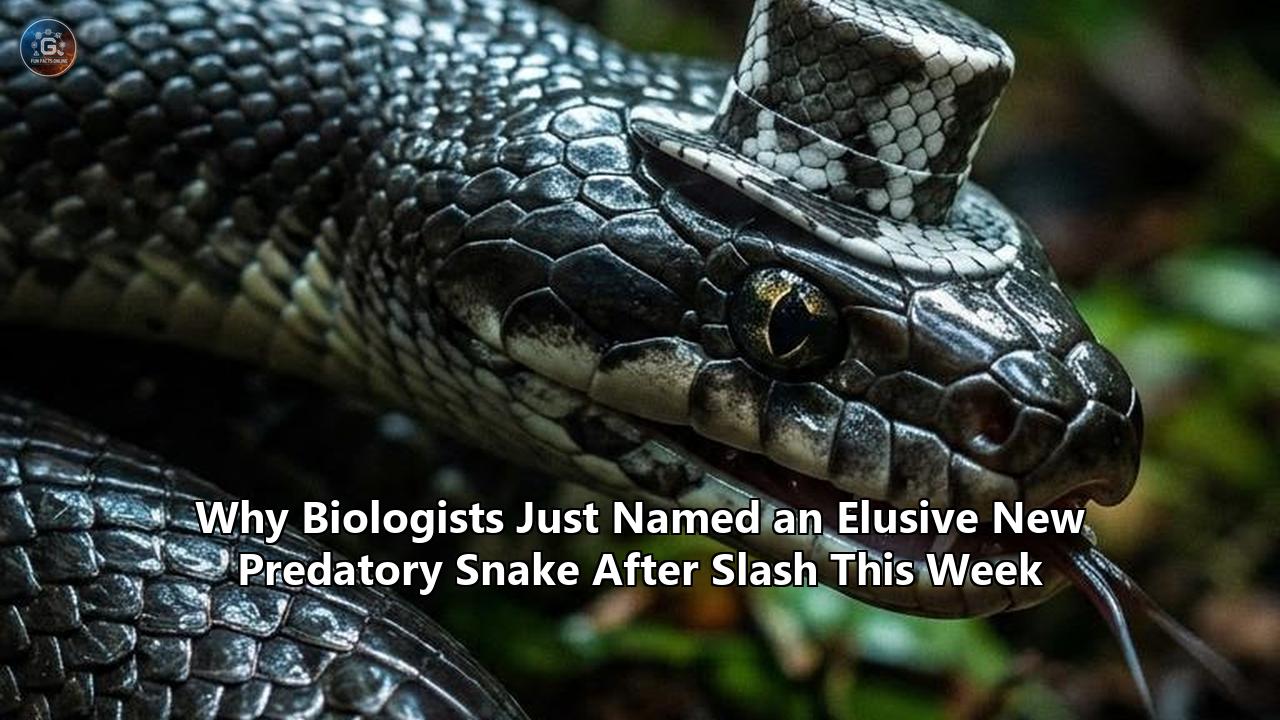
CHICAGO — In the dense tropical rainforests of New Guinea, an elusive predator has prowled the leaf litter unrecognized by modern science for decades. That changed when an international team of herpetologists formally unveiled Lielaphis slashi, a newly identified 28-inch colubrid snake named in honor of rock icon and lifelong reptile advocate Saul Hudson, better known as Slash.
The description, published in the taxonomic journal Zootaxa, solves an evolutionary cold case that began in 2006. Led by researchers from the Field Museum of Natural History in Chicago and Louisiana State University (LSU), the team deployed comparative genomic sequencing and micro-morphological analysis to distinguish the non-venomous reptile from lookalike relatives that populate the poorly documented Melanesian understory.
The debut of this new snake species named after Slash bridges high-level biodiversity science with rock-and-roll history. Behind the moniker lies a specific scientific tribute: recognizing Hudson not merely for his status as the lead guitarist of Guns N’ Roses, but for his decades of quiet, substantive advocacy for herpetological conservation, zoological institutions, and natural history education.
“As a long-time herpephile, I am extremely honored and humbled to have Lielaphis slashi from New Guinea named after me,” Hudson said following the announcement. “It is really exciting; I never would have imagined this moment would arrive.”
While the cultural connection commands international headlines, the research team emphasizes that the snake arrives at a critical conservation juncture. The ecosystems of New Guinea—the world’s second-largest island—are experiencing rapid disruption from agricultural expansion, coffee cultivation, and commercial mining, placing newly documented endemics in immediate peril before scientists even understand their baseline life history.
TAXONOMIC PROFILE: LIELAPHIS SLASHI
━━━━━━━━━━━━━━━━━━━━━━━━━━━━━━━━━━━━━━━━━━━━━━━━━━━━━━━━━━━━
Kingdom:       Animalia
Phylum:        Chordata
Class:         Reptilia
Order:         Squamata
Suborder:      Serpentes
Family:        Colubridae
Genus:         Lielaphis
Species:       Lielaphis slashi (Slash's groundsnake)
Holotype Loc.: Lowland/Montane Transition Forests, New Guinea
Total Length:  ~71 centimeters (28 inches)
Dentition:     Enlarged posterior maxillary teeth (rear-fanged)
Ecology:       Nocturnal, terrestrial forest floor predator
Diet:          Smooth-scaled scincid lizards, reptile eggs
Venom Status:  Non-hazardous to humans
Threats:       Mining operations, commercial coffee conversion
━━━━━━━━━━━━━━━━━━━━━━━━━━━━━━━━━━━━━━━━━━━━━━━━━━━━━━━━━━━━
The Cold Case in the Canopy: From 2006 Expedition to Museum Vaults
The story of Lielaphis slashi did not begin in a high-tech genomics laboratory, but in the muddy, mist-shrouded foothills of New Guinea nearly two decades ago. In 2006, Dr. Christopher Austin, a professor of biological sciences and curator of herpetology at Louisiana State University’s Museum of Natural Science, was conducting field surveys in the island's interior.
New Guinea contains roughly 8 percent of global terrestrial biodiversity on less than 0.5 percent of Earth's land area, yet vast tracts of its central cordillera and lowland rainforests remain virtually unsampled by professional taxonomists. Night surveys in these environments require researchers to navigate steep, hyper-humid terrain, scanning rotting logs, root tangles, and thick moss carpets for cryptic wildlife.
During one such nocturnal sweep, Austin collected a slender, reddish-brown groundsnake. Superficially, the specimen shared several anatomical hallmarks with other members of the genus Lielaphis, a poorly known lineage of forest-dwelling colubrids that hide beneath detritus by day and emerge under cover of darkness to hunt. Lacking obvious external traits to immediately separate it from known taxa, the specimen was carefully preserved, cataloged, and integrated into museum research collections.
For ten years, the specimen waited in ethanol storage. Museum collections routinely harbor undescribed species—often referred to as "dark biodiversity"—due to a severe global shortage of taxonomic specialists equipped to process backlog accessions.
In 2016, Austin joined forces with Dr. Sara Ruane, then a postdoctoral researcher who subsequently became Associate Curator of Herpetology at the Field Museum. Ruane had spent years untangling complex evolutionary trees among cryptic snakes across Madagascar and the Indo-Pacific. Recognizing that New Guinea's colubrid fauna was riddled with unrecognized lineages, Ruane and Austin initiated a systematic review of the island's historical museum accessions.
The investigative momentum surged in 2025 when Dr. Tianqi Huang joined Ruane’s laboratory at the Field Museum as a postdoctoral researcher. Huang, an evolutionary biologist specialized in snake phylogenomics and morphological modeling, took on the task of subjecting the 2006 specimen to modern genetic screens.
What looked like an ordinary brown snake in a jar soon emerged as an evolutionary outlier.
Anatomy of a Cryptic Predator: How Biologists Proved the Species Was Unique
Proving that a single preserved specimen represents an undescribed lineage requires a rigorous, multi-tiered evidentiary framework. Relying solely on color or gross body shape often fails in herpetology because closely related snakes frequently exhibit convergent evolution or high intraspecific variation.
To confirm the distinct status of the new snake species named after Slash, the team mounted a three-pronged investigation combining comparative morphological scalation, multilocus genomic sequencing, and macroecological niche modeling.
Taxonomic Differentiation Workflow
 1. Morphometrics ────> Precise scale counts (ventral, subcaudal, dorsal rows)
 2. Phylogenomics ────> DNA extraction & target-capture sequencing across loci
 3. Niche Modeling ───> Microclimate, elevation, and precipitation variance
Morphometrics and Scutellation
The researchers carried out microscopic scalation counts—examining the exact arrangement and number of epidermal scales across the head, midbody, and tail. In colubrids, scale patterns function as reliable anatomical signatures:
- Dorsal scale counts: The number of scale rows encircling the midsection differed statistically from closely related sister taxa in the genus Lielaphis.
- Subcaudal and ventral patterns: Variations were documented along the underside of the snake, correlating with unique body-to-tail length ratios.
- Cranial anatomy: The specimen possessed a distinct head morphology, characterized by a slightly flattened, blunt snout adapted for forcing its way beneath root systems and subterranean burrows.
Specialized Dentition
Anatomical inspections revealed that Lielaphis slashi is an active, specialized predator rather than an ambush constrictor. The snake lacks the musculature and physical girth required to suffocate quarry. Instead, it relies on modified dentition: large, backwards-curving teeth positioned toward the posterior margin of the maxilla.
“Snakes in this genus often have large teeth in the back of their mouths, which New Guinea groundsnakes may use to grab on to and eat small, slippery-scaled lizards and the eggs of other reptiles,” explained Dr. Ruane. “This snake isn't grasping and squeezing its prey like a boa constrictor.”
The elongated rear teeth work like anchors. When hunting slick, smooth-scaled scincid lizards that writhe violently in the humid underbrush, these posterior fangs prevent the prey from slipping free while the snake works it down its esophagus. The species produces no venom harmful to humans.
Molecular Phylogenetics
The deciding evidence came from the Field Museum’s genetic laboratories. Dr. Huang extracted genomic material from preserved tissue samples, sequencing conserved genetic markers alongside high-mutation loci to reconstruct the evolutionary history of the genus.
“Using multiple cutting-edge genetic analyses, we found that L. slashi is genetically distinct from other similar snakes in the same genus,” Huang said. “The combination of physical characteristics, like differences in numbers of scales when compared with other species, and the genetic evidence is what led us to realize that it is an entirely new species.”
Ecological Niche Modeling
Morphological and genomic separation was further corroborated through computational bioclimatic modeling. By plotting environmental metrics—such as elevation gradients, mean annual precipitation, canopy density, and soil substrate moisture—the researchers discovered that Lielaphis slashi occupies an environmental profile distinct from its closest phylogenetic cousins. The snake inhabits specialized transitional rainforest zones that bridge lowland alluvial floors with lower montane forests, explaining why field biologists had evaded finding it in standard coastal and high-elevation surveys.
Saul Hudson’s Unlikely Legacy in Herpetological Science
The formal scientific naming of a species is governed by strict global conventions administered by the International Commission on Zoological Nomenclature (ICZN). While descriptive names often reference anatomical traits or geographic locations, dedicating an epithet to an individual—known as an eponym—is reserved for significant patrons, pioneering researchers, or cultural figures who meaningfully aid natural sciences.
In pop culture, celebrity naming can sometimes read like a public relations stunt. For the team at the Field Museum, however, assigning the specific epithet slashi was deeply rooted in genuine natural history history.
Saul Hudson’s public identity is defined by towering electric guitar riffs, mirrored aviators, leather trousers, and a black silk top hat. Yet within herpetological circles, Hudson’s genuine obsession with reptiles has been common knowledge for more than thirty-five years.
THE DUAL ROLES OF SAUL HUDSON
─────────────────────────────────────────────────────────────
Public Persona:               Private Herpetophile:
• Rock and Roll Hall of Fame  • Lifelong reptile husbandry
• Guns N' Roses lead guitar   • Zoo & museum benefactor
• Gibson Les Paul exponent    • Captive breeding pioneer
• Stadium tour headliner      • Field conservation advocate
─────────────────────────────────────────────────────────────
Growing up between England and suburban Los Angeles, Hudson spent substantial portions of his youth overturning rocks, catching native garter snakes, and exploring canyon arroyos. By the time Guns N’ Roses conquered global rock charts in the late 1980s and early 1990s, Hudson’s home housed an extensive menagerie of exotic serpents. His collection included Burmese pythons (Python bivittatus), anacondas (Eunectes murinus), monitor lizards, and most famously, a red-tailed boa (Boa constrictor) named Pandora, which made a notable appearance in the band’s 1989 music video for “Patience.”
Unlike amateur collectors who view exotic reptiles as status-symbol stage props, Hudson developed deep ties to zoological institutions. He became a long-standing supporter and trustee-level benefactor of the Los Angeles Zoo, frequently advocating for its reptile and amphibian conservation programs, touring captive breeding setups, and promoting scientific literacy.
In 1995, Hudson agreed to be featured on the cover of REPTILES Magazine, photographed holding a massive reticulated python (Malayopython reticulatus) while discussing captive husbandry standards, responsible pet ownership, and the crucial ecological role of apex reptilian predators.
That single magazine issue had unintended, generational consequences.
From a 1995 Magazine Cover to a Zootaxa Paper: Sara Ruane’s Story
When that 1995 issue of REPTILES Magazine arrived in mailboxes, it landed in the hands of a 12-year-old girl in New Jersey with an all-consuming interest in animal biology.
“Guns N’ Roses has been one of my favorite bands since I was in first grade, and by fifth grade, I had already told my teacher that I wanted to be a herpetologist—a scientist who studies reptiles—when I grew up,” Dr. Sara Ruane recounted. “So when I was twelve years old and got my copy of REPTILES Magazine in the mail, and it had a picture of Slash holding his pet reticulated python on the cover, I thought, ‘This guy is so cool’.”
Throughout her secondary education, undergraduate work, and graduate research at LSU, Ruane held onto that magazine. As her professional career advanced—culminating in her appointment as Associate Curator of Herpetology at one of the world’s preeminent research museums—she periodically revisited the interview.
“I reread his interview, and he talked about how much he loves museums and zoos and natural history, and about how when he was a kid, he’d go outside and look for snakes,” said Ruane. “It was all stuff that I really related to, and it made me think that he’d be a great person to name a new species after.”
Timeline: The Path to Lielaphis slashi
 1995: Slash covers REPTILES Magazine, inspiring 12-year-old Sara Ruane.
 2006: Chris Austin collects an unidentified colubrid during a New Guinea survey.
 2016: Ruane and Austin initiate revisionary taxonomic analysis of Papuan fauna.
 2025: Tianqi Huang joins the team at the Field Museum; genomics confirms divergence.
 2026: Formal publication in Zootaxa names Lielaphis slashi; Slash visits the museum.
When the genetic and morphological datasets definitively proved that the 28-inch New Guinea colubrid was an unnamed taxon, Ruane knew precisely how she wanted to dedicate the discovery. Ahead of the formal paper release, Hudson traveled to the Field Museum in Chicago. There, Ruane met the musician in person, showing him the holotype specimen stored in the museum vaults alongside the very copy of REPTILES Magazine she had preserved since 1995.
The formalization of the new snake species named after Slash was completed with the publication of the peer-reviewed paper in Zootaxa, making Lielaphis slashi an indelible part of the official zoological record.
Under the Canopy: The Ecological Realm of New Guinea's Groundsnakes
To understand why Lielaphis slashi went undetected for so long, one must examine the extreme geography of New Guinea. The island is characterized by impenetrable tropical foliage, rugged limestone karst terrain, and mountain ranges rising abruptly to over 16,000 feet.
Within this environment, the genus Lielaphis plays a hyper-specific role in forest floor trophic webs.
Forest Floor Trophic Dynamics: The Micro-Niche of L. slashi
━━━━━━━━━━━━━━━━━━━━━━━━━━━━━━━━━━━━━━━━━━━━━━━━━━━━━━━━━━━━
Vegetative Debris / Leaf Litter / Karst Crevices
  │
  ▼
Invertebrates & Detritivores (Insects, Worms, Land Snails)
  │
  ▼
Primary Ectotherms (Lygosomine Skinks, Forest Geckos)
  │
  ▼
LIELAPHIS SLASHI (Rear-fanged terrestrial mesopredator)
  │
  ▼
Forest Raptors, Monitor Lizards (*Varanus*), Native Marsupials
━━━━━━━━━━━━━━━━━━━━━━━━━━━━━━━━━━━━━━━━━━━━━━━━━━━━━━━━━━━━
Unlike arboreal tree boas or semi-aquatic water snakes, groundsnakes are strictly terrestrial fossorial-to-subfossorial hunters. They inhabit the interface between decaying surface vegetation and the upper layers of humus. In tropical conditions, this layer stays continually damp, providing refuge for an immense biomass of small skinks (particularly from the diverse subfamily Lygosominae) and nocturnal geckos.
Field data suggest Lielaphis slashi operates as a nocturnal cruiser. By moving slowly through root cavities and under rotting bark, it tracks down sleeping lizards or unearths clutches of soft-shelled squamate eggs buried in the soil.
Observing this behavior in real-time is notoriously difficult. “It’s incredibly hard to observe snakes in the wild before they slither away, so our knowledge about L. slashi is limited,” Ruane noted. Most encounters in New Guinea last mere seconds before an individual vanishes into limestone fissures or dense root mass. Consequently, preserved museum specimens remain the primary vehicle for unlocking their basic biological profiles.
The Conservation Crucible: Deforestation, Mining, and Dark Biodiversity
While Guns N’ Roses was once branded “the most dangerous band in the world,” Lielaphis slashi represents no physical danger to people. Instead, human industrial expansion represents an immediate existential threat to the snake.
The description of the new snake species named after Slash serves as a critical warning siren for Melanesian conservation. New Guinea contains the third-largest continuous tract of tropical rainforest remaining on Earth, behind only the Amazon and Congo basins. Yet that wilderness is being rapidly fragmented.
Primary Pressures on Papuan Forest Ecosystems:
• Monoculture Agriculture: Rapid conversion of lowlands for oil palm and coffee.
• Commercial Mineral Extraction: Extensive open-pit nickel, copper, and gold operations.
• Industrial Timber Logging: Selective logging cutting corridors into virgin interiors.
• Infrastructure Intrusion: New access roads bisecting endemic micro-habitats.
“The habitats that Slash’s groundsnake is from are under threat from industries like coffee farming and mining,” said Ruane. “That’s part of why describing the species that live there is important. Every species should be recognized in order for us to better understand how ecosystems work, how everything fits into the environment. We can’t conserve animals or other living things that we don’t know about.”
This highlights a fundamental dilemma in conservation biology known as the Linnaean shortfall—the gap between the species that exist on Earth and those that have been formally identified and named by taxonomists.
Under the guidelines of the International Union for Conservation of Nature (IUCN) Red List, an organism cannot receive an official threat categorization, statutory protection, or reserve-designation priority until it has a valid taxonomic description. An undescribed animal destroyed by an open-pit mine simply never existed in the eyes of international environmental law.
THE TAXONOMY-TO-CONSERVATION PIPELINE
  Field Collection ──> Museum Deposition ──> Genomic & Morphological Diagnosis
         │
         ▼
  Formal ICZN Publication (Zootaxa) ──> IUCN Red List Threat Assessment
         │
         ▼
  Statutory Habitat Protections & Regional Reserve Buffer Zones
By officially naming Lielaphis slashi, the researchers have given New Guinea environmental managers a legal and scientific baseline to assess habitat impacts across its range. If future surveys reveal that the snake is confined exclusively to a narrow altitudinal band vulnerable to commercial concessions, the species can immediately be proposed for red-listing under threatened status.
Eponyms in Taxonomy: Why Cultural Figures Matter to Science Communication
Taxonomists have debated the role of cultural eponyms for centuries. Purists argue that specific epithets should remain strictly descriptive—denoting coloration (albus, niger), morphological quirks (cornutus, grandis), or geographic points of origin (guineensis, amazonensis).
However, over the past three decades, evolutionary biologists have recognized the strategic value of charismatic eponyms in driving public engagement and funding toward neglected organisms.
When scientists name an insect, spider, or non-venomous snake after an obscure geographic coordinates string, the publication is read almost exclusively by a handful of niche taxonomists. When an organism is named with clear cultural resonance, it commands mainstream international coverage.
NOTABLE TAXONOMIC EPONYMS IN RECENT DECADES
──────────────────────────────────────────────────────────────────
Species:                    Namesake:               Group:
• Lielaphis slashi          Slash (Saul Hudson)     Colubrid Snake
• Aegrotocatellus jaggeri   Mick Jagger             Trilobite
• Scaptia beyonceae         Beyoncé Knowles         Horsefly
• Tetragramma donaldtrumpi  Donald Trump            Fossil Sea Urchin
• Hyloscirtus princecharlesi King Charles III       Treefrog
• Cirolana mercuryi         Freddie Mercury         Isopod
• Heteropoda davidbowie     David Bowie             Huntsman Spider
──────────────────────────────────────────────────────────────────
In the case of Lielaphis slashi, the naming serves two practical communication goals:
- Combating Herpetophobia: Snakes remain among the most vilified animals on Earth, routinely killed on sight due to deep-seated cultural fear and widespread misconceptions about venom risks. Connecting a non-venomous, beneficial groundsnake to a globally celebrated rock figure presents an opportunity to re-frame serpents as fascinating, ecologically vital components of healthy wild ecosystems.
- Elevating Natural History Museums: Modern taxonomic museums face severe funding shortages, collection space constraints, and institutional neglect. Demonstrating that a 2006 museum specimen yielded a major discovery twenty years later reinforces the critical role that museum archives play as living libraries of Earth’s biodiversity.
Hudson himself has consistently directed the public spotlight back toward the institutions preserving these animals. His support underscores an awareness that conservation succeeds not through celebrity posturing, but through adequately funded laboratories, professional curators, and rigorous field exploration.
What Lies Ahead for New Guinea Herpetology and L. slashi
The description of Lielaphis slashi is an opening chapter rather than a final conclusion. Major gaps remain in the scientific understanding of this newly recognized predator:
- Population Demographics and Range: Because the species was verified primarily through historical accessions and limited survey materials, the exact geographical limits of its range across New Guinea remain undetermined. Is Lielaphis slashi restricted to a single mountain chain, or does it range broadly throughout the island's mid-elevation belt?
- Reproductive Biology: The reproductive strategy of L. slashi remains unobserved in the wild. Whether it lays eggs (oviparity) or gives live birth (viviparity) is inferred from related taxa, but specific clutch sizes, seasonal breeding triggers, and incubation timelines have yet to be documented.
- Trophic Specialization: While rear-fanged dental morphology and related congeners point to a specialized diet of skinks and squamate eggs, comprehensive gut-content analyses or fecal DNA metabarcoding from living specimens will be needed to map its full prey spectrum.
- *Genomic Resolution of Lielaphis: The broader genus Lielaphis still contains multiple unresolved populations. Ongoing collaborative work between the Field Museum, LSU, and local institutions across Papua New Guinea and Indonesia will deploy third-generation long-read DNA sequencing to assess whether additional cryptic species remain hidden within existing natural history collections.
Herpetologists are planning follow-up field expeditions to New Guinea to collect ecological data on Lielaphis slashi in its natural habitat. The challenge is steep: field operations in New Guinea are logistically demanding, expensive, and subject to intense seasonal weather patterns.
Yet every confirmed identification changes the conservation landscape. Decades after an energetic, top-hatted guitar hero first revealed his pet pythons to the world, that childhood enthusiasm has crystallized into permanent taxonomic reality. Somewhere beneath the dense, rain-soaked leaf litter of the Melanesian jungle, Lielaphis slashi* continues to navigate the damp undergrowth, an ancient predator finally recognized by the science that chased it for twenty years.
Reference:
- https://www.reddit.com/r/GunsNRoses/comments/1vyg09a/guns_n_roses_guitarist_slash_has_a_newly/
- https://www.fieldmuseum.org/about/press/welcome-to-the-jungle-newly-discovered-snake-named-after-slash-from-guns-n-roses
- https://www.geneonline.com/new-guinea-ground-snake-species-named-after-guitarist-slash/
- https://reptilesmagazine.com/new-snake-species-named-after-slash-of-guns-n-roses/
- https://www.thenews.com.pk/latest/1416777-scientists-name-newly-discovered-snake-after-guns-n-roses-slash
- https://www.ynetnews.com/environment/article/h1ny6ycvgx
- https://nautil.us/new-species-of-groundsnake-named-after-guns-n-roses-guitarist-and-noted-herpephile-slash-1284130
- https://www.popsci.com/environment/snake-species-named-after-guns-n-roses-guitarist-slash/
- https://www.sciencedaily.com/releases/2026/09/260918024816.htm