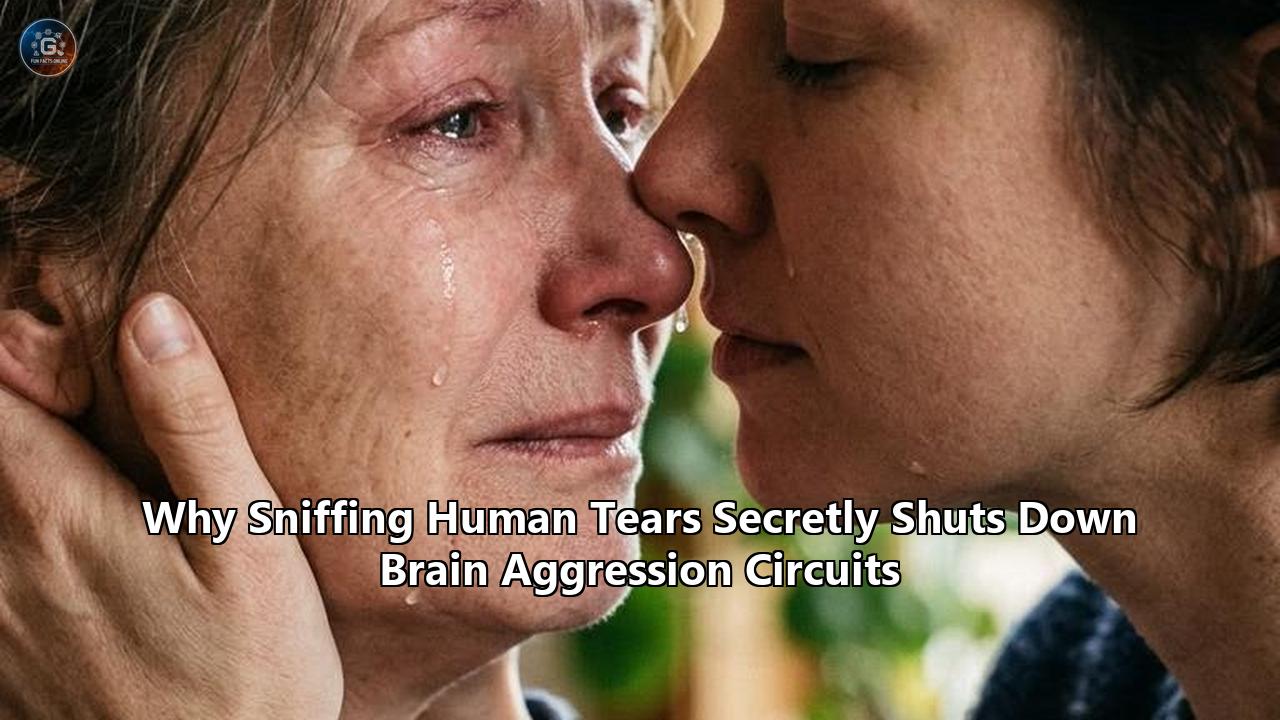
A quiet chemical signal embedded in human emotional tears directly disables the neural circuitry of physical and retaliatory aggression in men, reducing violent impulses by nearly half while simultaneously dampening activation across the brain’s executive and emotional networks. The discovery, originating from neurobiologist Noam Sobel’s laboratory at the Weizmann Institute of Science in Rehovot, Israel, and verified across molecular, behavioral, and neuroimaging platforms, overturns a century and a half of scientific consensus regarding why our species weeps.
For generations, biology treated emotional crying as a bizarre evolutionary accident—a uniquely human trait that wasted water, electrolytes, and metabolic energy without offering any obvious defensive utility. The newest data shows the opposite: emotional tears function as an externalized neurochemical shield. When inhaled, even without any detectable odor, these secretions systematically alter blood-oxygen-level-dependent (BOLD) signals in the human anterior insula and prefrontal cortex, blunting retaliatory behavior by an average of 43.7%.
Aggression Level During Provocation (PSAP Task)
Saline Control: [████████████████████] 100%
Inhaled Tears:  [███████████░░░░░░░░░]  56.3%  (-43.7% Retaliatory Behavior)

fMRI Neural Response (Provocation-Induced BOLD Signal)
Anterior Insula:    [████████████████████] Control
                    [█████████░░░░░░░░░░░] Tears Inhaled (Marked Suppression)
Prefrontal Cortex:  [████████████████████] Control
                    [██████████░░░░░░░░░░] Tears Inhaled (Marked Suppression)
The finding has triggered an immediate re-examination of social chemosignaling in humans. For decades, researchers assumed that because humans lack a functional vomeronasal organ—the specialized auxiliary nose used by lower mammals to detect pheromones—we were functionally immune to airborne behavioral manipulation. The Weizmann Institute’s molecular trials conducted in partnership with Duke University Medical Center proved this assumption false: human tears bypass conscious odor perception entirely, binding directly to four specific receptors in the main human olfactory epithelium to quiet the neural drivers of rage.
This realization did not arrive overnight. It emerged through a decades-long scientific struggle against established evolutionary dogma, beginning with a dismissal by Charles Darwin, escalating through bitter arguments over the human sense of smell, and arriving at a discovery that is reshaping psychiatry, evolutionary anthropology, and neurobiology.
1872–1980s: Darwin’s Blind Spot and the Excretion Hypothesis
The modern controversy over crying began with an uncharacteristic error by Charles Darwin. In his 1872 treatise The Expression of the Emotions in Man and Animals, Darwin wrestled with why humans were the only creatures to shed visible tears under psychological strain. He documented emotional weeping across human cultures, from distressed infants in English nurseries to grieving adults across the British Empire, but could find no adaptive purpose for the fluid itself.
Corneal lubrication was essential, Darwin conceded; reflex tearing washed away foreign debris. But psychogenic weeping struck him as a biological dead end. He concluded that emotional tears were merely an incidental physiological byproduct: when children scream in agony or rage, blood rushes to their eyes, the surrounding facial muscles contract forcefully to protect delicate ocular blood vessels, and this localized pressure mechanically squeezes the lacrimal glands, forcing tears onto the cheeks.
Emotional weeping, Darwin wrote, was "as purposeless as the secretion of tears from a blow outside the eye."
For over a century, orthodox evolutionary biology accepted Darwin’s verdict. Weeping was categorized as a visual artifact—a communicative flag evolved strictly for the eyes of others. If tears mattered, sociologists argued, it was because they visibly blurred vision, signaling vulnerability and submission from across a campfire. The fluid itself was presumed to be nothing more than sterile salt water, an inert backdrop to the visible performance of distress.
THE EVOLUTIONARY RE-EVALUATION
-----------------------------------------------------------------------------------------
Year    Investigator             Prevailing Doctrine / Discovery
-----------------------------------------------------------------------------------------
1872    Charles Darwin           Tears are purposeless mechanical byproducts of facial strain
1981    William Frey II          "Excretion Theory": Tears flush stress hormones (ACTH/Prolactin)
2005    Kazushige Touhara        ESP1 peptide discovered in mouse tears; controls mating receptivity
2011    Noam Sobel et al.        Human tears lower male testosterone and sexual arousal (Science)
2013    David Ferrero et al.     ESP22 peptide in juvenile mouse tears stops adult male attacks
2023    Shani Agron et al.       Sniffing human tears drops male aggression by 43.7% via main nose
2024+   Global Consortia         Investigation of infant tears, maternal pacification, synthetic mimetics
That consensus suffered its first structural crack in the late 1970s and early 1980s, when biochemist Dr. William H. Frey II set up a specialized lacrimal research unit at the St. Paul-Ramsey Medical Center in Minnesota. Frey was unconvinced that the body would shed energy-rich fluids for no biochemical purpose.
Frey designed protocols to harvest tears under two distinct conditions: irritant reflex (having volunteers chop raw Spanish onions) and emotional distress (having volunteers watch tragic tearjerkers like Brian’s Song or The Champ). He collected the fluid in capillary tubes and ran early protein assays.
Frey reported that emotional tears carried roughly 24% higher total protein concentration than irritant reflex tears. His laboratory isolated trace quantities of adrenocorticotropic hormone (ACTH), prolactin, and the endogenous opioid leucine-enkephalin in psychic tears—compounds intimately bound to the mammalian stress cascade.
From these initial assays, Frey formulated the "excretion theory" of crying: just as the kidneys eliminate metabolic wastes and the lungs purge carbon dioxide, the lacrimal glands act as an auxiliary excretory organ, purging neurochemical byproducts that accumulate during acute psychological stress. Crying, Frey argued, made people feel better because it physically ejected stress hormones from the bloodstream.
While Frey's hypothesis captured public attention, mainstream endocrinologists remained deeply skeptical. The mathematical reality did not hold up. A human crying session typically produces between one and two milliliters of fluid. Even if those two milliliters contained elevated concentrations of ACTH or prolactin, the total mass of hormone purged from the body was negligible compared to the vast hormonal reservoirs circulating in several liters of human blood.
The fluid had to be doing something else. If it was not an internal cleansing system, could the chemical payload of tears be directed outward, communicating with the brains of others?
2005–2010: The Rodent Clues and the Chemical Weaponry of Tears
The empirical pivot from tear chemistry as an internal waste stream to tear chemistry as a potent behavioral weapon occurred not in human clinics, but in rodent laboratories.
Throughout the early 2000s, sensory biologists recognized that rodents lived in a dense world of social chemosignals. Mice and rats communicated territory, dominance, and reproductive readiness through urine and glandular secretions. But few suspected that the fluid film protecting the cornea doubled as a high-potency broadcast channel.
In 2005, a research team led by Kazushige Touhara at the University of Tokyo isolated a specialized, non-volatile peptide from the extraorbital lacrimal glands of male mice. The peptide, christened Exocrine Gland-Secreting Peptide 1 (ESP1), was not released into the air; it was spread across the face during grooming and transferred to the bedding.
RODENT CHEMICALLY MEDIATED TEAR DYNAMICS
----------------------------------------------------------------------------------
Species / Subject      Molecule / Pathway           Observed Behavioral Effect
----------------------------------------------------------------------------------
Adult Male Mouse       ESP1 -> V2R Receptor / VNO   Triples female sexual receptivity (lordosis)
Juvenile Mouse         ESP22 -> VNO Circuitry       Complete blockade of adult male mounting/aggression
Blind Mole Rat         Lacrimal smear over pelt     Stops lethal attacks by dominant colony rivals
When female mice brushed their snouts against these male-conditioned tears, ESP1 bound to a specific receptor—V2Rp5—expressed in the female vomeronasal organ (VNO). The downstream neurological effect was instant: ESP1 triggered a dedicated circuit through the accessory olfactory bulb to the ventromedial hypothalamus, dramatically increasing female sexual receptivity (lordosis behavior). Tears were not merely lubricating eyes; they were acting as an externalized neuro-endocrine remote control.
The implications multiplied in 2013, when Stephen Liberles and David Ferrero at Harvard Medical School identified another tear-borne peptide, ESP22. Juvenile mice, aged between two and three weeks, produce massive quantities of ESP22 in their tears, coating their fur with the secretion during nest grooming.
When an adult male mouse encounters an unfamiliar intruder, territorial instincts normally dictate immediate, violent attack or aggressive mounting. Yet when adult males encountered juveniles coated in ESP22, their aggression circuits went completely dormant. If researchers genetically knocked out the adult male’s ability to detect ESP22, or engineered juvenile mice lacking the peptide, adult males brutally attacked the youngsters. The juvenile tears functioned as a chemical truce flag, dampening adult violence when the young were physically defenseless.
Parallel observations surfaced in subterranean environments. Biologists studying the blind mole rat (Spalax ehrenbergi) observed that subordinate animals, trapped in narrow underground tunnels with aggressive, dominant males, engaged in a distinct behavioral pattern: they vigorously smeared their own tears across their pelts.
Dominant males that encountered a tear-coated subordinate stopped their attack, their aggressive biting and territorial fury chemically halted. The tears acted as a defensive chemical armor against lethal intra-species violence.
These animal discoveries electrified neurobiologists. Evolutionary biology rarely invents an entirely new chemical signaling architecture for a single branch of the phylogenetic tree and discards it elsewhere. If rodents, lagomorphs, and subterranean mammals used tear-borne chemosignals to modulate aggression and sexual behavior, did humans truly abandon this molecular apparatus when our primate ancestors climbed into the trees?
The scientific consensus said yes. The standard evolutionary narrative held that as human ancestors developed stereoscopic, high-acuity color vision and sophisticated facial expressions, our sense of smell deteriorated. More decisively, human anatomical studies showed that our vomeronasal organ was an embryonic vestige—a non-functional, blind-ended pit in the nasal septum lacking sensory neurons and nerve connections to the brain. The key gene powering rodent VNO signal transduction, TRPC2, had degraded into a broken pseudogene millions of years ago during primate evolution.
Human tears, the textbooks maintained, could not possibly work like rodent tears.
2011: The First Human Spark and the Testosterone Controversy
At the Weizmann Institute of Science in Israel, neurobiologist Noam Sobel suspected that sensory biology had fundamentally underestimated human olfaction.
Sobel, head of the Olfaction Research Group, had spent years demonstrating that humans unconsciously sniff their own hands after handshakes, use sweat to gauge fear and anxiety in crowds, and track subterranean scent trails across open grass fields with surprising precision. Sobel turned his focus to the lacrimal gland: what if human emotional tears carried a chemosignal that did not require a vomeronasal organ at all?
In a study published in Science in January 2011, lead author Shani Gelstein and Sobel unveiled an experimental protocol that would set off a fierce, decade-long debate. The methodology was technically demanding: collecting pure, unadulterated human emotional tears.
Tears cannot be induced artificially with chemicals like menthol or onion vapor, as that produces irritant reflex tears with an entirely different chemical makeup. Sobel's team placed advertisements across university campuses seeking female donors who could weep reliably on demand while watching cinema clips without touching their faces or wearing cosmetics.
The researchers gathered the fluid using microcapillary pipettes directly from the cheeks of the donors, immediately freezing the samples. To construct an airtight experimental control, they trickled sterile saline solution down the exact same pathways of the donors' cheeks, collecting the runoff. This ensured that any chemical signature detected in the tears could not be attributed to skin oils, sweat, cosmetics, or residual bacteria.
THE 2011 SCIENCE PAPER: INITIAL DISCOVERY PROFILE
---------------------------------------------------------------------------------------
Cohort:                 24 healthy adult male participants
Stimulus:               Fresh female emotional tears vs. skin-trickled saline control
Perception:             Completely odorless; subjects could not distinguish samples
Endocrine Response:     Salivary testosterone dropped significantly (~13% average decline)
Autonomic Response:     Marked reduction in skin conductance and respiratory rate
Neural Response (fMRI): Significant suppression of hypothalamic and fusiform gyrus activity
                        when viewing emotionally and sexually provocative imagery
Sobel’s team then exposed healthy male volunteers to either the emotional tears or the saline control. Crucially, the tears were completely odorless; the men could not distinguish between the vial of tears and the vial of saline in forced-choice sensory tests.
The physiological results challenged established assumptions. Men who sniffed odorless emotional tears experienced a sudden, significant plunge in circulating salivary testosterone levels, accompanied by measurable drops in skin conductance, respiration rates, and self-reported sexual arousal.
When placed in a functional magnetic resonance imaging (fMRI) scanner and shown sexually suggestive or emotionally charged photographs, the men who had inhaled tears showed markedly blunted neural activity in the hypothalamus and the fusiform gyrus—regions central to erotic processing and visual face assessment.
The 2011 Science paper sent shockwaves through sensory physiology, but the pushback was immediate and severe.
Skeptics, led by prominent evolutionary psychologists and olfactory researchers, challenged the findings on several fronts:
- The VNO Objection: If humans have no functioning vomeronasal organ, through what anatomical doorway was this signal entering the brain?
- Behavioral Ambiguity: Lowering sexual arousal in a laboratory was not an obvious evolutionary adaptation. Why would a distressed woman want to chemically switch off male libido? It seemed like a secondary symptom rather than an evolutionary driver.
- Statistical Skepticism: Critics argued the sample sizes were modest and demanded to see how this purported chemosignal altered functional, real-world social interaction.
For years, the finding hung suspended in the literature: an unexplained, controversial data point that did not fit neatly into human sensory models. Sobel recognized that to settle the dispute, his laboratory had to answer two deeper questions: exactly which neural receptors detect these odorless compounds, and what primitive, survival-critical behavior do they exist to control?
2018–2022: Uncovering the Hidden Hardware
Between 2018 and 2022, the Weizmann team joined forces with molecular geneticists at Duke University Medical Center to tackle the primary objection: the missing human hardware. If humans lacked the rodent VNO, the tear signal had to be using the main olfactory system.
The human main olfactory epithelium, perched in the upper reaches of the nasal cavity, contains roughly 400 distinct types of olfactory receptors (ORs). These G-protein-coupled receptors detect everything from the sulfur of rotting meat to the complex esters of ripe fruit. But classical doctrine insisted that ORs were strictly tuned to volatile, airborne odorous molecules. Emotional tears, as established by repeated sensory panels, had no smell whatsoever.
Duke neurobiologists Claire A. de March and Hiroaki Matsunami pioneered an in vitro platform to test whether human olfactory receptors could register odorless bodily secretions. They utilized Hana3A cells—a engineered human embryonic kidney cell line designed to stably express mammalian olfactory receptor genes along with the accessory proteins (RTP1S and REEP1) required for those receptors to properly reach the cell membrane.
The joint team systematically cloned and expressed 62 individual human olfactory receptors in Hana3A cultures. They then wired each receptor to a luciferase-based luminescence reporter assay. If a chemical compound bound to and activated the olfactory receptor on the cell's surface, it sparked an internal cyclic adenosine monophosphate (cAMP) cascade, driving the production of firefly luciferase and causing the cells to emit measurable light in real time.
IN VITRO SCREENING ARCHITECTURE (DUKE / WEIZMANN EXPERIMENT)
===================================================================================
1. Express 62 distinct human Olfactory Receptors (ORs) in Hana3A cell lines
2. Wire cells with cAMP-driven Firefly and Renilla Luciferase luminescence reporter
3. Expose cell cultures to varying concentrations of fresh human tears vs. trickled saline
4. Read real-time bioluminescent emission via microplate luminometer
===================================================================================
Screening Outcome:
- 21 Olfactory Receptors showed initial baseline responsiveness
- 4 Specific Receptors showed robust, statistically validated DOSE-DEPENDENT activation:
  * OR11H6  (Transcriptional marker for complex social cues)
  * OR2AG2  (Main nasal epithelial receptor)
  * OR5A1   (Olfactory G-protein coupled transmembrane receptor)
  * OR2J2   (Broad-spectrum chemosensory channel)
===================================================================================
When the team bathed these receptor lines in micro-concentrations of human emotional tears, the luminometer registered unmistakable activity. While trickled saline elicited zero response, tears activated 21 receptors during initial screens.
Deeper dose-response profiling isolated four specific human olfactory receptors that responded to human emotional tears in a dose-dependent manner: OR11H6, OR2AG2, OR5A1, and OR2J2.
This was the structural link the scientific community had demanded. Humans did not need an intact vomeronasal organ to read chemical social cues.
The human main olfactory epithelium was already wired for the task. Odorless chemical signals in tears were being drawn up the nasal passage during normal respiration, latching onto classical olfactory receptors, and firing signals down the olfactory nerve directly into the limbic and paralimbic structures of the brain.
Simultaneously, Sobel’s team altered their behavioral focus. Why did tears drop testosterone?
In the animal kingdom, testosterone is the neuro-endocrine engine of inter-male physical dominance and aggressive competition. High testosterone amplifies aggressive territorial displays, impulsive retaliation, and mate-seeking combat. If human emotional tears were dropping testosterone, lowering sexual arousal was merely a peripheral symptom.
The central evolutionary objective, the researchers realized, was the mitigation of violence. Tears were designed to deactivate human aggression.
The Breaking Turning Point: Behavioral and Neural Demolition of Rage
In late December 2023, the full escalation of this multi-year research program culminated in a landmark paper published in PLOS Biology, authored by Shani Agron, Claire A. de March, Reut Weissgross, Noam Sobel, and their colleagues. The investigation provided concrete proof that human tears shut down aggressive brain networks.
To measure human aggression with objective experimental precision, Agron and Sobel deployed the Point Subtraction Aggression Paradigm (PSAP). The PSAP is a validated standard in psychiatric research for measuring real-time aggressive retaliation under controlled laboratory conditions.
POINT SUBTRACTION AGGRESSION PARADIGM (PSAP) ARCHITECTURE
=========================================================================================
Participant is seated at a console with access to three active response keys:

[KEY A] -> Monetary Accumulation (Pressing accumulates points convertible to cash money)
[KEY B] -> Aggressive Retaliation (Pressing SUBTRACTS points from an opponent)
           * Critical constraint: Player gains NO points by subtracting from opponent.
           * Purely spiteful/retaliatory behavior to punish perceived theft.
[KEY C] -> Protection Key (Shields points from theft for a brief duration)

Experimental Provocation:
The computer algorithm randomly steals the participant's earned points, blaming it
on a fictitious "human opponent" in another room to induce genuine, escalating anger.
=========================================================================================
The study tested healthy adult men who were told they were competing against a human player in an adjacent chamber. In reality, they were playing against a pre-programmed algorithm designed to provoke them. At randomized intervals, the algorithm flashed an alert showing that the opponent had stolen their hard-earned cash points.
The participant was given an immediate choice: continue earning money for themselves, or hit the retaliation button to deduct points from their opponent. Crucially, deducting points from the opponent yielded zero financial benefit to the player. Hitting the subtraction key was an act of pure, punitive aggression.
Prior to the game, the men were exposed in a double-blind protocol to either fresh emotional tears collected from female donors or the saline control solution trickled down the same donors' cheeks. Both substances were placed on an adhesive pad fastened to the upper lip, allowing the men to inhale the odorless vapors throughout the session.
The behavioral outcomes were stark: exposure to emotional tears caused retaliatory attacks during the PSAP game to plummet by 43.7%.
Faced with identical provocation, unfair point theft, and identical opportunities for payback, men who sniffed human tears simply let the provocation go. Their aggressive drive had been chemically defused.
BEHAVIORAL AND BRAIN METRICS: SALINE VS. TEARS
-----------------------------------------------------------------------------------------
Metric Measured                   Saline Exposure     Tears Exposure     Observed Impact
-----------------------------------------------------------------------------------------
Aggressive Retaliations (PSAP)    Baseline (High)     -43.7% Decline     p < 0.001
Left Anterior Insula Activation   Hyperactive         Suppressed         Marked BOLD reduction
Prefrontal Cortex (dlPFC/vlPFC)   Hyperactive         Suppressed         Downregulated
Olfaction-Aggression Connectivity Decoupled           Synchronized       Increased Coupling
Testosterone Fluctuation          Maintained          Downregulated      Suppressed Endocrine
-----------------------------------------------------------------------------------------
To see what was occurring inside the skull during these moments of provocation, Sobel and Agron replicated the entire experiment inside an fMRI scanner.
The brain scans captured an extraordinary divergence. When the control group suffered point theft, two dominant hubs of the human aggression network—the anterior insula and the prefrontal cortex—lit up with neural activity. The anterior insula processes social injustice, disgust, and visceral pain, while the prefrontal cortex integrates executive decision-making and retaliatory action planning.
In men who had sniffed emotional tears, this aggression circuit failed to fire. Despite the provocation, BOLD signals across both the anterior insula and the prefrontal cortex remained muted.
The greater the suppression of activity in these regions, the less likely the player was to hit the revenge button. The chemical signal in the tears was essentially acting as a circuit breaker, severing the connection between provocation and aggressive retaliation.
Even more intriguing was what happened to functional connectivity across the broader brain. The fMRI data revealed that sniffing emotional tears significantly increased functional synchronization between the primary olfactory structures (such as the piriform cortex) and the brain's aggression network.
Under normal circumstances, these networks operate largely independently. But under the influence of tears, the sensory olfactory system engaged directly with the aggression network, suppressing the anterior insula and prefrontal cortex and preventing retaliatory impulses from converting into physical behavior.
This study established a biological link between human tears and aggression, demonstrating that human tears act as a chemical peacemaker. The tears formed a functional chemical blanket that shielded the crier from physical harm by blunting the aggressive machinery of an observer's brain.
The Chemical Architecture: What Makes Tears So Potent?
The realization that emotional tears act as an airborne brake on aggression has forced an intense biochemical deconstruction of what tears are actually made of.
The human eye relies on three categorically distinct varieties of tears, each generated through different biological mechanisms and carrying radically divergent molecular fingerprints:
THE BIOCHEMICAL TYPOLOGY OF HUMAN TEARS
-----------------------------------------------------------------------------------------------
Tear Category   Primary Function                Origin & Secretion Mode    Key Chemical Markers
-----------------------------------------------------------------------------------------------
1. Basal        Continuous corneal maintenance  Accessory lacrimal glands  Lysozyme, Lactoferrin,
                and pathogen barrier            (Krause & Wolfring)        Lipocalin, Electrolytes

2. Reflex       Emergency ocular flushing of    Main lacrimal gland via    High water volume, low
                mechanical/chemical irritants   Trigeminal (CN V) arc      protein; mechanical rinse

3. Emotional    Social chemosignaling and       Main lacrimal gland via    Target chemosignals,
   (Psychic)    neurological defense            Superior Salivatory /      4x protein density,
                                                Autonomic signaling        ACTH, Prolactin, Enkephalin
-----------------------------------------------------------------------------------------------
Basal tears are produced continuously in minute quantities—roughly 1 to 2 microliters per minute—to nourish the avascular cornea, smooth optical irregularities, and deploy an antimicrobial cocktail of lysozymes and lactoferrins.
Reflex tears are produced when foreign matter, wind, or chemical irritants like allyl isothiocyanate activate the ophthalmic branch of the trigeminal nerve. The brainstem triggers a flood of diluted saline designed to wash the ocular surface clean. These tears are watery, low in protein, and functionally void of social cues.
Emotional or psychic tears are an entirely different biological substance.
They are initiated through complex pathways involving the anterior cingulate cortex, the amygdala, and the hypothalamus. Neural inputs project through the superior salivatory nucleus in the pons, traveling via the greater petrosal nerve and the pterygopalatine ganglion to stimulate the main lacrimal gland.
Under this autonomic drive, the lacrimal gland produces an exudate rich in complex, higher-molecular-weight proteins, lipid mediators, and peptides. The protein density of emotional tears is nearly four times greater than that of reflex tears.
Modern mass spectrometry has begun to identify the specific molecules responsible for blunting aggression. Unlike mouse ESP1, which is a large 7-kDa peptide that requires direct physical contact with nasal tissue, the human signal appears to rely on smaller, airborne compounds or micro-aerosolized non-volatile particles carried on moisture droplets.
Scientists are currently analyzing several candidate molecules:
- Endogenous Steroid Metabolites: Modified neuroactive steroids related to androstadienone and estratetraenol, which can modulate autonomic nervous system activity without activating conscious odor receptors.
- Lacrimal Lipocalins (LCN1): Specialized globular carrier proteins that bind and transport small hydrophobic pheromonal ligands through aqueous tears, shielding them from degradation until they enter the nasal cavity.
- Bioactive Neuro-Peptides: Endogenous fragments of proopiomelanocortin (POMC) and other regulatory peptides that can bind to epithelial receptors and alter downstream limbic signaling.
Because the signal operates below the threshold of conscious smell, it bypasses the cognitive scrutiny of the subject. In evolutionary biology, this subconscious route makes immense sense: if an aggressor consciously smelled a pacifying scent, cognitive defenses and suspicious intent might override it.
By operating silently through the olfactory system, the chemical signal in human tears bypasses higher-order executive resistance, acting directly on the ancient limbic circuits that drive fight-or-flight behaviors.
2024–2026: The Research Escalates Across Ages and Sexes
Following the 2023 PLOS Biology paper, research into the human tears aggression connection expanded rapidly into new experimental territory. The original Weizmann trial had focused on a single axis: male aggression dampened by female tears. This raised obvious questions: Does the effect apply across sexes, and how does it function across different stages of life?
EXPERIMENTAL AXES CURRENTLY UNDER ACTIVE INVESTIGATION
----------------------------------------------------------------------------------------
Target Axis                Hypothesized Function            Current Research Status
----------------------------------------------------------------------------------------
Female-to-Male             Suppression of lethal/sexual     Confirmed; 43.7% aggression drop,
                           aggression during vulnerability  prefrontal/insular suppression

Female-to-Female           Intra-sex conflict de-escalation Replicated in pilot cohorts;
                           and social coalition building    mechanisms match male trials

Male-to-Male               Appeasement; dominance conflict  Active trial stage; harvesting male
                           cessation in peer disputes       donor tears presents unique challenges

Infant-to-Adult            Universal chemical defense       High-priority focus; hypothesized
(Maternal & Paternal)      against parental infanticide     evolutionary origin of psychic tearing
----------------------------------------------------------------------------------------
The Symmetrical Response: Women Sniffing Women’s Tears
In subsequent laboratory trials testing female participants playing the Point Subtraction Aggression Paradigm, early data indicated that the suppression of retaliatory aggression is not sex-exclusive. Women exposed to female emotional tears showed comparable drops in retaliatory point subtraction.
Neuroimaging reveals a matching pattern: functional blunting of the anterior insula and reduced functional engagement of the amygdala during social provocation. The tear signal appears to be a species-wide chemical appeasement mechanism, rather than a specialized female-to-male mating regulator.
The Infant Protection Hypothesis: An Evolutionary Bulwark
The most significant escalation in tear research centers on human infants.
From an evolutionary standpoint, human newborns are among the most vulnerable creatures on the planet. Altricial and helpless, an infant cannot flee, physically fight back, or verbally reason with an agitated, exhausted, or aggressive caregiver.
Yet infants cry copiously. While the auditory component of infant crying is designed to alert caregivers across long distances, high-pitched, persistent infant crying can also trigger acute stress, frustration, and reactive violence in exhausted adults—a leading driver of shaken baby syndrome and physical child abuse.
Biologists at Weizmann and international collaborating centers are actively testing the hypothesis that infant tears evolved as a chemical defense against infanticide. When an infant is held close during distress, its tears are brought into direct proximity with the caregiver's nose.
If infant tears carry the same—or even higher—concentrations of these aggression-blunting chemosignals, they would provide a chemical pacifier that calms adult fury precisely when the auditory cry risks provoking it.
Preliminary screenings using Hana3A cell platforms expressing the four tear-responsive olfactory receptors (OR11H6, OR2AG2, OR5A1, OR2J2) have revealed that infant emotional tears trigger robust, dose-dependent receptor activation. Researchers are now conducting fMRI studies measuring parental brain responses to infant crying sounds while inhaling either infant tears or control saline.
The working hypothesis is that the olfactory signal in infant tears dampens reactive frustration in the caregiver's amygdala and anterior insula, counterbalancing the distressing impact of the acoustic cry and preserving infant survival.
The Skeptics’ Stand: Behavioral Challenges and Ecological Validity
Despite the striking in vitro and fMRI data, the research faces rigorous pushback from experimental psychologists and tear researchers.
Chief among the skeptics is Dr. Ad Vingerhoets, an emeritus professor of clinical psychology at Tilburg University in the Netherlands and the world's foremost authority on the psychology of weeping, author of Why Only Humans Weep. Vingerhoets has long maintained that the primary evolutionary function of human tears is visual, serving as an unambiguous, universal social signal of vulnerability, surrender, and need for help.
THE SCIENTIFIC DISPUTE: SOCIAL SENSORY ARCHITECTURE
========================================================================================
Visual Signaling Hypothesis (e.g., Vingerhoets) vs. Chemosensory Hypothesis (e.g., Sobel)
========================================================================================
Primary Modality:
  * Visualist: High-contrast light refraction on facial skin; observable from meters away.
  * Chemosensory: Odorless molecular binding to OR11H6, OR2AG2, OR5A1, OR2J2 via inhalation.

Speed of Action:
  * Visualist: Milliseconds (retinal processing via superior colliculus and visual cortex).
  * Chemosensory: Seconds to minutes (nasal transit, GPCR activation, limbic modulation).

Ecological Range:
  * Visualist: Effective across lines of sight up to several dozen yards.
  * Chemosensory: Extremely localized; requires intimate proximity (typically < 18 inches).

Core Critique:
  * Visualist: Laboratory chemosensory setups (saturated pads under nose) exaggerate real life.
  * Chemosensory: Visual tears can be faked or painted on; chemical cues cannot be spoofed.
========================================================================================
Vingerhoets and other behavioral critics have raised several major methodological and theoretical challenges to the chemosignaling model:
- The Proximity Dilemma: Under standard real-world conditions, an aggressor rarely places their nose directly against the cheek of an weeping opponent. The Weizmann experiments rely on an adhesive pad soaked in tears and placed directly below the nostril for prolonged periods. In a domestic dispute, a barroom confrontation, or ancient tribal warfare, combatants are separated by feet or yards. Skeptics question whether enough tear molecules can disperse into open air to hit olfactory receptors at the concentration needed to alter brain chemistry.
- The Visual Signal Precedence: Cognitive experiments consistently show that when an observer sees a photograph of a crying face, their empathy spikes and their willingness to punish plummets within 200 milliseconds. This visual signal acts far faster than any chemical plume could travel through air, enter the nasal cavity, bind to G-protein-coupled receptors, and trigger intracellular signaling. If visual crying works instantaneously at a distance, skeptics ask, why would natural selection preserve a slow-acting, short-range chemical signal?
- The Multi-Lab Replication Test: The field of human pheromone biology is filled with past claims that collapsed under larger replication efforts. The famous Martha McClintock "menstrual synchrony" findings in the 1970s and subsequent claims regarding the airborne steroid androstadienone have struggled to replicate consistently in independent, multi-center trials. Independent laboratories must replicate the 43.7% PSAP aggression drop before the phenomenon can be accepted as settled science.
The Weizmann team’s counter-arguments emphasize that visual and chemical signals are not mutually exclusive; they work together in an integrated defensive system. Visual signals alert observers at a distance, while chemical signals provide a failsafe during close physical contact.
When violence occurs, distance collapses into grappling, clutching, and close-quarters physical restraint. In those moments, when an attacker is inches away, tears are pressed against skin and clothing.
Furthermore, while visual crying can be easily faked—actors produce tears on command, and sociopaths can feign remorse—the biochemical signature of emotional tears cannot be faked. It represents an honest, non-counterfeitable biological signal that directly engages an assailant's brain, overriding conscious hostile intent.
The Clinical and Pharmacological Frontier: Engineering Peace
The mapping of human tear receptors has caught the attention of neuro-pharmacologists and psychiatric drug developers. The discovery that specific olfactory receptors (OR11H6, OR2AG2, OR5A1, OR2J2) can directly suppress the anterior insula and the prefrontal cortex offers a novel target for psychiatric intervention.
Modern psychiatry faces a major challenge in managing acute physical aggression, pathological impulsivity, and violent agitation. In emergency psychiatric rooms, dementia memory care facilities, and acute crisis centers, managing violent agitation currently requires systemic chemical restraints: high-potency antipsychotics like haloperidol or sedatives like lorazepam.
These drugs carry severe side effects, including motor dysfunction, respiratory depression, extreme sedation, metabolic disorders, and cardiovascular complications. They quiet aggression only by shutting down general consciousness.
THERAPEUTIC PARADIGM COMPARISON
--------------------------------------------------------------------------------------
Feature                 Current Standard Sedatives        Engineered Chemosensory Aerosol
--------------------------------------------------------------------------------------
Active Compounds        Haloperidol / Lorazepam / Olanzapine Synthesized OR-Targeted Agonists
Administration Route    Intramuscular / Intravenous Injection  Non-invasive Ambient Aerosol
Onset Time              15 to 45 minutes                  Seconds to 2 minutes
Mechanism of Action     Systemic D2/GABA Receptor Blockade Nasal Epithelium -> Limbic Circuit
Cognitive Impact        Heavy sedation, ataxia, blunted mind Zero sedation; preserves consciousness
Cardiovascular Risk     High (Arrhythmias, Hypotension)   Negligible; targeted non-systemic
--------------------------------------------------------------------------------------
If researchers can isolate the exact chemical ligands that activate these specific human olfactory receptors, synthetic chemists could produce stable, aerosolized analogs.
Imagine an acute psychiatric ward or emergency department equipped with an ambient, odorless nasal delivery system. Instead of physically pinning down an agitated patient to inject a heavy tranquilizer, clinical staff could introduce a plume of synthetic tear-mimetic chemosignals into the room's airflow.
The molecules would bind to the patient's nasal epithelium during normal breathing, quietly lowering activity in the anterior insula and calming retaliatory rage without inducing sedation, motor impairment, or cognitive blunting.
Moreover, the research holds promise for treating chronic behavioral conditions:
- Intermittent Explosive Disorder (IED): Individuals suffering from sudden, uncontrollable rages could use a targeted nasal spray designed to engage the aggression-mitigation circuit before impulses turn into physical violence.
- Dementia Care Units: Sundowning and severe agitation among Alzheimer’s patients often leads to traumatic physical combat with caregiving staff. Mild, ambient deployment of tear-derived chemosignals could provide a calming environment without worsening the cognitive confusion caused by sedative drugs.
- De-escalation Tools in High-Tension Scenarios: Law enforcement and military behavioral specialists are monitoring this research to evaluate whether targeted chemosensory compounds could assist in hostage negotiations and high-stakes standoff de-escalation.
The challenges remaining on this pharmacological frontier are substantial. Synthesizing these fragile peptides or complex steroids, ensuring their shelf stability, and figuring out how they disperse through ambient air are significant hurdles that will take years of clinical development to solve.
Yet the biological blueprint is clearly laid out: nature has already engineered a molecular brake for human rage.
What to Watch Next: The Emerging Milestones
As this scientific story accelerates, the field is tracking several pivotal developments that will confirm or reshape our understanding of how human tears control behavior:
- Publication of the Full Molecular Payload: The identification of the specific active compound—or cocktail of compounds—responsible for triggering OR11H6, OR2AG2, OR5A1, and OR2J2. The team that successfully identifies, isolates, and synthesizes these molecules will unlock the molecular key to non-invasive aggression control.
- The Definitive Infant Tear Trials: Peer-reviewed publication of parental fMRI studies during infant tear exposure. If infant tears trigger a stronger anti-aggression response than adult tears, it will cement the theory that crying evolved primarily as an infant survival adaptation against physical harm.
- Independent Multi-Site Replication Studies: International olfactory laboratories are currently running independent replications of the 43.7% PSAP behavioral decline. Independent confirmation across varied demographics and cultural populations is essential to establish the universal reach of the phenomenon.
- The Ambient Dispersion Experiments: High-resolution aerodynamic testing to determine the precise physical distance over which tears can transmit their chemosensory signal without direct nasal contact.
- The Female Aggression Paradigm: Full-scale publication of cross-sex and intra-female aggression data to map how tear chemosignals operate across different social and biological dynamics.
One hundred and fifty years after Charles Darwin dismissed emotional weeping as a pointless byproduct of ocular lubrication, science has revealed the hidden sophistication of tears.
Emotional weeping is not an evolutionary mistake. Human tears are an active, finely tuned chemical signaling system. By carrying an invisible message that quiets violence in the brains of those around us, our tears provide a chemical blanket that helps defuse conflict and ensure human survival.
Reference:
- https://journals.plos.org/plosbiology/article?id=10.1371/journal.pbio.3002442
- https://www.weizmann-usa.org/news-media/news-releases/tears-without-fears-sniffing-women-s-tears-reduces-aggression-in-men/
- https://wis-wander.weizmann.ac.il/life-sciences/tears-without-fears-sniffing-women%E2%80%99s-tears-reduces-aggression-men
- https://www.sciencedaily.com/releases/2023/12/231221162243.htm
- https://journals.plos.org/plosbiology/article?id=10.1371/journal.pbio.3002442
- https://pmc.ncbi.nlm.nih.gov/articles/PMC10734982/
- https://oola-lab.com/blogs/notes/boo-hoo-%F0%9F%98%A2-the-power-of-a-female-tear-%F0%9F%92%A7%F0%9F%92%A7