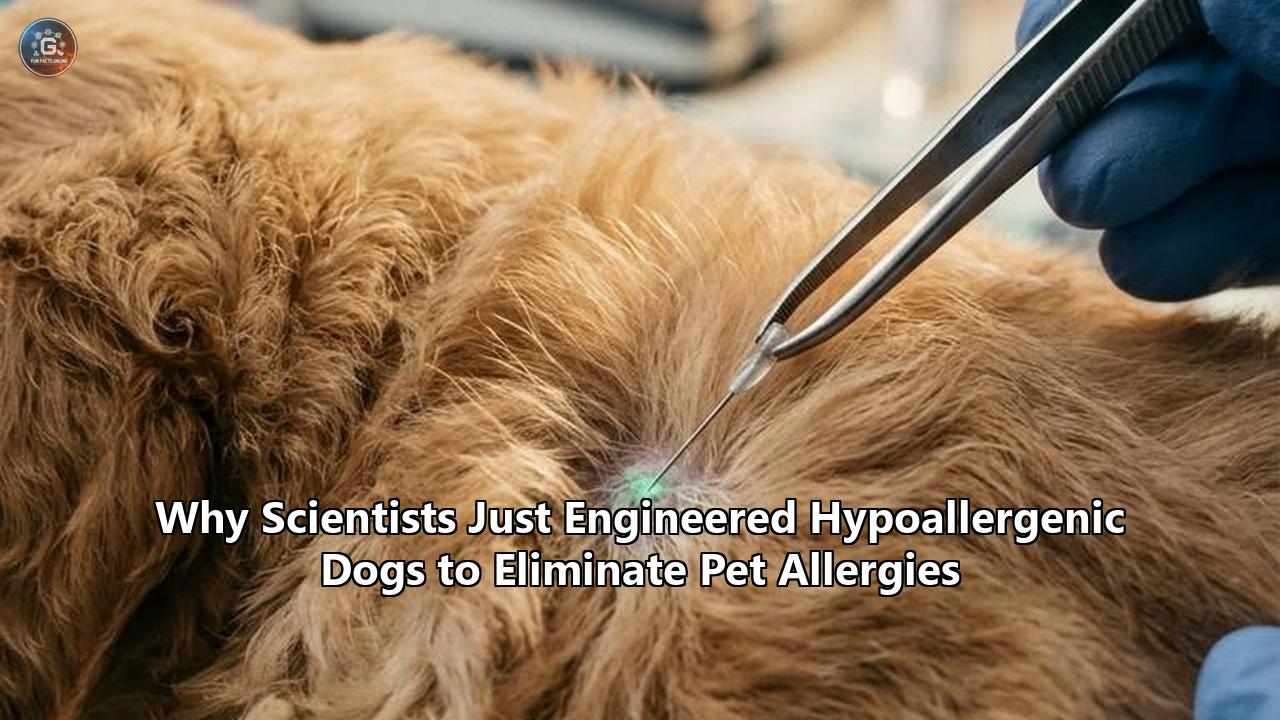
Two female Beagle puppies, born via somatic cell nuclear transfer and carrying a targeted CRISPR-Cas9 disruption of the Can f 1 gene, have reached two years of age with zero detectable allergen expression in their saliva, dander, and hair. The peer-reviewed study, published in The CRISPR Journal by New York-based biotechnology company Kindred Companion Sciences, documents the first successful genetic knockout of the primary canine allergen in living animals.
The dogs, named Alfie and Bailey, represent a stark divergence from the traditional companion animal market. For decades, dog breeders, kennel clubs, and commercial pet businesses have marketed specific breeds—such as Labradoodles, Portuguese Water Dogs, Poodles, and Schnauzers—as low-allergy options. However, clinical immunology has repeatedly demonstrated that hair length and shedding frequency have little correlation with allergen production. By altering the canine genome directly to halt the synthesis of the Canis familiaris allergen 1 (Can f 1) protein, researchers have bypassed hair mechanics entirely to target the molecular root of human immune hypersensitivity.
       TARGETED CANINE GENOME EDITING & SCNT PIPELINE

 +--------------------------+        +--------------------------+
 |  Beagle Dermal Fibroblast|  --->  | CRISPR-Cas9 RNP Delivery |
 |  (Primary Somatic Cell)  |        | (Single-base Indel CFA9) |
 +--------------------------+        +--------------------------+
                                                   |
                                                   v
 +--------------------------+        +--------------------------+
 | Enucleated Canine Oocyte |  <---  |  Validated Can f 1 Null  |
 |  (In Vivo Matured Cytoplast)      |  Donor Nucleus (Homozygous)
 +--------------------------+        +--------------------------+
              |
              v
 +--------------------------+        +--------------------------+
 | Electrofusion & Chemical |  --->  | Surrogate Embryo Transfer|
 | Activation (Ionomycin)   |        | (Laparoscopic Oviductal) |
 +--------------------------+        +--------------------------+
                                                   |
                                                   v
                                     +--------------------------+
                                     | Term Birth: Can f 1 Null |
                                     | Clones (Alfie & Bailey)  |
                                     +--------------------------+
Behind the initial reports lies a complex scientific, surgical, and regulatory reality. The development required overcoming notoriously difficult canine reproductive biology, navigating the uncharacterized physiology of mammalian lipocalins, and establishing a precedent for how the U.S. Food and Drug Administration (FDA) evaluates intentional genomic alterations in companion animals.
The Chemical Reality Behind the Breeder Myth
The multi-billion-dollar market for so-called hypoallergenic dogs has rested on an immunological misconception. Canine allergies do not stem from fur; they are mediated by microscopic, water-soluble globular proteins secreted by the sublingual and parotid salivary glands, sebaceous glands in the skin, and perianal glands. When a dog grooms itself, saliva dries on the hair shaft and flakes off as microscopic dander, remaining suspended in ambient indoor air for days.
       HUMAN IMMUNE SENSITIZATION PATHWAY: CAN F 1

 [ Canine Saliva / Dander ]
            |
            v  (Can f 1 Lipocalin Aerosolization)
 [ Inhalation / Epithelial Contact ]
            |
            v
 [ Human Dendritic Cell Antigen Processing ]
            |
            v
 [ Th2 Cell Activation & IL-4 / IL-13 Secretion ]
            |
            v
 [ B-Cell Isotype Class-Switching to IgE ]
            |
            v
 [ IgE Cross-Linking on Mast Cells / Basophils ]
            |
            v
 [ Degranulation: Histamine, Leukotrienes, Prostaglandins ]
            |
            v
 [ Clinical Symptoms: Rhinitis, Bronchoconstriction, Atopic Eczema ]
When an allergic individual inhales these protein-laden particles, their immune system mounts an inappropriate type I hypersensitivity response. Dendritic cells recognize the canine protein as an antigen, prompting helper T cells (specifically Th2 cells) to signal B cells to produce allergen-specific Immunoglobulin E (IgE) antibodies. These IgE antibodies bind to high-affinity FcεRI receptors on the surface of tissue-resident mast cells and circulating basophils. Subsequent exposure causes the antigen to cross-link adjacent IgE molecules, triggering rapid cellular degranulation. Within seconds, cells release histamine, leukotrienes, prostaglandin D2, and inflammatory cytokines into human tissues, causing nasal congestion, acute conjunctivitis, bronchospasm, and atopic dermatitis.
For over three decades, selective breeding attempted to address this issue by selecting for non-shedding, tightly curled coats. The clinical literature, however, has consistently invalidated this strategy:
- A foundational study published in The Journal of Allergy and Clinical Immunology by Nicholas et al. evaluated Can f 1 concentrations in 841 homes across 60 dog breeds. The researchers found no statistically significant differences in allergen levels between homes with breeds labeled hypoallergenic and those with standard breeds.
- Ramadour et al. measured airborne and hair-bound Can f 1 levels across individual breeds, finding that Poodles, Yorkshire Terriers, and Labradoodles frequently shed more Can f 1 per gram of hair than Labrador Retrievers, German Shepherds, or mixed-breed controls.
- Vredegoor et al. analyzed dander and coat samples from 196 dogs, concluding that Can f 1 and Can f 2 concentrations varied substantially more between individual dogs within the same breed than between distinct breeds.
+---------------------------+-----------------------------------+-----------------------------------+
| Metric                    | Conventional "Hypoallergenic" Dog | CRISPR-Cas9 Can f 1 Knockout Dog  |
+---------------------------+-----------------------------------+-----------------------------------+
| Primary Mechanism         | Reduced hair shedding             | Complete genetic silencing of     |
|                           | (mechanical containment)          | allergen protein synthesis        |
+---------------------------+-----------------------------------+-----------------------------------+
| Can f 1 Saliva Levels     | 0.5 to >100 μg/mL (Highly variable)| Undetectable (<0.01 ng/mL via      |
|                           |                                   | ELISA and Mass Spec)              |
+---------------------------+-----------------------------------+-----------------------------------+
| Airborne Dander Antigen   | High (protein adheres to          | Baseline zero for Can f 1;        |
| Load                      | micro-dander particles)           | minor allergens remain native     |
+---------------------------+-----------------------------------+-----------------------------------+
| Human Sensitization Match | Ineffective for primary Can f 1   | Eliminates primary trigger for    |
|                           | reactive patients                 | 50–75% of dog-allergic individuals|
+---------------------------+-----------------------------------+-----------------------------------+
| Genetic Stability         | Phenotypic variation across litters| Fixed Mendelian transmission upon |
|                           |                                   | establishing homozygous null lines|
+---------------------------+-----------------------------------+-----------------------------------+
Selective breeding failed because coat morphology and protein secretion are controlled by entirely independent, unlinked genetic loci. Alleles governing hair structure—such as RSPO2 (furnishings), FGF5 (hair length), and KRT71 (curl)—reside on chromosomes 13, 32, and 27, respectively. The gene encoding Can f 1 is located on canine chromosome 9 (CFA9). Breeding for coat texture never exerted direct selective pressure on the secretome of canine salivary and sebaceous glands.
Addressing the allergy required intervening directly at the transcriptional source of the protein.
The Molecular Strategy: Disabling the Can f 1 Locus
The project to engineer truly non-reactive dogs began in 2020, led by molecular geneticist Matt Walker, formerly of Columbia University's Department of Biological Sciences. The target was the Can f 1 gene, which spans roughly 6.5 kilobases on CFA9 and encodes a 174-amino-acid pre-protein containing an 18-amino-acid signal peptide and a 156-amino-acid mature secreted lipocalin.
                 CANINE CAN F 1 GENOMIC LOCUS (CFA9)

  5' ---[Exon 1]-------[Exon 2]-------[Exon 3]-------[Exon 4]-------[Exon 5]--- 3'
            |
            |-- CRISPR-Cas9 Target Cleavage Site
            |   (PAM: NGG / Guide RNA binding region)
            v
  5'-AUG AAG CUG CUG... [Double-Strand Break] ...GUG GCA CUG-3'
            |
            |-- Non-Homologous End Joining (NHEJ) Repair
            v
  5'-AUG AAG CUG CUG... [+1 bp Insertion] ...UAA (Premature Stop Codon)
            |
            v
  [ Nonsense-Mediated mRNA Decay (NMD) ] ---> ZERO Functional Protein Synthesis
Instead of using viral vectors or continuous expression plasmids, the research team synthesized guide RNAs (gRNAs) designed to direct the Cas9 endonuclease to a unique sequence within Exon 1, immediately downstream of the ATG translation initiation codon.
- Target Selection and RNP Assembly: Walker's team assembled Cas9 ribonucleoprotein (RNP) complexes in vitro using recombinant Streptococcus pyogenes Cas9 protein and a synthetic single guide RNA (sgRNA). Using purified RNP complexes instead of DNA plasmids minimized intracellular lifespan to several hours, dramatically reducing the probability of off-target cleavage events elsewhere in the dog genome.
- Cellular Transfection: The RNPs were delivered via electroporation into primary dermal fibroblasts harvested from an adult female Beagle donor.
- Repair and Disruption Mechanism: Cas9 introduced a targeted double-strand break (DSB) three base pairs upstream of the protospacer adjacent motif (PAM). In the absence of an exogenous donor template, the cell's endogenous DNA repair machinery utilized non-homologous end joining (NHEJ). This error-prone pathway introduced a single-base-pair insertion (+1 bp), causing a frame-shift mutation in the open reading frame.
- Nonsense-Mediated Decay: This frame-shift altered the reading frame, generating an immediate premature termination codon (PTC). In eukaryotic cells, transcripts containing premature stop codons located more than 50–55 nucleotides upstream of the final exon-exon junction are identified and degraded by the nonsense-mediated mRNA decay (NMD) surveillance pathway. As a result, no stable messenger RNA was translated into functional Can f 1 protein.
       MASS SPECTROMETRY (LC-MS/MS) VALIDATION METRICS

 Relative Protein Signal Intensity (Salivary Can f 1 vs Standard)

 100% |  ########################       ########################
      |  ########################       ########################
  75% |  ########################       ########################
      |  ########################       ########################
  50% |  ########################       ########################
      |  ########################       ########################
  25% |  ########################       ########################
      |  ########################       ########################
   0% +---------------------------------------------------------
         Wild-Type Beagle Control         CRISPR Edited Clone
         (High Can f 1 Signal)            (Zero Detectable Peak)
To confirm the accuracy of the edit, single-cell clones were expanded and subjected to rigorous genomic profiling. Sanger sequencing and targeted deep next-generation sequencing (NGS) confirmed biallelic disruption (both maternal and paternal alleles cleanly knocked out).
Whole-genome sequencing at >40x coverage was conducted to inspect the top 50 in silico-predicted off-target genomic sites; no insertions, deletions, or structural rearrangements were identified. Protein assays confirmed the molecular outcome: liquid chromatography-tandem mass spectrometry (LC-MS/MS) and sandwich enzyme-linked immunosorbent assays (ELISA) performed on saliva and dander extracts confirmed that Can f 1 levels were below the limit of detection.
Overcoming the Canine SCNT Hurdle
Engineering a single fibroblast in a Petri dish is a routine procedure in modern molecular genetics. Turning that single somatic nucleus into a living, breathing mammal is an exceptionally difficult bioengineering feat—and doing so in dogs is notoriously challenging.
Canine reproductive biology possesses unique evolutionary characteristics that have historically stymied reproductive biologists and made canine Somatic Cell Nuclear Transfer (SCNT) one of the lowest-efficiency cloning processes in veterinary medicine.
       THE CANINE SCNT REPRODUCTIVE SEQUENCE

 1. Serum Progesterone Monitoring in Donor Bitches (Every 12h)
    └── Identify precise LH surge and calculate post-ovulation timing (+72h)
       │
 2. Surgical Flushes of the Canine Oviduct
    └── Retrieve in vivo-matured Metaphase-II oocytes from donor bitches
       │
 3. Laser-Assisted Micromanipulation under Polarized Light
    └── Enucleate host oocyte (remove maternal chromosomes and polar body)
       │
 4. Subzonal Insertion of Can f 1-Edited Dermal Fibroblast Nucleus
    └── Position donor cell in direct contact with oocyte cytoplast membrane
       │
 5. High-Voltage Direct Current Electrofusion
    └── Apply electrical pulses to fuse membranes and initiate nuclear integration
       │
 6. Chemical Epigenetic Activation
    └── Treat with 5 μM Ionomycin + 6-DMAP to induce mitotic cell cycling
       │
 7. Laparoscopic Oviductal Embryo Transfer (ET)
    └── Transfer reconstructed embryos directly into recipient surrogate bitch
Unlike ungulates, rodents, and primates—which ovulate mature Metaphase-II (MII) oocytes ready for immediate fertilization—canines ovulate immature primary oocytes arrested at the Germinal Vesicle (GV) stage of Prophase I. These immature oocytes must traverse down the oviduct for 48 to 72 hours, completing their meiotic divisions and extruding the first polar body in vivo within the distal ampulla before becoming competent for fertilization or nuclear transfer.
Furthermore, canine oocytes cannot be reliably matured in vitro; laboratory culture systems routinely fail to recapitulate the complex oviductal lipid microenvironment, yielding maturation rates below 15%.
To circumvent this barrier, the engineering team had to establish an intensive in vivo recovery program:
- Strict Endocrine Tracking: Donor female Beagles were monitored with serial blood testing every 12 hours to detect the pre-ovulatory luteinizing hormone (LH) surge and precise rises in serum progesterone (reaching 4.0–10.0 ng/mL at ovulation).
- Oviductal Flushing: Exactly 72 hours post-ovulation, mature MII oocytes were recovered directly from the canine oviducts through surgical laparoscopic flushing.
- Overcoming Intracellular Lipids: Canine oocytes are densely packed with dark, opaque intracytoplasmic lipid droplets, making the meiotic spindle and metaphase plate completely invisible under standard brightfield microscopy. Scientists utilized polarized light birefringence microscopy and laser-assisted microdissection to locate the spindle, aspirate the native maternal chromatin (enucleation), and prepare the empty cytoplast.
- Nuclear Transfer and Electrofusion: A single, verified Can f 1-null fibroblast was inserted into the perivitelline space of each enucleated cytoplast. The donor cell and ooplasm were fused using two microsecond pulses of direct-current electricity (1.2–1.5 kV/cm), simultaneously permeabilizing the membranes and introducing the diploid nucleus.
- Activation and Implantation: The reconstructed zygotes were chemically activated with 5 μM ionomycin followed by incubation in 6-dimethylaminopurine (6-DMAP) to suppress kinase activity and initiate embryonic cleavage.
A total of 25 reconstructed embryos were laparoscopically transferred into the oviducts of a synchronized surrogate Beagle. After a standard 63-day gestation period, the surrogate successfully whelped two viable, healthy female puppies on September 22, 2024: Alfie and Bailey.
The overall efficiency—two live births from 25 transferred embryos (an 8% success rate)—falls well within typical mammalian SCNT parameters. However, this rate highlights the high technical demands, resource allocation, and specialized surgical expertise required to produce founder lines of genetically altered companion animals.
What Does Can f 1 Do in a Dog?
When altering any functional gene, geneticists face a fundamental question: What does the protein do in the host organism, and what phenotypic price does the animal pay for its deletion?
Can f 1 was first isolated and identified in 1996 by De Groot and colleagues, but for three decades, its precise physiological role in canines remained uncharacterized. The protein belongs to the lipocalin superfamily—an ancient, structurally conserved family of small extracellular proteins (15–25 kDa) characterized by an eight-stranded antiparallel, continuously hydrogen-bonded beta-barrel core that forms an internal ligand-binding calyx.
                  THE CAN F 1 LIPOCALIN CALYX

                      Beta-Strands 1-8
                   (Forms Hydrophobic Cone)
                     /                  \
                    |   +------------+   |
                    |   | Hydrophobic|   |  <-- Ligand Binding Cavity
                    |   | Ligand     |   |      (Lipids, Retinoids,
                    |   | Cavity     |   |       Odorants, Steroids)
                    |   +------------+   |
                     \                  /
                      ------------------
                        Alpha-Helix 1
                   (C-Terminal Anchoring)
In nature, lipocalin barrels act as molecular transport vehicles, shuttling small hydrophobic molecules—such as lipids, retinol, fatty acids, steroids, volatile odorants, and bacterial siderophores—across aqueous extracellular environments.
Because dogs possess multiple duplicate lipocalin genes in close chromosomal proximity, researchers hypothesized that Can f 1 might fulfill several possible biological roles:
- Odorant Transport and Chemoreception: Serving as an odorant-binding protein within saliva and nasal secretions, solubilizing volatile chemical compounds for delivery to the vomeronasal organ (Jacobson's organ) and olfactory epithelium.
- Epithelial and Mucosal Defense: Modulating the local oral and cutaneous microbiome by binding hydrophobic microbial signaling factors or sequestering bacterial iron chelators.
- Sebaceous Barrier Maintenance: Aiding in the emulsification and transport of protective skin lipids, preventing transepidermal water loss across the epidermis.
Before initiating the Beagle embryo experiments, Walker and his team evaluated baseline phenotypic risk using data from the International Mouse Phenotyping Consortium (IMPC). The closest murine homolog to Can f 1 is the odorant-binding protein 2A gene (Obp2a). IMPC phenotypic screens of homozygous Obp2a-null mice revealed no alterations in lifespan, fertility, anatomical development, sensory processing, or baseline metabolic parameters.
+------------------------------------+------------------------------------+
| Physiological Metric Monitored     | Findings in Alfie & Bailey (2 Yrs) |
+------------------------------------+------------------------------------+
| Morphometric Growth & Weight       | Normal Beagle trajectory           |
|                                    | (9.2 kg and 9.8 kg at 24 months)  |
+------------------------------------+------------------------------------+
| Complete Blood Count & Serum Panel | Normal (Albumin, BUN, Creatinine,  |
|                                    | ALT, AST, Electrolytes in range)   |
+------------------------------------+------------------------------------+
| Periodontal & Oral Cavity Scoring  | Zero clinical gingivitis; normal   |
|                                    | sublingual salivary flow & flora   |
+------------------------------------+------------------------------------+
| Cutaneous Barrier Integrity        | Normal transepidermal water loss   |
|                                    | (TEWL); zero atopic dermatitis     |
+------------------------------------+------------------------------------+
| Olfactory & Sensory Function       | Robust scent-tracking response     |
|                                    | in environmental lure trials       |
+------------------------------------+------------------------------------+
As Alfie and Bailey approach their second birthday, extensive veterinary health screenings have shown normal development. Their growth trajectories, complete blood panels, serum biochemistries, dental evaluations, and tear production metrics have remained within standard physiological reference ranges for Beagles. The dogs show no behavioral anomalies, sensory deficits, or dermatological conditions.
Longitudinal observation remains critical. Many canine physiological changes, such as age-related periodontal decay or altered mucosal immunity, manifest only in geriatric stages.
As Eleanor Raffan, an animal geneticist and veterinary surgeon at the University of Cambridge, pointed out following the study's release: "It is too early to say whether the edit will have any impact on the dogs' long-term health. Dental disease and mucosal alterations often occur much later in a dog's life. Can f 1 may contribute to oral homeostasis or local immune maintenance in ways that become evident only under environmental or immunological challenge".
The Canine Allergen Array: The Challenge of Complex Allergies
While the targeted knockout of Can f 1 successfully removes the most common canine allergen, it does not make the animal an automatic remedy for all dog allergies. Canine allergen biochemistry involves a complex network of proteins rather than a single compound.
 CANINE ALLERGEN COMPLEXITY

 [Can f 1] -- Major Lipocalin (50–75% Sensitization) -> KNOCKED OUT
 [Can f 2] -- Minor Lipocalin (~30% Sensitization; High Co-Sensitization with Can f 1)
 [Can f 3] -- Serum Albumin (15–30% Sensitization; Cross-Reactive with Beef/Cat)
 [Can f 4] -- Lipocalin (35–50% Sensitization; Concentrated in Dander Matrix)
 [Can f 5] -- Prostatic Kallikrein (70% in Isolated Male Dog Sensitivities)
 [Can f 6] -- Lipocalin (38% Sensitization; High Cross-Reactivity with Fel d 4)
 [Can f 7] -- Niemann-Pick Type C2 Protein (Epididymal Secretory Component)
The World Health Organization and International Union of Immunological Societies (WHO/IUIS) Allergen Nomenclature Sub-Committee recognizes seven distinct allergens produced by Canis familiaris:
1. Can f 1 (Lipocalin)
The primary driver of canine allergies, accounting for 50% to 75% of human clinical sensitizations. It is the principal agent responsible for inducing allergic asthma and respiratory symptoms in exposed humans. Knocking out this protein addresses the primary immune trigger for a large majority of allergic individuals.
2. Can f 2 (Lipocalin)
Sensitizes roughly 30% of allergic patients. The gene encoding Can f 2 is located immediately adjacent to Can f 1 on chromosome CFA9, likely the result of an ancient tandem gene duplication event. Due to this physical proximity, patients with severe dog allergies are frequently co-sensitized to both Can f 1 and Can f 2.
3. Can f 3 (Canine Serum Albumin)
Accounts for 15% to 30% of sensitizations. Serum albumin is an essential 66-kDa plasma protein responsible for maintaining oncotic pressure and transporting unesterified fatty acids in blood. Albumin cannot be knocked out without causing embryonic lethality. Patients sensitized to Can f 3 often display cross-reactivity to feline albumin (Fel d 2), equine albumin (Equ c 3), and bovine serum albumin (present in beef and dairy).
4. Can f 4 (Lipocalin)
Sensitizes approximately 35% to 50% of dog-allergic individuals. This 18-kDa protein is synthesized heavily in the skin and dander rather than the salivary glands. It forms a distinct immunological cluster, often triggering symptoms independently of Can f 1.
5. Can f 5 (Prostatic Kallikrein)
A 28-kDa arginine esterase produced exclusively in the prostate gland of intact male dogs and secreted in seminal fluid and urine. Can f 5 sensitizes up to 70% of individuals whose symptoms are triggered specifically by male dogs. Because it is androgen-dependent, Can f 5 is naturally absent in female dogs (such as Alfie and Bailey) and drops by over 90% in castrated male dogs.
6. Can f 6 (Lipocalin)
Sensitizes roughly 38% of patients. Can f 6 is clinically notable for its high amino acid sequence homology with the major cat allergen Fel d 4 and the primary horse allergen Equ c 1. Patients who experience cross-species allergic reactions are often reacting primarily to the Can f 6 / Fel d 4 / Equ c 1 axis.
7. Can f 7 (Niemann-Pick Type C2-like Protein)
A minor allergen localized within the canine epididymis and expressed at low levels in dander, sensitizing fewer than 15% of patients.
       PATIENT SENSITIZATION MATCH ANALYSIS

 Human Patient Immunological Phenotype    Response to Can f 1 Knockout Dog
 --------------------------------------  ---------------------------------
 Monosensitized to Can f 1 (50-60%)      ---> COMPLETELY ASYMPTOMATIC
 Co-sensitized to Can f 1 + Can f 5       ---> ASYMPTOMATIC (if dog is female/neutered)
 Polysensitized (Can f 1 + Can f 2/4/6)   ---> PARTIALLY ATTENUATED (Residual allergy)
 Monosensitized to Can f 3 (Albumin)      ---> FULL ALLERGIC REACTION (No protection)
The multi-protein nature of dog allergies makes engineering non-allergenic pets more complex than similar work in cats. In felines, a single protein—Fel d 1, a secretoglobin encoded by two genes (CH1 and CH2)—accounts for more than 90% of all cat-specific allergies. Knocking out Fel d 1 in a cat effectively addresses almost the entire allergen profile.
In dogs, eliminating Can f 1 addresses the primary immunological driver for the majority of the population, but it does not completely eliminate symptoms for polysensitized individuals who produce IgE antibodies against Can f 2, Can f 4, or Can f 6.
To achieve complete non-reactivity across all allergic populations, future genetic engineering pipelines will likely require multiplex base editing or prime editing—introducing multiple stop codons into Can f 1, Can f 2, Can f 4, and Can f 6 simultaneously in a single cell line without creating the double-strand DNA breaks that can cause chromosomal translocations.
The Regulatory Framework: Governing Gene-Edited Animals
The development of gene-edited companion animals has introduced new regulatory challenges, placing Kindred Companion Sciences within a complex administrative oversight system.
In the United States, the genetic modification of animals is governed under the Coordinated Framework for the Regulation of Biotechnology, split between three primary agencies: the FDA, the U.S. Department of Agriculture (USDA), and the Environmental Protection Agency (EPA).
For engineered companion animals, primary statutory jurisdiction resides with the FDA's Center for Veterinary Medicine (CVM).
                 FDA REGULATORY OVERSIGHT MECHANISM

  Federal Food, Drug, and Cosmetic Act (FD&C Act) - Section 512
  Guidance for Industry #187: Regulation of Intentional Genomic Alterations
                                     |
       +-----------------------------+-----------------------------+
       v                                                           v
 [ Direct Target Animal Safety ]                             [ Indirect Societal & ]
 [ (TAS) & Molecular Integrity ]                             [ Environmental Impact]
       |                                                           |
  1. Molecular Characterization                                1. Environmental Assessment
     - Indel specificity and Sanger/NGS                           under NEPA (Escape /
     - Off-target screening across genome                         Ecological risk)
                                                               2. Epigenetic Drift Profiling
  2. Multi-Generational Stability                              3. Heritability & Transmission
     - Mendelian transmission to F1/F2                            Metrics through line
     - Phenotypic permanence of edit                           4. Longitudinal Clinical Health
                                                                  Monitoring across lifecycle
Under Section 201(g) and Section 512 of the Federal Food, Drug, and Cosmetic Act (FD&C Act), any Intentional Genomic Alteration (IGA) introduced into an animal intended to affect its structure or function is formally classified and regulated as a "new animal drug" (NAD).
This regulatory definition applies whether the alteration is achieved through random integration of recombinant DNA, base editing, or a single-base knockout via CRISPR-Cas9.
According to FDA CVM Guidance for Industry (GFI) #187, titled "Regulation of Intentional Genomic Alterations in Animals," any commercial developer of an IGA animal must establish a comprehensive Investigational New Animal Drug (INAD) file and fulfill several strict regulatory requirements:
- Molecular Characterization: Detailed, nucleotide-level sequencing verifying the exact chromosomal coordinates of the edit, proving the absence of residual vector sequences, foreign transgenes, or mosaicism.
- Off-Target Assessment: Comprehensive bioinformatic and deep-sequencing evidence demonstrating that non-targeted homologous genomic loci have not suffered unintended off-target cleavage or structural rearrangements.
- Phenotypic Durability and Stability: Documentation proving that the genetic alteration is transmitted through the germline in a predictable Mendelian fashion across multiple generations (F1, F2, and backcrossed cohorts) without locus silencing or genetic reversion.
- Target Animal Safety (TAS): Longitudinal toxicology, physiological monitoring, and clinical veterinary pathology demonstrating that the deletion of the endogenous protein does not compromise the animal's welfare, immune competence, or physiological longevity over its lifespan.
- Environmental Assessment: Fulfilling National Environmental Policy Act (NEPA) requirements to establish that the gene-edited animals present no ecological or evolutionary risks should they escape, enter the feral animal population, or interbreed with wild canids (such as coyotes or wolves).
Precedents for IGA approval through the FDA CVM are rare, expensive, and historically limited to agricultural livestock and biomedical models:
+-------------------+-----------------------------+----------------------------+----------------------+
| Organism / Brand  | Alteration Type             | Developer                  | FDA Approval Year    |
+-------------------+-----------------------------+----------------------------+----------------------+
| AquAdvantage      | Transgenic GH gene insertion| AquaBounty Technologies    | 2015 (Commercial Food|
| Salmon            | (Rapid growth trait)        |                            | Distribution)        |
+-------------------+-----------------------------+----------------------------+----------------------+
| GalSafe Pig       | CRISPR alpha-gal sugar      | Revivicor / United         | 2020 (Human Food &   |
|                   | knockout (Anti-Alpha-Gal)   | Therapeutics               | Biomedical Xenografts|
+-------------------+-----------------------------+----------------------------+----------------------+
| PRLR SLICK Cattle | Targeted PRLR gene edit     | Acceligen                  | 2022 (Enforcement    |
|                   | (Short hair heat tolerance) |                            | Discretion)          |
+-------------------+-----------------------------+----------------------------+----------------------+
| Can f 1 Null      | Targeted CRISPR NHEJ indel  | Kindred Companion          | Investigational Phase|
| Beagle            | (Can f 1 protein knockout)  | Sciences                   | (Pre-Commercial)   |
+-------------------+-----------------------------+----------------------------+----------------------+
While Acceligen received "enforcement discretion" for its SLICK-coat cattle (a low-risk determination based on the edit mimicking a naturally occurring mutation in traditional breeds), companion animals are held to high safety standards. Companion dogs share direct, intimate living environments with human families, are treated as family members, and possess lifespans extending beyond a decade.
Kindred Companion Sciences has initiated formal pre-market consultation with the FDA CVM. However, obtaining full authorization for commercial breeding and consumer placement will likely require several years of multigenerational clinical data.
Bioethics, Animal Welfare, and Adoption Dynamics
The creation of hypoallergenic dogs using somatic cell nuclear transfer and genome editing has reopened broader debates at the intersection of veterinary ethics, synthetic biology, and animal protection.
                THE COMPANION ANIMAL GENETIC ETHICS SPECTRUM

  [ Anthropocentric Convenience ] <-------------------> [ Veterinary Welfare Imperative ]
                 |                                                |
  • Invasive reproductive surgeries                               • Eliminates allergen-driven
    on research beagles                                           euthanasia & shelter surrenders
  • High embryo loss rates in SCNT                                • Enables critical service dog access
  • Potential diversion of adoptions                              for highly sensitized individuals
    from shelter rescue networks                               • Validates therapeutic genomics
  • Inbreeding depression risks from                              for spontaneous canine disease
    narrow founder genetics
Arthur Caplan, head of the Division of Medical Ethics at the NYU Grossman School of Medicine, highlighted the potential social consequences: "Engineering companion animals to fit human lifestyle desires opens up unprecedented questions about human priorities. While it broadens access to the physical and emotional benefits of pet ownership for allergic individuals, it could also reshape companion animal adoption by steering prospective owners away from rescue shelters and toward expensive, proprietary animals".
According to data from the American Society for the Prevention of Cruelty to Animals (ASPCA):
- Roughly 3.1 million dogs enter municipal animal shelters across the United States annually.
- Approximately 390,000 dogs are euthanized each year due to severe overcrowding, medical constraints, or behavioral issues.
- Surveys by the National Council on Pet Population Study and Policy (NCPPSP) report that human allergic reactions are explicitly cited in 10% to 15% of all owner-directed canine surrenders.
Advocates for companion animal gene editing argue that targeted knockouts could provide a permanent solution to this problem, reducing relinquishment rates and helping keep dogs in their homes.
Furthermore, proponents emphasize the needs of allergic individuals who rely on working dogs:
"Consider the service dog sector," said Walker in an interview following the publication. "Individuals with visual impairments, brittle type 1 diabetes, or mobility limitations who are also severely allergic to dogs are frequently forced to choose between managing their medical disability and enduring severe allergic asthma or chronic anaphylaxis. Engineering non-reactive service animals can address a major unmet functional need".
From a veterinary welfare perspective, critics emphasize the biological cost required to create founder lines. Canine SCNT requires donor bitches to undergo surgical flushes to harvest in vivo-matured oocytes, followed by laparoscopic embryo transfer surgeries into surrogate recipients. Animal protection advocates note that multiple surrogate pregnancies and high rates of embryonic loss are often required to establish a viable line.
       MENDELIAN EXPANSION & POPULATION GENETICS PIPELINE

 Year 0: [ Founder Clones (F0) ]
         Alfie & Bailey (Homozygous Null: -/-)
                    |
                    | x Outcross with Genetically Diverse Sires (+/+)
                    v
 Year 2: [ First Generation (F1) ]
         100% Obligate Heterozygous Carriers (+/-)
         (Normal Can f 1 expression; phenotypically wild-type)
                    |
                    | Intercross (F1 x F1) or Backcross to Founder (F1 x F0)
                    v
 Year 4: [ Second Generation (F2) ]
         • 25% Wild-Type (+/+)
         • 50% Heterozygous Carriers (+/-)
         • 25% HOMOZYGOUS NULL KNOCKOUTS (-/-) ---> Scalable Non-Allergenic Base
A final genetic concern is the risk of the "popular sire" effect and resulting genetic bottlenecks. If commercial breeding lines are expanded too quickly from a small number of cloned founder animals, recessive deleterious mutations present in the original Beagle genome could spread rapidly through the population.
Preventing inbreeding depression will require an intentional outcrossing strategy: crossing homozygous null founder females with genetically diverse, unrelated wild-type males across multiple dog breeds, followed by selective intercrossing of heterozygous F1 offspring to produce genetically sound, homozygous null F2 cohorts.
Commercialization Timelines, Scalability, and Alternative Therapies
Commercial access to gene-edited companion animals remains years away. Kindred Companion Sciences has emphasized that neither Alfie, Bailey, nor their direct derivatives will be available to the general public in the immediate future.
                 COMMERCIAL DEVELOPMENT PHASES

 2020 - 2024: [ Phase 1: In Vitro Proof of Concept & Somatic SCNT ] -> COMPLETED
              • Design CRISPR-Cas9 RNP targeting Can f 1 Exon 1
              • SCNT cloning and surrogate transfer (25 embryos)
              • Birth of Alfie & Bailey (Sept 22, 2024)

 2024 - 2026: [ Phase 2: Phenotypic Validation & Stealth Monitoring ] -> COMPLETED
              • 24-month physiological and veterinary monitoring
              • Complete saliva/dander ELISA & Mass Spectrometry
              • First human skin-prick and environmental tests
              • Publication in The CRISPR Journal (August 2026)

 2026 - 2029: [ Phase 3: Mendelian Breeding & Multigenerational Safety ] -> ACTIVE
              • Outcrossing F0 founders with diverse sires to build F1 cohort
              • Intercrossing F1 lines to generate homozygous null F2 stock
              • Longitudinal veterinary safety documentation across generations

 2029 - 2032+: [ Phase 4: Regulatory Authorization & Market Deployment ]
              • Formal FDA Center for Veterinary Medicine NADA Review
              • Scaled distribution for service dog organizations & domestic homes
Producing pets entirely through Somatic Cell Nuclear Transfer is commercially unviable for the average pet owner. Modern canine cloning procedures carried out by specialized commercial entities—such as Sinogene in China or ViaGen Pets in the United States—range from $50,000 to $100,000 per animal, a cost driven by the surgical infrastructure, donor maintenance, and embryological expertise required.
Instead, the path to consumer availability relies entirely on standard Mendelian inheritance. Because the Can f 1 knockout is an engineered genomic change, it is transmitted directly to future generations through the germline.
Once homozygous null male and female founder lines are established across diverse genetic backgrounds, breeding two homozygous null dogs will produce litters where 100% of the offspring inherit the Can f 1-null phenotype naturally, completely eliminating the need for cloning or laboratory embryo manipulation in subsequent generations.
+--------------------------+------------------------------+------------------------------+
| Vector / Strategy        | Target Mechanism             | Practical Challenges         |
+--------------------------+------------------------------+------------------------------+
| Germline CRISPR Knockout | Biallelic disruption of      | High initial SCNT costs;     |
| (Kindred Companion)      | genomic Can f 1 locus       | long multi-year breeding     |
|                          |                              | timelines                    |
+--------------------------+------------------------------+------------------------------+
| Dietary Neutralization   | Egg-yolk IgY antibodies      | Must be fed continuously;    |
| (Feline model equivalent)| delivered in kibble to bind  | salivary target only; dander |
|                          | active salivary protein      | synthesis remains uninhibited|
+--------------------------+------------------------------+------------------------------+
| Allergen Immunotherapy   | Recombinant peptide human    | Multi-year injection course; |
| (Human Sublingual/SCIT)  | vaccines to retrain IgE      | variable patient compliance; |
|                          | human immune response       | incomplete desensitization   |
+--------------------------+------------------------------+------------------------------+
| In Vivo Somatic Delivery | Recombinant AAV vectors      | Low transduction efficiency  |
| (Topical / Intragland)   | targeting salivary glands    | in adult salivary tissue;    |
|                          | to silence local expression  | temporary duration           |
+--------------------------+------------------------------+------------------------------+
While germline editing progresses through regulatory review, competing approaches in companion animal biotechnology are exploring non-germline solutions:
- Dietary Neutralization Approaches: Following the model of Purina's LiveClear cat diet—which incorporates polyclonal egg-yolk antibodies (IgY) raised against Fel d 1 to bind and neutralize the active allergen in the cat's mouth during consumption—several animal nutrition firms are developing canine kibble containing anti-Can f 1 antibodies. However, this approach neutralizes only salivary protein, leaving dermal and sebaceous dander production completely unaltered.
- Recombinant Human Immunotherapy: Human immunologists are developing advanced synthetic allergen vaccines composed of recombinant, folded Can f 1 peptides designed to induce allergen-specific IgG4 blocking antibodies in sensitized patients without triggering anaphylactic IgE cross-linking. These human immunotherapies require years of regular clinical injections and often achieve only partial desensitization.
- In Vivo Somatic Gene Therapy: Researchers are evaluating the use of recombinant adeno-associated viral (AAV) vectors delivered directly into canine salivary glands via retrograde intraductal infusion, seeking to knock down Can f 1 production locally using short hairpin RNAs (shRNAs) without altering the animal's germline DNA.
What the Next Five Years Will Reveal
The creation of Alfie and Bailey marks a significant milestone in companion animal genetics, moving the field beyond traditional selective breeding toward targeted molecular alterations. However, this proof of concept raises important biological, regulatory, and practical questions that will take years to fully answer.
                 CRITICAL UPCOMING MILESTONES (2026–2030)

 1. F1 Cohort Epigenetic & Health Audits
    └── Assess whether heterozygous carriers exhibit any secondary compensatory
        upregulation of related lipocalin genes (Can f 2, Can f 4, Can f 6).

 2. Large-Scale Human Environmental Challenge Trials
    └── Place sensitized, asthmatic human participants in sealed clinical exposure
        chambers containing Can f 1-null dogs to quantify pulmonary reactivity.

 3. FDA Center for Veterinary Medicine Investigational Filing
    └── Deliver longitudinal multi-organ pathology datasets under the
        Investigational New Animal Drug (INAD) framework.

 4. Multiplex Next-Generation Editor Integration
    └── Deploy base-editing or prime-editing platforms to silence Can f 1,
        Can f 2, and Can f 4 simultaneously in a single founder line.
The primary clinical focus will center on double-blind human exposure trials. While skin-prick testing on study co-founder Matt Walker showed a complete absence of local wheal-and-flare reactions to Alfie and Bailey's saliva, broader clinical trials are needed to assess systemic human responses.
Future trials will monitor asthmatic and allergic individuals inside environmental exposure chambers, tracking changes in Forced Expiratory Volume in 1 second (FEV1), nasal peak inspiratory flow, and circulating histamine levels after prolonged contact.
At the same time, the biotechnology sector will watch how regulatory bodies respond. The FDA CVM's evaluation of the Can f 1 Beagle line will establish the primary blueprint for how intentionally edited companion animals are regulated, evaluated for lifetime safety, and approved for consumer placement.
Researchers now have the molecular tools to modify the proteins pets produce. The central challenge going forward is to ensure that as scientists alter animals to better accommodate human sensitivities, the long-term health, biological integrity, and welfare of the dogs remain fully protected.
Reference:
- https://www.improvethenews.org/story/2026/crispr-gene-editing-produces-worlds-first-hypoallergenic-dogs
- https://www.the-scientist.com/crispr-gene-editing-creates-hypoallergenic-dogs-74867
- https://www.iflscience.com/worlds-first-dogs-genetically-engineered-to-remove-allergy-causing-protein-celebrate-their-second-birthday-84319
- https://crisprmedicinenews.com/press-release-service/card/kindred-companion-sciences-unveils-first-dogs-genetically-edited-to-remove-the-major-dog-allergen/
- https://www.synbiobeta.com/read/biotech-startup-eliminates-major-dog-allergen-in-beagle-pups-using-crispr
- https://playfetch.io/blog/could-gene-editing-create-a-truly-hypoallergenic-dog/
- https://theweek.com/science/scientists-cure-allergies-gene-dogs
- https://www.facebook.com/laurahutch8/videos/story-for-thought-would-you-support-gene-editing-dogs-to-make-your-favorites-hyp/1402953325120391/
- https://www.facebook.com/physorg/posts/two-gene-edited-beagles-produced-no-detectable-can-f-1-the-main-dog-allergen-in-/1541154624706587/
- https://www.latimes.com/science/story/2026-08-11/gene-edited-beagles-may-offer-future-option-for-people-with-dog-allergies