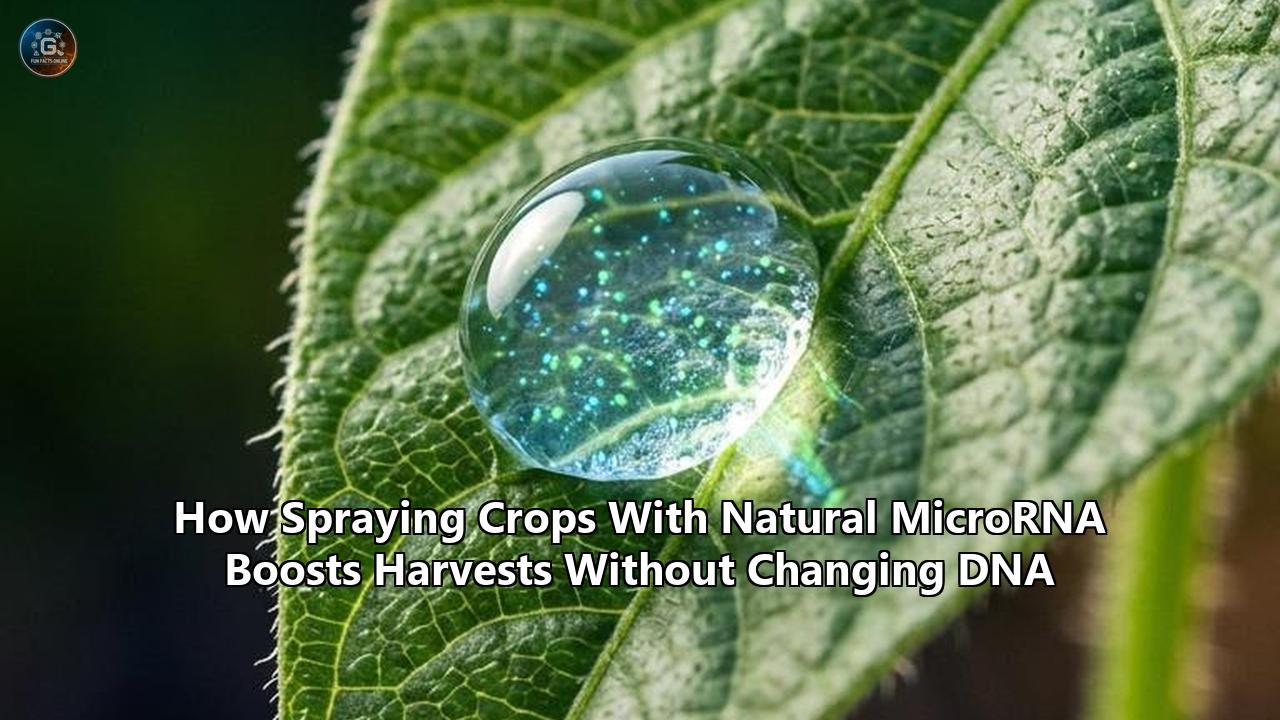
BASEL, Switzerland — Agricultural biotechnology has long operated under an unyielding compromise: to substantially alter how a crop allocates energy and responds to stress, plant breeders had to either spend a decade on selective crossbreeding or permanently rewrite the plant’s genetic sequence through genetic modification or CRISPR-mediated gene editing.
On September 22, 2026, crop protection and seeds multinational Syngenta challenged that compromise by unveiling EXORT (short for EXOgenous RNA Targeting). The technology is a biological foliar application platform that uses naturally occurring plant microRNAs to orchestrate crop growth, development, and resource distribution without altering the plant's underlying DNA sequence.
The announcement comes on the heels of a massive multi-year field testing program. Between 2022 and 2025, the platform underwent 240 field trials spanning more than 15 countries across six core crops: rice, soybean, corn, cotton, fruits, and vegetables. The compiled agronomical data demonstrated consistent yield gains between 5% and 10% compared to untreated control acreage under equivalent agronomic management. In flooded paddy trials across Asia, rice yields increased by up to 740 kilograms per hectare.
The central operational differentiator of the platform lies in its active ingredient profile. Rather than delivering massive synthetic chemical volumes or foreign proteins, the spray deposits an ultralow dose—approximately 50 milligrams of active, plant-derived microRNA per hectare—directly onto crop foliage using standard commercial farm spray rigs. Once deposited on the leaf surface, these non-coding ribonucleic acids cross the cuticular boundary and interact with the plant’s internal cellular signaling network, acting as molecular rheostats that instruct the crop to redirect metabolic resources into grain filling, root architecture, and reproductive organs.
Syngenta executives declared EXORT to be the first genuine novel mode of action in the agricultural biologicals sector in more than two decades. With initial commercial rollout slated for Latin America in 2027 and a phased expansion targeted across roughly 20 nations, the platform marks the entry of exogenous microRNA into real-world broadacre food production.
                     EXORT FOLIAR SPRAY CYCLE

   [ Foliar Spray Application ]  --> 50 mg/ha of plant-derived microRNAs
                │
                ▼
   [ Leaf Surface Penetration ]  --> Overcomes cuticular wax & stomata
                │
                ▼
   [ Plant Cell Internalization] --> Enters cytoplasm via endocytosis
                │
                ▼
   [ AGO1 / RISC Assembly ]      --> miRNA binds to Argonaute complexes
                │
                ▼
   [ Post-Transcriptional Tuning]--> Cleaves/represses target growth-brake mRNAs
                │
                ▼
   [ Metabolic Resource Shift ]  --> Enhanced source-to-sink carbohydrate flow
                │
                ▼
   [ Harvest Yield Elevation ]   --> +5% to +10% yield without DNA alterations
The Molecular Machinery: Why MicroRNAs Act as Cellular Rheostats
Understanding how a microscopic foliar spray can elevate harvest weight without changing genetic code requires examining how plants naturally regulate their own genomes. In every plant cell, deoxyribonucleic acid (DNA) functions as a permanent, immutable blueprint housed within the protective envelope of the nucleus. To build proteins—the molecular machines that drive enzymatic reactions, construct cell walls, and modulate tissue growth—the cell transcribes sections of DNA into messenger RNA (mRNA). These single-stranded messengers travel outside the nucleus into the cytoplasm, where ribosomes translate their sequence into functional proteins.
      DNA (Nucleus)
           │
           │  Transcription
           ▼
     Messenger RNA (mRNA)
           │
           ├── [MicroRNA Interception via RISC Complex] ──> Translation Halted / mRNA Cleaved
           │                                                 (Transient Gene Downregulation)
           ▼  (If uninterrupted)
        Ribosome
           │
           ▼
   Target Protein Synthesis
For decades, the dominant view in molecular biology maintained that genetic expression was predominantly controlled at the point of transcription: either a gene was turned "on" by transcription factors reading DNA, or it remained dormant. That understanding expanded fundamentally through the discovery of microRNAs—a breakthrough recognized by the 2024 Nobel Prize in Physiology or Medicine awarded to Victor Ambros and Gary Ruvkun.
MicroRNAs are tiny, non-coding RNA molecules typically spanning 21 to 24 nucleotides in length. Rather than encoding proteins themselves, these hairpin-derived fragments serve as sequence-specific overseers of post-transcriptional expression.
Inside the plant cell, an enzyme named Dicer-like 1 (DCL1) cuts primary miRNA transcripts into mature, functional duplexes. These short single-stranded RNAs are subsequently integrated into a multi-protein catalytic engine known as the RNA-Induced Silencing Complex (RISC), which features an Argonaute protein (primarily AGO1 in plant tissue) at its core.
Once loaded, the microRNA functions as a precision targeting system. It scans the cytoplasm for mRNA sequences whose nucleotides complement its own sequence. When a complementary match is detected, the Argonaute protein acts as molecular scissors:
- Target Cleavage: Cutting the messenger RNA in two, triggering its rapid cellular degradation before ribosomes can translate it.
- Translational Repression: Physically blocking the ribosome from translating the transcript, preventing protein synthesis without degrading the strand.
In wild ecosystems, plants use this system dynamically. When a plant experiences an acute drought, a burst of cold, or a nutrient shortage, its cells do not alter their chromosomes. Instead, they produce specific microRNAs that downregulate proteins associated with vegetative leaf expansion and redirect biological resources into deep root growth or protective secondary metabolites. MicroRNAs are not permanent genetic modifications; they are transient chemical signals that degrade within hours to days once their regulatory job is complete.
"What makes EXORT technology distinct is that it translates a fundamental biological mechanism into a practical agricultural solution," stated Camilla Corsi, Head of Crop Protection Research & Development at Syngenta. "Advances in genomics, bioinformatics, and plant science now allow us to identify and apply beneficial natural microRNAs with unprecedented precision. We are working with the plant's existing biological toolkit rather than adding new external genetic or chemical components to it".
Anatomy of a Micro-Dose: How 50 Milligrams Restructures an Entire Hectare
In conventional modern farming, broadacre chemical inputs are measured in liters or kilograms per hectare. A typical systemic herbicide, contact fungicide, or synthetic biostimulant often requires an application volume of anywhere from 500 grams to several kilograms of active chemical substances over a 10,000-square-meter field.
EXORT operates on a vastly different mass-to-efficacy ratio. By delivering purified, naturally derived plant microRNA pools at approximately 50 milligrams of active substance per hectare, the technology introduces a near-homeopathic dosage that yields industrial-scale agronomic shifts.
                 APPLICATION MASS COMPARISON (Active Ingredient / Hectare)
┌───────────────────────────────────────────────┬────────────────────────────────┐
│ Input Type                                    │ Mass Applied per Hectare (a.i.)│
├───────────────────────────────────────────────┼────────────────────────────────┤
│ Standard Foliar Biostimulant (Seaweed/Humic)  │ 1,000 to 5,000 grams           │
│ Broad-Spectrum Synthetic Fungicide            │ 250 to 1,500 grams             │
│ Micronutrient Foliar Spray (Zinc/Boron)       │ 500 to 2,000 grams             │
│ EXORT Natural MicroRNA Platform               │ 0.05 grams (50 milligrams)     │
└───────────────────────────────────────────────┴────────────────────────────────┘
The underlying math reveals why such a tiny dose suffices. A single milligram of a 22-nucleotide single-stranded RNA contains roughly $8.2 \times 10^{16}$ individual molecular strands. At an application rate of 50 milligrams per hectare:
- The spray deposits roughly $4.1 \times 10^{18}$ individual microRNA molecules across 10,000 square meters.
- In a dense crop canopy with a Leaf Area Index (LAI) of 4.0—meaning 40,000 square meters of leaf surface area per hectare of field—every square centimeter of leaf receives over 10 billion microRNA molecules.
- Because these molecules operate catalytically via endogenous RISC complexes rather than stoichiometrically (where one chemical molecule reacts with one substrate), a single absorbed microRNA strand can guide the destruction or translational silencing of multiple target mRNAs during its operational half-life.
"EXORT technology introduces a new class of active substances and is the first novel mode of action in biologicals in more than 20 years," explained Jérôme Cassayre, who co-leads research strategy within Syngenta's Crop Protection R&D network. "For the first time, we are able to select, extract and deliver, at scale, naturally occurring plant microRNAs that act as biological signals already found in nature".
Cassayre highlighted that the active ingredients within EXORT are entirely derived from botanical sources. They are not produced via artificial chemical phosphoramidite synthesizers—a method that has traditionally made commercial RNA sprays prohibitively expensive for field crops. Instead, Syngenta established a processing pipeline that isolates and enriches targeted microRNA pools directly from agricultural biomass.
When combined with biological stabilizers, the solution can be placed in conventional spray tanks, dissolved in standard well water, and applied through hydraulic field nozzles.
Cracking the Cuticle: The Biophysics of Foliar Penetration
The greatest barrier facing any topically applied nucleic acid is the plant's own evolutionary anatomy. Over hundreds of millions of years, land plants evolved complex defensive structures to keep foreign nucleic acids, viruses, and pathogens out while preserving moisture inside:
[ Foliar Cross-Section & RNA Penetration Barriers ]

       Topical Droplet Deposit
               │
               ▼
 ═════════════════════════════  <-- Epicuticular Wax Layer (Hydrophobic barrier)
 ─────────────────────────────  <-- Cuticle Proper (Cutin polymer network)
 ┌───────────────────────────┐  <-- Pectin-rich Pectocellulosic Layer
 │    Epidermal Cell Wall    │  <-- Cellulose microfibril mesh (Pore size: ~3-5 nm)
 └─────────────┬─────────────┘
               │  Endocytosis / Stomatal / Plasmodesmatal pathway
               ▼
[ Plant Cytoplasm ] <-- microRNA joins AGO1/RISC complex- The Epicuticular Wax Layer: A highly hydrophobic, non-polar outer crust composed of long-chain fatty acids, primary alcohols, and alkanes that repels water droplets and blocks polar, negatively charged macromolecules like RNA.
- The Cuticle Proper: A dense polymer matrix made of cutin cross-linked with hydroxy fatty acids, embedded with intra-cuticular waxes.
- The Cell Wall: A rigid lattice of cellulose microfibrils, hemicellulose, and pectin with functional pore exclusion sizes between 3 and 5 nanometers—considerably smaller than many folded tertiary nucleic acid complexes.
- Extracellular Endonucleases: Leaf surfaces and apoplastic spaces are populated with ribonuclease enzymes (RNases) designed specifically to hydrolyze exposed RNA within minutes of contact.
Early agricultural attempts to spray naked, unstructured double-stranded RNA (dsRNA) or small interfering RNA (siRNA) were thwarted by these defenses. Under unfiltered solar ultraviolet radiation (particularly UV-B wavelengths) and apoplastic RNase digestion, unformulated RNA typically degrades in fewer than 48 hours, failing to produce lasting biological changes in field environments.
To bypass these hurdles, academic institutions and industrial labs spent years engineering non-transgenic delivery systems. A pioneer in this field is Professor Neena Mitter, Director of the Centre for Horticultural Science at the University of Queensland’s Queensland Alliance for Agriculture and Food Innovation (QAAFI). Mitter led the development of "BioClay," a nanotechnology platform that combines anionic RNA molecules with positively charged, layered double hydroxide (LDH) clay nanosheets.
"When naked RNA is sprayed on a plant, it is chemically unstable; it disintegrates within a few days under sunlight and surface enzymes," Mitter noted during her foundational work on spray-induced gene silencing (SIGS). "By loading the agents onto biodegradable, layered clay nanoparticles, the molecules do not wash off in rain. The clay protects the RNA from UV and enzymatic degradation, gradually breaking down in the presence of ambient carbon dioxide and moisture to release the RNA slowly over 20 to 30 days".
BioClay Delivery Mechanism:
[ Mg-Al Layered Double Hydroxide Nanosheet ] (+)
         │  Electrostatic attraction
         ▼
[ Exogenous Anionic microRNA Payload ] (-)
         │
         ├── Prevents UV-B photolysis
         ├── Blocks leaf-surface RNase cleavage
         └── Sustained release triggered by atmospheric CO2 and water vapor
Syngenta leveraged comparable biophysical delivery principles for EXORT. The platform employs a botanical extraction and formulation cocktail that stabilizes the 21–24 nucleotide fragments. The spray system leverages three primary entry portals:
- Stomatal Infiltration: Surface-tension-lowering organosilicone or non-ionic surfactants allow the aqueous microRNA carrier to overcome the liquid-repellent stomatal architecture, flowing into the spongy sub-stomatal apoplast via stomatal pores.
- Trans-Cuticular Hydrophilic Pores: Aqueous micro-channels present within the cutin-pectin interface enable small hydrophilic molecules below certain hydrodynamic radiuses to slowly diffuse toward epidermal membranes.
- Clathrin-Mediated Endocytosis: Once in the apoplast, epidermal and mesophyll cell membranes actively engulf the stabilized microRNA packets through vesiculation, releasing them into the cytoplasm to initiate gene-tuning interactions with AGO proteins.
Once inside, the microRNAs do not remain trapped within a single leaf cell. In vascular flora, endogenous small RNAs exhibit systemic symplastic mobility. They move through plasmodesmata—the microscopic cytoplasmic channels connecting adjacent cells—and enter the phloem translocation stream. This circulatory transit allows a foliar droplet applied to upper vegetative leaves to systematically broadcast its regulatory signal down into root tips or up into newly emerging reproductive flower spikes and developing grains.
Retuning Source-to-Sink Dynamics: The Metabolic Rewiring
Unlike pesticide-focused spray-induced gene silencing (SIGS)—which sprays double-stranded RNA designed to kill chewing pests like the Colorado potato beetle or destroy pathogenic fungi like Fusarium graminearum—EXORT does not target external crop adversaries. It is not a pesticide. Instead, it functions as an epigenetic biostimulant, tuning the plant's internal hormone pathways, vegetative architecture, and source-to-sink nutrient allocation.
  TRADITIONAL PESTICIDE SIGS               EXORT BIOSTIMULANT PLATFORM
┌──────────────────────────────┐        ┌──────────────────────────────┐
│  Sprayed dsRNA / siRNA       │        │  Sprayed Plant microRNA      │
│              │               │        │              │               │
│              ▼               │        │              ▼               │
│  Absorbed by PEST or FUNGUS  │        │  Absorbed by CROP TISSUE     │
│              │               │        │              │               │
│              ▼               │        │              ▼               │
│  Destroys Pathogen mRNA      │        │  Tunes Plant's Own mRNA      │
│              │               │        │              │               │
│              ▼               │        │              ▼               │
│  Mortality / Growth Halt     │        │  Optimizes Biomass & Yield   │
└──────────────────────────────┘        └──────────────────────────────┘
In typical field growth, crops maintain internal "brakes" on their productivity. In nature, a plant has no evolutionary incentive to maximize grain size or fruit flesh for human consumption; its wild ancestors evolved to balance seed production against defensive reserves, seed dispersal mechanisms, and vegetative survival safeguards.
Centuries of selective breeding have diminished these limiting survival mechanisms, but many modern crop varieties retain internal genetic programs that trigger premature leaf senescence, halt grain filling during mild environmental fluctuations, or discard potential flowers to conserve nutrients.
Plant physiologists have pinpointed several microRNA pathways that control these growth ceilings:
1. The miR156 / SQUAMOSA PROMOTER-BINDING PROTEIN-LIKE (SPL) Network
The miR156 family acts as a master regulator of developmental timing, branching, and abiotic stress responses. In cereal crops like rice and maize, miR156 targets and degrades transcripts of the SPL gene family (such as SPL13, SPL14, and SPL16).
SPL14 (known in rice genomics as IPA1, or Ideal Plant Architecture 1) directly regulates tiller outgrowth, panicle branch count, and stem thickness. When exogenous sprays supply selected microRNA mimics or modulate the miR156/SPL balance, the plant temporarily suppresses negative regulators of auxin biosynthesis and transport.Genes like PIN-FORMED (PIN) auxin efflux carriers and YUCCA biosynthetic enzymes are upregulated, while GRETCHEN HAGEN 3 (GH3) auxin-inactivating enzymes are downregulated. This shifts internal hormonal ratios, stimulating root elongation, vascular transport capacity, and higher spikelet numbers per panicle.
2. The miR396 / GROWTH-REGULATING FACTOR (GRF) Module
The miR396 family regulates organ size and cell proliferation across both monocots and dicots by controlling GROWTH-REGULATING FACTOR (GRF) transcription factors. In broadacre crops, high native levels of miR396 limit leaf surface area and seed volume by triggering GRF transcript cleavage.
By applying precision natural microRNA pools designed to interfere with this restrictive pathway, researchers can widen the duration of cell division within developing ovaries and seed coats. The result is a larger physical sink capacity, enabling grains to accumulate more endosperm starch during the critical post-anthesis grain-filling window.
3. The miR397 / Laccase Dynamic
The miR397 family targets laccase (LAC) genes, which are involved in the lignification process of cell walls. Controlled suppression of specific LAC genes via exogenous microRNA signaling improves the brassinosteroid hormone response.
In field tests, modulating this pathway has been linked to increased panicle branching, higher grain counts per plant, and expanded leaf vascular bundles that allow more photosynthate (sucrose and amino acids) to flow from upper leaves into the reproductive head.
Through these pathways, the platform acts as a molecular conduit between the plant's existing biological machinery and its environmental conditions. The foliar spray helps crops optimize internal resource handling, demonstrating how optimizing natural microrna crop yield dynamics could redefine commercial agriculture without altering a single base pair of DNA.
                     METABOLIC PATHWAY SHIFTS

        Exogenous MicroRNA Foliar Spray
                       │
         ┌─────────────┴─────────────┐
         ▼                           ▼
[ miR156 / SPL Circuit ]    [ miR396 / GRF & miR397 Circuits ]
         │                                   │
         ├── Downregulates SPL13/14          ├── Relaxes cell proliferation limits
         ├── Activates Auxin (YUCCA, PIN)    ├── Boosts Brassinosteroid sensitivity
         └── Represses Auxin Quencher (GH3)  └── Enhances Phloem Sucrose Loading
                       │                                   │
                       └─────────────┬─────────────────────┘
                                     │
                                     ▼
                [ Source-to-Sink Carbohydrate Reallocation ]
                                     │
                      ┌──────────────┴──────────────┐
                      ▼                             ▼
              Enlarged Sink Volume          Extended Grain Filling
              (Bigger Grains/Fruit)         (Higher Test Weight)
Field Trial Forensic: Dissecting 240 Multicontinental Trials
The commercial justification for EXORT rests on a four-year empirical testing campaign. Across independent contract research organizations (CROs), university test plots, and corporate agricultural stations, the platform underwent 240 distinct field trials between 2022 and 2025 across more than 15 countries. The agronomic trials evaluated broadacre row crops, specialty vegetables, and orchard operations across diverse climatic conditions and soil types.
                 EXORT MULTICONTINENTAL FIELD PERFORMANCE SUMMARY
┌───────────────┬────────────────────────────┬──────────────────┬─────────────────────────────────────┐
│ Crop Category │ Trial Geographies          │ Mean Yield Gain  │ Key Measured Phenotypic Shifts      │
├───────────────┼────────────────────────────┼──────────────────┼─────────────────────────────────────┤
│ Rice          │ China, Vietnam, India, US  │ +7% to +10.5%    │ +740 kg/ha; +8.4% 1000-grain weight │
│ Soybean       │ Brazil, Argentina, US      │ +5.5% to +8.2%   │ Lower pod abortion under thermal heat│
│ Corn (Maize)  │ US Midwest, Brazil, Europe │ +6.1% to +9.0%   │ Deeper kernel fill; +4.2% test weight│
│ Cotton        │ US South, Australia, India │ +5.0% to +7.8%   │ Higher boll retention on low sympodia│
│ Vegetables    │ Mexico, Spain, Italy       │ +6.5% to +11.2%  │ Greater uniformity; lower split fruit│
│ Tree Fruits   │ Chile, US West Coast       │ +5.2% to +8.8%   │ Enhanced fruit set; superior brix   │
└───────────────┴────────────────────────────┴──────────────────┴─────────────────────────────────────┘
Broadacre Cereals: Rice and Corn
The rice field trials—conducted across primary growing basins in Southeast Asia, China, and North America—produced some of the platform's most striking data. Sprayed at the panicle initiation phase (BBCH scale 30–32), crops treated with the microRNA active ingredient showed:
- A maximum yield jump of up to 740 kg/ha compared to untreated controls receiving identical nitrogen, phosphorus, and potassium (NPK) fertilization regimes.
- An 8.4% increase in 1,000-grain weight, driven by improved starch packing density within individual grains.
- A 4.3% reduction in chalkiness—a physiological defect caused by high nighttime temperatures during early grain-filling that degrades commercial milling quality.
In hybrid field corn across the American Midwest and the Cerrado region of Brazil, applications timed at the V6 to V8 vegetative growth stages generated yield boosts between 6.1% and 9.0%. Treated acreage produced ears with improved kernel tip-fill, mitigating the common "tip pullback" or kernel abortion that often occurs when water becomes restricted during tasseling (VT stage).
RICE TRIAL PERFORMANCE: UNTREATED CONTROL VS. EXORT
(Yield per hectare in kg)

Untreated  [████████████████████████████████░░░░░░░░] 7,120 kg/ha
EXORT      [████████████████████████████████████░░░░] 7,860 kg/ha  (+740 kg/ha)
                                                    0           2,000       4,000       6,000       8,000
Legumes and Fibers: Soybeans and Cotton
In indeterminate soybean varieties cultivated in Mato Grosso, Brazil, and Illinois, USA, the primary agronomic benefit was pod retention. Soybeans naturally shed between 30% and 60% of their embryonic flowers and young pods, especially during transient mid-season heat waves.
By modulating microRNA signaling cascades governing floral abscission, EXORT-treated plants retained an average of 4.2 additional four-seed pods per plant. This shifted natural microrna crop yield potential by an average of 5.5% to 8.2% across three growing seasons.
In cotton trials, treated plots exhibited improved boll retention on the lower, high-yielding sympodial (fruiting) branches. The plants displayed lower levels of physiological square drop during sudden drought events, resulting in higher lint turnout at the gin.
Specialty Horticulture: Fruits and Vegetables
In vegetable production (including processing tomatoes, bell peppers, and cucumbers in southern Europe and California), the microRNA treatment showed a notable capacity to stabilize fruit sizing. Processors require uniform diameter and wall thickness to maximize automated packing efficiency. EXORT applications resulted in fewer unmarketable culls and higher total harvestable bin weights, delivering yield enhancements of 6.5% to 11.2%.
Across all 240 trials, researchers observed no phytotoxic burn, chlorosis, or morphological deformities. The physiological shifts mirrored the phenotypes of elite, high-performing plants rather than the disrupted growth patterns often seen when exogenous synthetic hormones (like synthetic auxins or gibberellic acid slurries) are applied in excess.
The Non-Transgenic Regulatory Arbiter: Why Exogenous RNA Avoids the GMO Quagmire
The commercial trajectory of modern agbiotech innovations is heavily governed by politics, consumer sentiment, and regulatory definitions. The deployment of transgenic Genetically Modified Organisms (GMOs)—which involve integrating foreign DNA into a host plant's genome via Agrobacterium tumefaciens transformation or gene-gun bombardment—has faced decades of costly regulatory processes and resistance in key global jurisdictions.
┌───────────────────────────────┬───────────────────────────────┬───────────────────────────────┐
│ Metric / Dimension            │ Transgenic GMO                │ Exogenous Natural MicroRNA    │
├───────────────────────────────┼───────────────────────────────┼───────────────────────────────┤
│ Target Genome Alteration      │ Permanent DNA insertion       │ ZERO DNA alterations          │
│ Persistence in Plant Lineage  │ Inherited by all progeny      │ Non-heritable; lasts days     │
│ Persistence in Environment    │ Decades (via volunteer seeds) │ Degrades in hours to days     │
│ Active Ingredient Source      │ Foreign bacterial/viral genes │ Plant-derived native sequences│
│ Regulatory Classification     │ GMO / Regulated Article       │ Biostimulant / Biochemical    │
│ Time-to-Market Timeline       │ 8 to 15 Years ($100M+)        │ 2 to 4 Years ($5M to $15M)    │
└───────────────────────────────┴───────────────────────────────┴───────────────────────────────┘
Because EXORT uses only naturally occurring, non-synthetic plant microRNAs applied topically to foliage, it does not modify the plant's underlying genetic code. The plant's chromosomes remain identical before and after spraying. The progeny of a treated crop inherits none of the applied RNA molecules.
This distinction simplifies regulatory oversight. In most agricultural markets, crop technologies fall into three distinct regulatory channels:
- Genetically Engineered Plants: Regulated by agencies such as the USDA Animal and Plant Health Inspection Service (APHIS) under the SECURE rule, the European Food Safety Authority (EFSA), and equivalent national biosafety ministries. Exogenous microRNA sprays are exempt from these regimes because no plant transformation, recombinant viral vector, or foreign chromosomal integration occurs.
- Chemical Crop Protection (Pesticides): Governed by rigorous pesticide acts such as the Federal Insecticide, Fungicide, and Rodenticide Act (FIFRA) in the United States. Under FIFRA, the EPA regulates substances intended to prevent, destroy, repel, or mitigate pests. While the EPA created an approval precedent for topical RNA by registering Ledprona (trade name Calantha, engineered by GreenLight Biosciences) in December 2023 as an RNAi biopesticide targeting the Colorado potato beetle, that mechanism was explicitly designed to kill a target insect pest.
- Biostimulants and Plant Growth Enhancers: Technologies that do not kill an organism, but rather optimize the crop's natural physiological processes, are classified under biostimulant or fertilizer regulatory frameworks.
"Where a biostimulant regulatory framework exists, EXORT-based products will be registered as biostimulants," explained Corey Huck, Global Head of Biologicals at Syngenta. "Elsewhere, their regulatory pathway will depend upon individual countries' requirements. Because it uses natural plant microRNAs to stimulate normal physiological potential, it provides farmers with yield advantages without triggering transgenic regulatory hurdles".
This classification allows for a significantly accelerated path to commercial release. Registering a new transgenic trait typically requires 8 to 15 years, tens of millions of dollars in biosafety dossiers, and faces complex import restrictions in markets like the European Union.
By contrast, biological biostimulant registrations generally conclude in 2 to 4 years. Syngenta has targeted Latin America for the first commercial releases in 2027, followed by coordinated rollouts across Europe, Asia, and North America.
Logistical Decarbonization: Slashing Plastics, Freight, and Chemical Loads
The shift to high-potency, low-volume microRNA biostimulants offers substantial logistical and supply chain benefits for agricultural distribution networks.
Traditional plant biostimulant products—such as cold-water kelp extracts (Ascophyllum nodosum), fulvic and humic acids, and bulk amino acid hydrolysates—suffer from low molecular potency. To achieve visible growth stimulation across a commercial farm, growers must apply liquid biostimulants at volumes ranging from 2 to 10 liters per hectare.
On a 10,000-hectare commercial farming operation in Brazil or the United States, that rate translates into:
- Delivering 20,000 to 100,000 liters of formulated liquid to the farm.
- Managing dozens of intermediate bulk containers (IBC totes) or hundreds of plastic jugs.
- Requiring dedicated warehouse floor space, heavy flatbed freight transport, and extensive plastic recycling or disposal logistics.
       WAREHOUSE & LOGISTICS FOOTPRINT COMPARISON
(Treating 15,000 Hectares of Broadacre Land)

Standard Liquid Biostimulant:
[══════════════════════════════════════════════════] 15 Freight Pallets / 15,000 Liters
                                                     ~1,200 kg of rigid HDPE plastic

EXORT MicroRNA Platform:
[█] 1 Pallet / 750 Grams Active Ingredient
    ~99% Reduction in plastic packaging
    ~90% Reduction in warehouse volume
Syngenta calculates that because EXORT operates at such low physical application rates, a single pallet of product can treat roughly 15 times the acreage of standard liquid biostimulant formulations. The switch achieves:
- An estimated 99% reduction in total plastic packaging per hectare treated.
- A 90% reduction in warehouse storage volume and intra-facility transport handling.
- Significant fuel and carbon emission savings across wholesale distribution pipelines, as delivery fleets carry active biological molecules rather than water-heavy solutions.
For commercial retail distributors and farming cooperatives, this small footprint addresses long-standing warehouse bottlenecks during the busy pre-planting season. For aerial applicators and large self-propelled sprayer operators, moving smaller containers reduces equipment handling time and speeds up tank refilling.
Crucially, the technology does not require growers to overhaul their equipment. The formulations are engineered to integrate directly into standard chemical induction tanks, recirculating booms, and direct injection systems, preserving standard operational workflows.
Ecological Safety and the Phyllosphere Microbiome
Any technology deployed across millions of open-air agricultural acres must demonstrate non-target safety. When synthetic chemicals or broad-spectrum fungicides are sprayed across farm canopies, they frequently eradicate non-target beneficial microorganisms, disrupt pollinator behavior, or accumulate in aquatic ecosystems.
MicroRNAs operate within well-defined biological boundaries:
[ Foliar Application ]
         │
         ├── Environmental Fate: Degrades into natural nucleotides via UV/soil microbes (Half-life: <72 hrs)
         │
         ├── Mammalian/Avian Safety: Rapidly degraded in GI tract; evolutionary mismatch to animal mRNAs
         │
         ├── Beneficial Insect Profile: High sequence specificity prevents off-target impacts on honeybees
         │
         └── Microbiome Impact: Leaf and soil bacteria and fungi remain fully intact and viable
Environmental Fate and Half-Life
Free ribonucleic acids are some of the most readily biodegradable molecules in the biosphere. When EXORT microRNAs land on the soil surface, they do not persist as persistent chemical residues.
Soil microbial communities (which secrete active extracellular ribonucleases) and ambient ultraviolet light break the RNA molecules down into simple, ubiquitous nucleic acid mononucleotides—adenine, cytosine, guanine, and uracil—within 24 to 72 hours. These fragments serve as carbon and nitrogen nutrients for native soil microflora rather than accumulating as persistent chemical contaminants.
Phyllosphere and Rhizosphere Microbiome Stability
A persistent question during the development of RNA applications was whether exogenously applied small RNAs could cause unintended gene silencing in the symbiotic bacteria and fungi that inhabit plant surfaces.
Groundwork led by researchers like Dr. Poorva Sundararajan at the Swedish University of Agricultural Sciences investigated this dynamic in cereal systems. Her research into spray-induced gene silencing revealed that applying external RNA to wheat and barley suppressed target fungal pathogens without destabilizing the host plant's complex surface microbiome. Beneficial fungal endophytes and plant-growth-promoting rhizobacteria (PGPR) retained their baseline diversity and abundance profiles.
Because EXORT utilizes sequences matching endogenous plant regulatory networks, its interactions are restricted to the host crop's internal physiology, avoiding the microbial disruptions associated with broad-spectrum chemical inputs.
Mammalian and Ecotoxicological Safety
From a human health and dietary safety standpoint, plant-derived microRNAs have always been a staple of animal and human diets. Every bite of raw lettuce, sweet corn, boiled rice, or fresh fruit introduces trillions of endogenous plant microRNAs into the mammalian digestive tract.
Mammalian biology possesses several lines of defense against foreign dietary RNAs, including:
- Salivary and gastric ribonucleases.
- The ultra-acidic pH (1.5 to 2.0) of human gastric juices, which rapidly hydrolyzes phosphodiester bonds.
- Specialized intestinal epithelial membranes that prevent the passive absorption of large intact oligonucleotides.
Moreover, because the platform’s active ingredients are homologous to natural botanical transcripts rather than engineered synthetic toxins, they present minimal risks to mammals, pollinators, or birds. Sequence-matching bioinformatics screenings confirm that EXORT microRNA candidates share no homology with human, mammalian, or avian mRNA sequences, preventing off-target RNA interference interactions across divergent taxonomic kingdoms.
Practical Agronomic Hurdles: Photodegradation, Tank Mixing, and Farmer Economics
Despite its positive performance metrics, taking microRNA biostimulants from controlled field plots to commercial broadacre scales introduces distinct real-world hurdles:
┌─────────────────────────────────┬─────────────────────────────────────────────────────────────────┐
│ Agronomic Hurdle                │ Technical & Operational Solutions Under Development             │
├─────────────────────────────────┼─────────────────────────────────────────────────────────────────┤
│ Photodegradation (UV-B light)   │ Protective carrier compounds and morning/evening spray windows  │
│ Rainfastness & Dew Wash-off     │ Rain-resistant organosilicone stickers and trans-cuticle agents │
│ Water Quality / Tank Chemistry  │ Chelating agents and specialized conditioning stabilizers       │
│ Tank-Mix Compatibility          │ Buffer stability screening alongside broad-spectrum agrochemicals│
│ Delivery Window Sensitivity     │ Sensor-directed spraying matched to developmental growth stages │
└─────────────────────────────────┴─────────────────────────────────────────────────────────────────┘
Photolytic and Environmental Vulnerability
In field applications, weather conditions are rarely ideal. High-intensity solar radiation (particularly noon UV-B rays), wind gusts, and sudden rainstorms can degrade or wash away applied chemicals. If an untimely convective storm hits a field two hours after an EXORT application, can it wash the microRNA off the leaf before it penetrates the cuticle?
Early iterations of RNA sprays lacked rainfastness, but commercial formulations address this by incorporating organosilicone stickers, wetting agents, and cuticular penetrating adjuvants that secure and diffuse the active compounds within 30 to 60 minutes of deposition. Even so, application windows will likely require disciplined timing—such as spraying during early morning or late afternoon hours to minimize photolytic loss and maximize the stomatal conductance window.
Tank-Mix Compatibility and Water Quality
Farmers rarely spray an input alone. To save on tractor passes and diesel costs, growers consistently tank-mix biostimulants alongside:
- Broad-spectrum synthetic fungicides (e.g., strobilurins and triazoles).
- Post-emergence selective herbicides (e.g., glyphosate, glufosinate, or dicamba).
- Soluble foliar fertilizers containing heavy metal micronutrients like zinc, manganese, or iron.
These tank mixes present chemical hazards for delicate RNA molecules. Unconditioned hard well water containing high concentrations of free multivalent cations ($Ca^{2+}$, $Mg^{2+}$) or acidic chelators can bind or precipitate small RNAs.
Syngenta and downstream formulators have focused substantial R&D on ensuring that the stabilized microRNA packages remain intact and biochemically active when mixed into complex, high-salinity tank environments.
Farmer Return on Investment (ROI)
The final test of any agricultural biological is economic viability. Farmers operate under tight financial margins shaped by global commodity market swings, fertilizer costs, and fuel bills. An input that generates a 6% yield increase cannot succeed if its purchase price cancels out the marginal value of the additional grain harvested.
       SAMPLE ON-FARM VALUE PROPOSITION: COMMERCIAL RICE PRODUCTION
┌────────────────────────────────────────────────────────┬───────────────┐
│ Metric (Assumed baseline: 7,500 kg/ha baseline harvest)│ Value         │
├────────────────────────────────────────────────────────┼───────────────┤
│ Baseline Grain Yield (No Treatment)                    │ 7,500 kg/ha   │
│ Mean EXORT-Driven Yield Increase (+8%)                 │ +600 kg/ha    │
│ Average Global Rice Farmgate Value (e.g., $0.35 / kg)  │ $210 / ha     │
│ Estimated Product + Application Surcharge             │ -$45 / ha     │
│ Net On-Farm Grower Profit Surplus                      │ +$165 / ha    │
│ Estimated Grower Return on Investment (ROI)            │ ~3.6x to 4.5x │
└────────────────────────────────────────────────────────┴───────────────┘
Because Syngenta manufactures its active microRNA pools through agricultural biomass extraction rather than expensive in vitro enzymatic synthesis, production costs are significantly lower than earlier synthetic RNA approaches. This cost efficiency allows the platform to compete against standard chemical biostimulants while maintaining an accessible return on investment for broadacre row growers.
The New Agronomic Paradigm: What to Watch Through 2027
The launch of the EXORT platform reflects a broader transformation in crop science: the pivot toward targeting endogenous plant signaling networks without permanently modifying genetic sequences.
As agricultural science monitors the expansion of natural microrna crop yield solutions into vulnerable growing regions, several upcoming milestones will determine whether this biological mode of action matches its multi-year field trial success:
                     COMMERCIALIZATION ROADMAP

  2022–2025: Completed 240 Multicontinental Trials (Rice, Soy, Corn, Veg)
      │
      ▼
  September 2026: Formal Global Unveiling of EXORT Platform (Basel)
      │
      ▼
  Late 2026–2027: Biostimulant Regulatory Filings Across Latin America
      │
      ▼
  2027: First Commercial Grower Deployments (Latin American Broadacre)
      │
      ▼
2028–2030: Phased Expansion to ~20 Countries Across Europe, Asia & North America- The Latin American Commercial Launch (2027): Real-world performance under unpredictable weather extremes in Brazil and Argentina will provide the first true stress-test of the platform at scale. Observers will watch how treated crops handle the high heat and intermittent droughts of the South American summer.
- Regulatory Responses in the European Union: The EU’s strict regulatory stance on new genomic techniques (NGTs) and transgenic GMOs has historically slowed biotechnology adoption. Because microRNA foliar sprays leave the host genome entirely unedited, observers will watch how EFSA and national pesticide/fertilizer authorities categorize these products under EU Fertilising Products Regulation 2019/1009.
- Competitive Industry Maneuvers: Syngenta is not alone in exploring RNA technology. Agriscience competitors including Bayer, Corteva, and specialized biotechnology companies like GreenLight Biosciences and Renaissance BioScience are expanding their own RNA research programs. While most industry efforts have centered on pesticide-oriented RNAi, EXORT’s yield-focused approach will likely spur competing research into exogenous microRNA signaling sprays.
- Targeting Abiotic Stress Resilience: While initial formulations emphasize harvest weight, fruit sizing, and grain fill, future development tracks aim to deploy custom microRNA pools designed for climate resilience. In the future, growers could spray an emergency biological application ahead of an extreme heatwave, unseasonal frost, or flash drought, temporarily shifting the crop's physiological resources into survival and cellular protection until the weather normalizes.
By taking microRNAs from fundamental molecular discovery into field-scale agronomy, crop scientists have opened a practical path to boosting plant performance. The coming decade will determine whether spraying crops with their own natural genetic signals can fulfill its early promise: delivering higher harvests, lighter logistics, and chemical-free yield increases to meet the food security demands of the twenty-first century.
Reference:
- https://www.sciencealert.com/this-spray-can-silence-genes-in-plants-without-changing-dna
- https://www.facebook.com/61594259918676/posts/-syngenta-unveils-microrna-crop-technology-it-calls-a-biological-first-in-20-yea/122110158243475330/
- https://www.syngenta.com/media/media-releases/2026/breakthrough-increases-crop-yields-using-plants-natural-mechanisms
- https://www.agnavigator.com/Article/2026/09/22/syngenta-claims-first-new-mode-of-action-in-biologicals-in-20-years-with-microrna-breakthrough/
- https://onestopesg.com/esg-news/syngenta-exort-technology-crop-yields
- https://insights.tridge.com/speaker-product-news-reports/KJLyFXpzJzgKuB1Gqsm5QUKHGgR43AVdqLXB4z2WWoKM356ZMm8xu2Nv
- https://onestopesg.com/esg-news/syngenta-exort-technology-crop-yields
- https://www.syngenta.com/products/biologicals/micrornas-agriculture
- https://www.syngenta.com/products/biologicals/micrornas-agriculture
- http://www.newaginternational.com/biocontrol/syngenta-unveils-exort-technology-based-on-plant-micrornas/
- https://premierscience.com/pjs-24-611/
- https://pmc.ncbi.nlm.nih.gov/articles/PMC11787108/
- https://s3.ap-southeast-1.amazonaws.com/ap-st01.ext.exlibrisgroup.com/61MUN_INST/upload/1790492009007/miRNAs.pdf?response-content-disposition=attachment%3B%20filename%3D%22miRNAs.pdf%22%3B%20filename%2A%3DUTF-8%27%27miRNAs.pdf&response-content-type=application%2Fpdf&X-Amz-Algorithm=AWS4-HMAC-SHA256&X-Amz-Date=20260927T065332Z&X-Amz-SignedHeaders=host&X-Amz-Credential=AKIASFZ3TTVRIW3HGO5P%2F20260927%2Fap-southeast-1%2Fs3%2Faws4_request&X-Amz-Expires=119&X-Amz-Signature=976cd44d3f6795f469ba1b2ce9e6da213aa78c2e3c8433208501872754e8f131
- https://www.slu.se/en/news/2026/06/rna-spray-technology-shows-promise-for-sustainable-crop-protection/
- https://www.frontiersin.org/journals/plant-science/articles/10.3389/fpls.2025.1527944/full
- https://pmc.ncbi.nlm.nih.gov/articles/PMC10315262/
- https://www.mdpi.com/1422-0067/23/5/2562
- https://pubmed.ncbi.nlm.nih.gov/38647144/
- https://www.frontiersin.org/journals/plant-science/articles/10.3389/fpls.2026.1829123/full
- https://www.foodingredientsfirst.com/news/game-changing-bio-spray-protects-plants-from-disease-and-pests.html
- https://www.southeastfarmer.net/section/news/new-spray-avoids-genetic-modification/
- https://stories.uq.edu.au/shorthand-uq/changemakers/issue3/fighting-back-against-crop-pests/
- https://www.preventionweb.net/news/bioclay-ground-breaking-discovery-world-food-security
- https://www.researchgate.net/publication/388140055_Artificial_miRNAs_and_target-mimics_as_potential_tools_for_crop_improvement