Human saliva holds billions of microscopic organisms, from well-cataloged bacteria that digest starches to viruses that prey on those microbes. Yet until a team of computational biologists and geneticists combed through massive public sequence databases, an entire branch of biological reality went unnoticed inside our mouths.
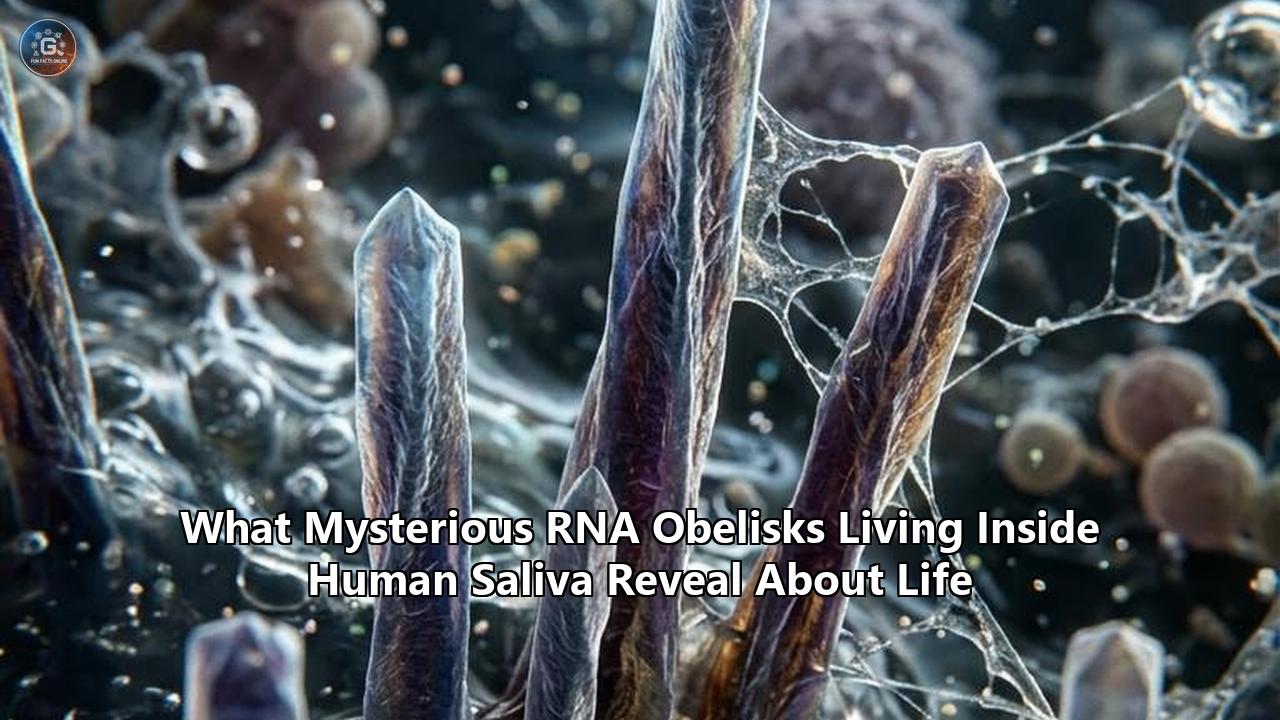
In research published in the journal Cell, a team led by Stanford University biochemist Ivan Zheludev and Nobel laureate Andrew Fire revealed the existence of nearly 30,000 previously unrecorded biological entities. These structures do not match any known virus, bacteria, archaea, or fungus. They exist as tightly folded, symmetrical loops of ribonucleic acid (RNA) roughly 1,000 nucleotides long. Because their secondary structures form rigid, rod-like configurations when modeled computationally, the researchers named them "obelisks".
The discovery caught the scientific community off guard not merely because of their unusual shape, but because of their prevalence. Obelisks were detected in approximately 50 percent of human oral microbiome samples analyzed, coating tooth surfaces and floating through saliva. They were also present in roughly 7 percent of stool samples from global donors, demonstrating that they are regular, persistent inhabitants of the human digestive tract rather than transient contaminants.
"The more we look, the more crazy things we see," observed Mark Peifer, a cell and developmental biologist at the University of North Carolina at Chapel Hill who was not involved in the work, when the preliminary results surfaced.
The discovery challenges basic assumptions about what defines an infectious agent, how the human microbiome interacts with subviral genetic material, and where the boundaries of life itself are drawn.
       +-------------------------------------------------------------+
       |               THE SUBVIRAL CONTINUUM                        |
       |                                                             |
       |  VIROIDS                  OBELISKS                VIRUSES   |
       |  • ~240-400 nt            • ~1,000 nt             • 2kb - 2Mb+
       |  • Circular RNA           • Circular RNA          • DNA or RNA
       |  • No protein coat        • No protein coat       • Protein coat
       |  • Non-coding             • Codes for OBLINS      • Many proteins
       |  • Infect plants          • Inhabit bacteria      • Infect all domains
       +-------------------------------------------------------------+
The Architecture of a Subviral Ghost: What Are RNA Obelisks?
To grasp why these entities eluded detection for decades, one must understand how they are built and how they operate. When researchers ask what are RNA obelisks, they are describing a class of circular, single-stranded RNA molecules that sit midway between two distinct biological categories: plant viroids and conventional viruses.
           PREDICTED ROD-LIKE SECONDARY STRUCTURE OF AN OBELISK
                   (~1,000 nucleotides base-paired on itself)

5'--[ G-C ]=[ A-U ]=[ G-C ]=[ C-G ]=[ G-C ]=[ U-A ]=[ C-G ]--...--\
    |                                                             | Loop
3'--[ C-G ]=[ U-A ]=[ C-G ]=[ G-C ]=[ C-G ]=[ A-U ]=[ G-C ]--...--/
                 |                                  |
           [Hammerhead Ribozyme]               [Oblin ORF]
At its baseline, an obelisk consists of approximately 1,000 to 1,200 nucleotides. In typical cellular biology, single-stranded RNA is an unstable, floppy messenger (mRNA) synthesized from DNA to carry protein-building instructions to ribosomes before being degraded by enzymes called ribonucleases. Obelisks do not behave like messenger RNA. Their sequence possesses intense internal self-complementarity: one half of the circular loop binds tightly to the opposite half, zipping up into a rigid, double-stranded rod.
This rod structure provides physical durability. Cellular enzymes that chew up exposed RNA cannot easily grab hold of an obelisk’s protected, base-paired backbone.
Within this tight rod, the researchers identified two critical features:
- Self-cleaving ribozymes: A specific subset of obelisks incorporates a type-III hammerhead ribozyme. Ribozymes are catalytic RNA molecules that act as their own molecular scissors, snipping long RNA chains into functional units without requiring assistance from external cellular proteins.
- Open reading frames for novel proteins: Unlike plant viroids, which contain zero protein-coding capacity, obelisks contain recognizable open reading frames (ORFs). They carry genetic blueprints to manufacture at least one, and occasionally two, specific proteins.
This combination defied conventional taxonomy. Biologists classify viroids as non-coding circular RNAs that cause disease exclusively in plants. Viruses, meanwhile, wrap their genetic material inside a protein coat known as a capsid. Obelisks possess no capsid, yet they code for proteins. They do not infect plant cells, but rather inhabit bacteria living inside human bodies. They represent a distinct phylogenetic grouping that shares no sequence homology with any known biological family.
Decoding the Oblins: The Mystery Proteins
The proteins that obelisks encode are just as perplexing as the RNA rods themselves. Zheludev, Fire, and their colleagues designated this newly discovered protein superfamily "Oblins".
In a typical genomic survey, when scientists find an unknown gene, they run its sequence through global databases like GenBank using basic local alignment search tools (BLAST). Usually, the algorithm flags a distant relative: a polymerase, a structural envelope protein, or a metabolic enzyme.
When the Stanford researchers ran the sequences for Oblin-1 and Oblin-2, the database returned nothing. The sequences did not resemble any viral capsid, bacterial toxin, or metabolic enzyme ever documented.
+---------------+------------------------+------------------------------------+
| Entity        | Genetic Material       | Protein Production                 |
+---------------+------------------------+------------------------------------+
| Bacteriophage | DNA or RNA (complex)   | Capsids, enzymes, tail fibers      |
| Plasmid       | DNA (circular double)  | Enzymes, resistance factors        |
| Plant Viroid  | RNA (circular single)  | Zero proteins (purely regulatory)  |
| Obelisk       | RNA (circular rod)     | Oblins (unknown biological family) |
+---------------+------------------------+------------------------------------+
Using computational structural prediction systems, including AlphaFold, the team began probing what these Oblin proteins might look like in three-dimensional space. The predictions revealed structural motifs associated with metal ion binding, specifically zinc-finger-like domains. In molecular biology, zinc-finger domains frequently serve one purpose: clamping onto nucleic acids.
This hints that Oblins might be built to manage the obelisk’s own life cycle. An Oblin protein could theoretically:
- Bind to the circular RNA to protect it from host nucleases during cellular stress.
- Direct host bacterial RNA polymerases to continuously copy the obelisk loop.
- Assist in partitioning the RNA loops into daughter cells when the host bacterium divides.
Because Oblins lack enzymatic active sites common to self-replicating polymerases, obelisks cannot copy themselves independently. They must act as molecular squatters, commandeering the bacterial host's internal transcription machinery to survive.
Finding the Host: Life Inside Streptococcus sanguinis
Discovering wild RNA sequences floating in saliva does not automatically explain where those sequences live. Human saliva contains human cells, hundreds of bacterial species, free-floating bacteriophages, fungi, and dietary debris.
To determine the host organism, the research team began screening purified, isolated cultures of common oral bacteria. They struck gold with Streptococcus sanguinis.
                 HUMAN MOUTH ECOSYSTEM (SALIVA & DENTAL ENAMEL)
                                      |
                         Streptococcus sanguinis
                           (Commensal Bacterium)
                                      |
                      +---------------+---------------+
                      |                               |
             Bacterial Chromosome             OBELISK-S.s.
             (Circular DNA genome)         (~1,137 nt RNA loop)
                      |                               |
              Normal metabolism            Replicates silently
              and cell division            Codes for Oblin proteins
No lysis / No cellular harmThe researchers analyzed specific laboratory strains of S. sanguinis, including the well-characterized SK36 strain, alongside clinical isolates from human mouths. They detected a distinct obelisk variant—designated Obelisk-S.s.—measuring 1,137 nucleotides in length, actively reproducing within the bacteria.
This finding allowed the team to conduct controlled laboratory experiments:
1. Host Growth Dynamics
When the team compared S. sanguinis cultures that carried Obelisk-S.s. against identical substrains that had lost the RNA entity, they discovered no difference in growth rates under nutrient-rich conditions. The obelisk did not kill the host, burst its cell wall (lyse it), or noticeably impair its replication. It lived within the bacterial cytoplasm as a quiet passenger.
2. The CRISPR Silence
Bacteria maintain an adaptive immune system known as CRISPR-Cas, which captures short sequences of viral and plasmid DNA (spacers) and stores them in a genomic library to target and destroy future invaders. When the team cross-referenced large databases of bacterial CRISPR spacers, they found no evidence that bacterial immune systems were targeting obelisk sequences.
This silence leaves two possibilities open. Either obelisks evade bacterial immune detection through their tight secondary structures and RNA-only life cycle, or bacteria do not register them as hostile pathogens.
3. Long-Term Human Persistence
The researchers tracked human participants over long timeframes and observed individual donors carrying identical obelisk variants in their microbiomes for more than 300 days. These are not fleeting environmental contaminants swallowed from drinking water or inhaled from air. They are established elements of human internal ecology.
Why Modern Medicine Missed Them for Decades
How did an entity inhabiting 50 percent of human mouths remain invisible throughout decades of high-tech microbiome mapping? The answer lies in the technical blind spots of standard genomic sequencing.
For the past twenty years, the human microbiome has primarily been explored through DNA metagenomics. Researchers extract genetic material from a stool or saliva sample, shred it, sequence every fragment of DNA, and assemble the puzzle pieces using powerful supercomputers.
+--------------------------------------------------------------------------+
|                  THE GENOMIC EXTRACTION BLIND SPOT                       |
|                                                                          |
|  SALIVA SAMPLE ---> DNA METAGENOMICS PIPELINE                            |
|                     • Captures bacterial DNA                             |
|                     • Captures DNA viruses                               |
|                     • Completely discards RNA                            |
|                     RESULT: Obelisks are literally thrown away           |
|                                                                          |
|  SALIVA SAMPLE ---> STANDARD RNA-SEQ (METATRANSCROPTOMICS)               |
|                     • Sequences all active RNA                           |
|                     • Filters reads against GenBank/RefSeq databases     |
|                     • Discards non-matching contigs as "noise/artifacts" |
|                     RESULT: Obelisks are deleted by software             |
|                                                                          |
|  SALIVA SAMPLE ---> REFERENCE-FREE DE NOVO ASSEMBLY                      |
|                     • Assembles raw RNA without reference templates      |
|                     • Screens for circularization (overlapping ends)     |
|                     • Calculates secondary folding structures            |
|                     RESULT: ~30,000 distinct Obelisk species detected    |
+--------------------------------------------------------------------------+
This approach misses obelisks entirely:
The DNA-Only Filter
Obelisks do not possess a DNA phase in their lifecycle. They exist strictly as RNA. In standard DNA metagenomic pipelines, chemical extraction protocols intentionally discard all RNA to isolate pristine DNA libraries. Millions of clinical microbiome studies conducted since the early 2000s discarded obelisks down the laboratory drain.
The Problem of Reference Databases
When scientists did examine active RNA—a method called metatranscriptomics—they hit a second wall. High-throughput sequencing generates terabytes of raw data. To make sense of it, bioinformatic algorithms match short sequence reads (typically 150 base pairs long) against reference databases of known organisms, like the National Center for Biotechnology Information (NCBI) GenBank.
Because obelisks share zero sequence homology with any known organism, standard computational pipelines flagged their reads as unmapped fragments, chimeras, or technical noise, automatically filtering them out.
The De Novo Breakthrough
The Stanford team bypassed this limitation by designing a reference-free search strategy. Instead of asking the computer "What known organisms are in this sample?", they asked: "Are there any circular RNA molecules here that can fold into stable rods and are self-cleaving?"
They surveyed 5.4 million publicly available datasets from the Sequence Read Archive (SRA), totaling petabytes of biological data collected across the globe. They analyzed RNA assemblies that looped back on themselves, possessed hammerhead ribozyme motifs, and lacked any matches in existing genetic registries.
The algorithms returned 29,959 unique obelisk species (clustered at a 90 percent sequence identity threshold). They emerged from human gut samples, human dental plaques, hospital wastewater, agricultural soils, freshwater lakes, and ocean trenches across all seven continents.
The entities were not rare anomalies; they were ubiquitous. Science had simply lacked the computational lenses to see them.
Viroid-Like Ancestry and the "RNA World"
The discovery of obelisks has reignited debates among evolutionary biologists regarding the origins of cellular life.
In 1986, Nobel laureate Walter Gilbert popularized the "RNA World" hypothesis. This model proposes that before modern cells evolved their complex division of labor—where stable double-stranded DNA stores information, proteins execute chemical tasks, and RNA acts as an intermediary—early life on Earth relied on RNA to perform both functions. Primitive RNA molecules had to store genetic blueprints and fold into intricate shapes to catalyze chemical reactions.
                   THE HYPOTHETICAL TIMELINE OF RNA ENTITIES

   4.0 Billion Years Ago               3.5 Billion Years Ago             Present Day
   +-----------------------+           +-----------------------+         +------------------+
   |    THE RNA WORLD      |           |  EMERGENCE OF DNA     |         | MODERN LIFE      |
   | • Self-replicating    | --------> |    AND PROTEINS       | ------> | • Cellular hosts |
   |   catalytic RNAs      |           | • Ribosomes take over |         | • Viruses        |
   | • Ribozyme-driven     |           | • DNA stores code     |         | • Obelisks (?)   |
   |   biochemistry        |           | • Viroids get isolated|         | • Viroids        |
   +-----------------------+           +-----------------------+         +------------------+
For decades, viroids were viewed as the most plausible surviving remnants of this ancient RNA World. Discovered in 1971 by Theodor Diener, viroids are tiny loops of non-coding RNA that infect plants. They use rolling-circle replication, rely on internal ribozymes to slice their own progeny, and function without producing any proteins. Many scientists argued viroids were biological fossils that survived within isolated plant hosts.
Yet, this theory faced a major objection: why were viroids found only in flowering plants (angiosperms), which evolved relatively late in evolutionary history, roughly 140 million years ago? Why were there no viroids in ancient single-celled organisms like bacteria?
Obelisks bridge this divide.
By establishing that viroid-like circular RNAs with self-cleaving ribozymes exist abundantly within bacteria, obelisks demonstrate that subviral RNA elements are deeply entrenched in the bacterial domain.
Evolutionary theorists now weigh two competing possibilities for where obelisks fit into biological history:
Hypothesis 1: Relics of the Primordial World
Obelisks could be direct, uninterrupted evolutionary descendants of pre-cellular genetic elements that survived the transition to cellular life billions of years ago. In this scenario, they survived inside early prokaryotic hosts, acquiring small protein-coding sequences (the Oblins) over deep time to anchor themselves permanently in bacterial machinery.
Hypothesis 2: Degenerate Escapees
Alternatively, obelisks could have emerged relatively recently. Cellular messenger RNAs, viral remnants, or retrotransposons might have excised themselves from host control, circularized into defensive rod shapes, and evolved autonomous parasitic life cycles. Under this view, nature continually re-invents viroid-like architectures because a circular, rod-shaped RNA loop is one of the most efficient ways for rogue genetic material to evade destruction.
The scientific community has yet to settle the question. But determining what are RNA obelisks in the context of evolutionary biology requires re-examining the tree of life to accommodate elements that defy standard branches.
How Obelisks Multiply: The Rolling-Circle Mechanism
Because obelisks do not possess their own polymerases, how do they produce thousands of copies inside a single bacterium?
Evidence indicates they replicate via a mechanism known as rolling-circle replication—the same strategy deployed by plant viroids and Hepatitis Delta Virus (HDV).
                 THE ROLLING-CIRCLE REPLICATION OF OBELISKS

    [Circular (+) Obelisk]
              |
              | Bacterial RNA Polymerase binds and continuously transcribes
              v
    5'=========[Unit 1]=========[Unit 2]=========[Unit 3]========... 3'
               (Linear, concatemeric negative-strand intermediate)
              |
              | Ribozyme Self-Cleavage (or host ribonuclease cut)
              v
    [Unit 1]  +  [Unit 2]  +  [Unit 3]  (Monomeric linear fragments)
              |
              | RNA Ligase (host or catalytic circularization)
              v
    [Circular (-) Intermediate Obelisk]
              |
              | Repeat transcription process to generate (+) sense rods
              v
    Daughter Obelisks assembled with Oblin proteins
1. Host Hijacking
An obelisk within Streptococcus sanguinis likely engages the host's DNA-dependent RNA polymerase. Although this bacterial enzyme evolved to transcribe double-stranded DNA into RNA, the obelisk’s tight base pairing and structural similarities to double-stranded DNA allow it to fool the host enzyme into binding to its RNA loop.
2. The Endless Loop
Because the RNA template is a continuous circle with no beginning or end, the polymerase spins around it repeatedly. It churns out a long, uninterrupted ribbon of repeated obelisk sequences, known as a concatemer.
3. Self-Slicing
This long strand contains repeating units of hammerhead ribozymes. As the ribbon emerges, the ribozyme regions snap into their catalytic 3D shapes and snip the ribbon, releasing single, monomer-sized obelisk fragments.
4. Ligation and Translation
The linear fragments are then circularized into closed loops, either by cellular RNA ligases or an intrinsic ligation process. Once circularized, the positive-sense loops serve two roles: they act as templates for another round of replication, and they are read by bacterial ribosomes to manufacture Oblin proteins.
This system is completely streamlined. The obelisk carries no structural cargo, no outer shell, and no bulky metabolic genes. It is pure, targeted biological replication reduced to its simplest mechanical components.
Health, Immunity, and the Oral Microbiome
The immediate concern whenever an unmapped entity is discovered inside the human body is clinical: do obelisks make people sick?
Preliminary data suggest they are not classical pathogens. The Stanford researchers observed that the presence of Obelisk-S.s. in human dental samples did not correlate with obvious oral disease, periodontitis, or acute tissue damage. In laboratory settings, the host bacteria showed normal growth whether colonized by the entity or not.
However, "non-pathogenic" does not mean "non-impactful." In the fragile ecology of the human microbiome, subtle shifts in bacterial behavior can produce significant downstream health consequences.
                   POTENTIAL MICROBIAL INTERACTIONS

     +-------------------------------------------------------+
     |                  Streptococcus sanguinis              |
     |                                                       |
     |   WITHOUT OBELISK               WITH OBELISK          |
     |   • Baseline metabolism         • Consumes energy for |
     |   • Standard biofilm              Oblin synthesis     |
     |   • Normal competition with     • Possible altered    |
     |     cavity-causing S. mutans      surface proteins    |
     |                                 • Potential changes   |
     |                                   in biofilm ecology  |
     +-------------------------------------------------------+
Biofilm Dynamics on Tooth Enamel
Streptococcus sanguinis is locked in constant competition with Streptococcus mutans, the primary driver of dental cavities. S. mutans produces lactic acid that erodes tooth enamel. If harboring an obelisk imposes even a fractional metabolic load on S. sanguinis, it could subtly diminish its competitive edge, potentially favoring acid-producing species.Conversely, if Oblin proteins alter the host cell wall, improve biofilm adhesion, or produce antibacterial peptides that keep competitors away, obelisks could act as beneficial mutualists that help protect human teeth.
The Endocarditis Link
While S. sanguinis is a harmless commensal in the mouth, it is a leading cause of subacute bacterial infective endocarditis when it enters the bloodstream—often during dental cleanings or oral surgeries. Once in circulation, the bacterium can colonize damaged heart valves, forming dangerous vegetations.
Researchers are investigating whether obelisk-colonized strains of S. sanguinis possess different adhesion properties, virulence profiles, or antibiotic susceptibilities compared to obelisk-free strains.
Gut Persistence and Inflammation
In the gastrointestinal tract, where obelisks were detected across 7 percent of global donors, their persistence raises questions about gut immunology. The human mucosal immune system continuously samples intestinal contents via toll-like receptors (TLRs), such as TLR3, TLR7, and TLR8, which evolved specifically to recognize foreign, double-stranded, or circular viral RNA and trigger inflammatory responses.
How obelisks survive inside human gut bacteria for over 300 days without triggering continuous chronic inflammation remains an open puzzle. They may be completely walled off within the bacterial cytoplasm, invisible to human immune surveillants unless the bacterial cell is destroyed.
Technological and Therapeutic Frontiers
Beyond basic biology, exploring what are RNA obelisks has practical implications for modern biotechnology, particularly in the rapid development of RNA-based medicines.
The pharmaceutical sector faced immense hurdles developing mRNA therapeutics during the COVID-19 pandemic, largely because linear mRNA is fragile. Cells are packed with exonucleases—enzymes that latch onto the open ends of RNA molecules and shred them within hours. To overcome this, drug developers formulate mRNAs with modified nucleosides and wrap them in lipid nanoparticles.
Over the past three years, synthetic biologists have pivoted heavily toward designing circular RNA (circRNA) therapeutics. Because circular RNAs lack open 5' and 3' ends, they are naturally impervious to exonuclease degradation and can persist inside human cells far longer, providing sustained protein production at lower doses.
       SYNTHETIC mRNA (LINEAR)              OBELISK-INSPIRED circRNA

       Cap-[  Protein Code  ]-Poly(A)       /-------[  Engineered Code  ]-------\
       (Open ends easily targeted           \---[Ribozyme]-------[Stabilizer]---/
        by cellular exonucleases)           (Closed circle: completely resistant
                                             to exonuclease degradation)
Obelisks present nature's masterclass in circular RNA stability. Over eons, they evolved an optimized balance of:
- Autonomous circularization driven by self-cleaving ribozymes.
- Densely packed secondary rod structures that deflect non-specific cellular nucleases.
- Internal open reading frames that express distinct proteins from a tiny footprint.
Biomedical engineers are now analyzing obelisk scaffolds to design new delivery platforms:
- Engineered Probiotic Vectors: If an obelisk can stably persist within Streptococcus sanguinis without harming the bacterium or triggering human immune alarms, engineered non-pathogenic oral bacteria could carry synthetic obelisks designed to produce protective proteins, anti-inflammatory molecules, or dental antimicrobial peptides directly onto tooth surfaces.
- Ribozyme-Driven Molecular Tools: The variant type-III hammerhead ribozymes identified in obelisks offer biochemical templates for self-splicing synthetic RNAs, expanding tools used in gene-editing applications like CRISPR-Cas guide RNA manufacturing.
- Targeted Microbiome Editing: If researchers can decipher how obelisks transmit between bacterial hosts, they could be re-engineered as narrow-spectrum antimicrobial shuttles—delivering genes that selectively neutralize dangerous pathogens while sparing beneficial commensal microbes.
Redefining the Boundaries of What It Means to Be Alive
The discovery of obelisks has disrupted long-standing scientific debates regarding the definition of biological life.
Textbooks have historically taught a clean biological hierarchy:
+----------------------------------------------------------------------------+
|                       TRADITIONAL TAXONOMIC VIEWS                          |
|                                                                            |
|   LIVING ORGANISMS                                                         |
|   • Independent metabolism, cellular structure, autonomous replication     |
|   • Examples: Animals, Plants, Fungi, Bacteria, Archaea                    |
|                                                                            |
|   THE BORDERLINE                                                           |
|   • Genetic code wrapped in protein, requires cellular host to replicate   |
|   • Examples: Viruses                                                      |
|                                                                            |
|   NON-LIVING BIOMOLECULES                                                  |
|   • Pure genetic elements or proteins, no coats, non-coding or helper-dependent|
|   • Examples: Viroids, Plasmids, Prions, Transposons                       |
+----------------------------------------------------------------------------+
Obelisks dismantle this tidy classification.
They are more complex than plant viroids because they encode novel, functional proteins. Yet they are simpler than viruses because they produce no capsid, construct no protective shell, and carry no genes for their own replication machinery. They represent an autonomous, self-perpetuating genetic collective—capable of Darwinian evolution, persistence across hundreds of days in human hosts, and global distribution—built from a naked loop of RNA containing barely a thousand chemical letters.
                     THE EXPANDED SPECTRUM OF REPLICATORS

    Prions       Viroids        OBELISKS       Viruses       Bacteria
  (Proteins)    (RNA-only)     (RNA + Oblin)   (Capsids)     (Cellular)
   [----]--------[----]----------[====]---------[----]--------[----]
  Non-Living                 THE SHADOW BIOSPHERE                  Living
They belong to what microbiologists often describe as the Shadow Biosphere: a realm of sub-cellular, subviral replicators that live in parallel with conventional cellular life, interacting with it, shaping its genomes, and using its machinery, all while remaining essentially invisible to traditional diagnostic tests.
If half the human species carries these enigmatic RNA structures in their mouths, our understanding of the human body's biological makeup is incomplete. We are not merely assemblies of human cells living in symbiosis with bacteria, fungi, and viruses. We are complex ecosystems harboring subviral entities whose basic ecological roles remain unexplained.
What to Watch For Next
The discovery of obelisks marks the beginning, not the conclusion, of an expansive scientific inquiry. As laboratories globally adjust their bioinformatics pipelines and bench experiments to investigate these elements, several milestones and unresolved questions will shape the field:
- Solving the Oblin Structure in the Lab: While AlphaFold has provided theoretical three-dimensional models of Oblin proteins, researchers must isolate native Oblin-1 and Oblin-2 in bacterial cultures to verify their actual structures through cryo-electron microscopy or X-ray crystallography. Confirming whether they actively bind zinc ions or latch onto the obelisk's own RNA backbone is a primary experimental priority.
- Deciphering the Transmission Mechanism: It remains entirely unknown how obelisks travel from one bacterium to another, or from one human to another. Do they rely on natural bacterial transformation (where bacteria take up naked RNA from saliva)? Are they packaged into extracellular vesicles that bacteria shed into saliva? Or do they spread exclusively through vertical transmission, passed down from mother cell to daughter cell as bacteria divide?
- Mapping Non-Human Reservoirs: While the initial Cell study surveyed environmental databases and found obelisks in diverse habitats, identifying their specific ecological hosts in oceans, soils, and animal livestock is just beginning. Documenting their distribution will illuminate whether obelisks are primarily an ancient bacterial phenomenon or if they can colonize other domains of life.
- Clinical Cohort Studies: Ongoing microbiome projects are expanding to evaluate whether shifts in obelisk abundance correlate with conditions like inflammatory bowel disease (IBD), colorectal cancer, or oral dysbiosis. Establishing whether they act as harmless passengers, protective shields, or silent instigators of microbial imbalance will determine their ultimate place in medicine.
The reality that an entirely unknown genetic entity was discovered living inside human saliva—a biological fluid examined under microscopes for more than three centuries—proves that massive biological frontiers remain right under our noses. As computational tools continue to query nature's raw data without preconceptions, the catalog of what is living inside us is far from closed.
Reference:
- https://pubmed.ncbi.nlm.nih.gov/39481381/
- https://www.upv.es/noticias-upv/noticia-14876-descubren-una-en.html
- https://s4me.info/threads/viroid-like-colonists-of-human-microbiomes-2024-zheludev-et-al.37055/
- https://www.sciencealert.com/Obelisks-entirely-new-class-of-life-has-been-found-in-the-human-digestive-system
- https://www.biorxiv.org/content/10.1101/2024.01.20.576352v1?utm_source=Securitylab.ru
- https://www.zmescience.com/science/news-science/scientists-uncover-bizarre-virus-like-structures-in-the-human-body-and-we-have-no-idea-what-they-are/
- https://www.revvity.com/blog/obelisks-viroid-circular-rnas-microbiomes
- https://biomedicalodyssey.blogs.hopkinsmedicine.org/2025/06/entangling-the-concept-of-what-is-alive-the-obelisks/
- https://astrobiology.com/2025/08/11/obelisks-newly-discovered-viroid-like-colonists-of-human-microbiomes/
- https://www.discovermagazine.com/mysterious-microbial-obelisks-colonize-our-gut-mouth-and-stool-47048
- https://en.wikipedia.org/wiki/Obelisk_(biology))
- https://www.earth.com/science/scientists-find-new-forms-of-life-called-obelisks-inside-humans-rna-carriers/