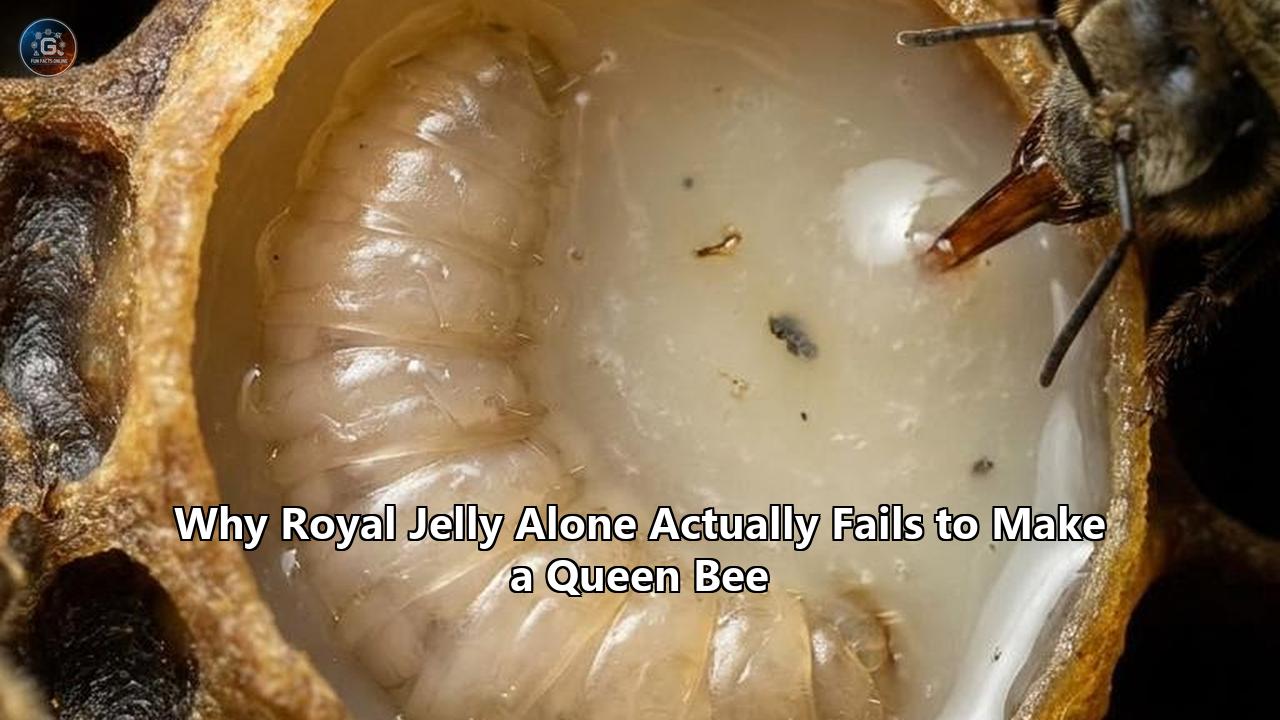
For generations, the standard explanation for the stark divergence between a sterile worker bee and a fertile, long-lived queen rested on a single, legendary substance: royal jelly. The narrative was beautifully simple. All honeybee larvae start their lives with identical genomes. Those destined to labor in the dark of the hive are transitioned to a diet of pollen and honey, while a select few are continuously drenched in a milky, glandular secretion produced by nurse bees. This exclusive diet was believed to be the sole environmental switch that unlocked royal development.
However, a landmark study published in Nature has fundamentally rewritten this textbook narrative. The international team, led by entomologists Yu Fang, Yahya Al Naggar, Kai Wang, Xiaofeng Xue, and Boris Baer, demonstrated that royal jelly alone actually fails to make a queen bee. Instead, the physical, chemical, thermal, and social architecture of the specialized, peanut-shaped "queen cell"—often called the "royal crib"—is an active, biochemically engineered microenvironment that is just as vital to queen development as the food she eats.
By showing that larvae fed royal jelly but reared under worker-cell wax suffer up to a 66% mortality rate and grow into stunted, malformed pupae, this study challenges long-held assumptions about nutritional determinism. It forces us to look beyond a single dietary silver bullet and analyze the honeybee colony as a multi-dimensional biological system capable of active material engineering. Using this discovery as a lens, we can extract profound lessons about developmental plasticity, epigenetics, niche construction, and the hidden limitations of reductionist science.
I. The Reductive Lure of the "Silver Bullet"
To understand why the scientific community so readily accepted royal jelly as the solitary agent of queen determination, one must examine the history of entomological research. The search for a single, magical "queen-maker" molecule has spanned over half a century.
The Rise and Fall of Royalactin
In 2011, a study published in Nature by Japanese researcher Masaki Kamakura appeared to have finally solved the mystery. Kamakura isolated a 57-kilodalton protein in royal jelly, which he named royalactin (major royal jelly protein 1, or MRJP1). He claimed that feeding purified royalactin to honeybee larvae was sufficient to trigger their transformation into queens. Even more astonishingly, when he fed royalactin to Drosophila melanogaster (fruit flies)—an insect species that does not even have a queen caste—they grew larger, lived longer, and laid more eggs. Kamakura mapped this to the epidermal growth factor receptor (EGFR) signaling pathway, suggesting that royalactin was the master key that unlocked the biological machinery of longevity and fertility across the insect world.
The scientific world was captivated. The paper fit perfectly into a reductionist paradigm: one gene, one protein, one phenotypic outcome. If royalactin was the master switch, then understanding how queen bees are made was merely a matter of mapping this single protein's interactions with cellular receptors.
[Traditional Reductionist Model]
Identical Larva + Royalactin (MRJP1) ──> EGFR Activation ──> Queen Bee Phenotype
But science is self-correcting. In 2016, researchers Anja Buttstedt and Robin Moritz of Martin Luther University Halle-Wittenberg attempted to replicate Kamakura’s findings. They meticulously removed royalactin from royal jelly and fed the depleted mixture to larvae in a laboratory setting.
The results were unequivocal: the larvae still developed into perfect queens. Conversely, supplementing larval diets with excess royalactin did not increase the proportion of queens produced. The "royalactin-as-monarch-maker" theory crumbled. Buttstedt’s work confirmed what German biochemist Heinz Rembold had argued in the late 1970s: there is no single chemical "determinator" in royal jelly. Rather, royal jelly acts as a complex, highly balanced nutritional soup that stimulates general larval metabolism, driving downstream hormonal changes.
The True Chemical Nature of Royal Jelly
If royal jelly is not a magical elixir containing a singular monarch-making compound, what is it? Secreted by the hypopharyngeal and mandibular glands of young nurse bees, royal jelly is a dense, acidic emulsion composed of:
- Water (60–70%)
- Proteins (12–15%): Predominantly Major Royal Jelly Proteins (MRJPs 1 through 9)
- Sugars (10–16%): Glucose and fructose
- Lipids (3–6%): Uniquely characterized by medium-chain dicarboxylic acids, most notably 10-hydroxy-2-decenoic acid (10-HDA), which is found nowhere else in nature.
- Vitamins, minerals, and trace elements
                       ┌── Water (60-70%)
                       ├── Sugars (10-16%: Fructose & Glucose)
                       │
Royal Jelly Composition├── Proteins (12-15%: MRJP1 - MRJP9)
                       │
                       └── Lipids (3-6%: Predominantly 10-HDA)
Royal jelly does not work by introducing a novel chemical command; instead, its lack of certain plant-based compounds is key. In a standard hive, worker larvae are fed a diet of "bee bread"—a mixture of pollen, nectar, and honey. Pollen is rich in plant microRNAs and phenolic compounds, such as p-coumaric acid.
Research has shown that these plant chemicals act as natural suppressants. They downregulate the development of the ovaries and keep worker larvae in a state of reproductive arrest—a process that some biologists refer to as "chemical castration" by the colony. By consuming royal jelly, which is entirely devoid of these pollen-derived suppressants, queen-destined larvae are not being fed a "growth drug"; rather, they are being spared the developmental braking system applied to their worker sisters.
Yet, even this nuanced nutritional view remained incomplete. If the key to how queen bees are made was simply the absence of suppressants coupled with high-calorie nutrition, why did decades of lab-reared queen experiments yield so many "intercastes"—bees that possessed the head of a worker but the abdomen of a queen, or vice versa? Why did laboratory-reared queens frequently suffer from high mortality and reduced fertility compared to their hive-reared counterparts?
The answer, as the June 2026 Nature paper reveals, lay in the physical container itself: the peanut-shaped wax queen cell.
II. The June 2026 Nature Study: Re-Engineering the Cradle
To investigate whether the physical space of the queen cell was actively contributing to development, Boris Baer and his international colleagues conducted an elegant series of experiments on both the western honeybee (Apis mellifera) and the eastern honeybee (Apis cerana).
For years, beekeepers and entomologists assumed that the peanut-shaped, vertically oriented queen cell was merely a larger "bucket" to hold the voluminous pools of royal jelly required by the rapidly growing larva. But Baer’s team realized that the hive dedicates an extraordinary amount of labor, energy, and specialized material to these structures.
"Bees spend so much time and energy constructing these cells that it made little evolutionary sense if they were merely larger food containers," Baer noted. "Could the cell itself contribute to queen development?"
The Physics and Chemistry of the "Royal Crib"
The researchers began by analyzing the material properties of the wax used to build worker cells versus the wax used for queen cells. The findings were stark. The two waxes represent entirely different chemical and physical formulations.
| Material Property | Worker-Cell Wax | Queen-Cell Wax (Royal Crib) |
|---|---|---|
| Physical Density | High | Low (Highly porous, loose) |
| Pliability & Hardness | Firm, high tensile strength | Soft, highly extensible, low compressive strength |
| Melting Point | Normal (~63°C) | Significantly higher melting point |
| n-Alkane Composition | High levels of long-chain n-alkanes (e.g., pentacosane) | Drastically reduced levels of long-chain n-alkanes |
| Fatty Acid Profile | Standard lipid profile | Elevated levels of unsaturated fatty acids (oleic & linoleic acid) |
| Volatile Organic Compounds | Standard hive scent | Rich, highly complex profile of volatile organic compounds (VOCs) |
This unique composition explains why the queen cell is physically softer and more elastic, yet structurally stable at higher temperatures. The high concentration of unsaturated fatty acids (like oleic and linoleic acids) creates a loose, open molecular matrix that is more porous, allowing for better gas exchange and humidity regulation. Meanwhile, the depletion of long-chain n-alkanes like pentacosane reduces the rigidity of the wax, allowing the peanut-shaped chamber to expand as the queen larva grows.
[Worker Wax Matrix]
   ███████████████  <-- High density, rich in long-chain n-alkanes (Rigid & Compact)

[Queen Wax Matrix]
   ░░ ░░ ░░ ░░ ░░   <-- Low density, rich in unsaturated fatty acids (Porous, Soft, Expandable)
The "Queen Cell Builders" and Their Thoracic Fever
How do the bees create this specialized wax formulation? The researchers discovered that the hive mobilizes a previously unrecognized sub-caste of worker bees, which they dubbed "queen cell builders".
These are not ordinary nurse bees. They are a highly specialized cohort of young workers who undergo a dramatic physiological and transcriptomic "reprogramming". RNA sequencing of these builders revealed a significant upregulation of genes associated with wax synthesis, lipid metabolism, and cellular respiration.
Even more fascinating is their thermal behavior. Using thermal imaging, the team observed that when queen cell builders are working on the royal cribs, they run a localized "fever". Their thoracic temperatures surge to above 39°C (102.2°F)—significantly hotter than the average hive temperature of 34°C (93.2°F).
  [Normal Hive Worker]                   [Queen Cell Builder]
   Thorax Temp: ~34°C                     Thorax Temp: 39°C+ (Fever)
         │                                      │
         ▼                                      │
  Standard Wax Shaping                          ▼
                                       - Melts high-MP wax
                                       - Blends unsaturated lipids
                                       - Chemically alters wax matrix
This high-temperature operation is essential. The specialized queen-cell wax has a higher melting point than standard worker wax. By heating their bodies to nearly 40°C, the queen cell builders act as tiny, living heat-guns, melting, blending, and refining the wax to modify its chemical structure in real-time.
Sourcing the Royal Materials: The Graphite Tracer Experiment
To prove that the queen cell builders were actively selecting and chemically altering materials rather than just using whatever wax was closest, the research team designed an ingenious tracer experiment.
They mixed microscopic, non-toxic graphite carbon particles into specific sections of standard honeycomb elsewhere in the hive. They then watched to see if and how those marked wax particles would migrate.
Sure enough, when the colony began building queen cells, the darkened, graphite-marked wax was selectively harvested by the queen cell builders. However, the builders did not simply move the wax; they subjected it to intense, high-temperature kneading and glandular modification, blending in unsaturated fatty acids to completely alter its physical properties before applying it to the royal crib. This highly coordinated material sourcing and modification mimics sophisticated human architectural and manufacturing processes.
The Decisive Bio-Manipulation Experiment
To establish a direct causal link between the specialized wax and larval development, the team conducted a precise environmental swap.
They allowed queen-destined larvae to develop on a standard diet of royal jelly for four days. At that stage, they capped the artificial, identically shaped queen-rearing cups with wax caps made of either:
- Natural queen-cell wax.
- Worker-cell wax that had been melted and precisely remolded to match the exact geometric shape of a queen cell cap.
This setup perfectly isolated the material chemistry of the wax from its geometric shape and the larvae's diet. If royal jelly alone was responsible for queen development, both groups should have developed into healthy queens.
The results were dramatic:
- Mortality Rates: Up to two-thirds (approx. 66%) of the larvae capped with worker-cell wax died before emerging. In contrast, only one-third (approx. 33%) of those under the natural queen-cell wax died.
- Physical Size: The surviving queens reared under worker-cell wax were significantly smaller, possessed lower pupal weight, and displayed underdeveloped reproductive traits.
- Normal Development: The queens reared under natural queen-cell wax emerged as large, robust, fully formed reproductive powerhouses, virtually identical to wild-reared queens.
  [Larva + Royal Jelly Diet]
             │
             ├───────► Capped with Worker Wax ──► 66% Mortality, Stunted Survivors
             │
             └───────► Capped with Queen Wax  ──► 33% Mortality, Robust Queens
"For centuries, we believed 'you are what you eat' was the only rule for making a queen bee," said co-author Kai Wang. "Our study rewrites that rule to say 'you are where you live, too.'"
III. Case Study Analysis: Extracting the Principles of Caste Determination
The discovery that queen development is a multi-sensory, biochemically engineered process provides an ideal lens through which we can analyze broader patterns in biology. It serves as a powerful case study for several fundamental scientific principles that challenge reductionist frameworks.
1. The Fallacy of the Single Environmental Switch
For decades, the search for how queen bees are made was hampered by a cognitive bias: the desire to find a single, linear cause-and-effect relationship.
[Reductionist Bias]
One Input (Royal Jelly) ──────► One Output (Queen Bee)

[Systemic Reality]
Chemical Inputs (No Pollen, Royal Jelly) ┐
Physical Inputs (Porosity, Elasticity)   ├─► Synergistic Development ─► Queen Bee
Thermal Inputs (39°C+ Microclimate)      │
Sensory Inputs (Volatile VOC Scent)      ┘
When Kamakura published his royalactin paper in 2011, it was widely celebrated because it fit this simple model. It suggested that complex social organization could be reduced to a single molecular switch.
The failure of royalactin to withstand replication, combined with the 2026 discovery of the queen cell's active role, teaches us that biological plasticity is rarely governed by isolated variables. The honeybee queen is not "triggered" by royal jelly; she is sculpted by a complex web of environmental factors working in synergy:
- Nutritional Abundance: The high sugar and protein content of royal jelly stimulates the insulin/insulin-like signaling (IIS) pathway and mTOR pathway, driving rapid cell growth.
- The Absence of Suppressants: The lack of p-coumaric acid and plant microRNAs from pollen prevents the chemical suppression of her reproductive organs.
- Physical and Mechanical Cues: The soft, expandable queen cell allows the larva to stretch and grow without physical compression, which may trigger mechanosensory pathways that guide hormonal surges.
- Thermal Acceleration: The elevated temperatures maintained by the queen cell builders act as a catalyst, speeding up her metabolic clock so that she matures in just 16 days, compared to the 21 days required for a worker.
- Chemical Volatiles: The unique VOC profile of the queen-cell wax likely communicates critical sensory feedback to the developing larva, preparing her sensory and reproductive systems for her future role.
2. Epigenetics Beyond the Genome: The Extended Epigenetic Matrix
We often define epigenetics as chemical modifications to DNA (such as DNA methylation or histone acetylation) that alter gene expression without changing the underlying genetic sequence. In honeybees, this process is highly pronounced.
In 2008, a groundbreaking study by Ryszard Maleszka and colleagues at the Australian National University showed that silencing the gene for DNA methyltransferase (Dnmt3) in young larvae caused them to develop into queens, even without being fed royal jelly. This proved that worker development is actively maintained by epigenetic gene silencing, and that the royal trajectory requires removing these chemical "locks" from the DNA.
  [Young Larva Genome]
           │
     (Dnmt3 active)
           │
           ▼
  [Worker-specific Genes Methylated (Locked)] ──► Worker Development

           │
     (Dnmt3 silenced via Royal Jelly OR RNAi)
           │
           ▼
  [Queen-specific Genes Unlocked]             ──► Queen Development
However, the 2026 Nature study forces us to expand our definition of the "epigenetic matrix". Epigenetics is not merely about the molecular marks on a chromosome; it is about the entire feedback loop between the organism and its environment.
The chemical composition of the queen-cell wax, the high thermal energy of the builders, and the mechanical properties of the cell itself represent a form of extra-genomic inheritance. The colony is not just passing down DNA; it is actively constructing a bio-reactive environment that instructs the DNA how to express itself. Without this external, engineered matrix, the internal genetic and epigenetic switches triggered by royal jelly simply fail to execute their program correctly, leading to high mortality and developmental failure.
3. Niche Construction and the Extended Phenotype
In evolutionary biology, Niche Construction Theory suggests that organisms do not simply adapt to their environments; they actively modify their environments, which in turn acts as a selective pressure on their development and evolution.
Similarly, Richard Dawkins introduced the concept of the Extended Phenotype, arguing that an animal's behavior and the structures it builds (like a beaver's dam or a spider's web) should be viewed as an extension of its genome.
The honeybee queen cell is a classic example of the extended phenotype in action. The genes of the worker bees—specifically those upregulated in the queen cell builders—are expressed outwardly in the form of a chemically modified, thermally regulated wax crib.
This built structure then reacts back upon the developing queen larva (who shares the same genes), guiding her physical transformation. The colony is operating as a single, integrated "superorganism" that coordinates its collective behavior to engineer the developmental destiny of its next ruler.
     Worker Bee Genome
            │
      (Expression)
            ▼
    Queen Cell Builders (Physiological "Fever")
            │
            ▼
    Physically & Chemically Modified Queen Cell
            │
      (Instructs)
            ▼
    Larval Epigenetic Switch ──► Healthy Queen Bee
IV. The Practical Fallout: Why Modern Beekeeping is Failing Queens
This conceptual transition from "you are what you eat" to "you are where you live" has profound, immediate implications for the global agricultural sector.
Honeybees are the world's most critical managed pollinators, supporting billions of dollars in global crop production. However, managed honeybee colonies have been facing unprecedented declines, driven by a combination of pesticides, pathogens, habitat loss, and climate stress.
At the center of this crisis is a phenomenon known as supersedure—where a colony prematurely kills and replaces its queen because she is weak, infertile, or failing. In the past, beekeepers reported queens living and successfully laying eggs for three to five years. Today, commercial queens frequently fail within six months to a year, forcing beekeepers to constantly buy replacements and absorb massive financial losses.
The Pathology of Industrial Queen Rearing
When we analyze how commercial queens are mass-produced, the lessons of the June 2026 Nature study reveal a major systemic flaw in modern apiculture.
[Industrial Queen Rearing]
Step 1: Graft young larvae into mass-produced plastic "grafting cups."
Step 2: Place cups into a "queenless" cell-builder colony.
Step 3: Workers feed the larvae royal jelly in these plastic containers.
Step 4: Ship emerged queens globally in small wooden cages.

[The Missing Variables]
- No natural queen-cell wax with high unsaturated fatty acids.
- No porous, expandable, peanut-shaped wax walls.
- No specialized "queen cell builders" running localized 39°C fevers on the plastic.
- Zero volatile organic compounds (VOCs) from the plastic matrix.
By rearing queens in plastic cups, commercial breeding operations have stripped away the entire physical, chemical, and thermal microenvironment of the royal crib. While the worker bees in these breeding hives still flood the plastic cups with royal jelly, the developing larvae are deprived of the softer, porous wax matrix, the critical VOC cues, and the localized thermal heating that is now known to be essential for healthy queen development.
   [Commercial Plastic Cup]              [Natural Wax Royal Crib]
 ┌──────────────────────────┐         ┌──────────────────────────┐
 │ - Rigid plastic walls    │         │ - Soft, porous wax walls │
 │ - No VOC chemical cues   │   vs.   │ - Rich in oleic/linoleic │
 │ - Heat blocked by plastic│         │ - 39°C+ localized heat   │
 │ - High larval stress     │         │ - Low mechanical stress  │
 └──────────────────────────┘         └──────────────────────────┘
The result is an assembly line of developmentally compromised queens. Though they may look like queens outwardly, they are biochemically and physiologically closer to intercastes. They possess smaller ovaries, store less viable sperm, and display weaker pheromonal profiles.
Once introduced to a production hive, the workers quickly sense that their new queen is deficient and execute her, starting a chaotic cycle of emergency queen rearing that destabilizes the colony and leaves it highly vulnerable to collapse.
Towards "Smart" Biomimetic Beekeeping
The 2026 study provides a roadmap for repairing this broken industrial pipeline. By understanding the exact materials science behind the royal crib, researchers and apiary equipment manufacturers can design next-generation breeding technologies.
- Biomimetic Rearing Cups: Instead of cheap, rigid plastics, manufacturers can develop biodegradable, porous grafting cups infused with the exact chemical signature of queen-cell wax—specifically depleted of long-chain n-alkanes and enriched with unsaturated oleic and linoleic fatty acids.
- Thermal Incubators: Queen-rearing incubators can be reprogrammed to mimic the localized 39°C "fever" of the queen cell builders, ensuring that larvae during their critical pupation stages receive the heat necessary to catalyze rapid metabolic development.
- Hormonal and VOC Diffusers: Infusing the rearing environment with the volatile organic compounds identified inside the natural royal crib could provide the sensory cues required to fully activate the queen's reproductive pathways.
By transitioning from a simple focus on nutrition to a holistic, biomimetic design that honors the superorganism’s natural engineering, the beekeeping industry can breed robust, climate-resilient queens with restored lifespans and superior reproductive health.
V. The Trans-Species Horizon: From Bees to Human Longevity
The implications of how environmental and physical structures shape biology extend far beyond the borders of the apiary. The concept of using the honeybee queen as a model organism for human health is gaining significant traction globally.
The ARIA £800 Million Initiative
In early 2025, the UK government-backed Advanced Research + Invention Agency (ARIA) launched a massive, high-risk, high-reward scientific venture. Backed by an £800 million fund, the project is specifically turning to social insects—including bees, wasps, ants, and termites—to unlock secrets that could transform human healthcare, aging, and fertility.
                [UK ARIA £800 Million Project]
                              │
             ┌────────────────┴────────────────┐
             ▼                                 ▼
   [Longevity & Aging]               [Organ Preservation]
   Queens live 5 years vs.           How do queens keep sperm
   workers living 5 weeks,           and tissues pristine
   despite identical DNA      for years?
The genetic similarity between a worker bee and a queen bee is virtually 100%, yet the queen lives up to 50 times longer and remains fertile for her entire life. This is equivalent to one human living to 80 years old, while their identical twin, kept in a different environment, lives to 4,000 years old.
"This is the kind of bold, unusual idea that could be truly transformative," said Yannick Wurm, a program director at ARIA and expert in evolutionary genomics. "Now, researchers hope that unlocking the biological secrets behind the queen bee's longevity and vitality could lead to breakthroughs in human aging, fertility, disease prevention, and even organ preservation."
Lessons for Human Epigenetics and Medicine
The discovery that the physical and material environment of the queen cell is a co-equal driver of development alongside diet introduces a fresh perspective to human biomedical research.
For years, human epigenetic research has focused heavily on chemical inputs: diet, pharmaceutical drugs, and toxin exposure. We are now forced to ask: how do mechanical forces, thermal microclimates, and architectural spaces influence human stem cell niche development and tissue regeneration?
- Mechanotransduction in Stem Cells: In human biology, we know that stem cells behave differently depending on the stiffness of the matrix they are grown on. Stem cells grown on soft matrices tend to differentiate into brain tissue, while those grown on rigid matrices differentiate into bone. The bee study shows this on an organismal scale: a larva reared in a soft, elastic wax matrix develops into a giant, fertile queen, while the same larva in a rigid, compact cell develops into a sterile worker.
- Microclimate Engineering in Neonatology: The intense localized "fever" run by the queen cell builders to optimize the development of their young parallels the incubators used in human neonatal intensive care units (NICUs). However, while human incubators focus primarily on maintaining a static temperature, the bee model suggests that dynamic, chemically active, and porous materials could play an active role in cellular and organ development.
- Organ and Tissue Preservation: Queens can store viable, functional sperm inside an specialized organ called the spermatheca for up to five years without any loss of viability. Understanding the exact mix of major royal jelly proteins, lipids, and physical properties within this microenvironment could lead to breakthroughs in how we preserve human organs for transplantation, or how we protect human eggs and sperm in fertility clinics.
VI. Re-imagining the Biological Commons
The June 2026 Nature paper does more than solve a biological mystery. It serves as a profound critique of scientific reductionism.
For decades, we sought a single "monarch molecule" like royalactin because it fit our linear, product-oriented way of thinking. We wanted to believe that if you just bought the right supplement, extracted the right protein, or flipped the right genetic switch, you could control the complex pathways of development, aging, and life.
But the honeybee colony defies this simplistic view. The creation of a queen bee is not a transaction; it is a collective, social orchestration. It is a process that requires a specialized class of builders to run a fever, a selective harvest of materials from across the hive, and a meticulously crafted, biochemically active cradle.
                       The Creation of Royalty
                                  │
         ┌────────────────────────┼────────────────────────┐
         ▼                        ▼                        ▼
    Nutritional                Physical                Biological
  Exclusion of diet         Porosity, elasticity,     High-temp fever
  suppressants in RJ        & VOCs of custom wax    of "builder" bees
     (60% of story)           (40% of story)          (The Catalyst)
The transformation of a simple larva into a queen is the work of a superorganism engineering its own future. It reminds us that in biology, as in society, we cannot separate the individual from the matrix in which they are raised. Destiny is not determined by the code of our DNA, nor by the food on our plates, but by the very architecture of the spaces we build, inhabit, and share.
What to Watch Next: Upcoming Milestones
As the scientific community digests this conceptual transition, several key areas of research are poised to develop over the next three to five years:
- The Molecular "Switch" of the Builders: Scientists are currently searching for the exact chemical signal (likely a volatile pheromone or an odorant) that triggers a young worker bee to undergo physiological reprogramming and become a "queen cell builder".
- The Larval Sensory Pathway: Researchers want to map how the developing queen larva physically senses the wax. Does she have specialized olfactory or mechanosensory receptors that detect the unsaturated fatty acids and VOCs of her crib?
- Commercial Field Trials: Keep an eye out for results from the first commercial apiaries testing biomimetic, wax-infused queen cups. Will these biologically engineered cradles successfully reduce supersedure rates and restore queen longevity in agricultural settings?
- ARIA Research Outputs: The UK's £800 million social insect longevity project will begin publishing its first major findings. Watch for how these insights into bee microclimates and epigenetics are translated into experimental therapies for human aging and organ preservation.
The answers to these questions will continue to reshape our understanding of life, proving that the most complex secrets of biology are often hidden in the very walls we build around us.
Reference:
- https://www.sciencenews.org/article/queen-honeybee-development-wax
- https://www.meteoweb.eu/2026/06/la-culla-della-regina-scoperte-le-costruttrici-reali-che-plasmano-il-destino-delle-api/1001939421/?amp=1
- https://news.ucr.edu/articles/2026/06/03/how-honeybees-really-crown-their-queens
- https://bioengineer.org/the-true-way-honeybees-crown-their-queens/
- https://dailyjournal.net/2026/06/03/a-diet-of-royal-jelly-isnt-the-only-thing-that-makes-a-queen-bee/
- https://news.ucr.edu/articles/2026/06/03/how-honeybees-really-crown-their-queens
- https://www.eurekalert.org/news-releases/1130618
- https://www.eurekalert.org/news-releases/587308
- https://www.discovermagazine.com/what-makes-a-queen-bee-one-special-protein-apparently-13685
- https://www.youtube.com/watch?v=eoFTZfGrUYI
- https://www.researchgate.net/publication/308389248_Royalactin_is_not_a_royal_making_of_a_queen
- https://curious.science.org.au/earth-environment/what-it-takes-make-queen-bee
- https://pmc.ncbi.nlm.nih.gov/articles/PMC12344410/
- https://www.geesbees.ca/post/the-queen-bee
- https://www.reddit.com/r/science/comments/1tvsapu/queencell_wax_helps_shape_honeybee_queen/
- https://www.163.com/dy/article/KUHOM58S0532BT7X.html
- https://bioengineer.org/the-true-way-honeybees-crown-their-queens/
- https://www.eurekalert.org/news-releases/1130618
- https://www.cabidigitallibrary.org/do/10.5555/collection-news-17901/abs/
- https://escholarship.org/content/qt9td8417k/qt9td8417k.pdf
- https://www.researchgate.net/scientific-contributions/Boris-Baer-38943391
- https://www.reddit.com/r/Futurology/comments/a3bqm5/researchers_at_stanford_university_found_that_the/
- https://www.youtube.com/watch?v=F3sgH8VFrUA
- https://madhyamamonline.com/science/scientists-look-queen-bees-clues-longer-healthier-lives-1397283
- https://profiles.ucr.edu/app/home/profile/borisbar
- https://axoncomunicacion.net/descubren-obreras-especializadas-que-construyen-celdas-clave-para-el-desarrollo-de-la-abeja-reina/