The Royal Swedish Academy of Sciences in Stockholm awarded the 2026 Nobel Prize in Chemistry to Henri B. Kagan of Université Paris-Sud and Kenso Soai of the Tokyo University of Science. The two researchers will share the 12 million Swedish kronor ($1.2 million) prize for discovering non-linear effects and asymmetric autocatalysis in organic synthesis—work that unraveled a mechanical paradox at the center of molecular geometry.
The announcement bridges an abstract puzzle of prebiotic physics with an urgent reality found in blister packs and pharmacy bottles: your body cannot safely process symmetrical medicine.
"Henri Kagan and Kenso Soai have provided a solution to a chemical mystery that is over a century old: how homochirality can emerge spontaneously," said Heiner Linke, chair of the Nobel Committee for Chemistry, during the presentation in Stockholm. Peter Somfai, a member of the Nobel Committee, went further, calling Soai’s experimental architecture "probably the coolest experiment in organic chemistry," emphasizing that their combined work fundamentally restructured how scientists build, amplify, and purify molecular configurations.
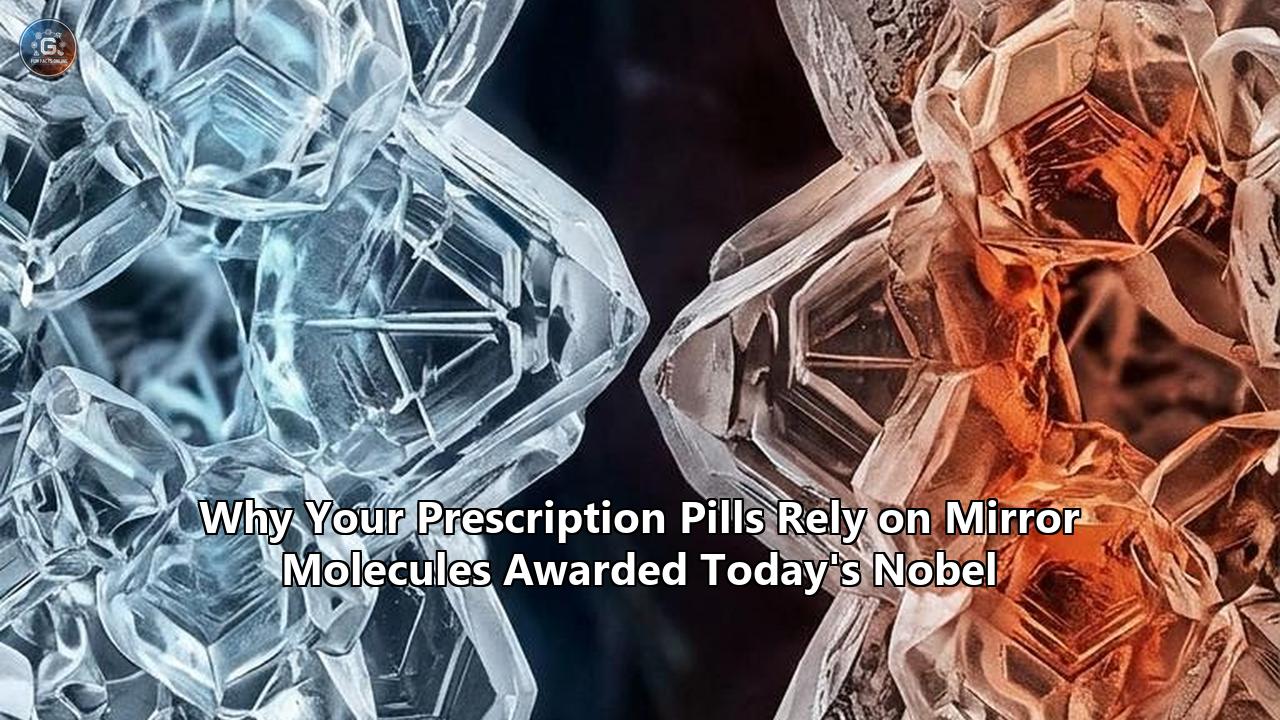
Nearly half of all clinically approved medicines—and nine out of the ten top-selling small-molecule drugs worldwide—consist of asymmetric structures. When synthetic chemists construct these compounds in a conventional laboratory setting, chemical reactions generate equal quantities of two molecules that are exact, nonsuperimposable mirror reflections of one another. These mirror pairs, called enantiomers, share identical molecular weights, identical boiling points, and identical elemental compositions.
Yet, within the crowded architecture of human physiology, one mirror image can heal an infection or lower arterial blood pressure, while its identical twin can sit inert, overwhelm metabolic clearance pathways, or bind to unintended biological targets with devastating consequences.
For decades, the pharmaceutical sector confronted an intractable economic and safety barrier: separating these mirror twins was inefficient, and catalytic chemical syntheses were thought to be strictly limited by the purity of their starting materials. Kagan and Soai destroyed that presumed limitation. By demonstrating that tiny, almost imperceptible chiral imbalances can amplify themselves into overwhelming purity through non-linear mechanisms and self-replicating chemical reactions, their work provided the industrial foundation for modern enantiopure therapeutics.
The Handedness Trap: The High-Stakes Asymmetry of Human Biology
The biological challenge begins with a physical property termed chirality, derived from the Greek word for hand (cheir). Your left and right hands possess the same components—four fingers, an opposable thumb, a palm, and identical joints—yet no amount of rotating or sliding them will allow your right hand to slip smoothly into a left-handed glove.
Molecules containing a carbon atom bonded to four distinct chemical substituents exhibit this identical spatial handedness. Chemists designate these pairs as either (R) and (S) (from the Latin rectus for right and sinister for left) or (+) and (−) based on the direction in which they rotate plane-polarized light.
       Mirror Plane
          |
    W     |     W
    |     |     |
 C--X     |     X--C
/ \       |       / \
Y   Z     |     Z   Y
(Left)    |    (Right)
In ordinary abiotic chemistry, left-handed and right-handed molecules behave identically. They dissolve at the same rate, react with identical speeds when exposed to symmetrical reagents, and share matching physical characteristics. But the interior of the human body is not an abiotic solvent; it is an exclusively one-handed environment.
Life on Earth is strictly homochiral. Every structural protein, cellular receptor, antibody, and catalytic enzyme in human tissue is constructed from L-enantiomer amino acids. Conversely, the helical backbones of human DNA and RNA rely entirely on D-sugars (deoxyribose and ribose). Because biological targets are themselves chiral, their binding pockets interact with incoming drug molecules with extreme spatial specificity.
This phenomenon is explained through the Easson-Stedman hypothesis, first formulated in 1933. The model demonstrates that for a drug molecule to elicit its intended biological response, at least three specific functional groups on the asymmetric carbon must dock into complementary binding regions on the receptor surface.
Receptor Site:  [ Pocket A ]    [ Pocket B ]    [ Pocket C ]
                     |               |               |
Active Eutomer:  Group A         Group B         Group C     --> Full Biological Response
                     |               |               |
Mirror Distomer: Group B         Group A         Group C     --> Mismatched / Inactive / Toxic
When the correct enantiomer—the eutomer—approaches the receptor, all three pharmacophoric groups dock into their corresponding pockets, like a three-pronged key sliding into a lock. When the mirror-image enantiomer—the distomer—encounters the same receptor, spatial constraints prevent more than two groups from aligning simultaneously.
This asymmetry underpins the decisive role of chirality in pharmaceuticals, where an identical atomic formula masks two opposing physical realities. In clinical pharmacology, a distomer is rarely just an innocent passenger. It can occupy receptors without activating them, block enzymatic cascades required for other critical pathways, undergo alternative metabolic transformations that generate cytotoxic metabolites, or bind to distant, unintended tissue receptors.
When Mirror Twins Collide: The Legacy of Racemic Medicine
The medical community learned the true cost of molecular mirror pairs through a series of mid-twentieth-century tragedies and clinical failures. Before Kagan and Soai clarified the dynamics of asymmetric amplification, synthetic manufacturing constraints forced pharmaceutical manufacturers to market chiral active ingredients as racemates: equimolar 50:50 mixtures of left- and right-handed molecules.
The most severe disaster occurred between 1957 and 1961 with the distribution of thalidomide. Marketed across Europe, Africa, and parts of the Americas under trade names like Contergan and Kevadon, the compound was widely prescribed to pregnant women as an over-the-counter sedative to combat morning sickness. The drug was synthesized and sold as a racemate.
Subsequent pharmacology demonstrated that the therapeutic sedative property resides in the (R)-enantiomer. The (S)-enantiomer, however, acts as a potent teratogen. It binds directly to cereblon (CRBN), a primary component of the E3 ubiquitin ligase protein complex. This binding triggers the targeted ubiquitination and rapid degradation of critical embryonic transcription factors, notably SALL4, which are necessary for proper limb outgrowth and limb-bud vascularization.
The resulting outcome was catastrophic: more than 10,000 infants worldwide were born with severe phocomelia—a congenital absence or reduction of the long bones of the limbs—and tens of thousands of pregnancies ended in spontaneous miscarriage.
Although modern pharmacology later demonstrated that thalidomide undergoes spontaneous in vivo racemization (interconverting between (R) and (S) within human blood plasma through keto-enol tautomerism), the catastrophe laid bare a dangerous blind spot: regulatory systems were approving chemical therapies without evaluating each mirror component independently.
                  THE THALIDOMIDE ASYMMETRY

      (R)-Thalidomide                 (S)-Thalidomide
             |                               |
    [ Target: CNS GABA ]            [ Target: Cereblon (CRBN) ]
             |                               |
       Sedative Relief                SALL4 Degradation
     (Intended Efficacy)            Phocomelia / Birth Defects
Thalidomide was not an isolated incident. Across therapeutic categories, researchers repeatedly uncovered clinical conflicts between enantiomers:
- Levodopa (L-DOPA): Formulated to replenish depleted dopamine levels in patients suffering from Parkinson’s disease. The body utilizes the enzyme aromatic L-amino acid decarboxylase to convert L-DOPA into dopamine within the central nervous system. Its mirror twin, D-DOPA, cannot be metabolized by this pathway; instead, it accumulates, interfering with cellular nutrient transport and producing severe systemic toxicity, including agranulocytosis and profound motor inhibition.
- Ethambutol: Prescribed as a frontline antimycobacterial agent against Mycobacterium tuberculosis. The (S,S)-enantiomer prevents cell wall synthesis by inhibiting arabinosyltransferase. The (R,R)-enantiomer provides negligible antibacterial activity but accumulates within retinal ganglion cells, inducing optic neuritis and permanent blindness.
- Penicillamine: The (S)-enantiomer (D-penicillamine) is an effective chelating agent used to treat Wilson’s disease and severe rheumatoid arthritis by capturing excess copper ions. Its mirror reflection, (R)-penicillamine (L-penicillamine), directly antagonizes pyridoxine (Vitamin B6), acting as an antimetabolite that triggers acute neurotoxicity, severe peripheral neuritis, and convulsions.
- Albuterol (Salbutamol): Widely used as an inhaled rescue therapy for asthma. The (R)-enantiomer (levalbuterol) binds beta-2 adrenergic receptors in bronchial smooth muscle to produce immediate bronchodilation. The (S)-enantiomer does not promote bronchodilation; it clears from pulmonary tissue at an exceptionally slow rate, induces intracellular calcium influx, promotes bronchial hyperreactivity, and directly exacerbates inflammatory airway constriction—the precise symptom the drug was administered to treat.
The Thermodynamic Bottleneck: The Failure of the Linear Assumption
By the late twentieth century, synthetic organic chemistry had run into a wall. The pharmaceutical sector understood the dangers of racemic mixtures, but eliminating them at scale was an economic and thermodynamic problem.
When an asymmetric center is formed from an achiral precursor in a typical reaction flask, the transition states leading to the (R) and (S) enantiomers have identical Gibbs free energy levels ($\Delta G^\ddagger$).
$$\Delta \Delta G^\ddagger = \Delta G^\ddagger_R - \Delta G^\ddagger_S = 0$$
Because the energy barriers to reach both enantiomers are equal, the universal Arrhenius rate constants match ($k_R = k_S$). The reaction inevitably produces an exact 50:50 mixture.
For decades, industrial chemists had only three crude pathways to bypass this thermodynamic balance:
- Classical Resolution via Diastereomeric Salt Crystallization: The racemate is reacted with an expensive, naturally occurring optically pure acid or base (such as tartaric acid, brucine, or cinchonidine). Because diastereomers have different physical solubilities, one enantiomer crystallizes out while the other remains in solution. The fatal downside: You instantly discard 50% of your chemical investment as waste, destroying process mass intensity (PMI) metrics.
- The Chiral Pool: Synthesizing the drug exclusively using pre-existing natural building blocks—such as amino acids, tartaric acid, or carbohydrates. The fatal downside: Natural compounds provide a limited structural landscape and frequently lack the fluorinated, heterocyclic architectures required for modern synthetic drugs.
- Catalytic Asymmetric Synthesis: Employing a chiral catalyst to accelerate the formation of one enantiomer over the other by breaking the energetic degeneracy between transition states ($\Delta \Delta G^\ddagger \neq 0$).
Catalytic asymmetric synthesis represented the most elegant pathway, earning William Knowles, Ryoji Noyori, and K. Barry Sharpless the 2001 Nobel Prize in Chemistry. Twenty years later, Benjamin List and David MacMillan received the 2021 Nobel Prize for establishing asymmetric organocatalysis.
Yet, an unexamined theoretical assumption severely limited industrial scaling: the Linearity Dogma.
For decades, physical organic chemists operated on the absolute assumption that the optical purity of a reaction product was strictly linear with respect to the optical purity of the catalyst. This relationship was captured mathematically:
$$ee_{\text{product}} = ee_{\text{catalyst}} \times ee_{\max}$$
where ee represents enantiomeric excess:
$$ee = \frac{|[R] - [S]|}{[R] + [S]} \times 100\%$$
Under this linear model, if an industrial chemist utilized an expensive chiral catalyst that was only 80% enantiopure ($ee_{\text{catalyst}} = 0.80$), the absolute best enantiomeric excess the resulting drug product could achieve—even under an optimal stereoselective transformation ($ee_{\max} = 1.0$)—was 80%.
Achieving the 99.5% or 99.9% enantiomeric purities mandated by modern pharmacopeias required catalysts of immaculate, near-absolute enantiomeric perfection. Synthesizing, isolating, and maintaining these ultra-pure chiral ligands added massive costs to drug development pipelines. If a catalyst began to degrade, racemize, or accumulate trace chiral impurities over continuous manufacturing runs, the drug product suffered an equivalent loss in purity, contaminating the active pharmaceutical ingredient (API).
The industry was caught in a linear trap: pristine asymmetric drugs required pristine asymmetric tools, and making those tools at scale was an operational nightmare.
Kagan’s Discovery: The Power of the Curved Line
In 1986, Henri Kagan—working at the Université Paris-Sud in Orsay—published a series of experiments in the Journal of the American Chemical Society that overturned the linearity dogma.
Kagan asked a fundamental mechanistic question: What happens if an asymmetric catalyst does not operate as an isolated, single-ligand monomer? What if the catalytic complex involves the coordination of two or more chiral ligands to a central metal atom?
        HOMOCHIRAL COMPLEX                  HETEROCHIRAL COMPLEX
             (Active)                            (Reservoir)

             [ L(R) ]                            [ L(R) ]
                 \                                   \
                  Metal                               Metal
                 /                                   /
             [ L(R) ]                            [ L(S) ]
        Produces Pure Product                  Catalytically Inactive
                                            (Traps Minor Enantiomer)
Consider a catalytic system where a central metal ion ($M$) coordinates two chiral ligands ($L$). If the chemist introduces a scalemic ligand mixture—a mixture that is partially enriched with $(R)$-ligands but still contains an impurity of $(S)$-ligands—the self-assembly process inside the flask does not produce one catalyst. It produces three distinct chemical complexes:
- Homochiral complex $(M-L_R L_R)$: Composed of two right-handed ligands.
- Homochiral complex $(M-L_S L_S)$: Composed of two left-handed ligands.
- Heterochiral complex $(M-L_R L_S)$: A hybrid, mixed complex containing one right-handed and one left-handed ligand.
Kagan demonstrated that the heterochiral complex $(M-L_R L_S)$ is an entirely different chemical entity with its own distinct thermodynamic stability, spatial geometry, and kinetic catalytic rate.
Crucially, in many catalytic systems, this heterochiral $(M-L_R L_S)$ dimer is thermodynamically favored to form, yet kinetically sluggish or completely dead. It acts as a molecular sponge, or a "thermodynamic sink."
Because the heterochiral complex requires one $(R)$ and one $(S)$ ligand, it preferentially scavenges and locks away the minority $(S)$-ligands out of the catalytic cycle. The minor enantiomer of the catalyst is effectively trapped in an inactive molecular reserve.
The remaining, freely circulating active catalysts are composed almost entirely of the majority homochiral complex $(M-L_R L_R)$. As a result, the chemical reaction generates a product with an enantiomeric excess dramatically higher than the purity of the catalyst initially introduced into the reactor.
Kagan designated this phenomenon the Positive Non-Linear Effect ((+)-NLE, or the asymmetric amplification effect). When he plotted product enantiomeric excess against catalyst enantiomeric excess, the resulting graph was not a flat, proportional 45-degree straight line. It was a steep, upward-arching curve.
  Product
  ee (%) ^
         |                Positive Non-Linear Effect ((+)-NLE)
     100 |                       . - - - ' ' '
         |                 . - '
      80 |             . '
         |          . '
      60 |        .'
         |      .'       /  Standard Linear Assumption
      40 |    .'       /
         |   /       /
      20 |  /      /
         | /     /
       0 +-------------------------------------------->
         0      20      40      60      80     100   Catalyst ee (%)
Kagan’s mathematical formulation provided process chemists with a diagnostic and synthetic tool. By carefully understanding ligand-ligand aggregation equilibria, an industrial chemist could utilize an inexpensive chiral catalyst with an enantiomeric purity of just 30% or 40% and achieve an end-product with >95% enantiomeric purity. Kagan showed that the minority enantiomer could be engineered to neutralize itself.
The Soai Reaction: The Chiral Avalanche
While Kagan demonstrated that multi-ligand complexes could mathematically amplify chiral signals, Japanese chemist Kenso Soai pushed chiral amplification to its physical limit.
In 1953, British physicist F. Charles Frank published a famous theoretical paper in the Biochimica et Biophysica Acta attempting to explain how life on Earth could have settled on a single stereochemical configuration. Frank calculated that spontaneous homochirality could occur in a closed system under three specific conditions:
- The production of a chiral catalyst.
- Autocatalysis: the catalyst must produce more copies of itself.
- Mutual antagonism: the two enantiomers must suppress each other's production.
For more than four decades, Frank’s model remained purely mathematical. Most chemists believed an experimental organic system demonstrating this behavior was impossible. In 1995, Kenso Soai proved it was real.
Working at the Tokyo University of Science, Soai designed an asymmetric alkylation reaction: the addition of diisopropylzinc ($i\text{Pr}_2\text{Zn}$) to pyrimidine-5-carbaldehyde.
                          O
                          ||
                       C--C--H
                      // \
                     N    N          +    Zn(i-Pr)2
                     \   /              Diisopropylzinc
                      \ /
             Pyrimidine-5-carbaldehyde
                         |
                         |  [ Autocatalysis: Product Catalyzes Itself ]
                         v
                          H   OH
                          |  /
                       C--C--CH(CH3)2
                      // \
                     N    N
                     \   /
                      \ /
             Chiral 5-Pyrimidyl Alkanol
The resulting product was a chiral secondary alcohol: a 5-pyrimidyl alkanol.
Soai discovered that the product of the reaction was itself an extraordinarily effective asymmetric catalyst for its own continuous formation.
When a tiny quantity of the (S)-enantiomer of 5-pyrimidyl alkanol was introduced into a flask containing the aldehyde and the organozinc reagent, that single enantiomer coordinated with diisopropylzinc to form a chiral zinc-alkoxide complex. This complex served as a template that bound incoming aldehyde molecules, orienting them in three-dimensional space so that incoming isopropyl groups could attack only from one face.
The reaction produced more (S)-pyrimidyl alkanol. That freshly synthesized (S)-product immediately joined the catalytic pool, binding more zinc and directing the conversion of more starting material.
In his landmark 1995 publication in Nature, Soai initiated the reaction with a minor enantiomeric excess of just 2%. By the end of the reaction, the enantiomeric excess had surged to 87%. Through successive catalytic additions without adding new chiral material, the purity climbed beyond 99.5%.
                 THE SOAI AUTOCATALYTIC CASCADE

   [2% Initial ee]
          |
          v
   Cycle 1 Reaction -------------------> [87% Product ee]
          |                                      |
          +<--- Product Acts As Catalyst <-------+
          |
          v
   Cycle 2 Reaction -------------------> [99.5% Product ee]
          |                                      |
          +<--- Autocatalytic Feedback Loop <----+
          |
          v
   Cycle 3 Reaction -------------------> [>99.99% Enantiopure]
By 2003, Soai pushed the threshold further. His research team demonstrated that an initial enantiomeric excess of just 0.00005%—a statistical imbalance of one part in two million—was sufficient to drive an entire chemical reaction to 99.99% homochiral purity.
Soai demonstrated that chiral amplification was so sensitive it could be triggered by physical forces from the environment:
- Chiral Quartz Crystals: Passing reagents over natural left- or right-handed quartz crystals initiated autocatalysis that yielded exclusively left- or right-handed organic molecules.
- Circularly Polarized Light: Irradiating an initially achiral mixture with right- or left-circularly polarized laser light produced an immeasurable micro-imbalance that the Soai cascade amplified into absolute single-enantiomer dominance.
- Isotopic Asymmetry: Soai showed that using an initiator molecule whose chirality was derived entirely from the 7% mass difference between Nitrogen-14 and Nitrogen-15 ($^{14}\text{N}$ vs. $^{15}\text{N}$) drove asymmetric amplification to high enantiomeric excess.
- Spontaneous Symmetry Breaking: Conducting the reaction without any chiral additive at all resulted in a reaction that randomly resolved itself into either pure (R) or pure (S) products, driven purely by stochastic thermal fluctuations at the single-molecule scale.
The Soai reaction proved that Frank’s mutual inhibition mechanism was physically viable: the heterochiral oligomers (aggregates composed of both (R) and (S) product molecules) are insoluble or catalytic dead ends, whereas the homochiral oligomers (tetrameric zinc alkoxides composed purely of one hand) are soluble, dynamic, and exceptionally active catalysts.
Together, Kagan and Soai established the complete roadmap of chiral mechanics: Kagan explained the thermodynamic trapping of minority enantiomers via non-linear aggregation, while Soai established the kinetic amplification of majority enantiomers through autocatalytic self-replication.
From Theory to Pharmacy: How Modern Drug Development Mastered Chirality
The discoveries made by Kagan and Soai reshaped the physical realities of the pharmaceutical manufacturing plant. Understanding how to manage chirality in pharmaceuticals at an industrial scale transformed process chemistry from an empirical art into a predictive discipline.
+---------------------------------------------------------------------------------------------------+
|                            THE THREE GENERATIONS OF CHIRAL MEDICINE                               |
+---------------------------------------------------------------------------------------------------+
|  Generation 1: Racemic Mixtures (Pre-1990)                                                        |
|  - 50:50 mixtures of (R) and (S) enantiomers.                                                     |
|  - Inactive distomer treated as inert filler.                                                     |
|  - High incidence of unexpected side effects, metabolic strain, and clinical failures.           |
|                                                                                                   |
|  Generation 2: Chiral Pool & Stoichiometric Auxiliary Synthesis (1990-2005)                       |
|  - Enantiomers separated via sacrificial crystallization or built from scarce natural sugars/acids.|
|  - Massive chemical waste (PMI > 100 kg waste per kg API).                                       |
|  - Linear catalyst requirements imposed severe cost constraints on scaled production.             |
|                                                                                                   |
|  Generation 3: Non-Linear Catalytic & Amplified Continuous Synthesis (2005-Present)               |
|  - Asymmetric synthesis utilizing non-linear effects ((+)-NLE) to allow imperfect catalyst reuse. |
|  - Autocatalytic and self-reinforcing ligand frameworks driving purity >99.8%.                    |
|  - Scaled continuous-flow asymmetric catalysis minimizing solvent waste and energy expenditure.  |
+---------------------------------------------------------------------------------------------------+
The Industrialization of Efavirenz
A clear industrial application of these asymmetric concepts appears in the commercial synthesis of Efavirenz, an essential non-nucleoside reverse transcriptase inhibitor (NNRTI) that transformed the clinical management of HIV-1.
               CF3
                |
                C = O   +   Cyclopropylacetylene
               / \               |
           Cl /   \ NH2          |  [ Chiral Zinc Catalysis via Kagan/Soai Principles ]
              \   /              v
               ===           CF3   OH
                              |   /
                              C--C = C--Cyclopropyl
                             / \
                         Cl /   \ NH2
                            \   /
                             ===
                   Single Enantiomer Intermediate
                    (Key Precursor to Efavirenz)
The synthesis of Efavirenz requires the stereospecific addition of a cyclopropylacetylene nucleophile to a trifluoromethyl ketone precursor, generating a quaternary chiral center.
Process chemists at Merck engineered a zinc-catalyzed asymmetric addition utilizing chiral amino alcohols, such as (1R,2S)-pyrrolidinyl-norephedrine. The reaction mechanism does not follow classical linear kinetics; instead, it relies on zinc-alkoxide aggregate equilibria that exhibit pronounced positive non-linear effects.
The heterochiral complexes sequester unwanted stereoisomers in unreactive states, while the active homochiral zinc assemblies drive stereoselective addition to the sterically congested carbonyl group.
Applying these non-linear principles allowed industrial chemists to produce metric tons of Efavirenz with enantiomeric purity exceeding 99.5% at exceptionally high chemical yields, driving down production costs and making daily antiretroviral therapy accessible to millions of patients globally.
The "Chiral Switch" Revolution
Beyond newly developed chemical entities, the mastery of asymmetric amplification ignited the "chiral switch" era: a strategic transformation in which pharmaceutical manufacturers took established, off-patent racemic drugs and systematically developed their pure, isolated eutomers.
This transition was driven by genuine pharmacology, resolving clinical limitations caused by unwanted distomers:
+------------------+-----------------------+------------------------+----------------------------------------------------+
|  Racemic Drug    |  Isolated Eutomer     |  Trade Name (Eutomer)  |  Clinical Advantage Over Racemate                  |
+------------------+-----------------------+------------------------+----------------------------------------------------+
|  Omeprazole      |  (S)-Omeprazole       |  Nexium (Esomeprazole) |  Eliminates CYP2C19 metabolic variation;           |
|  (Prilosec)      |                       |                        |  delivers 90% higher sustained gastric acid control|
+------------------+-----------------------+------------------------+----------------------------------------------------+
|  Citalopram      |  (S)-Citalopram       |  Lexapro (Escitalopram)|  Removes (R)-enantiomer, which allosterically      |
|  (Celexa)        |                       |                        |  inhibited SERT binding; doubles therapeutic rate  |
+------------------+-----------------------+------------------------+----------------------------------------------------+
|  Albuterol       |  (R)-Albuterol        |  Xopenex (Levalbuterol)|  Removes (S)-enantiomer, eliminating paradoxical   |
|  (Ventolin)      |                       |                        |  bronchial spasms and muscle tremors       |
+------------------+-----------------------+------------------------+----------------------------------------------------+
|  Modafinil       |  (R)-Modafinil        |  Nuvigil (Armodafinil) |  Extended half-life; prevents sudden plasma drops  |
|  (Provigil)      |                       |                        |  during peak daytime wakefulness therapy           |
+------------------+-----------------------+------------------------+----------------------------------------------------+- Omeprazole to Esomeprazole (Nexium): In the original racemate, the (R)-enantiomer is rapidly cleared by the polymorphic hepatic enzyme CYP2C19. This generated unpredictable drug exposures between different patient populations: "poor metabolizers" experienced elevated systemic drug levels, while "rapid metabolizers" cleared the drug before it could adequately suppress gastric acid production. By isolating (S)-omeprazole via catalytic asymmetric sulfoxidation, researchers eliminated the CYP2C19 metabolic bottleneck, delivering a therapeutic with three-fold higher bioavailability and predictable clinical outcomes.
- Citalopram to Escitalopram (Lexapro): The racemate contains equal quantities of (R)- and (S)-citalopram. Pharmacologists discovered that the inactive (R)-enantiomer is an allosteric inhibitor: it binds to a secondary, low-affinity regulatory site on the human serotonin transporter (SERT), physically counteracting the primary binding of the active (S)-enantiomer. By eliminating the distomer, escitalopram delivered superior SERT inhibition at half the dose, significantly reducing the cardiac QT-prolongation risks associated with high-dose citalopram administration.
The Regulatory Framework: How the FDA Ended Racemic Approvals
The scientific discoveries made by Kagan and Soai aligned with a fundamental overhaul in regulatory policy. When the U.S. Food and Drug Administration issued its landmark 1992 policy statement regarding chirality in pharmaceuticals, it altered the calculus of drug approval indefinitely.
Before 1992, regulatory authorities treated racemates as single chemical substances. A pharmaceutical sponsor could advance a 50:50 mixture through preclinical and clinical trials without isolating the individual enantiomers, as long as the total combined mixture demonstrated safety and efficacy in target populations.
1960s - 1980s: Racemates treated as single substances. Distomers ignored as "inert mass."
                           |
                           v
1992: FDA Policy Statement on Stereoisomeric Drugs
                           |
                           v
+--------------------------------------------------------------------------------------------------+
|  MANDATORY REGULATORY REQUIREMENTS FOR CHIRAL MEDICINES:                                         |
|                                                                                                  |
|  1. Rigorous Structural Characterization:                                                        |
|     Absolute stereochemical configuration must be established for each chiral center.    |
|                                                                                                  |
|  2. Enantiomer-Specific Pharmacokinetics:                                                        |
|     Sponsors must measure individual absorption, distribution, metabolism, and excretion (ADME)  |
|     profiles for both enantiomers independently.                                         |
|                                                                                                  |
|  3. Toxicological Profiles of the Distomer:                                                      |
|     The non-active enantiomer must undergo separate toxicity screening to guarantee that it      |
|     does not elicit off-target pharmacological harm.                              |
|                                                                                                  |
|  4. Justification of Racemates:                                                                  |
|     Any application seeking to market a racemic mixture must provide scientific proof that the   |
|     racemate is clinically superior to administering the pure single enantiomer.         |
+--------------------------------------------------------------------------------------------------+
The European Medicines Agency (EMA) and Japan’s Pharmaceuticals and Medical Devices Agency (PMDA) quickly adopted parallel stereochemical guidelines.
These regulatory standards fundamentally altered the market. Developing a racemate now required twice the safety documentation of an enantiopure compound, alongside the burden of proving that the distomer was non-toxic. Almost immediately, the pharmaceutical pipeline pivoted away from racemates toward pure enantiomers.
                 SMALL-MOLECULE DRUG APPROVALS BY TYPE (1980-PRESENT)
      100% ^
           |                                                      [Enantiopure Single Isomers]
       80% |                                                      ============================
           |                                                    ==
       60% |                                                 ===
           |                          =======================
       40% |                       ===                       ............................
           |                   ====                          [Achiral Molecules]
       20% |  =================                              ----------------------------
           |  ............................................... [Racemic Mixtures]
        0% +---------------------------------------------------------------------------------->
          1980               1990               2000               2010               Present
Today, more than 80% of all newly approved small-molecule drugs containing chiral centers enter the clinic as single enantiomers. What was once dismissed as a minor spatial detail has become a universal baseline of modern pharmaceutical development.
The Next Horizon: Beyond Small Molecules
The implications of Kagan and Soai’s work extend far beyond traditional organic chemistry. As drug discovery moves beyond small molecules, asymmetric principles are governing next-generation therapeutic modalities.
Stereopure Oligonucleotides and Genetic Medicines
The modern pharmaceutical pipeline is dominated by therapeutic antisense oligonucleotides (ASOs), small interfering RNAs (siRNAs), and mRNA delivery vectors designed to silence disease-causing genes directly.
To prevent natural nucleases inside human blood from immediately degrading these genetic therapies, chemists replace a non-bridging oxygen atom on the phosphate backbone of the RNA or DNA chain with a sulfur atom. This modification, termed a phosphorothioate (PS) linkage, stabilizes the medicine in human tissue.
       NATURAL LINKAGE                       PHOSPHOROTHIOATE (PS) LINKAGE
        (Enzymatically Degraded)                    (Nuclease Resistant)

                O                                           S
                ||                                          ||
         --O -- P -- O--                             --O -- P -- O--
                |                                           |
               O(-)                                        O(-)
          (Achiral Center)                         (CHIRAL PHOSPHORUS ATOM!)
                                                      Creates Rp or Sp Handedness
However, replacing oxygen with sulfur introduces a new chiral center at every single phosphorus atom along the therapeutic chain.
An antisense oligonucleotide containing 20 phosphorothioate linkages does not exist as a single drug entity. It exists as a mixture of $2^{20}$—over 1,048,576 individual stereoisomers—all with slightly different target affinities, varying RNase H activation potencies, and unpredictable toxicity profiles.
The next frontier of chirality in pharmaceuticals extends beyond simple small molecules into macromolecular therapeutics, where companies like Wave Life Sciences are engineering catalytic and solid-phase systems to synthesize stereopure oligonucleotides where every single phosphorus atom is locked into either an $R_\text{p}$ or $S_\text{p}$ configuration.
Preclinical studies demonstrate that stereopure genetic medicines show dramatic improvements in target selectivity, enhanced RNA clearance, and an order of magnitude reduction in off-target liver toxicity compared to the stereorandom mixtures that preceded them.
Chiral Spintronics: The Electron Spin Filter
At the intersection of physical chemistry and quantum biology, researchers are leveraging chirality to manipulate electron spins.
In 1999, Ron Naaman and his colleagues discovered the Chiral-Induced Spin Selectivity (CISS) effect: when electrons move through a chiral organic molecule—such as an alpha-helical peptide or a chiral supramolecular polymer—the molecule acts as a spin filter.
               Unpolarized Electrons                    Chiral Helix
                  [ Up / Down ]                             ||||
               ------------------------>                    ||||
                                                            ||||
                                                             |
                                                             v
                                                  Spin-Polarized Electrons
                                                        [ Pure Spin-Up ]
Because of spin-orbit coupling within the chiral electrostatic potential, electrons possessing one spin orientation transmit through the helical molecule with minimal resistance, while electrons with the opposite spin are scattered and reflected.
This quantum property is altering drug discovery:
- Enantiodiscrimination Sensors: Developing real-time biosensors that can detect trace distomer impurities down to parts-per-billion levels by measuring spin-polarized electrical current rather than optical light rotation.
- Biocatalytic Electron Transfer: Clarifying how mitochondrial cytochrome complexes achieve high energy transfer efficiencies without producing cytotoxic reactive oxygen species (ROS), providing blueprints for next-generation biomimetic catalysts.
What to Watch: Unresolved Frontiers in Chiral Chemistry
The recognition of Henri Kagan and Kenso Soai by the Nobel Committee celebrates a long chain of discovery that originated with Louis Pasteur manually separating tartaric acid crystals under a microscope in 1848. Yet, practical and theoretical challenges remain unresolved across the molecular sciences:
- The Unsolved Homochiral Origin: While Soai proved that autocatalysis can amplify a micro-imbalance into near-absolute purity, the original initiator on prebiotic Earth remains intensely debated. Did the initial bias originate from circular polarization of starlight, magnetochiral anisotropy, or the electroweak interaction’s fundamental parity violation? The search for an autocatalytic reaction that amplifies natural L-amino acids or D-ribose sugars with the efficiency of the pyrimidyl-zinc system remains an active quest in prebiotic chemistry.
- Dynamic In Vivo Inversion: While synthetic chemists can isolate enantiopure active ingredients, certain therapeutics still invert their spatial orientation inside the patient. Ibuprofen is an example: the inactive (R)-enantiomer is enzymatically converted in vivo to the anti-inflammatory (S)-enantiomer by 2-arylpropionyl-CoA epimerase. For other compounds, this inversion unpredictably generates toxic distomers post-ingestion. Developing chemical scaffolds resistant to in vivo racemization remains a crucial challenge in medicinal chemistry.
- AI-Driven Catalyst Design: Computational models and neural networks are predicting asymmetric reaction outcomes by modeling transition states. However, modeling non-linear effects ((+)-NLE) requires predicting complex multi-component aggregations, dimerizations, and oligomeric equilibria that defeat traditional density functional theory (DFT) computations. Expanding machine learning algorithms to accurately simulate Kagan-type higher-order aggregations will dramatically accelerate asymmetric catalyst discovery.
The 2026 Nobel Prize in Chemistry honors the realization that within the geometry of matter, the relationship between parts does not run along simple straight lines. Every time a patient swallows a modern pill—sparing healthy tissue while neutralizing a disease pathway—they are benefiting directly from the subtle curved lines of Kagan and the self-amplifying cascades of Soai.
Reference:
- https://alliancechemical.com/blogs/news/nobel-prize-chemistry-2026-kagan-soai-chirality-limonene
- https://finance.biggo.com/news/946f5fe4-7a35-4b47-bdc1-97635ebb1897
- https://www.legacyias.com/nobel-prize-chemistry-2026/
- https://www.jerrycards.com/news/kagan-soai-2026-nobel-chemistry-asymmetric-autocatalysis
- https://www.clarin.com/us-news/why-did-henri-kagan-and-kenso-soai-win-the-2026-nobel-prize-in-chemistry-the-century-old-molecular-mystery-they-solved_0_lE1aWhBDBS.html
- https://alliancechemical.com/blogs/news/nobel-prize-chemistry-2026-kagan-soai-chirality-limonene
- https://www.timesofisrael.com/nobel-prize-in-chemistry-awarded-for-research-solving-mirror-image-mystery/
- https://www.freepressjournal.in/analysis/chemistry-nobel-explaining-molecular-orientation-elegantly
- https://www.nobelprize.org/prizes/chemistry/2026/popular-information/
- https://finance.biggo.com/news/aa602bab-a40f-4ae2-ade1-56ec1c17091a
- https://www.drishtiias.com/daily-updates/daily-news-analysis/nobel-prize-in-chemistry-2026-non-linear-effects-autocatalysis
- https://economictimes.indiatimes.com/news/international/us/what-is-soai-reaction-how-kenso-soai-and-henri-b-kagan-helped-solve-mirror-image-mystery-to-win-the-nobel-prize-in-chemistry-2026/articleshow/134767561.cms?from=mdr
- https://news.itmo.ru/en/science/life_science/news/15057/
- https://chiralpedia.com/blog/chirality-in-medicine-from-discovery-to-disaster/
- https://english.elpais.com/science-tech/2023-11-29/david-macmillan-nobel-laureate-in-chemistry-i-believe-in-science-in-the-end-it-will-provide-solutions-to-climate-change.html
- https://nordiclifescience.org/a-third-type-of-catalysis/
- https://www.rsc.org/news/nobel-prize-for-chemistry-2026
- https://en.wikipedia.org/wiki/Non-linear_effects
- https://en.wikipedia.org/wiki/Soai_reaction
- https://www.rs.kagu.tus.ac.jp/soai/Soai_Research_Work.pdf
- https://www.scribd.com/presentation/38646266/chirality
- https://www.scribd.com/document/477163060/Chirality-in-Drug-action-pdf
- https://chiralpedia.com/blog/chiral-drugs-a-twisted-tale-in-pharmaceuticals/
- https://www.nobelprize.org/uploads/2026/10/popular-chemistryprize2026.pdf