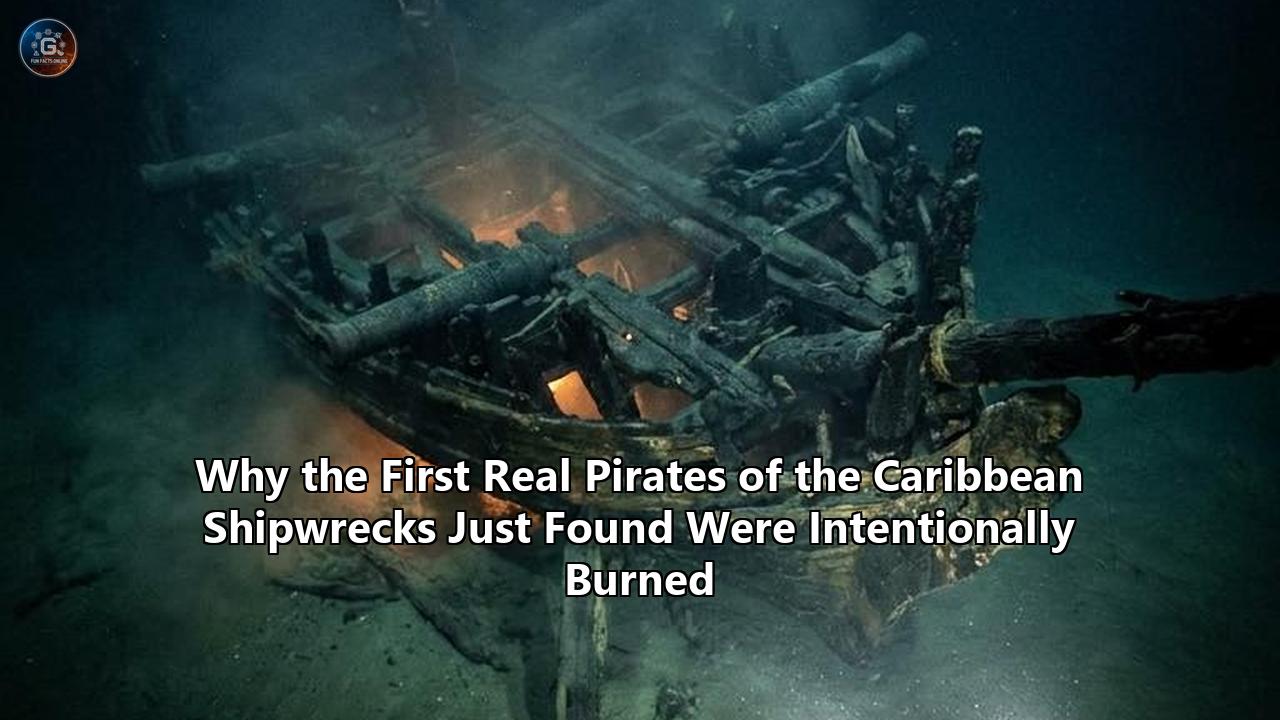
On May 27, 2026, a team of marine archaeologists, historians, and filmmakers officially rewrote the physical history of the Golden Age of Piracy. Diving into the restricted, heavily trafficked waters of Nassau Harbor in The Bahamas, the New Providence Pirates Expedition—working in tandem with Wreckwatch TV—announced the discovery of six historic shipwrecks. Remarkably, three of these vessels date directly to the late 17th and early 18th centuries, the lawless decades when Nassau served as the fortified capital of the legendary "Pirate Republic".
For centuries, the material culture of these maritime outlaws existed almost exclusively in the realm of folklore, trial records, and Hollywood romanticism. To date, only a tiny handful of pirate shipwrecks have ever been scientifically identified worldwide, including the Whydah Gally off Cape Cod and Blackbeard’s Queen Anne’s Revenge off North Carolina. The Nassau discoveries provide a rare, tangible anchor to a world once inhabited by the likes of Henry Avery, Edward Teach (Blackbeard), Benjamin Hornigold, and Calico Jack Rackham.
Yet, among the artifacts recovered—iron cannons, lead musket balls, sword-sharpening grinding stones, and personal clay tobacco pipes—the most compelling archaeological clue was written in carbon.
One of the newly discovered vessels, preserved beneath a protective ballast mound of stone inside Nassau Harbor, bore unmistakable, extensive fire damage across its remaining wooden structure. According to the expedition’s co-director, Dr. Michael Pateman, this charring was not an accidental tragedy. It was a deliberate operational strategy.
"Pirates often stripped captured vessels of cargo, weapons, and useful fittings before destroying the evidence," Dr. Pateman explained. "Burning ships after looting them helped remove traces of piracy from authorities' view."
This freshly unearthed physical evidence of intentional burning provides a perfect lens through which to analyze the broader, highly rational logistics of Golden Age piracy. Far from the chaotic, mindless vandalism depicted in popular media, the systematic torching of both prize ships and damaged pirate vessels was a cold, calculated business decision.
By analyzing the Nassau harbor finds alongside other prominent historical shipwrecks, a clear pattern emerges: burning ships was an essential tactic for forensic evasion, fleet optimization, resource denial, and even primitive scrap-metal recycling.
The Physics of Piracy: Why Outlaw Vessels are Archaeological Ghosts
To understand why the discovery of these Pirates of the Caribbean shipwrecks is so significant, one must first confront the paradox of pirate archaeology. While the cultural footprint of the Golden Age pirate is massive, the physical record left behind on the ocean floor is incredibly scarce.
Historically, military and merchant ships sank due to catastrophic battles, navigational errors, or sudden, violent storms. When a Spanish treasure galleon like the Nuestra Señora de las Maravillas struck a reef in 1656, it carried its massive cargo of silver and gold straight to the seabed, largely intact, creating a concentrated, highly visible archaeological site.
Pirate ships, however, operated under an entirely different set of environmental and economic pressures. Pirates rarely sailed custom-built warships; instead, they captured merchant sloops, brigantines, and ships-of-the-line, refitting them for speed and heavy deck-mounted armament. They ran these ships hard, often in shallow, poorly charted coastal waters where they could evade deep-draft naval frigates.
┌─────────────────────────────────────────────────────────┐
│              THE PIRATE VESSEL LIFECYCLE                │
├─────────────────────────────────────────────────────────┤
│ 1. Capture Merchant Vessel (Speed/Draft Optimization)    │
│                           │                             │
│                           ▼                             │
│ 2. Refit Deck for Armament (Add Swivel Guns/Chases)     │
│                           │                             │
│                           ▼                             │
│ 3. Intensive Operational Wear (No Dockyard Access)      │
│                           │                             │
│                           ▼                             │
│ 4. Strategic End-of-Life Decision                       │
│      ├── Careen & Repair (High Risk of Ambush)          │
│      ├── Abandon & Sink (Leaves Evidence)               │
│      └── STRIP & TORCH (Standard Operating Procedure)   │
└─────────────────────────────────────────────────────────┘
Because pirates operated outside the law, they had no access to official naval dockyards for routine maintenance. In the warm, tropical waters of the Caribbean, untreated wooden hulls were rapidly destroyed by Teredo navalis—the notorious shipworm—and choked with barnacles and weeds that severely dragged a vessel's speed. To fix this, pirates had to "careen" their ships: dragging them onto secluded beaches at high tide, tilting them over, and scraping or burning the marine growth off the hull.
Careening was an incredibly vulnerable process; a ship on its side could not fire its cannons, leaving the crew defenseless against sudden naval ambushes. If a ship's hull was too deeply compromised by rot or shipworms, or if the crew captured a superior vessel, the old ship became a liability.
Leaving an abandoned pirate ship intact on a beach or floating in a bay was a massive security risk. It invited investigation, provided naval authorities with physical evidence of the crew's identity and past crimes, and offered potential resources to rivals. Thus, the standard operating procedure for a pirate crew at the end of a ship's operational life—or immediately after looting a civilian prize—was simple: strip it bare and burn it to the waterline.
The Operational Logbook: Why Outlaws Burned Their Own Wealth
The burning of a multi-thousand-pound wooden asset seems counterintuitive to modern economic sensibilities. However, within the legal, financial, and tactical realities of the 18th-century maritime world, torching a vessel was often the most profitable and secure option available to a pirate quartermaster.
1. Anti-Forensics: Erasing the Paper Trail of the Seas
During the Golden Age, piracy was classified under international law as hostis humani generis—enemies of all mankind. The legal framework of Admiralty Courts, particularly after the Piracy Act of 1698, was merciless: any individual caught participating in piracy, or even aiding and abetting pirates, faced public execution by hanging, after which their bodies were often gibbeted in iron cages at harbor entrances as a warning to other mariners.
In this high-stakes legal environment, physical evidence was the executioner's best friend. Every merchant vessel in the Atlantic world was registered with specific colonial ports, carrying unique hull carvings, customized rigging arrangements, and highly documented ship papers.
If a pirate crew was stopped by a Royal Navy frigate while sailing a captured merchant ship, the physical vessel itself served as an undeniable, capital-offense smoking gun. Even if the pirates claimed they had purchased the vessel legally, the lack of official registration or the presence of modified cargo holds would expose the lie.
By stripping a captured ship of its cargo, cash, and weapons, and then immediately burning the remaining wooden hull, pirates achieved complete forensic sanitization. The fire consumed the ship's logbooks, its unique structural markers, and any identifying cargo markings. Once the ashes settled and the charred lower hull slipped beneath the waves, the physical proof of the crime was effectively erased.
Without a surviving vessel or eyewitnesses—who were often marooned on remote islands or forced to join the pirate crew—colonial prosecutors struggled to build a case that would stand up in Admiralty Courts.
2. Fleet Rationalization and the Economics of 'Share Dilution'
The popular image of a pirate admiral leading a massive, coordinated armada of captured ships is largely a fantasy. In reality, pirate democracy and the economics of the pirate "Articles" heavily discouraged the maintenance of large fleets.
PIRATE COOPERATIVE ECONOMY:
Total Plunder / Number of Crew Shares = Individual Payout
Under standard pirate articles, all spoils were divided mathematically into equal shares, with the captain and quartermaster receiving only slightly more (usually 1.5 to 2 shares). If a pirate crew of 80 men sailing a single sloop captured a large merchant ship, they faced a difficult decision. If they kept the captured ship to expand their fleet, they had to divide their crew to man both vessels.
This division of manpower had two disastrous consequences:
- Tactical Vulnerability: It split their defensive and offensive fighting force, leaving both ships understaffed and highly vulnerable to a concentrated naval attack.
- Financial Dilution: To safely sail multiple large ships, the pirates would need to recruit more crew members, either by forcing captured sailors to join them or by recruiting in ports like Nassau. More men meant more mouths to feed and, crucially, more shares to divide at the end of a voyage, severely diluting each individual pirate's payout.
Because of this, pirate crews operated with strict logistical efficiency. If a captured prize was not significantly faster, more durable, or better armed than their current vessel, it was deemed economically unviable. The pirates would systematically transfer the prize's cargo (such as sugar, tobacco, cocoa, or textiles), its fresh water, its liquor, and its weaponry to their own ship. Once the valuable assets were consolidated, the empty hull of the prize was set ablaze to ensure it could not be salvaged or returned to its original owners.
3. Resource Denial and the Mechanics of Escape
In the chess game played between Caribbean pirates and the naval powers of England, France, and Spain, information was the most valuable commodity. A merchant ship that had been boarded, looted, and left intact—even if stripped of its sails and rigging—remained a potential platform for escape or communication.
If a pirate crew left a looted merchant vessel floating with its crew onboard, the victimized sailors could work together to patch together spare sails, use rowing sweeps, or wait for a passing ship to rescue them. Once rescued, the merchant captain would immediately report the pirates' description, armament, strength, and last known heading to the nearest colonial governor or naval patrol.
By burning the prize ship, the pirates fundamentally altered the physics of pursuit. The victims were either forced into small, open wooden launches with minimal provisions or marooned on a deserted key or beach.
Without a ship, the victims had no means of quickly alerting naval authorities. This bought the pirates precious days, or even weeks, of lead time to run downwind, sell their plunder in sympathetic black-market ports, and disappear before a Royal Navy warship could be dispatched to hunt them.
4. The Scrap Metal Economy: Reclaiming Iron from the Ashes
While wood was an incredibly abundant resource in the heavily forested Caribbean and American colonies, refined, forged metal was incredibly scarce and highly expensive. A single 18th-century merchant ship required thousands of copper bolts, iron spikes, iron brackets (knees), and metal chain-plates to hold its massive structural timbers together against the violent forces of the ocean.
For pirates operating out of makeshift bases like Nassau, procuring raw iron spikes or replacement metal fittings was a major logistical hurdle. They could not simply walk into a British colonial shipyard and purchase a crate of forged spikes without raising immediate suspicion.
THE METAL RECOVERY PROCESS:
┌────────────────────────────────────────┐
│ Strip ship of sails, rigging, & guns   │
└───────────────────┬────────────────────┘
                    │
                    ▼
┌────────────────────────────────────────┐
│ Tow hull into shallow sandy bay        │
└───────────────────┬────────────────────┘
                    │
                    ▼
┌────────────────────────────────────────┐
│ Ignite hull; wood burns to waterline   │
└───────────────────┬────────────────────┘
                    │
                    ▼
┌────────────────────────────────────────┐
│ Collect fallen iron bolts from sand    │
└────────────────────────────────────────┘
To solve this, pirates turned to a destructive but highly effective recycling method. When a captured ship was deemed useless, they would tow the hull into a shallow, calm sandy bay. After stripping the easily accessible rigging, sails, and deck guns, they would set the vessel on fire.
As the wooden hull burned down to the waterline, the wood was consumed, leaving behind the heavy, fire-resistant iron and copper fasteners. Once the fire went out, the pirates could wade or shallow-dive onto the smoking, submerged skeletal remains, easily gathering the fallen iron spikes, copper bolts, and metal straps from the sandy bottom. These recycled metal components were then used to repair, reinforce, and patch their own vessels.
Comparative Analysis: Four Historic Burned Pirate Shipwrecks
To understand how the Nassau Harbor discovery fits into a broader, global pattern of pirate operations, we must examine it alongside three other historically significant pirate shipwrecks that were intentionally destroyed by fire.
The table below highlights the key archaeological and historical markers of these four unique sites:
| Shipwreck Site | Location | Original Function & Captain | Date of Destruction | Archaeological Evidence of Burning | Primary Tactical Motive |
|---|---|---|---|---|---|
| Nassau Harbor Wreck | Nassau, The Bahamas | Unidentified 18th-century vessel | Circa 1696–1720 | Charred timbers beneath stone ballast mound | Forensic evasion / Destroying evidence of active piracy |
| Quedagh Merchant | Catalina Island, Dominican Republic | 500-ton Armenian merchant ship; captured by Captain William Kidd | 1699 | Stacked, unlooted cannons and anchors; burned hull structure | Anti-forensics and resource denial by Kidd's panicked business associates |
| Nossa Senhora do Cabo | Îlot Madame, Sainte-Marie, Madagascar | 700-ton Portuguese warship; captured by Olivier Levasseur ("La Buse") | Circa 1721–1724 | Overlapping ballast piles, charred timbers, multicultural cargo | End-of-life disposal of an unserviceable, heavily damaged prize hull |
| Protestant Caesar | Bay of Honduras | British merchant ship; captured by Edward Teach (Blackbeard) | April 1718 | Documented historical account (unlocated archaeologically) | Psychological warfare and preventing recapture by colonial authorities |
Case Study 1: The Nassau Harbor Wreck (The May 2026 Discovery)
The newly discovered wreck inside Nassau Harbor represents a pure example of defensive, local anti-forensics. The ship was found preserved beneath a heavy ballast mound of stone, which had shielded the lower portion of the wooden hull from both the swift harbor currents and the destructive appetites of marine woodborers.
The presence of typical 18th-century construction features, such as hand-carved wooden treenails (pegs) securing the hull planks, firmly places the vessel's construction in the golden age. The severe charring across the remaining timber frames matches the physical signature of a ship that was intentionally set on fire while anchored in the harbor.
This find physically validates the 1718 reports of Woodes Rogers, the first Royal Governor of The Bahamas. When Rogers sailed into Nassau to reclaim the islands for the British Crown, he documented that the harbor was literally littered with the rotting, burned, and scuttled remains of nearly 40 captured merchant prizes and old pirate sloops.
The pirates of the "Flying Gang" had stripped these ships of their guns, sails, and valuable trade goods to fund their legendary, rum-fueled parties on the shores of New Providence, leaving the charred skeletons behind to choke the harbor channels.
NASSAU HARBOR STRATIGRAPHY (ARCHAEOLOGICAL FINDINGS):
┌────────────────────────────────────────────────────────┐
│ Sea Floor / Silt Layer                                 │
├────────────────────────────────────────────────────────┤
│ Stone Ballast Mound (Weighting & Protecting Hull)      │
├────────────────────────────────────────────────────────┤
│ Charred Oak Timber Planking (18th-Century Treenails)   │
├────────────────────────────────────────────────────────┤
│ Ash & Charcoal Interface (Evidence of Thermal Damage)  │
├────────────────────────────────────────────────────────┤
│ Estuary Clay Bed                                       │
└────────────────────────────────────────────────────────┘
Case Study 2: Captain William Kidd's Quedagh Merchant (1699)
The story of the Quedagh Merchant (also known as the Cara Merchant) is one of the most famous and legally complex sagas in pirate history. In 1698, the Scottish privateer Captain William Kidd captured the 500-ton merchant vessel in the Indian Ocean. The ship was loaded with an immense fortune in satin, silk, gold, silver, and sugar.
However, because the ship carried a French pass but belonged to Armenian merchants sailing under the protection of the Indian Grand Mogul, the capture sparked a major international diplomatic crisis. The British government, desperate to protect its highly lucrative trade with India, declared Captain Kidd a pirate.
Panicked and desperate to clear his name, Kidd sailed the massive, highly recognizable Quedagh Merchant to the Caribbean. He anchored the vessel near Hispaniola (modern-day Dominican Republic) and left it under the command of his merchant ally, Henry Bolton, while Kidd took a small sloop north to New York to negotiate with colonial authorities.
Bolton quickly realized that keeping a 500-ton, internationally hunted treasure ship anchored in shallow waters was a death sentence. As rumors of Kidd's impending arrest spread, Bolton and his crew systematically unloaded the remaining silk and muslin cargoes, sold off what they could to local traders, moved the ship into the secluded waters of the Rio Dulce, and set it on fire.
When marine archaeologists from Indiana University, led by Charles Beeker, discovered the wreck off Catalina Island in 2007, they found no gold or silver. Instead, they found a stunning "living museum" consisting of a massive pile of 26 stacked iron cannons and three large anchors, resting beneath just 10 feet of water.
The wood of the upper hull had been entirely consumed by the 1699 fire, causing the heavy iron cannons to collapse directly onto the lower hull timbers, sealing them against oxygen and preserving the ship's bottom for over three centuries.
Case Study 3: Olivier Levasseur's Nossa Senhora do Cabo (1721)
In April 1721, the French pirate Olivier Levasseur (famously known as "La Buse" or "The Buzzard") teamed up with English pirate John Taylor to pull off what many historians consider the richest pirate heist in human history. Anchored off Réunion Island in the Indian Ocean, they captured the 700-ton Portuguese warship Nossa Senhora do Cabo.
The ship had been severely battered by a recent storm, forcing its crew to throw most of its 72 cannons overboard to stay afloat. It was also carrying the retiring Portuguese Viceroy of Goa and the Archbishop of Goa, along with a breathtaking cargo of raw gold bars, silver plate, chests of diamonds, rubies, pearls, and priceless religious artifacts destined for Lisbon cathedrals. The modern value of the plunder has been estimated at over $138 million.
Levasseur and Taylor sailed the captured treasure ship back to their stronghold at Île Sainte-Marie (Nosy Boraha), off the eastern coast of Madagascar. Levasseur kept the massive warship, renaming it the Victorieux (Victorious), and used it as his flagship for several years.
However, by 1724, the tropical Indian Ocean environment had taken a severe toll on the vessel's hull. Lacking the drydock facilities required to repair a 700-ton warship, and with royal naval forces stepping up patrols, Levasseur made the strategic decision to abandon the ship.
The crew brought the Victorieux into the shallow waters of Îlot Madame off Sainte-Marie Island, systematically stripped the remaining brass fittings, structural timbers, and rigging, and burned the hull to the waterline.
In 2025 and 2026, researchers Brandon Clifford of the Center for Historic Shipwreck Preservation and Mark Agostini of Brown University published archaeological evidence confirming the location of the Cabo/Victorieux wreck site.
The excavation revealed a complex stratigraphy of overlapping ballast stone piles, Goan religious statues, Chinese export porcelain, and charred timber frames, proving that the standard Caribbean practice of burning unserviceable hulls was actively utilized by pirates operating on the other side of the globe.
Case Study 4: Blackbeard's Tactical Scuttling of the Queen Anne’s Revenge (1718)
While Edward Teach (Blackbeard) is famous for burning prize vessels like the Protestant Caesar to terrorize the merchant shipping lanes and deny resources to his enemies, his most famous act of maritime arson and destruction was directed at his own fleet.
In June 1718, Blackbeard’s massive flagship, the 40-gun Queen Anne’s Revenge (a captured French slave ship originally named La Concorde), and the smaller sloop Adventure were run aground at Beaufort Inlet, North Carolina.
For decades, popular history recorded this as an unfortunate navigational error. However, modern historical and archaeological analysis strongly suggests that Blackbeard ran the ships aground intentionally.
BLACKBEARD'S BEAUFORT INLET STRATEGY:
┌────────────────────────────────────────────────────────┐
│ 1. 400-Man Crew splits into multiple vessels           │
├────────────────────────────────────────────────────────┤
│ 2. Flagship 'Queen Anne's Revenge' intentionally run  │
│    aground at Beaufort Inlet                           │
├────────────────────────────────────────────────────────┤
│ 3. Sloop 'Adventure' run aground to 'assist'           │
├────────────────────────────────────────────────────────┤
│ 4. ~300 Crew members marooned or abandoned on beach    │
├────────────────────────────────────────────────────────┤
│ 5. Teach & ~40 select intimates escape with all loot   │
└────────────────────────────────────────────────────────┘
By June 1718, Blackbeard's pirate crew had swelled to over 400 men across four ships. This massive size made the fleet highly visible, difficult to feed, and economically inefficient, as any plunder had to be split 400 ways.
To solve this, Blackbeard engineered a fake grounding. He intentionally ran the Queen Anne’s Revenge onto a shallow sandbar. When the Adventure came to assist, he ran that vessel aground as well.
With his two largest ships disabled, Blackbeard marooned nearly 300 of his crew members on a nearby sandbar, loaded all the accumulated gold, silver, and high-value cargo onto a single small, fast sloop, and sailed away with a handpicked group of roughly 40 trusted crewmen.
While he did not set the Queen Anne's Revenge on fire—as the wreck was in shallow water very close to a major colonial settlement—he systematically stripped the ship of all its usable hardware, demonstrating the same ruthless, economically driven approach to ship destruction that defined his peers.
Forensic Archaeology: Reading Fire on the Sea Floor
To the untrained eye, a wooden shipwreck that has rested on the ocean floor for 300 years looks like little more than a pile of ballast stones and a few rotting, weed-covered timbers. How, then, do marine archaeologists like Dr. Sean Kingsley and Dr. Michael Pateman determine with scientific certainty that a ship was intentionally burned, rather than simply decaying over centuries?
FORENSIC MARITIME ARCHAEOLOGY:
[Charred Timber Wood Density] + [Fractured Ballast Stones] + [Melted Lead/Brass]
= Confirm Intentional Arson (Anti-Forensics)
The field of forensic maritime archaeology relies on a combination of physical, chemical, and geological markers to reconstruct the final, fiery moments of a vessel's life.
1. Macroscopic and Microscopic Charcoal Analysis
Wood that burns in an open-air fire undergoes a process called thermal degradation, which fundamentally alters the cellular structure of the timber. When a ship is burned to the waterline, the wood above the water burns completely, while the wood immediately below the water-interface is subjected to extreme heat in a highly oxygen-deprived (reducing) environment.
This process, known as pyrolysis, converts the outer layers of the hull planks and oak ribs into pure elemental carbon (charcoal).
Archaeologists collect core samples of the surviving timbers and analyze them under scanning electron microscopes (SEM).
If a ship sank naturally and decayed over time, the wood fibers will show typical cellular collapse caused by marine bacteria and wood-boring shipworms.
If the ship was burned, the microscopic analysis will reveal a distinct "charcoal boundary layer". In this zone, the cell walls of the oak or pine are highly carbonized and vitrified, indicating they were exposed to temperatures exceeding 500 degrees Celsius (932 degrees Fahrenheit) immediately before being submerged in seawater.
2. Thermal Fracturing and Discoloration of Ballast Stones
To remain stable in rough seas, sailing ships carried hundreds of tons of heavy stones in the very bottom of their holds, known as ballast. These stones were typically collected from riverbeds or volcanic deposits near the ship's home port.
When a ship was set on fire, the heat generated in the lower holds—where dry timber, pitch, tar, and gunpowder were stored—was immense.
THERMAL EXPANSION OF BALLAST STONES:
┌────────────────────────┐
│ Cold River Ballast     │
└──────────┬─────────────┘
           │
           ▼ (Ship set on fire; hold temperatures > 600°C)
┌────────────────────────┐
│ Unequal Core Expansion │
└──────────┬─────────────┘
           │
           ▼
┌────────────────────────┐
│ Radical Spider-Web     │
│ Fracturing (Spalling)  │
└────────────────────────┘
This intense heat caused the ballast stones to undergo rapid thermal expansion. Because stone is a poor conductor of heat, the outer layer of the ballast stones expanded much faster than the cold core, leading to a phenomenon known as "spalling."
Ballast stones recovered from burned shipwrecks exhibit radical, spider-web-like fracturing patterns and clean, sharp cleavages that do not occur through natural water erosion.
Furthermore, certain iron-rich sedimentary ballast stones will undergo a chemical color shift when exposed to extreme heat, turning from a dull grey or yellow to a vibrant, oxidized brick-red.
3. Fused Metals and Stratigraphic 'Drop Zones'
A catastrophic shipboard fire behaves like an incredibly violent chimney, with the upward draft carrying lighter materials into the air while heavier, melting metals collapse straight down through the burning decks.
When excavating a burned shipwreck, archaeologists map the precise 3D location of every artifact, creating a stratigraphic profile of the site. On an unburned wreck, metal items like pewter plates, lead musket balls, copper nails, and brass buckles are found scattered horizontally across the entire site, reflecting how the ship broke apart as it rolled on the seafloor.
On a burned wreck, however, these metal artifacts are often found in highly concentrated, vertically stacked "drop zones."
As the wooden decks burned and collapsed, heavy metal objects fell straight down, landing directly on top of the stone ballast mound.
More tellingly, archaeologists frequently discover "fused matrices"—clumps of sand, charcoal, and seashells held together by solidified pools of melted lead, copper, or pewter. Because lead melts at a relatively low temperature (327 degrees Celsius / 621 degrees Fahrenheit), the presence of melted and solidified lead shot or lead piping on the seafloor is an absolute, undeniable indicator of a high-temperature shipboard fire.
The Republic of Ash: Redefining Nassau's Golden Age
The discovery of the burned Pirates of the Caribbean shipwrecks in Nassau Harbor does more than simply confirm historical accounts of maritime arson. It provides a powerful physical lens through which we can reconstruct the true, gritty reality of the infamous Nassau "Pirate Republic", sweeping away decades of highly sanitized Hollywood mythology.
NASSAU'S SOCIO-ECONOMIC TRANSITION (1680–1740):
┌────────────────────────────────────────┐
│ 1680s–1690s: Wreckers' Supply Base      │
│ (Salvaging Galleons like the Maravillas)│
└───────────────────┬────────────────────┘
                    │
                    ▼
┌────────────────────────────────────────┐
│ 1696–1718: The Pirate Republic        │
│ (Lawless frontier, harbor choked with  │
│ burned prizes and scuttled hulls)      │
└───────────────────┬────────────────────┘
                    │
                    ▼
┌────────────────────────────────────────┐
│ Post-1718: Royal Colonial Port         │
│ (Suppression of piracy, rebuilding of  │
│ docks, emergence of London trade ships)│
└────────────────────────────────────────┘
Popular films and novels depict 18th-century Nassau as a picturesque, tropical seaside town of neatly whitewashed stone buildings, bustling docks, and organized pirate crews sailing majestic galleons under pristine black flags.
The archaeological and historical record painted by Dr. Sean Kingsley, Dr. Michael Pateman, and the New Providence Pirates Expedition reveals a landscape that was infinitely more hostile, chaotic, and transient.
Nassau was not a highly planned colonial capital; it was a rough, muddy, disease-ridden frontier settlement built largely on the profits of maritime salvage.
As research published by the Bahamas Maritime Museum highlights, Nassau's initial growth in the late 17th century was driven not by plantation agriculture, but by "wreckers"—pioneering chancers who made their living salvaging the incredibly wealthy remains of Spanish galleons, like the Nuestra Señora de las Maravillas, which had wrecked on the treacherous reefs of the northern Bahamas.
The step from legal shipwreck salvaging (which often involved bribing local governors and hiding recovered silver from royal tax collectors) to outright piracy was incredibly small.
By the early 1700s, Nassau had evolved into a lawless "leisure camp" and pirate stronghold. The town itself was a chaotic shantytown of wood-and-thatch huts, canvas tents, and rough taverns surrounding a dilapidated, poorly garrisoned stone fort.
Because the pirates had no municipal infrastructure, waste disposal, or harbor master, the waters of Nassau Harbor quickly became a highly hazardous ship graveyard.
The harbor was incredibly shallow, protected by shifting sandbars that made it highly difficult for deep-draft British or Spanish warships to enter and attack the pirates, but perfect for the shallow-draft sloops favored by the outlaws.
As the pirates dragged their captured merchant prizes into the harbor, they would systematically strip them bare of anything useful.
Once empty, these ships were set on fire, scuttled, or simply abandoned to rot along the shorelines. The harbor became a nightmarish landscape of blackened, smoking wooden ribs protruding from the water, with the air thick with the smell of burning oak, pitch, and rotting shipboard provisions.
This "Republic of Ash" served as both a highly practical shipyard and a visual deterrent to any merchant captain who dared sail near the Bahamian channels.
However, the physical stratigraphy of Nassau Harbor also records the dramatic death of this outlaw community. Alongside the charred remains of the Golden Age pirate vessels, the New Providence Pirates Expedition identified a third major shipwreck lying directly beneath Nassau's old bridge, in waters today patrolled by aggressive bull sharks.
This vessel, which showed no signs of fire damage, was packed with a highly structured cargo of London-made goods, refined glass bottles, and elegant clay tobacco pipes dating to the 1740s.
The pipes recovered from this site bore intricate, high-quality engravings, including the royal English motto: Dieu et Mon Droit ("God and my Right").
This unburned, highly organized merchant vessel represents the next, clean chapter of Bahamian history. Following the aggressive, royal suppression of piracy led by Governor Woodes Rogers in 1718—during which hundreds of pirates were hunted down, hanged, or forced to accept royal pardons—Nassau was rapidly rebuilt.
The chaotic, burned-out pirate lair was cleared away, replaced by an orderly, heavily fortified colonial port designed to facilitate legitimate, taxable British merchant trade across the Atlantic world.
Management Lessons: Strategic Resource Disposal
The tactical decision-making process that led Golden Age pirates to systematically destroy their most valuable assets—their captured ships—offers profound, timeless insights into strategic resource management, operations, and risk mitigation.
By analyzing this historical phenomenon as a corporate case study, we can extract several key strategic principles that remain highly relevant to modern business, legal, and operational environments:
1. The Principle of Evasion over Accumulation (Asset Rationalization)
In modern business, there is a natural tendency to equate growth and asset accumulation with success. Companies frequently acquire new technology, expand their physical real estate, or buy out smaller competitors simply to increase their overall market footprint.
However, as the pirates of Nassau understood, acquiring a new physical asset without the dedicated operational infrastructure to maintain it is a recipe for catastrophic failure.
┌──────────────────────────────────────────────────────────┐
│             ASSET ACQUISITION DECISION MATRIX            │
├──────────────────────────────────────────────────────────┤
│ Does the new asset possess superior speed/defense?       │
│      ├── YES: Adopt asset; STRIP & BURN old vessel.      │
│      └── NO:  Strip asset of value; BURN empty hull.     │
├──────────────────────────────────────────────────────────┤
│ Key Takeaway: Maintain zero excess operational weight.   │
└──────────────────────────────────────────────────────────┘
The pirates operated under extreme environmental hostility, with no access to official maintenance facilities or state-sponsored protection. Keeping a captured merchant ship simply to build a larger fleet was a net-negative decision: it split their highly specialized workforce, diluted their financial returns (share dilution), and drastically increased their visibility and vulnerability to naval pursuit.
- The Modern Lesson: Successful organizations must maintain strict operational efficiency. Acquiring "trophy" assets, expanding into unnecessary markets, or maintaining legacy systems that require disproportionate upkeep can create a massive drag on an organization's agility. Sometimes, the most profitable decision is to systematically strip a newly acquired asset of its intellectual property, talent, or core technologies, and immediately dismantle the remaining, inefficient shell.
2. Forensic Sanitization and Risk Abatement (Data & Legal Security)
The primary driver behind the intentional burning of the Nassau harbor wrecks was forensic sanitization: the absolute destruction of any physical evidence that could link the pirate crew to a capital crime in an Admiralty Court.
The pirates recognized that a single identifying hull marking, a forgotten cargo manifest, or a captured ship's logbook could serve as an absolute, legal death sentence if discovered by authorities.
- The Modern Lesson: In the digital age, data is the equivalent of an 18th-century merchant vessel. Organizations that accumulate massive quantities of legacy consumer data, outdated emails, or unencrypted operational logs are carrying a highly volatile legal liability. If a cybersecurity breach occurs, or if regulatory bodies initiate an audit, these unmaintained "data graveyards" can result in catastrophic financial and legal ruin. Organizations must implement aggressive, automated data retention and disposal policies—metaphorically "burning" their legacy data to the waterline once its operational utility has expired.
3. Absolute Resource Denial (Competitive Defensiveness)
When a pirate crew looted a prize vessel, they did not simply sail away and leave it floating; they systematically burned it to prevent the original owners, the Royal Navy, or rival pirate crews from reclaiming and utilizing the vessel.
They understood that any resource left intact in a competitive, high-stakes environment would inevitably be weaponized against them. By burning the ship, they forced their victims into a state of total operational paralysis, buying themselves the critical lead time required to secure their escape.
- The Modern Lesson: In highly competitive, fast-moving industries, defensive resource denial is a legitimate strategy for market survival. When a leading firm depreciates a product line, exits a market, or lays off specialized talent, they must ensure these resources cannot be easily captured and leveraged by competitors. This is achieved through the aggressive enforcement of non-disclosure agreements, the strategic patenting of defensive technologies (blocking patents), and the complete destruction or secure recycling of proprietary manufacturing hardware.
A Horizon of Charcoal and Silt
As marine archaeologists continue to map Nassau's seabed, more Pirates of the Caribbean shipwrecks are expected to emerge from the sand and silt, each carrying its own unique story of high-seas adventure, desperate survival, and fiery destruction.
The first official results from the New Providence Pirates Expedition are scheduled to be published in Wreckwatch magazine on June 4, 2026, accompanied by a highly anticipated documentary series on Wreckwatch TV.
These releases will feature the very first historically accurate, 3D digital reconstructions of the Nassau pirate settlement as it existed around 1715, allowing viewers to step back into the gritty, unpolished streets of the real Pirate Republic.
UPCOMING ARCHAEOLOGICAL MILESTONES (JUNE 2026):
┌────────────────────────────────────────────────────────┐
│ June 4, 2026: Official Academic Publication            │
│ (Wreckwatch Magazine, Issue 14)                        │
├────────────────────────────────────────────────────────┤
│ June 4, 2026: Documentary Series Premiere              │
│ (Wreckwatch TV: 'Mystery of the Pirate King's Treasure')│
├────────────────────────────────────────────────────────┤
│ Late 2026: Continued Magnetometer Mapping              │
│ (Targeting Henry Avery's scuttled flagship, the Fancy)  │
└────────────────────────────────────────────────────────┘
The ongoing search is not merely a quest for sunken gold or pirate treasure; it is a meticulous, scientific effort to recover the lost daily lives of a highly misunderstood historical community.
The charred oak timbers, fractured ballast stones, and melted lead shot resting beneath Nassau's warm, azure waters are far more valuable than a chest of Spanish silver pieces of eight.
They are physical, undeniable proof of a desperate, brilliant, and deeply ruthless outlaw society that chose to live hard, die young, and burn their bridges—and their ships—entirely behind them.
References
- Clifford, B. A., & Agostini, M. R. (2025). From Goa to Sainte-Marie: An Archaeological Case for the Identification of the Nossa Senhora do Cabo. Center for Historic Shipwreck Preservation, Brewster, MA / Brown University. Published in Wreckwatch Magazine, June 2025.
- Kingsley, S., & Pateman, M. (2026). The New Providence Pirates Expedition: First Results from Nassau Harbor, The Bahamas. Published in Wreckwatch Magazine, June 4, 2026.
- Rogers, W. (1718). A Cruising Voyage Round the World: First-hand accounts of the suppression of piracy in Nassau. Historical archives of the Bahamas Antiquities, Monuments and Museums Corporation (AMMC).
- Beeker, C. (2007). The Excavation of the Quedagh Merchant: Preserving Captain Kidd's Lost Legacy. Indiana University Office of Underwater Science Report.
- Lee, R. (1974). Blackbeard the Pirate: A Reappraisal of his Life and Times. North Carolina Historical Review.
Reference:
- https://archaeologymag.com/2026/05/first-shipwrecks-of-pirates-of-the-caribbean-in-the-bahamas/
- https://archaeologymag.com/2026/05/first-shipwrecks-of-pirates-of-the-caribbean-in-the-bahamas/
- https://en.wikipedia.org/wiki/Piracy
- https://en.wikipedia.org/wiki/Blackbeard
- https://www.newsweek.com/pirates-caribbean-link-revealed-legendary-shipwreck-finds-history-1946818
- https://www.businessinsider.com/maravillas-shipwreck-treasures-worth-millions-sparked-pirates-bahamas-2024-9
- https://www.popularmechanics.com/science/archaeology/a71031979/sunken-pirate-ship-from-18th-century-treasure-found/
- https://www.smithsonianmag.com/history/the-notorious-pirate-king-who-vanished-with-the-riches-of-mughal-treasure-ship-180984035/
- https://www.9news.com/article/news/weird/famous-pirates-ship-found-off-dominican-island/73-343089719
- https://www.youtube.com/watch?v=aB6UrXeE-uE
- https://shipwreckcenter.org/sainte-marie-madagascar/
- https://www.smithsonianmag.com/smart-news/archaeologists-find-300-year-old-shipwreck-in-what-used-to-be-one-of-the-baddest-pirate-lairs-on-earth-180986983/
- https://www.theguardian.com/world/2025/jun/19/expedition-new-providence-bahamas-treasure-pirates-caribbean
- https://www.popularmechanics.com/science/archaeology/a70532856/1721-pirate-treasure-discovery/
- https://www.indiegogo.com/en/projects/wreckwatchtv/mystery-of-the-pirate-king-s-treasure
- https://www.newsweek.com/pirates-caribbean-link-revealed-legendary-shipwreck-finds-history-1946818
- https://www.youtube.com/watch?v=i2e6pZ-TPnw
- https://www.thestkittsnevisobserver.com/treasure-islands-bahamas-diving-into-pirate-past/