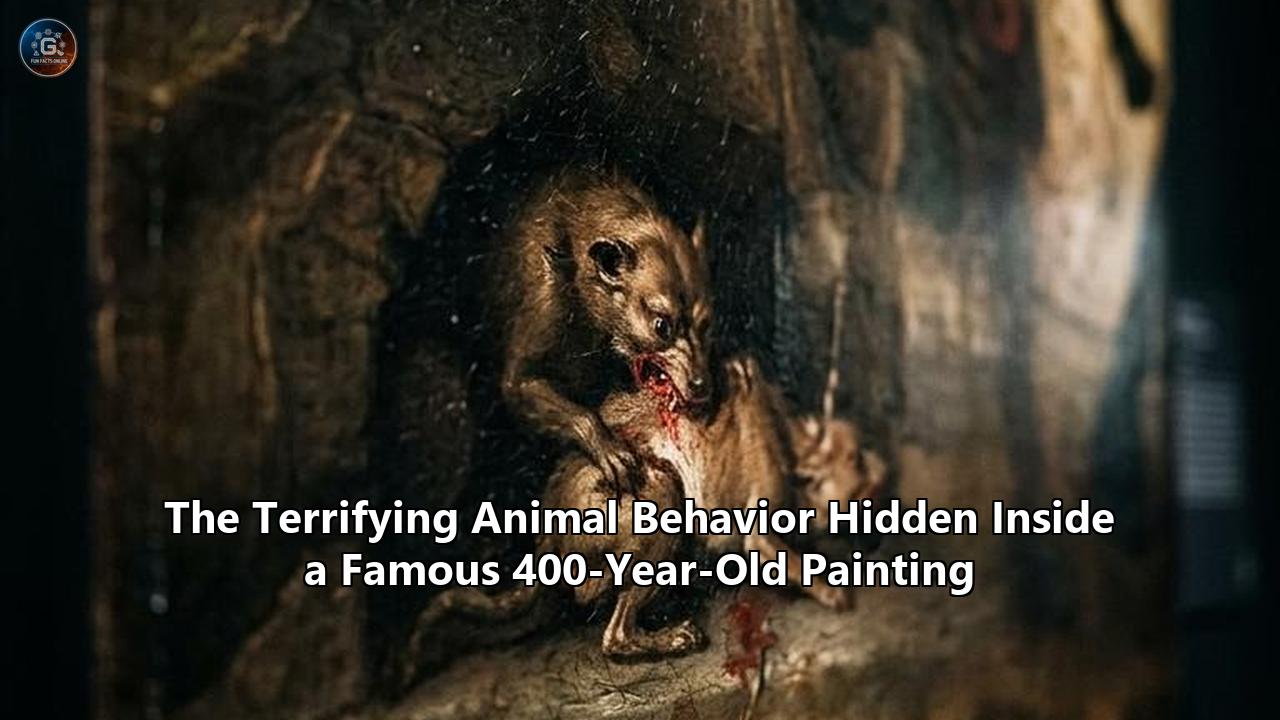
Late in June 2026, a team of Spanish ecologists and zoologists published a paper in the Proceedings of the National Academy of Sciences (PNAS) that sent shockwaves through both the international scientific community and the art world. Led by Dr. Pedro Romero-Vidal of the Doñana Biological Station in Seville, the researchers revealed that a subtle, overlooked detail in a famous 415-year-old oil painting had captured a highly complex, terrifying animal behavior centuries before modern science could confirm its existence.
The painting is Air (originally completed in 1611), an allegorical masterpiece by the Flemish Baroque painter Jan Brueghel the Elder. Housed in the Musée des Beaux-Arts de Lyon in France, the canvas depicts a swirling, chaotic menagerie of more than 60 bird species surrounding Urania, the Greek muse of astronomy. But tucked away in the upper right-hand corner of the painting, set against a darkening sky, is a tiny silhouette that had been ignored by art historians for generations.
Using high-resolution digital imaging, Romero-Vidal’s team zoomed in on this obscure figure to find a remarkably precise rendering of Europe’s largest bat: the greater noctule (Nyctalus lasiopterus). Clamped firmly in the bat's oil-painted jaws is a small, helpless songbird, its feathered wing dangling limply as the mammalian predator carries it through the air.
This is not a whimsical flight of artistic fancy. It is a highly specific, terrifying predatory act. The greater noctule bat is one of the only bat species on Earth known to hunt migrating songbirds in mid-air, intercepting them at high altitudes in the dead of night. To the astonishment of the research team, this extreme ecological interaction—which modern biologists only conclusively proved in 2025 using multimillion-dollar, state-of-the-art 3D biologging tags, acoustic telemetry, and GPS tracking—was painted with anatomical and behavioral accuracy by a Flemish master in 1611.
The revelation has exposed a profound challenge at the intersection of history, art, and ecology. For centuries, our understanding of the natural world has been siloed. By failing to bridge the gap between scientific observation and art historical analysis, we have remained blind to invaluable ecological data locked inside the world's great galleries. As human activity decimates global biodiversity and alters animal behaviors, finding ways to unlock these historical archives has become an urgent scientific priority.
The Aerial Nightmare: The Horrifying Biology of the Greater Noctule Bat
To understand why this discovery is so shocking, one must first understand the creature depicted and the sheer improbability of witnessing its predatory habits. The greater noctule bat is a formidable aerial predator. With a wingspan of up to 46 centimeters, it is the largest bat in Europe, possessing a robust head, a thick coat of reddish-brown fur, and short, rounded ears.
For most of the 20th century, Western zoologists believed that Europe's bats fed exclusively on insects. The idea that a mammalian flyer could hunt, capture, and consume active birds in the dark was widely dismissed as a biological impossibility. However, the greater noctule's diet has been the subject of fierce scientific debate for decades.
The first major clue emerged in 2001, when Italian researchers Farida Dondini and Simone Vergari examined thousands of fecal pellets collected from greater noctule roosts. To their surprise, they discovered a high concentration of feathers belonging to dozens of species of passerines—commonly known as perching birds or songbirds—including blue tits and European robins. The feathers peaked in concentration during the spring and autumn, precisely when millions of small songbirds embark on massive nocturnal migrations across Europe.
Despite this physical evidence, the zoological community remained highly skeptical. Many scientists argued that the bats were not hunting live birds in flight, but were instead scavenging dead carcasses from the ground, or perhaps occasionally snatching sleeping birds from their roosts in tree hollows. Skeptics pointed out the immense aerodynamic and sensory challenges of such a hunt:
- The Speed Barrier: Migrating songbirds fly at speeds ranging from 30 to 60 kilometers per hour. To catch them, a bat must match this speed while navigating the turbulent night air.
- The Altitude Factor: Migration takes place at high altitudes, often between 500 and 1,500 meters above the ground, far beyond the typical hunting canopy of most European bats.
- The Echolocation Limit: A bat’s echolocation has a limited range. High-altitude bats must detect, target, and intercept a fast-moving bird in a fraction of a second before the prey flies out of sonar range.
       [ HIGH-ALTITUDE NOCTURNAL MIGRATION CORRIDOR: 500m - 1,500m ]

            o (Migrating Songbird) ----------> 30-60 km/h
                 \
                  \  (High-Speed Aerial Intercept)
                   \
          <======== O (Greater Noctule Bat)
                    * Detects via powerful echolocation
                    * Strikes in pitch black
                    * Bites off wings to disable flight
                    * Consumes "on the wing" (up to 20 minutes)
The mystery was finally solved in 2025, when a collaborative international team of field biologists successfully fitted wild greater noctule bats with miniature, high-tech 3D biologging tags. These ultra-lightweight devices, which weigh less than two grams, record real-time altitude, three-dimensional movement, acoustic echolocation calls, and GPS coordinates.
The data retrieved from these tags revealed a sequence of high-altitude aerial warfare. Under the cover of total darkness, the greater noctules ascended to heights of over 1,000 meters to intercept the river of migrating songbirds. Utilizing a specialized, high-intensity echolocation call, the bats targeted individual birds, dove at high speeds, and struck them mid-air.
To prevent their struggling prey from escaping, the bats used their broad wings and tail membranes to cradle the bird, immediately biting off its wings to disable its flight capabilities. Most terrifying of all, the tracking data proved that the bats did not land to eat their catch. Instead, they consumed the songbirds "on the wing," chewing on their meal for up to 20 minutes while remaining entirely airborne.
This is a highly specialized, brutal evolutionary adaptation. Of the more than 1,400 bat species known to science, only three are documented bird-eaters, and only the greater noctule is known to perform this entire predatory sequence while flying. It is an animal behavior occurring far out of human sight, in the freezing, pitch-black airspace of the upper atmosphere. Yet, Jan Brueghel the Elder somehow recorded it with paint on a copper plate in the early 17th century.
The Intellectual Divide: Defining the Challenge of Segregated Knowledge
The core problem exposed by this discovery is not biological, but academic. It highlights a long-standing intellectual divide that has kept scientists and humanities scholars working in isolation. For centuries, the academic world has maintained a strict segregation between the arts and the sciences. This division has had profound consequences, leading to a form of collective amnesia regarding the natural world.
+-------------------------------------------------------------------------+
|                  THE HISTORIC INTELLECTUAL SILO                         |
+-------------------------------------------------------------------------+
|      ART HISTORIANS                     |      FIELD BIOLOGISTS         |
|                                         |                               |
|  * Focused on aesthetics and style      |  * Focused on empirical data  |
|  * Categorized animals as symbols       |  * Ignored historical art     |
|  * Dismissed literal biological truth   |  * Assumed past art was myth  |
+-------------------------------------------------------------------------+
|  RESULT: A 415-year blind spot on the predatory habits of the noctule   |
+-------------------------------------------------------------------------+
Historically, art historians looking at Baroque paintings have analyzed them through the lens of iconography, cultural context, and stylistic lineage. When encountering representations of animals, scholars almost universally interpreted them as allegorical devices or moral lessons. This focus on animal symbolism in art became a default interpretive framework. If a painting featured a lion, it symbolized strength; a lamb represented Christ; a dog stood for fidelity; and a bat, almost invariably, was cast as a symbol of darkness, melancholy, or the devil.
While these symbolic associations were undoubtedly part of the cultural tapestry of the Renaissance and Baroque eras, this framework created a major blind spot. By treating every animal on canvas as a metaphor, art historians systematically ignored the possibility that some artists were functioning as rigorous, empirical naturalists. The literal, biological reality of what was painted was dismissed as secondary to its perceived symbolic meaning.
Conversely, natural scientists have historically ignored art galleries, treating historical paintings as unreliable sources of data. Modern ecology prides itself on quantification, systematic sampling, and technological instrumentation. To a field biologist, an oil painting from 1611 is a subjective, stylized representation, prone to exaggeration, artistic license, and the limitations of 17th-century human vision. The idea that a Baroque painter could possess accurate ecological insights that eluded modern science was viewed as highly improbable.
This mutual dismissal has had serious consequences:
- The Delay of Discovery: Because scientists did not consult historical art and art historians did not understand bat biology, the greater noctule’s remarkable diet remained a secret to science for more than four centuries.
- The Loss of Historical Baselines: We are living through an era of unprecedented environmental degradation. Ecologists struggle to understand what healthy, pre-industrial ecosystems looked like because systematic scientific monitoring only began in the mid-to-late 20th century. By ignoring historical art, we have ignored a high-resolution, visual archive of past biodiversity and animal distributions.
- The Misinterpretation of Cultural Heritage: By failing to recognize the biological accuracy of historic paintings, art historians have often misread the intentions of the artists, attributing spiritual or mystical meanings to details that were actually grounded in direct, empirical observation of the natural world.
The challenge, therefore, is to dismantle these academic silos. The discovery in Brueghel’s Air demonstrates that art and science are not mutually exclusive domains, but are instead complementary methods of recording the truth of our planet.
Velvet Brueghel’s Lens: The Meticulous Obsession of a Baroque Master
To understand how this ecological truth ended up on a 17th-century canvas, we must examine the artist behind the brush. Jan Brueghel the Elder (1568–1625) was one of the most celebrated Flemish painters of his generation. The second son of the legendary Pieter Brueghel the Elder, Jan carved out his own distinct artistic identity, earning the nicknames "Velvet Brueghel" and "Flower Brueghel" for his extraordinary ability to render delicate textures, complex surfaces, and microscopic details with unparalleled precision.
                  ======================================
                  THE METICULOUS LINEAGE OF VELVET BRUEGHEL
                  ======================================

                         Pieter Brueghel the Elder
                        (Master of Peasant Landscapes)
                                     |
                                     v
                          Jan Brueghel the Elder
                       "Velvet" / "Flower" Brueghel
                 (Empirical Observer & Court Naturalist)
                                     |
                                     v
                        Collaborator with Rubens &
                    Archducal Courts of the Netherlands
Brueghel lived and worked during a pivotal moment in human history. The late 16th and early 17th centuries marked the dawn of the Scientific Revolution. It was an era of intense curiosity, global exploration, and the systematic cataloging of the natural world. European voyages to the Americas, Asia, and Africa were bringing back a flood of exotic plants and animals previously unknown to Western science.
Unlike many of his contemporaries who relied on secondhand sketches or pure imagination, Brueghel was obsessed with direct, firsthand observation. Based in Brussels, he served as the official court painter to Archduke Albert VII and Archduchess Isabella Clara Eugenia, the sovereign rulers of the Spanish Netherlands. This prestigious position granted Brueghel exclusive access to the archducal palace’s private menagerie and botanical gardens, which housed rare specimens from across the globe.
Brueghel's dedication to realism was legendary. He frequently traveled to observe rare animals in person. In letters to his patron, Cardinal Federico Borromeo, Brueghel wrote about the immense labor required to paint directly from life, describing how he spent months visiting the royal aviaries to study the exact colors of bird feathers, the texture of fur, and the unique movements of different species.
This empirical approach is on spectacular display in Air (1611). The painting is part of a famous four-part series celebrating the classical elements: Earth, Air, Fire, and Water. In Air, Brueghel created an incredibly dense, visual encyclopedia of flight. The canvas features over 60 bird species, rendered with such precision that modern ornithologists can easily identify almost all of them.
+-------------------------------------------------------------------------+
|                  SPECIES INVENTORY IN BRUEGHEL'S "AIR" (1611)           |
+-------------------------------------------------------------------------+
|  NATIVE EUROPEAN BIRDS         |  EXOTIC SPECIES (GLOBAL IMPORT)        |
|  * Mute Swan (Cygnus olor)     |  * Scarlet Macaw (Ara macao)           |
|  * Grey Heron (Ardea cinerea)  |  * Blue-and-Yellow Macaw               |
|  * Barn Owl (Tyto alba)        |  * Toco Toucan (Ramphastos toco)       |
|  * European Robin              |  * Ostrich (Struthio camelus)          |
|  * Common Kingfisher           |  * Wild Turkey (Meleagris gallopavo)   |
+-------------------------------------------------------------------------+
|  CHIROPTERA (BATS) - THE ONLY FLYING MAMMALS INCLUDED                   |
|  * Long-eared bat (Plecotus)                                    |
|  * Vesper bat (Vespertilionidae)                                |
|  * Greater noctule bat (Nyctalus lasiopterus) with prey         |
+-------------------------------------------------------------------------+
The composition is a testament to Brueghel’s commitment to natural history. Rather than filling his sky with mythological beasts like dragons or griffins—which were common in the art of his predecessors—Brueghel populated his sky with real, documented animals. The presence of the turkey (native to North America) and the macaws (native to South America) reflects the global trade networks of the Spanish Empire and Brueghel’s unique access to these exotic imports.
In this context, Brueghel’s inclusion of the bats is highly significant. As the only mammals capable of true flight, bats belong logically in an allegory of air. But instead of painting a generic, cartoonish bat silhouette, Brueghel applied the same rigorous anatomical standards to these nocturnal creatures that he did to the birds.
The painting depicts three distinct bat species:
- The Long-Eared Bat: Positioned in the left corner, clearly identifiable by its enormously oversized ears, typical of the genus Plecotus.
- The Vesper Bat: Located near the center, displaying the classic narrow wings and rapid-flight profile of the family Vespertilionidae.
- The Greater Noctule Bat: Positioned in the upper right, rendered with a rich, reddish-brown coat, short rounded ears, and a powerful, heavy jaw perfect for clutching prey.
For generations, art historians analyzing this painting fell back on the traditional analysis of animal symbolism in art. They argued that the bats were placed in the darkening upper section of the canvas to create a symbolic contrast between the creatures of the light (the birds) and the creatures of the dark (the bats), representing the classic Christian struggle between spiritual purity and sinful temptation.
While this symbolic reading matches the cultural conventions of the Baroque era, it completely missed the empirical breakthrough happening in the paint itself. Brueghel was not just painting a symbol of darkness; he was recording a specific, highly advanced biological phenomenon that he had either directly observed or learned about from trusted naturalists.
How Did He Know? The Mystery of the Painter’s Source
The discovery of the bird-eating bat in Air raises a fascinating, unresolved question: how did an artist living in Flanders in 1611 gain knowledge of a highly secretive, high-altitude, nocturnal predatory behavior that modern science could only confirm with advanced telemetry in 2025?
In their 2026 PNAS paper, Dr. Romero-Vidal and his co-authors Sonia Sánchez-Navarro, Elena Tena, and Miguel Clavero explored several theories to explain this historical anomaly.
               [ THEORIES: HOW DID BRUEGHEL LEARN OF THE HUNT? ]

    +---------------------------+---------------------------+
    |                           |                           |
    v                           v                           v
[ THEORY 1: DIURNAL ENCOUNTER ] [ THEORY 2: GUANO ANALYSIS ] [ THEORY 3: BIRD-CATCHERS ]
* Greater noctules occasionally * Renaissance scholars and   * Professional falconers
  fly during daylight hours     * naturalists examined bat    * and bird-netters found
  during autumn migrations.     * roosts, noting passerine    * bats attacking captive
* Brueghel may have witnessed   * feathers in fecal pellets   * decoy birds or caught
  a daytime aerial chase.       * and stomach contents.       * bats with bird remains.
Theory 1: Direct Diurnal Observation
While greater noctule bats are strictly nocturnal hunters for most of the year, there is a notable exception. During the peak of the autumn migration in Central and Southern Europe, some noctules exhibit occasional daytime activity. When millions of migrating songbirds are flying during the day, hungry bats will sometimes venture out in the late afternoon or early morning to exploit this massive food source.
Brueghel spent several years traveling and working in Italy between 1592 and 1596, living in Rome and Milan. Italy is a primary migration corridor for both passerine birds and greater noctule bats. It is entirely possible that during a late afternoon walk in the Italian countryside, Brueghel looked up and witnessed a rare, dramatic daytime chase—a massive, reddish-brown bat diving out of the clouds to snatch a migrating swallow or warbler in mid-air. For an artist obsessed with natural history, such a spectacular, terrifying sight would have been unforgettable, prompting him to record it in his sketches and later incorporate it into his allegorical painting of the air.
Theory 2: The Analysis of Bat Roosts and Diet
A second, highly plausible explanation lies in the early networks of Renaissance naturalists. In the 16th and 17th centuries, scholars were avidly collecting, dissecting, and cataloging specimens for private cabinets of curiosities (Kunstkammern).
It is possible that Brueghel, or the scholars he associated with in Brussels and Italy, examined the roosts of greater noctule bats. These bats frequently roost in large hollow trees or rock crevices. Anyone climbing up to inspect a roosting colony during the autumn migration would have found the ground beneath the roost littered with bat droppings containing highly visible bird feathers, claws, and tiny skulls.
Furthermore, early naturalists frequently dissected specimens to study their internal anatomy and diet. Opening the stomach of a freshly killed greater noctule bat during migration season would have revealed unmistakable, half-digested avian remains. From these physical clues, a sharp-eyed naturalist of the 17th century could have easily deduced that this large bat was preying on birds. Because Brueghel worked closely with these early scientists, he could have easily incorporated this cutting-edge anatomical knowledge into his artwork.
Theory 3: Accounts from Bird-Catchers and Falconers
In 17th-century Europe, bird-catching was both a popular sport and a vital source of food. Professional bird-catchers used complex networks of mist nets, glue-covered branches (lime-twigs), and caged decoy birds to capture wild songbirds.
These nets were often left open from dusk until dawn. It is highly likely that bird-catchers operating at twilight witnessed large greater noctules diving down to attack the helpless, fluttering decoy birds, or found the bats tangled in their nets alongside half-eaten songbirds. Because these hunters had an intimate, practical knowledge of local wildlife, they may have shared these terrifying stories of bird-eating bats with wealthy patrons and court painters like Brueghel.
Whichever theory is correct, the implications are profound. It proves that the Flemish Baroque period was characterized by a level of ecological awareness and empirical observation that modern science has long underestimated. Brueghel’s work demonstrates that the history of scientific discovery is not a straight, upward line of progress, but a complex web where crucial natural history observations can be made, forgotten, and then rediscovered centuries later.
Shifting Baselines and the Decimation of the Skies
The discovery of the bird-eating bat in a 1611 painting is not just an intriguing historical footnote; it is a vital piece of data that addresses one of the most critical challenges in modern conservation biology: Shifting Baseline Syndrome.
           [ THE CRISIS OF SHIFTING BASELINE SYNDROME ]

    GENERATION 1 (1611 - Brueghel's Era)
    =================================================================
    * Pristine forest canopies cover Europe.
    * Millions of mature, hollow trees provide nesting for noctules.
    * Billions of migrating songbirds fill the night skies.
    * Predation of birds by bats is a common, observable event.

    GENERATION 2 (Late 20th Century)
    =================================================================
    * Industrial logging removes old-growth forests and hollow trees.
    * Pesticides decimate insect populations; songbird numbers drop.
    * Noctule populations crash; their range contracts dramatically.
    * Bird predation becomes an ultra-rare, unobserved behavior.

    GENERATION 3 (2026 - Modern Era)
    =================================================================
    * Ecologists accept the degraded, birdless night skies as "normal."
    * Skeptics deny that bats ever ate birds, calling it a myth.
    * Only high-tech biologging and old paintings reveal the lost truth.
Coined by fisheries biologist Daniel Pauly in 1995, Shifting Baseline Syndrome describes a gradual, generational slide in our perception of what constitutes a healthy, normal environment. Each generation of scientists and citizens accepts the damaged, biodiverse-depleted state of the world they inherit as the natural starting point. They then measure all subsequent environmental changes against this degraded baseline, remaining unaware of what has been lost before their time.
The night skies of Europe are a prime example of this syndrome. Today, the greater noctule bat is a highly threatened, critically endangered species across much of its European range. It faces a barrage of modern threats that have devastated its populations and altered its behavior:
- The Destruction of Old-Growth Forests: Greater noctules rely on mature, hollow trees—particularly old oaks and beeches—to roost and raise their young. Modern forestry practices systematically remove dead and hollow trees, leaving these large bats with nowhere to live.
- The Pesticide Apocalypse: The widespread use of intensive chemical pesticides in agriculture has decimated insect populations across Europe. With their primary insect food source collapsing, greater noctules are forced to work harder to survive, making them highly vulnerable to starvation outside of bird migration seasons.
- The Wind Turbine Menace: The rapid expansion of wind energy across Europe has had a devastating impact on migratory bats. High-altitude flyers like the greater noctule are particularly susceptible to wind turbine collisions and barotrauma (lung damage caused by sudden air pressure changes near rotating blades).
- The Decline of Migratory Songbirds: Climate change, habitat destruction, and illegal hunting along migration routes have caused a catastrophic collapse in European songbird populations. With fewer birds flying, the ecological opportunities for greater noctules to perform their spectacular high-altitude hunts have plummeted.
Because of this ecological collapse, the high-altitude predation of songbirds by bats has become an vanishingly rare event. By the time modern ecologists began studying the greater noctule in the late 20th century, the behavior was so rare that many scientists flatly refused to believe it occurred at all.
This is where Jan Brueghel the Elder’s painting Air becomes a priceless scientific tool. By preserving a clear, anatomically accurate visual record of a greater noctule clutching a songbird in 1611, the canvas provides an invaluable, pre-industrial ecological baseline. It proves that this terrifying predatory behavior is not a modern anomaly, a freak occurrence, or a product of recent environmental stress. Instead, it was a prominent, recognized, and stable ecological interaction that occurred in Europe's skies for centuries.
Without this historical baseline, conservationists might target recovery goals that are far too modest, aiming merely to preserve the surviving, highly degraded populations of bats and birds. With Brueghel's painting, we are reminded of the true, wild potential of our natural world—a world where the night skies were once so teeming with life that mammals and birds locked in aerial combat was an observable reality.
Bridging the Chasm: The Rise of Art-History Bioprospecting
Faced with the challenge of Shifting Baseline Syndrome and the urgent need for historical ecological data, a new breed of visionary scientists, art historians, and conservation leaders are stepping forward with innovative solutions. They are building a new, highly interdisciplinary field of study known as Art-History Bioprospecting or Digital Paleo-Ecology.
Rather than keeping the humanities and natural sciences separated, these pioneers are actively mining the world’s art museums to reconstruct the lost biodiversity, ranges, and behaviors of the past.
       [ THE WORKFLOW OF ART-HISTORY BIOPROSPECTING ]

    +-------------------------------------------------+
    |  STEP 1: MUSEUM DIGITIZATION                    |
    |  High-resolution scanning of historical art     |
    +-------------------------------------------------+
                            |
                            v
    +-------------------------------------------------+
    |  STEP 2: AI-DRIVEN COMPUTER VISION              |
    |  Machine learning scans for animal anomalies    |
    +-------------------------------------------------+
                            |
                            v
    +-------------------------------------------------+
    |  STEP 3: TAXONOMIC AUDITING                      |
    |  Biologists verify species and active behaviors |
    +-------------------------------------------------+
                            |
                            v
    +-------------------------------------------------+
    |  STEP 4: ECOLOGICAL RECONSTRUCTION             |
    |  Mapping historical ranges and pre-human baselines|
    +-------------------------------------------------+
1. High-Throughput Digital Auditing of Historical Art
Historically, identifying animals in old paintings was a slow, manual process, dependent on individual scientists visiting physical galleries. Today, museums around the world are digitizing their vast collections, creating massive, open-access databases of ultra-high-resolution images.
To process this mountain of visual data, researchers are developing specialized AI-driven computer vision programs. These machine-learning models are trained on anatomical drawings and wildlife photographs, allowing them to scan digitized paintings, tapestries, and illuminated manuscripts to automatically identify animal species, count individuals, and flag unusual behaviors.
For instance, an AI scanning thousands of Dutch Golden Age landscapes might flag every painting containing a whale, a wolf, or a specific species of bird, instantly providing ecologists with a geographical and chronological map of historical wildlife distributions.
2. Decoding Symbolism to Reveal Ecological Truths
To successfully extract scientific data from art, researchers must learn to navigate the complex history of animal symbolism in art. This requires close collaboration between field biologists and art historians.
+-------------------------------------------------------------------------+
|             DECODING HISTORICAL PAINTINGS: SYMBOL VS. SCIENCE           |
+-------------------------------------------------------------------------+
|  THE DETAIL               |  TRADITIONAL SYMBOLIC VIEW  |  ECOLOGICAL TRUTH           |
+---------------------------+-----------------------------+-----------------------------+
|  Bat with a songbird      |  Sin overcoming purity;     |  Greater noctule bat        |
|  in its mouth (1611)      |  triumph of darkness    |  mid-air predation  |
+---------------------------+-----------------------------+-----------------------------+
|  Dodo bird in Dutch       |  Gluttony, laziness,        |  Anatomical reference of a  |
|  landscapes (1620s)       |  extinction’s tragedy       |  now-extinct species        |
+---------------------------+-----------------------------+-----------------------------+
|  Ermine in royal          |  Chastity, moral purity,     |  Seasonal coat changes and  |
|  portraits (1500s) |  royal justice       |  historic alpine ranges     |
+---------------------------+-----------------------------+-----------------------------+
When an artist employs animal symbolism in art, they often alter the animal’s anatomy or behavior to fit a narrative. For example, medieval bestiaries often depicted lions with human-like expressions or monkeys with bizarre, demonic traits. These stylized, metaphorical representations are highly valuable for understanding cultural history, but they are of limited use to science.
However, when an artist displays a commitment to empirical naturalism—rendering precise muscle groups, feather patterns, and specific species-level markers—the animal symbolism in art often coexists with, or is entirely subordinate to, literal ecological observation. By training AI systems and researchers to distinguish between these two modes of representation, scientists can filter out fanciful mythological depictions and focus on high-fidelity, scientifically valid data.
3. Case Studies in Art-History Bioprospecting
The greater noctule discovery is part of an exciting wave of recent breakthrough studies that have successfully used historical art to rewrite scientific history:
- The Return of the Giant Manta Ray: Ecologists studying the historical distribution of marine megafauna analyzed hundreds of 18th-century maritime sketches and paintings. They discovered that giant manta rays (Mobula birostris) were once highly common in coastal waters where they are now completely extinct, providing a vital target baseline for modern marine protected areas.
- The True Form of the Extinct Dodo: Because the dodo (Raphus cucullatus) went extinct in the late 17th century before the advent of modern photography, scientists long struggled to reconstruct its true anatomy. By analyzing highly detailed, life-sized oil paintings by Flemish artists like Roelandt Savery, who observed living dodos brought to Europe, paleontologists were able to correct historical misconceptions about the bird's posture, weight, and feather coloration.
- Tracking Climate Change Through Landscape Art: Climatologists have analyzed thousands of European landscape paintings spanning five centuries, focusing on the density of snow cover, the freezing of canals, and the types of vegetation depicted. By cross-referencing these artistic records with historical meteorological data, scientists have reconstructed high-resolution localized micro-climate baselines for the pre-industrial era, helping to track the precise rate of modern global warming.
A New Era for Art and Science
The revelation of the terrifying, bird-eating bat hidden inside Jan Brueghel the Elder’s Air has fundamentally altered the relationship between art history and modern ecology. It serves as a powerful reminder that our ancestors possessed a deep, intimate, and highly sophisticated understanding of the natural world—an understanding that was often recorded not in dry scientific treatises, but in the vibrant, detailed strokes of a painter's brush.
As we move forward, this discovery will continue to yield exciting milestones and reshape our intellectual landscape:
1. Reinterpreting the World's Great Masterpieces
Visitors walking through the galleries of the Louvre, the Prado, or the Metropolitan Museum of Art will begin to look at classic paintings with a completely different perspective. Masterpieces that were once viewed purely as monuments of human creativity, aesthetic style, or animal symbolism in art are now being recognized as high-resolution biological hard drives, archiving the lost ecology of a changing planet. A bird perched in the corner of a Rembrandt, a fish laid out on a kitchen table in a Chardin still life, or a pack of hunting hounds in a Velázquez portrait are no longer just decorative details—they are empirical records of past ecosystems, animal migrations, and human-nature interactions.
=============================================================================
                  THE TWOFOLD LEGACY OF THE DISCOVERY
=============================================================================

       [ FOR SCIENCE ]                            [ FOR ART ]
       ---------------                            -----------
* Validates historical art as a             * Unlocks deep, empirical
  rigorous ecological archive.                narratives in old canvases.
* Corrects "Shifting Baselines"             * Shows masters like Brueghel
  by documenting pre-industrial wildlife.     were pioneering naturalists.
* Powers AI-driven conservation             * Moves past pure symbolism
  and habitat restoration models.             to appreciate literal truth.
=============================================================================
2. Fueling Actionable Conservation Efforts
The ecological baselines retrieved from paintings like Air are already being put to practical use by conservation organizations and policy leaders. By knowing that greater noctule bats and migrating songbirds once shared a highly active, synchronized airspace over Western and Southern Europe, conservationists can design more effective habitat restoration programs. This includes:
- Targeted Forest Restoration: Protecting and expanding old-growth forests with the mature, hollow trees that greater noctules need for roosting, ensuring they have secure sanctuaries near major avian migration corridors.
- Pesticide-Free Buffer Zones: Creating vast, pesticide-free agricultural buffers along known bat hunting and bird migration routes, allowing insect populations to recover and providing vital food sources for both predators and prey.
- Wind Energy Safety Protocols: Implementing temporary, radar-triggered shutdowns of wind turbines during peak migration nights, preventing the catastrophic collisions and barotrauma that threaten high-altitude flyers.
3. The Unresolved Questions of the Canvas
While the PNAS study has solved the biological mystery of the greater noctule, it has left several intriguing, historical questions unanswered.
- Did Brueghel paint this detail from a direct, daylight encounter during his travels in Italy, or was he tipped off by a brilliant, forgotten naturalist who dissected a bat and found songbird feathers in its stomach?
- Are there other versions of Air—perhaps painted by Brueghel's apprentices or workshop assistants—that contain similar hidden biological secrets?
- What other terrifying animal behaviors, extinct species, or lost ecological interactions are currently hanging on museum walls, waiting for a sharp-eyed scientist to look past the symbolism and see the literal, empirical truth?
Ultimately, the silent witnesses hanging in our art galleries hold more than just cultural beauty. They carry the memories of an older, wilder, and more integrated world. By bridging the chasm between the arts and the sciences, we can begin to listen to what these 400-year-old masterpieces are trying to tell us—and in doing so, find the knowledge we need to protect our rapidly vanishing natural heritage.
Reference:
- https://www.pnas.org/doi/10.1073/pnas.2536525123
- https://www.sciencealert.com/peculiar-bat-behavior-revealed-in-a-400-year-old-painting
- https://phys.org/visualstories/2026-07-year-reveals-secret-diet.amp
- https://www.pnas.org/doi/10.1073/pnas.2536525123
- https://defector.com/this-17th-century-flemish-painting-held-a-gnarly-bat-secret
- https://www.sciencenews.org/article/discover-bat-diet-renaissance-painting
- https://timesofindia.indiatimes.com/science/scientists-find-a-bat-eating-a-songbird-hidden-in-a-1611-renaissance-painting-and-the-artwork-may-have-documented-a-behaviour-birds-and-bat-researchers-only-confirmed-in-the-last-year/articleshow/132084880.cms
- https://www.bioscience.com.pk/en/subject/ecology/this-400-year-old-painting-preserved-a-wildlife-discovery-no-one-recognized-until-now
- https://www.vice.com/en/article/scientists-found-a-bird-eating-bat-hidden-in-a-400-year-old-painting-heres-why-thats-a-big-deal/
- https://www.techexplorist.com/bat-mystery-hidden-renaissance-painting/103444/
- https://www.mavenart.com/blog/renaissance-animal-paintings/
- https://www.beculture.it/en/animals-in-renaissance-art/
- https://pubmed.ncbi.nlm.nih.gov/42372166/
- https://www.artsy.net/article/artsy-editorial-decoding-animals-art-history-immortal-peacocks-lusty-rabbits
- https://albertis-window.com/2009/11/the-artist-had-never-seen-a-insert-animal-before-2/
- https://www.youtube.com/watch?v=keRWazij4Nw