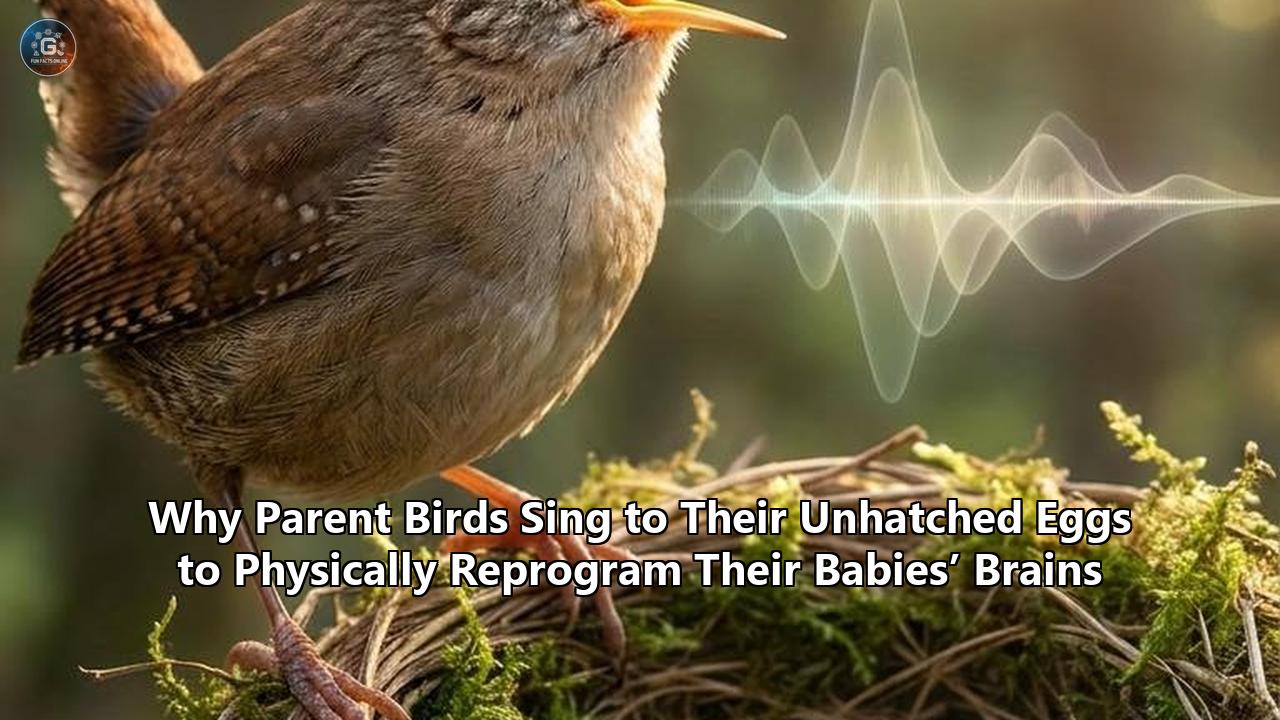
On June 11, 2026, a study published in the Journal of Experimental Biology revealed a highly sophisticated neurobiological mechanism of developmental plasticity: parent zebra finches (Taeniopygia castanotis) sing specific "heat warning" calls to their unhatched eggs, directly altering the physical structure and genetic expression of their offspring’s brains before they hatch.
Led by neuroscientist Julia George of Clemson University and behavioral ecologist Mylene Mariette of Deakin University, the research demonstrates that these acoustic signals do not merely stimulate the embryos' developing senses. Instead, they trigger target-specific gene regulation in the medial hypothalamus—notably remodeling the cerebral blood vessels and the blood-brain barrier (BBB) to protect the chicks from thermal stress.
This finding provides the first direct, genome-wide transcriptomic evidence of "acoustic developmental programming" physically reshaping the brain without any physical exposure to heat. The realization that birds singing to eggs can fundamentally reprogram embryonic neural plumbing changes how we understand phenotypic plasticity and adaptation under a rapidly warming climate.
For decades, developmental biology assumed that unhatched altricial embryos—chicks that hatch blind, featherless, and entirely dependent on parental care—were shielded from external environmental data, relying almost entirely on maternal biochemical cues deposited in the egg yolk. This study completely upends that consensus, showing that the vocal soundscapes of parents serve as a real-time epigenetic blueprint, physically preparing the offspring for the climatic realities of the outside world.
The Classic Paradigm: Decades of Scientific Blind Spots
To understand why this discovery is so profound, it is necessary to examine the historical scientific consensus regarding avian development. For more than half a century, embryologists and behavioral ecologists drew a sharp line between precocial and altricial bird species.
Precocial birds, such as chickens, ducks, and quails, hatch with open eyes, downy feathers, and the immediate ability to walk and forage. Because these species must navigate a hostile environment from day one, researchers recognized that they required prenatal sensory inputs. Classic experiments in the mid-20th century demonstrated that unhatched ducklings and quail embryos could hear their mother's calls through the eggshell, allowing them to imprint on her voice and coordinate their hatching times with their siblings.
Altricial birds, which include the vast majority of songbirds (Passeriformes), were viewed through an entirely different lens. Because they hatch in a highly undeveloped state—helpless, naked, and confined to a nest—scientists assumed their sensory systems were non-functional during incubation. The egg was treated as a closed biochemical incubator. According to this classic paradigm, once the female laid the egg, the developmental trajectory of the embryo was entirely locked in, governed solely by the genetic code of the parents and the finite mix of hormones, lipids, and antibodies deposited by the mother in the egg yolk during oogenesis.
[Maternal Egg Investment] ──> [Incubation (Fixed Path)] ──> [Hatch (Sensory Systems Ignite)]
                                        ▲
                             Classic Scientific View:
                             No external communication possible.
This view ignored a curious, persistent observation made by field biologists: incubating parents frequently vocalize directly to their eggs. In many species, parents sit low in the nest and emit quiet, rhythmic calls. For years, these vocalizations were dismissed as minor behavioral quirks, or at best, a way for the adult to self-soothe or communicate with a nearby mate. The idea that the embryo inside the egg was actively listening, processing, and physically adapting its physiology in response to these acoustic cues was considered biologically impossible.
This assumption began to crumble in 2016 when Mylene Mariette and Katherine Buchanan discovered that wild Australian zebra finches sang a highly specific, rapid, peeping call to their eggs only when the ambient temperature climbed above 26°C (78.8°F).
When the researchers played recordings of these "heat calls" to eggs incubated in a laboratory, the resulting chicks grew slower, emerged smaller, and ultimately fared much better in hot environments than those that heard standard contact calls. Yet, the physical mechanism behind this transformation remained a mystery. How could a simple acoustic signal, heard through a shell, fundamentally reshape the physical growth and long-term thermal tolerance of an animal?
The Clemson and Deakin Experiments: Isolating the Sound of Heat
To resolve this mystery, Julia George’s lab at Clemson University collaborated with Mariette to probe the genomic interior of the embryonic brain. The researchers designed an elegant experiment to isolate sound from physical temperature.
In the wild, a chick experiencing a heatwave would naturally undergo physical heat stress, making it impossible to tell if its developmental changes were caused by the physical temperature damaging or stimulating its cells, or by the parental song warning it of the heat.
To bypass this confounding factor, the team collected freshly laid zebra finch eggs and incubated them in a highly controlled laboratory setting. Crucially, all the eggs were kept at a constant, comfortable incubation temperature of 37.5°C (99.5°F) throughout their entire development. The eggs never experienced actual heat stress.
               [Controlled Lab Incubator at Constant 37.5°C]
                                ┌─────┴─────┐
                                ▼           ▼
                         [Group A: Playback] [Group B: Playback]
                         Parental Heat Calls   Standard Contact Calls
                                └─────┬─────┘
                                      ▼
                      [Medial Hypothalamus RNA-Seq]
                                      ▼
                        Physiological Re-wiring:
                        Vascular Smooth Muscle &
                        Blood-Brain Barrier Altered
During the final five days of incubation—the window when the embryo’s auditory and physiological regulatory systems begin to develop—the researchers divided the eggs into two groups:
- The Treatment Group: Exposed to audio playbacks of adult zebra finches emitting "heat calls".
- The Control Group: Exposed to playbacks of standard, low-frequency "contact calls," which parents use to coordinate nest duties under normal, temperate conditions.
Because the environment was thermally identical for both groups, the sound was the only variable. The treatment eggs received nothing but "the rumor of heat" transmitted via sound waves.
Shortly before the eggs were due to hatch, the researchers euthanized the embryos and extracted the medial hypothalamus. This tiny, deep-brain region acts as the absolute master regulator of vertebrate homeostasis. It coordinates the endocrine system, regulates metabolic rate, dictates growth trajectories, and controls thermoregulation.
The team, led by Clemson researcher Prakrit Subba, extracted the messenger RNA (mRNA) from the hypothalamic tissue and performed high-throughput RNA sequencing (RNA-Seq) to measure the expression levels of 21,407 genes across the samples.
Beyond Hormones: The Molecular Architecture of the Neurovascular Unit
When Subba and George analyzed the transcriptomic data, they expected to find widespread changes in hormone-related genes. Because the "heat-call" chicks in previous studies grew slower and emerged smaller, the team hypothesized that the acoustic signal would downregulate genes associated with the growth hormone axis or alter the neuroendocrine pathways that control thyroid hormones and corticosterone, the primary avian stress hormone.
Instead, the hormonal genes in the hypothalamus remained remarkably quiet. There was no broad, systemic neuroendocrine shift.
At first, this was disappointing. But as the team dug deeper into the data using Weighted Gene Co-expression Network Analysis (WGCNA), a highly sophisticated bioinformatic method that identifies coordinated gene networks, a different pattern emerged. The parental song had targeted a highly specific, unexpected system: the neurovascular unit and the blood-brain barrier (BBB).
                    [Parental Heat Call (Acoustic)]
                                   │
                                   ▼
             [Embryonic Brain: Medial Hypothalamus]
                                   │
                    ┌──────────────┴──────────────┐
                    ▼                             ▼
        [Endocrine Neurons]              [Neurovascular Unit]
          (Hormones Quiet)               (Targeted Plasticity)
                                                  │
                            ┌─────────────────────┼─────────────────────┐
                            ▼                     ▼                     ▼
                 [Endothelial Cells]    [Smooth Muscle Cells]   [Ependymal Cells]
                    (BBB Integrity)       (Vessel Dilation)    (Ventricular Barrier)
The embryos exposed to the "heat calls" showed a robust, coordinated downregulation of genes regulating:
- Vascular smooth muscle contraction
- Cytoskeletal dynamics
- Blood-brain barrier permeability
Among the most heavily suppressed genes was tropomyosin 1 (TPM1), a workhorse protein that stabilizes the actin cytoskeleton and is essential for the contraction of smooth muscle cells. The downregulation of these contractile genes was accompanied by "isoform switching," a process where the cell selectively alters the splicing of RNA transcripts to produce different structural variants of the same proteins.
Cell-type enrichment analyses confirmed that these genetic modifications were localized directly within the cellular components of the neurovascular unit:
- Vascular Endothelial Cells: The specialized cells lining the interior of the cerebral blood vessels, forming the primary physical barrier of the BBB.
- Vascular Smooth Muscle Cells: The contractile cells that wrap around the cerebral capillaries and arterioles, controlling the dilation and constriction of blood vessels to police cerebral blood flow.
- Ependymal Cells: The ciliated cells lining the brain's ventricles, responsible for regulating the passage of cerebrospinal fluid and maintaining cerebral fluid balance.
To understand why this localized genetic remodeling is highly adaptive, one must look at the unique physical challenges of a bird’s brain during a heatwave.
Unlike mammals, birds are highly vulnerable to localized brain hyperthermia. A bird’s high metabolic rate and elevated body temperature (normally around 40°C to 42°C / 104°F to 107.6°F) mean that even minor increases in environmental temperature can push the brain toward dangerous thermal thresholds.
During extreme heat, cardiac output increases dramatically, sending a surge of highly pressurized blood to the brain. If the cerebral blood vessels are too rigid or contract too tightly, this sudden hemodynamic surge can cause localized capillary rupture, cerebral edema, inflammation, and catastrophic heat stroke.
By downregulating the contractile machinery of the neurovascular unit, the parent's heat call pre-emptively relaxes the cerebral vasculature of the unhatched chick. The blood vessels in the embryonic hypothalamus are physically remodeled to be more flexible, dilated, and structurally plastic.
When the chick hatches and inevitably faces a scorching Australian heatwave, its brain is pre-adapted to safely handle rapid, dramatic increases in blood flow. This increased vascular plasticity allows the young bird to efficiently dissipate heat from its central nervous system, maintaining the structural integrity of its blood-brain barrier and shielding its brain from heat stroke.
Acoustic Developmental Programming vs. The Maternal Bottleneck
The discovery of this targeted neurovascular remodeling provides a compelling explanation for the evolutionary existence of "acoustic developmental programming," a term coined in 2021 by Mariette, David Clayton, and Katherine Buchanan to describe the phenomenon where external sounds dictate phenotypic development.
                                [THE MATERNAL BOTTLENECK]
                                            │
        ┌───────────────────────────────────┴───────────────────────────────────┐
        ▼                                                                       ▼
[Maternal Biochemical Cues]                                             [Acoustic Signals]
- Deposited during egg formation                                        - Delivered continuously during late incubation
- Days/weeks before hatching                                            - Real-time weather/ecological forecast
- Cannot adapt to post-laying changes                                   - Bypasses physiological bottleneck of female
- Static, high-risk bet                                                 - Dynamic, highly responsive adaptation
For decades, maternal effects were assumed to be entirely biochemical. Yet, maternal biochemical cues suffer from a fundamental evolutionary limitation: the maternal bottleneck.
Because a female bird must package all her maternal hormones, nutrients, and immune factors into the egg yolk before laying, she must make a "guess" about the future environment days or weeks before her chicks actually hatch. In highly volatile environments, such as the arid interior of Australia, weather patterns are notoriously unpredictable.
A female might lay her eggs during a cool, wet spring, only for an intense, multi-week heatwave to strike ten days later, right as the eggs are preparing to hatch. Once the egg is laid, the mother has no physiological way to alter the biochemical composition of the yolk or the albumen.
Sound completely bypasses this maternal bottleneck. Acoustic communication allows parents—both the mother and the father—to continuously transmit real-time, dynamic information directly through the eggshell to the late-stage embryo.
Because the sound is produced during the final third of incubation, it provides a highly accurate, short-term weather forecast of the exact environmental conditions the chicks will face upon hatching. The parent birds' vocalizations serve as a highly flexible, non-invasive epigenetic bridge, allowing the offspring to fine-tune their physical development in lockstep with a rapidly changing world.
Furthermore, the phenomenon of birds singing to eggs represents an elegant evolutionary workaround to the physical limits of maternal physiology. If a mother bird had to rely on hormonal signals to prepare her chicks for heat, she would have to raise her own circulating hormone levels (such as corticosterone or thyroid hormones), which could severely compromise her own health and survival during a heatwave.
By utilizing an external, non-contact sensory channel like sound, parent birds can program their offspring's brains without incurring the physical costs of systemic hormonal shifts.
A Symphony Across Species: Passwords, Predators, and Penguins
While the molecular link between acoustic programming and brain vasculature was mapped in zebra finches, a growing body of research shows that the strategy of birds singing to eggs is a widespread avian phenomenon.
Depending on the species and the ecological pressures they face, parents use prenatal acoustic signals to program everything from species recognition and predator defenses to sibling cooperation.
                     ┌────────────────────────────────────────┐
                     │   Acoustic Developmental Programming   │
                     └───────────────────┬────────────────────┘
        ┌────────────────────────────────┼────────────────────────────────┐
        ▼                                ▼                                ▼
 [Zebra Finches]              [Superb Fairy-Wrens]                [Yellow-Legged Gulls]
  - Heat Calls                 - Incubation Calls                  - Alarm Calls
  - Rewires Brain Vasculature  - Teaches Vocal Password            - Enhances Post-Hatch Defense
  - Prevents Heat Stroke       - Prevents Cuckoo Parasitism        - Coordinates Sibling Alerts
The Superb Fairy-Wren: The Vocal Password
One of the most famous examples of prenatal vocal learning is found in the superb fairy-wren (Malurus cyaneus), studied extensively by Sonia Kleindorfer and Diane Colombelli-Négrel. Fairy-wrens are heavily targeted by Horsfield’s bronze-cuckoos (Chalcites basalis), a brood parasite that lays its eggs in the fairy-wren’s nest, leaving the host parents to raise a chick that is not their own.
To combat this, incubating female fairy-wrens sing a highly specific "incubation call" to their unhatched eggs. The unhatched fairy-wren embryos listen to this song through the shell and learn a single, unique "vocal password".
Once they hatch, the nestlings must produce this precise password in their begging calls to receive food from their parents. Because parasite cuckoo eggs require less time to incubate and are laid later, the cuckoo chick hatches without having spent enough time under the mother’s prenatal tutoring.
Unable to produce the correct password, the parasite is immediately flagged by the parents, who abandon the nest and start over, starving the intruder. Here, birds singing to eggs functions as an acoustic defense network against reproductive theft.
The Yellow-Legged Gull: The Sibling Alarm System
In yellow-legged gulls (Larus michahellis), prenatal acoustic programming is used to coordinate predator defense. Gull nests are often laid on open ground, highly vulnerable to predators.
When a predator approaches, adult gulls emit loud, harsh alarm calls. Researchers discovered that unhatched gull embryos inside their shells hear these alarms.
Remarkably, the embryos do not keep this information to themselves; they physically vibrate their own shells, transmitting the warning vibrations to adjacent eggs in the clutch.
When these "warned" chicks hatch, they exhibit significantly higher baseline stress hormones (corticosterone), behave much more cautiously, run and hide more quickly when an alarm call is played, and grow up to be highly attuned to predator threats.
The Universality of Embryonic Listening
In 2021, a massive seven-year study led by Flinders University scientists measured the heart rate responses of unhatched embryos in five distinct bird species when exposed to parental vocalizations.
The species included:
- Vocal Learners: The superb fairy-wren, the red-winged fairy-wren, and Darwin's small ground finch.
- Vocal Non-Learners: The little penguin and the Japanese quail.
By using non-invasive digital monitors to track embryonic heart rates through the shell, the researchers made a striking discovery: embryos of all five species showed distinct, fluctuating heart rate responses when exposed to the vocalizations of their own species.
In vocal learners, the embryonic brain was incredibly fine-tuned to the calls, demonstrating complex, non-associative learning and the early acquisition of a species-specific "vocal template".
While fairy-wrens use this technique for species recognition and parasite defense, the discovery that zebra finches use birds singing to eggs to adaptively remodel their physical cardiovascular biology highlights the sheer versatility of prenatal acoustic programming.
The Physics and Genomics of Vascular Rewiring
The molecular findings in the June 2026 paper by Julia George and her colleagues offer a masterclass in how a mechanical stimulus—sound waves—is translated into a physical, cellular shift in the brain, a process known as mechanotransduction.
While the exact physiological pathways are still being mapped, the team's genomic data points to a highly coordinated cellular cascade:
                  [Acoustic Soundwaves (Parental Call)]
                                   │
                                   ▼
                [Passage through Shell & Amniotic Fluid]
                                   │
                                   ▼
               [Embryonic Auditory / Vestibular Organs]
                                   │
                                   ▼
            [Synaptic Release of Neuromodulators in Brain]
                                   │
                                   ▼
               [Activation of Medial Hypothalamic Cells]
                                   │
                 ┌─────────────────┴─────────────────┐
                 ▼                                   ▼
     [Transcriptional Regulation]           [Isoform Splicing]
     - Downregulation of TPM1               - Structural Protein Changes
     - Reduction of Cytoskeletal Contract   - Remodeled Cell Junctions
                 │                                   │
                 └─────────────────┬─────────────────┘
                                   ▼
                 [REMODELED NEUROVASCULAR UNIT & BBB]
                 - Pliable, elastic cerebral blood vessels
                 - Dilation without vascular leakage
- Preventative protection against heat stroke- Acoustic Transmission through the Shell: The sound waves produced by the adult bird travel through the porous, calcium-carbonate eggshell, vibrating the albumen and the amniotic fluid. The late-stage embryo, folded tight against the inner membrane, receives these vibro-acoustic signals.
- Sensory Transduction: Because the embryo's classical auditory pathways (such as the cochlea and the auditory forebrain) are still in the process of forming, the rapid, high-pitched peeping of the heat call is believed to register through both the developing inner ear and the vestibular system, which is highly sensitive to bone-conducted vibrations. This acoustic vibration triggers neural activity in the developing brain stem, which projects directly to the hypothalamus.
- Transcriptional Regulation: This neural input induces the release of specific neuromodulators within the medial hypothalamus, activating intracellular signaling cascades that regulate gene transcription.
- Cytoskeletal and Vascular Relaxation: In the cells of the neurovascular unit, this signaling cascade selectively suppresses the transcription of genes responsible for cytoskeletal tension and smooth muscle contraction, specifically tropomyosin 1 (TPM1).
- Isoform Splicing: Simultaneously, the cells undergo coordinated isoform switching, altering the physical structure of the proteins that form the tight junctions of the blood-brain barrier. This increases the plasticity and elasticity of the cerebral blood vessels, ensuring they can dilate and accommodate high-volume blood flow without leaking or rupturing.
What makes this process exceptionally elegant is its surgical precision. Rather than altering the expression of genes across the entire embryonic brain, the acoustic "weather forecast" targets a highly specific subset of genes.
Only about 2 percent of the total RNA in the medial hypothalamus is affected by the parental heat calls. The rest of the brain's developmental program proceeds completely unaffected, demonstrating that evolution has carved out a highly specialized, insulated genetic pathway dedicated solely to translating this parental vocalization into thermal resilience.
The Anthropocene Mismatch: When Epigenetic Forecasts Fail
The discovery of acoustic developmental programming is an extraordinary testament to evolutionary adaptation, but in our rapidly changing world, it reveals a deeply worrying vulnerability.
Under natural conditions, the parental "heat call" is an incredibly reliable predictor of the climate the chick will experience post-hatching. In the arid interior of Australia, stable weather systems dominate, meaning a severe heatwave during late incubation almost guarantees a scorching, dry environment for the newly hatched chicks.
However, human-driven climate change is rapidly destabilizing these historical weather patterns. Instead of prolonged, predictable seasonal shifts, wild populations are increasingly subjected to extreme, highly erratic weather events: sudden, localized heat spikes followed by rapid drops in temperature, unseasonable cold snaps, or unpredictable storms.
This destabilization introduces a dangerous evolutionary threat: the anticipatory mismatch.
                              [ECOLOGICAL MATCH]
Parental Heat Call ──> Embryo Brain Remodeled ──> Post-Hatch Heatwave ──> HIGH SURVIVAL
                                                                          (Adaptive)

                             [ECOLOGICAL MISMATCH]
Parental Heat Call ──> Embryo Brain Remodeled ──> Post-Hatch Cold Snap ──> COLD MORTALITY
                                                                          (Maladaptive)
If a parent bird experiences a brief, anomalous heat spike and pants, it will sing the "heat call" to its unhatched eggs, signaling that the outside world is a furnace. The embryonic brain, responding to this acoustic blueprint, will immediately redirect its developmental resources:
- It will slow down somatic growth and reduce overall body size.
- It will downregulate contractile genes in its brain, relaxing its neurovascular unit to maximize heat dissipation.
- It will alter its mitochondrial function, adjusting its metabolic baseline to survive under hyperthermic conditions.
If the weather suddenly undergoes a rapid, volatile shift and plunges into a cold snap right as the eggs hatch, these highly specialized, heat-adapted traits instantly transform into severe, life-threatening liabilities.
Slower-growing, smaller chicks possess a much higher surface-area-to-volume ratio, causing them to lose body heat at an accelerated rate. Their relaxed neurovascular systems and altered metabolic baselines are poorly equipped to conserve heat, rendering them highly vulnerable to hypothermia and death.
As Julia George warned upon the release of her team's study: "These changes can only offer protection if the parents' warnings accurately predict the conditions that the chicks will encounter after hatching, a match that may break down under rapidly changing climates".
As global temperatures become increasingly erratic, the delicate ecological alignment that made birds singing to eggs such an effective survival tool is being severely tested.
The Uncharted Frontiers of Prenatal Sensory Ecology
The discovery of targeted neurovascular programming in unhatched embryos has opened up a brand-new landscape of scientific inquiry, forcing researchers to ask fundamental questions about the limits of sensory biology, ecology, and conservation:
1. The Physical Transduction Pathway
How exactly does the physical vibration of sound waves translate into gene expression in the hypothalamus? Scientists are currently trying to determine if this is a direct, biomechanical effect (where physical sound waves literally shake the cell membranes of the neurovascular unit, opening stretch-activated ion channels and triggering downstream gene transcription) or if it is entirely mediated by classical sensory perception and the release of specific neurochemicals in the embryonic brain.
2. Anthropogenic Noise Pollution
If unhatched embryos are highly sensitive to parental vocalizations through the eggshell, what happens when wild nests are built near highways, cities, or industrial sites?
Does anthropogenic noise—the low-frequency rumble of diesel engines, the whine of sirens, or the hum of construction—drown out or distort these delicate parental warning calls?
                                [THE SOUNDSCAPE BARRIER]
                                            │
        ┌───────────────────────────────────┴───────────────────────────────────┐
        ▼                                                                       ▼
 [Pristine Wilderness]                                                  [Urban Noise Pollution]
 - Auditable parental heat calls                                        - Acoustic masking from traffic & machinery
 - Brain vascular systems reprogrammed                                  - Embryo deafened/confused inside egg
 - High juvenile survival during heatwaves                              - Failure to adapt, high heat stroke mortality
Could noise pollution be causing widespread "developmental programming errors" in wild songbird populations, leaving chicks physically unprepared for the thermal extremes of a changing world? Researchers are already beginning to deploy acoustic monitors and genetic sequencing tools in urban and rural nests to study this hidden conservation threat.
3. Conservation and Captive Breeding Programs
The insight that parental vocalizations physically shape embryonic brain development has massive implications for captive breeding and conservation programs of endangered avian species, such as the California Condor (Gymnogyps californianus) or the Kakapo (Strigops habroptilus).
In many of these programs, eggs are routinely taken from wild nests and raised in complete silence inside clinical, artificial incubators to maximize hatching success.
If these unhatched chicks are deprived of the complex, species-specific soundscapes of their parents, they may hatch with underdeveloped neural pathways, malformed cardiovascular dynamics, or compromised behavioral templates.
To ensure the long-term survival of captive-bred birds released into the wild, conservationists may need to design specialized "acoustic enrichment" protocols, playing back parental calls and environmental sounds to eggs inside incubators to ensure their brains are physically programmed to survive the wild.
The next time you hear a bird singing to its nest, remember that they are not just passing the time. Through the thin, fragile barrier of the eggshell, they are actively reaching in, utilizing the ancient physics of sound to physically sculpt, re-wire, and program the brains of the next generation.
Reference:
- https://www.sciencenews.org/article/songs-prep-unhatched-finches-hot-world
- https://www.eurekalert.org/news-releases/1130905
- https://www.researchgate.net/publication/406963566_Prenatal_acoustic_communication_triggers_adaptive_vascular_programming_in_the_developing_avian_brain
- https://www.researchgate.net/publication/400145333_Programming_of_Embryonic_Blood_Brain_Barrier_and_Neurovascular_Transcriptome_by_an_Anticipatory_Acoustic_Signal_of_Heat_in_the_Zebra_Finch
- https://www.deccanchronicle.com/lifestyle/pets-and-environment/190816/birds-sing-to-their-eggs-before-hatching-to-prepare-them-for-a-warming-world-study.html
- https://journals.biologists.com/jeb/article/227/Suppl_1/jeb246696/344075/Developmental-programming-by-prenatal-sounds
- https://www.smithsonianmag.com/science-nature/birds-talk-their-eggsand-song-might-help-their-babies-deal-climate-change-180960168/
- https://www.sciencealert.com/baby-birds-start-learning-their-songs-from-inside-their-snug-eggs-study-reveals
- https://www.researchgate.net/publication/328290783_Prenatal_exposure_to_incubation_calls_affects_song_learning_in_the_zebra_finch
- https://hearingreview.com/inside-hearing/research/acoustic
- https://scienceblog.com/a-birds-warning-song-rewires-its-chicks-brains-before-they-even-hatch/
- https://researchnow.flinders.edu.au/en/publications/prenatal-sound-experience-affects-song-preferences-in-male-zebra-/
- https://scienceblog.com/a-birds-warning-song-rewires-its-chicks-brains-before-they-even-hatch/
- https://journals.biologists.com/jeb/article/229/11/jeb252287/371902/Prenatal-acoustic-communication-triggers-adaptive
- https://bioengineer.org/zebra-finch-chick-brain-development-influenced-by-heat-warning-song-exposure-in-the-egg/
- https://guildofscientifictroubadours.com/2026/06/13/unborn-unhatched-finches-learn-about-heat-from-their-parents-songs/
- https://www.sciencenews.org/article/songs-prep-unhatched-finches-hot-world
- https://www.nsf.gov/news/baby-birds-tune-egg
- https://pmc.ncbi.nlm.nih.gov/articles/PMC8238503/