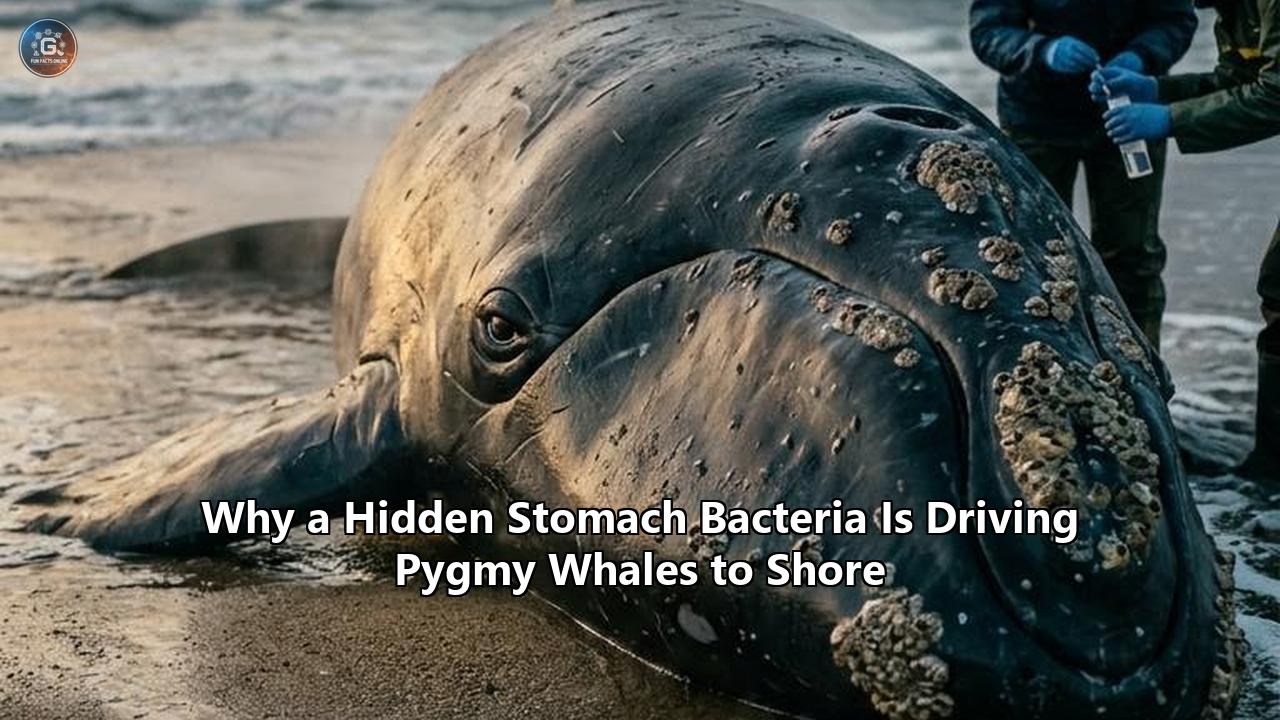
A 21-year retrospective investigation into marine mammal strandings along the southeastern coast of the United States has uncovered a hidden biological trigger driving one of the ocean's most elusive deep-diving species onto shallow shores.
Researchers analyzing post-mortem tissue samples from pygmy sperm whales (Kogia breviceps) discovered three previously unknown genotypes of spiral-shaped bacteria belonging to the genus Helicobacter embedded deep within the animals' stomach tissues. The study, published in the Journal of Wildlife Diseases by a team from Florida Atlantic University’s (FAU) Harbor Branch Oceanographic Institute and partner institutions, marks the first documented evidence of Helicobacter pathogens in pygmy sperm whales.
The quantitative findings present a stark epidemiological profile:
- 21 Years of Stranding Records: Between 1999 and 2020, FAU Harbor Branch responded to 59 pygmy sperm whale strandings along the eastern coast of Florida.
- 80% Necropsy Rate: Full post-mortem examinations were conducted on 47 of the 59 animals, providing a comprehensive anatomical and diagnostic archive.
- 100% Pathological Co-Occurrence: Every individual that tested positive for the novel Helicobacter strains exhibited severe gastrointestinal disease, including active gastritis, gastric ulcers, tissue fibrosis, and heavy parasitic worm infestations.
- 67% Microscopic Detection Rate: Histopathological examination revealed visible spirilliform bacteria in six out of nine stomach tissue samples extracted from PCR-positive cases.
- 3 Novel Bacterial Genotypes: High-throughput DNA sequencing identified three distinct genetic variants, officially designated Kogia Helicobacter 1, Kogia Helicobacter 2, and Kogia Helicobacter 3.
While researchers note that the bacteria were not listed as the definitive primary cause of death in the necropsy records, the pervasive mucosal destruction, chronic inflammation, and systemic weakness caused by these infections represent a primary, underreported factor in pygmy whale beaching causes. For a species that relies on intense physical exertion to dive up to 1,000 meters in search of prey, severe stomach ulceration severely compromises physical performance, driving sick animals away from open waters toward shallow beaches.
Genomic and Molecular Fingerprinting of Ocean-Dwelling Helicobacter
To isolate and identify the pathogen, researchers utilized a multi-tiered diagnostic framework combining histopathology, molecular amplification, and phylogenetic analysis. Experimental polymerase chain reaction (PCR) assays targeting the bacterial 16S rRNA gene successfully amplified DNA from gastric tissue samples—spanning the forestomach, fundus, and pylorus—in all four positive cases.
Target Gene Region: 16S rRNA Gene Sequence (572 Base Pairs)
├── Kogia Helicobacter 1 ──> High genetic homology to terrestrial/marine cetacean strains
├── Kogia Helicobacter 2 ──> Clustered with known cetacean Helicobacter species
└── Kogia Helicobacter 3 ──> Highly divergent, deep-ocean evolutionary lineage
DNA sequencing confirmed that all positive samples shared a common 572-base-pair region while splitting into three distinct genetic lineages:
- Kogia Helicobacter 1: Shows close sequence similarity to Helicobacter cetorum, a species previously identified in bottlenose dolphins (Tursiops truncatus) and beluga whales (Delphinapterus leucas).
- Kogia Helicobacter 2: Maps within a known clade of marine mammal pathogens, suggesting cross-species transmission or historical co-evolution among pelagic odontocetes.
- Kogia Helicobacter 3: Exhibits significant genetic divergence from all known terrestrial and aquatic Helicobacter strains, representing an ancient, highly specialized oceanic lineage.
In one stranded individual, researchers detected dual infection, finding both Kogia Helicobacter 1 and Kogia Helicobacter 3 co-existing within the forestomach lining.
"Helicobacter bacteria have long been associated with gastrointestinal disorders in humans and other animals, including chronic gastritis, ulcers, and even gastric cancer," stated Dr. Annie Page, senior author, clinical veterinarian, and associate research professor at FAU Harbor Branch. "To find novel strains of these bacteria in a deep-diving whale species is intriguing."
The discovery highlights a significant gap in baseline marine microbiology: deep-diving cetaceans harbor specialized microbial ecosystems that can quickly turn pathogenic under environmental or metabolic stress.
Quantitative Breakdown: 21 Years of Stranding Records
Pygmy sperm whales are among the fifth most common cetaceans to strand along the southeastern coastline of the United States, accounting for over 80% of single-pelagic deep-diver beachings in Florida. Yet, because they inhabit offshore meso- and bathypelagic waters, free-swimming sightings are exceptionally rare. Consequently, long-term stranding datasets offer the only viable quantitative window into their health, population trends, and disease profiles.
| Metric | Quantitative Value | Biological Significance |
|---|---|---|
| Study Timeframe | 1999 – 2020 (21 Years) | Long-term baseline for southeastern U.S. pelagic health. |
| Total Strandings (FAU Zone) | 59 Individuals | High concentration along Florida’s eastern coast. |
| Necropsies Evaluated | 47 Whales (80%) | High sampling coverage for anatomical pathology. |
| PCR-Positive Cases | 4 Whales (100% Retrospective Cohort) | Confirmed presence of novel Helicobacter DNA. |
| Spirilliform Microscopy Rate | 67% (6/9 Tissue Sections) | Visual verification of spiral bacteria in gastric lesions. |
| Gastric Lesion Prevalence | 100% of Infected Animals | Direct link between bacterial presence and tissue damage. |
| Colitis Co-Occurrence | 25% of Infected Animals (1/4) | Indicates potential spread beyond the stomach. |
The anatomical structure of the cetacean stomach complicates infection dynamics. Unlike humans, who possess a single stomach chamber, pygmy sperm whales feature a complex, multi-chambered digestive system comprising three main compartments:
Multi-Chambered Kogiid Digestive Anatomy:
┌─────────────────┐      ┌─────────────────┐      ┌─────────────────┐
│   Forestomach   │ ───> │  Main (Fundic)  │ ───> │ Pyloric Stomach │
│  (Nonglandular) │      │    (Glandular)  │      │   (Digestive)   │
└────────┬────────┘      └────────┬────────┘      └────────┬────────┘
         │                        │                        │
  Mechanical Break          Acid/Enzymatic            Nutrient Influx
     & Storage                 Digestion               & Bile Flow
The PCR analysis detected Helicobacter sequences across all three compartments, with the highest concentration of spirilliform bacteria colonizing the forestomach and fundic mucosa. The presence of bacteria across these distinct tissue types demonstrates that Kogia Helicobacter strains can adapt to both acidic, enzymatic environments and non-glandular mechanical holding chambers.
The Synergistic Pathosystem: Helicobacter and Gastric Nematodes
A critical pattern revealed by the diagnostic data is the 100% co-occurrence of Helicobacter infection with severe gastric nematode infestations. Every individual testing positive for Kogia Helicobacter carried high parasite loads of anisakid roundworms—primarily Skrjabinisakis brevispiculata, Skrjabinisakis paggiae, and Pseudoterranova ceticola.
Synergistic Mucosal Erosion Model:
1. Parasitic Penetration ──> Anisakid nematodes burrow into the gastric wall.
2. Mucosal Barrier Disruption ──> Mucus layer breached, exposing epithelium to acid.
3. Bacterial Colonization ──> Kogia Helicobacter invades micro-wounds and reproduces.
4. Inflammatory Cascade ──> Infiltration of eosinophils, neutrophils, and lymphocytes.
5. Chronic Ulceration & Fibrosis ──> Permanent tissue scarring, pain, and metabolic collapse.
This dual-pathogen interaction creates a destructive feedback loop within the gastric mucosal barrier:
- Physical Tearing: Anisakid nematodes anchor themselves into the mucosal and submucosal layers of the forestomach and fundus, creating focal ulcers, mechanical tissue tearing, and localized necrosis.
- Microbial Invasion: Helicobacter bacteria exploit these open physical breaches, colonizing the disrupted mucosal lining and establishing persistent infection.
- Acid-Induced Corrosion: Helicobacter enzymes neutralize local gastric acid while triggering intense chemical mucosal degradation, transforming minor parasitic wounds into extensive, chronic ulcers.
- Fibrotic Scarring: Histopathologic analysis revealed extensive gastric fibrosis—thickened, non-functional scar tissue—across infected stomachs, drastically impairing the digestive system's elasticity and nutrient-absorption capacity.
"All four whales that tested positive for Helicobacter had visible gastric pathology," noted Dr. Page. "We saw signs of gastritis, gastric ulcers, fibrosis, and nematode infestations. In one case, there was also colitis, which suggests that the infection may not be limited to the stomach."
This compounding damage indicates that evaluating pygmy whale beaching causes through a single-pathogen lens misses the broader reality. Instead, stranding events often stem from a complex pathosystem where parasites, novel bacteria, and environmental stressors combine to cripple the animal's digestive capacity.
Bioenergetic Collapse: How Gastric Ulcers Drive Deep-Divers to Shore
To understand how a microscopic stomach infection forces a 400-kilogram oceanic mammal onto a beach, researchers must evaluate the extreme physiological demands placed on Kogia breviceps.
Pygmy sperm whales are specialized deep foragers, hunting meso- and bathypelagic squids (such as Histioteuthis and Ancistrocheirus) at depths ranging from 300 to over 1,000 meters. These foraging dives demand precise metabolic management, high muscular energy, and uninterrupted oxygen conservation.
Physiological Cascade from Gastric Ulcers to Stranding:
┌────────────────────────────────────────────────────────┐
│ Chronic Helicobacter Infection & Gastric Ulceration    │
└───────────────────────────┬────────────────────────────┘
                            │
                            ▼
┌────────────────────────────────────────────────────────┐
│ Severe Abdominal Pain, Nausea, & Digestate Retention   │
└───────────────────────────┬────────────────────────────┘
                            │
                            ▼
┌────────────────────────────────────────────────────────┐
│ Anorexia, Muscle Catabolism, & Loss of Blubber Layer   │
└───────────────────────────┬────────────────────────────┘
                            │
                            ▼
┌────────────────────────────────────────────────────────┐
│ Thermal Dysregulation & Disruption of Buoyancy Control │
└───────────────────────────┬────────────────────────────┘
                            │
                            ▼
┌────────────────────────────────────────────────────────┐
│ Inability to Perform 1,000m Foraging Dives             │
└───────────────────────────┬────────────────────────────┘
                            │
                            ▼
┌────────────────────────────────────────────────────────┐
│ Displacement into Shallow Waters & Beaching Event      │
└────────────────────────────────────────────────────────┘
When Helicobacter causes chronic gastritis and deep mucosal ulcers, it sets off a rapid physical decline:
1. Disruption of Energy Intake
Gastric ulcers cause severe abdominal pain, nausea, and regurgitation—symptoms mirrored in human Helicobacter pylori infections. Affected whales stop hunting, leading to rapid muscle wasting and exhaustion of thermal blubber reserves.
2. Loss of Buoyancy and Thermal Control
Pygmy sperm whales rely on a thick blubber layer for thermal insulation in frigid, deep-ocean waters and for maintaining neutral buoyancy during deep dives. As anorexia depletes fat stores, the animal experiences hypothermia and buoyancy imbalances, making deep diving physically impossible.
3. Aerobic and Diving Collapse
Deep dives require high concentrations of myoglobin in muscle tissue and hemoconcentration in blood. Chronic gastrointestinal bleeding from deep stomach ulcers leads to anemia, drastically shortening the animal's Aerobic Dive Limit (ADL). Unable to hold its breath long enough to hunt in the bathypelagic zone, the whale is trapped at the surface.
4. Acoustic Disorientation in Shallow Waters
Exhausted, anemic, and thermoregulatory compromised, the animal drifts out of deep offshore currents into shallow, low-frequency coastal shelf waters. Pygmy sperm whales rely on high-frequency echolocation clicks (above 100 kHz) optimized for open ocean navigation. In shallow coastal zones, complex bottom topography, wave turbulence, and ambient noise distort their sonar, leaving them disoriented and prone to grounding.
Thus, while Helicobacter may not appear as the immediate cause of death on a necropsy report, the pain, starvation, and physical collapse it causes are direct drivers behind pygmy whale beaching causes.
Comparative Pathobiology Across Marine Cetaceans
The identification of Kogia Helicobacter 1, 2, and 3 provides a critical comparative baseline for marine mammal health worldwide. Helicobacter species were first documented in marine mammals in 2000. Over the past two decades, veterinarian pathologists have isolated diverse strains across various odontocete and mysticete species.
Prevalence and Impact of Helicobacter Across Cetacean Genera:
┌─────────────────────────┬─────────────────────────┬─────────────────────────┐
│       Bottlenose        │     Harbour Porpoise    │   Pygmy Sperm Whale     │
│   (Tursiops truncatus)  │   (Phocoena phocoena)   │    (Kogia breviceps)    │
├─────────────────────────┼─────────────────────────┼─────────────────────────┤
│ Pathogen:               │ Pathogen:               │ Pathogen:               │
│ Helicobacter cetorum    │ Helicobacter cetorum    │ Novel Kogia Strains 1-3 │
├─────────────────────────┼─────────────────────────┼─────────────────────────┤
│ Primary Lesions:        │ Primary Lesions:        │ Primary Lesions:        │
│ Pyloric/Fundic Ulcers   │ Erosive Gastritis       │ Forestomach Ulcers,     │
│                         │                         │ Fibrosis, Colitis       │
├─────────────────────────┼─────────────────────────┼─────────────────────────┤
│ Parasite Coinfection:   │ Parasite Coinfection:   │ Parasite Coinfection:   │
│ Moderate (Anisakis)     │ High (Anisakis)         │ 100% Rate (Anisakids)   │
├─────────────────────────┼─────────────────────────┼─────────────────────────┤
│ Ecological Habitat:     │ Ecological Habitat:     │ Ecological Habitat:     │
│ Coastal / Estuarine     │ Coastal / Shelf         │ Meso/Bathypelagic       │
└─────────────────────────┴─────────────────────────┴─────────────────────────┘
Comparative data reveals distinct epidemiological differences between coastal and deep-diving cetacean species:
- *Coastal Dolphins (Tursiops truncatus): Helicobacter cetorum infections frequently cause localized, focal stomach ulcers. Because coastal dolphins forage in shallow waters, they can manage chronic stomach inflammation longer without suffering immediate starvation or disorientation.
- Harbour Porpoises (Phocoena phocoena): Infections are tied to high population density and coastal runoff. Gastric lesions cause fluctuating body condition, but rarely lead to immediate stranding unless compounded by heavy net entanglements or toxic algal blooms.
- Pygmy Sperm Whales (Kogia breviceps): Due to their extreme deep-diving lifestyle, Kogia species have zero tolerance for physical decline. The emergence of Kogia Helicobacter 3—a genetically divergent strain—suggests that deep-ocean cetaceans carry specialized bacterial strains that can cause rapid, catastrophic health declines when activated by stress.
"Two of the genotypes, Kogia Helicobacter 1 and 2, are genetically similar to known Helicobacter species previously found in other cetaceans—such as dolphins and porpoises—and in humans," explained Wendy Marks, corresponding author and research coordinator at FAU Harbor Branch. "But Kogia Helicobacter 3 belongs to a more divergent lineage, which emphasizes the possibility that there are far more undiscovered bacteria in the ocean than we realize."
Microbial Oceanography: Environmental Triggers and Immune Suppression
The discovery of novel bacterial strains in deep-sea whales raises an important ecological question: Why do these latent stomach infections suddenly flare up into severe, life-threatening ulcers?
Microbial oceanographers and marine epidemiologists point to a combination of environmental stressors that impair immune function in wild cetacean populations:
Environmental Drivers of Microbial Pathogenesis:
┌────────────────────────────────────────────────────────┐
│ Thermal Stress & Marine Heatwaves                      │
│ (Alters water stratification & prey distribution)      │
└───────────────────────────┬────────────────────────────┘
                            │
                            ▼
┌────────────────────────────────────────────────────────┐
│ Foraging Shift & Nutritional Deficits                  │
│ (Increased search time for meso-pelagic prey)          │
└───────────────────────────┬────────────────────────────┘
                            │
                            ▼
┌────────────────────────────────────────────────────────┐
│ Elevated Cortisol & Chronic Stress Response            │
│ (Suppresses mucosal immunity & mucosal blood flow)     │
└───────────────────────────┬────────────────────────────┘
                            │
                            ▼
┌────────────────────────────────────────────────────────┐
│ Proliferation of Latent Kogia Helicobacter Strains     │
│ (Rapid ulceration, mucosal fibrosis, & beaching)       │
└────────────────────────────────────────────────────────┘
1. Thermal Anomalies and Prey Shifts
Changing sea surface temperatures and shifting thermoclines alter the depth and distribution of deep-sea squid populations. Pygmy sperm whales must dive deeper or travel farther to find food, increasing physical strain and caloric deficits.
2. Anthropogenic Noise and Cortisol Elevation
Deep-diving cetaceans are exceptionally sensitive to low- and mid-frequency naval sonar, seismic airgun testing, and commercial shipping noise. Chronic acoustic stress triggers elevated cortisol levels in marine mammals. Prolonged cortisol exposure suppresses mucosal immunity, reduces blood flow to the stomach lining, and allows opportunistic Helicobacter strains to rapidly invade stomach tissues.
3. Bioaccumulation of Persistent Pollutants
As long-lived apex predators of the deep pelagic zone, pygmy sperm whales accumulate heavy metals (such as methylmercury and cadmium) and persistent organic pollutants (like PCBs and PFAS). High organochlorine loads disrupt immune function, reducing the animal's ability to keep internal bacterial populations in check.
When these environmental stressors overlap, harmless or low-level microbial infections can quickly escalate into severe gastritis, extensive tissue scarring, and physical collapse—answering critical questions surrounding pygmy whale beaching causes in changing marine ecosystems.
Future Surveillance and Marine Conservation Metrics
The isolation of Kogia Helicobacter 1, 2, and 3 provides marine biologists with new tools for health monitoring, field diagnostics, and stranding response protocols. Moving forward, research groups are implementing advanced surveillance metrics to track pathogen prevalence and assess ecosystem health.
Future Marine Mammal Diagnostic Framework:
1. High-Throughput qPCR Diagnostics ──> Targeted screening of necropsy samples.
2. Environmental DNA (eDNA) Tracking ──> Detecting bacterial shed in surface waters.
3. Histopathological Biomarkers ──> Standardizing scar and fibrosis metrics.
4. Multi-Center Tissue Repositories ──> Shared databases across global stranding networks.
Key priorities for future research include:
1. Expanding Diagnostic Assays
Developing targeted quantitative PCR (qPCR) primers specific to Kogia Helicobacter 1, 2, and 3 to screen archived tissue samples from stranding networks in the Pacific, Indian, and South Atlantic Oceans.
2. Non-Invasive Environmental DNA (eDNA) Sampling
Refining eDNA extraction techniques to detect Helicobacter sequences shedding in sloughed intestinal cells or fecal material collected near wild, free-swimming Kogia pods.
3. Integrated Pathogen-Parasite Mapping
Standardizing necropsy protocols to measure parasite density alongside bacterial loads, establishing a diagnostic index for coinfection severity.
4. Evaluating Population-Level Risk
Analyzing long-term stranding data alongside satellite oceanographic models to determine if clusters of Helicobacter-driven beachings correlate with marine heatwaves, sonar testing, or shifts in regional pollution levels.
"This research underscores the value of long-term marine mammal stranding response programs," concluded Dr. Page. "Without the ability to study these stranded animals over decades, we never would have discovered these bacteria. Every whale tells a story, and sometimes that story leads us into entirely new scientific territory."
Key Research Milestones and Diagnostic Chronology
1999–2020: FAU Harbor Branch responds to 59 pygmy sperm whale stranding events in Florida.
   │
2000: Helicobacter species isolated from marine mammals for the first time.
   │
2017–2020: Tissue samples collected from four stranded Kogia breviceps reveal spirilliform bacteria.
   │
2024–2025: Advanced 16S rRNA gene sequencing isolates three novel bacterial strains.
   │
Early 2026: Journal of Wildlife Diseases publishes findings confirming Kogia Helicobacter 1, 2, and 3.
   │
Future: Global stranding networks initiate targeted qPCR screening and eDNA marine tracking.
As long-term monitoring continues, tracking these hidden bacterial strains will be vital to understanding how ocean changes impact deep-sea wildlife. The discovery of novel Helicobacter* strains demonstrates that solving pygmy whale beaching causes requires looking beyond visible surface injuries to examine the complex microscopic world inside these mysterious ocean deep-divers.
Reference:
- https://www.fau.edu/newsdesk/articles/stranded-pygmy-sperm-whales.php
- https://unb.com.bd/category/Science/scientists-discover-previously-unknown-bacteria-in-elusive-pygmy-sperm-whales/191162
- https://scitechdaily.com/mystery-bacteria-found-inside-one-of-the-oceans-most-elusive-whales/
- https://bioone.org/journals/journal-of-wildlife-diseases/volume-62/issue-1/JWD-D-24-00204/NOVEL-GASTRIC-HELICOBACTER-SPECIES-IN-STRANDED-PYGMY-SPERM-WHALES-KOGIA/10.7589/JWD-D-24-00204.full
- https://pubmed.ncbi.nlm.nih.gov/41275882/
- https://www.parasite-journal.org/articles/parasite/full_html/2024/01/parasite240084/parasite240084.html
- https://www.youtube.com/watch?v=SemJAQO56lQ
- https://www.fau.edu/research/research-daily/2026/new-bacteria-in-pygmy-sperm-whales/