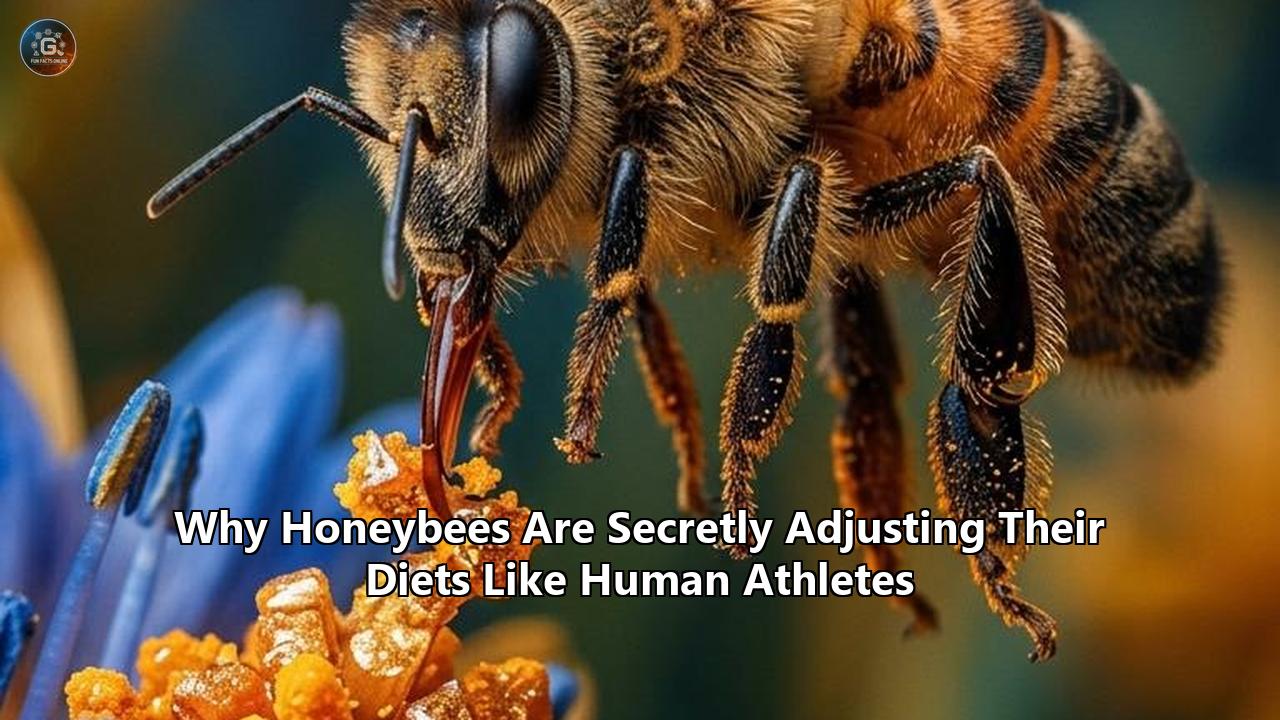
On June 17, 2026, a research team led by the University of Oxford published findings in Current Biology that dismantled a fundamental assumption in entomology. For decades, scientists and apicultourists treated floral pollen as a complete, near-perfect food source naturally tailored for honeybees. The Oxford study, led by Professor Geraldine Wright of Oxford’s Department of Biology, revealed a far more complex reality: pollen is an evolutionary battleground, and honeybees manage their intake with the precision of elite human athletes tracking their macronutrients.
By mapping the essential amino acid profiles of 99 flowering plant species across 26 plant families and comparing them directly against honeybee body tissue, Wright’s team discovered that most floral pollens are strikingly poor matches for bee physiology. Plants produce pollen as male gametes for reproduction, not as a custom-built nutritional shake for insects. To avoid toxic imbalances and metabolic exhaustion, individual worker bees actively adjust how much food they consume based on subtle shifts in amino acid ratios and lipid concentrations.
This finding provides a powerful new lens for understanding colony collapse, agricultural foraging, and insect physiology. Honeybees do not simply eat whatever pollen is available until they are full. Instead, they operate under a strict system of post-digestive biofeedback, shutting down their feeding mechanisms when key nutrient thresholds are reached. Understanding this sophisticated honeybee diet behavior explains why colonies collapse in vast monocultures of flowering crops and offers a roadmap for redesigning global pollinator conservation.
The Histidine Safety Switch and the Myth of 'Perfect Pollen'
To understand how honeybees manage their diets, the Oxford team constructed synthetic diets in the laboratory. Some diets mirrored the essential amino acid composition of honeybee tissue, while others replicated the amino acid signatures of various floral pollens.
When newly emerged worker bees were offered a diet matching their own body composition, they ate heartily, gained significant body mass, and maintained optimal protein intake. However, when placed on diets matching real-world plant pollens—which frequently contained skewed ratios of essential amino acids—their behavior changed dramatically.
               [ Floral Pollen Input ]
                          │
                          ▼
            [ Midgut Digestion & Absorption ]
                          │
         ┌────────────────┴────────────────┐
         ▼                                 ▼
[ Balanced Amino Acids ]      [ Imbalanced Amino Acids ]
  (Matches Bee Tissue)          (e.g., Elevated Histidine)
         │                                 │
         ▼                                 ▼
   High Consumption                Post-Digestive Feedback
   Body Mass Gain                  Appetite Suppression
   Optimal Gland Growth            (Prevents Amino Acid Toxicity)
The researchers zeroed in on a specific chemical trigger: histidine, an essential amino acid that honeybees require only in small quantities. When histidine levels were artificially elevated relative to branched-chain amino acids (BCAAs) such as leucine and isoleucine—a common imbalance in wild pollens—the bees suffered an immediate loss of appetite. They reduced their overall food consumption, cutting back on both proteins and carbohydrates.
"Although pollen is often assumed to be a near-perfect food for bees, it is the male gamete of plants and, unlike nectar, it is rarely produced solely as a reward for pollinators," explained Professor Geraldine Wright in a statement accompanying the release. "This creates a conflict of interest between the plant and the pollinator."
Rather than eating more pollen to compensate for a missing amino acid—which would result in a dangerous, toxic overconsumption of histidine—the bees used an internal metabolic brake. This post-digestive feedback mechanism prevents cellular toxicity by shutting down feeding entirely when a single nutrient ratio crosses a critical threshold.
This process closely resembles how human bodybuilders and endurance athletes manage their dietary inputs. In human sports science, the concept of essential amino acid ratios is fundamental: consuming an excess of a single amino acid without adequate supporting BCAAs can trigger metabolic stress, disrupt liver and kidney function, and cause appetite dysregulation. Honeybees, it turns out, have been managing the exact same metabolic balancing act for millions of years.
Nutritional Geometry: How Bees 'Count Macros'
The Oxford study builds upon a growing body of research using the Nutritional Geometry Framework (NGF), a scientific model pioneered by biologists David Raubenheimer and Stephen Simpson to study how animals navigate complex dietary landscapes.
Recent collaborative studies between the USDA Agricultural Research Service (ARS) and Texas A&M University, led by research ecologist Dr. Pierre Lau and entomology professor Dr. Juliana Rangel, applied NGF to honeybee macronutrient selection. Their work revealed that honeybees do not merely regulate amino acids; they maintain precise control over their protein-to-lipid (P:L) intake ratios.
Macronutrient Target Ratios Across Honeybee Castes & Life Stages
┌──────────────────────┬──────────────────────┬────────────────────────┐
│ Life Stage / Role    │ Primary Fuel         │ Target Ratio           │
├──────────────────────┼──────────────────────┼────────────────────────┤
│ Young Nurse Bees     │ Protein & Lipids     │ 1.5:1 P:L              │
│ (0–12 Days Old)      │ (Pollen / Bee Bread) │ (30% Protein, 20% Fat) │
├──────────────────────┼──────────────────────┼────────────────────────┤
│ High-Altitude        │ Carbohydrates        │ 1:250 P:C              │
│ Foragers (21+ Days)  │ (Nectar / Honey)     │ (Ultra-Low Protein)    │
└──────────────────────┴──────────────────────┴────────────────────────┘
When nurse bees—the young worker bees responsible for feeding developing larvae—were given choices between artificial diets varying in protein and lipid concentrations, they consistently self-selected a diet containing 30% protein and 20% lipids, representing a 1.5:1 protein-to-lipid ratio.
"Nurse honeybees stopped feeding once they hit their protein or lipid threshold," noted Dr. Pierre Lau regarding his team's findings. "This 'strict restraint' rule suggests that, like humans, bees need a balance of proteins and lipids to maintain good health and will stop eating rather than overconsume a nutrient that could disrupt their internal biochemistry."
                     Nutritional Geometry Framework (NGF)
          30% ┌──────────────────────────────────────────────┐
              │                                      *       │
              │                                (1.5:1 P:L)   │
   Protein %  │                               Target Intake  │
              │                                              │
          10% └──────────────────────────────────────────────┘
              0%                     20%                   40%
                                   Lipids %
This strict restraint rule illustrates how honeybee diet behavior adapts dynamically to internal metabolic states rather than relying on simple hunger queues. If a nurse bee is forced to consume a diet that is disproportionately high in lipids to reach its protein requirement, its feeding rate drops off dramatically. Overconsuming lipids can lead to visceral fat accumulation, metabolic inflammation, and premature aging, shortening the worker's operational lifespan within the hive.
Shift in Requirements Across Worker Life Stages
This macronutrient tuning changes drastically as a bee ages and shifts roles within the colony—a phenomenon known as age polyethism.
                                AGE POLYETHISM
                                ──────────────

  [ Day 1 - 12: Nurse Bee ]                       [ Day 21+: Forager Bee ]
  ─────────────────────────                       ────────────────────────
  • Macro Target: 1.5:1 P:L                       • Macro Target: 1:250 P:C
  • High Protein & Lipid Intake                   • Near-Total Carbohydrate Diet
  • Develops Hypopharyngeal Glands                • High Engine Output (Flight Fuel)
• Synthesizes Royal & Worker Jelly • Rapid Glycogen Consumption- The Bulking Phase (Nurse Bees, Days 1–12): Newly emerged workers act as the colony's heavy lifters and food processors. They require vast quantities of protein and essential fatty acids to develop their hypopharyngeal and mandibular glands. These glands produce royal jelly and worker jelly—protein-rich secretions fed directly to the queen and young larvae. A nurse bee’s metabolic state resembles an athlete in a heavy strength-building or hypertrophy phase, requiring high protein turnover and dense lipid resources.
- The Endurance Phase (Forager Bees, Days 21+): As workers transition into field foragers, their dietary requirements invert. Flight muscles are among the most metabolically active tissues in the animal kingdom, consuming immense energy during high-speed transit. Protein requirement drops precipitously, while carbohydrate demand skyrockets. Adult foragers adjust their protein-to-carbohydrate (P:C) intake ratio from 1:50 down to 1:250 P:C. They fuel their flights almost entirely on sugar-dense nectar—the insect equivalent of an endurance runner consuming rapid-acting carbohydrate gels during a marathon.
Inside the Hive's Kitchen: Processing 'Bee Bread' and 'Baby Food'
Individual foragers do not bring pure, raw pollen directly to the nursery larvae. Instead, the superorganism uses a multi-tiered food processing system to smooth out the severe nutritional flaws present in single-flower pollens.
When foragers return to the hive with pollen packed into their hind-leg corbiculae (pollen baskets), they deposit the loads into wax cells. Nurse bees then pack the pollen tightly, mixing it with regurgitated nectar containing digestive enzymes and beneficial microbes, such as Lactobacillus species and specialized yeasts. This mixture undergoes anaerobic fermentation to become bee bread.
[ Raw Floral Pollen ] ──► [ Microbial Fermentation ] ──► [ Bee Bread ]
                                                              │
                                                              ▼
                                                    [ Consumed by Nurse Bees ]
                                                              │
                                                              ▼
[ Larval Development ] ◄── [ Royal / Worker Jelly ] ◄── [ Glandular Synthesis ]
Fermentation breaks down the tough, outer sporopollenin walls of the pollen grains, freeing trapped lipids, bioavailable proteins, and trace minerals. More importantly, by blending pollens gathered from hundreds of different flowers across a multi-mile foraging radius, nurse bees create a homogenized food matrix.
The Oxford University study revealed that nurse bees take this nutritional processing a step further when preparing food for the brood. By consuming bee bread and synthesizing glandular secretions, nurse bees filter out excess toxic amino acids like histidine while concentrating limiting BCAAs. The resulting "baby food" delivered to larvae provides a balanced, tissue-matched amino acid profile that single floral species rarely provide on their own.
Nurse bees act as collective meal preppers for the colony. They consume raw, highly variable ingredients from the environment, extract the required macronutrient ratios, buffer against natural imbalances, and pass a synthesized, optimized product down to the next generation.
Monoculture Monodiets: An Agricultural Case Study
This scientific understanding of honeybee diet behavior illuminates why industrial agriculture has proven so destructive to global bee populations. Modern farming relies heavily on vast monocultures—thousands of contiguous acres planted with a single crop, such as almonds, sunflowers, corn, or canola.
                           DIETARY DIVERSITY CONTRAST
                           ──────────────────────────

  [ Polyculture / Wild Meadow ]                   [ Industrial Monoculture ]
  ─────────────────────────────                   ──────────────────────────
  • Multi-Species Floral Mix                      • Single Crop (e.g., Almonds)
  • Complementary Amino Acid Profiles             • Uniform, Skewed Amino Acid Profile
  • Balanced Protein-to-Lipid Ratios              • Excess Histidine / Missing BCAAs
  • High Consumption & Glandular Growth          • Post-Digestive Appetite Suppression
  • Strong Colony Immunity                        • Malnutrition & Colony Decline
Consider the California almond bloom, which draws over 2 million managed honeybee hives every February. While almond pollen is relatively rich in total protein, its amino acid and lipid profiles are highly skewed. When honeybees are surrounded by hundreds of square miles of almond blossoms with no alternative floral forage, they are effectively placed on a strict "single-meal" diet.
When forced onto a monoculture diet whose amino acid profile mismatches their body tissue, honeybees hit their metabolic safety switches. If the monoculture pollen contains an elevated ratio of histidine or an insufficient lipid concentration, the bees' post-digestive feedback mechanisms kick in. They consume less total pollen overall.
                               MONOCULTURE IMPACT
                               ──────────────────

                         ┌─────────────────────────────┐
                         │ Monoculture Pollen Exposure │
                         └──────────────┬──────────────┘
                                        │
                                        ▼
                         ┌─────────────────────────────┐
                         │  Histidine / Fat Imbalance  │
                         └──────────────┬──────────────┘
                                        │
                                        ▼
                         ┌─────────────────────────────┐
                         │ Post-Digestive Feedback Trigger │
                         └──────────────┬──────────────┘
                                        │
                                        ▼
                         ┌─────────────────────────────┐
                         │ Reduced Total Food Intake   │
                         └──────────────┬──────────────┘
                                        │
                                        ▼
                         ┌─────────────────────────────┐
                         │  Atrophied Nurse Glands     │
                         └──────────────┬──────────────┘
                                        │
                                        ▼
                         ┌─────────────────────────────┐
                         │ Depleted Vitellogenin Reserve│
                         └──────────────┬──────────────┘
                                        │
                                        ▼
                         ┌─────────────────────────────┐
                         │ Colony Immune Collapse      │
                         └─────────────────────────────┘
The downstream consequences of this appetite suppression ripple through the colony:
- Atrophied Hypopharyngeal Glands: Nurse bees cannot fully develop the glands necessary to produce larval food. Larvae receive lower-quality food, producing smaller, shorter-lived adult workers.
- Vitellogenin Depletion: Vitellogenin is a key storage protein that acts as an antioxidant, immune system buffer, and longevity factor in honeybees. When protein intake drops due to dietary imbalance, vitellogenin reserves plummet, making bees far more susceptible to viral infections and pesticide toxicity.
- Colony Immune Collapse: Malnourished bees cannot mount effective immune responses against pathogens like Nosema or viruses transmitted by the Varroa destructor mite.
This explains a long-standing paradox in apiculture: honeybee colonies placed in vast agricultural fields often show signs of severe malnutrition despite being surrounded by billions of blooming flowers. Total floral volume is irrelevant if the nutritional profile triggers the bee's internal feeding brake.
Redesigning Conservation and Beekeeping Architecture
The discovery that honeybees actively tune their nutrient intake like human athletes forces a redesign of pollinator conservation and commercial hive management. Three primary principles emerge from these findings:
1. Diversity of Amino Acid Profiles Over Floral Density
Historically, pollinator conservation initiatives focused on planting large numbers of flowers. However, the Oxford research demonstrates that planting 10,000 flowers of a single species offers limited benefit if that species exhibits an imbalanced amino acid profile.
Conservation schemes must prioritize nutritional complementarity. Wildflower mixes must be engineered so that the pollen of Species A (high in BCAAs, low in lipids) offsets the deficits of Species B (high in lipids, elevated histidine). Providing a complementary matrix of floral pollens enables bees to balance their intake naturally.
                     FLORAL COMPLEMENTARITY MATRIX
                     ─────────────────────────────

      Plant Species A                               Plant Species B
┌─────────────────────────┐                   ┌─────────────────────────┐
│ High BCAAs              │ ──┐           ┌── │ High Lipids             │
│ Low Lipids              │   │           │   │ Elevated Histidine      │
└─────────────────────────┘   │           │   └─────────────────────────┘
                              │           │
                              ▼           ▼
                   ┌─────────────────────────┐
                   │ Balanced Hive Intake    │
                   │ (30% Protein / 20% Fat) │
                   └─────────────────────────┘
2. Bio-Matched Artificial Feeds
During dearth periods or early spring build-up, commercial beekeepers feed artificial pollen substitutes made from soy flour, brewer's yeast, or corn gluten. Many of these commercial feeds were formulated based solely on crude protein percentages rather than bioavailable amino acid and lipid structures.
If a pollen substitute contains 40% crude protein but exhibits an essential amino acid profile that mismatches honeybee tissue, the bees will under-consume the patty due to post-digestive feedback. Future feed formulations must match the 1.5:1 protein-to-lipid ratio and align essential amino acid concentrations with honeybee tissue profiles.
                     POLLEN SUBSTITUTE REFORMULATION
                     ───────────────────────────────

   Traditional Patty Formulations             Bio-Matched Formulations
   ──────────────────────────────             ────────────────────────
   • Crude Protein Target (~40%)              • Tissue-Matched Amino Acid Ratios
   • Unfiltered Botanical Soy/Yeast           • 1.5:1 Protein-to-Lipid Balance
   • Skewed Amino Acid Ratios                 • Calibrated Histidine-to-BCAA Ratios
   • High Risk of Feeding Suppression          • Optimized Intake & Gland Development
3. Landscape-Level Macro-Mapping
With modern nutritional data, land managers can create regional nutritional heat maps. By profiling the amino acid and fatty acid signatures of local flora across seasons, agriculturalists can identify seasonal "nutritional gaps."
If a region lacks lipid-dense flora during late summer, farmers can plant cover crops specifically selected to supply essential fatty acids (such as linoleic and oleic acid), keeping nurse bees healthy as they rear winter bees.
Convergent Evolution of Macro-Balancing
The ability of honeybees to navigate complex macronutrient landscapes is not an isolated evolutionary fluke. It represents a widespread principle across the animal kingdom.
From social insects to higher mammals, organisms have evolved sophisticated internal monitoring systems to solve the fundamental problem of nutrition: how to extract an optimal balance of life-sustaining nutrients from an environment made of imperfect, variable food sources.
                   CONVERGENT NUTRITION STRATEGIES
                   ───────────────────────────────

           Honeybees (Apis mellifera)      Human Athletes
           ──────────────────────────      ──────────────
Macronutrient
Regulation         30% P : 20% L Target        Caloric Macro Splits
                   (Nurse Bees)                (e.g., 40/30/30)

Role-Specific      Nurse: High Protein/Fat     Bulking: High Protein
Diets              Forager: High Carbohydrate  Endurance: Carb Loading

Feedback           Histidine-Triggered         Post-Ingestive Satiety &
Mechanisms         Appetite Suppression        Essential Amino Acid Sensing
Research using the Geometric Framework for Nutrition has documented striking similarities across diverse species:
- *Bumblebees (Bombus impatiens): Bumblebees target distinct protein-to-lipid ratios depending on colony size and brood demands, actively foraging across different plant species to balance their collective intake.
- Solitary Bees (Osmia cornifrons): Unlike social bees that blend pollens in a central hive, solitary female mason bees must select individual floral sources that match the precise nutritional requirements of a single larva sealed inside a nest cell.
- Primates and Humans: Human appetite systems rely on similar post-ingestive feedback loops. The Protein Leverage Hypothesis* suggests that humans will continue consuming food until their absolute protein requirement is met; if diets are diluted with excess fats or carbohydrates, overeating occurs. Conversely, when human athletes consume unbalanced amino acid supplements, metabolic feedback mechanisms alter appetite and nutrient utilization.
In honeybees, this feedback system is refined down to the cellular level. Lacking the complex sensory organs of mammals, the honeybee relies on a combination of gustatory receptors on its antennae and mouthparts, alongside gut-brain chemical signaling pathways. When ingested food alters the hemolymph (bee blood) concentration of essential amino acids like histidine, neural signals suppress further feeding behavior.
Understanding honeybee diet behavior within this evolutionary context emphasizes that macronutrient balancing is a fundamental requirement for survival. When human land use disrupts the balance of available nutrients, insect populations suffer the same metabolic consequences as any organism forced onto an incomplete, low-quality diet.
What Lies Ahead for Insect Sports Science
The discoveries published by the Oxford team mark the beginning of a broader shift in pollinator ecology. As scientific tools improve, researchers are shifting from broad ecological surveys to molecular-level nutritional ecology.
Several key developments are poised to reshape this field in the coming years:
- AI-Powered Landscape Profiling: Researchers are pairing satellite imagery with biochemical pollen databases to map real-time nutritional landscapes. Beekeepers will soon be able to scan a geographic area using predictive models to assess whether surrounding blooms provide a balanced amino acid profile before deploying hives.
- Climate Change and Pollen Degradation: Emerging studies indicate that rising atmospheric CO2 levels alter plant carbon-to-nitrogen ratios, reducing total protein content and altering amino acid distributions in floral pollen. Understanding how honeybees adapt their feeding behavior to these shifting profiles is essential for predicting climate impacts on global pollination services.
- Precision Probiotics and Enzymatic Supplements: Future hive supplements will go beyond simple macro-patties. They will incorporate targeted micro-organisms that help break down toxic amino acid excesses or synthesize missing BCAAs directly within the bee bread matrix, actively assisting the nurse bees' internal processing.
The revelation that honeybees adjust their diets like elite athletes highlights the hidden sophistication of the hive. Far from simple automated foragers, honeybees are careful managers of their own internal biochemistry. Protecting them requires recognizing that, just like humans, bees cannot thrive on calories alone—their health depends on a finely calibrated balance of essential nutrients.
Reference:
- https://www.eurekalert.org/news-releases/1132079
- https://www.courthousenews.com/study-bees-change-their-diets-to-balance-nutrients/
- https://vinnews.com/2026/07/21/newly-discovered-sophisticated-warning-system-in-bees/
- https://scientificdiscoveries.ars.usda.gov/tellus/stories/articles/balance-key-nurse-honey-bees-diets
- https://www.theguardian.com/environment/2026/jun/17/honeybees-blend-food-pollen-larvae-balanced-diet-study
- https://www.downtoearth.org.in/wildlife-biodiversity/do-honeybees-tightly-regulate-their-diet-researchers-trying-to-find-out-90854
- https://pmc.ncbi.nlm.nih.gov/articles/PMC12266554/
- https://journals.biologists.com/jeb/article/224/3/jeb230615/223436/Regulation-of-dietary-intake-of-protein-and-lipid
- https://pmc.ncbi.nlm.nih.gov/articles/PMC7888720/
- https://pdfs.semanticscholar.org/75a3/e1be479e35bcda3fd015832c778b27956f6e.pdf
- https://www.mdpi.com/2075-4450/15/2/101
- https://pmc.ncbi.nlm.nih.gov/articles/PMC7074338/
- https://honeybeehealthcoalition.org/wp-content/uploads/2024/01/HBHC-Honey-Bee-Nutrition-Guide-Supplementary-Feeding-Guide-2024.pdf
- https://journals.biologists.com/jeb/article/219/24/3962/16515/Bumble-bees-regulate-their-intake-of-essential
- https://www.researchgate.net/publication/339362091_Pollen_Protein_Lipid_Macronutrient_Ratios_May_Guide_Broad_Patterns_of_Bee_Species_Floral_Preferences