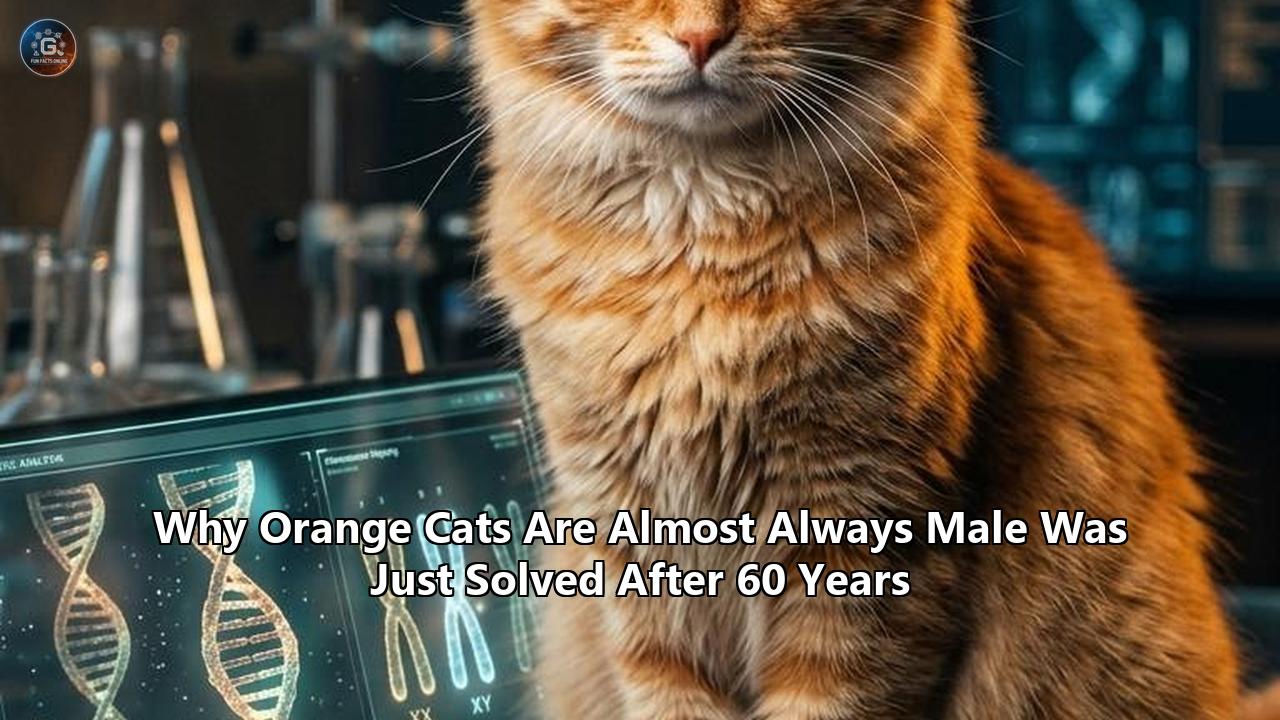
A genetic puzzle that has baffled feline biologists for more than sixty years has finally been cracked. In two independent studies published simultaneously in the scientific journal Current Biology, research teams from Stanford Medicine and Kyushu University announced they have discovered the precise genetic mutation responsible for orange fur in domestic cats. The discovery not only identifies the exact molecular trigger that turns feline coats red, ginger, and marmalade, but it also provides the definitive biological answer to a question that has long puzzled pet owners and geneticists alike: why are orange cats male roughly 80 percent of the time?
The studies—led by Dr. Christopher Kaelin and Dr. Greg Barsh at Stanford University, and Professor Hiroyuki Sasaki and Dr. Hidehiro Toh at Kyushu University’s Medical Institute of Bioregulation—identified an identical 5.1-kilobase deletion in a non-coding regulatory stretch of a gene known as ARHGAP36. The gene sits on the feline X chromosome. Because male cats have only one X chromosome while females have two, this single genomic alteration dictates an asymmetrical pattern of inheritance that skews the physical expression of orange fur heavily toward males, while relegating the majority of females with the gene to the mottled, multicolor patterns of tortoiseshell and calico cats.
"It has been a genetic mystery, a conundrum," said Dr. Barsh, emeritus professor of genetics and pediatrics at Stanford Medicine. "In a number of species that have yellow or orange pigment, the causal mutations almost exclusively occur in one of two genes, and neither of those genes are sex-linked. In domestic cats, it’s completely different."
For decades, scientists could point to the consequences of the mutation across millions of household pets, but they could never locate the physical sequence causing it. By isolating the exact 5,000 base pairs missing from the feline genome, the two teams have resolved one of the oldest cold cases in mammalian genetics and revealed a mechanism for animal pigmentation never before seen in nature.
The Sixty-Year Cold Case of the Orange Locus
The search for the orange gene dates back to the dawn of modern cytogenetics. In 1961, British geneticist Mary Lyon published a landmark paper in Nature outlining what would become known as the Lyon hypothesis, or the principle of random X-chromosome inactivation. Lyon proposed that in female mammals, whose cells carry two X chromosomes (XX) compared to the single X of males (XY), one of the two X chromosomes is permanently silenced early in embryonic development to prevent a double dose of gene products.
To illustrate how this process works in living tissue, Lyon pointed directly to cats. Female cats that carry the gene for orange fur alongside the gene for black fur consistently develop coats patterned in tortoiseshell or calico. In embryonic cells where the non-orange X chromosome stays switched on, the cat’s fur develops black or brown; in cells where the orange X chromosome remains active, the fur sprouts fiery red. Because male cats carry only one X chromosome alongside an inert Y, their cells have no second X to switch off. As a consequence, a male cat that inherits the orange variant will express it uniformly across his entire body.
Lyon’s conceptual model cemented the cat as the premier textbook example of epigenetics. High school and university biology courses have featured calico cats for generations to teach chromosome dynamics. Yet there was an awkward gap at the center of the curriculum: no one knew what gene was actually sitting on the so-called "Orange locus" (designated as O).
Every time researchers mapped the genomes of mammals with red or yellow coats—including golden retrievers, red foxes, Irish setters, chestnut horses, and red-headed humans—they found alterations in the exact same biological hardware: the melanocortin 1 receptor (MC1R) gene, or the agouti signaling protein (ASIP) gene. Crucially, in cats and all other mammals, both MC1R and ASIP are located on autosomes—the non-sex chromosomes. Mutations in those genes affect males and females in equal proportions.
Domestic cats, however, defied the mammalian rulebook. Their orange trait was undeniably tethered to the X chromosome, yet sequencing feline MC1R and ASIP revealed normal, functional genes with no sex-linked anomalies. For six decades, the physical identity of the O gene slipped through every genomic net scientists cast, largely because repetitive sequences on mammalian sex chromosomes make them notoriously difficult to assemble and annotate.
How Mammalian Fur Gets Its Color
To grasp why the domestic cat's pigmentation gene eluded scientists for so long, one must first look at the biochemical machinery that colors mammalian fur. All mammalian coat colors—from the pitch black of a panther to the creamy coat of a yellow lab—are built using just two basic forms of melanin pigment produced by specialized skin cells called melanocytes:
- Eumelanin: A dark, dense polymer that generates black and deep brown hues.
- Pheomelanin: A lighter, sulfur-containing chemical polymer that produces yellow, red, and orange tones.
Under normal genetic conditions, melanocytes operate like a programmable factory running on a primary molecular circuit. On the surface of every melanocyte sits the MC1R receptor, a G-protein-coupled receptor that acts as the primary master switch. When MC1R is stimulated by a circulating hormone called alpha-melanocyte-stimulating hormone ($\alpha$-MSH), it activates an internal enzyme called adenylyl cyclase.
[α-MSH Hormone] ──> [MC1R Receptor] ──> [Adenylyl Cyclase] ──> [cAMP Rises]
                                                                     │
                                                                     ▼
[Pheomelanin (Orange/Red)] <── [PKA-C Degraded] <── [Protein Kinase A (PKA)]
        ▲                                                            │
        │                                                            ▼
(Orange Cat Mutation)                                         [Active MITF]
                                                                     │
                                                                     ▼
                                                          [TYR / TYRP1 / DCT Enzymes]
                                                                     │
                                                                     ▼
                                                          [Eumelanin (Black/Brown)]
This enzyme triggers a surge in cyclic adenosine monophosphate (cAMP), a vital intracellular signaling molecule. Rising cAMP activates Protein Kinase A (PKA). PKA then mobilizes a master transcription factor called MITF (microphthalmia-associated transcription factor), which switches on a battery of downstream pigment enzymes, including tyrosinase (TYR), tyrosinase-related protein 1 (TYRP1), and dopachrome tautomerase (DCT). These enzymes churn out dark eumelanin.
When an animal needs to produce lighter shades, it normally turns down this pathway. The agouti protein (ASIP) can bind to MC1R to block $\alpha$-MSH, causing cAMP levels to plunge, silencing tyrosinase, and shifting the melanocyte’s default production toward pheomelanin. Red-haired humans and red-coated dogs almost universally carry structural mutations inside the MC1R gene that permanently break the receptor, leaving the switch permanently set to pheomelanin production.
Because domestic cats also synthesize pheomelanin to produce their ginger coats, researchers assumed for years that the cat's orange gene must be a missing receptor or signaling protein within this identical cascade. The reality, revealed by the new genetic mapping, proved far more unorthodox.
The Culprit: How ARHGAP36 Hijacked the Pigment Cell
When the teams at Stanford and Kyushu compared the genomes of orange cats against non-orange domestic cats, they zeroed in on a region of the feline X chromosome that contained ARHGAP36 (Rho GTPase Activating Protein 36).
The finding caught researchers entirely off guard. ARHGAP36 was already known to developmental biologists, but it had never been linked to mammalian coat colors. Instead, the gene plays a critical structural role during early embryogenesis, helping orchestrate cell signaling and neural tube development via the Hedgehog signaling pathway. In mice, humans, and non-orange felines, ARHGAP36 is expressed predominantly in neuroendocrine tissues like the brain and pituitary gland. It is normally kept completely dormant inside skin cells and hair follicles.
"Arhgap36 is essential for development, with many other roles in the body, so I had never imagined it could be the orange gene," Dr. Kaelin explained. "Mutations to the protein structure would likely be harmful to the cat."
Indeed, structural disruptions to the ARHGAP36 protein in other mammals can lead to embryonic death or aggressive neuroendocrine cancers. Yet orange cats are completely healthy, robust domestic pets.
Normal Mammals / Non-Orange Cats:
[ARHGAP36 Gene] ──> Active in Neuroendocrine Tissues (Brain/Pituitary)
                └── Kept SILENT in Melanocytes (Skin Cells) ──> Fur Produces Black/Brown Eumelanin

Orange Domestic Cats (5.1-kb Deletion):
[ARHGAP36 Gene] ──> Retains Normal Function in Brain and Organs
                └── Repressor Removed ──> Overexpressed 13x in Melanocytes ──> Fur Produces Pheomelanin
The explanation lies in the exact architecture of the mutation. The researchers discovered that the orange cat variant does not alter the protein sequence of ARHGAP36 at all. Instead, the mutation is a non-coding deletion: a missing 5.1-kilobase segment within an intron (a non-coding intervening sequence) adjacent to the gene.
This 5.1-kb deletion acts like a broken regulatory lock. Under normal circumstances, this missing piece of DNA contains binding targets that keep ARHGAP36 strictly silenced within pigment-producing cells. With that regulatory stretch deleted, melanocytes mistakenly activate the gene. Single-cell RNA sequencing revealed that the skin cells of orange cats produce roughly 13 times more ARHGAP36 RNA than the skin cells of non-orange cats.
Crucially, the deletion is tissue-specific. The researchers analyzed gene expression in the brains, kidneys, hearts, and adrenal glands of orange cats and found that ARHGAP36 activity in those tissues remained identical to non-orange cats. The gene is turned on only inside the melanocyte, leaving the cat completely unaffected in terms of health and development.
Bypassing the Master Switch
Once ARHGAP36 is mistakenly produced inside a cat’s melanocytes, how does it turn the hair orange?
The biochemical analysis performed by Kaelin and Barsh uncovered an entirely new pathway for animal color switching. In the melanocytes of orange cats, the upstream MC1R receptor functions normally. The hormonal signal arrives, adenylyl cyclase activates, and cAMP accumulates inside the cell as expected.
However, ARHGAP36 is a known inhibitor of Protein Kinase A. The surplus of ARHGAP36 protein in the melanocyte binds directly to the catalytic subunit of PKA (known as PKA-C) and targets it for degradation.
Because PKA-C is destroyed, the signal terminates midway through the cell. The internal messenger (cAMP) is shouting instructions, but the receiver (PKA) has been dismantled. The cell cannot activate the MITF transcription factor, and the production of tyrosinase collapses. Deprived of the enzymes needed to synthesize eumelanin, the melanocyte defaults to synthesizing pheomelanin.
The cat’s hair shaft is flooded with bright, sulfurous red-yellow pigment instead of dark brown or black. The cat does not need a broken MC1R receptor to be ginger; it has hijacked an internal regulatory protein to silence pigment enzymes from the inside out.
The Chromosomal Arithmetic: Why Are Orange Cats Male?
With the physical gene identified on the X chromosome, the mathematics behind feline coat colors settles into sharp focus. The underlying inheritance patterns explain why are orange cats male with such striking consistency across the globe.
Female domestic cats inherit two X chromosomes—one from their mother and one from their father ($X X$). Male domestic cats inherit one X chromosome from their mother and a Y chromosome from their father ($X Y$). Because the Y chromosome carries almost no genetic information related to coat pigmentation, a male cat's fur color is dictated entirely by whatever alleles reside on his single X chromosome.
Let $O$ represent the derived ARHGAP36 deletion (the orange allele), and let $o$ represent the ancestral non-orange allele.
- For a male cat: There are only two possible combinations:
$X^O Y$: The single X chromosome carries the ARHGAP36 deletion. Every melanocyte produces ARHGAP36, shutting down eumelanin. The cat is solid orange.
$X^o Y$: The single X chromosome carries the ancestral non-orange allele. The cat produces eumelanin normally and is black, brown, or grey (depending on other coat genes like agouti or dilution).
- For a female cat: There are three possible combinations:
$X^O X^O$: Both X chromosomes carry the ARHGAP36 deletion. Regardless of which X chromosome is silenced in any given cell, the active X will always produce ARHGAP36. The cat is solid orange.
$X^o X^o$: Neither X chromosome carries the deletion. The cat is black, brown, or grey.
$X^O X^o$: The cat is heterozygous. She has one orange X chromosome and one non-orange X chromosome. Due to random X-inactivation during embryonic development, her coat becomes a patchwork of both colors: tortoiseshell or calico.
The Population Genetics of the 80/20 Ratio
When broken down by sex chromosomes, the reason why are orange cats male in four out of five cases becomes a question of basic probability.
In population genetics, the frequency of an allele in a population is designated as $p$. If we examine an average urban or suburban cat population, surveys indicate that the frequency of the orange allele ($p$) typically fluctuates between 0.15 and 0.25 (15% to 25% of all feline X chromosomes in that population carry the ARHGAP36 deletion).
Assume a representative population where the orange allele frequency is $p = 0.20$ (20%):
- Male Probability: A male cat only needs one copy of the allele to express it fully. Therefore, the probability that a male cat is solid orange is simply equal to the allele frequency:
$$\text{Probability (Orange Male)} = p = 0.20 \quad (20\%)$$
- Female Probability: A female cat must inherit two independent copies of the orange allele—one from each parent—to be solid orange. Under standard Hardy-Weinberg equilibrium principles, the probability of a female inheriting two copies is:
$$\text{Probability (Orange Female)} = p^2 = (0.20)^2 = 0.04 \quad (4\%)$$
Now calculate the total pool of orange cats in this population. If an equal number of male and female kittens are born:
$$\text{Total Orange Kittens} = \text{Orange Males} + \text{Orange Females} = 0.20 + 0.04 = 0.24$$
To determine the proportion of orange cats that will turn out to be male:
$$\text{Male Share} = \frac{0.20}{0.24} = \frac{5}{6} \approx 83.3\%$$
$$\text{Female Share} = \frac{0.04}{0.24} = \frac{1}{6} \approx 16.7\%$$
Distribution of Orange Fur Across Feline Sexes (at Allele Frequency p = 0.20):

Male Cats (XY):
┌─────────────────────────────────┐
│ Solid Orange (20%)              │  Non-Orange / Black / Tabby (80%)
└─────────────────────────────────┘

Female Cats (XX):
┌───┐ ┌───────────────────┐
│ O │ │ Tortoiseshell (32%)│  Non-Orange / Black / Tabby (64%)
└───┘ └───────────────────┘
 ▲
 Solid Orange (Only 4%)

Combined Pool of Solid Orange Cats:
┌────────────────────────────────────────────────────────┬──────────┐
│ Male Orange Cats (~83.3%)                              │Female (~16.7%)
└────────────────────────────────────────────────────────┴──────────┘
This mathematical dynamic is inescapable. For a female kitten to be born orange, her father must be an orange cat ($X^O Y$), and her mother must carry at least one copy of the orange allele, meaning she must be either tortoiseshell/calico ($X^O X^o$) or orange ($X^O X^O$).
If an orange male mates with a non-orange female ($X^o X^o$), he can never produce an orange son (because he passes his Y chromosome to his sons) and he can never produce an orange daughter (because his daughters receive his $X^O$, but will inherit an $X^o$ from their mother, making all female offspring tortoiseshell or calico).
Because female free-roaming cats frequently mate with multiple toms from the surrounding neighborhood—most of whom carry ancestral non-orange chromosomes—the likelihood of a female kitten receiving two orange alleles remains low.
Tortoiseshells, Calicos, and Embryonic Geography
Understanding why are orange cats male also unlocks the mystery of their multicolor counterparts: why tortoiseshells and calicos are almost exclusively female.
When a female embryo inherits one orange allele and one non-orange allele ($X^O X^o$), both alleles are initially active in every cell. Around the twelfth day of feline gestation, when the embryo consists of just a few hundred cells, each embryonic cell undergoes Lyonization. One of the two X chromosomes compacts into a dense, non-functional clump of heterochromatin called a Barr body.
This inactivation is entirely random:
- In cell A, the maternal $X^O$ is turned off, leaving the paternal $X^o$ active. Cell A and all of its descendants will synthesize eumelanin (black or brown hair).
- In cell B, the paternal $X^o$ is turned off, leaving the maternal $X^O$ active. Cell B and all of its descendants will produce ARHGAP36, suppress PKA, and synthesize pheomelanin (orange hair).
                     Fertilized Egg (X-Orange / X-Black)
                                      │
                         Embryonic Division (Day 1-12)
                                      │
                     Random X-Chromosome Inactivation
                                     ╱ ╲
                                    ╱   ╲
     Cell Line 1: Silences Orange X       Cell Line 2: Silences Black X
         [Black X Stays Active]               [Orange X Stays Active]
                   │                                     │
           Produces Eumelanin                    Produces ARHGAP36
                   │                                     │
          Black / Brown Hair                     Orange / Ginger Hair
                   │                                     │
                   └─────────────────┬───────────────────┘
                                     │
                            [Adult Coat Pattern]
                        ┌────────────┴────────────┐
                        ▼                         ▼
            Tortoiseshell (No Spotting)     Calico (KIT Spotting Gene)
             Fine, intermingled swirls       Crisp, isolated color patches
              across a dark background        separated by white fur
As the embryo develops, melanocyte precursor cells (melanoblasts) migrate outward from a structure along the embryonic spinal cord called the neural crest, spreading over the body toward the paws, chest, and face. Each original melanoblast multiplies into a clone of millions of pigment cells, establishing a living mosaic.
Why Calicos Look Different from Tortoiseshells
Pet owners often confuse tortoiseshell and calico cats, but their physical differences stem from a separate genetic interaction between ARHGAP36 on the X chromosome and the KIT gene located on chromosome B1 (an autosome).
- Tortoiseshell: A cat with the genotype $X^O X^o$ that possesses normal KIT alleles has high melanocyte density. Melanoblasts migrate quickly and thoroughly, blanketing the entire skin surface. The orange-producing clones and black-producing clones mingle closely, creating a finely woven, speckled, or brindle coat pattern without distinct margins.
- Calico: A cat with the genotype $X^O X^o$ that also inherits the dominant White Spotting allele ($S$) of the KIT gene. The mutated KIT gene delays the migration and proliferation of melanoblasts during early development. Because fewer pigment cells make it to the skin in time, large areas of the cat's belly, chest, and paws remain completely uncolonized by melanocytes, producing unpigmented white fur.
Meanwhile, the surviving pigment cells arrive in fewer, isolated waves. Instead of competing and intermingling with neighboring clones, each solitary melanoblast expands to colonize a wide perimeter of skin before bumping into another clone. The result is the signature calico pattern: large, clean, well-defined islands of solid orange and solid black floating on a white canvas.
Rare Exceptions: The Male Calico Paradox
The chromosomal rules governing feline color patterns appear airtight, yet veterinary clinics occasionally encounter a male calico or tortoiseshell. Historically, folklore considered male calicos symbols of good fortune or maritime omens. In modern medicine, they are clinical manifestations of rare cytogenetic anomalies.
Roughly 1 in every 3,000 calico or tortoiseshell cats is male. These individuals occur through three primary biological mechanisms:
1. Klinefelter Syndrome (XXY Syndrome)
The vast majority of male calicos carry an extra sex chromosome, possessing an XXY karyotype rather than XY. This occurs through non-disjunction—a failure of sex chromosomes to separate cleanly during meiosis in the sperm or egg of the parents.
Because the cat carries two X chromosomes alongside a functional Y chromosome, the animal develops male anatomy (testes and male external genitalia) while retaining the cellular requirement for random X-inactivation. One X carries the ARHGAP36 deletion while the other carries the ancestral black allele. Just like an XX female, the XXY male silences one X chromosome per cell, yielding a calico or tortoiseshell coat. Because three sex chromosomes disrupt spermatogenesis, XXY male cats are almost universally sterile.
2. Tetragametic Chimerism
A much rarer phenomenon occurs when two separate eggs are fertilized by two separate sperm in the mother's uterus—one carrying an orange XY male embryo and the other carrying a black XY male embryo. In very early development, before the blastocysts implant, the two distinct embryos physically fuse into a single organism.
The resulting kitten is a genetic chimera: a single cat made up of two distinct cell populations with different DNA. Some patches of his skin carry the $X^O Y$ DNA (sprouting orange fur), while other patches carry the $X^o Y$ DNA (sprouting black fur). Unlike XXY cats, some chimeric male calicos have normal XY genetics in their reproductive organs and can be fully fertile, though they will pass on only one of the two cell lines to their offspring.
3. Somatic Mutation
On rare occasions, a genetically non-orange male cat ($X^o Y$) may experience a spontaneous somatic mutation during embryonic development. A single cell lineage in the skin may lose the 5.1-kb regulatory region of ARHGAP36, turning a isolated patch of fur orange on an otherwise black or tabby cat, without altering the chromosomes in the rest of his body.
The Archaeology of the Deletion: Tracing a Single Ancestor
One of the most striking findings from both the Stanford and Kyushu studies concerns the ancestry of the orange cat. The researchers did not just find a mutation in ARHGAP36; they found the exact same 5.1-kilobase deletion in every single orange, tortoiseshell, and calico cat tested.
The teams sampled hundreds of cats across diverse geographic regions: domestic short-hairs, long-hairs, pedigree show breeds, and feral colony felines from North America, Europe, East Asia, and the Middle East. In every animal that displayed sex-linked orange fur, the breakpoints of the deletion—the precise molecular cuts where the DNA was removed—were identical down to the individual base pair.
This means the orange cat mutation did not evolve independently multiple times. Every single ginger cat alive today descends from one solitary feline ancestor in which this precise 5,000-base-pair deletion first occurred.
Wild Feline Ancestor (Felis lybica)
- Normal MC1R and ASIP signaling
- Intact 5.1-kb regulatory region at ARHGAP36
- Coat: Brown Mackerel Tabby (Camouflage for hunting)
                    │
                    ▼
Single Spontaneous Deletion (~1,000 Years Ago)
- 5.1 kb deleted from ARHGAP36 non-coding intron
- ARHGAP36 switches ON inside skin melanocytes
- Eumelanin pathway blocked; Pheomelanin defaults ON
- Result: First ginger/calico domestic cat
                    │
                    ▼
Human Selection & Maritime Dispersal (12th Century - Present)
- Novel coat favored by human caretakers
- Cats carried on trade ships for pest control
- Rapid global spread: Allele reaches 20-30% frequency in global populations
When did this ancestor live? Wild ancestors of the domestic cat (Felis lybica, the African wildcat) do not carry the ARHGAP36 deletion; their coats are agouti mackerel tabbies designed for desert camouflage. Ancient Egyptian tomb paintings, which meticulously cataloged domestic cats over thousands of years, feature striped tabbies, spotted cats, and black cats, but depict no unambiguous calico or orange felines.
Depictions of calico and ginger cats begin appearing in historical artifacts around the twelfth century, featured in Chinese Song Dynasty scroll paintings and medieval Mediterranean manuscripts. Genomic clock estimates by the Kyushu team align with this timeline, suggesting the mutation arose roughly 900 to 1,200 years ago, likely in a domestic population along the Silk Road or Mediterranean maritime trade networks.
In the wild, a bright orange predator stands out against underbrush, making hunting difficult and increasing visibility to larger carnivores. In human settlements, however, the eye-catching ginger fur and distinctive calico patterns were prized by owners. Humans protected orange cats, bred them, and carried them aboard trading vessels across the globe to protect grain storage from rodents, driving what would have been an evolutionary liability into an extraordinarily successful urban trait.
The "One Orange Brain Cell" Myth vs. Biological Reality
The discovery of the ARHGAP36 mutation has also weighed in on one of pet culture's most enduring debates: do orange cats actually possess a unique personality?
Across pet forums and social media, orange cats are widely stereotyped as unusually affectionate, goofy, gregarious, and prone to reckless or clumsy antics—a cultural trope popularized under the meme of the shared "single orange brain cell."
Because ARHGAP36 is heavily expressed in the mammalian brain, neuroendocrine tissues, and pituitary gland, researchers initially hypothesized that the mutation might have pleiotropic effects—meaning a single genetic change might influence both coat color and brain function. If the 5.1-kb deletion altered ARHGAP36 expression inside neurons or neuroendocrine glands, it could offer a direct biochemical explanation for unusual feline behaviors.
The experimental data dashed that theory. When the Stanford researchers measured gene expression across non-skin tissues, they confirmed that the regulatory deletion does not alter ARHGAP36 levels in the feline central nervous system, hypothalamus, or adrenal glands. Inside the brain, an orange cat's gene expression looks identical to that of a black or tabby cat.
"The expectation, based on our observations, is this is highly specific to pigment cells," said Dr. Kaelin. While he acknowledged that science cannot entirely rule out subtle expression shifts in untested tissues, the research suggests that the distinct reputation of ginger felines is primarily an artifact of sex:
- The Male Behavioral Skew: Because 80 percent of orange cats are male, their collective behavioral profile reflects the well-documented personality traits of male domestic cats. Male felines, particularly when neutered, are statistically reported by veterinary surveys to be more outgoing, vocal, physical, and food-motivated than female cats, which tend to display more cautious, territorial behaviors.
- Observer Confirmation Bias: Cat owners aware of the "orange cat" stereotype are far more likely to notice, record, and amplify clumsy or bizarre behavior in a ginger cat while ignoring the exact same antics in a black cat or brown tabby.
The fiery fur is strictly skin deep. The ARHGAP36 deletion rewired the cat's hair follicles, but it left the feline brain entirely unchanged.
Why the Discovery Matters Beyond House Cats
While cracking the orange cat code settles a beloved domestic mystery, the findings have far broader ramifications for genetics and human clinical oncology.
ARHGAP36 is actively studied in human medicine. In humans, the gene acts as a potent oncogene when improperly activated, playing an active role in medulloblastoma (the most common malignant pediatric brain tumor), neuroblastoma, and certain forms of rhabdomyosarcoma. Oncologists have spent years trying to understand how ARHGAP36 interfaces with the Hedgehog signaling pathway and how it overrides Protein Kinase A to drive unchecked cellular proliferation.
The discovery that domestic cats carry a natural, non-lethal system that drives the selective overexpression of ARHGAP36 in living tissue gives cancer researchers an unexpected model organism. The studies provide the first direct in vivo proof in a whole mammal that ARHGAP36 regulates cell fate by directly degrading the catalytic subunit of PKA.
Furthermore, the mechanism highlights a shift taking place across modern genomics: evolutionary change and phenotypic variety are rarely driven by breaking or altering the protein-coding exons of genes. Modifying an essential protein like ARHGAP36 kills the animal. But modifying the non-coding regulatory sequences surrounding the gene—the so-called "junk DNA" that controls when, where, and how much protein is produced—allows nature to rewire a specific tissue without harming the organism.
By analyzing the 5.1-kilobase deletion in cats, molecular biologists are gaining precise blueprints for how non-coding enhancers and repressors operate, knowledge that can help geneticists understand how non-coding mutations in humans contribute to complex hereditary diseases.
Unresolved Questions and What Comes Next
With the papers from Stanford and Kyushu published in Current Biology, feline coat genetics has crossed off its longest-standing challenge. Yet several compelling questions remain for researchers to tackle in the coming years:
- Mapping the Lost Repressor: The 5.1-kilobase sequence deleted in orange cats is substantial. Current follow-up work aims to dissect that missing stretch of DNA base by base to identify the exact transcription factor that normally binds there to silence ARHGAP36 in skin cells. Identifying this repressor could expose new therapeutic targets for shutting down unwanted ARHGAP36 expression in human tumors.
- Ancient DNA Archaeology: Paleogenomics teams are beginning to extract and sequence ancient cat DNA from archaeological digs across Europe, North Africa, and the Silk Road. By testing feline remains from different historical strata for the ARHGAP36 deletion, researchers hope to pinpoint the exact century and geographic settlement where the original ginger cat walked the earth.
- The Modifier Genes of Coat Shade: While the ARHGAP36* deletion explains how the switch from eumelanin to pheomelanin happens, it does not explain why some orange cats are deep, dark mahogany red while others are pale apricot or peach. Identifying the downstream modifier genes that regulate the saturation, distribution, and banding of pheomelanin along the feline hair shaft remains the next frontier in cat genetics.
Sixty years after Mary Lyon first used the orange-and-black patches of calico cats to deduce how chromosomes behave in every mother, daughter, and sister on Earth, science has finally read the exact lines of code that put those patches there. The fiery coats of millions of marmalade tomcats are no longer a genomic blank spot; they are living testaments to a 5,000-base-pair deletion that rewrote the laws of mammalian color.
Reference:
- https://www.sciencealert.com/secret-of-orange-cats-finally-revealed-after-60-year-search
- https://stanmed.stanford.edu/genetic-link-found-orange-cats/
- https://www.snexplores.org/article/cats-orange-fur-ginger-color-gene
- https://neurosciencenews.com/genetics-orange-cat-28945/
- https://www.biorxiv.org/content/10.1101/2024.11.21.624608v1.full
- https://www.reddit.com/r/zoology/comments/1hbh9bg/geneticists_solve_the_mystery_of_why_some_cats/
- https://med.stanford.edu/news/all-news/2025/05/orange-cats.html
- https://www.forbes.com/sites/grrlscientist/2025/06/02/orange-fur-created-by-a-unique-mutation-in-domestic-cats/
- https://a-z-animals.com/articles/how-a-genetic-tweak-created-the-worlds-most-famous-cats/
- https://pubmed.ncbi.nlm.nih.gov/40378841/