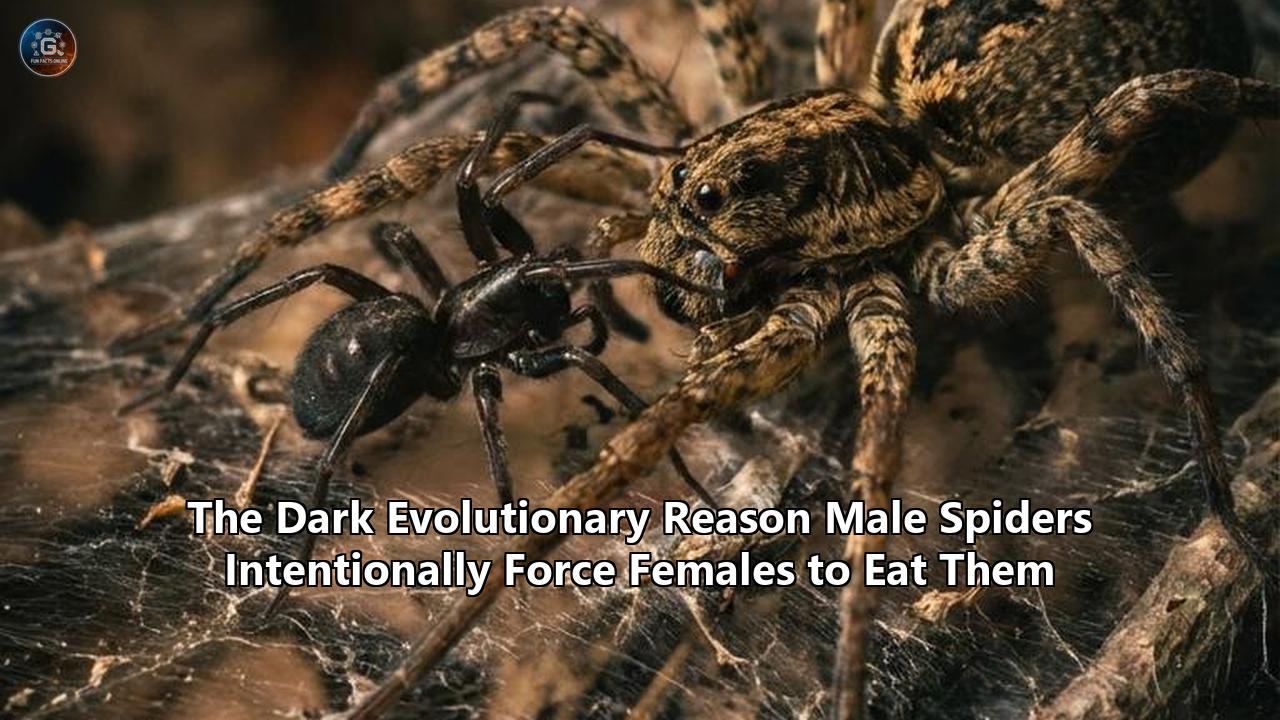
The dark fishing spider mating ritual does not look like reproduction. It looks like a carefully choreographed execution. The male, an arachnid a fraction of the size of his mate, approaches the female and transfers his genetic material through a specialized reproductive organ known as a pedipalp. Instantly, a bulb inside his pedipalp inflates like a microscopic airbag. His legs draw inward. His body curls into a tight, paralyzed posture. Within hours, his heart will stop completely. But long before clinical death takes hold, the female descends on his incapacitated body and devours him.
This is not a case of a predator overpowering a helpless victim. It is a biological calculation. The male initiates his own demise, orchestrating the exact conditions of his consumption.
For decades, biologists viewed the consumption of mates as a simple matter of female aggression and male misfortune. But a newly published, sweeping review in the September 2025 issue of Integrative Zoology dismantles that assumption. Authored by an international team of behavioral ecologists and evolutionary biologists—including Simona Kralj-Fišer, Franco Cargnelutti, Daiqin Li, and Matjaž Kuntner—the research synthesizes years of scattered field observations, laboratory experiments, and anatomical studies to present a unified theory of arachnid mating strategies.
The paper, titled "Unravelling Evolutionary Dynamics of Female Sexual Cannibalism and Male Reproductive Strategies in Spiders," maps an evolutionary arms race marked by bizarre and extreme male counter-adaptations. By categorizing behaviors ranging from self-castration and targeted catapulting to mating with immature females, the research team revealed that the grim reality of male spider sexual cannibalism is far more complex than simple female hunger. It is, instead, a high-stakes arena of sexually antagonistic coevolution, where males willingly weaponize their own bodies—and often their own deaths—to secure a genetic legacy.
The 2025 synthesis arrives at a critical juncture in behavioral ecology. Researchers are shifting their focus away from the predatory habits of female spiders and directing intense scrutiny toward the evolutionary mathematics driving male behavior. The evidence points to a dark, unyielding biological imperative: in environments where future reproductive opportunities approach zero, survival becomes entirely secondary to successful fertilization.
The Mathematics of Copulatory Suicide
To understand why a male would actively assist in his own dismemberment, one must examine the brutal calculus of the spider mating landscape.
Evolutionary biology is anchored by the concept of fitness—the ability of an organism to survive and pass its genes to the next generation. In many vertebrate species, male fitness is maximized through multiple mating events. A male lion or deer will fight to secure a harem, spreading his genetic material as widely as possible. But male spiders face a vastly different environmental reality, governed by a concept known as "zero residual reproductive value."
Spider populations are frequently characterized by extreme sexual size dimorphism. Females of species like the brown widow or the dark fishing spider are massive, sedentary, and heavily armored compared to their male counterparts. The females weave webs and wait. The males, once they reach sexual maturity, must abandon the safety of their juvenile habitats and embark on highly dangerous migrations to find a mate.
This journey is fraught with predation, starvation, and exposure. Studies tracking male widow spiders in the wild show that a staggering 80 percent of males fail to ever locate a female. They die in the underbrush, entirely removed from the gene pool. For the 20 percent that do manage to pick up the chemical pheromone trail of a receptive female and survive the journey to her web, the statistical probability of surviving the mating encounter, navigating back into the wilderness, and successfully locating a second female is infinitesimally small.
Biologists frame this as a stark economic reality. If a male's expected future reproductive value after his first mating is essentially zero, preserving his own life has no evolutionary benefit. His physical body loses all value as a vehicle for future survival and is immediately repurposed as a tool to maximize the success of this single, terminal encounter.
The Paternity Advantage: Buying Time with Blood
The earliest cracks in the myth of the helpless male victim emerged from pivotal observations of the Australian redback spider (Latrodectus hasselti). In these populations, researchers noticed an unsettling behavioral quirk: males were not just failing to escape; they were actively somersaulting into the jaws of the females during copulation.
Early assumptions held that this was a sacrificial offering designed merely to satiate a hungry female, ensuring she would not eat the male before sperm transfer was complete. But behavioral ecologists recognized gaps in this logic. If satiation were the only goal, why would the male trigger the attack precisely during the transfer process?
The answer lies in the mechanics of spider anatomy and the mechanics of sperm competition. Female spiders possess specialized sperm storage organs called spermathecae. They can mate with multiple males, storing the genetic material and maintaining complete control over which sperm is ultimately used to fertilize their eggs. For a male, simply transferring sperm is not enough. He must ensure his sperm outcompetes any rivals that came before him, and he must prevent the female from mating with any rivals that arrive after him.
By twisting his abdomen directly onto the fangs of the female, the male redback buys critical time. Mating encounters involving cannibalism last significantly longer than those where the male escapes. While the female is occupied with consuming his body, the male's pedipalp continues to pump sperm into her reproductive tract.
The resulting data on paternity is absolute. Males that are cannibalized can double the volume of sperm transferred relative to males that survive. Furthermore, the consumption of the first mate profoundly alters female behavior. A female that has engaged in copulatory suicide is far more likely to aggressively reject any subsequent suitors. By surrendering his life, the male acts as a biological roadblock, flooding the female's storage organs with his own genetic material and shutting down the reproductive prospects of his competitors.
The Nutritional Cocktail: Feeding the Future
While the redback spider sacrifices himself for time and exclusivity, other species engage in the practice to directly engineer the physical development of their unborn offspring. This introduces a second evolutionary pathway for male spider sexual cannibalism: maternal provisioning.
The dark fishing spider (Dolomedes tenebrosus) provided the clearest evidence of this phenomenon. Unlike web-bound widows, dark fishing spiders are large, active hunters. But the size disparity remains extreme, with females towering over the males.
Steven Schwartz, a behavioral ecologist operating out of Gonzaga University, spearheaded a multi-year investigation into the dark fishing spider's terminal mating habits. His team's observations, published in 2013 and expanded in subsequent years, documented the spontaneous death of the male immediately following sperm transfer. The male's heart ceases to function entirely on its own—the female does not need to inflict a fatal bite.
To isolate the specific evolutionary benefit of this post-sex dessert, Schwartz's team designed a controlled laboratory experiment. They separated female dark fishing spiders into distinct groups. One group was permitted to consume their mates naturally after copulation. Another group was denied the male entirely. A third group was denied the male but provided with a cricket of the exact same size and weight immediately after mating.
The researchers then tracked the resulting egg sacs, counting the number of spiderlings, measuring their physical dimensions, and subjecting the offspring to extreme environmental stressors, including simulated winter temperatures and severe food deprivation.
The metrics heavily favored the cannibalistic females. Females that consumed their mates produced nearly twice as many spiderlings as those that did not. Moreover, the offspring of the cannibalized males grew nearly 20 percent larger and survived 50 percent longer under starvation conditions.
The most revealing data point, however, came from the cricket-fed group. Despite consuming the exact same volume of calories and macronutrients, the females fed crickets did not experience the same explosion in offspring quantity or quality. The evolutionary advantage was not tied to simple caloric intake.
"There might be a nutrient, or maybe a cocktail of nutrients, that is somehow concentrated in the males' bodies," Schwartz observed during the analysis. While the precise chemical composition of this biological payload remains unidentified, the implication is clear. The male dark fishing spider operates as a highly specialized, single-use nutritional supplement. His entire developmental arc is optimized not for his own survival, but to build a dense chemical reserve that will eventually fortify his progeny.
The Eunuch Strategy: Emasculation as Defense
Death is not the only price exacted in the arachnid mating arena. The 2025 Integrative Zoology review extensively details cases of male spiders deploying severe bodily mutilation to bypass female defenses. When researchers looked closely at the Asian hermit spider (Nephilengys malabarensis), they uncovered a strategy that challenges basic assumptions regarding physical trauma and survival.
The Asian hermit female is a formidable predator, growing up to three times the size of the male. She frequently attacks during copulation. To survive the encounter, the male employs a harrowing countermeasure: he intentionally ejects his own genitals.
Male spiders are equipped with two palps. During copulation, a male Asian hermit spider will allow the female to become aggressive. At the precise moment of attack, he breaks off his palp, leaving it deeply lodged inside the female's reproductive tract, and scrambles to safety.
Initially, biologists interpreted this as a desperate, accidental injury sustained during a botched escape. But experimental analysis conducted by Daiqin Li at the National University of Singapore revealed a highly functional adaptation. Li's team paired virgin males with waiting females and meticulously tracked the transfer of sperm. Following copulation, the vast majority of males had completely severed palps.
Dissections of both the female reproductive tracts and the severed palps showed that the detached organ functions independently after separation. Only a fraction of the sperm enters the female immediately; the rest remains housed within the broken palp. Lodged firmly in the spermathecae, the severed palp continues to slowly and continuously pump sperm into the female long after the male has fled.
Furthermore, the lodged palp acts as a physical mating plug. It creates an impassable anatomical barrier, preventing any rival male from successfully inserting his own pedipalp.
The strategy transforms the male into a eunuch, stripping him of any future reproductive capability. But the loss of his genitals triggers a drastic behavioral shift. Free of the biological imperative to seek out new mates, the emasculated male Asian hermit spider enters a state of hyper-aggression. He anchors himself to the perimeter of the female's web and assumes the role of a permanent sentinel.
Laboratory observations confirm that these eunuch males become exceptionally agile and vicious fighters. Because they no longer carry the physical weight of sperm-laden palps, their combat endurance increases. They systematically attack and drive away any fully intact males that approach the web. The male sacrifices his physical integrity to become an optimized, single-minded bodyguard for his developing offspring, fighting off rivals while his severed appendage finishes the job of insemination.
Kinetic Escapes: The Mechanics of the Catapult
The 2025 integration of these behaviors highlights that the path of extreme adaptation does not always lead to submission or self-mutilation. Some species have evolved elaborate, high-speed evasion tactics to survive the fatal hunger of their mates.
Communal orb-weaving spiders (Philoponella prominens) engage in high-density living, with hundreds of individuals sharing interconnected webs. This proximity creates high competition, but it also creates high risk. The females are deeply cannibalistic, routinely targeting their mates immediately after sperm transfer.
In 2022, a research team out of Hubei University, led by behavioral ecologist Shichang Zhang, documented a mechanism of escape previously unrecorded in the animal kingdom. Using high-speed cameras operating at thousands of frames per second, the researchers recorded hundreds of mating encounters.
The footage revealed a jarring sequence. The moment copulation concludes, the male does not run or drop away. Instead, he vanishes. The male spider utilizes a specialized joint in his front two legs—the tibia-metatarsus—to launch himself directly off the female's body.
This is not a jump; it is a mechanical release of stored kinetic energy, functioning identically to a medieval catapult. The male compresses the joint during copulation, building immense hydraulic pressure. When he releases the lock, he is propelled backward at speeds approaching 88 centimeters per second. At the scale of a three-millimeter spider, this acceleration involves enduring extreme gravitational forces.
The stakes of the catapult maneuver are absolute. In the Hubei University laboratory trials, the males successfully executed the launch in 152 out of 155 recorded matings. The three males that failed to trigger the catapult were instantly seized, paralyzed, and consumed by the females.
By bringing catapulting into the broader framework of male reproductive strategies, the Integrative Zoology review illustrates the sheer diversity of selective pressures. Whether it is a chemical lock, an anatomical barricade, or explosive kinetic evasion, male spider evolution is entirely dictated by the necessity of surviving long enough to secure the genetic line.
Exploiting the Loophole: The Immature Advantage
If fighting, fleeing, and dying represent the brute force approaches to surviving female aggression, other species have developed a strategy based purely on timing. They exploit a narrow, temporary vulnerability in female development.
Lenka Sentenska, an animal behavior researcher operating out of the University of Greifswald, has spent years untangling the mating habits of widow spiders. The brown widow (Latrodectus geometricus) is a species known for female aggression. But Sentenska's fieldwork uncovered a striking behavioral bypass: mature male spiders actively seeking out sexually immature females.
Spider development is marked by a series of molts, where the spider sheds its rigid exoskeleton to allow for growth. A female spider in her final juvenile instar is almost fully developed internally, but her external reproductive organs—the spermathecae—remain sealed beneath her current exoskeleton. Crucially, at this stage of development, the female lacks the predatory drive to cannibalize mates. She is passive and largely defenseless.
Males have evolved the physical tools to capitalize on this window. When a mature male locates a final-instar female, he uses his sharp fangs to physically cut through the juvenile exoskeleton, slicing directly into her underlying reproductive tract. He deposits his sperm and successfully plugs the storage organs.
The female retains the sperm through her final molt. When she emerges as a fully mature adult, she is already fertilized and entirely closed off to other males.
This opportunistic tactic offers monumental advantages. The male bypasses the risk of male spider sexual cannibalism entirely. He faces no sperm competition, as he is guaranteed to be the first to inseminate the female. Because he survives the encounter unharmed, he physically retains the capacity to seek out a second female, breaking the harsh rule of zero residual reproductive value.
Yet, despite this clear evolutionary loophole, the behavior remains relatively rare. The reason traces back to the primary mechanism of arachnid communication: pheromones.
The Pheromone Trap and Cryptic Female Choice
Spiders operate in a world dominated by chemical signaling. Females excrete complex pheromone cocktails onto their silk, broadcasting their species, age, reproductive status, and precise location to any males downwind.
Immature females produce significantly weaker pheromone signals than mature adults. Sentenska's experimental data showed that when males are presented with a choice between an immature female and a highly dangerous, cannibalistic adult female, they will overwhelmingly choose to approach the adult.
"We found that even with all the associated dangers, males still preferred to approach adult females," Sentenska noted in her research. "It could be that they are simply following the stronger, or only, signal.".
The males are bound by their own neurological wiring. The evolutionary pressure to locate a mate is so intense that their sensory systems are highly tuned to the strongest chemical broadcast. The mature female, despite being a near-certain death trap, simply screams louder on a chemical level. The fatal attraction overrides the safer, opportunistic route.
This chemical dominance ties into a broader evolutionary theory heavily emphasized in the September 2025 review: cryptic female choice. Even when males deploy extreme counter-measures—plugging organs, severing palps, or cutting into exoskeletons—the female retains hidden mechanisms of control.
Female spiders can selectively digest sperm from certain males. They can manipulate the internal environment of their reproductive tracts to favor one suitor over another. In some species of orb-weaving spiders, researchers have observed females actively assessing the size and quality of the male's severed palp, attempting to physically dislodge it if the male is deemed sub-par.
The presence of male spider sexual cannibalism is, therefore, not just a matter of acquiring a quick meal. It is an extreme vetting process. If a male is not fast enough to catapult, aggressive enough to fight off rivals as a eunuch, or evolutionarily prepared to flood her system with a specialized nutritional cocktail, his genetic material is deemed unworthy. He is downgraded from a partner to prey.
Bound for Survival: The Thanatus fabricii Strategy
The intersexual arms race occasionally forces males to flip the script entirely, adopting aggressive, predatory tactics against the females to force compliance. The 2025 review collates recent findings on Thanatus fabricii, a species where the male relies on chemical sedation and physical restraint.
Instead of a cautious, hours-long courtship dance designed to soothe the female, the male Thanatus fabricii launches a direct physical assault. Upon locating a female, he immediately bites her legs, injecting a specialized venom that induces a state of temporary paralysis.
While the female is immobilized, the male rapidly spins dense layers of silk, tying her appendages to the ground. This binding process ensures she cannot lash out with her fangs as the venom wears off. Only when she is securely fastened does the male proceed with copulation.
The restraint allows the male to perform multiple insertions, maximizing his sperm transfer without the looming threat of dismemberment. Once he finishes, he abandons the web, leaving the female to slowly break free of the silk bindings over the course of several hours.
Researchers observed that this tactic carries a heavy cost for the female. Post-copulation, females that had been bitten and bound showed a significant decrease in their ability to catch prey. The venom and the physical struggle impair their hunting efficiency, directly harming their overall fitness.
The Thanatus fabricii strategy is a textbook example of sexually antagonistic coevolution. The male's survival comes at the direct expense of the female's vitality. In the vast majority of spider species, the female holds the physical advantage, and the male pays the ultimate price. But in isolated pockets of the arachnid family tree, the male has evolved the weaponry to subjugate the female, enforcing his genetic will through sheer chemical and physical force.
A Unified Theory of Arachnid Reproduction
For over a century, the study of spider mating was fractured. Entomologists working in isolation recorded localized oddities: a redback somersaulting in Australia, a dark fishing spider curling up in North America, a communal orb-weaver catapulting in China.
The publication of the September 2025 review in Integrative Zoology fundamentally shifts the discipline by unifying these behaviors under a single evolutionary umbrella. The authors emphasize that male spider sexual cannibalism cannot be understood by looking at the female alone. The behavior is the crucible in which male reproductive strategies are forged.
Every extreme adaptation—from self-sacrifice to self-castration, from opportunistic assaults on juveniles to venom-induced bondage—is a direct response to the selective pressure of a cannibalistic mating regime. The male spider is not a passive participant in his own destruction. He is a highly specialized biological machine, engineered to navigate one of the most hostile reproductive environments on the planet.
The research also highlights severe gaps in the scientific record. Of the roughly 50,000 described spider species globally, comprehensive behavioral mating data exists for only a fraction of a percent. The vast majority of studies have historically focused on iconic, medically significant species like the black widow and the brown recluse.
The review issues a direct call for expanded taxonomic sampling and standardized methodologies. Biologists are urged to move beyond the laboratory and conduct field-based observations that capture the environmental variables—temperature, humidity, prey availability—that influence the frequency and intensity of sexual cannibalism.
Looking Forward: Unresolved Questions in the Web
As researchers push forward into 2026 and beyond, the focus will increasingly shift toward the biochemical mysteries hidden within the male spider's body.
Steven Schwartz's hypothesis regarding the "nutrient cocktail" in dark fishing spiders remains a massive, unresolved puzzle. Identifying the specific proteins, lipids, or trace elements that trigger the 20 percent growth explosion in offspring could have profound implications for our understanding of invertebrate development. Researchers are currently utilizing advanced mass spectrometry to analyze the chemical makeup of male spiders pre- and post-copulation, hunting for the exact compound that makes their flesh so biologically valuable to the developing embryos.
Similarly, the mechanics of the detached, autonomous pedipalps of the Asian hermit spider present a frontier in neuromuscular research. How a severed appendage maintains the hydraulic and chemical function necessary to pump sperm for hours without a connection to a central nervous system or circulatory network remains largely unexplained. Understanding this localized autonomy could yield insights into specialized tissue function and muscle memory in arthropods.
Furthermore, climate change and habitat fragmentation are actively rewriting the rules of the spider mating landscape. As temperatures shift and insect prey populations fluctuate, the caloric requirements of female spiders will change. Will increased environmental stress drive higher rates of sexual cannibalism, forcing males to evolve even more extreme countermeasures? Or will a lack of resources suppress the behavior, pushing species toward more conservative reproductive strategies?
The evolutionary arms race between male and female spiders has been raging in the shadows for hundreds of millions of years. It is a conflict fought with venom, silk, hydraulic catapults, and voluntary death. The latest evidence confirms that in the brutal calculus of survival, yielding one's life is often the only way to ensure the lineage endures. The male spider does not die by accident. He dies by design.
Reference:
- https://pubmed.ncbi.nlm.nih.gov/40960378/
- https://www.researchgate.net/publication/395575813_Unravelling_Evolutionary_Dynamics_of_Female_Sexual_Cannibalism_and_Male_Reproductive_Strategies_in_Spiders
- https://cordis.europa.eu/article/id/448186-why-are-male-spiders-willing-to-die-for-sex
- https://academic.oup.com/beheco/article/14/4/531/210658
- https://scitechdaily.com/male-spiders-sacrifice-themselves-to-mates-for-the-kids/
- https://www.pnas.org/post/journal-club/journal-club-self-sacrificing-male-spiders-assist-in-their-own-cannibalism-to-aid-offspring
- https://news.unl.edu/article/ultimate-sacrifice-spiders-post-sex-cannibalism-aids-offspring
- https://www.forbes.com/sites/scotttravers/2025/04/18/meet-the-spider-that-ejects-its-genitals-after-sex-to-survive/
- https://www.theguardian.com/science/2012/feb/01/losing-genitals-mating-male-spiders
- https://gizmodo.com/these-male-spiders-evolved-a-post-sex-catapult-to-escap-1848830472
- https://royalsocietypublishing.org/rsbl/article/12/9/20160516/88056/Copulation-with-immature-females-increases-male
- https://boingboing.net/2020/11/20/some-male-spiders-tie-up-females-before-sex-so-they-dont-get-eaten-alive.html