The curation room at the University of California, Santa Barbara insect collection is usually a place of quiet, static preservation. But recently, a routine procedural step resulted in a biological anomaly that has sent ripples through entomology, optics, and materials science.
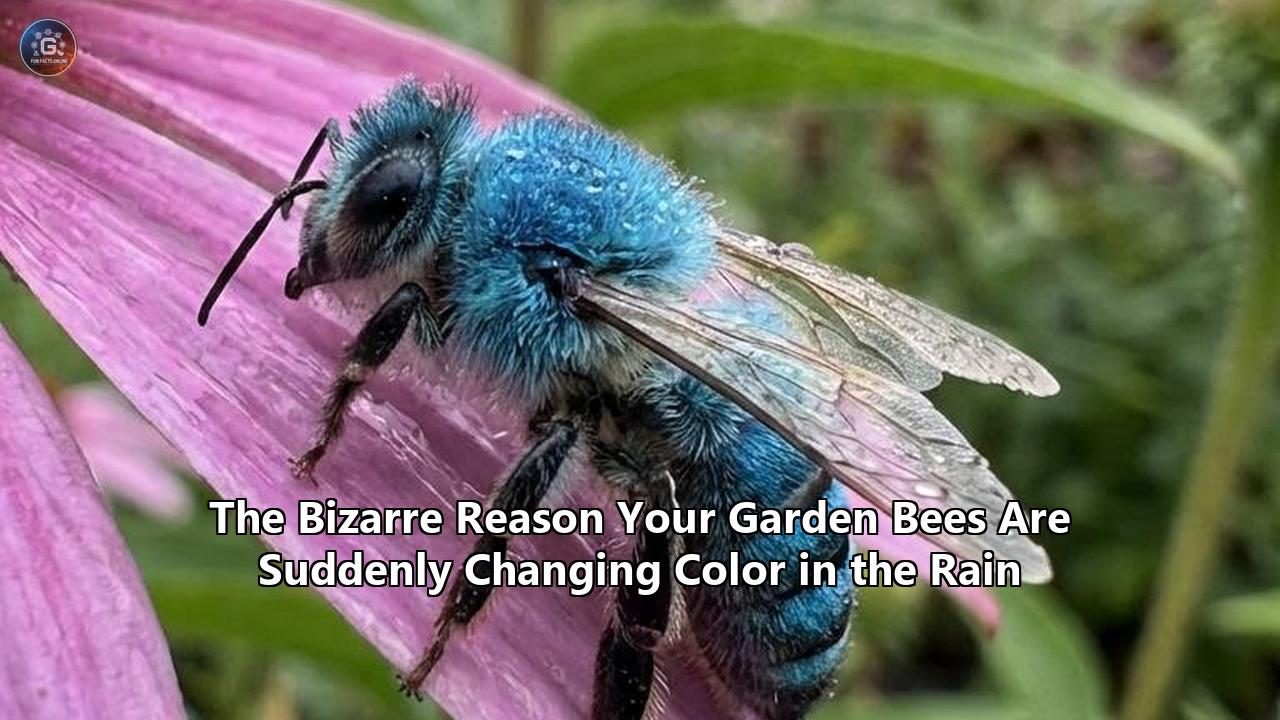
When specimen curator Jorge De La Cruz placed dead, pinned specimens of the fine-striped sweat bee (Agapostemon subtilior) into a high-humidity chamber—a standard method used to soften brittle insect exoskeletons for mounting—the bees began to transform. Their signature, brilliant blue-green cuticles shifted rapidly to a pale, coppery green. When the chamber was opened and the dry California air wicked the moisture away, the bees returned to their original deep sapphire-green hue.
This observation, investigated and published on April 22, 2026, in the journal Biology Letters by a team led by Dr. Madeleine Ostwald at Queen Mary University of London, proves that some bees act as living, passive hygrometers. They change their structural coloring based entirely on the ambient moisture in the air. The shift requires no biological energy, no pigment alterations, and no active chemical signaling from the bee itself. It is an entirely passive optical reaction that peaks within the first 24 hours of humidity exposure and is completely reversible.
The discovery upends decades of assumptions regarding insect taxonomy and raises immediate questions about how climate variables dictate the appearance of ecosystems. More importantly, understanding exactly why bees change color under these conditions has unlocked a new theoretical framework for engineers attempting to build zero-energy smart materials, optical sensors, and responsive bio-coatings.
Mainstream coverage has largely treated this as a quirky nature story—a "chameleon bee." But behind the scenes, this phenomenon exposes a critical vulnerability in how humanity has cataloged the natural world, while simultaneously offering a blueprint for the next generation of photonic engineering.
The Physics of the Illusion: Photonic Nanostructures
To understand the mechanics of this transformation, one must first abandon the concept of pigment. When a human blushes, or a cuttlefish shifts to a dark brown, the color change is driven by pigments—molecules that absorb certain wavelengths of light and reflect others. Pigment-based color is chemical and relatively stable under different lighting conditions.
The fine-striped sweat bee, however, utilizes structural coloration. Its exoskeleton contains no blue or green pigment. Instead, the surface of the bee’s cuticle is engineered at the nanoscale to physically intercept incoming light, bending and scattering it through microscopic ridges and multi-layered lattices. This is the exact same optical trick that produces the iridescent shimmer on a hummingbird’s throat, the blinding blue of a Morpho butterfly wing, and the rainbow sheen on a soap bubble.
In the case of Agapostemon subtilior, the epicuticle—the outermost layer of the exoskeleton—is composed of a dense matrix of chitin and specialized proteins arranged in a multi-layered reflector, also known as a one-dimensional photonic crystal. When ambient light hits this lattice, the light waves bounce off the different internal layers. Because the distances between these layers are calibrated to the exact nanometer, the reflected light waves interfere with one another. Wavelengths corresponding to red and yellow cancel each other out (destructive interference), while wavelengths corresponding to blue and green amplify each other (constructive interference), projecting a brilliant, metallic azure back to the observer.
The precise reason why bees change color lies in the interaction between this delicate nanoscale architecture and the physical properties of water.
Air has a refractive index of approximately 1.0. When the bee is in a dry environment, the microscopic gaps within its chitin matrix are filled with dry air, maintaining a specific optical resonance that reflects blue-green light. But when the relative humidity spikes, microscopic water molecules—which have a higher refractive index of roughly 1.33—permeate the porous structure of the exoskeleton.
This moisture intrusion triggers two simultaneous physical changes:
- Refractive Index Alteration: The replacement of air with water vapor alters the average refractive index of the gaps within the photonic crystal, slowing the speed of the light as it passes through the layers.
- Hygroscopic Swelling: Chitin is inherently hygroscopic, meaning it attracts and holds water. As moisture penetrates the epicuticle, the structural lattice literally swells, increasing the physical distance between the reflective layers.
According to Bragg’s Law of diffraction, the wavelength of the reflected light is directly proportional to the distance between the layers. As the humidity swells the bee’s cuticle, the distance increases, forcing the reflected light to shift toward the longer-wavelength red end of the visible spectrum. The deep blue becomes green, the green becomes yellow, and eventually, a coppery-orange hue emerges. Once the humidity drops, the water evaporates, the cuticle shrinks back to its baseline dimensions, and the blue color returns.
The Taxonomic Crisis: Misidentifying the Natural World
For centuries, the cornerstone of biological classification has been visual morphology. If a 19th-century naturalist captured a blue bee in Arizona and a copper-green bee in the humid swamps of Louisiana, standard practice would dictate classifying them as distinct species, or at least distinct regional subspecies.
Ostwald’s research introduces a troubling variable into historical taxonomy: if humidity dictates color, how many of the 4,500 known sweat bee species are simply identical insects experiencing different weather?
This concern is amplified by a specific detail buried in the Biology Letters data: the color-shifting effect is actually more pronounced in older, preserved museum specimens than in living bees. Over decades of storage in museum cabinets, the outer protective lipids of an insect's exoskeleton slowly degrade. Without this waxy barrier, the underlying chitin matrix becomes highly permeable to ambient moisture.
When Ostwald’s team subjected archival museum specimens to high humidity (monitoring them continuously for 55 hours), the older bees experienced a radical shift to an orange-green hue within 24 hours. Newer specimens showed a more muted response.
This poses a severe logistical headache for taxonomic curators. Every recognized species relies on a "holotype"—a single, physical specimen kept in a museum that serves as the definitive reference point for that species. If a holotype of a sweat bee was mounted and preserved in a humid Victorian-era facility in London, its baseline recorded color might be a copper-green. If another entomologist collected the exact same species in the arid climate of Nevada and stored it in a climate-controlled, dry facility, the blue-green specimen would look like an entirely different insect.
To test whether this phenomenon was purely an artifact of dead museum specimens or something that actively happens in the wild, the Queen Mary University team cross-referenced their lab findings with citizen science data. By scraping hundreds of verified photographs of Agapostemon subtilior from the iNaturalist app and correlating the timestamps with local meteorological data, the researchers found a direct real-world match. Living bees photographed in highly arid regions exhibited a heavy blue tint, while those photographed in humid environments leaned heavily green and copper.
The data confirms that entomologists can no longer rely on structural color as an absolute diagnostic trait without first calibrating for the local dew point.
Evolutionary Utility: Bug or Feature?
While the mechanics of the transformation are now established, the evolutionary biology community is currently debating the ecological utility of the shift. Do these bees actually benefit from turning copper in the rain, or is this simply an unavoidable physical byproduct of having a structurally colored exoskeleton?
Researchers caution against assuming every biological quirk is an optimized evolutionary adaptation. As Ostwald noted, the bees are not actively choosing to change color; it is a passive reaction. However, in nature, traits that incur a heavy survival penalty are quickly bred out. The fact that moisture-permeable structural coloration has persisted—and is widespread among Hymenoptera (the order comprising bees, wasps, and ants)—suggests it serves a distinct ecological purpose, or at least acts in tandem with one.
1. The Thermoregulation Hypothesis
The most prominent theory centers on thermal management. Insects are ectothermic; their internal body temperature is dictated by their environment. A recent global ecogeographic study published in late 2025 analyzed the presence of structural color across 1,784 bee species and found a significantly higher prevalence of structurally colored species in tropical, highly humid environments.
Humidity and temperature are deeply intertwined in forest and desert canopies. By shifting their reflectance to longer wavelengths (reds and coppers) during highly humid, often overcast or post-rain conditions, the bees might be altering their solar absorption profile. Structural colors are not just visual; they manage radiation. A shifting cuticle might act as a passive thermal vent, tuning the amount of infrared and visible light the bee absorbs based on the density of the air moisture.
2. Visual Signaling and Mating Dynamics
Another angle involves intraspecies communication. The Newton series color sequence generated by thin-film interference in insect wings and cuticles specifically lacks pure red. This is not an accident. The vast majority of insects, including small bees, lack red-sensitive photoreceptors; their vision is heavily weighted toward ultraviolet, blue, and green.
If a male sweat bee is searching for a mate, visual cues are paramount. The shift from deep blue to bright copper-green alters how the bee appears against the background vegetation. In a dry, bright environment, a deep blue might provide maximum contrast against yellow and brown arid terrain. In a wet, humid environment—where the ambient light is often diffused by cloud cover and the foliage is saturated dark green—shifting to a metallic, reflective copper-green might actually optimize visibility to other bees scanning the UV and green visual spectrums.
3. Water Repellence and Pathogen Defense
The nanostructures responsible for the color are also intrinsically linked to the exoskeleton's physical defense. Nanoscale ridges and multi-layered lattices frequently result in superhydrophobicity (the lotus effect). Water droplets that land on these structures cannot spread out; they bead up and roll off, carrying away dust, pollen, and dangerous fungal spores.
As the humidity rises and water vapor permeates the cuticle causing it to swell, the physical distance between the microscopic surface peaks increases. This micro-expansion may dynamically alter the surface tension properties of the exoskeleton just when the risk of waterlogging and fungal infection is highest—during periods of high moisture. The color change, in this scenario, is simply the visible exhaust of a mechanical waterproofing system engaging.
The Biomimetic Translation: Engineering Smart Materials
The realization of why bees change color has immediately triggered cross-disciplinary interest from materials scientists and optical engineers. The tech industry has spent billions attempting to develop "smart materials"—substances that can react to environmental stimuli without requiring an external power source, batteries, or complex circuitry.
Nature has already perfected this in the sweat bee's cuticle. The insect operates as a zero-power, highly accurate, reversible environmental sensor.
Currently, electronic humidity sensors (hygrometers) rely on measuring changes in electrical capacitance or resistance, which requires continuous power. But translating the sweat bee's structural architecture into synthetic materials opens the door for purely optical sensors.
Chemical engineers are already utilizing Cellulose Nanocrystals (CNCs) to mimic this exact biological mechanism. By extracting cellulose from plant waste and processing it into nanometer-scale rods, engineers can force the crystals to self-assemble into chiral nematic structures—effectively duplicating the spiraling, multi-layered architecture of the bee's exoskeleton.
Recent advancements in bio-based composite films have demonstrated that by mixing CNCs with specific polymers like glucan, engineers can create iridescent films that undergo a rapid, reversible structural color change from blue to red when the relative humidity shifts from 50% to 98%. The synthetic films mirror the sweat bee almost perfectly: the moisture swells the chiral structure, the pitch of the nanolayers increases, and the reflected wavelength shifts red.
The commercial applications for this bio-inspired technology are vast:
- Medical and Food Packaging: Smart labels printed with biomimetic structural inks could visually warn consumers if sterile medical equipment or perishable food has been exposed to compromising levels of moisture. If a package of surgical tools shows a copper-green label instead of a deep blue one, the seal has been breached.
- Agricultural Monitoring: Greenhouses could deploy passive optical tags throughout their canopies. Farmers could assess micro-climate humidity variations simply by looking at the color gradients across the tags, requiring zero digital infrastructure or wireless sensors.
- Anti-Counterfeiting: Banknotes and secure documents frequently use holographic strips, but those are static. A structural color seal that shifts from blue to green only when breathed upon (due to the moisture in human breath) and rapidly fades back to blue provides a layer of security that is nearly impossible to mass-reproduce with standard printing technology.
- Adaptive Architecture: Scaling these nanostructures up, architects are looking at integrating biomimetic solar absorbers into building facades. A window coating or external tile that physically swells and changes its light-reflecting properties based on morning dew or afternoon humidity could passively regulate a building's internal temperature without drawing on the electrical grid.
Shifting Climates, Shifting Ecosystems
Beyond the laboratory and the engineering bench, the Queen Mary University study forces a reevaluation of how global ecosystems will visually respond to rapid climate shifts.
We are accustomed to thinking of climate change in terms of temperature curves, glacial retreat, and shifting migration routes. But altering the atmospheric water vapor content will fundamentally change the optics of the natural world.
If a region that historically experienced arid conditions and supported populations of deep blue sweat bees transitions into a warmer, highly humid subtropical zone, the baseline appearance of that insect population will permanently shift to copper-green. This is not evolution; this is an immediate, mechanical response to the atmosphere.
This visual shift introduces compounding ecological friction. Predatory birds and insects develop search images—mental templates of what their prey looks like. If an entire population of pollinators suddenly shifts its structural color due to a sustained change in seasonal humidity, the predator-prey dynamics of that micro-ecosystem are instantly destabilized. Conversely, the bees' ability to camouflage against specific native flora could be compromised if their hue no longer matches the background foliage they evolved alongside.
Furthermore, the degradation factor observed in the museum specimens hints at the lifecycle challenges of the insects themselves. As bees age and forage, their cuticles take physical damage and lose their protective lipid coatings. An older bee is far more susceptible to this humidity-driven color shift than a newly hatched adult. It is entirely possible that other insects use this color variance as a visual indicator of age and vitality, avoiding mating with older, highly permeable individuals.
The research led by Dr. Ostwald is only the opening phase of a much larger scientific inquiry. Entomologists are now urgently screening other structurally colored species—from the emerald ash borer to the cuckoo wasp—to determine how widespread this passive hygroscopic shifting really is. Biologists must untangle the overlapping functions of nanostructures, determining where the line between an unavoidable physical reaction and a highly tuned evolutionary defense strategy actually sits.
What started as a mounting anomaly in a California curation room has exposed the fragile, highly responsive engineering of the natural world. The color of a bee is not a static characteristic painted onto its shell; it is a live, continuous dialogue with the atmosphere. As human activity continues to rewrite that atmospheric baseline, the optical landscape of the wild will rewrite itself in response.
Reference:
- https://www.ibtimes.sg/bees-that-change-color-weather-what-their-shimmer-could-mean-science-85614
- https://www.eurekalert.org/news-releases/1125294
- https://www.iflscience.com/these-shimmering-bees-radically-change-color-world-first-experiment-proves-with-a-little-help-from-citizen-scientists-83275
- https://www.reddit.com/r/chemicalreactiongifs/comments/7e69gl/a_butterflys_iridescent_wings_can_change_color/
- https://www.researchgate.net/publication/255772388_Structural_coloration_in_nature
- https://www.popsci.com/environment/humidity-makes-bees-change-color/
- https://www.researchgate.net/publication/397222002_Environmental_drivers_of_structural_colour_in_bees_Hymenoptera_Anthophila
- https://pmc.ncbi.nlm.nih.gov/articles/PMC3021046/
- https://www.thebrighterside.news/post/scientists-discover-the-ancient-link-between-bees-and-the-evolution-of-colors-in-flowers/
- https://pubs.acs.org/doi/10.1021/acs.biomac.1c00595
- https://www.researchgate.net/figure/A-Structural-color-reflectors-inspired-by-Morpho-butterfly-wings-1-Cross-sectional_fig1_348616748