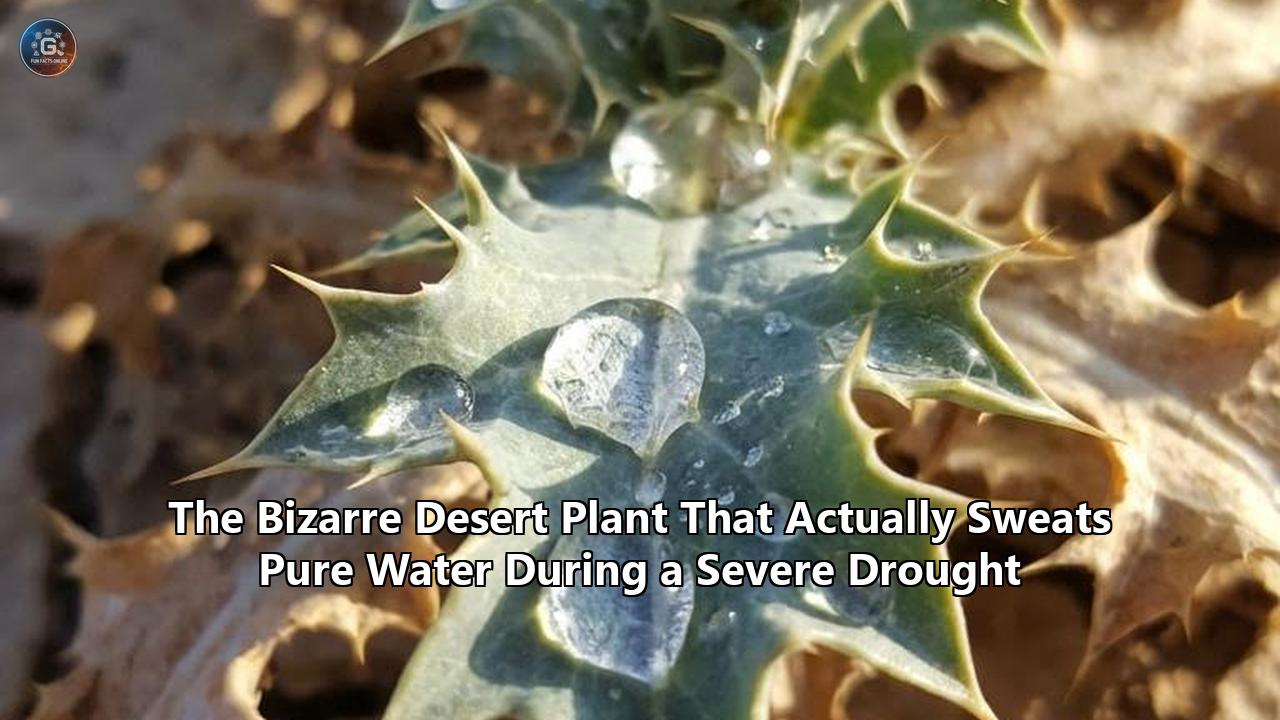
The 15-Milligram Anomaly: When Flora Harvests the Atmosphere
In the punishing environment of the United Arab Emirates, where ambient humidity often hovers around 55% and rainfall is a statistical anomaly, biologists have isolated a biological mechanism that defies conventional botanical logic. A recent study published in the Proceedings of the National Academy of Sciences (PNAS) by a team of materials scientists and chemists at New York University Abu Dhabi has documented a desert shrub that effectively sweats salt to extract pure water directly from the arid atmosphere.
The plant, an Athel tamarisk (Tamarix aphylla), operates as a natural dehumidifier. For decades, researchers understood that this halophytic (salt-tolerant) shrub absorbed highly saline groundwater, filtered out the necessary nutrients, and excreted the toxic excess salt through specialized glands on its leaves. The assumption was that these briny droplets simply dripped back into the soil. Time-lapse video analysis and environmental chamber testing have completely dismantled that theory.
The excreted droplets do not fall. Instead, they adhere to the leaf surface, where the harsh desert heat evaporates the water, leaving behind microscopic white salt crystals. At night, as temperatures drop and relative humidity slightly increases, these specific salt crystals swell, acting as a hygroscopic magnet that pulls pure water vapor directly out of the air.
The quantitative data behind this atmospheric harvesting is striking. When researchers placed a freshly cut Athel tamarisk branch in a controlled environmental chamber calibrated to emulate desert conditions—95 degrees Fahrenheit (35 degrees Celsius) with 80% humidity—the plant exhibited extraordinary collection metrics. Weighed at 20-minute intervals, the branch accumulated approximately 15 milligrams of pure water over a two-hour period.
To verify that the salt crystals, rather than the leaf's physical structure, were responsible for this moisture capture, the research team, led by materials scientist Marieh Al-Handawi and chemist Panče Naumov, executed a control test. They washed the identical branch to strip it of its crystalline residue and returned it to the chamber. The washed branch collected a mere 1.6 milligrams of water in the same 120-minute window. The presence of the excreted salts increased atmospheric water harvesting efficiency by 837%.
This discovery represents a critical data point in understanding desert plants water survival strategies. The extracted solution is not standard sodium chloride; researchers identified a highly complex hygroscopic crystalline mixture composed of at least ten distinct minerals. This precise chemical cocktail allows the salt to condense atmospheric moisture even when relative humidity drops as low as 55%, a threshold where most synthetic desiccants begin to fail.
The "Water Spender" Paradox: Sweating to Survive 133-Degree Heat
While the Athel tamarisk survives by pulling water from the sky, an equally bizarre desert plant survives by violently expelling it. Deep in the arid zones of the Middle East and North Africa, the desert colocynth (Citrullus colocynthis)—a wild, bitter relative of the watermelon—employs a strategy that appears totally suicidal during a severe drought: it intentionally sweats pure water at massive volumes.
Botanists classify drought-resistant vegetation into two primary categories: "water savers" and "water spenders". The vast majority of desert vegetation falls into the former category, hoarding every available droplet behind thick, waxy cuticles and tightly closed stomata (the microscopic pores on the leaf surface).
The colocynth completely inverts this model. When ambient air temperatures spike, the plant throws its stomata wide open, initiating rapid transpiration cooling. This biological "sweating" requires an exorbitant expenditure of internal water reserves, but the measurable outcomes are staggering. Researchers from Julius-Maximilians-Universität Würzburg (JMU), led by ecophysiologist Markus Riederer and biologist Amauri Bueno, documented that the colocynth can physically drop its leaf temperature by up to 15 degrees Celsius (27 degrees Fahrenheit) below the surrounding desert air.
In 1956, botanist Otto Ludwig Lange first recorded desert foliage surviving ambient temperatures of 56 degrees Celsius (133 degrees Fahrenheit) in the Mauritanian desert, but the specific thermal and chemical mechanics remained unquantified for decades. The modern JMU data reveals exactly how the colocynth achieves this feat. The plant's minimum leaf conductance (a metric of how easily water vapor escapes the leaf, denoted as gmin) increases by a factor of 3.2 the moment ambient temperatures cross the 35 degrees Celsius (95 degrees Fahrenheit) threshold.
This extreme water-spending strategy is exclusively financed by a massive subterranean infrastructure. The colocynth possesses a deep taproot system capable of accessing ancient, deep-soil aquifers that remain insulated from surface evaporation. By treating water as an expendable coolant rather than a hoarded resource, the colocynth maintains active photosynthesis during peak thermal stress, a period when neighboring water-saving plants are forced into metabolic dormancy.
Comparative Wax Analytics: The Date Palm Baseline
To contextualize the colocynth's extreme transpiration, JMU researchers compared it against a quintessential water saver: the desert date palm (Phoenix dactylifera). The quantitative differences in their physical chemistry explain their divergent survival paths.
- Cuticular Wax Coverage: The colocynth features a highly permeable skin, with cuticular wax coverage measuring just 4.2 ± 0.4 micrograms per square centimeter (µg cm⁻²). The date palm features a dense, armored lipid layer measuring 29.4 ± 4.2 µg cm⁻², effectively sealing the plant off from the atmosphere.
- Thermal Tolerance: Because the date palm refuses to sweat, its leaves regularly absorb thermal radiation, reaching internal temperatures up to 11 degrees Celsius higher than the surrounding ambient air.
- Wax Melting Points: The date palm's wax chemistry is structured from very-long-chain aliphatics engineered to withstand extreme heat, with a wax melting midpoint of 80 degrees Celsius, compared to the colocynth's 73 degrees Celsius.
- Minimum Leaf Conductance (gmin): At a baseline of 25 degrees Celsius, the date palm's gmin is an exceptionally low 1.1 × 10⁻⁵ meters per second, holding steady even as temperatures climb toward 50 degrees Celsius. The colocynth's baseline is six times higher at 6.9 × 10⁻⁵ m s⁻¹, accelerating rapidly as the heat rises.
The colocynth deliberately sacrifices physical waterproofing to utilize water as a thermal shield. This extreme form of desert plants water survival proves that endurance in hyper-arid zones is not solely about conservation; it is frequently about geometric and metabolic resource allocation.
The Megadrought Catalyst: Rapid Spikes in Intrinsic Water-Use Efficiency
These localized botanical anomalies are currently playing out against the backdrop of the most severe climate shift in centuries. In the American Southwest, a multidecadal megadrought has forced regional flora to accelerate their evolutionary adaptations at rates previously considered biologically impossible by terrestrial ecologists.
A comprehensive longitudinal study conducted by the University of Utah quantified exactly how fast desert shrubs are altering their internal hydraulics. For nearly 40 years, researchers tracked native Mojave Desert species—specifically brittlebush (Encelia farinosa), button brittlebush (Encelia frutescens), and burrobush (Ambrosia salsola). By analyzing the stable carbon and oxygen isotopes trapped in the leaf tissues collected annually since the 1980s, the team constructed a high-resolution timeline of plant respiration and water consumption.
The critical metric here is intrinsic water-use efficiency (iWUE)—the exact ratio of how much carbon dioxide a plant absorbs for photosynthesis compared to how much water vapor it loses through its open stomata. Higher iWUE indicates a plant is extracting maximum carbon with minimal water loss.
The data indicates a drastic, structural shift in plant behavior triggered by increasing atmospheric aridity. From 1989 to 2019, mean annual precipitation at the study sites did not change significantly; however, the vapor pressure deficit (VPD)—a precise measurement of how dry the air is and how much moisture it will forcefully strip from a leaf—surged. At nine of the 17 monitoring sites, the rate of VPD increase accelerated seven-fold after the year 2010.
Faced with an atmosphere rapidly turning into a sponge, the Mojave shrubs cranked their iWUE to historic levels. The University of Utah team, led by postdoctoral researcher Steven Kannenberg and laboratory technician Avery Driscoll, recorded iWUE increases of 53% to 58% over the 39-year study period.
To put these numbers in perspective, the brittlebush and its localized peers increased their water efficiency six to ten times faster than vegetation in other arid global environments. When cross-referenced with global botanical databases, the researchers found only one other recorded instance of a faster iWUE increase in any plant species (a specific conifer). The data clearly dictates that these desert shrubs are vastly more sensitive to atmospheric drying than large trees or grasses, pushing their physiological boundaries to the absolute limit.
Isotopic Signatures: Reading the Botanical Archive
Understanding how biologists extract this efficiency data requires looking at the atomic level. Because desert shrubs do not produce the clean, easily readable tree rings found in temperate forests, scientists rely on stable isotope ratio mass spectrometry.
When a brittlebush opens its stomata, it absorbs atmospheric carbon. The atmosphere contains two stable carbon isotopes: Carbon-12 (which is lighter and more common) and Carbon-13 (which is heavier). The enzymes responsible for photosynthesis heavily prefer the lighter Carbon-12. However, when a plant is experiencing severe drought stress, it partially closes its stomata to prevent water from escaping. With the stomata closed, the internal supply of Carbon-12 is rapidly depleted, forcing the plant's enzymes to process the heavier Carbon-13.
By combusting the alpha-cellulose from the collected shrub leaves and measuring the ratio of Carbon-13 to Carbon-12, researchers can mathematically reverse-engineer exactly how wide the stomata were open during that specific growing season, thereby determining the exact volume of water the plant surrendered to the atmosphere. The sharp spike in Carbon-13 concentrations in the Mojave samples since 2010 provides an unassailable quantitative record of plants suffocating their own carbon intake just to prevent fatal dehydration.
Biomimicry: Engineering the 2030 Water Grid
The raw statistical data extracted from both the Athel tamarisk and the Mojave shrubs is currently transitioning from botanical journals to industrial engineering blueprints. The global water crisis demands scalable extraction technologies, and synthetic biomimicry is utilizing these extreme desert plants water survival tactics to engineer human-grade solutions.
Atmospheric Water Generators (AWGs)
Current human technologies designed to pull moisture from the air—such as active condensation HVAC units or fog-harvesting meshes—are highly inefficient. Standard fog nets require nearly 100% relative humidity to function effectively, making them useless in actual desert environments. Active condensation requires immense electrical inputs to chill metal coils below the dew point, a massive energetic bottleneck.
The discovery of the Athel tamarisk's ten-mineral salt compound offers a disruptive chemical alternative. Because this specific hygroscopic mixture can pull water from the air at just 55% relative humidity without mechanical cooling, materials scientists are currently attempting to map and synthesize the exact mineral ratio. By coating industrial collection surfaces with synthetic versions of this salt matrix, engineers project a massive reduction in the energy required for atmospheric water generation. The resulting moisture can be harvested dynamically at night, relying entirely on passive chemical absorption and natural diurnal temperature shifts, mimicking the tamarisk's exact 24-hour cycle.
Phytoremediation and Mucilage Filtration
While some plants extract pure water from the sky, others are being deployed to violently scrub toxins from existing groundwater. Researchers at the University of South Florida, led by chemical engineering professor Norma Alcantar, have spent over a decade analyzing the inner mucilage (the viscous, slimy tissue) of the prickly pear cactus (Opuntia).
This mucilage is a complex matrix of carbohydrates comprising approximately 60 different sugars. When introduced to heavily contaminated water, the cactus guts act as a powerful organic flocculant. The molecular structure of the mucilage physically binds to heavy metal sediments, bacteria, and complex chemical pollutants, forcing them to clump together and sink, leaving clean, purified water above.
The quantitative efficacy of this botanical filtration is not merely theoretical. Following the catastrophic 2010 earthquake in Haiti, Alcantar and her team successfully deployed cactus mucilage to purify contaminated drinking water networks in disaster zones. Current applications have scaled outward, with laboratories testing the mucilage as a highly effective, non-toxic, biodegradable oil dispersant for marine spills, and as a biological scrubber for commercial aquaculture, where it rapidly degrades the odor-producing bacteria and sediment buildups that plague recirculating fish farm tanks.
Micro-Scale Grooves and Hydrodynamics
Beyond chemistry, the physical topography of desert plants is influencing hydro-engineering. The desert moss Syntrichia caninervis, native to the Great Basin and the Gurbantünggüt desert, features microscopic hairs called awns extending from its leaves. High-speed video and environmental scanning electron microscopes reveal that these awns are covered in distinct nano- and micro-scale grooves optimized for instantaneous water condensation.
When moisture hits these grooves, it aggregates into droplets that travel rapidly down the barbs directly into the leaf surface, bypassing the root system entirely. Utah State University researchers have isolated the precise dimensions of these nano-grooves and are utilizing the plant's geometry to engineer advanced anti-splash materials and rapid-drainage industrial surfaces, projecting significant reductions in facility maintenance costs and public hygiene hazards.
The Mathematical Limits of Drought Adaptation
Despite the heroic biological engineering displayed by these species, hard quantitative limits dictate the future of arid ecosystems. The 53% to 58% increase in water-use efficiency observed in Mojave Desert brittlebush populations represents an extreme defense mechanism, but it is a defense mechanism with a mathematical ceiling.
Increased iWUE is fundamentally a trade-off. By keeping their stomata tightly closed to hoard water, these shrubs severely restrict their carbon dioxide intake. Less carbon translates directly to reduced photosynthesis, stunted biomass production, and lower reproductive rates. While the individual plant survives the immediate vapor pressure deficit, the overall health and density of the shrubland canopy degrades.
Projections modeled by the U.S. Department of Energy and the National Science Foundation indicate that atmospheric aridity in the American Southwest will continue to climb linearly through 2050. The pressing scientific question is whether the rate of environmental drying will ultimately outpace the biological limits of stomatal closure. If a plant closes its stomata entirely to prevent water loss, it starves to death from a lack of carbon. If it opens them to feed, it dies of dehydration.
Biologists warn that we are rapidly approaching this terminal intersection. "Increased iWUE may not be enough to save the desert shrubs," the University of Utah research team noted, pointing out that survival ultimately hinges on whether the sheer intensity and duration of the megadrought exceeds the plants' absolute genetic capacity to adapt. If the vapor pressure deficit continues its 7-fold acceleration trajectory, whole populations of ancient, drought-resistant shrubs could collapse in the coming decades, triggering cascading trophic failures across the desert food web.
The Gypsum Rock Extractors: Finding Water in Solid Stone
When atmospheric and soil moisture drop to absolute zero, certain extreme plants have evolved to bypass the hydrological cycle entirely by extracting their water from solid rock.
A team of plant biologists from the Instituto Pirenaico de Ecología in Spain and the University of Lleida isolated a unique species of rockrose, Helianthemum squamatum, which survives in hyper-arid, gypsum-rich environments. Gypsum is a remarkably soft mineral that chemically traps water within its crystalline structure; approximately 20% of gypsum's weight is pure crystallization water.
Using advanced isotopic analysis to differentiate the hydrogen and oxygen signatures of free soil water versus rock-bound crystallization water, the researchers analyzed the sap of H. squamatum during the brutal peak of summer. The results shattered standard biological models: between 70% and 90% of the fluid running through the plant's sap in the summer was derived directly from the crystallization water trapped inside the gypsum rock.
This is the only known plant species on Earth capable of mining fluid requirements directly from solid mineral structures. The plant utilizes a highly specialized root exudate to chemically degrade the gypsum lattice, releasing the trapped water molecules and absorbing them.
The quantitative implications of this discovery stretch far beyond Earth. Astrobiologists are currently utilizing the Helianthemum squamatum data to reconfigure their search parameters for extraterrestrial life. Gypsum is highly prevalent on the surface of Mars. If terrestrial biology can evolve a chemical mechanism to extract water from solid mineral lattices, the theoretical viability of microbial or basic botanical life existing on planets completely devoid of liquid surface water increases exponentially.
What to Watch For Next: Synthetic Botany and Upcoming Milestones
The timeline for applying these discoveries to macro-scale human infrastructure is accelerating rapidly. As the global agricultural sector prepares for a projected 40% shortfall in available freshwater by 2030, the genetic, physical, and chemical data extracted from extreme desert plants water survival tactics will serve as the baseline for the next generation of drought engineering.
Milestone 1: Genetic Introgression of Cuticular WaxesAgronomists are actively mapping the genetic pathways responsible for the extreme, heat-resistant, high-melting-point waxes found on the date palm (Phoenix dactylifera). The goal is to isolate the genes that synthesize these specific long-chain aliphatics and splice them into critical, water-intensive cash crops like maize and soybeans. If commercial agriculture can artificially increase the cuticular wax density of a corn leaf by even 10 micrograms per square centimeter, the corresponding drop in minimum leaf conductance could save billions of gallons of agricultural irrigation water annually across the American Midwest and the Global South.
Milestone 2: Industrial Synthesis of Tamarisk SaltsMaterials science laboratories are advancing toward a commercially viable synthesis of the 10-mineral hygroscopic salt compound discovered on the Athel tamarisk. The immediate target is integrating this chemical matrix into passive atmospheric water generators intended for deployment in sub-Saharan Africa and the Middle East. If scaled successfully, these units could reliably pull potable water from ambient air at 55% humidity with zero moving parts and zero grid-power requirements, effectively bypassing the need for deep-well drilling in heavily depleted aquifers.
Milestone 3: Monitoring the Mojave Shrubland BaselineEcologists will continue their multidecadal isotope tracking of the Encelia farinosa populations in the Mojave. The data collected between 2026 and 2030 will be critical in determining whether the shrubs' intrinsic water-use efficiency has hard-capped at the 58% increase mark, or if further, potentially highly destructive, metabolic trade-offs are occurring. A flattening of the iWUE curve despite rising temperatures would signal that the biome has reached its absolute physiological limit, providing climate modelers with a precise mathematical threshold for imminent ecosystem collapse.
The raw engineering taking place inside a single bitter cucumber leaf or a microscopic tamarisk salt crystal rivals anything designed in a human laboratory. These plants are not passively enduring drought; they are actively rewriting thermodynamics, executing complex mineral chemistry, and manipulating isotopic carbon to survive a rapidly overheating planet. The data they provide over the next decade will not just explain how they managed to survive the last thousand years—it will dictate exactly how human agriculture and water infrastructure must adapt to survive the next century.
Reference:
- https://www.smithsonianmag.com/smart-news/this-desert-plants-salty-sweat-can-collect-water-from-the-air-180983170/
- https://www.sciencedaily.com/releases/2023/10/231030194601.htm
- https://www.sciencedaily.com/releases/2019/04/190429104736.htm
- https://www.labmanager.com/wax-helps-plants-to-survive-in-the-desert-1999
- https://www.eurekalert.org/news-releases/720932
- https://pmc.ncbi.nlm.nih.gov/articles/PMC6416792/
- https://www.ksl.com/article/news/outdoors/how-these-desert-shrubs-became-more-efficient-amid-the-megadrought/50315996
- https://attheu.utah.edu/facultystaff/shrubs_megadrought/
- https://attheu.utah.edu/facultystaff/high-efficiency-shrubs/
- https://www.earth.com/news/how-desert-shrubs-have-survived-a-megadrought/
- https://www.eurekalert.org/news-releases/938136
- https://pmc.ncbi.nlm.nih.gov/articles/PMC8719875/
- https://www.voanews.com/a/iconic-desert-plant-could-hold-secret-to-clean-water/3234161.html
- https://www.thescienceexplorer.com/desert-plant-sucks-water-right-out-of-the-air-1792
- https://www.iflscience.com/desert-plant-derives-90-water-intake-gypsum-rock-25611