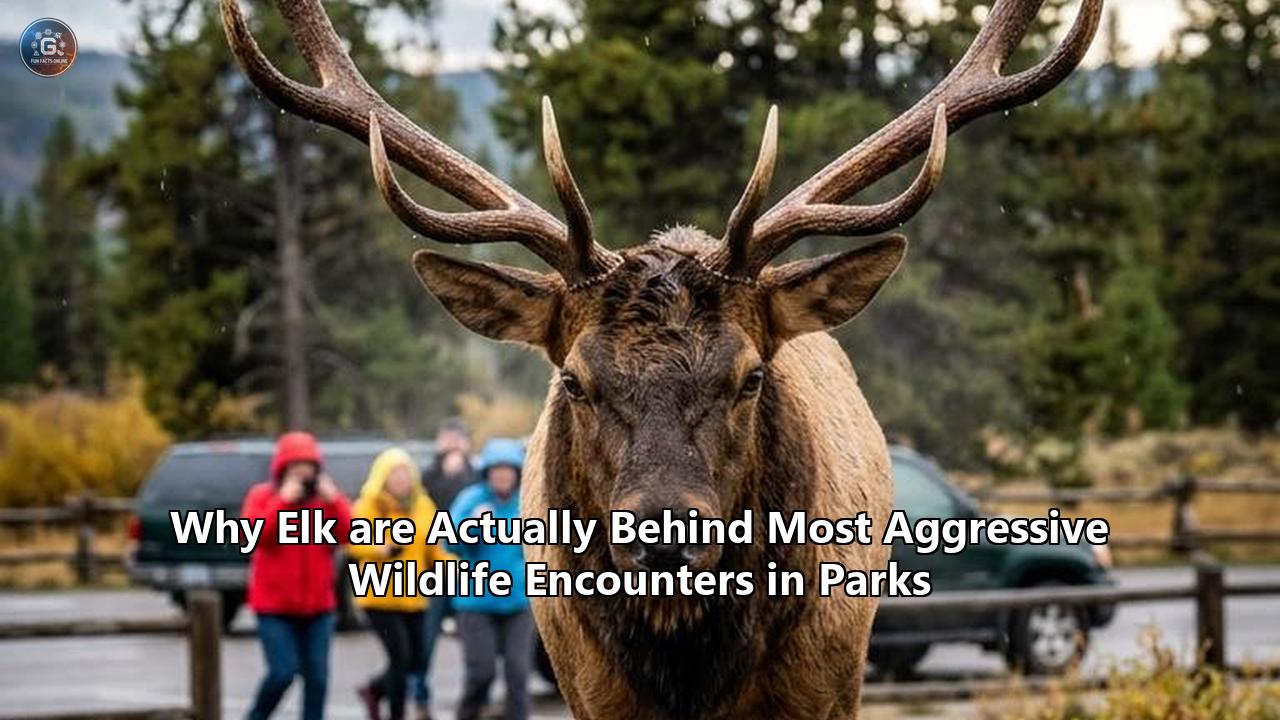
On June 8, 2026, a quiet morning in the mountain town of Estes Park, Colorado, took a violent turn. An unsuspecting resident stepped out of his apartment door on Manford Avenue and was immediately charged, knocked down, and repeatedly stomped by a 500-pound cow elk. The attack, which required emergency medical transport and hospitalization, was followed by four other aggressive encounters in the same neighborhood that single day, forcing local police to issue a town-wide emergency alert.
Just weeks later, in late June 2026, filmmaker Jon Steingard was walking with his family near a visitor center parking lot at Grand Canyon National Park when they encountered another cow elk. Steingard pulled out his phone to record a video; the 600-pound animal charged. When Steingard stood his ground to try and scare the animal off, it paused before launching a direct, physical assault. While Steingard escaped physically unhurt, the footage went viral, renewing intense debate over national park safety.
These high-profile encounters are not isolated anomalies. On July 2, 2026, a peer-reviewed study published in Frontiers in Conservation Science provided the empirical framework that connects these dots. Led by researchers Holly Landles and conservation biologist Dr. Shashank Balakrishna at the University of York, the study analyzed 2,878 aggressive human-wildlife encounters recorded by Parks Canada between 2010 and 2023.
The data revealed a striking reality: elk—not grizzly bears, black bears, or wolves—are the single most frequent source of aggressive large-animal encounters in North American parks, accounting for a massive 62 percent of all documented incidents. While visitors spend their trips nervously scanning the forest edge for apex predators, the reality of elk aggressive wildlife dynamics indicates that our fear is often directed at the wrong species.
Using these recent incidents and the University of York study as a lens, we can dissect the complex biological, ecological, and behavioral drivers behind this phenomenon. The findings reveal that elk aggression is not random; rather, it is a predictable consequence of how these large herbivores exploit human spaces, navigate natural risks, and interact with park visitors who routinely underestimate them.
Case Study: The Estes Park Stomping and Maternal Aggression
To understand why elk dominate conflict statistics, one must look closely at the June 8, 2026, incident in Estes Park. The victim, who was simply leaving his apartment complex, had no intention of interacting with wildlife. He was unaware that a cow elk had stashed her newborn calf in the manicured grass nearby.
The Biological Drive of Calving Season
From mid-May through June, female elk (cows) give birth across the Mountain West. A newborn calf is virtually defenseless, weighing only about 30 to 35 pounds and lacking the speed to outrun predators like coyotes, cougars, bears, or wolves. To protect their young, cow elk rely on extreme vigilance and hyper-aggression.
During this calving window, a cow elk's hormonal profile is geared entirely toward defense. They will attack anything they perceive as a threat to their calf’s hidden location. Because elk calves are designed to lie perfectly still and camouflaged in vegetation, humans frequently stumble into their immediate vicinity without realizing they are there.
The Forward-Striking Weaponry of the Cow Elk
Unlike bears or cougars, which utilize claws and teeth, a cow elk’s primary defensive weapon is its hooves. When a cow elk charges, she does not merely run at a human to scare them; she attempts to trample them.
While horses are famous for kicking backward, elk are highly proficient at striking forward with their front legs. They rear up on their hind legs and bring their sharp, heavy front hooves down in a rapid, chopping motion. This stomping behavior can easily fracture bones, crush chest cavities, or inflict traumatic brain injuries.
As CPW spokesperson Kara Van Hoose noted following the Estes Park incident, "We do see a cow elk will chase people from an area around their calf, but stomping on them is a bit more uncommon". The transition from a warning chase to a physical stomping usually occurs when the human is cornered or startles the elk at extremely close range, leaving the animal with no perceived escape route.
Case Study: The Grand Canyon and the "Refuge Effect" Paradox
The Grand Canyon incident involving Jon Steingard highlights another dimension of the issue: resource-driven habituation and the spatial ecology of human-dominated landscapes.
The "Human Shield" Hypothesis
In ecology, the "human shield" or "human refuge" hypothesis explains how prey species alter their behavior to avoid predators. Large carnivores, such as wolves and mountain lions, are highly sensitive to human activity and generally avoid heavily developed visitor centers, paved pathways, and housing complexes.
Elk, being highly adaptable and intelligent ungulates, quickly recognize this pattern. They deliberately migrate into developed park zones—such as the South Rim of the Grand Canyon or the townsite of Estes Park—to utilize human presence as a protective shield against the predators that fear us.
Predator Avoidance Pathway:
[Wolves / Cougars / Bears] ──(Avoidance)──> [Human Developed Zones]
                                                   │
                                                   ▼
                                        [Elk Seek Safe Haven Here]
                                                   │
                                                   ▼
                                        [Aggressive Encounters]
This spatial strategy creates a dangerous paradox. By seeking safety near visitor infrastructure, elk place themselves in constant, close-quarters contact with humans. Over time, this leads to profound habituation—the gradual loss of an animal's natural fear of humans.
The Arid Oasis of Park Infrastructure
In the arid climate of the Grand Canyon's South Rim, this habituation is supercharged by the search for water. Rocky Mountain elk, which were introduced to the region from Yellowstone between 1913 and 1928, have learned to exploit artificial water sources.
Visitors frequently observe elk standing directly over paved walkways, drinking from leaks in water-treatment infrastructure, or catching the runoff from public bottle-filling stations. As the Grand Canyon's resident elk population has grown, the rising frequency of elk aggressive wildlife encounters has forced park managers to seek active, non-lethal intervention strategies.
A New Approach: The Conservation K-9 Pilot Project
To disrupt this cycle of habituation without resorting to lethal culling, Grand Canyon National Park launched the Conservation K-9 Pilot Project. The star of this program is "Blue," a certified Catahoula Leopard Hound trained specifically for wildlife herding.
Under the guidance of wildlife biologist and project lead Brady Dunne, Blue conducts controlled hazing operations in developed "exclusion zones". When habituated elk begin congregating near visitor centers or hotel lawns, Blue is deployed to actively herd them back into the surrounding pine and juniper forests.
By using a herding dog, the park mimics the natural pressure of a predator. This re-establishes a boundary of fear, teaching the elk that developed areas are no longer safe, low-stress havens.
To measure the effectiveness of this program, park biologists have fitted nine habituated elk and five bighorn sheep with telemetry tracking collars. Over the course of the three-year pilot, researchers will monitor how these collared animals modify their spatial ranges in response to Blue's hazing.
The Ecology of Unpredictability
Why do large herbivores like elk consistently cause more aggressive conflicts than apex predators? The answer lies in what Dr. Shashank Balakrishna calls the "ecology of unpredictability".
"Each species occupies a different ecological role, so they perceive human threat differently," Dr. Balakrishna explained following the release of the July 2026 study. "Elk sometimes avoid humans, but at other times use human presence as refuge from predators. This unpredictability may explain why they top the list for aggressive encounters".
Unlike carnivores, which have clear, consistent boundaries regarding human contact, elk behavior fluctuates wildly depending on the season, the location, and the perceived level of immediate threat.
| Feature | Predators (e.g., Grizzlies) | Herbivores (e.g., Elk) |
|---|---|---|
| Primary Habitat Selection | Remote, undisturbed wilderness areas | Developed park townsites and campgrounds |
| Primary Trigger for Aggression | Sudden surprise at close range on quiet trails | Encroachment on calves (spring) or mating harems (fall) |
| Human Proximity Tactic | Consistent avoidance and flight | Habitual exploitation of human spaces for safety |
| Public Perception of Risk | High; visitors are highly alert and cautious | Low; visitors view them as docile and approachable |
The Two Peaks of Seasonal Aggression
Elk aggression operates on a strict, biphasic calendar. While they may appear docile and slow-moving for much of the year, their biological clocks trigger two periods of extreme volatility.
Seasonal Aggression Peaks:
  [May - June] ───────────────────> Calving Season (Maternal Aggression)
  [July - August] ────────────────> Relative Calm / Foraging
[September - October] ──────────> The Rut (Hormonal Bull Aggression)- The Calving Season (Spring/Early Summer): As seen in the Estes Park and Grand Canyon incidents, this period is defined by maternal defense. Cow elk are hyper-vigilant, stressed, and willing to charge anyone who crosses an invisible threshold around their hidden offspring.
- The Rut (Autumn): During September and October, bull elk enter their mating season. Flooded with testosterone, bulls compete aggressively for dominance and the right to breed. A mature bull elk can weigh up to 700 pounds and sport a six-foot rack of antlers weighing 30 to 40 pounds. During the rut, bulls bugle to assert dominance and will actively chase away anything—including tourists, vehicles, or pets—that approaches their harem of cows. A charging bull can reach speeds of 45 miles per hour in short bursts, far faster than any human can run.
Because many tourists perceive these massive herbivores as docile and photogenic, they frequently ignore park warnings. They cross safe boundaries to snap photographs, completely unaware of how easily elk aggressive wildlife behaviors can be triggered by a minor territorial intrusion.
High-Risk Activity Pairings: Deconstructing the York Study
The University of York study published in Frontiers in Conservation Science went beyond basic conflict statistics. By utilizing a negative binomial mixed model, researchers mapped the exact combinations of human activities and animal species that resulted in the highest frequency of aggressive encounters.
The findings challenge conventional wisdom about outdoor safety. It is not extreme sports or backcountry expeditions that land visitors in the most trouble; rather, it is everyday, low-impact activities.
1. The Campground Trap: Elk and Camping
One of the most dangerous combinations identified in the study was the intersection of elk and camping. The data showed that elk were involved in an astonishing 84 percent of all aggressive campground incidents.
This high rate of conflict is driven by geography and timing. Campgrounds in national parks are typically situated in flat, lush valley bottoms near water sources—precisely the prime grazing habitat for elk.
Furthermore, peak camping season in North America aligns perfectly with the end of the calving season and the transition into the autumn rut. When campers pitch tents directly in grazing meadows or walk around campsites in the dim light of dawn and dusk, they frequently startle resting or protective elk.
2. The Townsite Overlap: Developed Zone Dominance
The study also revealed that elk were involved in over 73 percent of all aggressive encounters occurring within park townsites.
This statistic reflects the exact scenarios playing out in places like Banff, Alberta, and Estes Park, Colorado. Municipal lawns, golf courses, and landscaped flower beds provide high-nutrient forage that is kept green throughout the dry summer months.
When elk enter these towns to feed and escape predators, they become embedded in human infrastructure. This leads to encounters on sidewalks, in parking structures, and right outside residential doorways.
Parks Canada Aggressive Incident Breakdown (2010–2023):
  ┌──────────────────────────────────────────────────────────┐
  │ Elk: 62%                                                 │
  └───────────────────────────┬──────────────┬───────────────┘
                              │ Grizzly: 14% │ Black Bear: 13%
                              └──────────────┴───────────────┘
  (Mule Deer: 7%, Coyotes: 3%)
3. The Fallacy of Low-Impact Activities
A particularly counterintuitive finding of the study was that low-impact activities, such as hiking and wildlife observation, accounted for 25 percent of all aggressive encounters across all species.
"We found low-impact activities were associated with the highest frequency of aggressive encounters, regardless of species," first author Holly Landles stated.
This is largely because quiet, slow-moving hikers are far more likely to surprise an animal at close range. While a loud group of mountain bikers or trail runners will alert an animal from a distance, a silent hiker can round a bend and find themselves feet away from a bedded bear or a cow elk and her calf.
Managing the Elk-Human Interface
The clear takeaway from both recent park incidents and the University of York study is that the traditional approach to managing human-wildlife conflict requires a significant shift.
Historically, wildlife management has focused heavily on the dangers of carnivores. Visitors are thoroughly educated on bear sprays, food storage, and cougar safety, yet they receive comparatively little preparation for navigating large herds of habituated ungulates.
The Limits of Passive Education
Signs warning visitors to keep their distance are a staple of national parks, but their effectiveness is limited. Tourists who do not understand animal behavior often interpret an elk's calm, stationary posture as an invitation to approach.
As seen in the Grand Canyon incident, pulling out a smartphone to capture a close-up video is a common trigger for a charge. Because elk do not look like predators, visitors fail to recognize the subtle warning signs of an impending attack:
- Pinning ears back flat against the head.
- Flaring the whites of the eyes.
- Grinding teeth or smacking lips.
- Stomping a single front hoof on the ground.
- Raising the hair on the rump or spine.
When these warning signs are ignored, the animal is left with few options other than flight or physical retaliation.
Active Hazing and Aversion Therapy
Because state and federal wildlife agencies do not cull or euthanize elk for displaying natural defensive behaviors—such as protecting a calf or fighting during the rut—the burden of keeping developed areas clear falls on active management.
Programs like the Grand Canyon's Conservation K-9 Project represent the future of non-lethal wildlife management. By establishing clear, actively enforced "exclusion zones" using trained herding dogs, parks can re-program habituated herds to graze in wilder, safer areas.
However, herding dogs are only one piece of the puzzle. Park managers must also address the resources that attract elk to developed zones in the first place:
- Fencing off manicured lawns and decorative vegetation in townsites.
- Retrofitting water infrastructure to prevent puddles and leaks that serve as artificial watering holes.
- Implementing dynamic trail and campground closures during the peak of the calving and rutting seasons.
As human encroachment into natural habitats continues and national park attendance rises, mitigating elk aggressive wildlife encounters will require a double-pronged approach of active wildlife hazing and strict regulatory enforcement.
Looking Ahead: The Future of Coexistence
The findings of the University of York study and the recurring conflicts in places like Estes Park and the Grand Canyon present a clear lesson: we must overcome our predator-centric bias when assessing wild spaces.
In the coming years, wildlife managers across North America will be watching the results of the Grand Canyon's K-9 tracking collar study closely. If the data proves that herding dogs like Blue can successfully and permanently shift the home ranges of habituated elk away from visitor centers, we may see similar canine programs adopted in major hotspots like Rocky Mountain National Park in Colorado, Yellowstone in Wyoming, and Banff in Alberta.
Ultimately, the key to reducing these dangerous encounters lies in reshaping human behavior. Visitors must learn to respect the invisible boundaries of the wild animals that share our spaces.
The National Park Service recommends maintaining a distance of at least 75 feet (the length of two school buses) from elk at all times—and 100 feet during the sensitive calving and rutting seasons. If an elk alters its behavior because of your presence, you are already too close.
Shedding our perception of elk as gentle, photogenic backdrops and recognizing them as powerful, highly defensive wild animals is the most important step we can take toward keeping both ourselves and these majestic herds safe.
Reference:
- https://www.cbsnews.com/colorado/news/colorado-parks-wildlife-caution-female-elk-protect-young-estes-park/
- https://www.9news.com/article/news/local/colorado-news/aggressive-cow-elk-triggers-emergency-alert-estes-park/73-8435f718-a7c0-436c-80bc-6398a222078a
- https://retro1025.com/elk-attack-estes-park/
- https://unofficialnetworks.com/2026/06/26/tourist-attacked-by-aggressive-elk-while-protecting-family-grand-canyon-national-park/
- https://www.sciencenews.org/article/aggressive-wildlife-encounters-elk-bear
- https://www.discoverwildlife.com/animal-facts/mammals/most-dangerous-human-animal-encounters-study-canada
- https://www.youtube.com/watch?v=OMVn4CtXOHc
- https://animals.howstuffworks.com/mammals/elk.htm
- https://a-z-animals.com/articles/blue-the-dog-has-one-job-at-grand-canyon-elk-patrol/
- https://www.taylorganz.com/uploads/1/2/7/0/127016301/ecology_-_2024_-_ganz_-_cougars__wolves__and_humans_drive_a_dynamic_landscape_of_fear_for_elk.pdf
- https://iaac-aeic.gc.ca/050/documents/p80101/136099E.pdf
- https://www.biorxiv.org/content/10.1101/2024.12.10.627781v1.full-text
- https://wildlife.org/human-shields-can-be-lethal-for-midsized-predators/
- https://gearjunkie.com/parks-and-public-lands/grand-canyon-national-park-blue-dog
- https://www.york.ac.uk/news-and-events/news/2026/research/bears-elks-parks/
- https://particle.news/story/elk-top-cause-of-aggressive-park-encounters-new-analysis-shows
- https://timesofindia.indiatimes.com/world/rest-of-world/elk-not-bears-were-behind-most-aggressive-wildlife-encounters-in-canadian-parks-and-campground-incidents-made-the-risk-jump-sharply-for-visitors/articleshow/132157653.cms
- https://www.iflscience.com/whats-the-most-dangerous-animal-you-could-encounter-in-a-national-park-spoilers-it-probably-isnt-the-one-youd-expect-83992
- https://www.frontiersin.org/news/2026/07/02/minimize-chances-dangerous-wildlife-encounters