In late June 2026, a team of international oceanographers and limnologists published a stark warning in the journal Limnology and Oceanography: Earth’s aquatic respiratory system is failing. Led by Dr. Erica Ferrer of the University of California, Santa Barbara, and senior author Dr. Lisa Levin of the Scripps Institution of Oceanography, the researchers issued an urgent call to formally add aquatic deoxygenation as the tenth Planetary Boundary. The framework—originally created in 2009 to define the environmental thresholds within which humanity can safely operate—tracks existential planetary threats such as climate change, ocean acidification, and biosphere integrity.
The scientists' warning arrived on the heels of another sweeping global investigation published in Science Advances by researchers at the Chinese Academy of Sciences. Analyzing four decades of satellite data and physical measurements across 21,439 river reaches worldwide, the team discovered that 78.8% of global rivers are actively losing dissolved oxygen. Tropical rivers are suffocating at the fastest rates recorded; the Ganges River, for instance, is losing dissolved oxygen at a rate 20 times faster than the global average.
GLOBAL AQUATIC OXYGEN LOSS AT A GLANCE
┌───────────────────────────────────┬────────────────────────────────────────┐
│ Global Ocean Loss Since 1950      │ ~2.0% total dissolved oxygen lost      │
│ Projected Ocean Loss by 2100      │ Additional 1.0% to 7.0% decline        │
│ Rivers Experiencing Oxygen Loss   │ 78.8% of 21,439 analyzed waterways     │
│ Average River Decline Rate        │ -0.045 mg/L per decade                 │
│ Primary Driver of River Loss      │ Climate warming (~63% of total loss)   │
└───────────────────────────────────┴────────────────────────────────────────┘
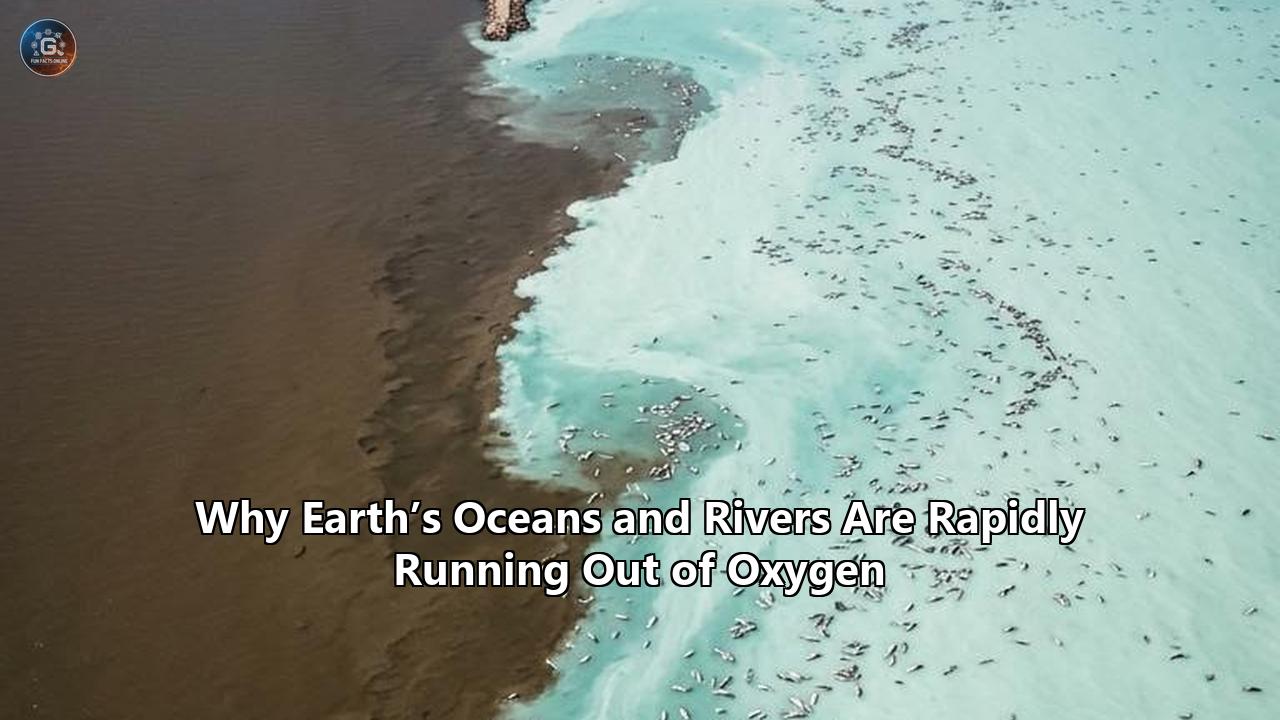
The combined findings reveal an alarming reality: from coastal estuaries and high-altitude lakes to deep oceanic trenches and river basins, oxygen is draining from Earth’s aquatic ecosystems at a rate unprecedented in human history. The global ocean has already lost approximately 2% of its total dissolved oxygen since 1950, with projections indicating a further 1% to 7% drop by the end of the century. Over 200 permanent or seasonal ocean hypoxic zones—popularly known as "dead zones"—now blanket coastal regions globally, while lakes are losing oxygen up to nine times faster than the ocean.
"The health and stability of our planet depends on the health and stability of aquatic ecosystems, which need oxygen to function normally," Dr. Ferrer explained following the publication. "Mitigating its impacts represents a critical component of maintaining biodiversity and climate."
Understanding why this depletion is accelerating requires examining the physical, chemical, and biological forces destroying aquatic oxygen reserves, analyzing who and what are most vulnerable, and evaluating the cascading consequences for global food security, biogeochemical cycles, and Earth system stability.
The Physics and Chemistry of Aquatic Suffocation
Dissolved oxygen ($O_2$) is the fundamental fuel of aerobic aquatic life. Unlike atmospheric air, which is roughly 21% oxygen (approximately 210,000 parts per million), natural waters hold only a fraction of a percent of dissolved oxygen—typically 6 to 14 parts per million (mg/L) depending on water temperature, salinity, and atmospheric pressure. Because water holds so little oxygen to begin with, even modest shifts in temperature or water chemistry can trigger catastrophic ecological collapses.
     Atmospheric Oxygen (210,000 ppm)
                  │
                  ▼
  ┌───────────────────────────────┐
  │  Surface Water Diffusion     │
  │  & Photosynthesis Production  │
  └───────────────┬───────────────┘
                  │
   [Thermal Warming & Stratification Block Transport]
                  │
                  ▼
  ┌───────────────────────────────┐
  │  Hypoxic Deep/Interior Layer │
  │  (Microbial Respiration O2↓) │
  └───────────────────────────────┘
When evaluating the primary ocean deoxygenation causes, scientists categorize the drivers into two interconnected domains: climate-driven physical changes and terrestrial nutrient pollution.
Thermal Solubility Dynamics
The single largest driver of aquatic oxygen loss is rising global water temperature. Under basic thermodynamic principles governed by Henry's Law, warm water cannot hold as much dissolved gas as cold water. As climate change drives surface ocean temperatures and river water temperatures upward, water molecules vibrate more rapidly, driving dissolved oxygen out of solution and releasing it back into the atmosphere.
The Science Advances global river study determined that thermal warming accounts for roughly 63% of the total oxygen loss measured in rivers over the past 40 years. In marine environments, surface ocean warming accounts for approximately half of the observed oxygen loss in upper ocean layers.
Density Stratification and Ventilation Stagnation
As surface waters warm and receive increased freshwater runoff from melting ice caps and altered rainfall patterns, they become lighter and less dense than the cold, salty water beneath them. This creates a stable thermal and density barrier known as stratification.
Stratification prevents surface water—which is continuously replenished with oxygen through atmospheric contact and phytoplankton photosynthesis—from mixing with deeper layers. Deep ocean basins rely on physical mixing and ocean currents (a process called "ventilation") to deliver oxygen down into the ocean interior. As surface ocean stratification intensifies, ventilation slows or shuts down entirely, trapping deep waters in near-darkness where oxygen is steadily consumed by microbial respiration but never replenished.
Nutrient Overload and Eutrophication
Analyzing these ocean deoxygenation causes reveals how land-use practices interact directly with climate forces. Agricultural fertilizers containing nitrogen and phosphorus, industrial wastewater, and untreated municipal sewage flow into rivers, lakes, and coastal bays. This massive influx of nutrients triggers explosive blooms of algae and cyanobacteria.
Nutrient Runoff (N & P) ──► Algae Bloom Explosion ──► Algae Die Off & Sink
                                                               │
Anaerobic Bacteria Takeover ◄── Severe Hypoxia ◄── Oxygen Consumption by Microbes
When these massive algal populations die, they sink to the bottom, where heterotrophic bacteria decompose the organic matter. This aerobic decomposition process consumes vast amounts of dissolved oxygen. When microbial oxygen demand exceeds the rate of physical oxygen supply, water columns enter hypoxia (dissolved oxygen dropping below 2.0 mg/L) or complete anoxia (0 mg/L).
Hydrological Alterations and Dam Reservoirs
In rivers and streams, physical infrastructure compounds thermal oxygen loss. Dams and impoundments transform free-flowing, turbulent rivers—which naturally oxygenate through surface reaeration over rapids and riffles—into stagnant, warm reservoirs. Reduced river discharge due to freshwater abstraction for agriculture further slows river flow, reducing mechanical aeration and allowing organic sediments to settle and decompose on the riverbed, drawing down oxygen levels.
Who Is Affected: Aquatic Species and Vulnerable Habitats
The depletion of dissolved oxygen does not impact aquatic organisms equally; it reshapes biological communities by selecting for stress-tolerant generalists and driving vulnerable species out of their habitats.
OXYGEN THRESHOLDS FOR AQUATIC SURVIVAL
┌───────────────────────────┬────────────────────────────────────────────────┐
│ Dissolved Oxygen Level    │ Ecosystem & Physiological Response             │
├───────────────────────────┼────────────────────────────────────────────────┤
│ High (> 6.0 mg/L)         │ Healthy, fully functioning ecosystem           │
│ Moderate (3.0 - 5.0 mg/L) │ Reduced growth rates; physiological stress     │
│ Hypoxia (< 2.0 mg/L)      │ Mass migration; benthic mortality; reproduction failure │
│ Severe Hypoxia (< 0.5 mg/L)│ Massive fish kills; survival limited to specialists    │
│ Anoxia (0.0 mg/L)         │ Anaerobic microbial takeover; toxic H2S production      │
└───────────────────────────┴────────────────────────────────────────────────┘
Pelagic Megafauna and Apex Predators
Large, fast-swimming pelagic fish—such as yellowfin tuna, blue marlin, sailfish, and pelagic sharks—possess high metabolic rates and require oxygen-rich water to sustain their energetic lifestyles. As Oxygen Minimum Zones (OMZs) expand vertically into upper pelagic zones, these apex predators are excluded from deep water where they normally hunt.
This phenomenon, known as "habitat compression," forces pelagic predators into a narrow band of oxygenated water near the surface. While this surface concentration makes them easier targets for commercial longline fisheries, it simultaneously exposes them to thermal stress and exhausts their local prey supplies.
       SURFACE LAYER (Oxygen Rich, Warm)
       ─────────────────────────────────────────  ◄── Pelagic Predators Compressed Here
       HYPOXIC BARRIER (Oxygen Minimum Zone)          (Tuna, Marlins, Sharks)
       ─────────────────────────────────────────  ◄── Deep Hunting Grounds Inaccessible
       DEEP OCEAN INTERIOR (Anoxic / Low Oxygen)
Benthic and Sedimentary Ecosystems
Organisms anchored to the seafloor or riverbed—such as oysters, clams, crabs, sea anemones, and benthic worms—cannot swim away when oxygen drops. During hypoxic events, these organisms undergo extreme physiological stress.
- Behavioral Changes: Benthic invertebrates emerge from buried sediment to stretch into higher water layers, exposing themselves to predators.
- Mass Mortality: If hypoxia persists for more than a few days, immobile species suffocate en masse, creating underwater graveyards devoid of complex animal life.
- Microbial Shifts: The functional composition of benthic microbial communities shifts radically from aerobic nutrient recyclers to anaerobic bacteria and specialized fungi, altering the underlying chemistry of ocean sediments.
Upwelling Biomes and Estuarine Nurseries
Eastern Boundary Current Upwelling Systems (EBCUS)—such as the California Current, the Humboldt Current off Peru and Chile, the Canary Current off West Africa, and the Benguela Current off southwest Africa—produce over 20% of global wild-caught marine fish while occupying less than 1% of the ocean’s surface. Upwelling winds push surface water offshore, drawing cold, nutrient-rich, but oxygen-poor deep water to the coast.
As global ocean interior oxygen levels fall, upwelling currents deliver water that is already dangerously deficient in oxygen. When these upwelled waters reach shallow coastal bays and estuaries, they overlap with agricultural runoff, turning biological hotspots into lethal hypoxic zones.
UPWELLING BIOME HYPOXIA DYNAMICS
Offshore Winds ──► Surface Water Pushed Offshore
                          ▲
                          │ Upwelling of Low-O2 Deep Water
                          │
                  ┌───────┴────────┐
                  │ Coastal Zones  │ ──► Overlaps with Ag Runoff ──► Severe Coastal Hypoxia
                  └────────────────┘
Tropical River Ecosystems
Freshwater species face immediate pressure in tropical river basins. The May 2026 Science Advances study highlighted that tropical rivers in South America, Central Africa, and South Asia are losing oxygen faster than polar rivers.
Because tropical rivers are warm year-round, their baseline dissolved oxygen levels are inherently lower than those of temperate or polar rivers. Additional warming from climate change pushes these systems over critical biological thresholds, threatening freshwater species such as the giant Mekong catfish, Amazonian river dolphins, and thousands of endemic fish species adapted to narrow oxygen windows.
Human Communities on the Frontline
The rapid decline of dissolved oxygen in rivers and oceans directly threatens human livelihoods, food supplies, economic infrastructure, and public health.
                       ┌───────────────────────────────┐
                       │  Aquatic Deoxygenation Crisis │
                       └───────────────┬───────────────┘
                                       │
         ┌─────────────────────────────┼─────────────────────────────┐
         ▼                             ▼                             ▼
┌─────────────────┐           ┌─────────────────┐           ┌─────────────────┐
│  Food Security  │           │ Water Utilities │           │ Coastal Economy │
│  & Fisheries    │           │ & Public Health │           │ & Real Estate   │
└────────┬────────┘           └────────┬────────┘           └────────┬────────┘
         │                             │                             │
         ▼                             ▼                             ▼
• Shellfish collapses          • Toxic metal release        • Tourism declines
• Finfish catch declines       • Cyanotoxin formation       • Real estate drops
• Aquaculture die-offs         • Skyrocketing treatment     • Fishing port closure
Fisheries and Commercial Aquaculture Collapses
More than three billion people worldwide depend on wild-caught and farmed seafood as their primary source of animal protein. Aquatic deoxygenation directly degrades wild fisheries by shrinking suitable spawning grounds, slowing fish growth rates, reducing reproductive success, and causing sudden mass die-offs.
Commercial coastal aquaculture facilities—such as salmon farms, shrimp ponds, and shellfish beds—are exceptionally vulnerable because farmed stock is confined to nets or cages and cannot migrate away from hypoxic water masses. In regions like the Pacific Northwest, Northern Europe, and East Asia, sudden subsurface hypoxic intrusions have wiped out entire shellfish hatcheries and salmon pens overnight, inflicting hundreds of millions of dollars in direct economic losses on coastal communities.
Municipal Water Security and Public Health
For inland human populations, deoxygenated rivers and lakes present serious water security challenges. When bottom waters in drinking reservoirs and river systems become anoxic, chemical reactions at the sediment-water interface change radically:
- Heavy Metal Mobilization: Under anoxic conditions, insoluble iron and manganese oxides in sediments dissolve, releasing bound heavy metals—including toxic arsenic, manganese, and lead—into the water column.
- Cyanotoxin Proliferation: Low-oxygen, nutrient-saturated freshwater bodies favor harmful algal blooms (HABs) of microcystin-producing cyanobacteria. These toxins cause liver damage and neurological harm in humans and domestic animals.
- Escalating Treatment Costs: Municipal water utilities must invest heavily in advanced oxidation, aeration, and chemical treatment infrastructure to clean anoxic raw water before it is safe for municipal distribution.
Coastal Tourism and Local Economies
Coastal communities reliant on recreational fishing, scuba diving, and beach tourism face severe economic downturns when hypoxic dead zones strike. Shellfish closures, foul odors from decaying marine life washed ashore, and toxic algal bloom warnings deter tourists and depress local real estate values along affected coastlines.
Ecosystem Restructuring: What Changes Underwater
As aquatic deoxygenation spreads, it causes deep structural changes in biogeochemical cycles and underwater food webs, replacing complex multi-trophic communities with simplified, microbial-dominated systems.
BALANCED HYPER-DIVERSE SYSTEM       DEOXYGENATED MICROBIAL SYSTEM
┌─────────────────────────────┐    ┌─────────────────────────────┐
│ • High Species Richness     │    │ • Anaerobic Bacteria Dominant│
│ • Complex Multi-Trophic Web │ ──►│ • Simplified Food Web       │
│ • Efficient Nutrient Cycles │    │ • Greenhouse Gas Generation │
│ • Apex Predator Survival    │    │ • Hydrogen Sulfide Toxins   │
└─────────────────────────────┘    └─────────────────────────────┘
Expansion of Oceanic Oxygen Minimum Zones
Oxygen Minimum Zones (OMZs) are naturally occurring layers of water in the ocean interior (typically between 200 and 1,000 meters depth) where oxygen levels are low due to high biological productivity above and slow ocean ventilation. Over the past half-century, these intermediate-depth dead zones have expanded laterally by millions of square kilometers and shoaled (moved closer to the ocean surface).
The expansion of OMZs fundamentally alters ocean chemistry:
- Nitrogen Stripping (Denitrification): In severe low-oxygen conditions, specialized microbes stop using oxygen for respiration and switch to nitrate ($NO_3^-$). This process converts bioavailable nitrogen into inert nitrogen gas ($N_2$) and nitrous oxide ($N_2O$). Denitrification strips essential nutrients from the ocean, lowering overall ocean productivity.
- Phosphorus Release: Anoxic sediments release bound phosphate back into the water column, creating a positive feedback loop that fuels further algal blooms and exacerbates hypoxia when these waters upwell to the surface.
Shifts Toward Anaerobic Microbial Regimes
As higher organisms flee or die, hypoxic and anoxic waters are colonized by extremophilic microbial communities. Sulfate-reducing bacteria flourish in completely anoxic environments, using sulfate ($SO_4^{2-}$) instead of oxygen to decompose organic matter.
A toxic byproduct of sulfate reduction is hydrogen sulfide gas ($H_2S$). Hydrogen sulfide is extremely toxic to aerobic life and can strip remaining oxygen from surrounding waters. In extreme cases—such as off the coast of Namibia or in the Black Sea—massive hydrogen sulfide eruptions rise from the seabed to the surface, turning coastal waters a pale green, stripping oxygen, and causing mass mortalities across all marine taxa.
       Anoxic Sediments / Deep Water
                  │
                  ▼
   Sulfate-Reducing Bacteria Active
                  │
                  ▼
   Hydrogen Sulfide ($H_2S$) Produced
                  │
                  ▼
   Gas Eruptions Rise to Ocean Surface
                  │
                  ▼
   Mass Mortality & Atmospheric Toxic Releases
Disruption of Marine Carbon Pumps
The ocean acts as a vital sink for anthropogenic carbon dioxide through the "biological carbon pump." Phytoplankton absorb carbon dioxide at the surface via photosynthesis; when they die, they sink into the deep ocean, effectively locking carbon away for centuries.
Aquatic deoxygenation alters this pump in complex, dangerous ways:
- Reduced aerobic microbial decomposition at intermediate depths allows some organic carbon to sink deeper.
- The loss of large zooplankton and fish—which actively transport carbon to the deep ocean through daily vertical migrations—disrupts active carbon export.
- Anaerobic decomposition in oxygen-depleted waters releases potent greenhouse gases, turning oxygen-starved aquatic systems from carbon sinks into net greenhouse gas sources.
Short-Term Consequences: Acute Events and Seasonal Collapses
While ocean deoxygenation is a long-term trend, its short-term impacts manifest as sudden, destructive environmental crises that shock ecosystems and human communities alike.
CHRONOLOGY OF AN ACUTE HYPOXIC COLLAPSE
Day 1-3   │ Heatwave warms water column; surface stratification seals deep layer.
Day 4-7   │ Nutrient runoff triggers rapid algal bloom; light penetration drops.
Day 8-12  │ Bloom dies off; aerobic microbial decomposition consumes available O2.
Day 13-15 │ Dissolved oxygen drops below 1.5 mg/L; mobile fish flee, benthic species die.
Day 16+   │ Anoxia sets in; hydrogen sulfide releases; complete system collapse.
Marine Heatwaves and Sudden Hypoxic Spikes
Marine heatwaves—extended periods of anomalously high sea surface temperatures—have increased in frequency, duration, and intensity over the last two decades. Marine heatwaves act as acute drivers of oxygen depletion.
When a marine heatwave hits a coastal ecosystem, it simultaneously caps the water column with a layer of hot water, reduces oxygen solubility, and accelerates the metabolic rates of cold-blooded organisms and microbes. Organisms require more oxygen to survive at higher temperatures, precisely when the water holds less oxygen. This metabolic mismatch frequently causes sudden, catastrophic "fish kills" where millions of fish suffocate simultaneously and wash ashore.
Seasonal Estuarine and Riverine Dead Zones
In temperate estuaries and major river systems—such as the Gulf of Mexico (fed by the Mississippi River basin), the Baltic Sea, Chesapeake Bay, and the East China Sea—hypoxia follows a destructive seasonal cycle:
- Spring: High river discharge carries massive loads of agricultural fertilizer into coastal waters.
- Summer: Warm solar heating stratifies the water column, capping nutrient-enriched surface waters over colder deep waters.
- Late Summer: Bacterial decomposition of dead algae strips oxygen from bottom waters, creating massive hypoxic zones that span thousands of square miles.
- Autumn: Autumn storms and cooling surface temperatures break down stratification, reoxygenating the water column until the cycle repeats the following spring.
SPRING                     SUMMER                   LATE SUMMER               AUTUMN
┌────────────────┐        ┌────────────────┐        ┌────────────────┐        ┌────────────────┐
│ Heavy Ag Runoff│ ──►    │ Warm Solar     │ ──►    │ Bacterial      │ ──►    │ Autumn Storms  │
│ Delivers N & P │        │ Stratification │        │ Decomposition  │        │ Mix & Re-oxygen│
└────────────────┘        └────────────────┘        └────────────────┘        └────────────────┘
Proliferation of Toxic Algal Blooms
Hypoxic waters create ideal conditions for toxic algal blooms. As dissolved oxygen vanishes, competitive aerobic organisms die off, leaving warm, nutrient-rich, low-oxygen waters dominated by harmful dinoflagellates and cyanobacteria.
These blooms produce dangerous neurotoxins—such as domoic acid, saxitoxin, and microcystins—that build up in the tissues of shellfish, fish, and marine mammals. When humans consume contaminated seafood, it can lead to Paralytic Shellfish Poisoning (PSP) or Amnesic Shellfish Poisoning (ASP), leading to emergency closures of commercial shellfisheries.
Long-Term Consequences: Climate Feedbacks and Tipping Points
Looking beyond immediate impacts, the long-term consequences of aquatic deoxygenation threaten to disrupt Earth system stability for generations.
AQUATIC DEOXYGENATION CLIMATE FEEDBACK LOOP
         ┌────────────────────────────────────────────────────────┐
         ▼                                                        │
┌─────────────────┐       ┌─────────────────┐       ┌─────────────┴───┐
│ Global Climate  │ ──►   │ Ocean & River   │ ──►   │ Subsurface      │
│ Warming         │       │ Warming         │       │ Deoxygenation   │
└─────────────────┘       └─────────────────┘       └─────────────┬───┘
         ▲                                                        │
         │                                                        ▼
┌────────┴────────┐                                 ┌─────────────────┐
│ Enhanced Ocean  │ ◄───────────────────────────────│ Nitrous Oxide   │
│ Warming & Gas   │                                 │ ($N_2O$) Gas    │
└─────────────────┘                                 │ Emissions       │
                                                    └─────────────────┘
Nitrous Oxide Emissions and Climate Feedback
One of the most dangerous long-term consequences of expanding hypoxic and anoxic zones is the production of nitrous oxide ($N_2O$). Nitrous oxide is a potent greenhouse gas, with a global warming potential nearly 300 times greater than carbon dioxide ($CO_2$) over a 100-year timescale, and a primary driver of stratospheric ozone depletion.
As intermediate ocean waters and freshwater riverbeds lose oxygen, microbial denitrification accelerates, producing $N_2O$ as a byproduct. This creates a severe climate feedback loop:
- Atmospheric greenhouse gases warm the planet.
- Warmer waters drive aquatic oxygen loss.
- Expanding oxygen-starved zones produce increased $N_2O$ emissions.
- $N_2O$ enters the atmosphere, accelerating global warming and driving further aquatic deoxygenation.
Irreversible Loss of Aquatic Biodiversity
Unlike terrestrial animals that can often migrate northward or to higher elevations as temperatures rise, aquatic organisms face hard physical barriers. Riverine species are trapped within specific basin networks. Marine species seeking deeper, cooler water are met by expanding Oxygen Minimum Zones.
This trap—being squeezed between warm, low-oxygen surface waters and anoxic deep zones—threatens to trigger broad extinction events. Evolutionary biologists warn that the rapid rate of modern aquatic deoxygenation far exceeds the adaptive capacity of most fish and invertebrate species, paving the way for long-term marine biodiversity loss.
Multi-Century Ocean Recovery Timelines
Because deep ocean circulation moves slowly—taking up to 1,000 years for a parcel of water to complete a full journey through the global ocean conveyor belt—reversing deep ocean deoxygenation is impossible on human timescales.
Even if humanity immediately halted all greenhouse gas emissions and nutrient pollution today, physical ocean mixing processes mean that oxygen depletion in the ocean interior will continue to expand for decades or centuries. Scientists warn that we risk crossing a major planetary tipping point, driving deep ocean ecosystems into low-oxygen states that will persist for generations.
Defining Aquatic Deoxygenation as the 10th Planetary Boundary
The landmark review published by Dr. Ferrer and her colleagues in Limnology and Oceanography establishes why aquatic deoxygenation must be integrated into the Planetary Boundaries framework alongside existing boundaries like climate change and ocean acidification.
                 THE 10 PLANETARY BOUNDARIES FRAMEWORK
┌───────────────────────────────────────┬─────────────────────────────────────┐
│ Established Planetary Boundaries      │ Proposed 10th Planetary Boundary    │
├───────────────────────────────────────┼─────────────────────────────────────┤
│ 1. Climate Change                     │                                     │
│ 2. Ocean Acidification                │                                     │
│ 3. Biosphere Integrity                │                                     │
│ 4. Biogeochemical Flows (N & P)       │                                     │
│ 5. Land-System Change                 │  10. AQUATIC DEOXYGENATION          │
│ 6. Freshwater Use                     │      (Dissolved Oxygen Inventory    │
│ 7. Atmospheric Aerosol Loading        │       Across Oceans, Rivers & Lakes)│
│ 8. Stratospheric Ozone Depletion      │                                     │
│ 9. Novel Entities (Chemical Pollution)│                                     │
└───────────────────────────────────────┴─────────────────────────────────────┘
The authors demonstrate that dissolved oxygen acts as a primary regulator of Earth system stability, interacting directly with all nine existing planetary boundaries:
- Climate Change: Oxygen loss drives greenhouse gas emissions ($N_2O, CH_4$), accelerating atmospheric warming.
- Ocean Acidification: Microbial respiration that consumes oxygen simultaneously releases $CO_2$, lowering pH and worsening local ocean acidification.
- Biogeochemical Flows: Oxygen availability dictates whether nitrogen and phosphorus are retained in sediments or recycled back into the water column.
- Biosphere Integrity: Low oxygen strips viable habitat from marine and freshwater organisms, driving biodiversity loss.
By establishing a formal, quantified boundary for global dissolved oxygen loss, scientists aim to provide policymakers with concrete metrics to track aquatic health and enforce global protection targets.
Reversing the Aquatic Oxygen Crisis
Addressing the root ocean deoxygenation causes requires coordinated action spanning local, regional, and international governance. Because aquatic deoxygenation is driven by both global warming and regional nutrient pollution, mitigation must combine rapid climate action with land-use reform.
                  ┌─────────────────────────────────────────┐
                  │ Integrated Deoxygenation Mitigation Plan│
                  └────────────────────┬────────────────────┘
                                       │
         ┌─────────────────────────────┼─────────────────────────────┐
         ▼                             ▼                             ▼
┌─────────────────┐           ┌─────────────────┐           ┌─────────────────┐
│ Global Climate  │           │ Agricultural &  │           │ Hydrological &  │
│ Mitigation      │           │ Runoff Reforms  │           │ Coastal Care    │
└────────┬────────┘           └────────┬────────┘           └────────┬────────┘
         │                             │                             │
         ▼                             ▼                             ▼
• Decarbonize energy           • Precision fertilizer use    • Dam release aeration
• Limit atmospheric warming    • Wetland buffer restoration  • Protected oxygen refugia
• Slow ocean heating           • Advanced wastewater tech    • Seasonal fishing limits
Watershed Nutrient Management
Reducing nutrient runoff is the most effective way to restore oxygen levels in coastal seas, lakes, and rivers.
- Regenerative Agricultural Practices: Implementing precision fertilizer application, planting winter cover crops, and practicing no-till farming reduces nitrogen and phosphorus runoff into river networks.
- Riparian Buffer Zones and Wetland Restoration: Rebuilding wetlands and natural vegetated buffers along riverbanks creates natural nutrient sinks that absorb excess agricultural fertilizers before they reach open water.
- Upgraded Municipal Wastewater Infrastructure: Installing advanced biological nutrient removal (BNR) technologies in sewage treatment plants prevents nitrogen and phosphorus from entering urban waterways.
Climate Change Mitigation and Decarbonization
Because thermal warming accounts for roughly 63% of river oxygen loss and drives ocean stratification, halting fossil fuel emissions is essential to saving aquatic oxygen reserves.
Achieving rapid global decarbonization under the Paris Agreement targets is necessary to limit surface ocean warming, stabilize hydrological cycles, and prevent further weakening of deep ocean ventilation systems.
Hydrological Infrastructure and Reservoir Aeration
For rivers and impounded freshwater systems, targeted hydrological management can help alleviate local hypoxia:
- Environmental Flow Allocations: Ensuring dams release sufficient water volumes during critical summer low-flow periods maintains river turbulence and keeps water temperatures cooler.
- Mechanical Reservoir Aeration: Installing solar-powered hypolimnetic aerators in stratified lakes and drinking water reservoirs injects dissolved oxygen into deep bottom waters without disrupting thermal layering.
Dynamic Marine Spatial Planning and Oxygen Refugia
As oxygen minimum zones expand, marine conservation strategies must adapt:
- Protecting Oxygen Refugia: Identifying and establishing Marine Protected Areas (MPAs) in regions naturally resilient to deoxygenation gives vulnerable marine species safe harbors.
- Adaptive Fisheries Management: Dynamically adjusting commercial fishing quotas and seasonal closures when low-oxygen events occur prevents fisheries from overexploiting stress-compressed fish stocks.
What to Watch Next
As global scientific attention turns to Earth's suffocating waters, several key milestones, research initiatives, and policy negotiations will shape the global response to aquatic deoxygenation:
- Formal Planetary Boundary Adoption: Environmental scientists and international policy bodies are working to formally integrate "Aquatic Deoxygenation" into the global Planetary Boundary framework, establishing official safe operating limits for marine and freshwater dissolved oxygen reserves.
- UN Climate and Biodiversity COP Negotiations: Marine conservation organizations are pushing to include specific aquatic oxygen targets within the United Nations Framework Convention on Climate Change (UNFCCC) and the Convention on Biological Diversity (CBD) frameworks.
- Global Ocean Oxygen Network (GO2NE) Monitoring Expansion: Spearheaded by UNESCO's Intergovernmental Oceanographic Commission, researchers are expanding real-time underwater oxygen monitoring networks using autonomous biogeochemical ocean floats, satellite observation, and AI-driven predictive modeling to generate early warnings for hypoxic events worldwide.
- Transboundary Watershed Agreements: Major international river basins—including the Amazon, Ganges, Mekong, and Danube—are developing cross-border water management agreements focused specifically on curbing nutrient pollution and restoring riverine oxygen levels.
The scientific consensus is clear: oxygen is disappearing from Earth's waters at a pace that demands immediate action. Protecting the respiratory system of our ocean, rivers, and lakes is fundamental to preserving marine biodiversity, ensuring global food security, and maintaining a livable climate.
Reference:
- https://gizmodo.com/earths-oceans-are-rapidly-losing-oxygen-it-could-destabilize-the-planet-2000787781
- https://www.sciencedaily.com/releases/2026/07/260719035939.htm
- https://scripps.ucsd.edu/news/underwater-oxygen-loss-threatens-earths-stability-researchers-warn
- https://www.ioc.unesco.org/en/articles/aquatic-deoxygenation-new-planetary-boundary-earth-system-stability
- https://www.sciencedaily.com/releases/2026/05/260515233327.htm
- https://www.sciencealert.com/80-of-earths-rivers-are-quickly-losing-oxygen-study-reveals
- https://greekreporter.com/2026/07/21/scientists-warn-earths-waters-running-oxygen/
- https://pmc.ncbi.nlm.nih.gov/articles/PMC11794425/
- https://oceanographicmagazine.com/news/oxygen-disappearing-from-earths-waters-at-alarming-rate-scientists-warn/