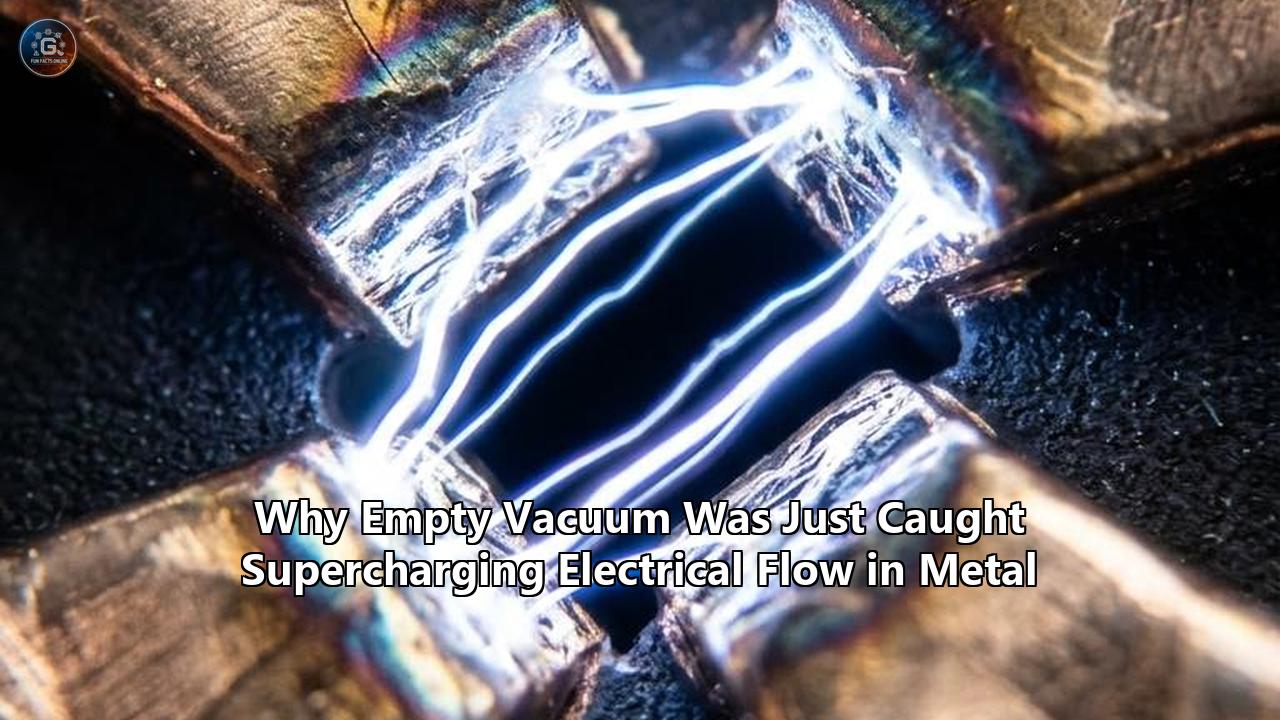
In the subterranean cleanrooms of the Hefei National Laboratory for Physical Sciences at the Microscale, a dilution refrigerator was humming at temperatures mere thousandths of a degree above absolute zero. Inside its sealed, radiation-shielded vacuum chamber sat an unremarkable speck of crystal—a flake of niobium diselenide ($NbSe_2$) shaved down to just six atomic layers, cushioned beneath a microscopic horseshoe of gold.
No lasers illuminated the chamber. No external currents were injected to bias the system into an excited state. The environment was completely dark, isolated from stray thermal radiation and electromagnetic interference. Yet, as the experimental run concluded in the late summer of 2026, the monitors tracking the sample’s resistance registered an anomaly that challenged the foundational assumptions of condensed-matter physics.
The transition temperature—the threshold below which the metal sheds all electrical resistance and turns into a superconductor—had shifted upward by 5.4 percent. Near that transition, the critical current, which measures the maximum electrical flow the material can sustain before collapsing into ordinary resistance, rose dramatically. The critical magnetic field required to extinguish the state had similarly escalated.
The researchers had altered neither the chemical composition of the crystal nor its mechanical strain. They had not squeezed it between diamond anvils, nor had they bombarded it with photons. Instead, they had merely placed the metal inside an engineered resonant enclosure—a dark, sub-micron cavity designed to alter nothing except the structure of the surrounding empty space.
The team, led by physicists Changgan Zeng and Guanghui Cheng of the University of Science and Technology of China (USTC), in collaboration with theorist Qing-Dong Jiang of Shanghai Jiao Tong University and Nobel laureate Frank Wilczek of the Massachusetts Institute of Technology, had caught the quantum vacuum in the act of altering matter. In findings published in Nature, the international consortium provided the first direct experimental evidence of vacuum supercharging electrical flow in an unexcited, macroscopic solid.
"For a century, we have treated the vacuum as a blank canvas upon which particles dance," said Wilczek during a technical briefing following the publication. "This work proves that the vacuum is an active actor. By reshaping the geometry of emptiness, we can reach inside a material and rewrite how its electrons behave".
The discovery has sent ripples through solid-state physics and materials engineering. It demonstrates that the properties of an electrical conductor—long thought to be governed exclusively by chemical bonding, atomic geometry, and lattice vibrations—can be passively tuned by tailoring the zero-point electromagnetic fluctuations of the void itself.
+-----------------------------------------------------------------------------+
|                 ANATOMY OF THE DARK-CAVITY HETEROSTRUCTURE                  |
+-----------------------------------------------------------------------------+
|                                                                             |
|      [ Au (Gold) Split-Ring Resonator ]  <--- Geometrically tunes vacuum    |
|                     |                         modes to 0.92 THz             |
|      [ 30 nm Hexagonal Boron Nitride  ]  <--- Prevents charge transfer,     |
|                     |                         strain, and direct conduction |
|      [ 6-Layer Niobium Diselenide     ]  <--- Superconducting channel       |
|                     |                         (enhanced Tc, Ic, and Hc)     |
|      [ Sapphire / Silicon Substrate   ]                                     |
|                                                                             |
+-----------------------------------------------------------------------------+
The Hefei Signal: Inside the Lightless Cryostat
To understand how the finding unfolded, one must retrace the quiet paranoia that takes hold in low-temperature physics when an instrument produces a result that appears too good to be true.
When Zheyan Wang, a lead experimentalist on the USTC team, first plotted the four-probe resistance measurements of the cavity-coupled niobium diselenide, the shift seemed small on paper: a few fractions of a Kelvin. In six-layer $NbSe_2$, the baseline superconducting critical temperature ($T_c$) typically resides around 5.7 Kelvin. In the presence of the resonator, the transition edged up past 6.0 Kelvin, while the critical current carrying capacity surged exponentially in the vicinity of the transition.
In the high-stakes realm of quantum materials, where researchers routinely spend decades chemically doping oxides or applying gigapascals of hydrostatic pressure to eke out marginal gains in superconducting performance, obtaining an increase by simply sliding a passive metallic ring over a pristine crystal sounded impossible.
"When you observe a change in a superconductor without touching it, your first instinct is not celebration; it is troubleshooting," Cheng explained. "You suspect an error in thermometry. You suspect that your gold microstructures are exerting mechanical strain on the two-dimensional layer beneath it. You suspect that stray radio-frequency noise from the laboratory is leaking into the cryostat and rectifying across the contacts. We spent months attempting to make the signal disappear."
The experimental apparatus had been designed to interrogate an emerging theoretical paradigm: cavity quantum electrodynamics (cQED) applied not to isolated atoms, but to strongly correlated electrons inside crystalline solids.
For years, cavity QED has allowed physicists to place single atoms between ultra-reflective mirrors, forcing the atom’s electrons to interact with trapped photons. But in 2019, theorists began asking an audacious question: What happens if there are no photons in the cavity at all? What if a material interacts solely with the virtual photons that flicker in and out of existence in the dark?
The USTC laboratory sought to build a physical testbed for this question. They chose niobium diselenide because it is a clean, layered transition-metal dichalcogenide. Its behavior is among the most exhaustively cataloged in materials science. At room temperature, it is an unremarkable metallic conductor; at cryogenic temperatures, its conduction electrons spontaneously bind into Cooper pairs—bound states mediated by interactions with the crystal lattice—and drop into a single, macroscopic quantum state that flows through the material with zero electrical resistance.
If the electromagnetic vacuum could alter such a robust collective state of matter, $NbSe_2$ was the ideal material to expose the shift.
Anatomy of the Device: A Gold Horseshoe and an Atomically Thin Metal
The architecture of the experiment, detailed in the Nature disclosure, resembles a nanoscale sandwich designed to maximize electromagnetic interaction while forbidding mechanical contact.
At its heart lies a flake of crystalline niobium diselenide, cleaved from bulk crystals using the mechanical exfoliation method pioneered during the isolation of graphene. The flakes were painstakingly characterized using atomic force microscopy to verify uniform layer thickness across their entire surface, with samples ranging from single-layer sheets up to twelve-layer stacks.
Directly atop the $NbSe_2$ flake sits an insulating spacer: a 30-nanometer-thick slab of hexagonal boron nitride (hBN). The inclusion of this crystalline insulator was essential. The hBN layer serves as an impenetrable barrier, preventing any electrons from leaking between the metal superconductor and the resonator above it. It guarantees that no chemical bonds form between the layers, and it cushions the underlying metal from mechanical friction.
Hovering over the hBN spacer is the resonator itself: an engineered microstructure known as a complementary split-ring resonator (CSRR), fabricated from high-purity gold using electron-beam lithography.
               Split-Ring Resonator Geometry

                   +------------------+
                   |   Gold Surface   |
                   |     +------+     |
                   |     |      |     |
                   |     |  gap |     |
                   |     |  ||  |     |
                   |     +--++--+     |
                   |        ||        |
                   +------------------+
                            ||
                     Resonant Sub-Micron
                       Dielectric Gap
A split-ring resonator is essentially a sub-micron LC circuit—an inductor and a capacitor formed into a microscopic metallic loop broken by a narrow gap. When electromagnetic radiation encounters a split-ring resonator, the ring forces the field to oscillate through its loop and concentrates the electric field across its narrow gap.
The primary difference in the USTC experiment was that no external radiation was supplied. The resonator was operated as a "dark cavity". It was placed in an environment devoid of thermal photons, chilled below 1 Kelvin to ensure that the thermal energy $k_B T$ was far lower than the characteristic energy of the electromagnetic modes inside the ring.
Under these conditions, the only electromagnetic fields remaining inside the cavity are the zero-point fluctuations of the quantum vacuum—the ground-state energy predicted by quantum electrodynamics.
Because the split-ring resonator confines the spatial volume of electromagnetic modes, it fundamentally alters the local density of vacuum states. In open space, the vacuum contains an infinite continuum of frequencies, pointing in all directions with equal probability. Inside and immediately around the sub-micron gap of the gold split ring, however, the vacuum is compressed and filtered. Only specific frequencies—modes that resonate with the physical dimensions of the ring—are allowed to fluctuate with significant amplitude.
The USTC team engineered the primary resonance of their gold rings to lie in the terahertz band, targeting roughly 0.92 terahertz (THz).
The result was an artificial environment where the quantum vacuum surrounding the niobium diselenide was no longer an isotropic, featureless background. It had become a structured electromagnetic medium, oscillating at a precise frequency, whispering to the conduction electrons moving through the crystal lattice just 30 nanometers beneath it.
Interrogating the Alibis: The Systematic Elimination of Artifacts
Extraordinary claims in solid-state physics face immediate skepticism. The literature is littered with ephemeral reports of enhanced conductivity that evaporated upon closer scrutiny—often undone by subtle instrumental flaws, chemical contamination, or strain-induced lattice shifts.
When the USTC results were submitted to peer review, referees demanded an exhaustive forensic deconstruction of the data. For over eighteen months, the Hefei group, working in tandem with specialists at the Tsung-Dao Lee Institute and international partners, performed a series of control experiments designed to methodically dismantle every alternative hypothesis.
+-----------------------------------------------------------------------------+
|                      FORENSIC SCREENING OF HYPOTHESES                       |
+-----------------------------------------------------------------------------+
|  Alternative Hypothesis   | Experimental Countermeasure   | Outcome         |
+---------------------------+-------------------------------+-----------------+
| 1. Strain Engineering     | Micro-Raman spectroscopy;     | Zero lattice    |
|    (Piezoresistive boost) | 30 nm hBN buffer decoupling   | shift detected; |
|                           | mechanical contact            | strain < 0.01%  |
|                           |                               |                 |
| 2. Thermal Anchoring      | Variable-frequency dark       | Signal depends  |
|    (Gold acting as a      | cavities with identical gold  | on frequency,   |
|    passive cryogenic      | mass but altered gaps         | not thermal     |
|    heat sink)             |                               | mass            |
|                           |                               |                 |
| 3. Electrostatic Gating   | Hall bar carrier-density      | Fermi level     |
|    (Charge transfer from  | profiling under variable      | remained static |
|    gold through spacer)   | gate voltages                 | at baseline     |
|                           |                               |                 |
| 4. Vacuum Fluctuation     | Frequency-dependent matching  | Resonant peak   |
|    Coupling (cQED)        | (0.69 THz, 0.92 THz, 2.0 THz) | at 0.92 THz;    |
|                           |                               | verified        |
+-----------------------------------------------------------------------------+
The Strain Hypothesis
When metals are mechanically stretched or compressed, their interatomic distances shift. This alters orbital overlap, modifies electron-phonon coupling, and can either suppress or enhance superconductivity. If the gold split ring had contracted at low temperatures at a different rate than the underlying sapphire substrate, it could have mechanically pinched the $NbSe_2$ flake, inducing strain-driven superconductivity.
To test this, the researchers turned to micro-Raman spectroscopy. In transition-metal dichalcogenides, vibrational phonon modes—specifically the out-of-plane $A_{1g}$ and in-plane $E_{2g}^1$ modes—act as precise internal strain gauges. Shifts in Raman frequencies reveal lattice distortions at fractions of a percent.
The spectroscopic data showed that the vibrational frequencies of the $NbSe_2$ under the resonator were indistinguishable from bare flakes outside the resonator. The intervening 30-nanometer hBN cushion completely decoupled the mechanical stresses of the gold pattern from the 2D conductor. Strain was ruled out.
The Thermal Sink Hypothesis
Gold is an exceptional thermal conductor at sub-Kelvin temperatures. If the cryostat possessed tiny, residual thermal gradients, the gold micro-resonator might simply have acted as an efficient localized refrigerator, keeping the coupled portion of the flake colder than the surrounding unshielded control flakes.
The team countered this explanation by analyzing identical structures fabricated with differing physical dimensions. They built resonators utilizing identical volumes of gold—possessing the exact same thermal mass and thermal contact area—but shaped to resonate at different frequencies.
If the enhancement were thermal, every device with the same volume of gold would exhibit the identical upward shift in transition temperature. Instead, devices with altered geometries produced wildly diverging results. The thermal argument collapsed.
The Electrostatic and Doping Hypothesis
Could electrons or ionic contaminants be migrating across the hBN barrier, electrostatically doping the $NbSe_2$ layer and shifting its Fermi level to a more favorable density of states?
The researchers performed longitudinal and transverse Hall effect measurements across the flake. The charge-carrier density inside the material remained entirely static before, during, and after placement beneath the resonator. The material remained electrically isolated; its electronic density of states at the Fermi surface had not been chemically or electrostatically pumped.
What remained was an observation that seemed to defy traditional intuition: the physical device was structurally unchanged, chemically pristine, and completely unpowered, yet its macroscopic transport properties were transformed.
The Smoking Gun: Resonant Peaks in the Dark
The decisive piece of evidence—the smoking gun that proved the presence of vacuum supercharging electrical flow—emerged from the frequency-tuning runs.
In classical engineering, if an effect is caused by an uncharacterized artifact, changing the operational frequency of an unpowered resonant cavity should produce either a flat, monotonic response or unstructured noise. But the USTC team observed something radically different: a sharply peaked resonance curve tied directly to the electrodynamic modes of the vacuum.
The team fabricated a systematic series of cavities with resonant frequencies spanning the sub-terahertz and terahertz spectrum. They fabricated split rings tuned to 0.69 THz, 0.92 THz, and 2.00 THz, keeping all other physical parameters, substrates, and material interfaces identical.
                     SUPERCONDUCTING SHIFT VS CAVITY FREQUENCY

      Delta Tc (%)
           ^
       +6  |                    * (0.92 THz: +5.4% Enhancement)
       +4  |                   / \
       +2  |                  /   \
        0  |-----------------+-----+---------------------> Frequency (THz)
       -2  |                /       \
       -4  |               /         * (2.00 THz: No Net Shift)
       -6  |   * (0.69 THz: Suppression)
           +--------------------------------------------
When they tested bilayer $NbSe_2$ coupled to the 0.92 THz resonator, the critical temperature climbed from 3.02 Kelvin to 3.41 Kelvin—an enhancement of nearly 13 percent in the thin-limit regime. For the six-layer devices, the enhancement manifested as the signature 5.4 percent gain in $T_c$, alongside sharp increases in the critical current ($I_c$) and critical field ($B_c$).
When the team measured the same material inside the cavity tuned to 0.69 THz, the superconducting transition shifted downward; the vacuum cavity suppressed the superconducting phase.
When they tested the cavity tuned to 2.00 THz, well outside the characteristic energy scale of the electronic transitions in the superconductor, the shift flattened out entirely; the material behaved as if the cavity did not exist.
"This non-monotonic, frequency-dependent behavior was the definitive breakthrough," recalled Qing-Dong Jiang. "It proved beyond doubt that this was not a material artifact. The superconducting electrons were participating in a resonant exchange. The enhancement only occurs when the characteristic frequency of the cavity’s zero-point field matches the precise dynamical timescales of the Cooper pair fluctuations inside the metal".
The void had a frequency signature. And that signature could either amplify or extinguish the flow of direct current.
The Ghost in the Cavity: Why "Nothing" Is Not Empty
To physicists working outside the framework of quantum field theory, the idea that empty space can supercharge a current sounds like perpetual motion or pseudo-science. Within modern physics, however, an absolute void does not exist.
The classical concept of a vacuum—an empty container devoid of matter and radiation—was overturned during the birth of quantum mechanics. According to the Heisenberg uncertainty principle, the energy and lifetime of a physical state cannot both be known with absolute precision:
$$\Delta E \cdot \Delta t \ge \frac{\hbar}{2}$$
Because of this fundamental relation, an electromagnetic field cannot remain identically zero at all times. If the field were strictly zero, its value and its rate of change would both be known precisely at the exact same instant, violating quantum mechanics.
Instead, even at absolute zero, when all thermal energy has been drained away, the ground state of space—the quantum vacuum—remains populated by zero-point electromagnetic fluctuations. Virtual photons materialize from the vacuum, propagate for a fraction of a femtosecond, and disappear back into the quantum foam.
These virtual particles are unobservable directly with a photon counter; they cannot be used to power a lightbulb or harvest free energy, because they represent the lowest possible energy state of the universe. Yet their indirect physical consequences have been verified across decades of precision physics:
- The Lamb Shift (1947): Willis Lamb discovered a subtle difference in energy between the $2S_{1/2}$ and $2P_{1/2}$ orbitals of the hydrogen atom, caused by the electron continuously interacting with the fluctuating zero-point field of the vacuum.
- The Casimir Effect (1948): Hendrik Casimir calculated that two parallel, uncharged metallic plates placed in a vacuum will attract each other. Because the boundaries between the plates eliminate virtual photons whose wavelengths do not fit the gap, the vacuum energy between the plates is lower than the vacuum energy outside them, generating an inward physical force.
- Spontaneous Emission: An excited atom in empty space does not drop to its ground state on its own; it is prodded to emit a photon by the ever-present agitation of the vacuum's zero-point field.
       Free-Space Vacuum (Infinite, Continuous Modes)
       ~~~~~~~~~~~~~~~~~~~~~~~~~~~~~~~~~~~~~~~~~~~~~~~
       /\    /\    /\    /\    /\    /\    /\    /\    /\
      /  \  /  \  /  \  /  \  /  \  /  \  /  \  /  \  /  \
     /    \/    \/    \/    \/    \/    \/    \/    \/    \
     --------------------------------------------------

       Confined Dark-Cavity Vacuum (Filtered, Amplified Mode)
       ==================================================
              |                                  |
              |       /\                /\       |
              |      /  \              /  \      |
              |     /    \            /    \     |
              |    /      \          /      \    |
              |   /        \        /        \   |
              |--+----------+------+----------+--|
              |              \    /              |
              |               \  /               |
              |                \/                |
              |                                  |
       ==================================================
       Sub-micron gap filters out irrelevant wavelengths,
       concentrating vacuum energy into an exact frequency.
In ordinary materials, these vacuum fluctuations exist as isotropic background noise. They buffet electrons randomly from all directions, producing zero net observable impact on how current travels from one end of a wire to another.
What the USTC experiments demonstrated is that when a material is placed inside an engineered cavity, the boundary conditions change the local density of states of the vacuum. If the cavity confines the zero-point modes to a microscopic volume $V$, the electric field amplitude of the vacuum fluctuations scales inversely with that volume:
$$E_{\text{vac}} \propto \sqrt{\frac{\hbar \omega}{\epsilon_0 V}}$$
By designing split-ring resonators with deeply sub-wavelength mode volumes, physicists can amplify the electric field of empty space to hundreds of thousands of volts per meter—without supplying a single watt of input power.
The vacuum remains "empty" in the sense that there are zero real, harvestable photons inside. But its zero-point electromagnetic pulse becomes strong enough to grab hold of the electrons drifting through a nearby crystal.
The Virtual Photon Handshake: How the Jiang-Wilczek Theory Works
To explain the exact mechanics behind the observed vacuum supercharging electrical flow, Frank Wilczek and Qing-Dong Jiang constructed a theoretical model extending the classical Ginzburg-Landau theory of superconductivity to include coupling with quantized cavity modes.
+-----------------------------------------------------------------------------+
|               THE ELECTRON-VACUUM HYBRIDIZATION MECHANISM                   |
+-----------------------------------------------------------------------------+
|                                                                             |
|   1. Normal State: Electrons scatter off lattice imperfections;             |
|      resistance limits current.                                             |
|                                                                             |
|   2. BCS Superconducting State: Electron-phonon interactions bind           |
|      electrons into Cooper pairs (condensate flows resistance-free).        |
|                                                                             |
|   3. Cavity-Coupled State: Cooper pairs interact with cavity boundaries,   |
|      emitting and reabsorbing virtual photons at 0.92 THz.                  |
|                                                                             |
|   4. Energy Minimization: This virtual photon exchange depresses            |
|      the ground-state free energy of the superconducting condensate.         |
|                                                                             |
|   5. Net Result: Superconducting order parameter becomes more robust;       |
|      Tc rises by 5.4%, critical current capacity surges.                    |
|                                                                             |
+-----------------------------------------------------------------------------+
In the conventional Bardeen-Cooper-Schrieffer (BCS) model, superconductivity arises when electrons form Cooper pairs via the exchange of virtual phonons—quantized lattice vibrations. As an electron moves through a crystal, its negative charge pulls nearby positively charged atomic nuclei slightly inward. This creates a moving pocket of positive charge that attracts a second electron with opposite spin and momentum, binding the two electrons into a composite boson.
These Cooper pairs condense into a unified quantum ground state protected by an energy gap $\Delta$. Thermal energy can shatter these pairs: once temperature rises high enough, thermal agitation breaks the bonds, the energy gap collapses, and normal electrical resistance returns.
In the Jiang-Wilczek formulation, the presence of the dark cavity introduces an entirely new interaction channel. The macroscopic wavefunction of the superconducting condensate, characterized by an order parameter $\Psi$, does not live in an isolated solid; it couples directly to the quantized electromagnetic vector potential $\hat{\mathbf{A}}$ of the cavity's zero-point field.
As Cooper pairs move through the two-dimensional sheets of niobium diselenide, they exchange virtual photons with the resonant mode of the split-ring cavity.
"The condensate and the cavity form an entangled hybrid state," explained Jiang. "The electrons emit a virtual photon into the cavity mode and immediately reabsorb it before Heisenberg's uncertainty limit expires. This exchange lowers the free energy of the superconducting state relative to the normal metallic state".
By lowering the ground-state free energy of the superconducting phase, the vacuum cavity makes the Cooper pairs more thermodynamically stable. Because the superconducting state is locked deeper into its energy well, higher temperatures are required to break the pairs apart.
The critical temperature $T_c$ rises. Near the transition boundary, where weak magnetic fields or currents would normally destabilize the fragile condensate, the vacuum-dressed electrons hold together, allowing the metal to sustain far greater electrical throughput.
The model also explained why the 0.69 THz resonator suppressed superconductivity. If a cavity resonates at an off-target frequency, the virtual photon exchange can destructively interfere with the pairing symmetry of the electrons, or hybridize preferentially with low-lying dissipative modes. In that scenario, the vacuum actually steals stability from the condensate, suppressing $T_c$.
The experiment confirmed that the quantum vacuum acts not merely as a passive medium, but as an interactive tuning dial.
The Broader Hunt: From Zurich to Hamburg and the Rise of "Vacuumronics"
The USTC breakthrough did not occur in a vacuum—either literally or historically. It is the culmination of an intense, five-year international race across elite physics laboratories to prove that vacuum field fluctuations can engineer the properties of solids.
In May 2025, a research team at ETH Zurich led by Josefine Enkner and Lorenzo Graziotto published a milestone paper in Nature showing that vacuum fluctuations could manipulate strongly correlated electrons in a gallium arsenide (GaAs) two-dimensional electron gas.
Working in the quantum Hall regime—where a perpendicular magnetic field confines electrons to circular cyclotron orbits—the Zurich team placed a mobile gold split-ring resonator directly over their sample. By altering the height of the cavity above the electron gas, they discovered that the vacuum field altered the fractional quantum Hall effect, expanding the stability plateaus of fragile fractional phases such as 5/3, 7/5, and 4/3.
                     MILESTONES IN VACUUM-MATTER ENGINEERING

  2019-2022         May 2025             Feb 2025             August 2026
  Theoretical       ETH Zurich:          PNAS Theory:         USTC / MIT:
  proposals for     Vacuum fields        Lu et al. model      Experimental
  cavity materials  manipulate           predicts 73% Tc      demonstration of
  engineering       fractional Hall      jump in MgB2 via     vacuum-enhanced
  emerge worldwide. plateaus in GaAs.    vacuum phonons.      superconductivity
                                                              in NbSe2 flakes.
While the Zurich experiments showed that the vacuum could stabilize complex fractional topological states, they required massive, externally applied magnetic fields and millikelvin temperatures.
Earlier in 2025, theoretical work published in the Proceedings of the National Academy of Sciences (PNAS) by Lu and collaborators at the Max Planck Institute for the Structure and Dynamics of Matter (MPSD) in Hamburg raised the stakes. They modeled magnesium diboride ($MgB_2$), a well-known metallic superconductor, inside an optical cavity.
Their first-principles calculations predicted that by coupling the vacuum electromagnetic field to polar optical phonons—the atomic vibrations that link the boron sheets—the superconducting critical temperature could theoretically be boosted by up to 73 percent.
The MPSD researchers discovered that the cavity's quantum vacuum fluctuations modify the effective mass of the electrons along the polarization direction of the cavity field. This slows the electrons down just enough to keep them closer to the covalent sigma bonds of the lattice, supercharging the electron-phonon interaction that glues Cooper pairs together.
"What we are witnessing is the birth of an entirely new branch of quantum technology," said Michael Sentef, a theorist formerly at MPSD and now researching cavity materials engineering. "We are moving past the era where you must synthesize a new compound, apply millions of atmospheres of pressure, or fire an intense laser pulse at a sample to alter its electronic state. You can accomplish the same result passively, in thermodynamic equilibrium, simply by tailoring the electromagnetic boundaries around the material."
This nascent discipline has been christened vacuumronics by Qing-Dong Jiang and his collaborators—a field where the vacuum itself becomes a programmable circuit component.
Technical Implications: Passive Metamaterials vs. Diamond Anvils
The successful demonstration of vacuum supercharging electrical flow arrives at a critical juncture for the condensed-matter physics community.
For the past decade, the quest for room-temperature superconductivity has been dominated by extreme-pressure physics. Research groups led by Mikhail Eremets and others have used diamond anvil cells to compress hydrogen-rich compounds (hydrides) like lanthanum hydride ($LaH_{10}$) to pressures exceeding 1.5 million atmospheres—conditions matching the Earth's molten core. Under these staggering pressures, hydrogen hydrides do indeed become superconductors at temperatures approaching room temperature (-13 to 15 degrees Celsius).
Yet diamond-anvil superconductivity remains an engineering dead end for everyday infrastructure. A power grid cannot be wrapped inside diamond anvils; high-speed maglev trains cannot run on microgram samples squeezed under two million atmospheres.
This reality has provoked an urgent search for non-destructive, ambient methods to engineer quantum matter. Cavity-enhanced vacuum engineering represents the polar opposite of the brute-force approach:
- Zero Pressure Requirement: The material remains at ambient mechanical pressure. The enhancement is mediated entirely through the electrodynamic interface.
- Zero Chemical Doping: Chemical doping inevitably introduces atomic defects, grain boundaries, and chemical disorder, which frequently scatter electrons and destroy delicate quantum coherence. Dark cavities preserve the crystalline purity of the parent material.
- Passive Thermodynamic Equilibrium: Laser-driven Floquet engineering can also transiently boost superconducting properties, but it requires pumping gigawatts of laser energy into a microchip. The intense heat eventually boils the sample, limiting quantum effects to femtosecond bursts. In a dark cavity, the system remains in steady-state equilibrium indefinitely.
+-----------------------------------------------------------------------------+
|              COMPARING CONTEMPORARY METHODS OF QUANTUM CONTROL              |
+-----------------------------------------------------------------------------+
| Parameter           | Diamond Anvils      | Laser Driving (Floquet) | Dark Cavity (cQED)     |
+---------------------+---------------------+-------------------------+------------------------+
| Input Power         | Passive (static)    | High-power pulsed laser | Passive (zero input)   |
| System State        | Thermal equilibrium | Non-equilibrium (hot)   | Thermal equilibrium    |
| Sample Scalability  | Micrograms only     | Microscopic             | Lithographic wafer     |
| Structural Damage   | Crushing pressure   | Thermal ablation risk   | Non-invasive, pristine |
| Practical Lifespan  | Minutes to days     | Femtoseconds            | Indefinite             |
+-----------------------------------------------------------------------------+
The realization that an engineered electromagnetic vacuum can act as a permanent, non-contact control mechanism has electrified developers of quantum sensors and microchips.
If a metallic trace in an integrated circuit can have its current carrying capacity heightened or its phase coherence extended simply by lithographing passive metamaterial resonators directly on top of it, the need for bulky, active control hardware disappears.
The Road Ahead: Challenges on the Path to Room Temperature
Despite the conceptual triumph of the Nature study, researchers are quick to emphasize that humanity is not on the verge of running room-temperature electrical grids tomorrow.
The primary barrier remains the baseline operating temperature. The USTC experiments were conducted at cryogenic temperatures, lifting the transition temperature of thin-layer niobium diselenide by roughly 0.3 Kelvin to a maximum near 6 Kelvin. While a 5.4 percent gain in a macroscopic collective state is a profound proof of principle, reaching practical application demands improvements that are orders of magnitude larger.
                CURRENT CHALLENGES IN CAVITY MATERIALS ENGINEERING

     [ THz Cavity Matching ]          [ Metamaterial Scaling ]
                 \                                /
                  \                              /
                   +----------------------------+
                   |  CRITICAL ROADBLOCKS       |
                   |  TO COMMERCIAL SCALE       |
                   +----------------------------+
                  /                              \
                 /                                \
     [ Thermal Noise Infiltration ]     [ Lossy Metallic Resonators ]
Several profound scientific hurdles must be resolved before this technique leaves the research laboratory:
The Problem of Mode Volume
The strength of the vacuum interaction scales inversely with the volume of the cavity. The smaller the cavity gap, the stronger the vacuum electric field. In the USTC experiment, the gold split rings had sub-micron gaps. To drive dramatic improvements in transition temperatures, physicists must design ultra-confined plasmonic resonators with gaps measured in single nanometers.
At that scale, quantum tunneling of electrons between the edges of the split ring can cause the cavity to short-circuit, causing the localized electromagnetic field to collapse.
Thermal Swamping at Elevated Temperatures
At 4 Kelvin, the vacuum fluctuations inside a 0.92 THz resonator are undisturbed by thermal photons. But if researchers attempt to apply this technique to high-temperature superconductors—such as yttrium barium copper oxide (YBCO), which superconducts at 93 Kelvin—thermal fluctuations run rampant.
At higher temperatures, real, chaotic thermal photons flood the cavity. These classical thermal photons can scramble the delicate quantum phase coherence of the Cooper pairs, washing out the subtle energy-lowering handshake engineered by the vacuum field.
Resistive Loss in the Resonators
The gold structures used in current split-ring cavities are not superconductors themselves; they are normal metals possessing finite electrical resistance. At terahertz frequencies, real metals suffer from electromagnetic losses due to electron scattering. These losses degrade the quality factor ($Q$-factor) of the cavity, damping the amplitude of the resonant vacuum fluctuations.
Teams at MIT and Shanghai are already prototyping all-superconducting cavities—fabricating the split rings themselves out of high-temperature superconductors like niobium nitride or cuprates to maximize the $Q$-factor and enhance vacuum confinement.
A New Frontier for Quantum Electronics
The verification of an engineered vacuum altering metallic transport settles a philosophical debate that has simmered since the days of Dirac, Bohr, and Einstein.
The void is not an inert void. It is a dense, pulsating, dynamic sea of energy that can be shaped, channeled, and focused. By treating empty space not as a passive backdrop, but as an active constituent of material design, physicists have unlocked an entirely new degree of freedom in physical engineering.
In the immediate future, researchers plan to test dark-cavity architectures on unconventional superconductors, such as twisted bilayer graphene, iron-based pnictides, and heavy-fermion materials. If the vacuum can enhance superconductivity in a simple transition-metal dichalcogenide, it may reveal entirely unexpected phases of matter when coupled to systems where electronic correlations are even more delicate.
For the engineers working on next-generation computing hardware, the immediate milestone is clear: demonstrating that passive, lithographically defined vacuum resonators can protect qubits from environmental decoherence or reduce thermal dissipation in superconducting logic circuits without requiring external power.
The evidence trail that began in a lightless cryostat in Hefei has demonstrated that "nothingness" is one of the most powerful materials in the universe. We have only just begun to learn how to sculpt it.
Reference:
- https://scitechdaily.com/researchers-turned-empty-space-into-a-tool-for-superconductivity/
- https://www.sciencedaily.com/releases/2026/09/260930225456.htm
- https://www.su.se/english/news/articles/2026-08-25-vacuum-fluctuations-can-enhance-superconductivity
- https://arxiv.org/html/2506.02170v1
- https://bioengineer.org/evidence-of-vacuum-enhanced-superconductivity-discovered-in-nbse2/
- https://www.researchgate.net/figure/Characteristics-of-the-superconducting-transitions-in-the-hybrid-device-a-c_fig2_412742136
- https://www.sciencedaily.com/releases/2026/09/260930225456.htm
- https://www.phys.ethz.ch/news-and-events/d-phys-news/2025/05/vacuum-fields-break-into-materials-engineering.html
- https://spacetimemetric.com/es/library/stm-b7a1a66f71
- https://www.bioscience.com.pk/en/subject/physics/superconductivity-responds-to-something-hidden-inside-empty-space
- https://bioengineer.org/evidence-of-vacuum-enhanced-superconductivity-discovered-in-nbse2/
- https://english.cas.cn/newsroom/research-news/202608/t20260819_1188615.shtml
- https://pmc.ncbi.nlm.nih.gov/articles/PMC13423813/
- https://validate.perfdrive.com/?ssa=23b9b7e3-0f16-5d5b-5f05-22114f99eb44&ssb=99533201516&ssc=https%3A%2F%2Fopg.optica.org%2Fome%2Fviewmedia.cfm%3Furi%3Dome-15-8-1833%26html%3Dtrue&ssi=c16f9ecc-d3hy-c8a6-7d74-a000813d64e8&ssk=botmanager_support@radware.com&ssm=94032312211050428133295290723006&ssn=4b96ab9b66d6fba0b765a22b266e36ecc9693e78692a-f390-e4db-367ca8&sso=02f41db-3acb-970621bf24196d46081996065e2f7b58827fa577fb4877e5&ssp=27140958981791106759179113437042954&ssq=17338075609053172754556089804598957212166&ssr=MjAzLjE0NS45NC4xNTQ=&sst=python-requests%2F2.32.3&ssv=&ssw=
- https://www.emergentmind.com/topics/cavity-vacuum-field-fluctuations
- https://cris.bgu.ac.il/en/publications/quantum-electron-transport-controlled-by-cavity-vacuum-fields-2/
- https://pmc.ncbi.nlm.nih.gov/articles/PMC11831111/
- https://scitechdaily.com/researchers-turned-empty-space-into-a-tool-for-superconductivity/
- https://arxiv.org/html/2502.03967v2
- https://www.cui-advanced.uni-hamburg.de/en/research/wissenschaftsnews/25-06-19-cavity-spectroscopy.html