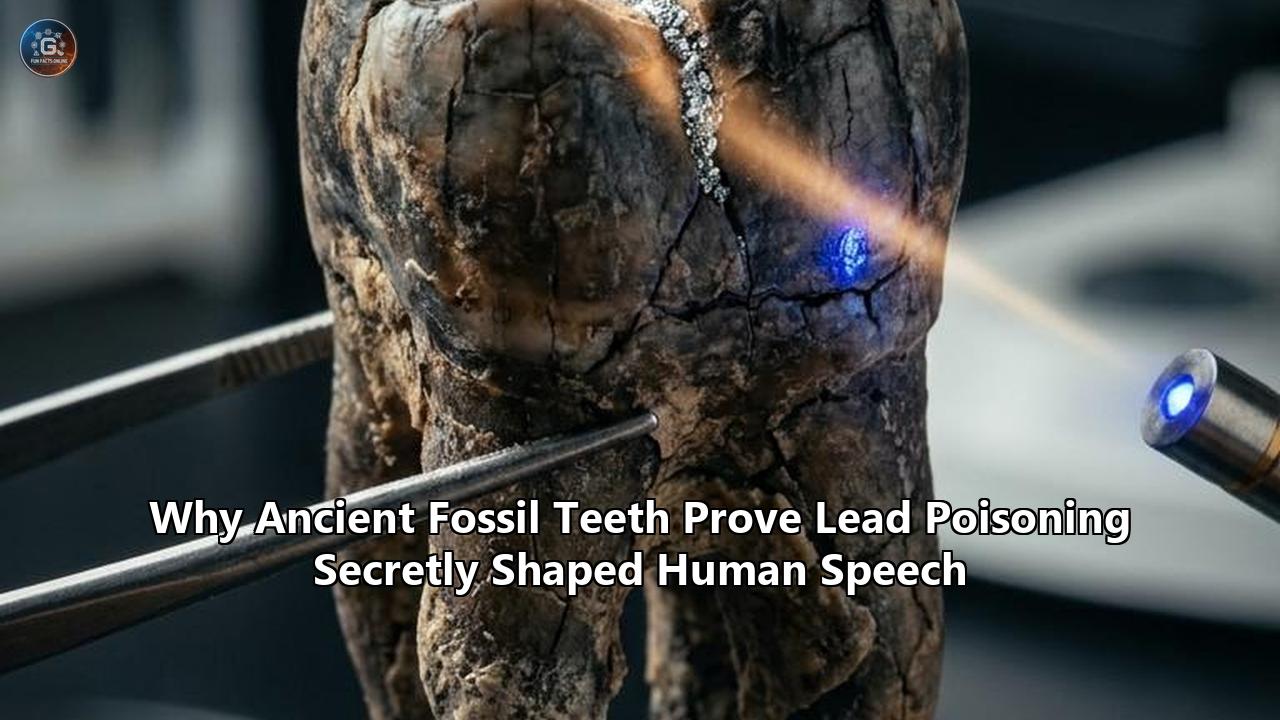
A landmark study published in Science Advances has upended the conventional timeline of human evolution, revealing that toxic heavy metals systematically altered our species' neurobiology long before the dawn of modern industry. By subjecting 51 fossilized hominin teeth spanning two million years to sub-micron laser geochemistry, an international consortium of researchers proved that recurrent childhood lead exposure was an inescapable reality across ancient Africa, Asia, and Europe. The investigation demonstrated that modern humans survived this toxic crucible only because of a solitary, protective genetic mutation that shielded the neural pathways governing complex speech from heavy metal toxicity—a defense mechanism our archaic cousins, including Neanderthals, completely lacked.
The project, conducted jointly by the Geoarchaeology and Archaeometry Research Group at Southern Cross University, the Icahn School of Medicine at Mount Sinai, and the University of California San Diego School of Medicine, linked deep-time environmental toxicology directly to the origin of complex language. Modern Homo sapiens carry a unique variant of the neuro-oncological ventral antigen 1 (NOVA1) gene. When researchers cultured lab-grown brain organoids engineered with the archaic Neanderthal version of this gene and exposed them to lead levels identified in Pleistocene dental enamel, the toxin triggered massive cell death and disrupted FOXP2, the master regulator gene essential for speech articulation and syntax.
The biochemical revelation establishes a startling evolutionary mechanism: the neurological wiring that makes human conversation possible did not evolve in a benign vacuum, but as an adaptive survival shield against environmental contamination. By demonstrating how prehistoric lead poisoning human speech networks selectively culled hominin lineages, the study reframes the emergence of modern language from a spontaneous cognitive leap into a hard-won metabolic defense.
EPISODIC LEAD EXPOSURE ACROSS HOMININ FOSSILS
Analyzed via High-Precision Laser-Ablation ICP-MS (n=51)

Australopithecus africanus    [■■■■■■■■■■■■■■■■□□□□] 71% Positive
Paranthropus robustus         [■■■■■■■■■■■■■■■■□□□□] 71% Positive
Gigantopithecus blacki        [■■■■■■■■■■■■■■■■■■■□] 90% Positive (Highest acute levels)
Homo neanderthalensis         [■■■■■■■■■■■■■■■■□□□□] 73% Positive
Early Homo sapiens            [■■■■■■■■■■■■■■■■□□□□] 71% Positive
Tracing the trajectory of this discovery reveals an escalating scientific detective story. Over the course of fifteen years, isolated geochemical anomalies buried in museum archives converged with cutting-edge stem cell biotechnology, overturning decades of anthropological assumptions regarding cognitive evolution, cave ecology, and the selective pressures that doomed our archaic relatives.
2010–2017: The Industrial Dogma and the French Cave Anomaly
For nearly a century, environmental toxicologists and anthropologists operated under a shared dogma: lead exposure was an exclusively anthropogenic scourge. The standard historical narrative posited that hominins evolved in a pristine, chemically uncorrupted world. Widespread toxic ingestion was believed to have originated in classical antiquity, when the Roman Empire smelted massive quantities of argentiferous galena to extract silver, generating lead byproducts that lined aqueducts, cooking cauldrons, and wine flagons. Atmospheric ice cores extracted from Greenland appeared to support this framework, showing that hemispheric lead pollution began around 2,500 years ago, dipped following the fall of Rome, and surged vertically after the Industrial Revolution with the advent of leaded gasoline and coal combustion.
Beneath that consensus, inconsistent data points quietly accumulated in archaeological storage drawers. During the early 2010s, analytical chemists began refining micro-spatial sampling methods, attempting to reconstruct prehistoric nursing patterns by measuring barium-to-calcium ratios in fossilized teeth. Teeth function as permanent biological calendars; unlike bone, which continually remodels, turnover in dental enamel ceases once it mineralizes during early childhood.
In 2014, an analytical chemist and physical anthropologist, Renaud Joannes-Boyau of Southern Cross University, was examining the dental micro-layers of two Neanderthal specimens from the Middle Paleolithic site of Payre in southeastern France. Located on the western bank of the Rhône Valley, the Payre cave deposits date to approximately 250,000 years ago. Joannes-Boyau was looking for seasonal shifts in climate and maternal milk consumption preserved within the incremental growth lines of the hominin molars.
Instead of clean elemental baselines, the spectrometer registered localized spikes of an unexpected heavy element: lead.
Initial reactions treated the spikes as lab contamination or post-depositional diagenesis—the process by which minerals from surrounding cave soil leach into fossilized specimens over millennia. Joannes-Boyau and his colleagues spent years developing decontamination protocols to rule out sedimentary interference. By using high-resolution spatial mapping, they discovered that the lead signatures were strictly confined along the biological growth striations of the inner enamel, completely absent from the surrounding sediment matrix and external tooth surfaces.
Published quietly in late 2018, the Payre finding showed two discrete episodes of acute lead ingestion during the winter or early spring seasons of a Neanderthal child's life. The child had somehow ingested heavy metals a quarter of a million years before the first metal foundry was conceived.
The discovery sparked intense debate. Most physical anthropologists dismissed Payre as a geographic freak—a localized tragedy where a single family shelter happened to sit directly atop a exposed vein of lead sulfide. Others argued that the Neanderthals had mistakenly ingested galena ore while seeking mineral pigments for cave paints. The dominant academic camp maintained that heavy metal toxicity was completely irrelevant to broad hominin evolution. However, for a small collective of exposome researchers and geochemists, Payre was a crack in the industrial orthodoxy. If one Neanderthal child in the Rhône Valley was absorbing lead into its developing skeleton, the phenomenon might not have been an isolated accident, but a continuous environmental reality.
2018–2023: Laser Ablation Exposes a 2-Million-Year Chemical Baseline
Validating whether lead exposure was a universal evolutionary factor required an unprecedented analytical scale and techniques sensitive enough to map fossil chemistry without obliterating rare specimens. Between 2018 and 2023, Joannes-Boyau teamed with Manish Arora, Vice Chairman of Environmental Medicine at the Icahn School of Medicine at Mount Sinai. Arora had pioneered methods using children’s baby teeth to track how early-life environmental exposures correlate with modern autism, neurodevelopmental delays, and behavioral disorders.
The researchers turned the analytical capacity of Mount Sinai’s Exposomics laboratories and Southern Cross University's Geoarchaeology and Archaeometry Research Group (GARG) toward deep-time fossils. They deployed high-precision Laser Ablation Inductively Coupled Plasma Mass Spectrometry (LA-ICP-MS). The system works by focusing an ultraviolet laser down to a spot size narrower than a human hair, vaporizing microscopic trenches of enamel across sectioned teeth. The aerosolized tooth dust is instantly swept by high-purity helium and argon gas into an inductively coupled plasma torch burning at 10,000 Kelvin, atomizing and ionizing the elements before passing them into a quadrupole mass spectrometer.
INCREMENTAL GROWTH ANALYSIS (LA-ICP-MS)
Section of Molar Enamel showing Childhood Chronology

Outer Surface
────────────────────────────────────────────────────
Enamel Prism Matrix
  │  [Day 060] - Basal Calcium Homeostasis
  │  [Day 120] - Lead Spike (karst runoff / illness mobilization)
  │  [Day 180] - Enamel Retzius Line (developmental stress)
  │  [Day 240] - Lead Deposition (nursing / cave water)
  │  [Day 300] - Basal Calcium Homeostasis
────────────────────────────────────────────────────
Dentine-Enamel Junction (DEJ)
By rastering across the lines of Retzius and perikymata—the daily and weekly biological growth increments of mammalian dentition—the team assembled a timeline of heavy metal uptake week by week across an ancient individual's childhood.
Over five years, the researchers assembled a cohort of 51 fossilized dental specimens sourced from collections worldwide. The teeth represented an expansive phylogenetic and chronological sweep:
- Australopithecus africanus and Paranthropus robustus from the Sterkfontein and Swartkrans karst systems of South Africa (1.5 to 2.0 million years old).
- Gigantopithecus blacki, the massive extinct ape from the subterranean karst networks of southern China (dated to 1.8 million years old).
- Extinct and extant non-human primates, including fossil Pongo (orangutans) and Papio (baboons).
- Middle and Late Pleistocene Homo neanderthalensis specimens from France, Spain, and Central Europe.
- Early fossil Homo sapiens specimens spanning Africa, the Levant, and Australia.
The geochemical results contradicted established environmental paradigms. Out of the 51 specimens, 73% showed clear, undeniable signatures of episodic lead exposure during childhood. When restricting the analysis solely to hominins (Australopithecus, Paranthropus, and Homo), 71% of all individuals possessed discrete lead bands deeply embedded within their enamel architectures.
The older specimens showed the most severe spikes. Fossil molars belonging to Gigantopithecus blacki dating to 1.8 million years ago displayed recurrent, high-amplitude bursts of lead absorption, indicating severe acute contamination events. Neanderthals and early Homo sapiens displayed repeated, cyclical lead bands that matched seasonal weather variations and periods of developmental stress.
The source of the poison was geological. Early hominins were cave-dwelling foragers reliant on subterranean springs, limestone caverns, and deep shelters for survival. Karst environments—limestone formations dissolved by acidic waters—are natural geological reservoirs for galena and other heavy metal sulfides. Cave water filtering through mineralized rock fracture networks carried high concentrations of dissolved lead.
Furthermore, during periods of acute seasonal starvation or systemic physiological illness, hominin metabolic systems broke down internal reserves, inadvertently releasing skeletal lead stores back into the bloodstream where it was taken up by the developing enamel. For over two million years, early human and hominin nervous systems grew up immersed in neurotoxic heavy metals.
The critical question moved from geology to biology: If early hominids were exposed to heavy neurotoxins throughout the Pleistocene, how did Homo sapiens develop the refined, fragile neurological networks that made abstract thought and syntactic language possible?
2021: The Unexplained Mutation in the Human Brain
While geochemists mapped heavy metals across prehistoric dental enamel, an independent line of inquiry in California had run into an evolutionary mystery. At the University of California San Diego, developmental biologist Alysson Muotri was investigating what distinguishes the modern human brain from extinct hominin species.
Comparative genomics had already revealed that our genome is almost identical to that of Neanderthals and Denisovans. Svante Pääbo’s Nobel Prize-winning sequencing of the Neanderthal genome revealed that fewer than a hundred amino-acid substitutions in protein-coding genes are uniquely fixed across all modern humans. The overwhelming majority of our biological machinery is shared with archaic hominins.
Among that small catalog of differences, Muotri’s team zeroed in on NOVA1 (Neuro-oncological ventral antigen 1). NOVA1 is a master alternative splicing regulator active during early neurodevelopment. It does not merely produce a single structural component; it acts as a conductor, directing how hundreds of other pre-mRNAs are sliced, joined, and translated into proteins within developing cortical synapses and neural circuits.
Modern humans carry a derived, fixed version of NOVA1. Archaic hominins—Neanderthals and Denisovans—carried an ancestral version that they shared with chimpanzees. The difference between the modern human NOVA1 and the archaic variant comes down to a single base pair out of billions: a substitution that replaces isoleucine with valine at amino acid position 197.
In a 2021 paper published in Science, Muotri’s laboratory used CRISPR-Cas9 genome editing to "re-archaicize" modern human induced pluripotent stem cells (iPSCs). They reverted human stem cell lines back to the Neanderthal NOVA1 variant, then guided those stem cells to differentiate into brain organoids—three-dimensional, millimeter-wide balls of living human brain tissue that recapitulate early fetal neurodevelopment.
The organoids carrying archaic NOVA1 grew into distinctly abnormal structures. Compared to smooth, spherical modern human organoids, the archaic-variant organoids formed irregular, wrinkled, popcorn-shaped surfaces. Their neural progenitor cells proliferated slower, formed fewer active synapses, and exhibited chaotic, altered firing patterns across their neural networks.
NOVA1 ALTERNATIVE SPLICING VARIANT DIVERGENCE

Archaic Variant (Ancestral: Chimpanzees, Neanderthals, Denisovans):
   ... Gly - Pro - [ ILE ] - Ala - Thr ...
                     ▲
                     │ Point Mutation (Single Base Pair)
                     ▼
   ... Gly - Pro - [ VAL ] - Ala - Thr ...
Modern Human Variant (Fixed in 100% of living Homo sapiens):
Muotri’s 2021 experiments proved that this single nucleotide swap changed the architecture of the hominin brain. What the study could not explain was why. In evolutionary biology, mutations do not sweep to 100% fixation across an entire global species unless driven by intense positive selection. Under normal conditions, both the archaic and modern human organoids survived in nutrient-rich laboratory media. There was no obvious evolutionary pressure evident in a clean petri dish that justified why ancestral hominins would need to ditch an ancient, conserved protein variant that had served primates effectively for tens of millions of years.
The answer remained locked until Muotri crossed paths with Joannes-Boyau and Arora.
2024–2025: The Crucible Experiment That Linked Metal to Language
The breakthrough occurred when the teams fused ancient geochemistry with stem cell genetics. Joannes-Boyau and Arora presented Muotri with physical evidence that hominins had been persistently absorbing lead for hundreds of millennia. Arora’s epidemiological research had established that modern human NOVA1 activity shifts in response to environmental toxins.
The researchers formulated a direct hypothesis: the modern NOVA1 mutation was not an arbitrary structural adjustment. It was a protective mutation selected to safeguard fetal brain development from environmental lead poisoning.
To test this, the cross-disciplinary team designed a decisive experiment. They grew parallel cohorts of cortical and thalamic brain organoids: one group carrying the modern human NOVA1 variant, and the other edited to express the archaic Neanderthal NOVA1 allele. Both cohorts were systematically exposed to calibrated micro-doses of lead acetate, matching the precise exposure levels recorded within the childhood enamel bands of the Pleistocene fossil teeth.
The cellular consequences were asymmetrical.
In both modern and archaic organoids, lead exposure altered general NOVA1 expression, affecting gene families implicated in broad neurodevelopmental vulnerabilities such as autism spectrum conditions and epilepsy.
However, the archaic brain organoids suffered a specific, catastrophic failure. Inside the Neanderthal-variant organoids, lead toxicity caused profound disruption to the transcriptional activity and alternative splicing of FOXP2 (Forkhead box protein P2). FOXP2 expression dropped precipitously in cortical and thalamic tissues, triggering apoptotic death among the specialized neural populations that express the protein.
In contrast, brain organoids bearing the modern human NOVA1 variant showed resilience. The modern amino acid configuration insulated the splicing machinery. Downstream regulation remained stable, FOXP2 expression continued without interruption, and the cortical-thalamic projection neurons survived heavy metal doses that devastated archaic brain tissue.
"These type of neurons related to complex language are susceptible to death in the archaic version of NOVA1," Muotri stated upon analyzing the transcriptomic data. "The FOXP2 gene itself is identical between us and Neanderthals, but it is how the gene is regulated by NOVA1 that creates the divergence. Our variant offered protection against the harmful neurological effects of lead."
For decades, geneticists had puzzled over the evolutionary paradox of FOXP2. When researchers sequenced the Neanderthal genome in 2007, they were stunned to discover that Neanderthals possessed the exact same functional amino acid sequence for FOXP2 as living humans. Anthropologists concluded that Neanderthals must have possessed linguistic capacities identical to our own.
The organoid experiments shattered that assumption. Possessing the blueprint for a protein is meaningless if environmental stress destabilizes its upstream molecular conductors. The deep-time tooth chemistry, paired with molecular neuroscience, demonstrated that persistent environmental lead poisoning human speech networks selectively culled hominins with archaic regulatory machinery, forcing an evolutionary fork.
Neurobiological Breakdown: How Heavy Metals Attack Speech Circuits
The vulnerability of archaic hominin communication stems from the physiological demands of human vocalization. Speech is the most complex motor activity the human body performs. Producing a single, coherent sentence requires the coordinated firing of over one hundred muscles spanning the lungs, vocal cords, larynx, pharynx, soft palate, tongue, and lips. These physical movements must occur with millisecond precision, regulated continuously by sensory auditory feedback loops.
NEUROLOGICAL PATHWAY OF SPEECH ARTICULATION
Impact of Heavy Metal Disruption

     [ Neocortex (Motor/Broca's Area) ]
                     │
          ( Corticostriatal Loop )
                     ▼
              [ Basal Ganglia ] ◄── Disrupted by Archaic NOVA1/FOXP2 Splicing
                     │
                     ▼
          [ Thalamic Relay Center ] ◄── Severe Apoptosis under Pb²+ Exposure
                     │
                     ▼
   [ Cranial Motor Nuclei (V, VII, X, XII) ]
                     │
                     ▼
   [ Vocal Tract: Larynx, Tongue, Pharynx ]
This motor coordination is controlled by dedicated cortico-striatal and cortico-thalamic loops. Neurons expressing FOXP2 are concentrated in the deep layers of the cerebral cortex, the basal ganglia (specifically the striatum), and the thalamus. These structures process motor sequencing and procedural learning, transforming abstract linguistic intent into rapid, fluid muscular articulation.
At the biophysical level, lead ($Pb^{2+}$) is a molecular mimic of calcium ($Ca^{2+}$). Because it carries an identical ionic valence and a similar hydration radius, lead readily slips past the blood-brain barrier via calcium transport channels. Once inside developing neural progenitor cells and mature neurons, lead binds with picomolar affinity to calcium-sensing sites on proteins, including Calmodulin, Protein Kinase C, and N-methyl-D-aspartate (NMDA) receptors.
This causes two major issues:
- Excitotoxicity and Premature Apoptosis: Lead locks open mitochondrial transition pores, generating reactive oxygen species (ROS) and initiating programmed cell death in metabolic brain hubs.
- Spliceosome Collapse: In neural circuits containing archaic NOVA1, lead interrupts how the splicing factor binds to RNA hairpins. Instead of orchestrating the clean assembly of synaptic proteins and stabilizing FOXP2 transcripts, the archaic NOVA1 protein misfolds, generating aberrant alternative splicing.
In the brain organoid models, when archaic NOVA1 was exposed to lead, FOXP2-positive neurons in the thalamus and cortex systematically shut down. In living hominins, this damage would have translated directly into speech apraxia—a condition where the brain cannot reliably transmit motor signals to the speech organs.
Modern pediatric toxicology demonstrates that children exposed to elevated lead levels suffer deficits in phonological processing, reduced vocabulary acquisition, and severe articulation disorders. In prehistoric environments, hominins carrying the archaic NOVA1 variant faced identical neurochemical degradation whenever they drank from mineralized cave springs or mobilized bone-stored lead during winter resource shortages.
Because archaic hominins lacked the protective point mutation, recurrent environmental lead poisoning human speech capabilities stunted their capacity to transmit complex vocal instructions, coordinate communal hunts, or sustain complex social safety nets across fragmented groups. Conversely, early modern humans who inherited the derived NOVA1 variant maintained their cortical-thalamic speech networks through contaminated environments, providing an unexpected selective advantage.
The Academic Fault Lines: Geochemists, Geneticists, and Skeptics
The publication of the Science Advances findings in late 2025 provoked immediate reaction across physical anthropology, paleo-genomics, and trace-element geochemistry. The hypothesis that a neurotoxin shaped human speech challenged traditional adaptationist theories that attributed language evolution purely to social dynamics, tool manufacture, or cooperative foraging.
Prominent skeletal biologists and dental anthropologists quickly raised methodological concerns. Shara Bailey, a biological anthropologist at New York University who specializes in hominin dental morphology, urged caution regarding how the geochemical data was interpreted.
"It's bold. It's a creative hypothesis," Bailey told reporters shortly after the paper's debut. However, Bailey pointed out that identifying heavy metal banding does not automatically confirm systematic, population-level neurodevelopmental damage. She argued that tooth enamel calcification schedules vary significantly across hominin taxa, making it difficult to prove that every detected lead band corresponded to the narrow windows of fetal or early infant development when linguistic brain centers are most vulnerable. "At this stage, the evidence doesn't really convince me," she noted.
Tanya Smith, an evolutionary biologist at Griffith University and a world authority on the micro-anatomy of hominin teeth, echoed that skepticism. Smith, who had spent decades analyzing hominin developmental rates, cautioned against drawing sweeping macro-evolutionary conclusions from a modest sample size.
"This is a really complex paper that makes some highly speculative claims," Smith stated. While acknowledging that ancient primates encountered heavy metals naturally, Smith highlighted geographic and sample constraints: "The limited distribution, number, and type of fossils included simply does not demonstrate that human ancestors were consistently exposed to lead over two million years."
CORE SCIENTIFIC CONFRONTATION

CRITICS (Bailey, Smith, et al.)       AUTHORS (Joannes-Boyau, Muotri, Arora)
─────────────────────────────────────────────────────────────────────────────
• Sample size (n=51) too small to    • 73% positive rate across three
  represent multi-million-year trends  continents spans distinct taxa

• Diagenetic leaching from cave      • High-resolution LA-ICP-MS maps show
  sediments could mimic bio-uptake     lead strictly inside Retzius growth lines

• Organoids model fetal tissue,      • Archaic NOVA1 organoids show specific
  not adult behavioral linguistic      transcriptomic collapse of FOXP2
  performance                          pathways absent in modern controls

• Causation vs. correlation: Did     • Selective sweep of modern NOVA1 points
  speech select NOVA1, or did heavy    to an extreme, universal selective
  metals simply select general fitness? filter during the Middle Pleistocene
The study's authors responded with detailed empirical defenses. Joannes-Boyau emphasized that their laser-ablation protocol measured trace element profiles across the dentine-enamel junction (DEJ) down to sub-micron scales. If post-mortem diagenetic leaching had occurred, the concentration of lead would have been highest on the outer enamel surface and decayed inward toward the pulp. Instead, the mass spectrometers recorded sharp peaks strictly along internal biological growth trajectories, matching maternal transfer lines and seasonal Retzius bands.
Arora supported these findings by comparing the ancient fossil data to modern human pediatric teeth collected across the United States between the 1940s and 1970s—the peak era of leaded automotive fuel. The spatial configuration of lead banding inside the molars of Gigantopithecus, Neanderthals, and early Homo sapiens was chemically indistinguishable from modern children who suffered documented neurodevelopmental deficits from leaded petrol.
The genetic findings added another layer of evidence. Muotri observed that while both the archaic and modern NOVA1 organoids suffered broader metabolic stress under lead exposure, only the archaic version experienced catastrophic disruption of the FOXP2 language network. If the evolutionary selection on NOVA1 had been driven by general fitness or simple cell survival, the modern mutation would have improved baseline cellular viability across all organoid tissues. Instead, the modern human variant acted as an insulating buffer, specifically preserving the transcriptional integrity of language circuits while leaving other cellular vulnerabilities largely unchanged.
Ecological Realities: The Cave as a Toxic Accelerator
To understand how heavy metals shaped our evolution, one must examine the environments occupied by Pleistocene hominins. For roughly two million years, species across the genera Australopithecus, Paranthropus, and Homo experienced intense climatic swings. Glacial cycles repeatedly altered global weather, turning verdant savannas into arid dust bowls and freezing open European steppes.
In both tropical Africa and periglacial Europe, caves offered stable microclimates, protection from apex predators, and essential access to underground water tables. However, this shelter presented an evolutionary trade-off.
PLEISTOCENE CAVE ENVIRONMENTAL CASCADE

Rainfall & Carbonic Acid Infiltration
                 │
                 ▼
Limestone Karst Dissolution & Galena (PbS) Weathering
                 │
                 ▼
Heavy Metal Leaching into Cave Drip-Water & Springs
                 │
                 ▼
Early Childhood Ingestion (Drinking Water & Foraging)
                 │
                 ▼
Archaic Hominin Lineages             Modern Homo sapiens Lineage
(Ancestral NOVA1 Variant)           (Derived NOVA1 Variant)
        │                                   │
Lead disrupts FOXP2 expression       NOVA1 protects FOXP2 splicing
        │                                   │
Cortical-Thalamic Apoptosis          Preserved Neural Wiring
        │                                   │
Speech Apraxia / Motor Deficits      Complex Syntactic Speech Intact
        │                                   │
Social Fragmentation & Extinction    Adaptive Linguistic Dominance
Limestone karst caverns are generated by the dissolution of soluble rocks. Deep within these rock formations sit primary hydrothermal sulfide deposits containing lead, zinc, and arsenic. Rainwater charged with atmospheric carbon dioxide filters through topsoil, turning weakly acidic. As this groundwater percolates through karst ceilings, it leaches heavy metal ions out of galena and sphalerite veins.
When early hominins drank from cave puddles or consumed animal game that fed near mineral-rich salt licks and karst springs, they ingested constant micro-doses of lead. The exposure was not steady; it surged episodically. During seasonal droughts, stagnant subterranean pools became hyper-concentrated with evaporated minerals. During freezing glacial winters, hominins spent weeks huddled deep within cave interiors, drinking dripping karst water.
For species carrying ancestral NOVA1, these environments acted as an evolutionary trap. Neanderthal populations in Western Europe occupied the same limestone cave systems for tens of thousands of consecutive generations. The fossil record demonstrates that Neanderthals maintained extremely low genetic diversity and lived in small, isolated family groups.
If recurrent childhood heavy metal poisoning triggered neurodevelopmental disorders, speech apraxia, and motor communication deficits, the linguistic fabric binding these small social units would have frayed. Complex syntax, symbolic transmission of culture, long-distance trade alliances, and strategic military coordination against rival human groups would become difficult to sustain.
Modern Homo sapiens emerged from sub-Saharan Africa carrying the derived NOVA1 mutation. When these early humans migrated across Eurasia, entering the same toxic karst ecosystems that Neanderthals had inhabited for millennia, their biology responded differently. They absorbed the same toxic lead—as proven by the elemental bands in their fossilized teeth—but their developmental networks withstood the neurological insult. The cortico-striatal circuits orchestrating complex syntax and motor speech remained stable, permitting robust social networks to coordinate across expanding territories.
The physical teeth of our ancestors reveal that the link between early lead poisoning human speech preservation and evolutionary persistence was a critical factor in how Homo sapiens came to replace our archaic relatives.
The Modern Cost: Splicing Networks and Neurodivergence
The protective shield forged during the Pleistocene carried significant biological trade-offs. In evolutionary biology, adaptive mutations rarely come without physiological costs. The derivation of modern human NOVA1 altered alternative splicing networks across the central nervous system, restructuring the human brain.
Recent genomic analyses indicate that the modern human brain operates on tightly calibrated splicing dynamics. By shifting our neurobiology toward a more complex, interconnected alternative splicing system, our species gained protection for speech networks against environmental heavy metals. However, this heightened complexity left the human brain uniquely susceptible to other neurodevelopmental and psychiatric conditions.
Muotri’s laboratory confirmed that while modern NOVA1 shielded FOXP2 from heavy metal collapse, lead exposure in modern organoids still altered other downstream gene networks linked directly to autism spectrum disorder, schizophrenia, and childhood epilepsy. The modern NOVA1 variant resolved a specific threat—the destruction of language networks by environmental toxins—but it introduced a delicate regulatory architecture where minor genetic or environmental perturbations can disrupt neurodivergent brain pathways.
THE EVOLUTIONARY TRADE-OFF

Pleistocene Selection Pressure:
Karst Cave Geochemistry & Intermittent Lead Contamination (2,000,000 BP)
                 │
                 ▼
Fixation of Modern NOVA1 Variant (Single Base Pair Mutation: I197V)
                 │
                 ▼
        ┌──────────────────────────────────────────────────┐
        │                                                  │
        ▼                                                  ▼
EVOLUTIONARY BENEFIT                               BIOLOGICAL COMPLICATIONS
• Preserved FOXP2 expression                       • Complex alternative splicing
• Resistance of speech motor networks                cascade fragile to mutations
• Survival of complex syntax & language            • New susceptibilities to modern
• Enhanced cross-generational culture                toxins, autism, and apraxia
This dynamic helps explain why humans remain vulnerable to low-level lead exposure. Modern human industrial activity reintroduced lead into urban atmospheres, drinking waters, and consumer products at concentrations far higher than prehistoric baselines.
Our modern NOVA1 variant provides a protective buffer that prevents acute collapse of early language circuits, yet the human nervous system was never adapted to withstand continuous industrial exposure. The deep-time legacy uncovered in fossil teeth demonstrates that while our genetics evolved under the influence of heavy metals, that adaptive threshold has definitive limits.
What Lies Ahead on the Paleo-Chemical Frontier
The convergence of dental laser-ablation mass spectrometry, ancient genomics, and stem cell organoid modeling has created the emergent field of paleo-exposomics. The realization that environmental poisons directed the course of hominin cognitive evolution has prompted new research across three main fronts.
First, researchers are expanding dental elemental mapping across high-priority hominin sites. Consortia are currently preparing microscopic sampling campaigns on fossil hominins from:
- The deep chamber systems of Rising Star Cave in South Africa (Homo naledi), looking to determine if dynamic toxicological pressures were present in that isolated hominin population.
- The Sima de los Huesos and Gran Dolina sites in the Atapuerca Mountains of Spain (Homo antecessor and early Neanderthals).
- Denisova Cave in the Altai Mountains of Siberia, seeking to evaluate whether Denisovans shared the archaic toxicological vulnerability observed in their Neanderthal sister lineage.
Second, biochemists and geneticists are using CRISPR to test other single-nucleotide mutations that distinguish modern humans from archaic hominins. Several derived human genes regulate heavy metal transport, oxidative stress handling, and neuro-immune inflammation. Investigators hypothesize that NOVA1 is just one component of an integrated suite of protective adaptations that evolved to protect human cognition from environmental contaminants. Organoid trials are underway to test how archaic variants of genes like SLITRK1, TKTL1, and ARHGAP11B behave under heavy metal and trace mineral pressures.
Third, pediatric neurologists and environmental toxicologists are using the fossil-derived data to reconsider modern language disorders. By observing how archaic NOVA1 fails under toxic stress, researchers are uncovering the cellular pathways that trigger childhood speech apraxia and selective mutism. Understanding the evolutionary mechanisms that protected human speech during the Pleistocene may point toward therapeutic interventions for children whose language networks are compromised by environmental insults today.
The 51 fossil teeth held in museum collections have exposed a fundamental truth about human origins. The speech networks that allow our species to communicate, share knowledge across generations, and build complex civilizations were not an assured evolutionary inevitability. They are the surviving remnants of an ancient biochemical trial—an adaptation written into our DNA to overcome a toxic world.
Reference:
- https://www.facebook.com/environmentalcoffeehouse/posts/when-it-comes-to-natural-selection-having-just-a-slight-edge-can-make-a-huge-dif/1146204174279014/
- https://pmc.ncbi.nlm.nih.gov/articles/PMC12527068/
- https://www.sciencealert.com/lead-exposure-may-have-given-ancient-humans-an-edge-over-neanderthals
- https://www.scu.edu.au/news/2025/ancient-lead-exposure/
- https://today.ucsd.edu/story/did-lead-limit-brain-and-language-development-in-neanderthals-and-other-extinct-hominids
- https://www.news-medical.net/news/20251015/Ancient-lead-exposure-may-have-shaped-human-evolution-and-language.aspx
- https://news.asu.edu/20251015-health-and-medicine-study-finds-ancient-lead-exposure-shaped-evolution-human-brain
- https://www.discovermagazine.com/ancient-human-brains-adapted-from-exposure-to-lead-poisoning-providing-an-evolutionary-advantage-48151
- https://www.smithsonianmag.com/smart-news/our-human-ancestors-were-exposed-to-lead-and-it-may-have-shaped-human-evolution-180987526/
- https://www.sciencedaily.com/releases/2025/10/251015230952.htm