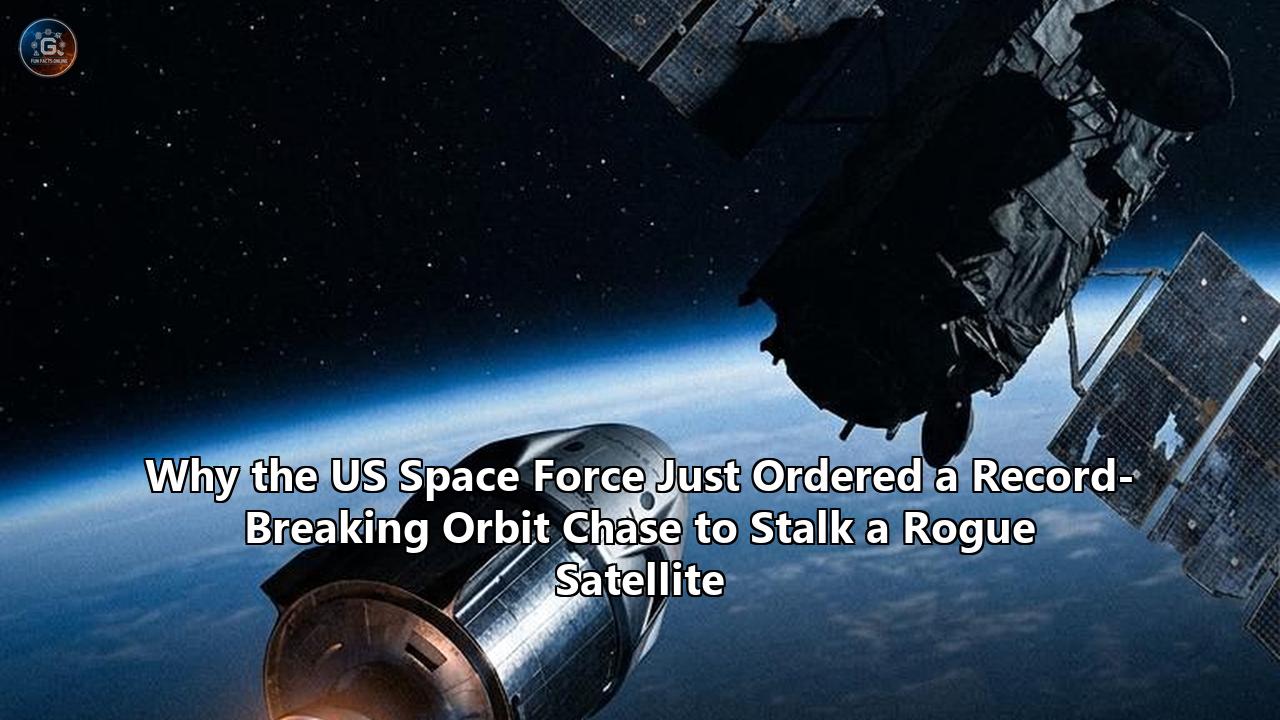
The Call in the Night: Breaking the 17-Hour Barrier
At exactly 5:40 AM local time on June 19, 2026, the quiet of New Zealand’s Mahia Peninsula was shattered by an urgent communication. The United States Space Force’s Space Systems Command, operating through its elite Space Safari Program Office, had issued an official Notice to Launch. For the team on the ground at Rocket Lab’s Launch Complex 1, this was not a routine scheduled flight. They had not been told when they would launch, which orbit they were targeting, or the precise identity of their objective until the moment the call came through.
Just 16 hours and 42 minutes later, Rocket Lab’s Electron rocket roared to life, lifting off into the dark Southern Hemisphere sky. Onboard was a highly maneuverable Pioneer spacecraft, built, integrated, and operated by the company under a $32 million military contract. The mission, designated VICTUS HAZE, was a live-fire demonstration of Tactically Responsive Space (TacRS) capabilities.
The target of this record-shattering launch was already circling the globe. A Jackal Autonomous Orbital Vehicle, built by the defense technology startup True Anomaly, had been launched in early May on a SpaceX rideshare and was posing as an uncooperative, non-compliant adversary. Within hours of reaching orbit, the Pioneer spacecraft initiated a series of high-thrust maneuvers to match the Jackal’s orbital plane and begin an active, close-proximity chase.
This was not a theoretical computer simulation or a tabletop war game. This was a physical, real-time intercept mission carried out in the crowded corridors of Low Earth Orbit (LEO). The Space Force had just ordered a record-breaking orbit chase to stalk a simulated rogue satellite. It marked a dramatic escalation in the Pentagon's efforts to prepare for a conflict that many military planners believe is no longer a matter of if, but when.
Historically, military satellite missions have been defined by years of planning, bureaucratic procurement cycles, and rigid launch windows scheduled months or even years in advance. VICTUS HAZE swept that obsolete paradigm aside. By compressing the timeline from order to orbit to under 17 hours, the Space Force demonstrated a rapid-reaction capability that fundamentally alters the strategic calculus of orbital warfare.
The First Proximity Threats: Early Whispers of Co-Orbital Espionage (2014–2020)
To understand why the Space Force took the drastic step of ordering an immediate, high-speed orbit chase, one must look back to the quiet, destabilizing maneuvers that began occurring in orbit more than a decade ago. For decades, space was treated as a sanctuary. Satellites were viewed as passive eyes in the sky, vulnerable only to ground-based anti-satellite (ASAT) missiles or massive, easily tracked space debris clouds.
That illusion of safety began to unravel in 2014.
[2014: Olymp-K Launch] ──> [2017: Nesting Doll Tests] ──> [2020: Kosmos-2542 Stalks USA-245]
      │                                                                  │
      └─► Parks between communication satellites      └─► General Raymond issues public warning
In October 2014, Russia launched a mysterious spacecraft designated Olymp-K (also known as Luch). Instead of operating within a designated orbital slot, Olymp-K began performing highly unusual maneuvers in geostationary orbit (GEO). It systematically parked itself directly between commercial communication satellites operated by Intelsat, sometimes positioning itself within a mere 10 kilometers of its targets. Western intelligence agencies quickly realized the satellite was conducting close-range signals intelligence, intercepting the data streams flowing to and from the neighboring spacecraft.
This was the first modern example of "space stalking." It proved that a motivated adversary did not need to blow up a satellite to render it useless; they could simply park next to it, spy on its operations, or quietly intercept its communications.
By 2017, the Kremlin’s orbital antics had escalated from passive eavesdropping to active, kinetic testing. Russia launched Kosmos-2519, ostensibly a "space apparatus inspector." Two months after launch, this satellite did something that shocked Western space trackers: it birthed a smaller sub-satellite, Kosmos-2521. A few months later, Kosmos-2521 deployed yet another object, Kosmos-2523.
The U.S. military dubbed these "nesting doll" satellites, referencing the traditional Russian Matryoshka dolls. In July 2020, the second iteration of this program, Kosmos-2543, performed a high-speed projectile test. While shadowed by an American spy satellite, Kosmos-2543 launched an unguided projectile into the vacuum of space at relative speeds exceeding 250 kilometers per hour.
The test was a clear message. The Kremlin had successfully tested an orbital weapon capable of firing kinetic kill vehicles at neighboring satellites.
The tensions reached a boiling point in early 2020 when General John "Jay" Raymond, the newly appointed Chief of Space Operations for the newly minted US Space Force, took the unprecedented step of publicly calling out Russian behavior. A pair of Russian satellites, Kosmos-2542 and Kosmos-2543, had actively maneuvered within 160 kilometers of USA-245, a multibillion-dollar American electro-optical spy satellite.
"We view this behavior as unusual and disturbing," Raymond told reporters. "It has the potential to create a dangerous situation in space." The game of orbital cat-and-mouse was no longer a secret whispered in classified briefing rooms; it was actively unfolding in real-time view of the world's telescope networks.
The Grapple at 36,000 Kilometers: Shijian-21 and the Era of Kinetic Manipulation (2021–2022)
While Russia was refining its high-speed kinetic capabilities, China was quietly developing a different, arguably more sophisticated threat: robotic manipulation in the deep-space environment of Geostationary Orbit.
On October 24, 2021, Beijing launched Shijian-21 (SJ-21). Officially, Chinese state media declared the satellite was designed to "test and verify space debris mitigation technologies." But the true nature of SJ-21 became clear on January 22, 2022.
During the daylight hours, when ground-based optical telescopes are blinded by the sun, SJ-21 performed a massive, unannounced maneuver. It slipped out of its regular orbital slot and closed the distance with a defunct Chinese Beidou navigation satellite.
Using an advanced, proprietary docking mechanism, SJ-21 physically grappled the dead satellite. It then fired its high-thrust thrusters, towing the multi-ton dead weight several hundred miles above the geostationary belt, dumping it into a highly eccentric "graveyard orbit" designed to safely house defunct spacecraft. Once the cargo was released, SJ-21 returned to geostationary orbit to resume its patrol.
[GEO Belt] ───(SJ-21 Grapples Dead Beidou)───► [Massive Delta-V Burn] ───► [Elliptical Graveyard Orbit]The maneuver was a technical masterpiece, watched in awe by commercial space situational awareness firms like ExoAnalytic Solutions. But within the Pentagon, it sparked profound alarm.
The military implications of a "space tug" are stark. The exact same technology used to grapple a dead navigation satellite and drag it into a graveyard orbit can be used during a conflict to grab an active, vital U.S. missile-warning satellite and pull it out of its operational slot, rendering it blind. Because the grapple occurred during the daylight hours when the U.S. military’s optical tracking network was limited, it demonstrated a stealth capability that bypassed traditional space surveillance.
The SJ-21 incident forced a fundamental shift in Space Force doctrine. Space was no longer a realm where satellites operated in isolation. It was now a physical contact sport where adversaries possessed the capability to reach out, grab, and physically manipulate high-value national security assets.
The Stalker in the Same Plane: Kosmos-2558 and USA-326 (2022–2024)
In August 2022, Russia raised the stakes even further. It launched Kosmos-2558 from the Plesetsk Cosmodrome. What made the launch so brazen was its timing and physical geometry.
Just six months earlier, the U.S. National Reconnaissance Office (NRO) had launched USA-326, a highly classified next-generation spy satellite believed to be a state-of-the-art electro-optical reconnaissance platform. Kosmos-2558 was launched into the exact same orbital plane as USA-326.
Orbital Plane of USA-326:      =====================[USA-326]=====================
                                                ▲
                                                │ (Periodic close passes of 75km down to 45km)
                                                ▼
Orbital Plane of Kosmos-2558:  ==================[Kosmos-2558]==================
This was not a coincidence. It was a direct, persistent physical intercept. Kosmos-2558 was inserted into an orbit that allowed it to pass directly underneath USA-326 on a regular basis.
Independent satellite trackers, such as Dr. Marco Langbroek and Jonathan McDowell, watched in real time as the Russian stalker satellite performed periodic maneuvers to maintain its proximity to the American spacecraft. Every few days, the two spacecraft would make close passes. In August 2022, they passed within 75 kilometers of each other. By April 2023, Kosmos-2558 had closed that gap to just 45 kilometers.
U.S. intelligence analysts realized they were facing a critical vulnerability. USA-326 was a bus-sized, multi-billion-dollar optical imaging satellite. If the Russian inspector satellite got too close, it could photograph the internal mechanics of the American spy craft, analyze its optical mirrors to determine its exact resolution limits, or utilize radio-frequency weapons to fry its highly sensitive electronic systems.
In early 2023, the U.S. military responded. USA-326 performed a sudden, high-energy evasive burn, raising its altitude to escape the incoming trajectory of the Russian tracker. Yet, this maneuver came at a steep cost. Satellites carry a strictly finite amount of propellant. Every time USA-326 was forced to burn fuel to escape its Russian pursuer, it shaved months, if not years, off its operational lifespan.
Russia had successfully implemented a strategy of asymmetric attrition: using a relatively cheap, maneuverable tracker to drain the life-support fuel of a vital, multi-billion-dollar American intelligence asset.
The Deployment of Object C: A Dormant Weapon Awakens (June 2025)
The game of orbital hide-and-seek between Kosmos-2558 and USA-326 reached a dangerous turning point on June 28, 2025.
For nearly three years, Kosmos-2558 had merely followed USA-326, maintaining a steady, albeit close, distance. But as the two satellites passed over the Northern Hemisphere, Dr. Marco Langbroek and international tracking networks detected a sudden, unexpected separation.
Kosmos-2558 had deployed a previously unannounced sub-satellite, designated Object C (and cataloged by NORAD as 64627).
What alarmed Space Force commanders was not just the release of the sub-satellite, but the timing and location. Unlike previous Russian nesting-doll tests, which occurred shortly after launch, Object C was deployed nearly three years into the mission, while Kosmos-2558 was in extremely close proximity to USA-326.
"Although these missions are officially described as inspection operations, I've repeatedly expressed concerns that we're actually witnessing the deployment of dormant anti-satellite systems," Langbroek wrote in his post-incident analysis.
[Kosmos-2558] ───(Stalking USA-326 for 3 Years)───► [Deploys Object C (Sub-satellite)] ───► [Moves closer to USA-326]DeAnna Burt, who served as Chief Operations Officer at the US Space Force during the build-up of the program, voiced the military's deep-seated anxieties regarding the deployment of Object C. "You have a satellite that then has another satellite within it that then, we believe, is a KK or Kinetic Kill vehicle that would go out and rendezvous with another satellite and potentially harm it or image it or do different things," she warned in a January 2026 retrospective.
The sudden deployment of Object C proved that Russian inspect-and-track platforms were not merely passive intelligence gathering tools. They were loaded with active, kinetic weapons systems that could lie dormant for years, orbiting quietly alongside American assets, waiting for the command to strike.
If a conflict were to break out on Earth, these dormant orbital interceptors would execute their commands in minutes, blinding American missile-tracking and communication capabilities before the Pentagon even realized a launch had occurred.
The Strategy Pivot: Bypassing the Procurement Swamp (2024–2026)
Faced with a highly dynamic, fast-evolving threat in orbit, the Space Force found itself hampered by its own acquisition bureaucracy. Historically, the Department of Defense procured satellites via a process that took an average of seven to fifteen years from initial design to final launch.
In a world where an adversary can deploy a US Space Force rogue satellite threat or launch a new co-orbital interceptor on a weekly basis, the traditional procurement cycle was a recipe for strategic defeat.
To break this bottleneck, the Space Force created Space Safari. Established under the Space Systems Command’s Space Domain Awareness and Combat Power program, Space Safari’s mission was simple: bypass the standard acquisition channels and leverage the rapid commercial space sector to deliver immediate, tactically responsive orbital solutions.
Traditional Procurement (7-15 Years) ───► [Obsolete before launch]
Space Safari / TacRS (Under 24 Hours)  ───► [Active Threat Response]
Under the Tactically Responsive Space (TacRS) initiative, the Space Force sought to prove that it could rapidly acquire, process, launch, and operate spacecraft in response to an active orbital crisis.
The first proof of concept came in September 2023 with the VICTUS NOX mission. The Space Force partnered with Millennium Space Systems (who built the satellite) and Firefly Aerospace (who provided the Alpha rocket). When the Space Force issued the notice to launch, the team successfully encapsulated the payload, mated it to the rocket, fueled the booster, and launched the satellite into Low Earth Orbit in just 27 hours.
While VICTUS NOX was a landmark achievement, it only solved half of the problem. It proved the Space Force could launch a satellite quickly, but the satellite itself was relatively static. It did not have the high delta-v (velocity change) capabilities or the sophisticated software needed to chase down a maneuverable, uncooperative target.
Between the summer of 2025 and early 2026, the Space Force conducted a series of intensive tabletop exercises and live-field operations known as VICTUS DIEM. These exercises refined the ground processing pipelines, secure data links, and command-and-control structures necessary to manage multiple, rapid-response orbital maneuvers simultaneously.
The stage was set for the ultimate test of the new doctrine: a live, dual-satellite orbital chess match.
The Players and Their Platforms: Pioneer, Jackal, and the Mosaic Suite
In early 2024, the Space Systems Command, in partnership with the Defense Innovation Unit (DIU) and SpaceWERX, awarded two critical contracts for the VICTUS HAZE mission.
The first contract, worth $32 million, went to Rocket Lab. The company was tasked not only with providing its dedicated Electron launcher but also with building, testing, and operating its proprietary, highly maneuverable Pioneer spacecraft.
The second contract, worth $30 million, was awarded to True Anomaly. True Anomaly is a Colorado-based defense technology firm founded by former military space officers, dedicated exclusively to building hardware and software for space superiority and combat operations. True Anomaly’s contribution was the Jackal Autonomous Orbital Vehicle (AOV) and its proprietary Mosaic command-and-control software suite.
            VICTUS HAZE CORE ARCHITECTURE

   ┌─────────────────────────────────────────┐
   │          U.S. Space Force               │
   │       Space Systems Command             │
   └────────────────────┬────────────────────┘
                        │
         ┌──────────────┴──────────────┐
         ▼                             ▼
┌──────────────────┐          ┌──────────────────┐
│   Rocket Lab     │          │   True Anomaly   │
│Pioneer Spacecraft│          │    Jackal AOV    │
│ (The Interceptor)│          │ (Simulated Rogue)│
└────────┬─────────┘          └────────┬─────────┘
         │                             │
         └──────────────┬──────────────┘
                        ▼
         [Dynamic Rendezvous (RPO) in LEO]
The Jackal AOV is a high-performance, tactical fighter-interceptor designed specifically for contested space environments. Unlike scientific or commercial imaging satellites, the Jackal features:
- High-thrust, high-delta-v propulsion: Allowing it to execute massive, rapid orbital plane changes to pursue or evade targets.
- Modular mission hardpoints: Capable of hosting an array of electro-optical, infrared, and radar sensors, as well as electronic warfare effectors.
- Mosaic Software integration: An AI-decision support system that allows operators to command autonomous, real-time maneuvers and tactics in simulated and live environments.
To support its rapidly expanding orbital defense portfolio, True Anomaly closed a massive $650 million Series D funding round in April 2026, aimed at accelerating the manufacturing of the Jackal platform to combat-ready scale.
Under the VICTUS HAZE mission profile, True Anomaly’s Jackal-0004 satellite would launch first, acting as a non-compliant threat. Rocket Lab’s Pioneer spacecraft would act as the active interceptor.
Rocket Lab vertically engineered almost every subsystem of the Pioneer in-house, including the propulsion, reaction wheels, star trackers, flight software, and propellant tanks, ensuring that they had absolute, end-to-end control of the vehicle’s performance.
June 19, 2026: Anatomy of an Unprecedented 16-Hour Response
On May 3, 2026, True Anomaly launched Jackal-0004 into low Earth orbit via a SpaceX Falcon 9 rideshare mission out of Vandenberg Space Force Base. For the next six weeks, the Jackal sat in orbit, undergoing commissioning and conducting preliminary tests.
Meanwhile, on the other side of the world in New Zealand, the Rocket Lab team and Captain George Eberwine, the Space Force VICTUS HAZE mission manager, sat on console, waiting. The Electron rocket stood ready on the pad, its payload fairing housing the Pioneer spacecraft. The team was in a state of cold standby, unable to make final launch calculations because they had no idea when the target satellite would pass overhead in an optimal orbital configuration.
That changed in the early hours of Friday, June 19, 2026.
The Notice to Launch order was transmitted to Rocket Lab’s Oakland control room. Instantly, a highly choreographed, 16-hour and 42-minute countdown began:
- T-Minus 16 Hours: Rocket Lab’s guidance, navigation, and control (GNC) team received the physical telemetry and orbital data of the Jackal-0004 target satellite. Over the next four hours, they calculated the optimal launch trajectory, updated the Electron rocket’s flight software, and coordinated ground tracking stations across the globe.
- T-Minus 12 Hours: Aviation and maritime hazard notices were pushed to international databases, warning ships and aircraft away from the Mahia Peninsula launch corridor.
- T-Minus 6 Hours: The launch pad crew initiated final vertical alignments and avionics checks on the Electron rocket.
- T-Minus 3 Hours: Liquid oxygen and RP-1 kerosene propellants were pumped into the carbon-composite stages of the booster.
- T-Minus 15 Minutes: Julia Wimbacher, Rocket Lab’s Launch Director, completed the final "Go/No-Go" poll of all flight controllers, with Space Force representatives monitoring on-pad telemetry.
At 10:19 PM local time (10:19 AM GMT), the nine 3D-printed Rutherford engines ignited, producing 50,000 pounds of thrust. The Electron rocket climbed off the pad, punching through the night atmosphere. Just nine minutes later, the Pioneer spacecraft was deployed directly from the second stage, successfully reaching its targeted orbit.
The entire sequence, from the unexpected military order to successful orbital insertion, took just 16 hours and 42 minutes. It didn't just beat the previous TacRS record set during VICTUS NOX; it shattered it by more than 10 hours, establishing a new global benchmark for rapid space access.
The Chase Commences: High-Stakes Proximity Maneuvers in LEO
Once the Pioneer spacecraft separated from the Electron rocket, the most technically demanding phase of the VICTUS HAZE mission began.
The Space Force had set a strict 72-hour deadline for Rocket Lab to fully commission the Pioneer, boot up its guidance and sensor suites, and prepare the vehicle for its first active orbital burn. The Rocket Lab engineering team beat this deadline by more than 34 hours, completing full vehicle commissioning and executing their first orbital maneuver in just 37 hours and 36 minutes.
Within eight hours of launch, open-source satellite tracking data curated by astrophysicist Jonathan McDowell revealed that the Pioneer spacecraft had already closed the gap to True Anomaly’s Jackal-0004. Pioneer executed a high-precision flyby, passing within approximately 100 kilometers of the Jackal satellite on the evening of June 19.
           RENDEZVOUS AND PROXIMITY TIMELINE

[T+0: Launch] ───► [T+8h: 100km Flyby] ───► [T+37h: Commissioning Complete] ───► [RPO Operations]
This close pass was only the beginning of a highly complex, multiphased Rendezvous and Proximity Operations (RPO) campaign. Over the subsequent days, both spacecraft began a series of active, co-orbital maneuvers to "stalk" and engage with each other.
To simulate a real-world US Space Force rogue satellite encounter, True Anomaly’s Jackal acted as an uncooperative, potentially hostile platform. It executed sudden, unexpected burns to change its altitude and inclination, mimicking an adversary trying to evade inspection or position itself to strike.
Rocket Lab’s Pioneer, utilizing its on-board autonomous navigation systems, was forced to recalculate its trajectories in real time, burning its own propellant to track, follow, and maintain close-range optical tracking of the fleeing Jackal.
These maneuvers require an extraordinary level of mathematical precision. In LEO, objects travel at speeds exceeding 27,000 kilometers per hour. Executing a close-approach maneuver down to a few kilometers—or even meters—without causing a catastrophic collision is equivalent to firing a bullet and hitting another bullet in mid-air, all while trying to take high-resolution photographs of the target.
The Tactical Playbook: Scenarios of the Great Orbital Dogfight
As the Pioneer and Jackal satellites dance around each other in Low Earth Orbit, they are running through a highly classified tactical playbook designed by the Space Force Space Systems Command. This playbook is structured around three core operational threat-response scenarios:
Scenario A: Close-Range Threat Characterization (The Eye-in-the-Sky)
In this scenario, a foreign nation launches a satellite that behaves erratically, moving close to a critical U.S. military communication or GPS satellite. The Space Force cannot tell from ground-based telescopes if the foreign craft is a harmless commercial payload, a signals-intelligence spy platform, or a kinetic weapon.
During VICTUS HAZE, Rocket Lab’s Pioneer is practicing how to close the distance with such a "rogue" target, position itself in its blind spot, and use optical and infrared cameras to capture high-resolution, multi-spectral images. These images can reveal hidden antennas, mechanical robotic arms (similar to China’s SJ-21), or internal kinetic projectile launchers (similar to Russia's Kosmos-2543).
                  CLOSE-RANGE CHARACTERIZATION

  [Adversary Satellite] <─────────────── [Pioneer Spacecraft]
 (With hidden payloads)     (Optical/IR)  (Approaches in blind spot)
Scenario B: Dynamic Evasion and Fuel Preservation
If the "rogue" satellite turns out to be hostile and begins maneuvering to intercept a U.S. asset, the asset must be able to escape. However, as demonstrated by USA-326, constant evasive maneuvers will quickly drain a satellite's precious fuel, ending its mission prematurely.
VICTUS HAZE is testing how U.S. operators can use real-time AI decision-support tools—like True Anomaly’s Mosaic software—to calculate the absolute minimum amount of fuel required to dodge an incoming interceptor, or how to use a rapidly launched companion satellite (like Pioneer) to act as a shield or decoy, drawing the adversary's attention away from the primary military asset.
Scenario C: Active Defensive Interception
The most sensitive and classified aspect of the exercise involves "protective measures." Lt. Gen. Gregory Gagnon, Combat Forces Command Commander, confirmed that the Space Force has deployed new prototype maneuver vehicles operated by Space Delta 9, the unit dedicated specifically to orbital warfare.
These prototypes are designed to drive spacecraft in ways never possible before, training guardians to physically interdict, block, or electronically jam an incoming adversary satellite before it can reach its target. By practicing these dynamic engagements with the Jackal and Pioneer, Space Force operators are writing the literal combat manual for low-Earth orbit warfare.
Chaos in the Adversary's Calculus: The Geopolitical Impact of Rapid-Response Space
The strategic implications of the VICTUS HAZE mission stretch far beyond the technical success of Rocket Lab and True Anomaly. By demonstrating a repeatable, under-17-hour launch-and-intercept capability, the United States has introduced a profound level of uncertainty into the military doctrines of China and Russia.
For years, the anti-satellite doctrines of Beijing and Moscow were built around the concept of a "Day Zero" strike. In a potential conflict over Taiwan or Eastern Europe, the adversary’s plan was to initiate a coordinated, pre-emptive strike against the United States' highly centralized satellite network. By utilizing ground-based direct-ascent ASAT missiles, co-orbital kamikaze satellites, and high-powered electronic jamming, they hoped to blind U.S. command-and-control, GPS navigation, and missile-warning capabilities within the first hour of war.
         PRE-EMPTIVE "DAY ZERO" DOCTRINE (OLD PARADIGM)

[Adversary Strike] ───► [Destroys US Satellites] ───► [US Blinded for Years]
                                                    (No rapid replacement)

         TACTICALLY RESPONSIVE SPACE (NEW PARADIGM)

[Adversary Strike] ───► [US Launches Replacements] ───► [Constellation Restored]
                         (Within 17 Hours)              (Combat capability maintained)
Historically, this strategy was highly viable because once a U.S. satellite was destroyed, it took years to build and launch a replacement, leaving the U.S. military blind for the duration of a short, high-intensity regional war.
Tactically Responsive Space completely upends this math.
If the Space Force can launch, commission, and deploy a highly capable, maneuvering interceptor in less than 17 hours, a "Day Zero" strike loses its strategic utility. If China or Russia disables a vital American military satellite, the Space Force can immediately launch a replacement satellite—or a co-orbital defense platform—into the exact same orbit before the next day's sun rises.
As Col. Bryon McClain, Space Systems Command's acting portfolio acquisition executive for space combat power, noted: "VICTUS HAZE set out to demonstrate our ability to respond to irresponsible behavior on orbit under operationally realistic conditions, and we are doing just that, leveraging commercial partnerships to maximize flexibility and minimize cost."
Furthermore, the capability to quickly deploy a surveillance platform to inspect a newly launched foreign object deters adversaries from attempting to sneak weapons into orbit disguised as commercial payloads. If an adversary deploys a US Space Force rogue satellite threat under the guise of a scientific mission, they now know that a U.S. inspector craft could be parked next to it, taking high-resolution pictures of its internal systems, within 24 hours.
The New Normal: Future Horizons of Contested Orbits
As the Pioneer and Jackal-0004 satellites continue their high-altitude dance, the Space Force is already looking toward the next milestones of the TacRS program.
The success of VICTUS HAZE is expected to lead to the rapid production and standardized fielding of responsive space vehicles. The Space Force’s goal is to transition TacRS from a series of highly coordinated, experimental demonstrations into a "ready, repeatable capability" integrated across the entire Department of Defense.
                ROADMAP TO REPEATABLE TacRS

[VICTUS NOX (2023)] ───► [VICTUS HAZE (2026)] ───► [VICTUS SOL (Future)]
    (Rapid Launch)          (Rapid Intercept)        (Alpha Block II + Jackal)
The next major milestone on the horizon is VICTUS SOL. A spokesperson for Firefly Aerospace confirmed that the company is actively moving toward this upcoming mission, which will utilize Firefly’s upgraded Alpha Block II launch vehicle and True Anomaly’s Jackal platform.
The VICTUS SOL mission will build directly on the operational lessons learned from VICTUS NOX and VICTUS HAZE, testing even faster processing times, more complex orbital tracking algorithms, and potentially integration with active defense payloads.
However, this rapid leap into active co-orbital maneuvers raises profound, unresolved legal and regulatory questions. International space law, primarily governed by the Outer Space Treaty of 1967, is notoriously vague regarding close-proximity operations.
- At what distance does a "close-approach inspection" constitute a hostile act?
- If a U.S. satellite approaches within 10 kilometers of a Chinese military satellite to inspect it, does China have the legal right to fire a defensive laser or kinetic projectile?
- How do we prevent accidental collisions during these high-speed, co-orbital chases that could generate massive debris fields, rendering entire orbits unusable for generations?
There is also the risk of escalatory misunderstandings. If a nation misinterprets a close-range inspection maneuver as an active attack, it could trigger a kinetic response in space that rapidly escalates into a terrestrial war.
For now, the United States Space Force has made its position clear. The final frontier is no longer a silent sanctuary, and the era of uncontested American operations in orbit is over. By ordering a record-breaking orbit chase to stalk a simulated rogue satellite, the Space Force has proven that it has the technology, the raw speed, and the strategic will to hunt down any threat in the cold, contested vacuum of space.
The great orbital dogfight has officially begun.
Reference:
- https://www.youtube.com/watch?v=jfFnNC0NG2Y
- https://www.space.com/space-exploration/launches-spacecraft/rocket-lab-launches-us-space-force-mission-with-less-than-17-hours-notice-a-new-record
- https://defensescoop.com/2026/06/23/space-force-victus-haze-launch-rocket-lab/
- https://universemagazine.com/en/space-wars-the-united-states-launches-a-mission-to-hunt-enemy-satellites/
- https://www.airandspaceforces.com/space-force-mission-goes-from-orders-to-launch-in-less-than-17-hours/
- https://www.reddit.com/r/space/comments/1ucowfv/a_us_military_exercise_in_space_got_underway_with/
- https://www.quiverquant.com/news/Rocket+Lab+Launches+VICTUS+HAZE+for+U.S.+Space+Force%2C+Sets+New+Record+for+Rapid+Space+Response
- https://newsable.asianetnews.com/markets/rklb-stock-slides-overnight-spacex-selloff-dulls-rocket-lab-s-record-16-hour-space-force-mission-articleshow-2dcxzny
- https://qz.com/us-space-force-war-simulation-scenarios-orbit-1851408685
- https://resonantnews.com/2020/02/13/cold-war-in-space-its-russian-nesting-doll-like-satellites-vs-american-spy-satellites/
- https://www.twz.com/35057/space-force-boss-says-russia-has-been-testing-its-killer-satellites-in-orbit
- https://futurism.com/the-byte/russia-killer-satellite
- https://www.forbes.com/sites/davidhambling/2020/07/24/us-and-uk-accuse-russia-of-testing-in-orbit-anti-satellite-weaponry/
- https://www.space.com/russian-spacecraft-stalking-us-spy-satellite-space-force.html
- https://www.twz.com/44054/a-chinese-satellite-just-grappled-another-and-pulled-it-out-of-orbit
- https://breakingdefense.com/2022/01/chinas-sj-21-tugs-dead-satellite-out-of-geo-belt-trackers/
- https://science.slashdot.org/story/22/01/30/0111255/chinese-satellite-observed-grappling-another-and-pulling-it-out-of-orbit
- https://www.freethink.com/space/space-tug
- https://www.universetoday.com/articles/a-chinese-space-tug-just-grappled-a-dead-satellite
- https://www.businessinsider.com/russian-inspector-satellite-chasing-secret-us-military-satellite-cat-mouse-2023-4
- https://www.space.com/russia-spacecraft-stalk-us-spy-satellite
- https://universemagazine.com/en/russian-military-satellite-to-get-closer-to-american-space-scout/
- https://united24media.com/latest-news/space-matryoshka-russian-spacecraft-deploys-possible-anti-satellite-weapon-near-usa-326-9540
- https://gizmodo.com/russias-new-satellite-appears-to-be-stalking-u-s-satellite-in-orbit-2000611080
- https://www.rferl.org/a/33667792.html
- https://www.trueanomaly.space/
- https://aviationweek.com/space/commercial-space/true-anomaly-demonstrates-rpo-activities-third-flight-test
- https://www.satcat.com/sats/69012
- https://taskandpurpose.com/news/space-force-orbital-warfare-training-satellite/