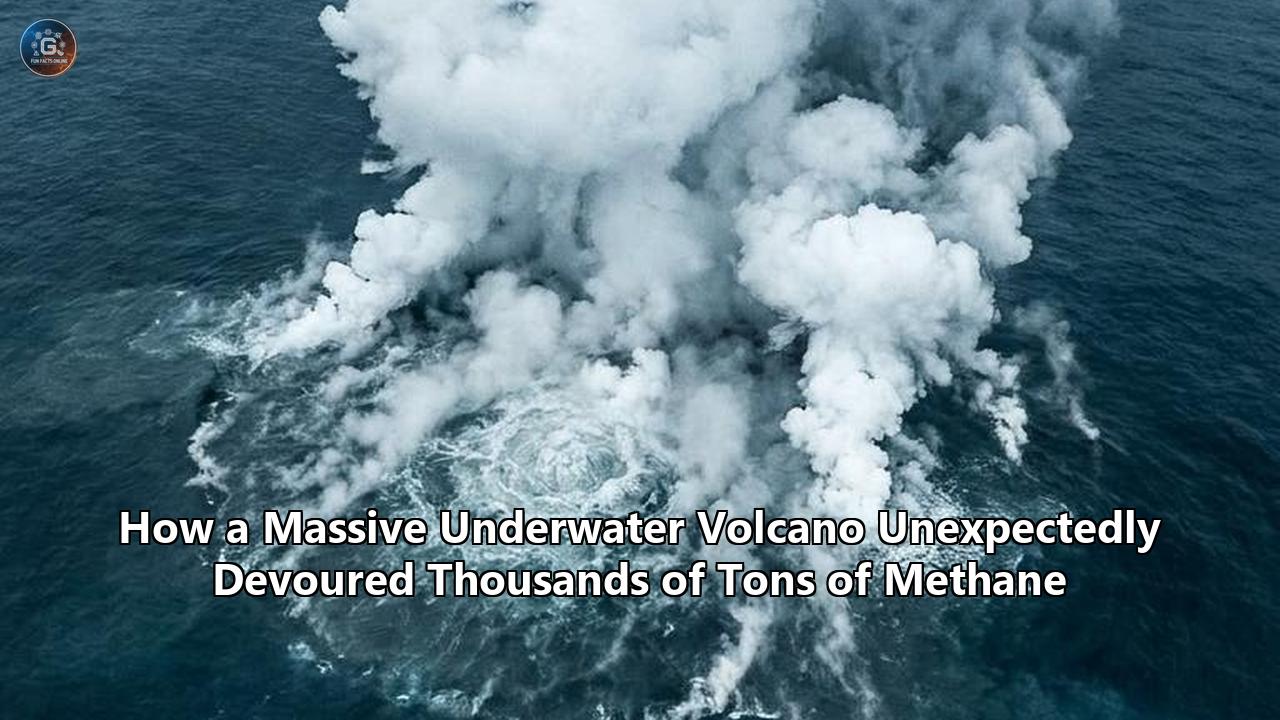
On January 15, 2022, the submarine volcano Hunga Tonga–Hunga Haʻapai in the South Pacific blew its top with a ferocity that shook the entire planet. Located about 65 kilometers north of Tonga’s main island of Tongatapu, the volcano’s caldera sat roughly 150 meters below the ocean surface. When it erupted, it did not merely spew lava and ash; it triggered an explosion of historic proportions, vaporizing cubic kilometers of seawater and launching a towering plume of gas, steam, and particulate matter 58 kilometers high, piercing the stratosphere and reaching deep into the mesosphere. The sonic boom rippled across the globe, heard as far away as Alaska—more than 10,000 kilometers from the source. The atmospheric pressure wave circled the Earth multiple times, while the displacement of the ocean generated a planet-spanning tsunami.
For years, atmospheric scientists and climate modelers cautioned that the legacy of this eruption would affect the Earth's climate system for a generation. Most of the concern centered on the estimated 146 million metric tons of water vapor blasted directly into the stratosphere, which temporarily increased the global stratospheric water content by 10%. Because water vapor is a potent greenhouse gas at high altitudes, researchers predicted the eruption would exert a net warming effect on the surface of the Earth.
However, a study published in the journal Nature Communications has revealed an entirely unexpected twist to this geological event. A team of international researchers discovered that while the underwater volcano blasted immense amounts of methane into the atmosphere, it simultaneously triggered a massive, high-altitude chemical reaction that systematically "devoured" thousands of tons of methane.
The eruption released approximately 330 gigagrams (330,000 metric tons) of methane—equivalent to the annual enteric emissions of more than two million dairy cows. Yet, in a rare display of natural self-regulation, the chemical furnace ignited within the volcanic plume continuously destroyed this greenhouse gas at a rate of 900 megagrams (900 metric tons) per day for more than a week.
This discovery has upended established assumptions about volcanic emissions, offering a detailed look at how a highly localized, violent geological event can spark a self-cleansing atmospheric process. By examining the complex interactions between volcanic ash, sea salt, and stratospheric sunlight, scientists are now gaining insights into how the Earth’s atmosphere naturally breaks down its most aggressive warming gases. This mechanism could prove vital to developing future strategies for mitigating human-induced climate change.
The Smoking Gun: Tracking a Phantom Gas Across the South Pacific
To understand how an underwater volcano methane plume could systematically destroy itself, researchers first had to solve a measurement puzzle. Methane ($CH_4$) is colorless, odorless, and highly diffuse in the atmosphere, making its real-time chemical destruction exceptionally difficult to observe directly from orbit. Instead of looking for methane that was no longer there, the international research team, led by Dr. Maarten van Herpen of Acacia Impact Innovation BV, looked for its chemical footprint.
That footprint came in the form of formaldehyde ($HCHO$).
Formaldehyde is a highly volatile organic compound that serves as a short-lived intermediate product when methane is oxidized (broken down) in the atmosphere. Under normal conditions, formaldehyde is incredibly unstable. When exposed to sunlight, it decomposes into carbon monoxide, carbon dioxide, and water vapor within a matter of hours. Because of this incredibly short atmospheric lifetime, formaldehyde cannot accumulate in high concentrations unless it is being continuously and rapidly produced by an active precursor reaction.
Methane (CH4) ---> [Formaldehyde (HCHO)] (Short-lived Intermediate) ---> CO2 + H2O
                         ^
                 (Detected by TROPOMI)
Using the European Space Agency’s Sentinel-5 Precursor satellite, the researchers analyzed data captured by the TROPOspheric Monitoring Instrument (TROPOMI). TROPOMI is a high-resolution, nadir-viewing spectrometer designed to measure trace gases and air pollutants across various wavelengths of light, from the ultraviolet to the shortwave infrared. What they found in the satellite's daily orbital passes shocked the scientific community.
Directly inside the drifting volcanic plume of Hunga Tonga–Hunga Haʻapai, TROPOMI detected a colossal, highly concentrated cloud of formaldehyde. The concentration of $HCHO$ peaked at an unprecedented 12 parts per billion (ppb) at an altitude of approximately 30 kilometers—the highest stratospheric concentration of formaldehyde ever recorded by modern instruments.
"When we analyzed the satellite images, we were surprised to see a cloud with a record-high concentration of formaldehyde," explained Dr. van Herpen. "We were able to track the cloud for 10 days, all the way to South America. Because formaldehyde only exists for a few hours, this showed that the cloud must have been destroying methane continuously for more than a week."
Plume Path: South Pacific (Hunga Tonga) ------------> 10-Day Drift ------------> South America
                                  [Continuous Formaldehyde Generation]
However, interpreting the satellite data was far from straightforward. Volcanic plumes are incredibly hostile environments for remote sensing instruments. The eruption had injected massive amounts of sulfur dioxide ($SO_2$) and fine volcanic ash into the same atmospheric layers, creating a dense aerosol screen that interfered with TROPOMI’s spectrometers.
Co-author Isabelle De Smedt of the Royal Belgian Institute for Space Aeronomy noted that the team had to develop sophisticated correction algorithms to account for the extreme altitude of the plume and the spectral overlap of $SO_2$.
"Getting these corrections right was essential to confirm that what we were seeing was real," De Smedt stated. Once the interference was removed, the data was clear: a massive, self-sustaining chemical reaction was actively devouring methane inside the plume as it drifted thousands of miles across the Pacific Ocean.
The Salt, Ash, and Sunlight Engine: The Chemistry of the Plume
To understand why this specific underwater volcano methane destruction occurred, one must look at the unique physical geometry of the Hunga Tonga–Hunga Haʻapai eruption.
When a standard volcano on land erupts, it releases a mixture of dry ash, carbon dioxide, sulfur dioxide, and hydrogen sulfide directly into the air. However, because Hunga Tonga’s crater was submerged 150 meters below the South Pacific, the physics and chemistry of the blast were entirely different. The superheated magma, flashing at temperatures exceeding 1,100 degrees Celsius, came into direct, violent contact with cold seawater. This caused a Surtseyan eruption of apocalyptic scale, vaporizing vast quantities of salty ocean water and blasting it, along with fine-grained volcanic ash, directly into the stratosphere.
This injection of seawater was the catalyst for the atmospheric vacuum. Seawater contains a high concentration of sodium chloride ($NaCl$), providing an abundant source of chloride ions ($Cl^-$). At the same time, the volcanic ash was rich in iron ($Fe$), particularly trivalent iron ($Fe^{3+}$).
When these components were propelled to an altitude of 30 kilometers, they formed a unique aerosol mixture. The fine ash particles and salt dissolved into the stratospheric sulfate aerosol droplets, creating a highly reactive chemical medium.
When this stratospheric brew was exposed to intense solar ultraviolet (UV) radiation, it triggered a photochemical chain reaction. The mechanism relies on iron-chloride photochemistry:
- Photo-reduction of Iron: Under the influence of UV light, the trivalent iron ($Fe^{3+}$) within the sulfate-coated ash particles undergoes photo-reduction, converting to divalent iron ($Fe^{2+}$).
- Release of Chlorine Radicals: This reduction process co-generates highly reactive, atomic chlorine radicals ($Cl^\bullet$) from the dissolved chloride salts.
- Methane Attack: Unlike molecular chlorine ($Cl_2$), which is relatively stable, atomic chlorine radicals are incredibly aggressive oxidizers. A single chlorine radical will actively seek out and collide with a methane ($CH_4$) molecule, abstracting a hydrogen atom to form hydrochloric acid ($HCl$) and a highly reactive methyl radical ($CH_3^\bullet$):
$$\text{CH}_4 + \text{Cl}^\bullet \rightarrow \text{CH}_3^\bullet + \text{HCl}$$
- Formaldehyde Synthesis: The methyl radical ($CH_3^\bullet$) immediately reacts with the surrounding stratospheric oxygen ($O_2$) to form a methylperoxy radical ($CH_3O_2^\bullet$). Through a sequence of rapid subsequent reactions with nitric oxide ($NO$) or hydroperoxy radicals ($HO_2$), this compound is oxidized into formaldehyde ($HCHO$), which TROPOMI detected from space:
$$\text{CH}_3^\bullet + \text{O}_2 \rightarrow \text{CH}_3\text{O}_2^\bullet \rightarrow \dots \rightarrow \text{HCHO}$$
   [Salty Seawater (Cl-)] + [Volcanic Ash (Fe3+)]
                          |
                          v
                 [Sulfate Aerosols]
                          |
                  + UV Light (Sunlight)
                          |
                          v
                 [Chlorine Radicals (Cl*)]
                          |
                  + Methane (CH4)
                          |
                          v
            [Hydrochloric Acid (HCl)] + [Methyl Radicals (CH3*)]
                                                   |
                                            + Oxygen (O2)
                                                   |
                                                   v
                                          [Formaldehyde (HCHO)]
This chlorine-driven pathway is up to 16 times faster at destroying methane than the atmosphere’s primary natural cleansing agent, the hydroxyl radical ($OH^\bullet$). This extreme reactivity explains how the volcanic plume was able to continuously destroy approximately 900 tons of methane per day. The volcano had essentially manufactured its own high-altitude chemical reactor, using the ocean's salt as a fuel and the sun's light as an ignition switch.
A Desert Connection: Replicating Saharan Science in the Stratosphere
While the discovery of stratospheric methane destruction in a volcanic plume surprised scientists, the underlying chemical engine was not entirely unknown. In fact, the researchers realized that the Tonga eruption had replicated a rare chemical process first identified in 2023, but in a completely different part of the world.
In July 2023, a study published in the Proceedings of the National Academy of Sciences (PNAS) outlined a natural phenomenon occurring over the North Atlantic Ocean. Scientists discovered that when massive dust storms lift mineral dust from the Saharan Desert and carry it west over the ocean, the dust mixes with sea salt spray lofted from the breaking waves.
This mixture of iron-rich desert dust and salty ocean water forms what are known as iron salt aerosols (ISAs). When these ISAs are exposed to sunlight, the iron acts as a catalyst, converting the chloride from the sea salt into reactive chlorine radicals. These chlorine radicals then act as a natural sink, breaking down tropospheric methane over the ocean.
Troposphere (Saharan Dust + Ocean Spray) ---> Iron Salt Aerosols (ISA) ---> Chlorine Radicals ---> Tropospheric Methane Sink
                                                                                                           |
                                                                                            (Discovered in 2023)
                                                                                                           |
Stratosphere (Volcanic Ash + Seawater)  ---> Sulfate-Coated Ash/Salt  ---> Chlorine Radicals ---> Stratospheric Methane Sink
                                                                                                           |
                                                                                            (Discovered in 2026)
The lead author of that 2023 study was none other than Dr. Maarten van Herpen, working alongside Professor Matthew S. Johnson, an atmospheric chemist at the University of Copenhagen. When the team began analyzing the satellite data from the 2022 Tonga eruption, they realized they were looking at the exact same ISA chemistry, but scaled up to a planetary level and operating in a completely different atmospheric layer.
"What is new—and completely surprising—is that the same mechanism appears to occur in a volcanic plume high up in the stratosphere, where the physical conditions are entirely different," said Professor Johnson.
In the troposphere (the lowest layer of the atmosphere, extending from the surface up to about 10–15 kilometers), the air is dense, relatively warm, and highly humid. In contrast, the stratosphere (ranging from 15 to 50 kilometers high) is extremely dry, incredibly cold (often dipping below -50 degrees Celsius), and contains highly rarefied air. Under normal stratospheric conditions, chlorine is typically locked away in stable "reservoir" species like chlorine nitrate ($ClONO_2$) and hydrochloric acid ($HCl$).
The Tonga eruption bypassed these normal stratospheric limits. By physically blasting megatons of seawater and fine ash directly into the stratosphere, the volcano instantly created an artificial, high-altitude laboratory. The fine, sulfate-coated volcanic ash particles acted as surrogate mineral dust grains, while the vaporized seawater provided the necessary chloride. Exposed to the unfiltered, intense UV radiation of the upper atmosphere, this mixture produced an unprecedented burst of active, catalytic chlorine.
This cross-disciplinary connection has demonstrated that the iron-salt-aerosol mechanism is far more robust and versatile than previously believed. If the same chemical reactions can occur both in the warm, humid air of the Atlantic shipping lanes and in the sub-zero, near-vacuum of the stratosphere, then the ISA mechanism represents a fundamental, highly adaptable pathway in global atmospheric chemistry.
Methane: The Climate Emergency Brake
To grasp why the scientific community is so focused on how an underwater volcano methane plume behaves, it is necessary to understand the unique physics of methane as a greenhouse gas.
While carbon dioxide ($CO_2$) is the most abundant human-emitted greenhouse gas and receives the majority of public attention, methane is a far more aggressive driver of near-term global warming. Methane is currently responsible for roughly 30% to 33% of the total rise in global temperatures observed since the pre-industrial era.
The primary difference between $CO_2$ and $CH_4$ lies in their molecular structures and how they absorb infrared radiation. Methane's chemical bonds are highly efficient at trapping heat escaping from the Earth's surface. On a 20-year timescale, a single molecule of methane is approximately 80 to 82 times more potent at warming the atmosphere than a molecule of carbon dioxide.
Greenhouse Gas Comparison (20-Year Timescale):

Carbon Dioxide (CO2) | [1x Warming Potency] (Persists for centuries/millennia)
Methane (CH4)        | [80-82x Warming Potency] (Persists for ~10 years)
However, methane has a major Achilles' heel: its atmospheric lifetime is remarkably short. While carbon dioxide emissions remain in the atmosphere, warming the planet for hundreds or even thousands of years, methane is chemically unstable. It has an atmospheric half-life of only about 10 to 12 years before it naturally oxidizes into $CO_2$ and water.
Because of this short lifespan, methane is often referred to by climate scientists as the global warming "emergency brake."
If humanity can drastically reduce methane emissions—or find ways to actively remove existing methane from the air—the atmosphere will clear itself of this gas within a decade. This would result in an almost immediate reduction in the rate of global warming, providing a rapid cooling effect that could prevent the Earth from crossing dangerous climate tipping points while we undertake the much more difficult, long-term task of decarbonizing global energy grids and reducing $CO_2$ levels.
Natural Atmospheric Methane Lifespan: ~10 Years

[Emission] ===============================> [Natural Oxidation (OH Radicals)]
                                                           |
                                            (Takes a decade to clear)

With Enhanced ISA Oxidation:

[Emission] ========> [Accelerated Chlorine Radical Destruction]
                               |
                   (Clears in days/weeks)
This is where the Hunga Tonga discovery becomes highly relevant. Up until now, the global methane budget—the detailed accounting of how much methane enters the atmosphere from sources like wetlands, agriculture, and fossil fuel leaks versus how much is removed by natural sinks—has been modeled using highly static assumptions. Sinks were assumed to be dominated almost entirely by tropospheric hydroxyl ($OH^\bullet$) radicals, with a small percentage removed by soil bacteria and stratospheric chemistry.
The discovery that volcanic ash and seawater can combine to form an incredibly efficient, high-speed methane sink has forced atmospheric scientists to rethink these models.
"We now know that atmospheric dust—for example from a volcanic eruption—impacts the methane budget, meaning the budget of how much methane is added to the atmosphere and how much is removed," said Professor Johnson. "Because dust has not previously been taken into account, it is important that we correct the data on which these estimates are based."
The Geoengineering Debate: Can Humans Mimic a Volcanic Cleanup?
The revelation that the Tonga volcanic cloud effectively "cleaned up after itself" has added fuel to an already intense global debate: Can humans intentionally replicate this natural process to combat climate change?
As the realities of global warming become more acute, a growing group of scientists, startup companies, and non-governmental organizations are researching Atmospheric Methane Removal (AMR). The goal is to develop active technologies that can accelerate the breakdown of methane in the open atmosphere. The Hunga Tonga study has provided these researchers with a massive, real-world proof of concept.
"The researchers behind the new study believe their findings could inform a growing field working on solutions to reduce methane emissions by artificially accelerating its breakdown in the atmosphere—similar to how the volcano effectively cleaned up after itself," notes a report from the University of Copenhagen.
The primary technology inspired by this natural chemistry is Iron Salt Aerosol (ISA) Geoengineering.
The concept involves using specialized distribution systems—such as retrofitted commercial shipping vessels, offshore towers, or high-altitude aircraft—to intentionally release tiny particles of iron(III) chloride ($FeCl_3$) into the marine boundary layer or the lower atmosphere. Once airborne, these engineered aerosols would utilize natural sunlight and the abundant chloride found in ocean sea spray to generate a continuous stream of chlorine radicals, mimicking the Saharan dust and Hunga Tonga plumes.
Proposed ISA Geoengineering Deployment:

[Engineered ISA Release (Ships/Towers)]
               |
               v
  [Solar UV Catalysis (Sunlight)]
               |
               v
 [Local Chlorine Radical Generation]
               |
               v
  [Rapid Methane Oxidation Sink]
Advocates of ISA geoengineering point out several potential benefits:
- Catalytic Efficiency: Because iron acts as a catalyst, a single iron molecule can theoretically produce multiple chlorine radicals before it eventually deposits out of the atmosphere, making the process highly cost-effective.
- No Massive Infrastructure Needed: Unlike industrial "Direct Air Capture" (DAC) plants, which require massive, energy-intensive fans and chemical scrubbing facilities to extract $CO_2$ from the air, ISA geoengineering uses the sun as its energy source and the natural wind to disperse the cleansing agents.
- Direct Verification: One of the biggest challenges of carbon offset programs is verifying that emissions have actually been removed. The Tonga study proved that satellite instruments like TROPOMI can directly track and quantify methane destruction in real-time by measuring the resulting formaldehyde plume.
However, the prospect of intentionally releasing iron and chlorine into the atmosphere to manipulate the Earth's climate—a practice broadly categorized as solar radiation management or chemical geoengineering—has sparked deep concern among ecologists, environmental lawyers, and atmospheric scientists.
The risks and unresolved questions are substantial:
1. Stratospheric Ozone Destruction
Chlorine is highly destructive to the Earth's protective ozone layer ($O_3$). In the 1980s, the global community banned chlorofluorocarbons (CFCs) because they released chlorine into the stratosphere, creating the famous "ozone hole" over Antarctica. If humans were to scale up ISA geoengineering and accidentally loft chlorine-releasing particles into the stratosphere, it could lead to severe ozone depletion, allowing dangerous levels of mutagenic ultraviolet radiation to reach the Earth's surface.
2. Acid Deposition
The primary byproduct of chlorine-driven methane destruction is hydrochloric acid ($HCl$). While the ocean is highly buffered and can easily absorb small amounts of chlorine, releasing massive, industrial-scale quantities of ISA over the oceans could lead to localized acid deposition, potentially harming sensitive marine ecosystems, plankton populations, and coastal environments.
3. Complex Atmospheric Feedbacks
Atmospheric chemistry is highly non-linear. Computer models suggest that under certain conditions, adding low concentrations of chlorine radicals can actually increase the lifetime of methane.
This paradox occurs because chlorine can react with and destroy tropospheric ozone ($O_3$), which is the primary precursor for hydroxyl ($OH$) radicals—the atmosphere’s main natural methane sink. If the added chlorine destroys too much ozone, the natural $OH$ sink collapses, causing methane levels to rise rather than fall.
Atmospheric Chemical Balancing Act:

Low Chlorine Addition:
Added Chlorine ---> Destroys Ozone ---> Reduces Hydroxyl (OH) Radicals ---> Methane Lifetime INCREASES (Worse Warming)

High/Optimal Chlorine Addition:
Added Chlorine ---> Exceeds Chemical Threshold ---> Direct Chlorine Oxidation Dominates ---> Methane Lifetime DECREASES (Successful Cooling)
"It's an obvious idea for industry to try to replicate this natural phenomenon—but only if it can be proven to be safe and effective," warns Professor Johnson. "Our satellite method could offer a way to help figure out how humans might slow global warming."
The Abyssal Sinks: How Deep-Sea Volcanoes and Microbes Silently Manage Methane
While the Hunga Tonga eruption has focused scientific attention on the high-altitude, chemical destruction of methane, it represents only one extreme end of a massive, incredibly complex geological and biological system. To fully appreciate how underwater volcanoes interact with methane, we must dive from the stratosphere down to the abyssal plains of the ocean floor, where a completely different kind of methane "devouring" occurs every single day.
There are thousands of submarine volcanoes, mud volcanoes, and hydrothermal vents scattered across the Earth's ocean floor. Together, these geological structures are estimated to emit roughly 27 million tons of methane annually, representing about 5% of global emissions. Yet, under normal conditions, almost none of this deep-sea methane ever reaches the atmosphere to cause global warming.
This is due to the deep-sea microbial filter.
Sea Surface (Atmosphere)  ==============================================================
                                       ^                                         ^
                                       | (Eruption Bypasses Filter)              | (Only 10% Escapes)
                                       |                                         |
Ocean Water Column        [Hunga Tonga Violent Blast]                    [Slow Hydrothermal Vent Seep]
                                       |                                         ^
                                       |                                         |
                                       |                                [Microbial Filter Consumes 90%]
                                       |                                         ^
                                       |                                         |
Ocean Floor (Abyssal)     ==============================================================
                              Subsea Volcano                            Methanotrophic Bacteria
Unlike the violent, explosive Surtseyan eruptions that characterize shallow-water volcanoes like Hunga Tonga, most deep-sea volcanoes and hydrothermal vents release their gases slowly and steadily through hydrothermal fluid seeps. In these dark, high-pressure environments, a highly specialized community of microorganisms has evolved to exploit the chemical energy locked within volcanic gases.
The primary consumers are methanotrophic bacteria and archaea.
These extremophiles are capable of performing anaerobic and aerobic oxidation of methane, utilizing sulfate ($SO_4^{2-}$) or oxygen dissolved in the seawater to break down methane molecules for energy. As they consume the methane, they convert it into bicarbonate ($HCO_3^-$), which reacts with calcium in the seawater to precipitate out as solid calcium carbonate ($CaCO_3$) crusts on the seafloor.
This biological filter is incredibly efficient. In stable, slow-seeping deep-sea environments, methanotrophic microbes successfully consume up to 90% of the escaping methane before it can rise more than a few meters into the water column.
However, as researchers from the Max Planck Institute for Marine Microbiology have documented, this microbial filter is highly sensitive to geological disturbances. When a submarine mud volcano erupts, or when a volcanic vent undergoes a sudden, violent spasm, the rapid rush of mud, heat, and gas completely overwhelms the slow-growing microbial communities.
"The older the mud was, the more living beings were contained," noted deep-sea researcher Emil Ruff during a study of the Håkon Mosby mud volcano in the Norwegian Sea. "In fresh mud that had just leaked out, we found only a few organisms... the microbes do not work so efficiently everywhere. In areas of the seabed that are more turbulent than normal—such as gas leaks or so-called underwater volcanoes, the microbes remove just one tenth to one third of the escaping methane."
When a massive, explosive event like Hunga Tonga occurs, the biological filter is bypassed. The force of the explosion blasts the gas through the water column and into the sky in a matter of seconds, leaving no time for deep-sea bacteria to intervene.
Yet, in a striking example of natural irony, the very violence of the eruption that destroyed the ocean's biological filter is what enabled the high-altitude, chemical filter to ignite. By violently throwing seawater and ash into the stratosphere, the volcano substituted a slow, bacterial cleanup on the seafloor for a rapid, photolytic cleanup in the sky.
Rewriting the Global Carbon Ledger: What Happens Next?
The discovery that the Hunga Tonga–Hunga Haʻapai eruption initiated a massive methane-devouring engine in the stratosphere has far-reaching implications for climate science, atmospheric modeling, and global policy. As researchers absorb the data from the Nature Communications study, several critical areas of inquiry and upcoming milestones are taking shape.
1. Correcting the Global Methane Models
Historically, climate models have treated volcanic eruptions almost exclusively as sources of greenhouse gases and sulfur aerosols. The realization that underwater volcano methane releases can be mitigated—or even completely offset—by in-plume, ash-catalyzed chlorine chemistry means that the global methane budget must be fundamentally revised.
Atmospheric scientists are now working to update global chemical transport models to include the catalytic effects of iron salt aerosols and volcanic ash. This will allow for more accurate predictions of how future volcanic eruptions will affect global temperatures and ozone recovery.
Traditional Volcanic Model:
Eruption ---> Emits CO2, SO2, CH4 ---> Net Atmospheric Warming

Revised Volcanic Model (Post-Tonga Discovery):
Eruption ---> Emits Seawater (Salt) + Ash (Iron) + CH4
         ---> Solar UV Activation
         ---> Chlorine Radical Generation
         ---> Rapid Methane Oxidation
         ---> Reduced Climatic Impact
2. The Search for Active Volcanoes
Are other, smaller underwater volcanoes around the world quietly performing similar atmospheric cleanups? Earth contains an estimated 1.5 million submarine volcanoes, many of which are shallow enough to interact with seawater during minor eruptions.
Scientists are planning to review historical satellite data of past eruptions—such as the 2011 eruption of El Hierro in the Canary Islands or the ongoing eruptions in the Vanuatu arc—to look for previously unnoticed, localized formaldehyde signals that might indicate smaller-scale methane destruction.
3. Rigorous Geoengineering Research
The Tonga discovery has provided a physical blueprint for active methane removal, but it has also highlighted the need for extreme caution. Research initiatives, such as the ongoing shipping-lane flask-sampling projects conducted by Utrecht University in collaboration with global shipping giants like Maersk and Stolt, will continue to study natural ISA formation over the oceans.
[Ocean Shipping Vessels] ---> Collect Atmospheric Flask Samples ---> [Utrecht University Lab]
                                                                                |
                                                                  Analyzes Natural ISA Impacts
These studies aim to precisely characterize the chemical thresholds of chlorine addition. Over the next several years, these field observations will be critical in determining whether human-engineered iron salt aerosols can ever be safely deployed without destroying the stratospheric ozone layer or causing toxic ecological side effects.
Ultimately, the self-cleansing plume of Hunga Tonga–Hunga Haʻapai serves as a reminder of the Earth's highly complex, interconnected systems. When a violent geological event threatened to dump hundreds of thousands of tons of warming gas into our fragile sky, the ocean and the sun combined to build a temporary chemical shield.
As humanity continues to search for ways to decelerate global warming, we may find that some of our most powerful tools are already operating in the natural world, hidden inside the ash, salt, and light of the planet's most violent underwater explosions.
Reference:
- https://www.popularmechanics.com/science/environment/a71259204/volcanic-eruption-cleanup/
- https://en.wikipedia.org/wiki/Hunga_Tonga%E2%80%93Hunga_Ha%CA%BBapai
- https://en.wikipedia.org/wiki/2022_Hunga_Tonga%E2%80%93Hunga_Ha%CA%BBapai_eruption_and_tsunami
- https://sos.noaa.gov/catalog/datasets/hunga-tonga-hunga-ha-apai-2022-volcano-eruption/
- https://www.sciencenews.org/article/tonga-volcano-eruption-tsunami-shock-wave
- https://www.thebrighterside.news/post/a-violent-volcanic-eruption-triggered-a-rare-atmospheric-cleanup/
- https://pmc.ncbi.nlm.nih.gov/articles/PMC10655571/
- https://www.discovermagazine.com/after-a-massive-eruption-this-underwater-volcano-removed-methane-from-the-atmosphere-49078
- https://www.sciencedaily.com/releases/2026/05/260509210640.htm
- https://www.sciencedaily.com/releases/2026/05/260509210640.htm
- https://www.techno-science.net/en/news/volcanic-eruption-destroys-methane-in-the-atmosphere-N28752.html
- https://gizmodo.com/a-new-way-to-fight-climate-change-emerges-from-erupting-volcano-2000757118
- https://www.earth.com/news/giant-volcano-eruption-cleaned-methane-from-the-atmosphere/
- https://news.ku.dk/all_news/2026/05/scientists-stunned-volcano-cleans-up-after-itself-by-removing-methane-from-the-air/
- https://cmr.earthdata.nasa.gov/search/concepts/C1627516292-GES_DISC.html
- https://en.wikipedia.org/wiki/Atmospheric_methane_removal
- https://www.sparkclimate.org/methane-removal/primer/approaches/iron-salt-aerosols
- https://www.uu.nl/en/news/science-and-citizens-collaborate-to-understand-natural-methane-removal
- https://pubs.acs.org/doi/abs/10.1021/acsearthspacechem.4c00283
- https://www.eurekalert.org/news-releases/1127102
- https://en.wikipedia.org/wiki/Methane_emissions
- https://www.eurekalert.org/news-releases/1127102
- https://science.ku.dk/english/press/news/2026/scientists-stunned-volcano-cleans-up-after-itself-by-removing-methane-from-the-air/
- https://acp.copernicus.org/articles/24/5659/2024/
- https://www.divessi.com/en/blog/a-filter-for-greenhouse-gas-is-produced-in-the-deep-sea-4073.html
- https://www.whoi.edu/press-room/news-tip/more-methane-from-the-deep-sea-mud-volcanos-as-methane-source/
- https://www.newsweek.com/ice-age-volcano-spewing-methane-discovered-arctic-seabed-1803300
- https://www.youtube.com/watch?v=EmzimZPvCyA
- https://www.livescience.com/planet-earth/volcanos/scientists-discover-giant-crater-from-ice-age-explosion-that-has-methane-spewing-mud-volcano-inside-it
- https://www.discovermagazine.com/after-a-massive-eruption-this-underwater-volcano-removed-methane-from-the-atmosphere-49078
- https://documentation.dataspace.copernicus.eu/Data/SentinelMissions/Sentinel5P.html