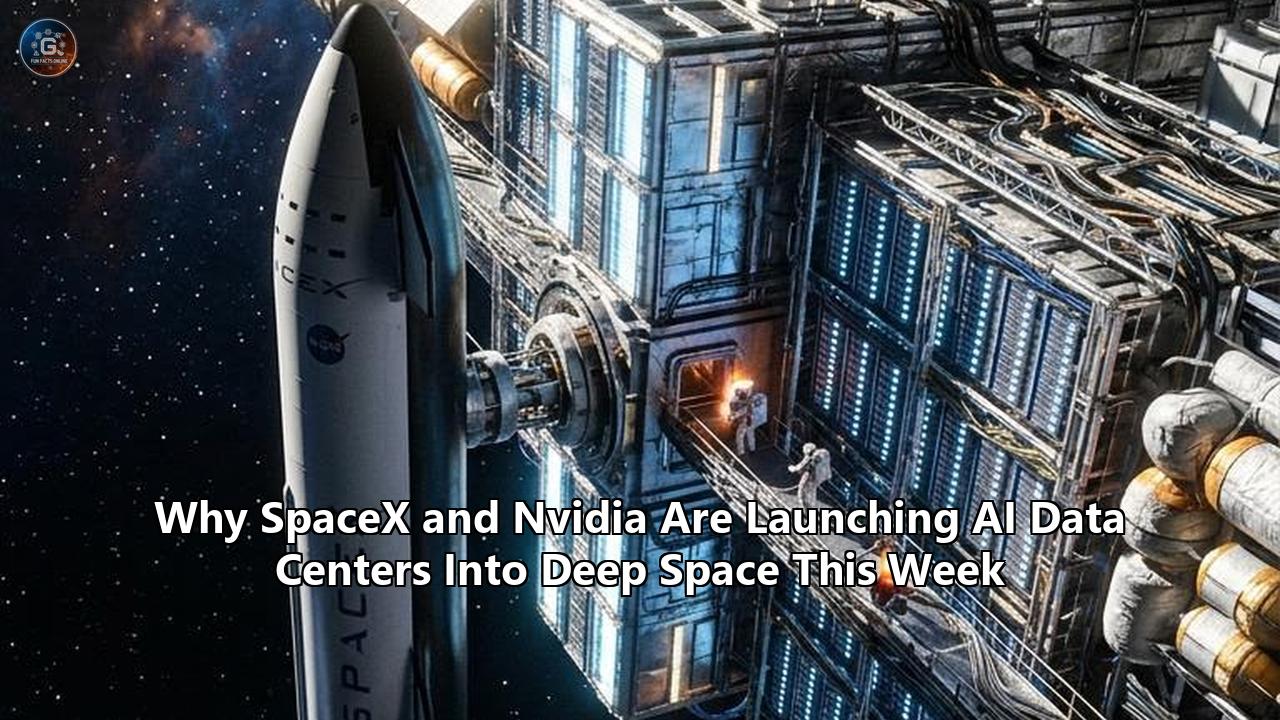
Space Exploration Technologies and Nvidia unveiled an exclusive strategic partnership to deploy high-performance artificial intelligence data centers into low Earth orbit. Anchored by SpaceX’s newly announced Starmind AI1 program, the initiative marks the first coordinated attempt to migrate rack-scale, production-grade AI compute payloads directly into space.
Revealed during SpaceX’s first public earnings call following its landmark June 2026 IPO, the agreement commits SpaceX to exclusively standardizing its future AI infrastructure—both on the ground and in orbit—on Nvidia’s next-generation Vera Rubin architecture. The core payload for the Starmind AI1 satellite centers on an optimized version of Nvidia's Vera Rubin NVL72 rack-scale system, packing 72 Rubin GPUs and Vera CPUs into a modified satellite bus capable of delivering 250 kilowatts of peak onboard power.
This move directly addresses the severe land, power, and environmental constraints crippling ground-based hyperscale facilities. By taking AI acceleration beyond the atmosphere, SpaceX and Nvidia are betting that the future of massive language model training and real-time edge processing lies hundreds of miles above the Earth’s surface.
However, moving advanced microelectronics into orbit presents stark engineering and economic tradeoffs. Comparing the physics, infrastructure, financial profiles, and operational mechanics of terrestrial data centers against orbital compute nodes demonstrates why this strategy represents such a radical departure from traditional cloud architecture.
                     TERRESTRIAL VS. ORBITAL AI COMPUTE ARCHITECTURE
┌───────────────────────────┬───────────────────────────────────┬───────────────────────────────────┐
│ Feature / Metric          │ Terrestrial Hyperscale            │ Orbital Compute (Starmind AI1)    │
├───────────────────────────┼───────────────────────────────────┼───────────────────────────────────┤
│ Power Source              │ Local electrical grid / Gas / SMR │ 24/7 Unfiltered Solar Radiation   │
│ Primary Thermal Vector    │ Convection & Evaporative Cooling  │ Pure Radiative Infrared Cooling   │
│ Data Interconnect         │ Terrestrial Fiber Optic Networks  │ High-Speed Optical Laser Links    │
│ Hardware Maintenance      │ Physical Repair & Hot- Swaps      │ Non-Serviceable (Disposable)      │
│ Infrastructure Bottleneck │ Grid Permitting & Power Capacity  │ Launch Payload Mass & Radiation   │
└───────────────────────────┴───────────────────────────────────┴───────────────────────────────────┘
Terrestrial Grid Saturation vs. Low Earth Orbit Solar Harvesting
The fundamental crisis confronting terrestrial AI scaling is power access. On Earth, constructing a multi-gigawatt data center requires navigating years of utility interconnect queues, local zoning disputes, and severe transmission line bottlenecks. Facilities built in technology hubs like Northern Virginia or West Texas are pushing local electrical grids to their physical limits, forcing operators to deploy dedicated natural gas turbines or wait years for Small Modular Reactors (SMRs) to come online.
TERRESTRIAL POWER DELIVERY
[ Utility Power Grid ] ──► [ Local Substation ] ──► [ Facility PDU ] ──► [ Server Racks ]
                                                                             │
                                                                   (30-40% Lost to Cooling)

ORBITAL POWER DELIVERY
[ Unfiltered Sunlight ] ──► [ Solar Array ] ──► [ Onboard Direct DC-to-DC ] ──► [ Rubin NVL72 ]
                                                                                   │
                                                                   (Zero Water/Air Cooling Power)
In low Earth orbit, power generation changes completely. Free from atmospheric scattering, cloud cover, and nightfall—when placed in specific sun-synchronous orbits (SSO)—orbital solar panels harvest continuous, high-flux solar energy. Solar irradiation in space yields approximately 1.36 kilowatts per square meter, yielding nearly double the energy efficiency of equivalent solar arrays on the Earth's surface.
The primary tradeoffs between these two approaches involve energy density versus physical infrastructure requirements:
- Grid Dependency vs. Onboard Autonomy: Terrestrial data centers rely on legacy power grids subject to regional power outages, fluctuating electricity rates, and stringent carbon regulations. Orbital compute clusters generate their own power continuously at zero marginal energy cost once deployed.
- Mass Penalties vs. Land Acquisition: On Earth, adding megawatt capacity means purchasing hundreds of acres of industrial land and laying miles of high-voltage copper transmission lines. In space, power scaling is strictly constrained by the payload fairing volume and lift capacity of rockets, requiring deployable, ultra-lightweight solar arrays that can generate hundreds of kilowatts without destabilizing satellite attitude control.
- Infrastructure Lead Times: Securing 1 gigawatt of grid capacity on Earth can take 4 to 7 years in environmental review and transformer procurement. A Starship launch cadence, by contrast, can theoretically orbit hundreds of megawatts of compute payload within months once mass production of the satellite bus is established.
Thermal Mechanics: Terrestrial Convective Cooling vs. Orbital Radiative Heat Transfer
Perhaps the most critical engineering divergence between terrestrial computing and space-based compute lies in thermodynamics. Modern AI accelerators generate immense heat flux. A standard 72-GPU rack operating on Earth requires intricate liquid-to-liquid cooling loops, massive chilled-water systems, and industrial cooling towers. Terrestrial data centers consume between 30% and 40% of their total power budget solely to run thermal management systems.
TERRESTRIAL THERMAL FLOW
GPU Heat ──► Cold Plate ──► Liquid Loop ──► Heat Exchanger ──► Cooling Tower ──► Atmosphere (Convection)

ORBITAL THERMAL FLOW
GPU Heat ──► Vapor Chamber ──► Heat Pipe / Liquid Loop ──► Radiator Panel ──► Deep Space (Radiation)
In the vacuum of space, temperature management behaves according to radically different physical laws. Because vacuum contains no air molecules, convective cooling is impossible. Heat cannot be transferred to ambient air or dissipated using fans. Instead, heat can only be removed through radiative thermal transfer, governed by the Stefan-Boltzmann law:
$$E = \epsilon \sigma T^4$$
Where $E$ is the radiated power per unit area, $\epsilon$ is the emissivity of the radiator material, $\sigma$ is the Stefan-Boltzmann constant, and $T$ is the absolute temperature in Kelvin.
While deep space offers a vast thermal sink near absolute zero (2.7 Kelvin) in shadow, any surface exposed to direct sunlight heats up rapidly. Managing a 250-kilowatt Nvidia Vera Rubin rack inside a satellite frame creates an unprecedented thermal management hurdle:
- Radiator Surface Area vs. Payload Footprint: To dissipate 250 kW of thermal output purely through infrared radiation, a satellite must deploy massive radiator panels coated with specialized optical solar reflectors. If the radiator temperature is maintained at 350 Kelvin (~77°C), hundreds of square meters of radiator surface are required per node.
- Parasitic Power Consumption: Terrestrial data centers burn millions of kilowatt-hours operating compressors, pumps, and fans. Orbital systems eliminate fans entirely, relying on closed-loop liquid-to-gas phase-change heat pipes or low-power capillary pumps to transfer heat from GPU microchannels to exterior radiative wings.
- Thermal Extremes: Terrestrial facilities operate inside climate-controlled buildings. Orbital data centers cycle through extreme temperature swings—ranging from +120°C in direct sunlight to -150°C in Earth's shadow—requiring active thermal insulation to protect sensitive silicon from thermal expansion stress and solder-joint fatigue.
Understanding the physics driving the SpaceX Nvidia AI space initiative requires examining how orbital thermal dynamics can be re-engineered from an obstacle into a scaling advantage. By removing liquid chillers and evaporative water consumption, orbital nodes can dedicate nearly 100% of their onboard power directly to compute logic rather than environmental cooling overhead.
Data Networking: Fiber Networks vs. Optical Inter-Satellite Laser Meshes
Terrestrial data centers are connected by ultra-dense, low-latency terrestrial fiber optic backbones. Hyperscale facilities in Virginia, Oregon, and Dublin route petabytes of data via underground cables with millisecond latencies and high signal integrity.
Moving high-performance computing to orbit alters the communications topology. Rather than relying on physical cables, orbital data centers depend on a high-bandwidth optical mesh network.
TERRESTRIAL NETWORK TOPOLOGY
[ User ] ───────── Fiber Cable ─────────► [ Terrestrial Data Center ]
                 (Low Latency, Ultra-High Physical Bandwidth)

ORBITAL NETWORK TOPOLOGY
[ User ] ── Radio Link ──► [ Starlink Ground Gate ]
                                   │
                           Laser Interconnect
                                   ▼
                   [ Orbiting Starmind AI Cluster ]
                 (Laser-to-Laser Mesh in Vacuum)
The key differences between these two data transmission models reveal sharp operational tradeoffs:
Bandwidth and Transport Latency
Terrestrial fiber transmits light through a silica core, where the speed of light is roughly 30% slower than its velocity in a vacuum ($c$). In orbital space, optical laser interconnects transmit data directly through the vacuum. This allows inter-satellite optical links (ISLs) to route data across global distances faster than underground fiber cables, offsetting part of the vertical round-trip altitude latency.
Local Edge Reduction vs. Global Backhaul
Sending massive raw datasets—such as multi-terabyte hyperspectral Earth observation images or real-time radar data—down to Earth for processing creates severe spectrum bottlenecks. The Starmind platform performs in-situ edge inference directly in orbit.
Raw sensor data is ingested, processed, and summarized by the onboard Vera Rubin hardware, allowing the satellite to beam down only digested actionable insights, dramatically reducing downlink bandwidth requirements.
RAW DATA DOWNLINK (Legacy)
[ Satellite Sensors ] ──► Send Terabytes Raw Data ──► [ Ground Station ] ──► [ Earth Data Center ]
                          (Downlink Bottleneck)

IN-SITU ORBITAL INFERENCE (Starmind Platform)
[ Satellite Sensors ] ──► [ Onboard Rubin NVL72 ] ──► Send Kilobytes Insights ──► [ User ]
                          (Processed in Orbit)
Distributed Compute Topologies
Inside a terrestrial supercomputer, thousands of GPUs communicate across ultra-low-latency NVLink backplanes and InfiniBand switches at multiple terabytes per second. Replicating this cluster scale in orbit requires dynamic, space-based laser tracking.
While a single satellite node contains an NVLink bus for its internal 72 GPUs, inter-node communications across different satellites must rely on free-space optical transceivers, introducing bandwidth constraints between separate orbital server racks.
Silicon Survivability: Ground-Level Maintenance vs. Radiation-Hardened Orbital Hardware
The operational lifetime and maintenance strategies for ground versus space hardware represent diametrically opposed paradigms. On Earth, data center operations assume hardware failure is routine. Technicians work continuously inside cold aisles to swap burnt-out power supplies, replace failed cooling fans, or re-seat damaged optical cables. Terrestrial GPUs operate in a clean, radiation-shielded atmosphere at sea level.
In orbit, hardware is totally inaccessible. Once a satellite is deployed, manual hardware intervention is impossible. Furthermore, operating microelectronics in low Earth orbit exposes sensitive sub-10nm silicon to destructive cosmic radiation.
TERRESTRIAL SILICON ENVIRONMENT
├── Atmospheric Shielding (Protects against galactic cosmic rays)
├── Standard Commercial-Grade Packaging
└── On-Site Field Service Engineers (Immediate component replacement)

ORBITAL SILICON ENVIRONMENT
├── Direct Cosmic Ray Hits & Solar Particle Events
├── Heavy Radiation Hardening / Redundant Logic Paths
└── Zero Physical Maintenance (Fault isolation must be fully autonomous)
Radiation Threats in Orbit
Space radiation induces two distinct forms of hardware degradation:
- Single-Event Upsets (SEUs): High-energy protons or heavy ions strike a memory cell or transistor flip-flop, flipping a binary bit ($0 \to 1$). In AI inference, bit-flips can corrupt matrix math calculations or trigger system kernel panics.
- Total Ionizing Dose (TID): Long-term radiation exposure causes charge accumulation in semiconductor oxide layers, gradually increasing leakage current, altering threshold voltages, and ultimately leading to permanent chip destruction over time.
Maintenance and Deprecation Strategies
On Earth, servers are typically depreciated over a 3- to 5-year accounting cycle, after which older GPUs are uninstalled and recycled. Moving to orbit accelerates silicon obsolescence dynamics.
Launching high-cost Nvidia Rubin chips into orbit creates a high-stakes depreciation clock: the hardware must generate sufficient compute value before either cosmic radiation degrades the silicon or newer, more efficient ground architectures render the satellite payload economically obsolete.
As the SpaceX Nvidia AI space deployment model matures, it forces a direct comparison between ground-based hardware maintenance and redundant, fault-tolerant orbital system design.
Rather than utilizing expensive, specialized rad-hardened chips that trail current-generation performance by a decade, SpaceX and Nvidia are leveraging commercial-grade silicon wrapped in active software error-correcting code (ECC), structural shielding, and modular micro-architectural redundancy.
Single-Node Edge Processing vs. Distributed Orbital Megaconstellations
The announcement of the Starmind AI1 program highlights a growing divide in how tech companies conceptualize space-based computing. Industry initiatives range from localized edge processors aboard earth-imaging satellites to full-scale distributed supercomputing constellations floating in orbit.
COMPETING SPACE COMPUTE PARADIGMS

[ Paradigm A: Distributed Orbital Megaconstellation ]
┌──────────────┐  Laser Link  ┌──────────────┐  Laser Link  ┌──────────────┐
│ Starmind AI1 │ ───────────► │ Starmind AI2 │ ───────────► │ Starmind AI3 │
│  (250 kW)    │ ◄─────────── │  (250 kW)    │ ◄─────────── │  (250 kW)    │
└──────────────┘              └──────────────┘              └──────────────┘
       ▲                                                           │
       └────────────────── Full Orbital Supercomputer ─────────────┘

[ Paradigm B: Isolated Satellite Edge Modules ]
┌──────────────────┐          ┌──────────────────┐          ┌──────────────────┐
│ Earth Observation│          │ Commercial CubeS │          │ Defense Payload  │
│  + Jetson Orin   │          │  + Space-1 Module│          │  + Edge Module   │
└──────────────────┘          └──────────────────┘          └──────────────────┘
Comparing these competing technical approaches highlights the uniqueness of the SpaceX-Nvidia architecture:
Single-Node Edge Modules
Historically, space compute has meant mounting small, low-power accelerator modules—such as Nvidia’s Jetson Orin or IGX Thor platforms—onto individual imaging or scientific satellites. Companies like Axiom Space, Planet Labs, and Starcloud deploy these compact systems to run localized image classification or sensor filtering directly on the satellite.
These modules consume between 15 and 100 watts, handling light inference workloads without altering the fundamental power or thermal footprint of the spacecraft.
Google’s Modular Solar Compute (Project Suncatcher)
Google’s experimental "Project Suncatcher" explores orbiting dedicated solar arrays paired with modular compute nodes. This approach focuses on offloading specific non-time-sensitive batch processing jobs from ground facilities to small, highly distributed space nodes.
However, it relies on legacy satellite manufacturing models and third-party launch providers, keeping initial scaling constrained by payload deployment costs.
SpaceX-Nvidia Starmind Infrastructure
The Starmind framework operates at a completely different order of magnitude. Rather than embedding minor compute chips inside payload bays, the Starmind AI1 design turns the entire satellite into a flying 250 kW rack-scale data center node.
By chaining thousands of these high-power nodes together via Starlink's laser network, SpaceX aims to build a global distributed orbital supercomputer capable of running massive AI training and heavy inference workloads entirely in space.
┌───────────────────────────┬───────────────────────────┬───────────────────────────┬───────────────────────────┐
│ System Parameter          │ Single-Node Edge Modules  │ Project Suncatcher        │ SpaceX-Nvidia Starmind    │
├───────────────────────────┼───────────────────────────┼───────────────────────────┼───────────────────────────┤
│ Target Architecture       │ Jetson Orin / IGX Thor    │ Custom TPU / Modular ASIC │ Vera Rubin NVL72          │
│ Power Budget per Satellite│ 15 W - 100 W              │ 1 kW - 10 kW              │ ~250 kW                   │
│ Target Workloads          │ Local Sensor Filtering    │ Batch Task Processing     │ Foundation Model Compute  │
│ Network Mesh Integration  │ Isolated Downlinks        │ Basic Inter-Sat Links     │ Mass Laser Mesh Network   │
└───────────────────────────┴───────────────────────────┴───────────────────────────┴───────────────────────────┘
Economic Tradeoffs: Capex, Opex, and the Path to Orbital Cost Parity
Evaluating the financial structure of orbital data centers against ground facilities demonstrates why this shift is happening despite high initial capital barriers. Currently, orbital compute remains roughly four times more expensive per compute unit than terrestrial equivalents. However, the cost trajectories of both operating models are moving in opposite directions.
TERRESTRIAL FINANCIAL PROFILE
High Initial CAPEX ──► Moderate Ongoing OPEX (Rising Grid Power Costs + Utility Taxes + Cooling Water)

ORBITAL FINANCIAL PROFILE
Ultra-High Initial CAPEX (Launch & Space Hardware) ──► Near-Zero Ongoing OPEX (Free Solar Power & Cooling)
Terrestrial Cost Structure
- CAPEX: Constructing a 1-gigawatt ground data center requires approximately $10 billion to $12 billion in land acquisition, structural builds, cooling infrastructure, substations, and GPU purchases.
- OPEX: Operating costs are dominated by ongoing electricity utility bills, cooling water fees, facility maintenance, land taxes, and power grid interconnect maintenance. Over a 5-year lifecycle, electricity and cooling can exceed 50% of total capital expenditure. As energy demand surges, power prices per megawatt-hour are trending sharply upward on Earth.
Orbital Cost Structure
- CAPEX: Building and orbiting a space-based data center requires massive upfront capital. Beyond buying Nvidia silicon, operators must pay for payload integration, space-proofing, satellite buses, deployable solar arrays, and rocket launch services.
- OPEX: Once a satellite is deployed into orbit, its operational expenditure plummets to near zero. Sunlight is free, radiative cooling consumes no purchased utilities, and physical facility maintenance is non-existent.
The long-term viability of the SpaceX Nvidia AI space strategy hinges on whether Starship can drive down cost-per-kilogram launch expenses fast enough to cross the economic parity threshold.
If Starship lowers heavy-lift launch costs below $100 per kilogram, the zero-OPEX profile of orbital compute will make space-based AI factories financially competitive with terrestrial facilities burdened by rising energy costs and power grid capacity limits.
Architectural Deep Dive: Nvidia Vera Rubin NVL72 in Zero Gravity
Deploying Nvidia’s flagship Vera Rubin NVL72 platform into space required a complete redesign of standard server rack geometry. On Earth, the NVL72 is a tall, heavy metal rack designed for vertical installation inside concrete data center halls. In space, structural mass, acceleration load, vibration resistance, and thermal routing dictate a fundamentally different structural layout.
TERRESTRIAL NVL72 RACK GEOMETRY
┌─────────────────────────┐
│  Compute Tray 1 (Vera)  │
├─────────────────────────┤
│  Compute Tray 2 (Rubin) │
├─────────────────────────┤  <-- Mounted vertically in concrete server room
│  NVLink Switch Tray     │  <-- Air/Liquid hose connections back
├─────────────────────────┤
│  Power Distribution Unit│
└─────────────────────────┘

STARMIND ORBITAL NVL72 INTEGRATION
┌─────────────────────────────────────────────────────────┐
│               Structural Ring Chassis                   │
│ ┌──────────────────────┐      ┌───────────────────────┐ │
│ │ Modular Compute Tray │ ──── │ Direct Fluid Loop Pipe│ │ <-- Cable-less backplane
│ └──────────────────────┘      └───────────────────────┘ │ <-- Integrated Structural
│ ┌──────────────────────┐      ┌───────────────────────┐ │     Vapor Chambers
│ │ NVLink Switch Tray   │ ──── │ Phase-Change Radiator │ │
│ └──────────────────────┘      └───────────────────────┘ │
└─────────────────────────────────────────────────────────┘
The engineering changes between terrestrial server designs and space-optimized rackscale architectures illustrate the radical adjustments required for zero-gravity operations:
- Cable-Free Internal Backplanes: Traditional server racks feature hundreds of manual cable runs, optical jumpers, and liquid cooling hoses. Under the severe launch vibrations of a rocket liftoff, physical cable couplings represent point failures. The Starmind NVL72 satellite payload uses rigid, blind-mate PCB backplanes that eliminate physical cables, improving structural rigidity and assembly automation.
- Direct Phase-Change Fluid Loops: Rather than routing water-glycol mixtures through external chiller pumps, orbital trays use closed-loop heat pipes filled with low-boiling-point working fluids. Heat from Rubin GPUs boils the liquid into vapor, which travels natively via thermal pressure gradients to exterior radiator panels, condenses as it dumps heat into deep space, and returns to the cold plates via capillary action—eliminating heavy mechanical pumps.
- Structural Mass Integration: On Earth, the rack frame is dead weight whose sole job is holding server trays upright against gravity. On the Starmind AI1 satellite, the compute chassis serves a dual purpose as the primary structural frame of the spacecraft bus, transferring load forces evenly during launch staging.
Market Dynamics: Hyperscale Cloud Resistance vs. Vertical Compute Integration
The collaboration between SpaceX and Nvidia alters competitive dynamics across the technology and aerospace sectors. Historically, cloud hyperscalers like Microsoft, Amazon, and Google bought Nvidia chips to host inside ground data centers, leasing compute access to enterprise customers.
By partnering directly with SpaceX to build orbital compute infrastructure, Nvidia is bypassing traditional land-bound cloud delivery models.
TRADITIONAL COMPUTE DELIVERY CHAIN
[ Chip Maker (Nvidia) ] ──► [ Hyperscaler (AWS/Azure) ] ──► [ Power Grid / Land ] ──► [ Enterprise User ]

STARMIND VERTICALLY INTEGRATED CHAIN
[ SpaceX + Nvidia Partnership ] ──► [ Starship Launch ] ──► [ Orbital Starmind Cluster ] ──► [ User via Starlink ]
When evaluating the broader market, the SpaceX Nvidia AI space platform represents a radical evolution from localized satellite processing to a fully vertically integrated compute pipeline.
This vertical integration provides structural structural advantages over traditional hyperscale deployments:
- Launch Control: Independent cloud providers attempting to build space-based data centers must purchase launch services from external rocket providers, introducing scheduling delays and launch margin costs. SpaceX controls the Starship launch manifest, enabling rapid iterative deployments of Starmind hardware.
- Integrated Optical Telecommunications Network: Launching a compute satellite is useless without bandwidth to transfer data back to Earth. SpaceX’s existing Starlink constellation—which already operates tens of thousands of optical laser links in low Earth orbit—provides an instant global distribution network for Starmind AI outputs.
- Captive Internal Demand: SpaceX and its subsidiary xAI require gigawatts of compute capacity to train advanced models like Grok. The Starmind platform serves both internal AI training needs and external enterprise cloud leasing, mitigating financial risk for initial satellite rollouts.
Regulatory and Orbital Challenges Ahead
While the physics and strategic logic of off-planet compute offer compelling advantages, launching millions of high-power compute satellites faces regulatory, environmental, and operational hurdles.
                               ORBITAL DEPLOYMENT BARRIERS
┌───────────────────────────┬───────────────────────────────────┬───────────────────────────────────┐
│ Challenge Category        │ Specific Operational Risk         │ Engineering / Policy Mitigation   │
├───────────────────────────┼───────────────────────────────────┼───────────────────────────────────┤
│ Spectrum & FCC Licensing  │ Radio Interference & Orbital Slot │ Optical Laser Downlinks & Low-LEO │
│                           │ Congestion (1M Satellite Filing)  │ Decluttering Trajectories         │
├───────────────────────────┼───────────────────────────────────┼───────────────────────────────────┤
│ Orbital Debris (Kessler)  │ Satellite Collisions Destroying   │ Autonomous Propulsion De-orbit    │
│                           │ Multi-Million Dollar Compute Nodes│ Systems & Demisability Design     │
├───────────────────────────┼───────────────────────────────────┼───────────────────────────────────┤
│ Astronomical Impact       │ Light Pollution & RF Contamination│ Low-Reflectivity Coatings &       │
│                           │ Threatening Ground Observatories  │ Trajectory Steering Away from Scopes│
└───────────────────────────┴───────────────────────────────────┴───────────────────────────────────┘- Orbital Debris Management: Packing orbits with dense compute clusters increases collision risks. A single high-speed debris impact could destroy a multi-million-dollar Rubin compute node. SpaceX must ensure every Starmind satellite possesses active propulsion systems to maneuver around space track debris and autonomously de-orbit at the end of its operational lifecycle.
- Atmospheric Re-entry Footprints: As satellites reach end-of-life, burning up hundreds of high-density server racks in Earth's upper atmosphere releases metallic oxide particles. Atmospheric scientists are actively investigating how large-scale aluminum and silicon re-entry vaporization affects the stratospheric ozone layer.
- Regulatory Allocation: SpaceX’s filing with the Federal Communications Commission (FCC) for up to 1 million AI compute satellites faces intense pushback from astronomical societies, competing satellite operators, and international telecommunications bodies concerned over orbital slot monopolies.
What to Watch as Space Computing Takes Flight
The launch of the Starmind AI1 payload marks the beginning of an unprecedented hardware experiment. Over the next 12 to 24 months, several operational and technical milestones will determine whether space-based data centers evolve into a core pillar of global AI infrastructure or remain a specialized niche for defense and satellite data edge processing:
- Starmind AI1 Flight Test Results (Early 2027): Initial prototype flight tests will offer the first real-world telemetry on how Nvidia's Vera Rubin architecture handles zero-gravity phase-change cooling and continuous solar thermal cycling in low Earth orbit.
- Starship Cadence and Payloads: The commercial scaling of Starmind relies directly on Starship achieving rapid, re-usable flight operations to drive orbital deployment costs down toward cost parity with terrestrial construction.
- In-Situ Model Training Milestones: Key performance indicators will focus on whether orbital nodes can execute continuous distributed model training across laser inter-satellite links without suffering packet loss or computational sync delays.
- Terrestrial Energy Grid Responses: As terrestrial data center developers face growing grid interconnect delays and stricter energy regulations on Earth, hyperscaler capital expenditure may shift faster toward off-planet compute alternatives.
The convergence of rocket reusability, optical laser networking, and advanced chip architectures has expanded the boundary of data center engineering. By attempting to build a distributed supercomputer in low Earth orbit, SpaceX and Nvidia are launching a bold bid to bypass the physical limits of Earth's power grid. Whether the future of artificial intelligence remains bound to terrestrial power plants or migrates overhead into orbital sunshine will be settled in the skies above.
Reference:
- https://investorplace.com/hypergrowthinvesting/2026/08/spacex-just-put-a-launch-date-on-the-orbital-ai-boom/
- https://visionarycios.com/spacex-nvidia-partnership/
- https://www.konsulteer.com/article/spacex-partners-with-nvidia-to-build-orbital-ai-data-centers-powered-by-rubin-architecture
- https://www.tomshardware.com/tech-industry/artificial-intelligence/elon-musk-says-spacex-will-exclusively-use-nvidia-gpus-because-they-are-the-best-says-optimized-vera-rubin-nvl72-will-be-launched-into-space-next-year
- https://www.reddit.com/r/NvidiaStock/comments/1vi7is8/nvda_spacex_data_centers_in_space/
- https://www.fool.com/investing/2026/08/06/just-announced-spacex-and-nvidia-teaming-up-on-new-orbital-ai-data-center/
- https://logisticsviewpoints.com/2026/08/05/spacex-and-nvidia-are-preparing-to-move-ai-infrastructure-into-orbit/
- https://www.inc.com/melissa-angell/spacex-just-beat-estimates-and-unveiled-a-huge-bet-with-nvidia-on-space-compute/91380765
- https://www.thenews.com.pk/latest/1411313-musk-confirms-spacex-nvidia-alliance-to-build-ai-data-centers-in-space
- https://www.facebook.com/marketwatch/posts/spacexs-nvidia-deal-may-be-bad-news-for-neoclouds-like-coreweave-analysts-say/1416781253655525/
- https://www.barchart.com/story/news/3746369/nvidia-is-going-to-space-with-elon-musk-s-million-satellites-plan-here-s-why-it-could-be-the-start-of-a-trillion-dollar-cycle
- https://simplywall.st/stocks/us/semiconductors/nasdaq-nvda/nvidia/news/nvidia-nvda-secures-exclusive-chips-role-in-orbital-ai-data