The quiet hum of the MECC conference center in Maastricht, Netherlands, was suddenly broken by a collective intake of breath. It was the afternoon of June 3, 2026, and the global heavy-flavor physics community had gathered for the Beauty 2026 conference. For years, the hallways of such gatherings had been dominated by incremental progress—high-precision measurements of known phenomena and quiet calibrations of existing datasets. But when researchers from the LHCb Collaboration at CERN projected a slide showing a sharp, unmistakable spike in an otherwise noisy mass spectrum, the atmosphere in the room changed instantly.
The spike, peaking at approximately 3,727 mega-electronvolts (MeV/c²), was the definitive signature of the $\Omega_{cc}^+$ (Omega-cc-plus) baryon—a particle containing two heavy charm quarks and one strange quark. By June 18, 2026, CERN had officially finalized the announcement. For the first time in history, experimentalists had observed the third and final member of a family of doubly charmed baryons first predicted more than half a century ago.
This is more than just another addition to the catalog of subatomic structures. It is a moment of profound historical symmetry, closing a narrative arc that began in the early 1960s. The discovery of the $\Omega_{cc}^+$ represents the ultimate validation of the structural rules theorists laid down when they first tried to map the chaotic interior of the atomic nucleus. This landmark elusive particle discovery was incredibly difficult to achieve, requiring a multi-decade quest that spanned multiple generations of particle accelerators, intense theoretical disputes, and a massive technological overhaul of the world’s most powerful machine.
The Eightfold Way and the Original Blueprint of Matter
To understand the origin of the $\Omega_{cc}^+$, we must travel back to 1962. At the time, particle physics was in a state of chaotic crisis. Accelerators were bombarding atomic nuclei with ever-increasing energies, and in return, they were flooded with a "particle zoo" of hundreds of unexpected, highly unstable hadrons. There was no periodic table for these subatomic fragments, no clear rules governing why some existed and others did not.
At a CERN conference in 1962, two theorists working independently, Murray Gell-Mann and Yuval Ne'eman, proposed a classification scheme. Gell-Mann called it the "Eightfold Way," organizing the known mesons and baryons into neat, geometric patterns based on their mathematical symmetries—specifically, the SU(3) flavor symmetry group.
In this model, particles were not fundamental spheres but composite objects built from even smaller entities that Gell-Mann called "quarks". At the time, only three types (or "flavors") of quarks were proposed: Up ($u$), Down ($d$), and Strange ($s$).
The power of any taxonomic system lies in its ability to predict the unknown. In 1962, the Eightfold Way’s organizing geometry—specifically the "baryon decuplet"—had a glaring, asymmetrical hole at its bottom tip. The model insisted that there must exist a particle consisting of three strange quarks ($sss$), possessing an electric charge of -1 and a mass of roughly 1,680 MeV/c². They called it the $\Omega^-$ (Omega-minus).
In 1964, experimentalists at Brookhaven National Laboratory found exactly what was predicted. Using a liquid-hydrogen bubble chamber, they captured a single historic photograph showing the characteristic decay of an $\Omega^-$ particle. The photograph confirmed the existence of quarks and solidified the Eightfold Way as the definitive map of subatomic reality.
But this map was about to get much larger and more complicated.
The 1974 Twist: Rewriting the SU(4) Multiplet
The three-quark universe did not last. In November 1974, in an event known to physicists as the "November Revolution," teams at Brookhaven and the Stanford Linear Accelerator Center (SLAC) simultaneously discovered the $J/\psi$ meson. This discovery revealed the existence of a fourth quark: the charm quark ($c$).
The SU(3) symmetry of the Eightfold Way had to be expanded to SU(4) to accommodate the new charm flavor. The geometric shapes used to organize the particles went from two-dimensional hexagons and triangles to three-dimensional polyhedra. The baryon decuplet and octet became a 20-plet—a complex, three-dimensional pyramid of particle relationships.
At the very top tiers of these new three-dimensional pyramids sat a highly exotic, heavy class of matter: baryons containing not just one, but two heavy charm quarks. These were the "doubly charmed baryons".
The theoretical blueprint predicted three distinct ground-state spin-1/2 doubly charmed baryons:
- The $\Xi_{cc}^{++}$ baryon, composed of two charm quarks and one up quark ($ccu$).
- The $\Xi_{cc}^+$ baryon, composed of two charm quarks and one down quark ($ccd$).
- The $\Omega_{cc}^+$ baryon, composed of two charm quarks and one strange quark ($ccs$).
For fifty years, this triplet remained an unverified prediction. Because charm quarks are roughly 1.3 times more massive than a proton, creating particles with two of them required massive amounts of energy and highly specialized experimental conditions. They were the ghosts of the SU(4) multiplet—theoretically mandatory, but experimentally invisible.
The SELEX Phantom: A Twenty-Year Controversy
The path to completing this family was not a smooth progression of discoveries. Instead, it was stalled for more than two decades by a deep scientific controversy that divided the high-energy physics community.
In 2002, the SELEX (Solvent Extraction) experiment at Fermilab—a fixed-target experiment using a high-energy hyperon beam—announced that it had observed a candidate for the $\Xi_{cc}^+$ baryon at a mass of 3,519 MeV/c². The statistical significance was high, and the SELEX team was confident.
However, the discovery immediately raised red flags among theorists. The mass reported by SELEX was significantly lower than what potential models and lattice QCD calculations had predicted. Even more troubling was how the particle seemed to be produced: SELEX observed it at an astonishingly high rate, but only when using a baryon beam containing strange quarks, whereas standard production models suggested it should be incredibly rare.
The real trouble started when other major particle physics experiments tried to replicate the SELEX finding:
- The FOCUS experiment at Fermilab looked for the particle and found nothing.
- The BaBar experiment at SLAC searched its extensive dataset and reported a null result.
- The Belle experiment in Japan also came up empty-handed.
- Even the early runs of the Large Hadron Collider’s LHCb detector, which was specifically built to study heavy-flavor physics, saw no trace of the 3,519 MeV/c² state.
For nearly two decades, the field of heavy baryon spectroscopy was paralyzed by this discrepancy. Had SELEX seen a genuine anomaly that defied standard QCD calculations, or was their peak an experimental artifact—a statistical fluctuation or a misunderstanding of their background?
The first break in the case came in 2017. The LHCb Collaboration announced the discovery of the first undisputed doubly charmed baryon: the $\Xi_{cc}^{++}$ ($ccu$). It was found at a mass of 3,621 MeV/c²—roughly 100 MeV/c² heavier than the SELEX state. Because the $\Xi_{cc}^{++}$ and the $\Xi_{cc}^+$ are "isospin partners" (differing only by swapping an up quark for a down quark), their masses should be almost identical, with differences of only a few MeV.
The 2017 LHCb discovery of the $\Xi_{cc}^{++}$ at 3,621 MeV/c² made the SELEX claim of a 3,519 MeV/c² partner physically impossible under standard theory. Yet, the $\Xi_{cc}^+$ itself remained missing from LHCb's data. This hunt for the $\Xi_{cc}^+$ became a cautionary tale of elusive particle discovery, illustrating just how easily systematic errors can mimic true discoveries in high-energy physics.
The tension was finally resolved in March 2026. At the prestigious Rencontres de Moriond conference, LHCb announced that they had observed the $\Xi_{cc}^+$ ($ccd$) baryon. It appeared at a mass of 3,621 MeV/c², with a statistical significance of 7 sigma. It was the perfect match for the $\Xi_{cc}^{++}$ discovered nine years prior, and its location completely ruled out the old SELEX claim once and for all.
“This was a vital step,” says Dr. Vincenzo Vagnoni, a physicist at the National Institute for Nuclear Physics (INFN) in Bologna and the spokesperson for the LHCb experiment. “With the $\Xi_{cc}^+$ finally observed at its correct, predicted mass, the controversy was laid to rest. We had our doublet. But the pyramid was still missing its crown: the strange-flavored sibling.”
That sibling was the $\Omega_{cc}^+$.
Inside the Machine: How the Upgraded LHCb Captured the Unobtainable
If the $\Xi_{cc}^{++}$ and $\Xi_{cc}^+$ were difficult to find, the $\Omega_{cc}^+$ was on an entirely different level of experimental difficulty.
The $\Omega_{cc}^+$ baryon consists of two charm quarks and one strange quark ($ccs$). Creating a particle with two heavy charm quarks is already extremely rare; adding a strange quark to the mix reduces the production rate even further. Standard proton-proton collisions at the LHC produce a sea of light up and down quarks, making the creation of a strange-heavy baryon an extraordinarily rare event.
Furthermore, the $\Omega_{cc}^+$ is incredibly short-lived. It decays via the weak force, with a predicted lifetime of only a few tens of femtoseconds (one femtosecond is a quadrillionth of a second). In the time it takes to decay, the particle travels only a fraction of a millimeter—typically less than 100 micrometers—from the point of the initial collision.
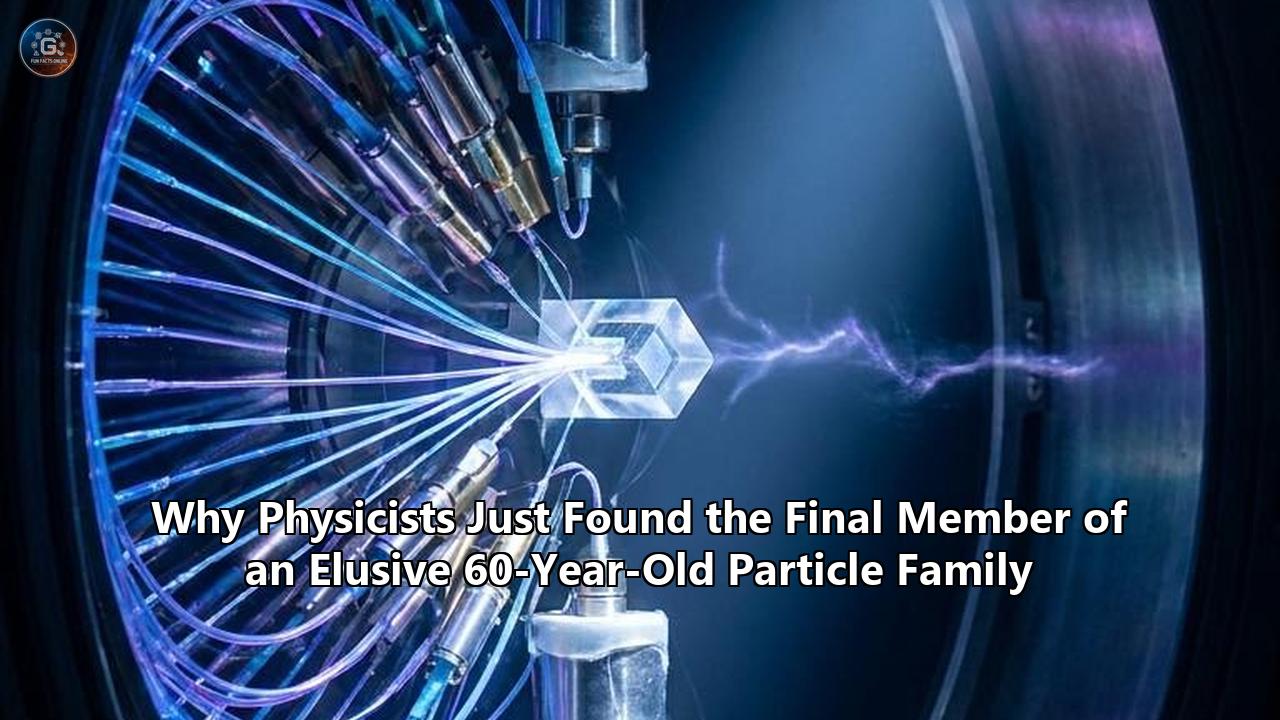
To pull such a tiny, transient signal out of the blinding debris of proton-proton collisions required an experimental apparatus of unprecedented precision. This is where the upgraded LHCb detector, which came online for Run 3 of the LHC, proved to be the decisive factor in this elusive particle discovery.
+-----------------------------------------------------------------------------+
|                          LHCb DETECTOR UPGRADE (RUN 3)                      |
|                                                                             |
|  [Collision Point]                                                          |
|         │                                                                   |
|         ▼                                                                   |
|  [VELO (Vertex Locator)]  ===> Upgraded silicon pixel detector              |
|         │                      Positioned just 5.1 mm from the beam         |
|         │                      Reconstructs decay vertices in 3D            |
|         ▼                                                                   |
|  [DAQ Readout System]     ===> Upgraded to 40 MHz (full collision rate)     |
|         │                                                                   |
|         ▼                                                                   |
|  [All-Software Trigger]   ===> Hardware trigger removed                       |
|                                Real-time selection via GPU farm             |
|                                Hadronic state efficiency increased 2-4x     |
+-----------------------------------------------------------------------------+
Between 2020 and 2023, the LHCb detector underwent a major upgrade. The most critical change was the complete removal of the hardware-based "Level-0" trigger. In previous runs, the hardware trigger could only process a fraction of the collision events, discarding massive amounts of data containing hadronic decays to keep up with the data-transmission limits.
The upgraded LHCb replaced this system with an all-software trigger operating at the full LHC collision rate of 40 MHz. Every single collision—40 million times per second—is now read out and processed in real time by a massive farm of Graphics Processing Units (GPUs). This software trigger runs advanced reconstruction algorithms, identifying promising particle decays as they happen.
“The removal of the hardware trigger was a total game-changer for hadron spectroscopy,” explains Dr. Paula Collins, the incoming deputy spokesperson of the LHCb Collaboration. “For particles like the doubly charmed baryons, which decay into complex hadronic states, the efficiency of our selection software increased by a factor of two to four. We were suddenly able to record and analyze events that previously would have been thrown away at the hardware level.”
Alongside the trigger upgrade, LHCb deployed a newly designed Vertex Locator (VELO). The VELO consists of silicon pixel detectors placed just 5.1 millimeters from the proton beams, closer than any other detector at the LHC. This proximity allows the VELO to reconstruct the tracks of charged particles with a spatial resolution of a few micrometers, distinguishing between the primary collision point and the secondary decay vertex where the $\Omega_{cc}^+$ decayed just a fraction of a millimeter away.
Deconstructing the Five-Track Decay
Because the $\Omega_{cc}^+$ decays almost instantly, physicists cannot detect it directly. Instead, they must reconstruct it by working backward from its decay products, a process that requires tracing a complex trail of fragments.
The team targeted a highly specific, multi-step decay chain:
$$\Omega_{cc}^+ \to \Omega_c^0 \pi^+$$
But the $\Omega_c^0$ is also highly unstable and immediately decays:
$$\Omega_c^0 \to p K^- K^- \pi^+$$
This means that the birth and death of a single $\Omega_{cc}^+$ baryon leaves behind a final state of five charged particles: one proton ($p$), two kaons ($K^-$), and two pions ($\pi^+$).
   [Proton-Proton Collision]
             │
             │ (travels ~100 micrometers)
             ▼
       [Ωcc+ Decay Vertex]  ─────────► [π+ Track]
             │
             │ (travels ~50 micrometers)
             ▼
       [Ωc0 Decay Vertex]
         ├───► [p Track]
         ├───► [K- Track]
         ├───► [K- Track]
         └───► [π+ Track]
To find this signature among the billions of other particles flying out of the collisions, LHCb's software had to execute an incredibly demanding series of filters.
First, the system had to identify the tracks of the five final particles and measure their momenta with extreme accuracy. This was done using LHCb's tracking stations and its Ring-Imaging Cherenkov (RICH) detectors, which can distinguish between protons, kaons, and pions by measuring the Cherenkov radiation they emit when passing through gas-filled radiators.
Second, the algorithms calculated the trajectories of the proton, the two kaons, and one of the pions backward in space to see if they met at a single, distinct point—the decay vertex of the $\Omega_c^0$.
Third, the software combined the reconstructed $\Omega_c^0$ candidate with the remaining pion track ($\pi^+$) and checked if their trajectories intersected at a point closer to the primary collision. This point would be the decay vertex of the parent $\Omega_{cc}^+$ baryon.
Finally, the invariant mass of the entire five-particle system was calculated. If the $\Omega_{cc}^+$ actually existed, plotting the invariant masses of thousands of these candidate events would reveal a sharp "peak" at the exact mass of the parent particle, rising above a flat background of accidental combinations where random particles just happened to cross paths in a way that mimicked the decay chain.
Using the high-intensity data collected in 2024 during Run 3 of the LHC, the physicists analyzed the $\Omega_c^0 \pi^+$ mass spectrum. The result was a beautiful, narrow peak at around 3,727 MeV/c². The statistical significance of the peak was well above 5 sigma, the gold standard in particle physics required to officially claim a discovery.
“When you see a peak that clean, after so many years of searching, it is an incredible feeling,” says Ao Xu, a researcher at the Scuola Normale Superiore associated with INFN, who played a central role in the real-time software selection. “We were looking at something that had never been seen before, yet it was exactly where the mathematics told us it should be.”
Quantum Chromodynamics at the Limit
Why are physicists so deeply invested in finding these exotic, short-lived particles? The answer lies in our incomplete understanding of the strong nuclear force, the physical interaction that holds the atomic nucleus together.
The strong force is described by a theory called Quantum Chromodynamics (QCD). At very high energies, such as those inside the hottest stars or the early moments of the Big Bang, the equations of QCD are relatively easy to solve because the force becomes weaker—a phenomenon known as asymptotic freedom, which won its discoverers the Nobel Prize in 2004.
However, at the lower energies characteristic of ordinary matter—the scale of protons, neutrons, and stable atoms—the strong force becomes incredibly powerful and complex. The equations become mathematically intractable; we cannot solve them analytically. Instead, physicists must rely on massive supercomputer simulations (Lattice QCD) or simplified theoretical models to predict how quarks bind together.
This is where the doubly charmed baryon family becomes an invaluable, unique laboratory.
In a normal proton ($uud$) or neutron ($udd$), the three light quarks are constantly whizzing around each other at nearly the speed of light. Because they all have similar, very light masses, their individual dynamics are highly chaotic and deeply intertwined. Trying to model this system is a three-body nightmare.
But a doubly charmed baryon like the $\Omega_{cc}^+$ ($ccs$) is structurally very different. It contains two heavy, slow-moving charm quarks and one light, fast-moving strange quark. Because the charm quarks are so massive, they behave like a single, tightly bound unit. Physicists refer to this pair as a "diquark core".
      LIGHT BARYON (Proton)                   DOUBLY CHARMED BARYON (Ωcc+)

          [u]  ~~~~  [u]                           [c] ======= [c]
            \      /                                  \       /
             \    /                                    \     /   (Heavy Diquark Core)
              [d]                                       [cc]
                                                         │
                                                         │  ~ ~ ~  (Color Field)
                                                         ▼
                                                        [s]  (Orbiting Light Quark)
In this setup, the heavy diquark core ($cc$) acts essentially like a heavy nucleus at the center of an atom, while the light strange quark ($s$) orbits around it in the color field generated by the heavy pair.
This separation of scales simplifies the mathematics of QCD dramatically. It allows theorists to use "Heavy-Quark Effective Theory" (HQET) to separate the heavy-quark dynamics from the light-quark dynamics. By comparing the masses, lifetimes, and decay rates of the $\Xi_{cc}^{++}$, $\Xi_{cc}^+$, and $\Omega_{cc}^+$, physicists can test these theoretical approximations with unprecedented precision.
“These three particles are a perfect testbed,” says Dr. Collins. “Because they share the same heavy $cc$ diquark core but have different light quarks—an up, a down, or a strange quark—we can isolate and study the effect of the light quark on the overall structure. It is the closest we can get to performing a controlled experiment on the strong force itself.”
The mass difference between the $\Omega_{cc}^+$ and its partners provides a direct measurement of how the strange quark interacts with the heavy diquark compared to the lighter up and down quarks. Furthermore, the lifetimes of these particles are highly sensitive to "subleading" effects in the heavy-quark expansion—complex quantum interference patterns that occur inside the baryon before it decays.
This elusive particle discovery provides the exact numerical benchmarks theorists need to calibrate their Lattice QCD algorithms, transforming speculative models into precise, predictive physics.
The High-Stakes Geopolitics of Big Science
While the discovery of the $\Omega_{cc}^+$ is a triumph of international collaboration, it also comes at a time of significant political and financial tension within the global physics community.
The success of the LHCb experiment has historically relied on the heavy participation of institutions from around the world. However, in late 2025, the UK’s primary funding body, UK Research and Innovation (UKRI), made a controversial decision to "deprioritise" funding for the proposed LHCb Upgrade II—a massive project planned for the 2030s to allow the detector to operate at even higher collision rates.
The decision sent shockwaves through the scientific community. UK physicists make up more than 18 percent of the LHCb collaboration and have been the primary technical drivers behind many of the detector’s most advanced components, including the VELO.
In a sharply worded editorial published in early 2026, Dr. Vincenzo Vagnoni warned of the long-term consequences of this funding withdrawal. “By treating a multi-decade international project as a discretionary line item, UKRI has undermined the strategic planning of every European lab that trusted the British word,” Vagnoni wrote. He argued that the decision risks sidelining UK scientists from the next generation of fundamental discoveries.
Despite these political headwinds, the completion of the ground-state doubly charmed baryon family serves as a powerful reminder of the immense scientific return on investment that long-term funding provides. The upgrades completed in 2023, which were funded by international contributions over a decade, are only now beginning to yield their most valuable results. The discovery of the $\Xi_{cc}^+$ in March and the $\Omega_{cc}^+$ in June 2026 are direct products of those upgraded systems.
“This is exactly what we promised when we asked for the upgrades,” says Dr. Collins. “The technology works, the detector is performing beautifully, and we are closing chapters of physics that have been open for sixty years.”
The Road Ahead: Triple Charm and the High-Luminosity Runs
The discovery of the $\Omega_{cc}^+$ represents the completion of the spin-1/2 doubly charmed ground-state baryon family, but for particle physicists, the work is far from finished. The map of subatomic matter still has many unexplored regions.
Now that the ground-state triplet is complete, researchers are shifting their sights to several even more exotic targets:
1. Spin-3/2 Doubly Charmed States
The particles discovered so far ($\Xi_{cc}^{++}$, $\Xi_{cc}^+$, and $\Omega_{cc}^+$) all have a total spin of 1/2, meaning the intrinsic spins of their constituent quarks are aligned in a way that minimizes their energy. However, theory predicts a parallel set of "excited" spin-3/2 states, where the quark spins are aligned differently, resulting in slightly higher masses. Observing these states will provide even tighter constraints on QCD potential models.
2. Triply Heavy Baryons
If two heavy quarks are interesting, three are even better. The ultimate prize in heavy-flavor baryon spectroscopy is the $\Omega_{ccc}^{++}$ (Omega-ccc-double-plus), a baryon consisting of three charm quarks ($ccc$). This particle would contain no light quarks at all, making it a pure heavy-quark system—the ultimate QCD analogue of a hydrogen atom. It is expected to be incredibly rare and difficult to produce, likely requiring the massive data rates of the upcoming High-Luminosity LHC (HL-LHC) era.
3. Bottom-Containing Heavy Baryons
Physicists are also eager to find baryons containing a mix of charm and bottom quarks, such as the $\Xi_{bc}^0$ ($bcu$) or the $\Omega_{bb}^-$ ($bbs$). Because the bottom quark is even heavier than the charm quark, these states would allow physicists to study the strong force at even higher energy scales.
As the Large Hadron Collider prepares for its final transition into the High-Luminosity LHC in the late 2020s, the tools and techniques developed to find the $\Omega_{cc}^+$ will form the foundation for these future searches. The software-trigger architectures, the high-precision pixel tracking, and the sophisticated multi-track vertexing algorithms will all be pushed to their limits.
For now, the physicists at CERN and their collaborators around the world are celebrating a rare and beautiful moment of scientific closure. Sixty years ago, theorists drew a geometric pattern on a blackboard and asserted that nature must conform to its symmetries. With the detection of the $\Omega_{cc}^+$, the final piece of that decades-old puzzle has finally been snapped into place, proving once again that when we look closely enough at the smallest scales of existence, the universe is governed by an elegant, predictable order.
Key Milestones in the 60-Year Quest
- 1962: Murray Gell-Mann and Yuval Ne'eman propose the Eightfold Way, classifying hadrons using SU(3) symmetry.
- 1964: The discovery of the $\Omega^-$ ($sss$) baryon at Brookhaven National Laboratory confirms the validity of the quark model.
- 1974: The November Revolution reveals the charm quark ($c$), requiring the expansion of the particle catalog to SU(4) symmetry, which predicts doubly charmed baryons.
- 2002: The SELEX experiment at Fermilab claims a candidate for the $\Xi_{cc}^+$ baryon at 3,519 MeV/c², sparking a twenty-year controversy as other detectors fail to replicate it.
- 2017: The LHCb Collaboration at CERN discovers the first undisputed doubly charmed baryon, the $\Xi_{cc}^{++}$ ($ccu$), at 3,621 MeV/c².
- March 2026: LHCb observes the true $\Xi_{cc}^+$ ($ccd$) baryon at 3,621 MeV/c², resolving the SELEX controversy and establishing the doublet.
- June 2026: LHCb announces the discovery of the $\Omega_{cc}^+$ ($ccs$) baryon at 3,727 MeV/c², completing the ground-state doubly charmed baryon family.
Summary of the Doubly Charmed Baryon Family
| Baryon Name | Quark Content | Mass (Approximate) | Discovery Date | Discovery Experiment |
|---|---|---|---|---|
| $\Xi_{cc}^{++}$ | Two Charm, One Up ($ccu$) | 3,621 MeV/c² | July 2017 | LHCb (CERN) |
| $\Xi_{cc}^+$ | Two Charm, One Down ($ccd$) | 3,621 MeV/c² | March 2026 | LHCb (CERN) |
| $\Omega_{cc}^+$ | Two Charm, One Strange ($ccs$) | 3,727 MeV/c² | June 2026 | LHCb (CERN) |
The Investigative Trail Going Forward
As the data continues to pour in from Run 3, the teams at CERN are already running automated searches for the spin-3/2 partners and the first hints of bottom-charm combinations. The story of how we mapped the subatomic world is not a series of disconnected, random discoveries; it is a single, continuous detective story. With the crown of the doubly charmed pyramid now firmly in hand, the next generation of physicists is already writing the opening lines of the next chapter. The hunt continues.
Reference:
- https://indico.cern.ch/event/1595459/contributions/7068596/
- https://lhcb-outreach.web.cern.ch/2026/06/03/observation-of-the-doubly-charmed-baryon-%CF%89cc/
- https://www.sci.news/physics/cern-third-doubly-charmed-baryon-14857.html
- https://home.cern/lhcb-discovers-the-final-missing-member-of-a-doubly-charmed-particle-family/
- https://ep-news.web.cern.ch/content/doubly-charmed-baryon-doublet-completed-upgraded-lhcb
- https://www.reddit.com/r/Physics/comments/1twv2un/observation_of_the_doubly_charmed_baryon_%CF%89cc_by/
- https://www.sci.news/physics/cern-bc-plus-meson-particle-14793.html
- https://www.sci.news/physics/proton-like-doubly-charmed-baryon-14640.html
- https://indico.in2p3.fr/event/39055/contributions/170598/attachments/100322/155543/1_SHan-v1.pdf
- https://www.youtube.com/watch?v=zoeA-meVS2s
- https://home.cern/lhcb-collaboration-discovers-new-proton-particle/
- https://www.infn.it/en/cern-lhcb-discovers-a-new-proton-like-particle-but-much-heavier-and-extremely-rare/
- https://breakthroughprize.org/Laureates/1/L3995
- https://home.cern/lhcb-discovers-the-final-missing-member-of-a-doubly-charmed-particle-family/
- https://breakthroughprize.org/News/98
- https://indico.bnl.gov/event/736/timetable/?view=standard
- https://www.researchprofessionalnews.com/rr-news-europe-views-of-europe-2026-2-leaving-cern-collaboration-betrays-europe-and-sidelines-uk/
- https://github.com/SNSFT/Substrate-Neutral-Structural-Foundation-Theory-SNSFT
- https://cernandsocietyfoundation.cern/lhc-experiment-collaborations-receive-breakthrough-prize/
- https://alumni.cern/news