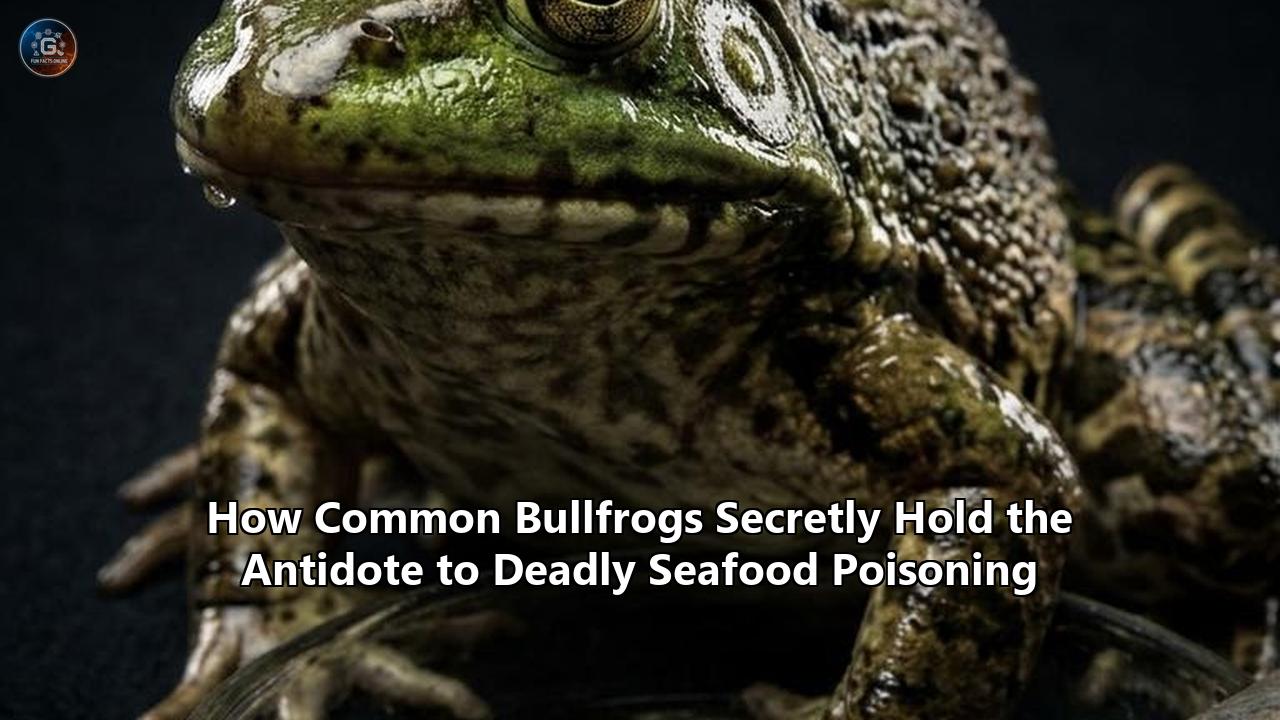
On July 16, 2026, researchers at the University of California, San Francisco (UCSF) and Stanford University published a landmark study in Nature Communications demonstrating that a protein naturally produced by American bullfrogs can neutralize and reverse otherwise lethal doses of saxitoxin in living mammals. Saxitoxin, a marine neurotoxin produced during toxic "red tide" algal blooms, is one of the most potent natural poisons on Earth. It is responsible for Paralytic Shellfish Poisoning (PSP) in humans and is so deadly that international law classifies it as a Schedule 1 chemical weapon.
The protein, known as saxiphilin, acts as a circulating "molecular sponge." When introduced into the bloodstream, it binds tightly to saxitoxin molecules, stripping them away before they can disable the nervous system. In controlled animal trials, an injection of recombinant saxiphilin administered after exposure rescued 90% of subjects from acute respiratory paralysis and death.
The development of this functional bullfrog toxin antidote establishes a critical bridge between evolutionary biology and emergency medicine. For nearly a century, medical science had no direct treatment for saxitoxin ingestion, leaving poisoned patients entirely reliant on emergency mechanical ventilation. With climate change accelerating the frequency, duration, and geographic footprint of toxic algal blooms worldwide, this amphibian-derived discovery provides a long-sought solution to an escalating global public health threat.
                          SAXITOXIN EXPOSURE PATHWAY & RESCUE

  [Toxic Algal Bloom] ----> [Shellfish Accumulation] ----> [Human Ingestion]
  (Dinoflagellates/STX)     (Mussels, Clams, Oysters)      (Paralytic Shellfish Poisoning)
                                                                   |
                                                                   v
                                                      [Voltage-Gated Sodium Channels]
                                                      (Blocked: Paralysis & Asphyxiation)
                                                                   ^
                                                                   |  (High-Affinity Capture)
                                                      [SAXIPHILIN / BULLFROG ANTIDOTE]
                                                      (Mops up toxin / Restores breathing)
The Challenge: Rising Red Tides and the Silent Lethality of Saxitoxin
The challenge answered by this discovery is anchored in marine ecology and neurobiology. Harmful Algal Blooms (HABs)—often referred to as red tides—occur when microscopic marine algae proliferate rapidly in warm, nutrient-rich waters. Key among these organisms are dinoflagellates belonging to the genera Alexandrium, Gonyaulax, Gymnodinium, and Pyrodinium, as well as certain freshwater cyanobacteria. Under specific environmental conditions, these single-celled microbes synthesize saxitoxin (STX), a complex, non-protein alkaloid neurotoxin.
+-----------------------------------------------------------------------------------+
|                                SAXITOXIN AT A GLANCE                              |
+-----------------------------------------------------------------------------------+
| Primary Source       | Marine dinoflagellates (Alexandrium spp.) & cyanobacteria   |
| Lethal Mechanism     | Blocks voltage-gated sodium channels (NaV1.1 - NaV1.9)     |
| Relative Toxicity    | ~1,000x more potent than sodium cyanide                    |
| Human Lethal Dose    | 0.5 mg to 1.0 mg (ingested via contaminated seafood)       |
| Environmental Status | Increasing globally due to ocean warming & agricultural run-off |
| Biosecurity Status   | Schedule 1 Chemical Weapon (Chemical Weapons Convention)   |
| Standard Treatment   | Supportive care only (mechanical ventilation in an ICU)    |
+-----------------------------------------------------------------------------------+
When filter-feeding marine organisms—such as mussels, clams, oysters, scallops, and certain fish—consume these algae, saxitoxin concentrates in their tissues. The toxin is invisible, odorless, heat-stable, and acid-stable. Boiling, steaming, freezing, or frying contaminated seafood does not alter or destroy the toxin's molecular structure. Contaminated shellfish look, smell, and taste entirely normal.
When a human eats saxitoxin-laden seafood, the clinical onset of Paralytic Shellfish Poisoning is exceptionally swift. Within 30 to 60 minutes, patients experience:
- Initial Paresthesia: Tingling, burning, or numbness around the lips, mouth, tongue, and fingertips.
- Motor Ataxia: Loss of muscular coordination, weakness in the extremities, difficulty walking, and slurred speech.
- Flaccid Paralysis: Rapidly ascending muscle weakness that compromises voluntary movement.
- Respiratory Failure: Complete paralysis of the diaphragm and intercostal muscles, culminating in asphyxiation and fatal cardiac arrest within hours if medical intervention is unavailable.
At a cellular level, saxitoxin targets voltage-gated sodium channels ($Na_V1.1$ through $Na_V1.9$) embedded in nerve and muscle cell membranes. These channels act as the electrical gateways of the body, allowing sodium ions to flood into cells to generate action potentials—the bioelectrical signals that tell the heart to beat, muscles to contract, and lungs to expand. Saxitoxin physically plugs the outer vestibule of the channel pore like a cork in a bottle. Electrical signaling halts entirely.
Saxitoxin is roughly 1,000 times more lethal than sodium cyanide. A microscopic quantity—less than one milligram—is sufficient to kill an adult human. Because of its extreme lethality, rapid onset, and lack of an antidote, saxitoxin was researched and stockpiled as a bioweapon during the Cold War and remains strictly regulated under international chemical weapons conventions.
                       MECHANISM OF ACTION AT CELLULAR MEMBRANE

       NORMAL NERVE SIGNALING                   SAXITOXIN POISONING

        Sodium Ions (Na+)                        Sodium Ions (Na+)
            |   |   |                                |   |   |
            v   v   v                                x   x   x  (Blocked!)
       +-------------+                          +-------------+
       |   NaV Pore  |                          | [STX Plug]  |  <-- Saxitoxin blocks
       +-------------+                          +-------------+      ion passage
       | Cell Membrane |                        | Cell Membrane |
       +-------------+                          +-------------+
              |                                        |
              v                                        v
       [Action Potential]                       [Electrical Silence]
       (Normal Contraction)                     (Paralysis & Asphyxia)
Compounding this physiological danger is a worsening ecological crisis. Driven by rising sea surface temperatures, marine heatwaves, and agricultural runoff, harmful algal blooms are growing larger, lasting longer, and appearing in coastal zones where they were previously rare. From the Pacific coast of North America to the waters of Northern Europe, Asia, and South America, toxic red tides are expanding. Commercial fisheries face multi-million-dollar closures, while coastal Indigenous populations and recreational harvesters face heightened risks from traditional subsistence practices.
Until now, hospitals faced with a PSP patient had only one recourse: put the patient on a mechanical ventilator, manage their blood pressure, and wait 24 to 72 hours for the kidneys to clear the toxin naturally. If a patient is hours away from an intensive care unit—as is frequently the case on remote coastlines—the outcome is often fatal.
What Went Wrong: Decades of Structural Hurdles and Failed Countermeasures
The quest for a saxitoxin antidote has baffled scientists for nearly a century. The connection between amphibians and saxitoxin resistance was first noted in the late 1920s and 1930s by Dr. Hermann Sommer, a physician-scientist at UCSF who investigated severe shellfish poisoning outbreaks along the California coast. Sommer demonstrated that "mussel poison" originated from microscopic marine plankton, but he also made a puzzling observation: wild bullfrogs and other amphibians living in coastal estuaries could ingest toxic organisms without showing any signs of neurotoxicity.
For decades, modern pharmaceutical science attempted to reverse saxitoxin poisoning using standard drug discovery approaches. Every attempt encountered significant biological hurdles:
+-----------------------------------------------------------------------------------+
|                   WHY TRADITIONAL ANTIDOTE STRATEGIES FAILED                     |
+-----------------------------------------------------------------------------------+
| Approach             | Primary Failure Mechanism                                  |
|----------------------+------------------------------------------------------------|
| Channel Displacement | Small molecules designed to kick STX off NaV channels      |
| Therapeutics         | ended up blocking the channels themselves, causing fatal  |
|                      | cardiac arrhythmias.                                       |
|----------------------+------------------------------------------------------------|
| Monoclonal Antibody  | STX is a tiny molecule (~299 Da) with low immunogenicity.   |
| Development          | Antibodies bound too slowly or lacked sufficient affinity  |
|                      | to outcompete NaV channel binding.                         |
|----------------------+------------------------------------------------------------|
| Universal Antidote   | STX exists as over 50 distinct chemical variants          |
| Targeting            | (congeners). Drugs designed for pure STX failed against    |
|                      | complex real-world algal toxin mixtures.                   |
+-----------------------------------------------------------------------------------+
The Pore-Displacement Trap
Scientists initially tried to design small-molecule drugs that could enter the sodium channel pore and displace saxitoxin. However, because the pore structure of voltage-gated sodium channels is conserved across the central nervous system and heart, any small molecule capable of binding inside the channel vestibule tended to block the passage of sodium ions itself. These experimental compounds caused severe cardiac arrhythmias or profound central nervous system toxicity, proving as dangerous as the poison they were meant to treat.
The Low Immunogenicity of Tiny Molecules
Traditional biopharma reliance on monoclonal antibodies also stalled. Saxitoxin is a non-protein small molecule with a molecular weight of just 299 Daltons—far too small to naturally trigger a robust immune response in mammals. While researchers eventually managed to generate synthetic antibodies against saxitoxin in laboratory settings, these antibodies bound the toxin slowly. Because saxitoxin binds to human $Na_V$ channels with sub-nanomolar to low-nanomolar affinity ($K_D \approx 0.5 \text{ to } 2 \text{ nM}$), standard antibodies could not pull the toxin off cell receptors fast enough to rescue a suffocating patient.
The Congener Complexity Crisis
Crucially, saxitoxin is not a single compound. Marine dinoflagellates produce a diverse chemical family of more than 50 distinct structural variants, known as congeners. These include:
- Neosaxitoxin (neoSTX)
- Gonyautoxins (GTX1 through GTX6)
- Decarbamoyl toxins (dcSTX, dcneoSTX)
- Sulfamated C-toxins (C1 through C4)
Each congener features subtle variations in functional groups—such as sulfate, hydroxyl, or carbamoyl additions—that alter its charge distribution and physical shape. An antibody or synthetic inhibitor optimized to catch classic saxitoxin often failed entirely when exposed to gonyautoxins or sulfamated variants present in wild shellfish. A successful therapeutic required a mechanism that could capture the entire family of toxins simultaneously.
The Molecular Solution: How Bullfrogs Evolved a 'Toxin Sponge'
The solution to this dilemma came not from pharmaceutical engineering, but from evolutionary biology. To survive in freshwater ecosystems frequently plagued by cyanobacterial algal blooms, the American bullfrog (Lithobates catesbeianus, formerly Rana catesbeiana) evolved a defense mechanism. Rather than mutating its critical sodium channels—an evolutionary trade-off that might compromise nerve signal velocity—the bullfrog developed a specialized, soluble decoy protein in its blood plasma called saxiphilin ($RcSxph$).
                                  TRANSFERRIN EVOLUTION

         Ancestral Vertebrate Transferrin
         (Iron Transport Protein: Fe3+ Binding)
                        |
                        |  Gene Duplication & Divergence
                        v
         Bullfrog Saxiphilin (RcSxph)
         (Iron binding lost; High-affinity neurotoxin binding pocket created)
                        |
                        v
         Sequesters Saxitoxin & >50 Congeners with sub-nanomolar affinity
Saxiphilin is a monomeric plasma protein (~90 kDa) structurally related to transferrin, the iron-transport protein found across vertebrate species. Over evolutionary time, through gene duplication and structural mutation, the ancestral amphibian transferrin lost its iron-binding machinery. In its place, it evolved a deep, negatively charged structural pocket optimized for capturing neurotoxins.
Mapping the Atomic Structure
Led by Dr. Daniel Minor, a biophysicist at UCSF's Cardiovascular Research Institute, scientists used high-resolution X-ray crystallography and cryo-electron microscopy at Berkeley Lab’s Advanced Light Source to solve the atomic structure of free saxiphilin and saxiphilin bound to saxitoxin.
The structural maps revealed an evolutionary feat: the binding pocket inside bullfrog saxiphilin features a pocket lined with negatively charged aspartate and glutamate residues. This pocket mimics the outer pore region of mammalian voltage-gated sodium channels.
                     CONVERGENT MOLECULAR ARCHITECTURE

     Human Sodium Channel Pore (NaV)         Bullfrog Saxiphilin (RcSxph)
  +-----------------------------------+   +-----------------------------------+
  | - Negatively charged Asp/Glu ring |   | - Negatively charged Asp/Glu cleft |
  | - Fits STX guanidinium groups     |   | - Fits STX guanidinium groups     |
  | - Binding KD ~ 0.5 - 2.0 nM       |   | - Binding KD < 0.1 nM (Tighter!)  |
  | RESULT: Ion Blockade & Paralysis  |   | RESULT: Toxin Trapped & Neutralized|
  +-----------------------------------+   +-----------------------------------+
Because saxiphilin's binding affinity ($K_D < 0.1 \text{ nM}$) is significantly tighter than that of human sodium channels, the protein acts as a molecular magnet. When introduced into an organism, saxiphilin intercepts saxitoxin molecules in the blood stream and physically pulls toxin molecules off sodium channels, trapping them inside its internal cleft.
Solving the 50-Variant Problem
In April 2025, Minor's research group published a structural study in Nature Communications demonstrating how bullfrog saxiphilin ($RcSxph$) achieves broad-spectrum neutralization. The researchers proved that saxiphilin utilizes a flexible "lock-and-key" binding mechanism.
While the pocket fits the core guanidinium framework of saxitoxin tightly, its outer cleft contains flexible loop regions that accommodate the diverse chemical side-chains of various STX congeners. Whether exposed to neosaxitoxin, gonyautoxins, or decarbamoyl variants, saxiphilin sequesters them.
This discovery set the stage for testing whether engineered bullfrog toxin antidote formulations could reverse lethal poisonings in living mammals.
In the Lab: Reversing Lethal Poisoning in Mammalian Models
The landmark July 16, 2026 study in Nature Communications, co-authored by Dr. Daniel Minor, Dr. Justin Du Bois (Stanford University), and UCSF postdoctoral scholars Dr. Samantha Nixon and Dr. Sandra Zakrzewska, provided proof that saxiphilin works inside living mammalian systems.
+-----------------------------------------------------------------------------------+
|              LANDMARK 2026 IN VIVO RESCUE EXPERIMENT (UCSF / STANFORD)             |
+-----------------------------------------------------------------------------------+
| Parameter          | Experimental Details & Observations                          |
|--------------------+--------------------------------------------------------------|
| Target Neurotoxin  | Saxitoxin (STX) administered at lethal doses (>LD100)        |
| Model Organism     | Mammalian test models (mice)                                 |
| Control Outcome    | Rapid paralysis in 90-180 sec; 0% survival (death via        |
|                    | respiratory failure)                                         |
| Rescue Treatment   | Single IV/IP injection of recombinant Bullfrog Saxiphilin    |
| Treatment Timing   | Administered 60 seconds post-toxin (after onset of weakness) |
| Rescue Outcome     | 90% Survival (9 out of 10 fully recovered)                   |
| Physiological Impact| Rapid restoration of diaphragmatic breathing, loss of ataxia,|
|                    | zero observed off-target toxicity or cardiac side effects    |
+-----------------------------------------------------------------------------------+
The Experimental Protocol
Researchers expressed recombinant American bullfrog saxiphilin in high-yield cell culture lines, producing a pure form of the protein. They then administered lethal doses of saxitoxin—well above the $LD_{100}$ threshold (the dose guaranteed to cause 100% mortality)—to mammalian models.
- Control Group: Mammals injected with saxitoxin alone developed severe symptoms within 90 to 180 seconds. The animals suffered rapid limb paralysis, body tremors, complete loss of motor control, and severe respiratory distress, expiring shortly thereafter due to asphyxiation.
- Prophylactic & Simultaneous Cohorts: When saxiphilin was administered prior to or alongside the saxitoxin injection, 100% of the subjects were protected. The protein bound the toxin in the vascular bed immediately, preventing it from reaching peripheral nerves or neuromuscular junctions.
The Acute Rescue Trial
To mimic a real-world medical emergency—where a person has already consumed toxic seafood and is showing symptoms—the researchers conducted an acute therapeutic rescue experiment.
- Test subjects were injected with a lethal dose of saxitoxin.
- Researchers waited 60 seconds until the animals showed clear signs of systemic poisoning, including limb weakness and respiratory distress.
- At the 60-second mark, scientists injected a single dose of recombinant saxiphilin.
The results were striking: 9 out of 10 animals in the rescue group survived.
Within minutes of receiving the bullfrog toxin antidote, the paralyzed animals began breathing normally. Motor function returned, limb paralysis resolved, and the subjects recovered completely without any lingering neurological deficits.
               MAMMALIAN RESCUE TIMELINE (JULY 2026 STUDY)

  T = 0 sec           T = 60 sec                     T = 180 sec        T = 5 min
  +-------------------+------------------------------+------------------+------------------+
  | STX Ingested      | Symptoms Appear              | Saxiphilin Given | Full Recovery    |
  | (Lethal >LD100    | (Limb weakness,              | (Toxin Sponge    | (Normal motor    |
  |  dose given)      |  respiratory distress)       |  Injected)       |  & lung function)|
  +-------------------+------------------------------+------------------+------------------+
                                                             |
                                                             v
                                                    [90% Survival Rate!]
Pharmacokinetic tracking demonstrated that saxiphilin spread rapidly throughout the circulatory system, penetrating tissues in the heart, brain, and skeletal muscle. Crucially, the frog protein produced no off-target channel blockades, toxic side effects, or adverse immune reactions in the subjects.
Dr. Rebecca Tarvin, an evolutionary biologist at UC Berkeley who was not involved in the research, noted the significance of these findings: "The results demonstrate that the amphibian-derived protein survives and functions effectively in warm mammalian bodies... It has the potential to act as either a prophylactic treatment or a therapeutic rescue."
Dr. Matthew Holding, an evolutionary biologist at the University of Michigan, added: "Saxitoxin is considered a chemical weapon by international law, and here we have what appears to be an effective rescue antitoxin that could be injected and provide relief of symptoms—particularly severe symptoms—of shellfish poisoning."
Beyond Medicine: Environmental Detection and Coastal Biosecurity
The practical applications of bullfrog saxiphilin extend beyond emergency room therapeutics. The protein's ability to lock onto saxitoxin and its 50+ variants with extreme precision is poised to transform environmental monitoring and food safety infrastructure.
+-----------------------------------------------------------------------------------+
|               MULTIFACETED APPLICATIONS OF SAXIPHILIN TECHNOLOGY                  |
+-----------------------------------------------------------------------------------+
| Domain              | Impact & Implementation                                     |
|---------------------+-------------------------------------------------------------|
| Emergency Medicine  | Injectable rescue therapeutic for human PSP victims         |
|                     | far from intensive care facilities.                         |
|---------------------+-------------------------------------------------------------|
| Food Safety Testing | Replaces crude 1930s Mouse Bioassays with rapid,            |
|                     | field-deployable biosensors for commercial dockside testing. |
|---------------------+-------------------------------------------------------------|
| Coastal Indigenous  | Provides safety and rapid diagnostic tools for high-risk   |
| Health              | subsistence harvesting in remote regions.                   |
|---------------------+-------------------------------------------------------------|
| Military Biodefense | Injectable countermeasure for first responders and military |
|                     | personnel exposed to Schedule 1 chemical weapons agents.    |
+-----------------------------------------------------------------------------------+
Phasing Out the 1930s Mouse Bioassay
For nearly a century, the standard testing protocol enforced by global health agencies to verify shellfish safety during algal blooms has been the Mouse Bioassay (MBA). Developed in the 1930s, this test involves homogenizing tissue samples from harvested mussels or clams, injecting the extract into live mice, and timing how long it takes for the animals to die.
The Mouse Bioassay is increasingly criticized for:
- Ethical Concerns: Requiring thousands of test animals annually.
- Slow Turnaround Times: Samples must be shipped to specialized central laboratories, delaying harvest decisions by days.
- Low Sensitivity: Inability to detect low-level toxin accumulations before blooms reach critical thresholds.
By using engineered saxiphilin as a capture reagent, scientists are developing rapid, handheld biosensors. Similar to home glucose monitors or lateral flow tests, these saxiphilin-based devices can detect tiny concentrations of saxitoxin congeners in marine extracts within 15 minutes right on commercial fishing docks.
Protecting Remote Coastal Communities
For Indigenous communities along the coasts of Alaska, western Canada, and the Pacific Northwest, shellfish harvesting is a primary source of sustenance and cultural heritage. However, these remote coastlines are vulnerable to sudden red tides, and emergency medical care is often hours away by air ambulance.
Deploying rapid saxiphilin diagnostic kits alongside stockpiles of injectable therapeutics provides a comprehensive safety net for remote populations.
                      TRADITIONAL VS. SAXIPHILIN TESTING

   TRADITIONAL MOUSE BIOASSAY (1930s)          SAXIPHILIN BIOSENSOR (2026+)
   +----------------------------------+        +----------------------------------+
   | - Takes days (Lab shipping)      |        | - Takes 15 minutes on the dock   |
   | - Requires live animals          |        | - Field-deployable lateral flow  |
   | - Misses low-level STX variants  |        | - Detects all 50+ STX congeners  |
   +----------------------------------+        +----------------------------------+
Engineering Challenges: Delivering the Antidote in the Real World
While the animal trial results are promising, translating a frog protein into a human therapeutic presents engineering challenges. Researchers are actively addressing three primary technical hurdles:
+-----------------------------------------------------------------------------------+
|               TRANSLATIONAL CHALLENGES & ENGINEERING SOLUTIONS                    |
+-----------------------------------------------------------------------------------+
| Challenge            | Problem Description          | Technological Solution      |
|----------------------+------------------------------+-----------------------------|
| The Human Window     | Symptoms occur 30-60 min     | Optimizing binding kinetics |
|                      | post-ingestion; therapeutic  | to pull bound toxin off     |
|                      | must work retroactively.     | channels rapidly.           |
|----------------------+------------------------------+-----------------------------|
| Immunogenicity       | Full 90 kDa frog protein     | Designing humanized,        |
|                      | could trigger human immune   | truncated "micro-           |
|                      | neutralization.              | saxiphilins."               |
|----------------------+------------------------------+-----------------------------|
| Field Shelf-Life     | Protein requires cold-chain  | Protein engineering for     |
|                      | storage; unsuitable for      | room-temperature auto-      |
|                      | remote maritime use.         | injectors (EpiPen style).   |
+-----------------------------------------------------------------------------------+
1. Extending the Treatment Window
In laboratory rodent trials, rescue injections were delivered 60 seconds after toxin administration. In real-world human poisonings, victims often do not realize they have ingested saxitoxin until 30 to 60 minutes after eating contaminated seafood. Researchers are currently modeling human pharmacokinetics to determine the maximum therapeutic window during which saxiphilin can pull bound toxin molecules off human cardiac and diaphragmatic channels.
2. Truncating and Humanizing the Protein
Wild-type bullfrog saxiphilin is a large molecule (~90 kDa). Injecting a foreign amphibian protein into a human recipient carries a risk of triggering an immune reaction or an anaphylactic response, especially if administered multiple times.
To overcome this, Dr. Daniel Minor and Stanford chemist Dr. Justin Du Bois are engineering compact, humanized variants termed "micro-saxiphilins." By utilizing rational protein design and AI-guided structural folding models, the team is stripping away non-essential amphibian protein domains while preserving the negatively charged toxin-binding pocket. These micro-proteins maintain toxin-binding affinity while minimizing human immunogenicity.
                     CREATING A HUMANIZED MICRO-SAXIPHILIN

  Full Amphibian Saxiphilin (~90 kDa)         Engineered Micro-Saxiphilin (~15-25 kDa)
  +---------------------------------+         +---------------------------------+
  | [Non-essential frog domain]     |         |                                 |
  | [Tox-Binding Pocket: ACTIVE]    |  ---->  |  [Tox-Binding Pocket: ACTIVE]   |
  | [Non-essential frog domain]     |         |                                 |
  +---------------------------------+         +---------------------------------+
  Risk: Immune reaction / bulky               Benefit: Low immunogenicity, high
                                              tissue penetration, stable
3. Creating Room-Temperature Auto-Injectors
For a bullfrog toxin antidote to save lives on fishing vessels, remote beaches, or rural coastal clinics, it cannot rely on liquid cold-chain storage. Protein engineers are working on lyophilized (freeze-dried) formulations that can be stored at ambient temperatures for years and reconstituted instantly inside pre-filled auto-injectors, similar to emergency epinephrine pens.
What Happens Next: The Road to Clinical Deployment
The discovery that bullfrog saxiphilin can reverse lethal marine poisoning has launched a broad research and development push. Key milestones over the next several years include:
                           CLINICAL ROADMAP (2026 - 2030)

  2026 - 2027              2027 - 2028              2028 - 2029              2030+
  +--------------------+   +--------------------+   +--------------------+   +--------------------+
  | - Micro-Saxiphilin |   | - FDA IND Filing   |   | - Human Phase I    |   | - Full Clinical    |
  |   Optimization     |   |   (Orphan Drug /   |   |   Safety Trials    |   |   Deployment &     |
  | - Dockside Sensor  |   |   Fast Track)      |   | - Global Field     |   |   Global Emergency |
  |   Commercialization|   | - Primate Testing  |   |   Sensor Rollout   |   |   Stockpiling      |
+--------------------+ +--------------------+ +--------------------+ +--------------------+- 2026–2027: Micro-Saxiphilin Optimization and Primate Testing
Researchers will finalize truncated micro-saxiphilin constructs and test their rescue efficacy in larger mammalian models, focusing on defining exact dosage curves and pharmacokinetics. Simultaneously, commercial partners will begin scaling dockside saxiphilin biosensor kits.
- 2027–2028: FDA Investigational New Drug (IND) Application
Given saxitoxin's designation as a chemical weapon threat and the lack of existing medical countermeasures, the UCSF and Stanford team plans to pursue FDA Orphan Drug Designation and Fast Track status. Under the FDA’s "Animal Rule"—which allows approval of countermeasures for hazardous toxins based on robust animal efficacy data when human trials are unethical—the drug pathway could be significantly accelerated.
- 2028–2029: Phase I Human Safety Trials
Phase I clinical trials will evaluate the safety, tolerability, and pharmacokinetics of micro-saxiphilin auto-injections in healthy human volunteers to ensure zero off-target cardiovascular or neurological effects.
- 2030 and Beyond: Global Stockpiling and Expanding the "Toxin Sponge" Platform
Once approved, saxiphilin auto-injectors will be distributed to coastal emergency medical services, naval vessels, commercial fisheries, and biodefense stockpiles.
Furthermore, researchers are applying this "toxin sponge" paradigm to other fatal marine biotoxins. Scientists are searching amphibian and marine genomes to identify binding proteins capable of neutralizing tetrodotoxin (pufferfish poison), ciguatoxin (tropical reef fish poisoning), and microcystins (freshwater cyanobacterial liver toxins).
As climate change continues to alter marine ecosystems and intensify algal blooms, nature has provided a template for our protection hidden within a common amphibian. The transformation of bullfrog saxiphilin from an evolutionary curiosity into a life-saving antidote marks a major advancement in toxicological science and environmental biosecurity.
Reference:
- https://www.eurekalert.org/news-releases/1135762
- https://www.kqed.org/science/2001461/the-antidote-to-deadly-shellfish-poisoning-may-be-inside-a-frog
- https://newscenter.lbl.gov/2019/06/26/a-frog-worth-kissing/
- https://www.sciencenews.org/article/bullfrog-antidote-shellfish-poisoning
- https://hakaimagazine.com/news/paralytic-shellfish-poisoning-meets-its-match/
- https://pubmed.ncbi.nlm.nih.gov/40274765/
- https://cvri.ucsf.edu/news/frog-protein-may-mitigate-dangers-posed-toxic-marine-microbes-fueled-climate-change
- https://www.technologynetworks.com/biopharma/news/could-a-frog-protein-stop-shellfish-poisoning-414767
- https://timesofindia.indiatimes.com/science/scientists-discover-first-ever-antidote-to-red-tide-toxin-behind-shellfish-poisoning/articleshow/132463549.cms
- https://pubmed.ncbi.nlm.nih.gov/2448601/
- https://www.the-microbiologist.com/news/frog-protein-could-become-first-antidote-to-deadly-red-tide-toxin/9536.article