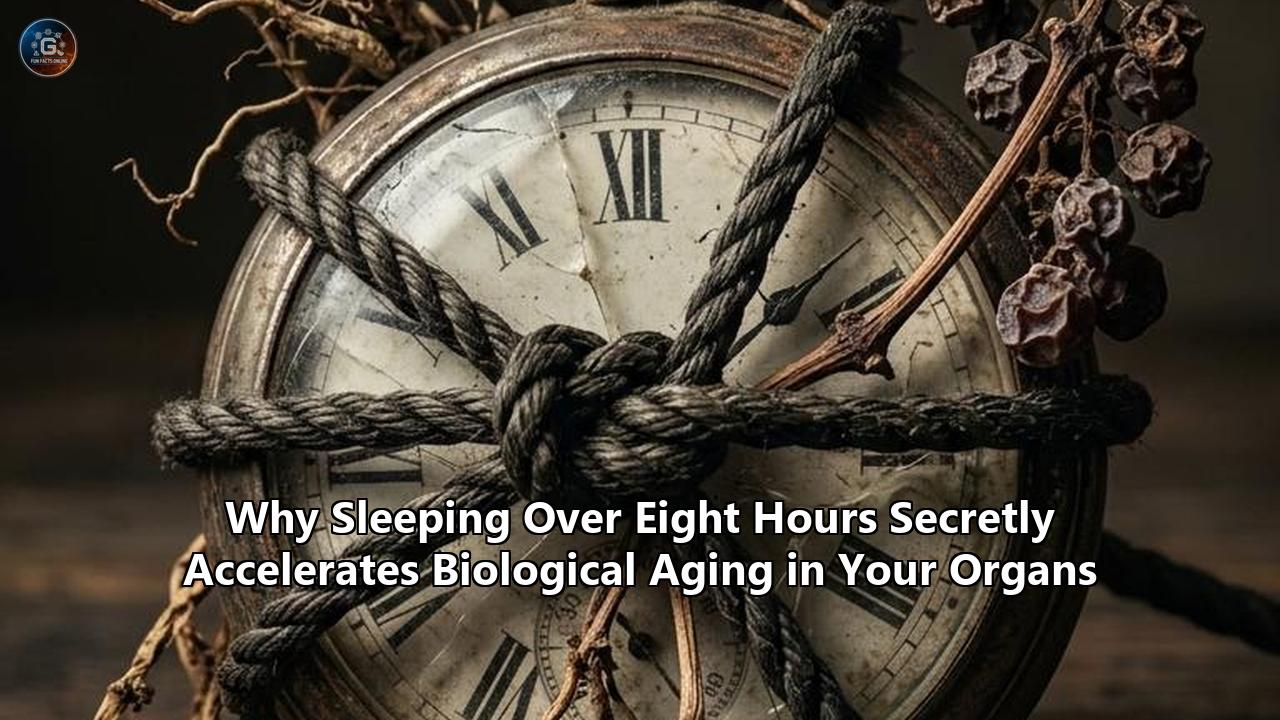
A multi-institutional investigation led by researchers at Columbia University Vagelos College of Physicians and Surgeons has challenged one of modern medicine’s most entrenched wellness assumptions: that more sleep is universally restorative. Analyzing data from roughly 500,000 individuals using 23 distinct biological aging clocks across 17 organ systems, the study published in Nature reveals that habitually sleeping over eight hours per night is systematically linked to accelerated biological aging across nearly every major organ in the human body.
The research, led by Dr. Junhao Wen, an assistant professor of radiology at Columbia, and conducted alongside the MULTI Consortium, uncovered a pronounced U-shaped curve linking nightly rest to physiological wear and tear. While short sleep duration of fewer than six hours has long been vilified for damaging cardiovascular and metabolic function, the data demonstrates that sleeping more than eight hours correlates with comparable—and in several organ systems, more severe—advancements in biological age.
The lowest rates of multi-organ cellular decay were concentrated within a defined biological window: between 6.4 and 7.8 hours of sleep per night.
Biological Aging Rate across Organ Systems vs. Nightly Sleep Duration

 Accelerated |          *                          *
 Biological  |           *                        *
 Age Gap     |            *                      *
 (Years)     |             *                    *
             |              *                  *
   Baseline  |               *   OPTIMAL ZONE *
   Aging     |________________*______________*_________________
                             6.4h          7.8h
             |-------- <6.0h -------|--------------- >8.0h ----|
                 Short Sleep                   Long Sleep
              (Direct Stress/Metabolic)     (Indirect/Organ-Mediated)
“Previous studies have found that sleep is largely linked to aging and the pathological burden of the brain,” Dr. Wen stated following the release of the findings. “Our study goes further and shows that too little and too much sleep are associated with faster aging in nearly every organ, supporting the idea that sleep is important in maintaining organ health within a coordinated brain-body network, including metabolic balance and a healthy immune system”.
The revelation reshapes longevity research and clinical practice. For decades, public health messaging prioritized combating sleep deprivation, framing extended sleep as either benign or therapeutic. These biological clock measurements indicate that chronic long sleep is not a passive state of recovery, but a physiological state accompanied by systemic proteomic shifts, metabolic deceleration, and tissue-specific cellular senescence.
The Architecture of the Discovery: 23 Clocks Across 17 Organs
To quantify how sleep duration influences physiological decline, Dr. Wen’s team departed from traditional chronological tracking. Chronological age measures elapsed time; biological age measures cellular deterioration, functional reserve, and mortality vulnerability.
Most previous longevity studies relied on aggregate, whole-body biological clocks. However, human organs do not age at a uniform pace. The MULTI Consortium deployed machine-learning models to map 23 separate biological aging clocks across 17 discrete physiological systems, using deep multi-omics and imaging datasets gathered from the UK Biobank.
┌────────────────────────────────────────────────────────────────────────┐
│             MULTI-MODAL BIOLOGICAL AGING CLOCK FRAMEWORK                │
├──────────────────────┬──────────────────────┬──────────────────────────┤
│ Imaging Clocks       │ Proteomic Clocks     │ Metabolomic Clocks       │
│ (MRI Age Gaps)       │ (ProtBAGs)           │ (MetBAGs)                │
├──────────────────────┼──────────────────────┼──────────────────────────┤
│ • Structural Brain   │ • Hepatic Proteome   │ • Lipid Subclasses       │
│ • Subcortical Volume │ • Renal Proteome     │ • Amino Acid Profiles    │
│ • Cardiac Morphology │ • Pulmonary Matrix   │ • Glycolytic Metabolites │
│ • Adipose Deposition │ • Immune Signaling   │ • Ketone Intermediates   │
│ • Hepatic Steatosis  │ • Skin Fibroblasts   │ • Inflammatory Markers   │
└──────────────────────┴──────────────────────┴──────────────────────────┘
The team analyzed three distinct biological layers:
- Imaging-Derived Age Gaps (MRIBAGs): Magnetic resonance imaging assessed structural atrophy, parenchymal loss, and tissue volume changes in the brain, heart, liver, and adipose distributions.
- Proteomic Biological Age Gaps (ProtBAGs): Serum assays captured organ-enriched protein expression profiles, measuring the degradation of structural proteins, enzymatic cascades, and cellular senescence secretomes.
- Metabolomic Biological Age Gaps (MetBAGs): High-throughput nuclear magnetic resonance quantified systemic lipid distributions, fatty acid saturations, and mitochondrial metabolites.
When cross-referenced with participant sleep profiles over an age range spanning 37 to 84 years, the algorithms exposed biological age gaps (BAGs)—the difference between an individual's chronological age and their organ's molecular age. In individuals habitually sleeping nine hours or longer, several core organ systems exhibited molecular age signatures that were several years older than the chronological age of the participant.
Who Is Affected: Demographics, Thresholds, and Phenotypes
The acceleration of biological age through extended rest does not distribute evenly across populations. The MULTI Consortium data demonstrates that age, biological sex, baseline metabolic health, and chronotype dictate an individual's vulnerability to long-sleep senescence.
┌────────────────────────────────────────────────────────────────────────┐
│           VULNERABILITY PROFILES ACROSS DEMOGRAPHIC COHORTS            │
├──────────────────────┬─────────────────────────────────────────────────┤
│ Cohort               │ Primary Biological Vulnerabilities              │
├──────────────────────┼─────────────────────────────────────────────────┤
│ Middle-Aged Adults   │ • Hepatic ProtBAG acceleration                  │
│ (Ages 40–55)         │ • Adipose tissue expansion & insulin resistance │
│                      │ • Vascular endothelial stiffness                │
├──────────────────────┼─────────────────────────────────────────────────┤
│ Older Adults         │ • Brain MRIBAG expansion (cortical thinning)    │
│ (Ages 56–84)         │ • Systemic "inflammaging" (elevated IL-6, CRP)  │
│                      │ • Glomerular filtration rate decline            │
├──────────────────────┼─────────────────────────────────────────────────┤
│ Biological Males     │ • Hepatic and cardiovascular proteomic drift    │
│                      │ • Microvascular rarefaction                     │
├──────────────────────┼─────────────────────────────────────────────────┤
│ Biological Females   │ • Adipose tissue aging acceleration             │
│                      │ • Pulmonary gas-exchange degradation            │
└──────────────────────┴─────────────────────────────────────────────────┘
Middle-Aged vs. Older Adults
The study documented that while both extremes of sleep disrupt physiology across adulthood, the manifestation shifts with advancing chronological age. In adults between 37 and 55, sleeping over eight hours manifests predominantly as metabolic and hepatic proteomic aging. In participants older than 55, oversleeping correlates heavily with structural neuroimaging age gaps (brain atrophy) and vascular stiffening.
Sex-Specific Divergences
The "sweet spot" of optimal sleep duration varies slightly between men and women. Biological males demonstrated the lowest biological age gap across cardiovascular and liver proteomic clocks at approximately 7.2 hours of sleep. In biological females, the inflection point where biological aging accelerated in adipose and pulmonary clocks was closer to 7.6 hours. In both sexes, exceeding 8.2 hours of sleep triggered uniform upward trajectories in biological age gaps across the board.
The Weekend Catch-Up Phenotype
A major segment of modern populations operates under a "sleep debt and repayment" cycle, sleeping 5 to 6 hours during the workweek and 9 to 11 hours on weekends. The data indicates this rhythm fails to reset the biological clock.
Instead, weekend overcompensation exposes tissues to acute circadian desynchrony, yielding elevated metabolomic biological age markers comparable to consistent short sleepers. Intermittent oversleeping acts as an independent metabolic stressor rather than a restorative buffer.
The Molecular Link Between Oversleeping and Aging
The fundamental mystery uncovered by the Columbia University team centers on biological causality: why would excess time spent in an anabolic, resting state accelerate physiological decline? The answer lies in the intersection of circadian transcriptomics, cellular proteostasis, and tissue hypoperfusion.
Understanding the mechanics of oversleeping and aging requires looking past the conscious brain to examine the autonomous cellular clocks that operate inside peripheral organs. Every cell in the human body houses a transcription-translation feedback loop powered by the core clock genes CLOCK, BMAL1, PER1/2/3, and CRY1/2.
┌────────────────────────────────────────────────────────────────────────┐
│                   THE CELLULAR FEEDBACK CYCLE OF SLEEP                 │
│                                                                        │
│   ┌───────────────────────────┐      Circadian Rhythms Matched         │
│   │   Normal Sleep Window     │ ─────────────────────────────────┐     │
│   │      (6.4 - 7.8 hrs)      │                                  │     │
│   └───────────────────────────┘                                  ▼     │
│                                                       ┌──────────────────┐
│                                                       │ Healthy Organ    │
│                                                       │ Homeostasis      │
│                                                       └──────────────────┘
│   ┌───────────────────────────┐                                  ▲     │
│   │   Extended Sleep Window   │ ────────────────────────┐        │     │
│   │        (> 8.0 hrs)        │                         │        │     │
│   └───────────────────────────┘                         │        │     │
│                 │                                       │        │     │
│                 ▼                                       ▼        │     │
│   ┌───────────────────────────┐           ┌──────────────────┐   │     │
│   │ Transduction Phase Shift  │           │ Proteostasis     │   │     │
│   │ Epigenetic Repression     │           │ Collapse         │   │     │
│   └───────────────────────────┘           └──────────────────┘   │     │
│                 │                                  │             │     │
│                 └──────────────────────────────────┴─────────────┘     │
│                                 │                                      │
│                                 ▼                                      │
│                    Cellular Senescence Triggered                       │
└────────────────────────────────────────────────────────────────────────┘
Under physiological sleep-wake cycles matching human evolutionary biology, systemic clearance mechanisms run during specific nocturnal windows, followed by metabolic activation prompted by daylight, movement, and nutrition. When sleep extends beyond eight hours, several cellular pathologies ignite simultaneously:
1. Circadian Transcriptomic Uncoupling
The master circadian pacemaker in the hypothalamic suprachiasmatic nucleus (SCN) coordinates with peripheral oscillators in the liver, pancreas, and kidneys via autonomic signaling and endocrine cues (such as cortisol and insulin). Extended rest uncouples these peripheral clocks from the central pacemaker.
While the SCN begins preparing for waking metabolic demands around hour seven, peripheral organs in an oversleeping individual remain in a state of prolonged nutrient deprivation and inactivity. This transcriptomic desynchrony suppresses the expression of longevity-associated sirtuins (SIRT1, SIRT3) and downregulates AMPK (AMP-activated protein kinase) signaling, accelerating epigenetic aging through increased DNA methylation drift.
2. Autophagic Arrest and Proteostatic Collapse
Autophagy—the lysosomal degradation pathway that cleans damaged mitochondria and misfolded proteins—is not linear. It functions within a strictly timed circadian pulse during early-to-mid sleep cycles.
When sleep is artificially prolonged, autophagic flux slows down and plateaus, shifting the cellular state into proteostatic arrest. Instead of continuing to clean the intracellular matrix, the cell begins accumulating advanced glycation end-products (AGEs) and lipofuscin. This arrest is directly detected in blood assays as accelerated proteomic age gaps (ProtBAGs).
3. Chronic Macrophage Polarization and Low-Grade Inflammation
Prolonged physical immobility and extended respiratory depression alter the tissue microenvironment. Extended sleep promotes the polarization of resident tissue macrophages from the anti-inflammatory M2 phenotype to the pro-inflammatory M1 phenotype. This fuels low-grade systemic inflammation, termed "inflammaging," characterized by sustained elevations in interleukin-6 (IL-6), tumor necrosis factor-alpha (TNF-$\alpha$), and high-sensitivity C-reactive protein (hs-CRP).
Organ-by-Organ Breakdown of Accelerated Senescence
The multi-omic biological clocks developed by Dr. Wen and the MULTI Consortium allow researchers to observe how prolonged sleep damages specific organ systems. The biological age gaps manifest distinctly based on the specialized tissue architecture of each organ.
┌────────────────────────────────────────────────────────────────────────┐
│            ORGAN-SPECIFIC PATHOLOGY OF EXTENDED SLEEP DURATION         │
├──────────────────────┬─────────────────────────────────────────────────┤
│ Organ System         │ Primary Pathological Mechanism                  │
├──────────────────────┼─────────────────────────────────────────────────┤
│ Brain & CNS          │ Glymphatic saturation, subcortical atrophy,     │
│                      │ microglial inflammation                         │
├──────────────────────┼─────────────────────────────────────────────────┤
│ Adipose Tissue       │ Adipocyte hypertrophy, dysregulated lipolysis,   │
│                      │ secretome senescence                            │
├──────────────────────┼─────────────────────────────────────────────────┤
│ Liver (Hepatic)      │ Steatotic drift, lipid peroxidative stress,      │
│                      │ suppressed glycogen turnover                    │
├──────────────────────┼─────────────────────────────────────────────────┤
│ Pulmonary System     │ Basal atelectasis, reduced surfactant turnover, │
│                      │ matrix remodeling                               │
├──────────────────────┼─────────────────────────────────────────────────┤
│ Cardiovascular       │ Loss of laminar shear stress, microvascular     │
│                      │ rarefaction, arterial stiffening                │
├──────────────────────┼─────────────────────────────────────────────────┤
│ Immune System        │ Premature leukocyte exhaustion, chronic         │
│                      │ senescence-associated secretory phenotype (SASP)│
└──────────────────────┴─────────────────────────────────────────────────┘
The Brain and Central Nervous System
The brain was historically thought to benefit from unlimited sleep due to the restorative activity of the glymphatic system—the glial-dependent waste clearance pathway that removes amyloid-beta and tau proteins during slow-wave sleep. However, the MULTI Consortium’s brain imaging clocks (MRIBAGs) showed accelerated structural aging in people sleeping over eight hours.
  Brain Fluid Flow Dynamics vs. Sleep Duration

  Glymphatic
  Clearance Rate
      ▲
      │             Peak Clearance
      │             (Hours 3 to 7)
      │               ┌─────────┐
      │              ╱           ╲
      │             ╱             ╲       Glymphatic Stagnation
      │            ╱               ╲      & Microvascular Congestion
      │           ╱                 ╲    ┌───────────────────────────
      │          ╱                   └───┘
      │         ╱
      │        ╱
      └───────┴──────┬───────────┬───────────┬───────────────►
             0h     3h          7h          9h+           Time
Glymphatic efficiency peaks during deep, non-REM slow-wave sleep, which predominates in the first half of a sleep cycle. Beyond the seventh hour, sleep consists almost entirely of Stage 2 NREM and REM sleep, during which glymphatic clearance drops precipitously. Remaining recumbent for nine to ten hours alters intracranial fluid dynamics and cerebral perfusion pressure, causing localized microvascular congestion and fluid stagnation.
Neuroimaging data revealed accelerated cortical thinning in the prefrontal cortex and volume loss across subcortical structures—specifically the hippocampus and thalamus—in habitual long sleepers.
Adipose Tissue and Metabolic Networks
The biological aging of adipose (fat) tissue was one of the strongest mediators linking long sleep to systemic disease in the Nature study. Far from being an inert storage depot, adipose tissue functions as a major endocrine organ.
When sleep extends past eight hours, the prolonged absence of physical muscular contraction and nutrient intake alters adipocyte signaling. Adipose tissue clocks revealed that extended sleep triggers:
- Accelerated adipocyte hypertrophy (cell enlargement without division).
- Dysregulated lipolysis, releasing excessive free fatty acids into systemic circulation.
- The secretion of senescent adipokines (chemerin, resistin) alongside suppressed production of cardioprotective adiponectin.
These changes age the biological clock of visceral fat, transforming adipose tissue into a chronic source of pro-inflammatory cytokines that spread to other organs.
The Liver and Hepatic Proteome
The liver’s proteomic clock (hepatic ProtBAG) is sensitive to deviations from the 6.4–7.8 hour sleep window. The liver is the body's primary metabolic factory, governed by strict circadian cycles of glycogen storage, lipogenesis, gluconeogenesis, and bile acid synthesis.
Extended Sleep (>8h)
  │
  ▼
Suppressed Hepatic AMPK Activation & Sustained Hypometabolism
  │
  ▼
Impaired Mitochondrial Beta-Oxidation of Fatty Acids
  │
  ▼
Excessive Intrahepatic Triglyceride Accumulation (Steatotic Drift)
  │
  ▼
Accelerated Hepatic Proteomic Biological Age Gap (ProtBAG)
In long sleepers, the hepatic fasting response becomes dysregulated. The liver remains in a state of hypometabolism, leading to impaired mitochondrial fatty acid beta-oxidation. Over time, this causes hepatic steatotic drift—the micro-accumulation of lipid droplets within hepatocytes—accelerating liver aging even in non-obese individuals. The liver's proteomic profile shifts toward an aged phenotype marked by reduced synthetic capacity for albumin and clotting factors.
The Pulmonary and Cardiovascular Systems
Lying flat in bed for extended periods challenges the cardiorespiratory systems. In individuals sleeping more than eight hours, pulmonary biological clocks revealed structural tissue aging resembling early-stage restrictive lung changes.
Prolonged recumbency causes dependent atelectasis—the partial collapse of alveoli at the lung bases—and slows pulmonary surfactant turnover. This leads to mild chronic gas-exchange inefficiency, low-grade nocturnal hypoxia, and pulmonary vascular remodeling.
Concurrently, the cardiovascular system is deprived of the dynamic blood pressure variations and endothelial shear stress prompted by upright movement and physical exertion. Endothelial cells require the rhythmic mechanical stimulation of increased blood flow to produce nitric oxide, the primary signaling molecule that maintains arterial elasticity. Chronic long sleep reduces shear-stress signaling, accelerating arterial stiffening and microvascular rarefaction, rendering the cardiovascular network biologically older than the patient's chronological baseline.
The Immune System and Inflammaging
The immune system’s ProtBAG clock in long sleepers displayed an accelerated trajectory driven by persistent cellular senescence. Natural killer (NK) cells and cytotoxic T-lymphocytes exhibited phenotypes associated with immune exhaustion, including the upregulation of surface markers like PD-1 and CD57.
This state of premature leukocyte senescence weakens the immune system’s ability to clear mutated or viral-infected cells, while increasing the basal secretion of senescence-associated secretory phenotype (SASP) factors. Consequently, the research confirmed higher incidences of autoimmune reactivity, chronic respiratory conditions such as asthma, and chronic digestive disorders like gastritis and gastroesophageal reflux disease (GERD) in extended sleepers.
Mediation vs. Causation: The Late-Life Depression and Morbidity Pathway
A critical epidemiological challenge in sleep research is untangling cause from effect: does oversleeping directly accelerate biological aging, or do individuals sleep longer because they have underlying, undiagnosed diseases?
┌────────────────────────────────────────────────────────────────────────┐
│      DISTINCT PATHWAYS: SHORT SLEEP VS. LONG SLEEP PATHOLOGY           │
├────────────────────────────────────────────────────────────────────────┤
│ SHORT SLEEP (<6 Hours): DIRECT NEUROPATHOLOGY                          │
│                                                                        │
│  [Short Sleep Duration] ──(Direct Path)──► [Depression / Neuropathy]   │
│            │                                                           │
│            └──► Minor Organ-Mediated Aging Contribution                │
├────────────────────────────────────────────────────────────────────────┤
│ LONG SLEEP (>8 Hours): INDIRECT ORGAN-MEDIATED AGING                   │
│                                                                        │
│  [Long Sleep Duration]                                                 │
│            │                                                           │
│            ├──► Brain Aging Clocks (62% Mediation)  ──┐                │
│            │                                          ▼                │
│            └──► Adipose Aging Clocks (24% Mediation) ─┴─► [Late-Life   │
│                                                          Depression    │
│                                                          & Morbidity]  │
└────────────────────────────────────────────────────────────────────────┘
The Columbia University team addressed this issue using two advanced statistical methods: Mediation Analysis and Mendelian Randomization.
Mediation Analysis: The Late-Life Depression Discovery
The researchers investigated the biological link between sleep duration and late-life depression. The data revealed that short sleep and long sleep reach this psychiatric endpoint through fundamentally different biological pathways:
- Short Sleep acts directly on the brain: Sleep deprivation directly degrades mood-regulating neural circuits, causing neuroinflammation and immediate neurochemical deficits without requiring whole-body tissue aging as an intermediary.
- Long Sleep acts indirectly through organ-specific biological aging: For individuals sleeping over eight hours, the association with late-life depression was mediated through accelerated organ aging clocks.
Specifically, accelerated biological aging in the brain (MRIBAG) accounted for 62% of the total effect, while accelerated aging in adipose and liver tissues accounted for 24% of the effect.
This finding proves that long sleep does not merely coincide with depressive symptoms; oversleeping ages brain structures and metabolic tissues, which then physically triggers neurochemical depressive cascades.
┌──────────────────────────────────────────────────────────────────────┐
│           STATISTICAL SUMMARY: MEDIATION OF LATE-LIFE DEPRESSION     │
├────────────────────────────────┬─────────────────────────────────────┤
│ Organ-Specific Aging Clock     │ Percentage of Effect Mediated       │
├────────────────────────────────┼─────────────────────────────────────┤
│ Brain Structural Clock         │ 62%                                 │
│ (MRIBAG Volume Loss)           │ (Primary Pathological Driver)       │
├────────────────────────────────┼─────────────────────────────────────┤
│ Adipose & Hepatic Clocks       │ 24%                                 │
│ (Adipose/Liver MetBAGs)        │ (Secondary Metabolic Driver)        │
├────────────────────────────────┼─────────────────────────────────────┤
│ Direct Sleep Effect            │ 14%                                 │
│ (Unmediated Factor)            │ (Residual Direct Influence)         │
└────────────────────────────────┴─────────────────────────────────────┘
Mendelian Randomization: Testing Reverse Causality
To verify whether pre-existing systemic disease forces people to oversleep, the MULTI Consortium executed two-sample Mendelian Randomization analyses across 525 disease endpoints.
Using genetic variants as instrumental variables, they tested whether genetic liabilities for various diseases causally lengthened sleep duration. The Mendelian Randomization analyses showed no significant causal relationship pointing from the 525 disease endpoints back to lengthened sleep duration.
This demonstrates that extended sleep is not simply a passive side effect of illness, but an independent operational risk factor that accelerates biological aging.
Short-Term Physiological Disruptions: The Immediate Costs of Hypersomnia
While biological clocks measure changes accrued over years, the physiological mechanisms driving accelerated oversleeping and aging produce immediate, acute disruptions. When an individual oversleeps by just 90 to 120 minutes beyond their homeostatic set point, a cascade of immediate acute stress responses takes place.
Timeline of Acute Physiological Events During Sleep Extension

 Hour 7.0 - 7.8: Optimal Rest Window Completed
 ├── Core body temperature nadir passed
 └── SCN signals adrenal glands to initiate waking cascade

 Hour 8.0 - 9.0: The Hypersomnia Transition
 ├── Blunted Cortisol Awakening Response (Flat CAR Curve)
 ├── Peripheral insulin sensitivity declines by up to 25%
 └── Venous blood velocity falls; localized stasis begins

 Hour 9.0 - 10.0+: Acute Microvascular & Neurological Disruption
 ├── Severe "Sleep Inertia" (Persistent high-amplitude delta-wave intrusion)
 ├── Glymphatic flow ceases; intracranial pressure fluctuates
 └── Systemic pulse of pro-inflammatory cytokines (IL-6, TNF-alpha) released
1. Blunted Cortisol Awakening Response (CAR)
The Cortisol Awakening Response is an essential physiological process wherein cortisol levels rise rapidly by 50% to 75% within 30 to 45 minutes of waking. This hormone surge activates cardiovascular tone, upregulates blood pressure, mobilizes glucose, and resets peripheral metabolic clocks.
Oversleeping blunts and delays the CAR curve. Instead of a sharp morning peak, cortisol secretion becomes erratic and flattened, leaving the body in a hypometabolic state, impairing cellular energetic recovery and generating grogginess.
2. Postprandial Glucose Dysregulation
Sleeping past eight hours extends the biological fasting window beyond its designed circadian limit, downregulating GLUT4 glucose transporters on skeletal muscle cell membranes. When an oversleeping individual finally eats their first meal, peripheral tissues exhibit acute insulin resistance. Postprandial blood glucose and serum insulin levels spike higher and remain elevated significantly longer than when eating after 7 hours of rest, exposing the vascular endothelium to advanced glycation stress.
3. Extended Microvascular Stasis and Sleep Inertia
Severe sleep drunkenness—prolonged sleep inertia—is more than a mental annoyance; it indicates delayed cerebral neurovascular reactivation.
During extended sleep, the microcirculation in deep brain structures remains in a vasoconstricted state. When forced awake after nine or ten hours, electroencephalography (EEG) demonstrates that high-amplitude slow delta waves continue to intrude into the frontal lobes for up to two hours, indicating impaired cerebral metabolic rate of oxygen consumption ($CMRO_2$) and delayed cellular clearing.
Long-Term Systemic Trajectories: The Cost of Chronic Oversleeping
When extended sleep becomes a chronic behavioral pattern, acute metabolic and vascular disruptions solidify into permanent biological damage. The MULTI Consortium's long-term incident disease predictions revealed marked increases in chronic degenerative disease across multiple organ systems.
┌────────────────────────────────────────────────────────────────────────┐
│           LONG-TERM CLINICAL CONSEQUENCES OF CHRONIC OVERSLEEPING      │
├──────────────────────┬─────────────────────────────────────────────────┤
│ Clinical Domain      │ Pathological Manifestation                      │
├──────────────────────┼─────────────────────────────────────────────────┤
│ Cardiovascular       │ • 34% increase in coronary artery disease risk  │
│                      │ • Elevated incident heart failure               │
│                      │ • Increased prevalence of atrial fibrillation   │
├──────────────────────┼─────────────────────────────────────────────────┤
│ Metabolic            │ • Accelerated development of Type 2 Diabetes    │
│                      │ • Progression of Metabolic Dysfunction-         │
│                      │   Associated Steatotic Liver Disease (MASLD)    │
│                      │ • Visceral adiposity accumulation               │
├──────────────────────┼─────────────────────────────────────────────────┤
│ Neurodegenerative    │ • Accelerated hippocampal volume loss           │
│                      │ • Increased risk of late-life clinical          │
│                      │   depression via structural brain aging         │
│                      │ • Elevated vascular dementia incidence          │
├──────────────────────┼─────────────────────────────────────────────────┤
│ Systemic Mortality   │ • Clear U-shaped all-cause mortality curve      │
│                      │ • Increased biological frailty index scores     │
└──────────────────────┴─────────────────────────────────────────────────┘
Cardiovascular and Cerebrovascular Morbidity
The proteomic and imaging biological age gaps observed in the heart and blood vessels directly predict clinical outcomes. Long sleepers experience a 34% increase in risk for coronary artery disease and heart failure compared to individuals within the 6.4–7.8 hour window.
The chronic loss of arterial elasticity, coupled with persistent nocturnal elevations in sympathetic tone, accelerates atherosclerosis and increases the incidence of arterial remodeling, stroke, and ischemic attacks.
Progression to Metabolic Disease
The acceleration of hepatic and adipose biological clocks makes oversleeping a potent driver of metabolic syndrome. The sustained disruption of insulin-mediated glucose disposal increases the risk of developing clinical Type 2 Diabetes.
Furthermore, hepatic steatotic drift regularly advances into Metabolic Dysfunction-Associated Steatohepatitis (MASH), characterized by progressive liver fibrosis, ballooning hepatocytes, and heightened risk of cirrhosis.
Neurodegenerative Decline and Frailty
The correlation between prolonged sleep, hippocampal atrophy, and late-life depression establishes a pathway toward neurodegeneration. Individuals who consistently sleep over eight hours exhibit accelerated rates of global cognitive decline and an elevated incidence of vascular dementia.
When combined with muscular atrophy from prolonged bed rest, this neurobiological decay drives clinical frailty syndrome, leaving older adults vulnerable to falls, functional impairment, and loss of independence.
Reassessing Clinical Norms: Why the Eight-Hour Standard Needs Calibration
For nearly a century, public health institutions, medical textbooks, and cultural conventions have promoted the idea of the "eight-hour sleep night" as an unassailable biological rule. The empirical findings from the 23 biological aging clocks require a critical re-evaluation of this standard.
┌────────────────────────────────────────────────────────────────────────┐
│           HISTORICAL MYTH VS. MULTI-OMIC BIOLOGICAL REALITY            │
├──────────────────────┬─────────────────────────────────────────────────┤
│ Historical Concept   │ Modern Multi-Omic Reality                       │
├──────────────────────┼─────────────────────────────────────────────────┤
│ "8 Hours for Work,   │ An industrial-era social compromise (1800s),    │
│ 8 for Rest, 8 Play"  │ not an empirical physiological measurement      │
├──────────────────────┼─────────────────────────────────────────────────┤
│ "More Sleep is       │ Organ aging accelerates past 7.8 hours;         │
│ Always Restorative"  │ autophagic and glymphatic clearance plateaus    │
├──────────────────────┼─────────────────────────────────────────────────┤
│ "The Body Naturally  │ Modern environments bypass natural awakening;   │
│ Wakes When Rested"   │ artificial bedding/darkness promotes oversleep  │
├──────────────────────┼─────────────────────────────────────────────────┤
│ "Sleep Needs are     │ The biological optimum spans 6.4–7.8 hours,     │
│ Uniform"             │ varying precisely by organ system and sex       │
└──────────────────────┴─────────────────────────────────────────────────┘
The eight-hour sleep guideline originated not from molecular biology or evolutionary medicine, but from 19th-century labor movements. Slogans like Robert Owen's 1817 campaign for "Eight hours labour, Eight hours recreation, Eight hours rest" established a social compromise to protect factory workers from exploitation. While setting a crucial upper bound on labor, the eight-hour sleep target was an industrial construct rather than a calibrated physiological necessity.
Evolutionary anthropology supports the Columbia study's molecular timeline. Studies of pre-industrial, non-electrified societies—such as the Hadza of Tanzania, the San of Namibia, and the Tsimané of Bolivia—show that adults in natural environments rarely sleep eight or more hours. Their nightly sleep averages between 5.7 and 7.1 hours, with natural awakenings driven by ambient temperature changes and dawn light signals.
┌────────────────────────────────────────────────────────────────────────┐
│                CROSS-COHORT SLEEP DURATION COMPARISON                  │
├───────────────────────────────────┬────────────────────────────────────┤
│ Population / Cohort               │ Average Measured Sleep Duration    │
├───────────────────────────────────┼────────────────────────────────────┤
│ Hadza Hunter-Gatherers (Tanzania) │ 6.25 Hours / Night                 │
│ San Hunter-Gatherers (Namibia)    │ 6.00 Hours / Night                 │
│ Tsimané Forager-Horticulturalists │ 6.80 Hours / Night                 │
├───────────────────────────────────┼────────────────────────────────────┤
│ MULTI Consortium "Sweet Spot"     │ 6.40 – 7.80 Hours / Night          │
│ (Minimum Biological Aging)        │ (Lowest Organ Biological Age Gaps) │
├───────────────────────────────────┼────────────────────────────────────┤
│ Western Public Health Tradition   │ 8.00 – 9.00 Hours / Night          │
│ ("Standard Recommendation")       │ (Linked to Accelerated Aging)      │
└───────────────────────────────────┴────────────────────────────────────┘
Modern indoor environments—insulated bedrooms, light-blocking curtains, climate control, and ergonomic mattresses—blunt natural environmental waking cues. This artificial comfort allows people to remain asleep long after their biological clearing windows have closed, inadvertently exposing their organs to the senescence-accelerating mechanics of prolonged rest.
Diagnostic and Preventative Strategies: Measuring and Mitigating Organ Aging
The recognition that extended sleep accelerates cellular aging opens new opportunities for longevity medicine. Physicians and individuals can use precision diagnostics to quantify biological aging and implement evidence-based behavioral and clinical corrections.
┌────────────────────────────────────────────────────────────────────────┐
│             CLINICAL PROTOCOL FOR BIOLOGICAL CLOCK OPTIMIZATION        │
│                                                                        │
│  DIAGNOSIS & BIOMARKERS             INTERVENTION STRATEGY              │
│  ┌───────────────────────┐          ┌───────────────────────┐          │
│  │ Epigenetic Methylation│ ───────► │ Sleep Compression     │          │
│  │ (PhenoAge, GrimAge)   │          │ (Anchor to 7.0–7.5h)  │          │
│  └───────────────────────┘          └───────────────────────┘          │
│             │                                  │                       │
│             ▼                                  ▼                       │
│  ┌───────────────────────┐          ┌───────────────────────┐          │
│  │ Serum Proteomics      │ ───────► │ Immediate Awakening   │          │
│  │ (ProtBAG, hs-CRP)     │          │ (Lux Phototherapy)    │          │
│  └───────────────────────┘          └───────────────────────┘          │
│             │                                  │                       │
│             ▼                                  ▼                       │
│  ┌───────────────────────┐          ┌───────────────────────┐          │
│  │ Dynamic Metabolomics  │ ───────► │ Morning Fasted Zone 2 │          │
│  │ (Lipids, HOMA-IR)     │          │ (Metabolic Reactivity)│          │
│  └───────────────────────┘          └───────────────────────┘          │
└────────────────────────────────────────────────────────────────────────┘
1. Precision Biomarker Assessment
To identify systemic damage linked to oversleeping and aging, clinicians are turning to advanced molecular diagnostic panels:
- Epigenetic Methylation Clocks: Assays such as GrimAge2, PhenoAge, and DunedinPACE measure the pace of biological aging and systemic mortality risk from a single blood draw.
- Organ-Specific Serum Proteomics: Measuring circulating panels of organ-enriched proteins (including liver-specific transaminases, microvascular cell adhesion molecules like VCAM-1, and brain-derived neurotrophic factors) tracks individual ProtBAG trajectories.
- Metabolic and Inflammatory Blood Chemistry: Routine testing should include fasting insulin, HOMA-IR, high-sensitivity CRP, lipid sub-fraction fractionation via NMR, and serum amyloid A to check for low-grade inflammaging.
2. The Sleep Compression Protocol
For habitual long sleepers (consistently exceeding 8.5 hours), clinical sleep specialists use sleep compression therapy to systematically tune nightly rest into the 6.4–7.8 hour biological longevity window.
┌────────────────────────────────────────────────────────────────────────┐
│           STEPWISE SLEEP COMPRESSION IMPLEMENTATION SCHEDULE           │
├─────────┬──────────────────────────────────┬───────────────────────────┤
│ Week    │ Nightly Time in Bed Allocation   │ Target Physiological Goal │
├─────────┼──────────────────────────────────┼───────────────────────────┤
│ Week 1  │ Baseline minus 20 minutes/night  │ Eliminate late Stage 2 NREM│
│ Week 2  │ Baseline minus 40 minutes/night  │ Consolidate slow-wave sleep│
│ Week 3  │ Baseline minus 60 minutes/night  │ Align SCN with CAR surge  │
│ Week 4+ │ Stabilize at 7.0 to 7.5 hours    │ Achieve minimum organ BAG │
└─────────┴──────────────────────────────────┴───────────────────────────┘
This gradual titration prevents the acute sleep debt associated with cold-turkey schedule adjustments while consolidating slow-wave sleep and eliminating the low-efficiency, stagnating late-stage sleep where biological age gaps widen.
3. Chronobiological Resetting Strategies
To break the cycle of prolonged sleep and prevent morning metabolic stagnation, individuals can leverage strong environmental zeitgebers (time-givers):
- Immediate Morning Phototherapy: Exposing the eyes to 10,000 lux of full-spectrum light within ten minutes of waking stops melatonin synthesis, triggers a healthy cortisol awakening response, and synchronizes the central SCN clock with peripheral metabolic organs.
- Morning Muscular Activation: Engaging in five to ten minutes of low-intensity movement or Zone 2 aerobic exercise within thirty minutes of waking rapidly restores vascular shear stress, clears fluid from the extremities, and stimulates hepatic AMPK expression.
- Consistent Wake-Time Anchoring: Keeping a wake-up time that varies by no more than thirty minutes between weekdays and weekends prevents the metabolic and epigenetic damage caused by weekend catch-up sleep.
Future Research Horizons and Clinical Milestones
The identification of a multi-organ biological age gap driven by sleep duration marks a major shift in longevity research, opening new avenues for clinical investigation and technology development.
┌────────────────────────────────────────────────────────────────────────┐
│           FUTURE HORIZONS IN CHRONOBIOLOGY & LONGEVITY MEDICINE        │
├──────────────────────┬─────────────────────────────────────────────────┤
│ Research Domain      │ Upcoming Objectives and Clinical Milestones     │
├──────────────────────┼─────────────────────────────────────────────────┤
│ Interventional       │ Randomized controlled trials evaluating whether │
│ Clinical Trials      │ compressing sleep down to 7 hours actively      │
│                      │ reverses ProtBAG and MRIBAG biological ages     │
├──────────────────────┼─────────────────────────────────────────────────┤
│ Next-Generation      │ Shifting consumer sleep tracking algorithms     │
│ Wearable Metrics     │ away from maximizing duration toward optimizing │
│                      │ time-in-window and recovery efficiency          │
├──────────────────────┼─────────────────────────────────────────────────┤
│ Pharmacological      │ Investigating whether senolytics, AMPK activators│
│ Chronotherapeutics   │ (e.g., Metformin), or Sirtuin agonists protect  │
│                      │ organs during inevitable circadian misalignment │
├──────────────────────┼─────────────────────────────────────────────────┤
│ Public Health        │ Updating institutional guidelines (CDC, WHO)    │
│ Guideline Overhaul   │ to establish precise upper limits for adult     │
│                      │ sleep duration based on multi-omic data         │
└──────────────────────┴─────────────────────────────────────────────────┘
1. Interventional Reversibility Trials
The Columbia University MULTI Consortium study established clear observational and mediation associations across hundreds of thousands of participants. The immediate next frontier is interventional reversibility trials.
Upcoming multi-center clinical trials will assign habitual long sleepers showing accelerated biological age gaps to structured sleep compression protocols. These trials will test whether reducing nightly sleep duration from nine hours to seven hours directly reverses epigenetic methylation drift, lowers ProtBAG scores, and restores metabolic biomarker balances.
2. Recalibration of Health Wearables
The commercial wearable technology industry (Apple Watch, Oura Ring, Whoop) has long relied on algorithms that score longer sleep durations as positive recovery metrics.
Engineering teams are now working to update their physiological readiness models using the 23-clock biological age data. Future algorithms will penalize oversleeping, shifting focus from raw duration to sleep architecture quality, sleep efficiency, and staying within the 6.4-to-7.8-hour biological longevity window.
3. Unresolved Questions in Chronotherapeutics
Several crucial scientific questions remain active areas of investigation:
- Can targeted pharmacological agents, such as AMPK activators or senolytic compounds, mitigate organ-specific aging in individuals forced into long sleep due to neurodegenerative or musculoskeletal conditions?
- How do individual genetic polymorphisms in clock genes (CLOCK, PER2) alter the ideal biological sleep window for specific individuals?
- What are the precise molecular switches that transform extended sleep from an anabolic state into a catabolic, pro-senescent environment?
Answering these questions will refine our understanding of human longevity. The discovery that sleeping beyond eight hours accelerates biological aging across our organ systems alters fundamental medical models. Slower biological aging and extended healthspan demand precision, balance, and alignment with the cellular rhythms developed over evolutionary history—proving that in sleep, as in all aspects of physiology, more is not always better.
Key Takeaways
- The Discovery: Data from roughly 500,000 individuals evaluated across 23 multi-omic biological aging clocks demonstrates that sleeping over eight hours per night accelerates biological aging across 17 organ systems.
- The Optimal Window: Minimum biological age gaps and lowest mortality risk are achieved between 6.4 and 7.8 hours of sleep per night.
- Organ Vulnerabilities: Extended sleep accelerates biological age in the brain, adipose tissue, liver, lungs, cardiovascular network, and immune system.
- Mediation Mechanism: Long sleep indirectly drives late-life depression and morbidity through accelerated biological aging in brain structural tissue (62% mediation) and adipose tissue (24% mediation).
- Clinical Shift: Public health guidelines are moving away from the industrial-era eight-hour standard toward personalized, organ-specific biological sleep optimization.
Reference:
- https://www.inc.com/lucia-auerbach/think-8-hours-of-sleep-is-best-for-longevity-study-23-biological-aging-clocks-different-answer/91396271
- https://www.futura-sciences.com/en/the-exact-number-of-sleep-hours-that-slows-aging-are-you-getting-it-right_38575/
- https://pmc.ncbi.nlm.nih.gov/articles/PMC12363694/
- https://www.cuimc.columbia.edu/news/too-little-sleep-and-too-much-associated-faster-aging
- https://neurosciencenews.com/sleep-duration-organ-aging-clocks-30686/
- https://pmc.ncbi.nlm.nih.gov/articles/PMC11253334/
- https://neuronup.us/research/lines-of-research/duration-of-sleep-and-brain-biological-aging-clinical-and-neurobiological-implications/
- https://www.news-medical.net/news/20260513/Too-little-or-excessive-sleep-may-accelerate-organ-aging.aspx
- https://www.researchgate.net/figure/Associations-of-sleep-score-with-the-DNA-methylation-age-acceleration-stratified-by_fig2_392203530