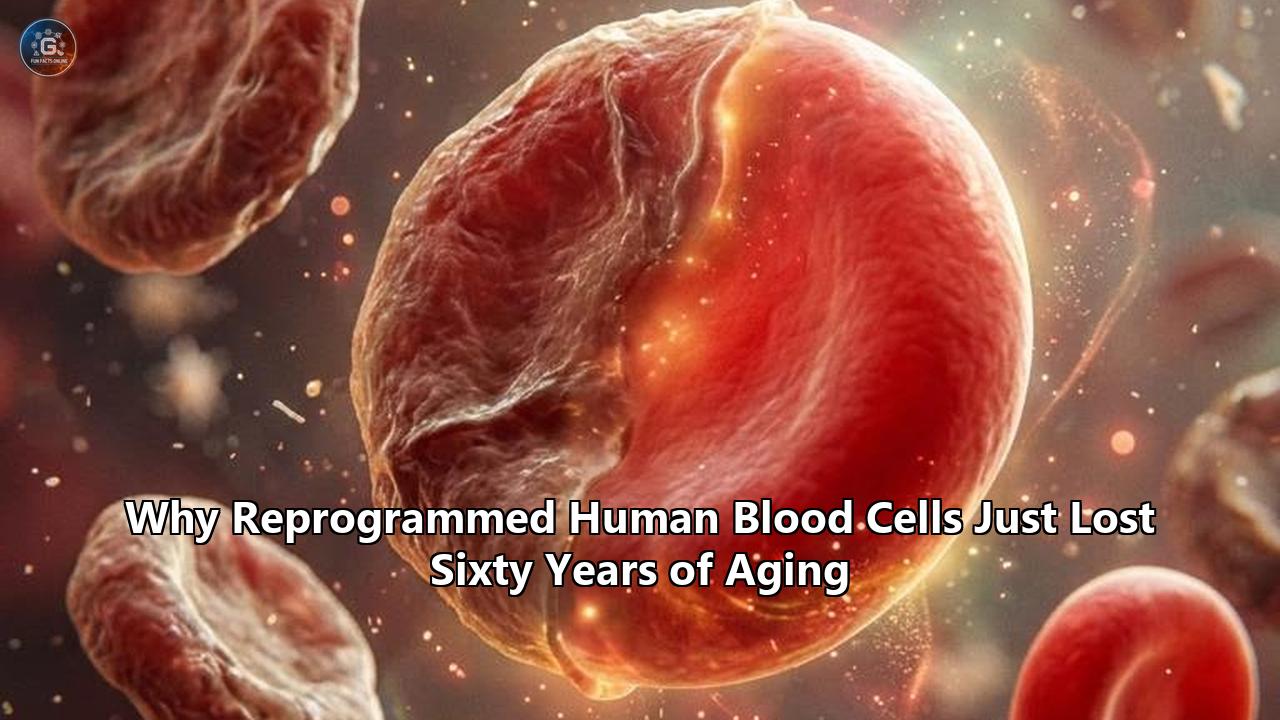
BONN, Germany — In a laboratory at the University Hospital Bonn, red blood cell precursors drawn from an 80-year-old donor have shed six decades of biological decay, emerging from cell culture dishes with the molecular and functional characteristics of cells belonging to an 18-year-old.
The findings, published in the journal Aging Cell by a research team led by stem cell neurobiologist Professor Oliver Brüstle and lead author Lea Jessica Berg, demonstrate that direct lineage conversion can systematically dismantle the epigenetic architecture of human senescence. By directly converting peripheral blood progenitors into induced neural stem cells (iNSCs) using just two transcription factors, the researchers reset molecular aging clocks by more than sixty years. When testing cells across a cohort ranging from neonates to a 101-year-old individual, the converted stem cells discarded the overwhelming majority of their age-associated markers, retaining only 5% to 13% of the donor’s original biological timeline.
The discovery upends a foundational assumption in cellular biology: that winding back the molecular clock of an adult human cell requires plunging it into the chaotic, highly oncogenic state of embryonic pluripotency.
Even more compelling than the sheer span of years erased is the velocity at which the rollback took place. Where standard embryonic reprogramming violently wipes cellular memory within a matter of days, the Bonn team’s direct conversion system unfolded in slow motion over more than 100 days. This protracted runway has handed scientists an unprecedented observational window into the mechanical gearwork of reversing cellular aging, providing an experimental sandbox to determine exactly how, when, and why an old cell sheds its molecular wear-and-tear.
“Epigenetic rejuvenation ensures that the cells actually behave like young cells,” said Brüstle, director of the Institute of Reconstructive Neurobiology at University Hospital Bonn and a member of the Transdisciplinary Research Area Life and Health at the University of Bonn. “Rejuvenation that extends over such a long period of time is ideal as an experimental model. Since the epigenetic clocks are slowly reset over several weeks, we can use this model to investigate which factors and active substances accelerate or slow down the rejuvenation process”.
The implications reach straight into the epicenter of regenerative medicine, particularly for neurodegenerative conditions like Alzheimer’s disease and Parkinson’s disease, where chronological age stands as the single dominant risk factor.
Inside the Bonn Protocol: Bypassing the Embryonic Blank Slate
To understand why the Bonn results have resonated across stem cell biology, one must look closely at the starting material and the deliberate path the researchers chose to avoid.
Mature human red blood cells are biological anomalies: they lack nuclei, meaning they carry no genomic DNA to manipulate. To reprogram blood, researchers must capture erythroid progenitor cells (EPCs)—nucleated early-stage precursor cells circulating within human peripheral blood. In the Bonn trial, these EPCs were isolated from human donors spanning every phase of the human lifespan, from cord blood taken at birth to peripheral blood draws from nonagenarians and a 101-year-old centenarian.
Historically, taking a cell from an 80-year-old and rewinding its biological clock required using the four canonical Yamanaka transcription factors: OCT4, SOX2, KLF4, and c-MYC (collectively termed OSKM). Discovered in 2006 by Nobel laureate Shinya Yamanaka, this cocktail forces mature cells backward along the developmental timeline into induced pluripotent stem cells (iPSCs). Pluripotent cells possess the developmental plasticity of a blastocyst-stage embryo; they can theoretically become any cell type in the human body, from a cardiomyocyte to an astrocyte.
Alongside that plasticity comes an automatic reset of the cell's biological age. Yet that reset carries severe biological hazards:
- Teratoma Formation: If even a microscopic fraction of undifferentiated iPSCs slips into a transplanted tissue graft, they rapidly seed teratomas—tumors containing chaotic mixtures of teeth, hair, bone, and gut tissue.
- Loss of Identity: Total pluripotency erases the cell's structural and epigenetic identity completely, making targeted tissue engineering complex, expensive, and prone to genomic instability.
- Speed-Induced Opacity: In iPSC reprogramming, epigenetic erasure occurs in a sudden, high-speed biological collapse, making it nearly impossible for scientists to dissect the sequence of events or separate rejuvenation from identity loss.
The Bonn protocol bypassed pluripotency altogether through direct lineage transdifferentiation.
Instead of deploying the full four-factor OSKM cocktail, the team introduced only two reprogramming factors: SOX2 and c-MYC. SOX2 acts as a master transcriptional regulator of neural identity, while c-MYC functions as a chromatin remodeler and metabolic driver. Overexpressing this specific pair in the erythroid progenitors coerced the blood precursors to abandon their hematopoietic lineage and transdifferentiate directly into induced neural stem cells (iNSCs)—self-renewing, multipotent progenitors restricted exclusively to the nervous system.
Direct Lineage Transdifferentiation (Bonn Model):
[Aged Erythroid Blood Progenitor]
         │
         ▼ (Overexpression of SOX2 + c-MYC)
[Slow Epigenetic Unwinding: 0 - 100+ Days]
         │
         ▼ (No Pluripotent/iPSC Intermediate)
[Rejuvenated Induced Neural Stem Cell (iNSC)]
         │
         ▼ (Directed Differentiation)
[Functionally Youthful Mature Neurons & Glia]
By engineering this shortcut, the researchers observed something previously unseen: the cells turned into neural precursors long before they finished shedding their age, allowing the mechanical process of rejuvenation to stretch across a hundred days of culture.
Reading the Epigenetic Odometer: How Sixty Years Disappeared
How do scientists determine that a cell culture has shed six decades of life? They do not rely on visual appearance alone. They read the cell's epigenome.
As human cells age, the sequence of adenine, cytosine, guanine, and thymine in the genetic code remains largely unchanged, save for sporadic somatic mutations. What changes continuously and predictably is the epigenome: the chemical scaffold of methyl tags, acetyl groups, and chromatin packing structures that dictate which genes are read and which remain silenced.
Throughout a human life, methyl groups (-CH3) are systematically added to or subtracted from specific regions of DNA known as CpG sites—spots where a cytosine nucleotide sits adjacent to a guanine nucleotide. This predictable drift over chronological time functions like an indelible molecular logbook.
In 2013, biostatistician Steve Horvath at the University of California, Los Angeles, demonstrated that mathematical algorithms analyzing DNA methylation patterns at several hundred specific CpG sites could calculate a person's—or a tissue's—biological age with razor-sharp accuracy. Known as epigenetic clocks, these algorithms measure biological wear, physiological stress, and cellular aging far more reliably than chronological birth certificates.
Epigenetic Clock Trajectory in Bonn Study:
Donor Age:               Epigenetic Clock Readout:
80 Years Old (Blood)  ──► High-passage iNSC: <20 Years (60+ years erased)
101 Years Old (Blood) ──► Rejuvenated to a fraction of initial age
Baseline Retention:      Preserved only ~13% (low passage) to ~5% (high passage)
Applying the multi-tissue Horvath clock to the blood-derived cells, Brüstle, Berg, and their collaborators tracked the methylation landscape of the cells at regular intervals.
The erythroid precursors from an 80-year-old donor entered the culture showing an epigenetic age matching their donor's chronological profile. As direct conversion progressed, the epigenetic clock began to wind backward. By day 50, the clock indicated that the cells had shed decades.
By the time the induced neural stem cells had stabilized in late passages, their epigenetic age registered below 20 years. The cells derived from the 101-year-old donor underwent an equally staggering collapse in biological age. Across all samples, the newly minted neural lines retained a mere 13% of their initial biological age at early passage, falling to just 5% as cell lines stabilized.
Crucially, this was not a mathematical illusion generated by a single algorithm. The team cross-verified the data across complementary epigenetic clock models, including skin-and-blood specific algorithms and transcriptomic age predictors. Every metric yielded the same conclusion: the cells had dumped the molecular baggage of senior adulthood.
Reversing Cellular Aging Without the Pluripotency Trap
The fundamental question dividing the longevity field over the past ten years has been whether rejuvenation can be uncoupled from embryonic dedifferentiation.
When Shinya Yamanaka’s team first reprogrammed somatic cells, rejuvenation was viewed as an automatic side effect of erasing a cell's specialized identity. If you wanted a young cell, you had to turn it into an embryo-like stem cell first.
This reality created a clinical bottleneck. If researchers injected Yamanaka factors directly into living organisms, the animals developed lethal teratomas within weeks. The cells did not merely de-age; they forgot they were liver cells, heart cells, or skin cells, dissolving tissue architecture into malignant embryonic clusters.
To get around this, laboratories worldwide have attempted partial reprogramming:
- In 2016, researchers at the Salk Institute led by Juan Carlos Izpisua Belmonte demonstrated that pulsed, transient expression of Yamanaka factors in mice with premature aging could extend lifespan without spawning teratomas.
- At Stanford University, researchers led by Vittorio Sebastiano developed cyclic messenger RNA protocols to briefly deliver reprogramming signals to human cells, proving that cells could experience epigenetic rejuvenation before losing their identity.
- At Harvard Medical School, David Sinclair’s group engineered adeno-associated viruses (AAVs) carrying three of the factors—OCT4, SOX2, and KLF4 (omitting the oncogene c-MYC)—to restore youthful DNA methylation and restore vision in aged mice and primates.
Yet all of these partial reprogramming techniques balance on a razor's edge. Express the factors for a day too short, and you achieve zero rejuvenation; express them a day too long, and cells slip off the epigenetic cliff into pluripotency, identity loss, and tumorigenesis.
The Bonn study provides definitive proof of a third path for reversing cellular aging: direct lineage transdifferentiation.
By showing that erythroid cells can hop directly onto the neural stem cell track via SOX2 and c-MYC, the German researchers demonstrated that the biological machinery that strips away epigenetic damage does not require transit through a totipotent or pluripotent embryonic intermediate. Rejuvenation and pluripotency are distinct biological programs that can be mechanically separated.
Reprogramming Strategies Compared:

Method:                 Identity Transit:            Risk Profile:            Rejuvenation Rate:
Full Yamanaka (OSKM)    Somatic ──► iPSC (Embryonic) High Teratoma Risk       Rapid (Days)
Partial Pulsed (OSK/M) Somatic ──► Somatic (Pulsed)  Risk of Identity Drift   Moderate (Intermittent)
Direct Conversion (SM)  Somatic ──► Multipotent iNSC Low Pluripotency Risk   Protracted (Weeks to Months)
The Hundred-Day Runway: Turning a Black Box into a Glass Pipeline
If the Bonn researchers had merely generated youthful brain stem cells, the paper would still have made headlines. But what has excited cellular biologists is the extended duration of the transition.
In traditional iPSC conversion, the epigenetic slate is wiped clean almost overnight. The transition happens inside a biochemical storm where transcription networks are shattered and rebuilt in days. Because the window is brief, identifying the exact enzymes responsible for sweeping away specific methyl marks has been nearly impossible. It was a biological black box.
The Bonn direct conversion operates on a slow-motion timeline. Epigenetic de-aging stretched out for more than 100 days. At day 14, the cells had discarded only an initial fraction of their methyl tags. At day 30, they were midway through the process. At day 50, they had dropped six decades.
“In our approach, rejuvenation occurred gradually and could be tracked for over 100 days,” Brüstle explained. “This opens up a unique window into a better understanding of cellular rejuvenation processes... Since the epigenetic clocks are slowly reset over several weeks, we can use this model to investigate which factors and active substances accelerate or slow down the rejuvenation process”.
This extended timeframe turns the Bonn protocol into a screening engine. Researchers can freeze the cells at day 20, day 40, or day 60, pull down their chromatin, run single-cell RNA sequencing, and profile their metabolic intermediates.
If a pharmaceutical company wants to screen small molecules to determine whether a compound accelerates cellular rejuvenation or blocks it entirely, they no longer need to wait years for mice to age or guess what happened during a two-day iPSC blast. They can introduce molecules at day 30 of this conversion and watch the dials of the epigenetic clock tick forward or backward under controlled conditions.
Active Erasure vs. Passive Dilution: The Proliferation Discovery
When a cell undergoes dramatic epigenetic de-aging in culture, skeptics in the scientific community frequently raise a major methodological objection: passive dilution.
Every time a human cell replicates its DNA and divides, it must reconstruct its methylation landscape. If the enzymes responsible for maintaining methyl tags—principally DNA methyltransferase 1 (DNMT1)—fail to keep pace with rapid cell division, older epigenetic marks are passively diluted away across generations. Under that scenario, the cell is not actively repairing its aging epigenome; it is simply outrunning its own molecular bookkeeping through hyper-proliferation.
The Bonn team designed a rigorous experiment to test this exact question.
They engineered culture conditions that severely restricted cell division, placing the developing iNSCs under stringent proliferation-inhibiting constraints. If the reset were merely a passive consequence of cell division, de-aging should have stalled entirely or collapsed.
Instead, the epigenetic clocks continued to wind down.
The cells shed decades of biological age even when forced into a near-quiescent state. This proved that the de-aging observed during direct neural conversion is driven by active biological machinery.
The cell actively deploys internal enzymatic systems—such as the Ten-Eleven Translocation (TET) methylcytosine dioxygenases and base-excision repair pathways—to strip off the oxidized methyl groups accumulated over a lifetime, replacing them with unadorned cytosines characteristic of youth.
| Feature / Metric | Conventional iPSC Conversion | Bonn Direct iNSC Conversion |
|---|---|---|
| Starting Factor Cocktail | OCT4, SOX2, KLF4, c-MYC (OSKM) | SOX2, c-MYC only |
| Intermediate Identity | Embryonic Pluripotent Stem Cell (iPSC) | None (Bypasses Pluripotency) |
| Rejuvenation Velocity | Rapid (Occurs within days) | Protracted (Unfolds over 100+ days) |
| Age Erasure Magnitude | ~100% reset to prenatal baseline | ~87% to 95% reset (80yo ──► <20yo) |
| Teratoma Risk Profile | High (Requires intense sorting) | Negligible (Lineage-restricted) |
| Proliferation Dependency | Heavily dependent on rapid division | Persists under proliferation-inhibiting conditions |
| Primary Utility | Blastocyst-level developmental modeling | High-resolution kinetic modeling & drug screens |
Beyond the Epigenetic Scorecard: Functional Rebirth
A persistent critique of the longevity field is that researchers can alter a mathematical biomarker without restoring genuine biological function. A cell might look younger on an algorithmic methylation array, but does it perform like a young cell?
In the Bonn study, the researchers demonstrated that their de-aged cells shed the physical and physiological hallmarks of cellular senescence alongside their epigenetic scores.
1. Dissipation of the Senescence Secretory Phenotype (SASP)
Old blood progenitors enter the lab carrying the hallmarks of immunosenescence and chronic inflammation, secreting interleukin-6 (IL-6), tumor necrosis factor-alpha (TNF-α), and matrix metalloproteinases—a toxic cocktail termed the senescence-associated secretory phenotype (SASP). As the direct conversion approached the 50-to-100-day mark, the transcriptomic signatures driving SASP broke down completely, matching the quiet, baseline secretome of neonatal-derived neural lines.
2. Mitochondrial Restoration and Metabolic Rewiring
Aged somatic cells exhibit damaged, fragmented mitochondria with reduced membrane potentials, leaking reactive oxygen species (ROS) into the cytoplasm. Analysis of the stabilized iNSCs demonstrated that their mitochondrial networks had undergone extensive structural remodeling.
The reticular mitochondrial architecture cleared out damaged cristae, restored electron transport chain capacity, and shifted metabolic reliance from dysregulated stress-induced pathways toward the metabolic balance typical of youthful multipotent stem cells.
Metabolic and Structural Rebirth:
Old Blood Cell (Aged 80)          Rejuvenated iNSC (Molecular Age <20)
────────────────────────          ───────────────────────────────────
Fragmented Mitochondria    ──►    Elongated, Dynamic Networks
High ROS / Oxidative Stress──►    Normalized Redox Homeostasis
Elevated p16INK4a / p21    ──►    Silenced Senescence Checkpoints
Chronic SASP Secretion     ──►    Quiescent, Youthful Secretome
Heavy Epigenetic Marks     ──►    Open Chromatin at Pro-Neural Loci
3. Dissipation of Age-Related Transcriptomic Gaps
When the researchers compared the baseline gene expression profiles of young donor-derived cells and old donor-derived cells, thousands of genes showed divergent transcriptional noise—a classic hallmark of aging.
With protracted conversion time, those transcriptomic differences completely dissipated. By the end of the culture run, an iNSC derived from an 80-year-old was transcriptionally indistinguishable from an iNSC derived from a young adult.
4. Robust Neuronal Differentiation and Synaptogenesis
The ultimate test of a neural stem cell is its ability to differentiate into functioning neurons and glial cells. Aged stem cells normally display sluggish neurogenesis, frequently stalling or producing aberrant, non-functional astrocytes.
The Bonn team confirmed that their rejuvenated iNSCs differentiated readily into TUBB3-positive neurons and mature astrocytes with high efficiency. In earlier foundational studies, the team had already demonstrated that neurons derived from these human iNSCs functionally integrated and formed active synaptic connections after being transplanted into the brains of immunocompromised mice.
Why Neuroscience Urgently Needs "De-Aged" Cells
The decision to convert blood specifically into neural stem cells was not an arbitrary technical demonstration. It directly addresses a crisis in neurobiology.
Age is the predominant risk factor for neurodegenerative disorders. A person's chance of developing sporadic Alzheimer’s disease doubles roughly every five years after age 65; similar age-dependent trajectories drive Parkinson’s disease and amyotrophic lateral sclerosis (ALS). Yet for the past two decades, studying these diseases in human cell cultures has run into an experimental wall.
The Neurodegenerative Modeling Paradox:

Classic iPSC Differentiation:
Old Patient Skin/Blood ──► Full iPSC Reset ──► Embryonic Neurons (Age = 0)
Problem: The biological age of the patient is wiped out. Late-onset
diseases like Alzheimer's fail to manifest without artificial toxins.

Direct Transdifferentiation to Post-Mitotic Neurons:
Old Patient Skin/Blood ──► Mature Neurons (Age = 80 preserved)
Problem: Neurons are post-mitotic. They cannot divide, cannot be expanded
in culture, and cannot be scaled for high-throughput therapeutic screens.

The Bonn Solution (Direct iNSC Conversion):
Old Patient Blood ──► Multipotent iNSCs (Expandable, Age Reset to <20)
Advantage: Creates an infinite, expandable supply of clean neural progenitors
with controlled biological age, ideal for both disease baseline modeling
and regenerative autologous transplantation.
When researchers take skin or blood from an 85-year-old Alzheimer’s patient and convert it into iPSCs to grow brain cells, the classic Yamanaka method erases the cell's age back to day zero—an embryonic baseline. The resulting neurons are developmentally newborn.
Consequently, researchers often fail to observe late-onset pathology; the cells are simply too biologically young to show the protein aggregation, tau tangles, and synaptic failure that took eight decades to manifest in the patient. Scientists are routinely forced to poison these young cells with stressors like hydrogen peroxide just to mimic aging.
Conversely, older methods of direct conversion that bypassed stem cell states entirely—turning a skin fibroblast straight into a mature neuron via factors like Ascl1—preserved the donor's age. But those neurons were post-mitotic: they could not divide.
A researcher might get a few thousand old neurons in a dish, but the culture died out within weeks, rendering large-scale drug screening impossible.
The Bonn discovery breaks this deadlock.
Because the resulting cells are neural stem cells, they can be expanded indefinitely in culture vessels, frozen in liquid nitrogen, and distributed across research teams globally. Because their age was tracked and rolled back gradually, scientists can intercept the cells at intermediate biological ages—say, freezing one batch at a biological age of 60, another at 40, and another at 18.
For the first time, neuroscientists can hold the genetic background of a single human being constant while dialing their biological age up and down to observe when neurodegenerative cascades trigger.
The Genetic Elephant in the Room: Epigenetic Rejuvenation vs. DNA Mutations
As promising as the Bonn findings are, oncologists and geneticists urge caution regarding the absolute limits of cellular reprogramming.
A fundamental distinction exists between the epigenome (how genes are expressed) and the genome (the underlying sequence of DNA).
Rolling back the epigenetic clock by 60 years does not automatically repair somatic mutations that accumulated in the nuclear DNA while that 80-year-old donor lived their life. Over decades of living, human blood-forming stem cells endure repeated rounds of DNA damage caused by replication errors, oxidative stress, and cosmic radiation.
Many individuals over the age of 70 carry an asymptomatic condition known as clonal hematopoiesis of indeterminate potential (CHIP). In CHIP, a significant portion of blood cells carries somatic driver mutations in cancer-associated genes like DNMT3A, TET2, or ASXL1. These mutations confer a competitive growth advantage to mutant stem cell clones, elevating the lifelong risk of myelodysplastic syndromes, leukemia, and cardiovascular inflammation.
Epigenome vs. Genome: What Was Rewound, What Remains

Feature / Marker               Status After Bonn Protocol
────────────────────────────────────────────────────────────
DNA Methylation Age (Horvath)  Rewound from 80 to <20 Years
Transcriptomic Profile         Reset to Youthful Multipotent State
Mitochondrial Ultrastructure   Restored Cristae Architecture
Senescence Markers (SASP)      Silenced / Dispersed
Somatic Point Mutations        RETAINED (Unchanged DNA sequence)
Clonal Hematopoiesis (CHIP)    RETAINED (If present in original clone)
Telomeric Alterations          Partially elongated via stem cell expansion
When researchers directly reprogram blood progenitors carrying somatic point mutations into neural stem cells, those underlying sequence mutations remain. The epigenetic software has been reinstalled, but the physical DNA drive still carries the wear of an 80-year lifetime.
"The work is technically elegant because it pulls apart the mechanics of identity change and age reversal," notes Dr. Arthur Keller, an independent cellular biologist working on stem cell therapeutics. "However, before anyone talks about infusing reprogrammed cells back into human brains, we have to recognize that an 80-year-old nucleus carries a catalog of genetic mutations that epigenetic remodeling does not edit. If you take a clone with a pre-malignant mutation and give it the limitless proliferation potential of a young stem cell, you risk engineering a malignancy."
This reality emphasizes why the Bonn team positioned their work primarily as an exceptional experimental model rather than an off-the-shelf autologous therapy ready for clinical infusion.
Parallels in the Blood: Mount Sinai and the Organelle Engine
The Bonn breakthrough does not exist in a vacuum. It arrives alongside a parallel finding in blood aging biology from researchers at the Icahn School of Medicine at Mount Sinai.
While the Bonn team reset blood precursors by transdifferentiating them into neural lines, a Mount Sinai team led by Dr. Saghi Ghaffari, professor of Cell, Developmental, and Regenerative Biology, targeted the biological decline of blood stem cells directly within their own hematopoietic lineage.
Published in Cell Stem Cell, Ghaffari's group investigated why hematopoietic stem cells (HSCs)—the ultimate master cells in bone marrow responsible for generating billions of immune and red blood cells daily—deteriorate as we age.
For decades, dogma held that aged organelles simply break down and run out of steam. Ghaffari’s team discovered the opposite: inside aged HSCs, the lysosomes—the metabolic recycling centers of the cell—were not slowing down.
They had shifted into a state of destructive hyperactivity.
The Mount Sinai Discovery: Rescuing Blood Stem Cells Directly
Old Hematopoietic Stem Cell (HSC)
  ├── Problem: Hyperactive, Over-Acidified Lysosomes
  ├── Consequence: Metabolic Derangement, cGAS-STING Inflammation, Loss of Quiescence
  │
  ▼ [Targeted Intervention: Low-Dose Lysosomal Inhibitors]
Rejuvenated Hematopoietic Stem Cell
  ├── 8-Fold Increase in Regenerative Engraftment
  ├── Balanced Production of Lymphoid vs. Myeloid Progeny
  └── Restored Epigenetic and Metabolic Function
As HSCs age, their lysosomes become excessively acidic, swollen, and overactive. This hyperactive recycling state triggers abnormal metabolic signaling, sparks chronic intracellular inflammation via the cGAS-STING pathway, and disrupts mitochondrial clearance.
Instead of remaining quietly tucked in their protective bone marrow niches, old HSCs are pushed into constant, exhausted division, eventually skewing their blood production toward myeloid cells (driving inflammation) while starving the body of fresh lymphoid cells (T cells and B cells needed to fight off novel infections).
By treating aged mouse and human HSCs ex vivo with targeted, low-dose lysosomal inhibitors to tone down this hyperactivity, Ghaffari’s team achieved a remarkable functional turnaround:
- The aged HSCs regained their youthful metabolic balance.
- Their capacity to generate balanced blood systems in living animal models increased more than eightfold.
- Their DNA methylation profiles and chromatin organization shifted toward youthful configurations.
Together, the Bonn and Mount Sinai studies outline a fundamental biological truth: cellular aging is not an irreversible physical deterioration.
Whether by overriding epigenetic programming through transcription factors or re-tuning organellar homeostasis with chemical inhibitors, the biological age of human cells can be intervened upon, halted, and systematically wound down.
The Landscape of Epigenetic Therapeutics
The successful rollback of 60 years of biological age in human blood cells adds fuel to a surging biotechnology sector focused on cellular rejuvenation. Over the past five years, billions of dollars have flowed into commercial ventures seeking to harness these cellular programs for clinical use.
Major players across the sector are pursuing distinct approaches to the problem:
Altos Labs
Launched with a reported $3 billion in capital backing and a roster of Nobel laureates including Shinya Yamanaka and Frances Arnold, Altos Labs is dedicated to cellular rejuvenation programming. Rather than attempting whole-organism life extension directly, their research focuses on understanding the molecular pathways of stress response and epigenetic resilience, seeking to discover how cells repair their own internal programs.
Retro Biosciences
Armed with $180 million in initial funding, Retro Biosciences has targeted three primary clinical areas: autophagy, blood plasma therapeutics, and cellular reprogramming. Their reprogramming platform aims to develop therapies that deliver partial reprogramming factors into specific human tissues to treat age-related degeneration.
Life Biosciences
Co-founded by Harvard's David Sinclair, Life Biosciences has focused on delivering OSK (OCT4, SOX2, KLF4) via gene therapy vectors to restore youthful epigenetic states in ocular conditions. Their preclinical work demonstrated restoration of vision in primate models of non-arteritic anterior ischemic optic neuropathy (NAION) and glaucoma, representing one of the closest translational attempts to bring epigenetic age reversal into human clinical trials.
Calico Life Sciences
An Alphabet-backed research and development enterprise, Calico works in collaboration with AbbVie to target age-related diseases. Their focus includes understanding basic aging mechanisms, protein homeostasis, and stress-response pathways that prevent age-induced cellular degradation.
The Bonn study provides these commercial ventures with a roadmap.
By showing that SOX2 and c-MYC alone can drive robust epigenetic de-aging without pluripotency, the University of Bonn team has narrowed down the required genetic cargo. Gene therapy delivery vectors, such as adeno-associated viruses (AAVs) or lipid nanoparticles (LNPs), face strict size limits. Fitting four large transcription factors into a single vector has been an engineering barrier.
A two-factor protocol that achieves dramatic de-aging without the immediate risk of teratomas simplifies the vector design challenge substantially.
From Dish to Clinic: The Roadmap to Autologous Therapies
How does a petri dish containing 60-year-de-aged neural stem cells eventually alter the clinical reality of a patient in a neurological ward?
The translational pathway forward will rely on autologous cell replacement therapy.
In contemporary medicine, if an 80-year-old patient suffers from advanced Parkinson’s disease, their midbrain dopaminergic neurons in the substantia nigra have died off. The brain cannot regenerate them.
Historically, attempting cell replacement for this patient required one of two flawed choices:
- Allogeneic Fetal or Embryonic Grafts: Sourcing cells from foreign donors, which triggers aggressive immune rejection and demands lifelong, toxic immunosuppressive drugs.
- Standard Autologous iPSC Grafts: Taking the patient’s own skin, making iPSCs, and differentiating them into dopamine neurons. This process is expensive, carries teratoma risks, and typically takes six to nine months of complex cell culture manipulation to guarantee safety.
The Future Autologous Clinical Pipeline:

Step 1: Simple Blood Draw
└── Clinicians draw 10 mL of peripheral blood from an elderly patient.

Step 2: Progenitor Isolation
└── Erythroid progenitor cells (EPCs) are isolated in a cGMP facility.

Step 3: Direct Lineage Conversion
└── Overexpression of SOX2 + c-MYC transforms EPCs directly into iNSCs.
└── Protracted culture (~50-100 days) wipes out 60+ years of epigenetic aging.

Step 4: Quality & Genomic Screening
└── Cell lines undergo whole-genome sequencing to verify the absence
    of deleterious CHIP or cancer driver mutations.
└── Horvath epigenetic clocks confirm biological rejuvenation to age <20.

Step 5: Directed Neural Maturation
└── Rejuvenated iNSCs are differentiated into target lineages
    (e.g., A9 midbrain dopaminergic progenitors or cortical neurons).

Step 6: Stereotactic Autologous Implantation
└── The patient receives their own, biologically youthful neurons back
    into their brain, requiring zero immunosuppressive drugs.
Because these cells originate from the patient's own blood, the recipient's immune system recognizes them as self, eliminating the need for immunosuppression. Because the cells traversed an induced neural stem cell state rather than an iPSC state, the risk of residual undifferentiated pluripotent stem cells causing teratomas is drastically reduced.
And because the cells underwent genuine epigenetic de-aging, the transplanted neurons possess the metabolic vitality, mitochondrial health, and synaptic plasticity of youthful cells, ready to survive in the brain for decades.
Open Scientific Frontiers and the Road Ahead
While the Bonn findings mark a major step in the study of cellular reprogramming, they leave several critical mechanistic questions unanswered:
1. What Sets the Epigenetic Floor?
Across the Bonn experiments, whether starting with cells from a 50-year-old, an 80-year-old, or a 101-year-old, the rejuvenation process consistently hit an epigenetic plateau between 5% and 13% of original donor age, landing near a molecular age of 15 to 20 years. Why did the clock stop there? Why did it not wind all the way back to zero, or continue into negative prenatal ages?
Identifying the biological brakes that prevent the epigenetic clock from slipping past late adolescence will be critical to establishing precise control over cellular age.
2. Can the Factor Cocktail Be Replaced by Small Molecules?
Direct conversion still requires introducing foreign genes (SOX2 and c-MYC) via viral vectors or synthetic RNA. c-MYC is an infamous proto-oncogene whose persistent activation is tied to multiple human cancers.
Now that researchers have an extended 100-day observational window, the immediate next milestone will be chemical screening: finding combinations of small-molecule drugs that activate endogenous SOX2 and down-stream epigenetic repair enzymes without requiring viral integration or oncogene overexpression.
3. Does the Mechanism Generalize Across Other Tissues?
The Bonn study proved that red blood cell precursors can shed 60 years while becoming neural stem cells. Can an old blood cell shed 60 years while directly converting into a cardiomyocyte (heart muscle cell), a hepatocyte (liver cell), or a chondrocyte (cartilage cell)?
If direct conversion de-aging is universal across lineages, medicine gains a systematic platform to regenerate multiple worn-out human organs from a simple blood draw.
What took place inside Professor Oliver Brüstle's laboratory in Bonn is a fundamental demonstration that biological age is an alterable, plastic state.
Human cells carry an innate memory of how to be young. For the first time, scientists have demonstrated that an adult cell can discard sixty years of wear-and-tear, bypass the hazardous embryonic state, and walk down a controlled, observable path toward youth. As the underlying molecular gears of this transition come into sharp focus, the boundary between irreversible biological decline and therapeutic restoration continues to blur.
Reference:
- https://bioengineer.org/blood-cells-from-80-year-olds-rejuvenated-into-brain-cells-with-molecular-age-under-20/
- https://www.mensjournal.com/health/scientists-made-80-year-old-blood-cells-60-years-younger-and-found-a-surprise
- https://longevity-germany.com/en/research/old-blood-cells-turned-into-neural-stem-cells-shed-most-of-their-epigenetic-age
- https://civl.com/news/story/bonn-researchers-convert-blood-cells-from-donors-up-to-101-into-young-neural-ste-f1b16790
- https://www.scilit.com/scholars/019f27a8d06271bcae0a378159ecdff1
- https://www.researchgate.net/publication/415206045_Protracted_Fate_Acquisition_and_Epigenetic_De-Aging_During_Induced_Neural_Stem_Cell_Conversion_of_Human_Blood_Cells
- https://bgodinspired.com/index.php/bgodinspired-news/bgodinspired-health-news/old-blood-cells-into-young-brain-cells/
- https://www.facebook.com/M.A.Ostrega/posts/from-article-researchers-from-the-university-hospital-of-bonn-and-the-university/10243875597295268/
- https://www.mensjournal.com/health/scientists-made-80-year-old-blood-cells-60-years-younger-and-found-a-surprise
- https://nautil.us/blood-cells-from-an-80-year-old-transformed-into-young-brain-cells-1285722
- https://www.gene.com/stories/turning-back-the-clock
- https://pubmed.ncbi.nlm.nih.gov/37437248/
- https://www.technologynetworks.com/biopharma/articles/re-setting-the-epigenetic-clock-to-reverse-cellular-aging-413392
- https://www.facebook.com/M.A.Ostrega/posts/from-article-researchers-from-the-university-hospital-of-bonn-and-the-university/10243875597295268/
- https://www.youtube.com/watch?v=2LtAKiiLfEo
- https://medlabportal.com/longevity-sensation-cells-rejuvenated-by-six-decades-in-the-laboratory/
- https://www.researchgate.net/figure/DNAm-age-dynamics-upon-iNSC-conversion-reveal-that-epigenetic-de-aging-is-a-protracted_fig2_415206045
- https://que.com/rejuvenating-old-blood-stem-cells-could-rewrite-the-future-of-healthy-aging/
- https://manchestercourier.co.uk/scientists-successfully-rejuvenate-human-cells-80-year-old-cells-now-resemble-20-year-olds/
- https://www.foundmyfitness.com/episodes/interrupted-yamanaka-age-reversal
- https://agingresearch.news/p/MED-42829448/direct-conversion-to-neural-stem-cells-de-ages-human-blood-cells
- https://bioengineer.org/blood-cells-from-80-year-olds-rejuvenated-into-brain-cells-with-molecular-age-under-20/
- https://www.sciencedaily.com/releases/2026/05/260511213204.htm
- https://www.longevityfederation.com/news/researchers-transform-old-blood-cells-into-young-brain-cells/
- https://www.uni-bonn.de/en/news/211-2026