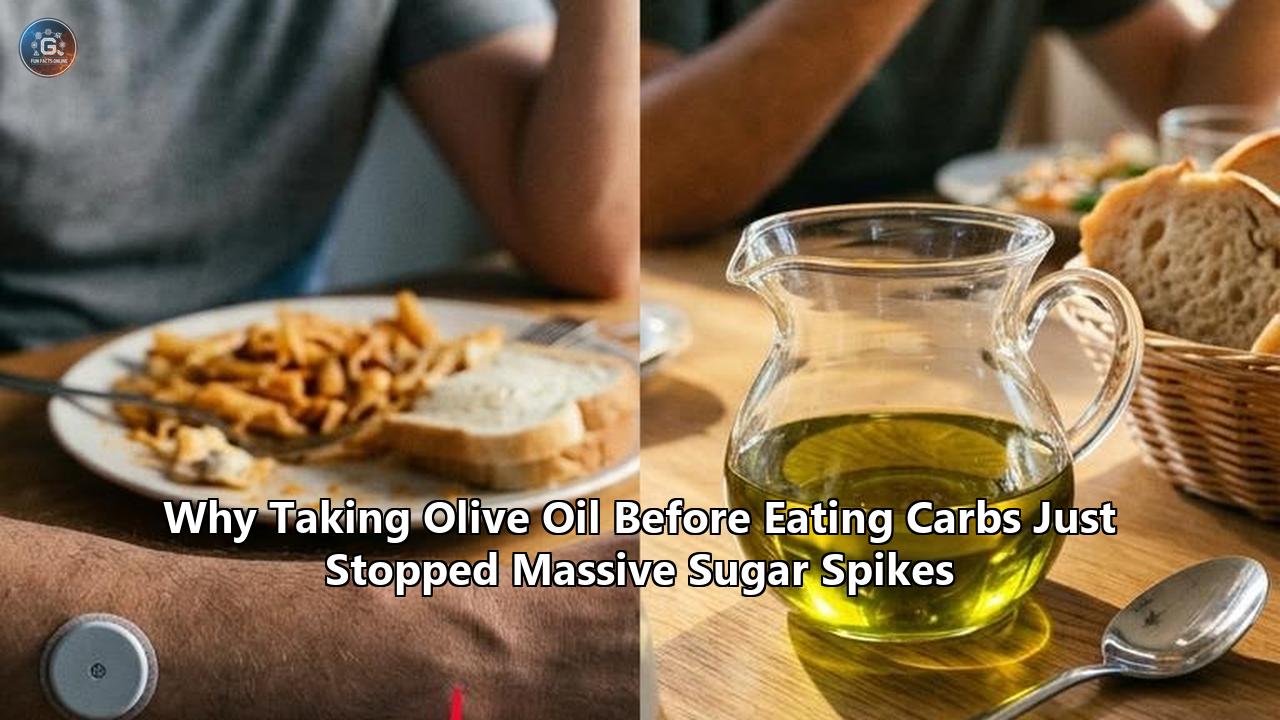
When an international team of metabolic researchers published findings in the journal Diabetes showing that administering a small dose of olive oil precisely fifteen minutes before carbohydrate ingestion virtually erased the acute post-meal glucose spike, the result captured immediate attention across metabolic medicine. But the headline findings obscured the real shock inside the laboratory data: the dramatic flattening of blood sugar was not driven by insulin.
Instead, the investigation—spearheaded by corresponding author Daisuke Yabe of Kyoto University alongside diabetes pioneer Daniel J. Drucker of the Lunenfeld-Tanenbaum Research Institute and gastric motility authority Michael Horowitz of the University of Adelaide—uncovered a biological paradox. Consuming olive oil prior to carbohydrates initiated a coordinated neuro-hormonal circuit that delayed gastric emptying, engaged the vagus nerve, and relied on a surprising synergy between glucagon-like peptide-1 (GLP-1) and glucagon—a hormone historically villainized as a pure driver of blood sugar elevation.
Even more startling for clinical endocrinologists, the protective effect persisted intact in animal models with severe, end-stage insulin deficiency and advanced type 2 diabetes. By stepping behind the institutional press releases, laboratory protocols, and continuous glucose monitoring traces, a far more complex picture emerges of how nutrient sequencing rewires human digestion, challenges longstanding pharmacological assumptions, and exposes the biochemical machinery behind postprandial glucose regulation.
The Kyoto Protocol: What Happened Inside the Metabolic Ward
The experimental design that led to the discovery was deceptively simple, yet structured to eliminate the confounding variables that have plagued nutritional science for decades. Conducted across collaborative facilities at Kyoto University, the researchers fasted experimental cohorts overnight before dividing them into strictly controlled intervention arms.
EXPERIMENTAL DESIGN (Kyoto University / Diabetes, 2026)
-----------------------------------------------------------------------------------------
Cohort A (Control):      Fasting -> Water Oral Gavage -> 15-min pause -> Oral Glucose Bolus
Cohort B (Preload):      Fasting -> Olive Oil Gavage  -> 15-min pause -> Oral Glucose Bolus
Cohort C (Postload):     Fasting -> Oral Glucose Bolus -> 15-min pause -> Olive Oil Gavage
-----------------------------------------------------------------------------------------
Diagnostic Assays:
- Blood glucose & insulin kinetics at 0, 15, 30, 60, 90, 120 min
- Radioimmunoassay & ELISA for Total/Active GLP-1, GIP, and Glucagon
- Liquid chromatography-mass spectrometry for acetaminophen tracer (gastric emptying)
- Subdiaphragmatic bilateral vagotomy surgical intervention
- Targeted receptor blockade: Exendin(9-39) and monoclonal Glucagon Receptor Antagonists
To determine whether the order of macronutrient intake mattered more than the total caloric or fat composition of the meal, the investigators tested three distinct regimens:
- Group 1 received an oral gavage of pure water followed 15 minutes later by a standardized bolus of oral glucose.
- Group 2 received a preload of extra virgin olive oil followed 15 minutes later by the glucose bolus.
- Group 3 inverted the sequence, receiving the glucose bolus first, followed 15 minutes later by the olive oil.
The divergence across the glycemic curves was stark. In the animals given water before glucose, circulating blood sugar levels erupted into a vertical spike within 15 to 30 minutes, exceeding standard hyperglycemic thresholds before slowly clearing over two hours. When olive oil was administered after the glucose, the spike was virtually indistinguishable from the control; the carbohydrate load had already rushed through the pylorus and into the duodenum, where it was rapidly pulled into systemic circulation.
However, when olive oil was administered 15 minutes before the glucose challenge, the early glycemic excursion was suppressed. The initial steep ascent seen on blood glucose curves collapsed into a low, gentle rolling hill. The absolute peak glucose value dropped precipitously, and the early incremental area under the curve (iAUC) shrank dramatically.
To verify that the phenomenon was not an artifact of healthy murine metabolism, the researchers replicated the protocol in models of advanced type 2 diabetes with marked beta-cell exhaustion, as well as models engineered with severe insulin deficiency mirroring type 1 diabetes. Even without functional insulin machinery to push glucose into muscle and adipose tissue, the olive oil preload suppressed early glycemic volatility.
The sequence of consumption alone dictated the postprandial outcome. But while initial observers assumed the response was driven by a massive pulse of endogenous insulin stimulated by dietary fat, serial laboratory blood panels quickly dismantled that hypothesis.
The Glucagon Anomaly: Upending a Forty-Year Endocrine Dogma
For decades, classic endocrine physiology has operated under a binary framework: insulin reduces systemic glucose by promoting cellular uptake, while glucagon, secreted by pancreatic alpha cells, raises blood glucose by signaling the liver to break down glycogen stores (glycogenolysis) and synthesize new glucose from amino acid substrates (gluconeogenesis). Under this model, an elevation in postprandial glucagon is viewed as a pathological defect that exacerbates diabetic hyperglycemia.
The data gathered by Yabe, Drucker, and their colleagues shattered this assumption.
When the researchers analyzed plasma hormone concentrations immediately following the olive oil preload, they detected a rapid, robust surge in glucagon-like peptide-1 (GLP-1) and glucose-dependent insulinotropic polypeptide (GIP). This was expected; dietary lipids in the proximal small intestine are well-known triggers for enteroendocrine L-cells and K-cells.
The shock came from the alpha cells: systemic glucagon levels spiked rapidly alongside GLP-1.
Standard clinical assumptions suggested this glucagon surge should have compounded the incoming carbohydrate load, unleashing a wave of hepatic glucose into the bloodstream to worsen the impending spike. Yet blood glucose remained suppressed.
THE DUAL-RECEPTOR REDUNDANCY PARADOX
=========================================================================================
Experimental Condition                     Early Postprandial Glucose Surge Suppression
-----------------------------------------------------------------------------------------
Control (No Preload)                       NO  (Severe Hyperglycemic Spike)
Olive Oil Preload (Vehicle)                YES (Marked Suppression)
Preload + GLP-1 Receptor Antagonist        YES (Suppression Maintained)
Preload + Glucagon Receptor Antagonist     YES (Suppression Maintained)
Preload + Dual Blockade (GLP-1R + GCGR)    NO  (Complete Loss of Glycemic Suppression)
=========================================================================================
Conclusion: GLP-1 and Glucagon operate with biological redundancy to brake the stomach.
To dissect this contradiction, the team deployed targeted pharmacological receptor antagonists to disable specific hormonal signaling pathways:
- First, they administered exendin(9-39), a selective peptide antagonist that blocks the GLP-1 receptor, neutralizing the body's ability to sense its own GLP-1. They expected the glucose spike to return in full force. It did not. The olive oil preload continued to suppress the glucose excursion, proving that GLP-1 signaling alone was not responsible for the metabolic shield.
- Next, they chemically blocked the glucagon receptor using specific monoclonal antagonists. Once again, the olive oil preload continued to hold the glucose spike down.
- Only when the researchers blocked the GLP-1 receptor and the glucagon receptor simultaneously did the glucose-lowering effect vanish completely. With both receptors disabled, the olive oil preload failed, and oral glucose surged into the blood as violently as if no fat had been consumed.
The finding revealed an unappreciated biological redundancy. GLP-1 and glucagon, long treated as hormonal antagonists, were acting in concert as functional partners. While glucagon exerts catabolic, glucose-releasing actions on hepatocytes in the liver during prolonged fasting, acute elevations of glucagon within the digestive phase exert an inhibitory effect on gastrointestinal motility.
When olive oil enters the digestive tract 15 minutes before carbohydrates, it prompts the gastrointestinal and pancreatic systems to release both GLP-1 and glucagon. Together, these hormones bind to receptors on the enteric nervous system and gastric musculature, paralyzing forward motor transit and closing the exit hatch of the stomach before the first carbohydrate molecule arrives.
The Gastric Brake: How Acetaminophen Tracers Exposed the Physical Bottleneck
To quantify the mechanical deceleration taking place inside the stomach, the research team turned to the acetaminophen absorption test—the gold standard pharmacological method for assessing gastric emptying rates in living organisms without invasive surgical sensors.
Acetaminophen is non-ionized in the acidic milieu of the stomach and exhibits near-zero absorption across the gastric mucosal lining. It can only be absorbed into the systemic bloodstream once it passes through the pyloric sphincter into the neutral, highly vascularized environment of the small intestine. Consequently, the speed and volume at which acetaminophen appears in peripheral blood directly charts the rate of gastric emptying.
The team administered acetaminophen concurrently with the oral glucose challenge across all experimental arms and measured systemic concentrations at tight time intervals.
GASTRIC EMPTYING PROFILE (Systemic Acetaminophen Appearance, mcg/mL)
=========================================================================================
Time Post-Carb Dose:     15 min      30 min      60 min      90 min      120 min
-----------------------------------------------------------------------------------------
Water Preload (Control):  24.2        48.7        36.1        18.4         9.2
Olive Oil Post-Load:      22.8        46.3        38.9        21.0        11.5
Olive Oil Preload:         4.1        11.6        19.4        28.5        26.1
=========================================================================================
Result: A 15-minute olive oil lead time induces an 83% reduction in early gastric emptying.
The differences were staggering. In the control group, plasma acetaminophen surged within 15 minutes and crested at 30 minutes, indicating rapid, uninhibited dumping of stomach contents into the duodenum.
In the group that received the olive oil preload, early plasma acetaminophen concentrations were blunted by more than 80%. The stomach had physically clamped shut.
Under continuous ultrasound and anatomical evaluation, the mechanics of this gastric brake became visible:
- Antral Quiescence: The rhythmic, grinding peristaltic contractions of the distal gastric antrum—the mechanical engine of the stomach—were suppressed. The antrum remained dilated and motionless, holding the meal in stasis.
- Tonic Pyloric Contraction: The pyloric sphincter, the muscular ring separating the stomach from the duodenum, tightened, developing sustained tonic pressure that barred passage to chyme.
- Preservation of Proximal Receptive Relaxation: The proximal stomach (fundus) maintained prolonged compliance, accommodating the incoming volume without generating the intragastric pressure that normally drives liquid and dissolved carbohydrates through the pylorus.
Because the stomach was immobilized, the subsequent carbohydrate bolus was trapped in the gastric reservoir. Enzymes like salivary and early gastric amylase could begin hydrolyzing complex starches, but the resulting glucose monomers could not reach the sodium-glucose cotransporter 1 (SGLT1) proteins lining the enterocytes of the brush border membrane in the jejunum.
Rather than entering the circulation in a sudden 30-minute rush, the carbohydrate was metered out slowly over three to four hours. The total quantity of glucose entering the system remained unchanged, but the rate of delivery ($dG/dt$) flattened, preventing the sharp peaks that trigger glucotoxicity, reactive hypoglycemia, and metabolic stress.
The Chrono-Nutritional Mechanism: How Olive Oil Sugar Spikes Are Blunted
The discovery explains the precise physiological cascade behind how olive oil sugar spikes are systematically suppressed in clinical settings. The key lies in understanding that this is not a passive mixing effect, but an active, time-dependent neurochemical priming process.
CHRONO-NUTRITIONAL CASCADE
=========================================================================================
Minute 0:     Ingestion of Extra Virgin Olive Oil (10-15 mL)
              - Lingual and gastric lipases cleave triglycerides into 2-MAG and Free Fatty Acids.
Minute 3-5:   Lipid emulsion enters the duodenal bulb.
              - Free oleic acid binds to GPR120 (FFA4) and GPR40 (FFA1) on enteroendocrine cells.
              - Hydroxytyrosol and polyphenolic fractions suppress luminal DPP-4 enzymes.
Minute 7-10:  Endocrine & Neural Surge
              - Robust secretion of GLP-1, GIP, CCK, and Pancreatic Glucagon.
              - Vagal sensory afferents (nodose ganglion) register lipid arrival and fire to the brainstem.
Minute 12-15: The Pyloric Gate Closes
              - Efferent vagal motor fibers decrease antral motility and elevate pyloric tone.
              - Enteric nervous system triggers the duodenal brake.
Minute 15+:   Carbohydrates Ingested
              - Carbohydrates hit a paralyzed stomach.
              - SGLT1 glucose transporters in the jejunum remain empty.
              - Systemic blood sugar curve flattens into an extended, harmless wave.
When fats are consumed concurrently with carbohydrates—such as dipping bread into oil or eating pizza where cheese and dough are ingested simultaneously—the lipid droplets are dispersed within the carbohydrate matrix. Under this simultaneous condition, gastric emptying is slowed only moderately, because the mechanical volume of the meal stimulates immediate mechanical stretch receptors in the gastric wall, forcing the pylorus to open and allowing significant amounts of dissolved starches and sugars to leak into the duodenum before the hormonal feedback loop can close the gate.
The 15-minute separation completely changes the regulatory timeline. By providing a clean lipid preload without carbohydrates, the stomach transfers a micro-bolus of free fatty acids directly into the duodenum without triggering the broad gastric distension that prompts emptying.
The duodenum senses this incoming fat as an energy-dense substrate that requires extensive biliary emulsification and pancreatic lipase breakdown. In response, it fires chemical and electrical signals back up to the stomach: halt all transit until this lipid is processed.
When the carbohydrates arrive 15 minutes later, they do not enter an active, churning digestive tract. They enter an organ that has already been chemically and neurally locked down. By managing the timing of nutrient arrival, the targeted intervention stops olive oil sugar spikes before systemic absorption can even begin.
The Molecular Trigger: Oleic Acid, Free Fatty Acid Receptors, and Polyphenols
The specific biochemistry of extra virgin olive oil makes it an exceptionally potent driver of this inhibitory reflex. Olive oil is dominated by oleic acid (C18:1 cis-9), a monounsaturated omega-9 fatty acid that accounts for 55% to 83% of its total lipid profile, alongside smaller fractions of palmitic acid, linoleic acid, and a dense matrix of bioactive secoiridoids and phenolic compounds.
The downstream metabolic effects depend directly on this fatty acid profile:
LIPID SENSING AT THE ENTEROENDOCRINE INTERFACE
-----------------------------------------------------------------------------------------
Receptor/Sensor     Target Ligand                Cellular Output / Downstream Mechanism
-----------------------------------------------------------------------------------------
GPR120 (FFA4)       Long-Chain FFAs (Oleic)      Enteroendocrine L-Cells -> GLP-1 & PYY release
                                                 Suppression of macrophage inflammation
GPR40 (FFA1)        Medium/Long-Chain FFAs       K-Cells -> GIP release; I-Cells -> CCK release
CD36 Translocase    Long-Chain Fatty Acids       Facilitates mucosal uptake; triggers OEA synthesis
DPP-4 Inhibition    EVOO Polyphenols             Prevents degradation of active GLP-1(7-36) amide
                    (Oleuropein / Tyrosol)       Extends circulating half-life of incretins
-----------------------------------------------------------------------------------------
1. G-Protein Coupled Receptor Activation (GPR120 and GPR40)
When olive oil reaches the duodenum, pancreatic lipase rapidly hydrolyzes triglycerides into free oleic acid and 2-monoacylglycerol. Unesterified oleic acid acts as a direct, high-affinity ligand for two primary G-protein coupled receptors expressed on the apical and basolateral surfaces of enteroendocrine cells:
- GPR120 (Free Fatty Acid Receptor 4 / FFA4): Abundantly expressed on enteroendocrine L-cells in the ileum and duodenum, activation of GPR120 triggers an intracellular cascade via $G_{\alpha q/11}$, activating phospholipase C and driving a transient rise in intracellular calcium ($Ca^{2+}$). This intracellular calcium flux forces vesicle fusion, releasing large stores of GLP-1 and peptide YY (PYY) directly into the mesenteric venules.
- GPR40 (Free Fatty Acid Receptor 1 / FFA1): Expressed on both enteroendocrine K-cells and pancreatic beta-cells, GPR40 activation stimulates the secretion of GIP and prepares basal beta-cells for subsequent nutrient absorption.
Saturated fats, such as palmitic acid (found in butter and palm oil), bind these receptors with different kinetics and evoke altered transcriptional profiles. Clinical trials directly comparing extra virgin olive oil to butter have demonstrated that while both fats slow gastric emptying to some degree, extra virgin olive oil provokes a higher early incremental GLP-1 response without inducing the pro-inflammatory endotoxemic state typical of long-chain saturated fats.
2. The OEA (Oleoylethanolamide) Pathway
Once absorbed into the mucosal enterocytes of the upper small intestine, a portion of the free oleic acid is enzymatically converted into oleoylethanolamide (OEA), an endogenous lipid mediator synthesized on demand. OEA binds to peroxisome proliferator-activated receptor-alpha (PPAR-$\alpha$) and recruits vagal sensory afferents, amplifying satiety signaling in the hypothalamus and further delaying upper gastrointestinal transit.
3. Polyphenolic Protection of Incretins
Beyond fatty acids, unrefined extra virgin olive oil carries a complex payload of bioactive polyphenols: hydroxytyrosol, tyrosol, oleuropein, and the anti-inflammatory dialdehydic secoiridoid oleocanthal.
Groundwork laid by Francesco Violi and colleagues at the Sapienza University of Rome established that extra virgin olive oil interacts directly with dipeptidyl peptidase-4 (DPP-4)—the circulating enzyme responsible for cleaving and inactivating endogenous GLP-1 within two minutes of its release.
Violi's team demonstrated that high-polyphenol olive oil significantly downregulates DPP-4 activity in human subjects. By inhibiting this degradation enzyme, the polyphenols preserve active GLP-1(7-36)amide in the portal and systemic circulation, prolonging its half-life and amplifying its inhibitory feedback on the stomach. Refined seed oils (such as corn, soybean, or canola oil) stripped of polyphenols during industrial refining fail to induce this DPP-4 suppression, highlighting that the physical quality of the oil is essential to its metabolic effect.
The Neural Superhighway: The Subdiaphragmatic Vagus Connection
The hormonal surge is only half the circuit. The speed with which olive oil immobilizes the stomach—often within minutes—suggested that chemical diffusion through the systemic bloodstream was too slow to fully account for the response. A faster, hardwired transmission network had to be involved.
To test this, the Kyoto researchers performed bilateral subdiaphragmatic vagus nerve ligation on animal cohorts, surgically severing the sensory and motor branches of the vagus nerve below the diaphragm while keeping thoracic cardiac and pulmonary innervation intact.
NEURAL CIRCUIT OF THE PRE-MEAL LIPID BRAKE
=========================================================================================
1. Duodenal Enterocytes / L-cells detect free oleic acid via GPR120 / GPR40.
2. Local paracrine release of GLP-1, CCK, and 5-HT stimulates vagal sensory nerve terminals.
3. Sensory Action Potentials travel up via the NODOSE GANGLION to the BRAINSTEM.
4. Signal integration occurs within the NUCLEUS TRACTUS SOLITARIUS (NTS).
5. Central reflex output descends through the DORSAL MOTOR NUCLEUS OF THE VAGUS (DMV).
6. Efferent cholinergic signals reach the enteric nervous system:
   - Nitric oxide (NO) / VIP neurons trigger Fundic Relaxation (pooling).
   - Antral motor neurons are INHIBITED (cessation of peristaltic churning).
   - Excitatory motor neurons to the PYLORIC SPHINCTER fire (closure of the outflow tract).
=========================================================================================
Surgical Verification: Subdiaphragmatic vagotomy partially reverses this braking effect.
When the vagus nerve was severed, the olive oil preload lost a substantial portion of its ability to delay gastric emptying and suppress subsequent glucose spikes.
This revealed that the olive oil preload does not merely float into the stomach to coat the lining like a mechanical sealant—a popular myth frequently repeated on social media platforms. Instead, it triggers a vago-vagal neuro-epithelial reflex arc.
The moment oleic acid enters the proximal duodenum, it binds to enteroendocrine receptors that immediately release GLP-1, cholecystokinin (CCK), and serotonin into the local lamina propria. These molecules act as paracrine neurotransmitters, binding to specialized receptors clustered on the unmyelinated terminals of vagal afferent nerve fibers located just beneath the intestinal mucosa.
These sensory neurons send action potentials through the nodose ganglion directly into the nucleus of the solitary tract (NTS) in the caudal brainstem. The brainstem integrates these signals as an emergency fuel-density alert.
Within milliseconds, the brainstem sends efferent signals back down through the dorsal motor nucleus of the vagus to the enteric nervous system of the stomach. The efferent pathways stimulate non-adrenergic, non-cholinergic (NANC) inhibitory neurons to halt the rhythmic pacing of the interstitial cells of Cajal in the gastric antrum, while exciting the smooth muscle of the pyloric sphincter.
The entire stomach halts its forward propulsion through an integrated neural circuit that operates long before the olive oil has even entered systemic circulation.
The Human Evidence: From Naples to Rome
While the definitive neural tracing and dual-hormone redundancy mechanisms were mapped out at Kyoto University, the physiological foundations of this response have been quietly accumulating in human clinical trials across Southern Europe for over a decade.
HUMAN CLINICAL TRIALS ON EXTRA VIRGIN OLIVE OIL & POSTPRANDIAL GLYCEMIA
========================================================================================================
Study / Institution        Cohort               Intervention                      Primary Findings
--------------------------------------------------------------------------------------------------------
Violi et al. (2015, 2017)  25 Healthy Subjects  Mediterranean Lunch + 10g EVOO    - Significant drop in 2h PPG
Sapienza University        14 IFG (Prediabetic) vs 10g Corn Oil vs Control        - DPP-4 activity reduced
Rome, Italy                                                                       - GLP-1 & insulin elevated
--------------------------------------------------------------------------------------------------------
Bozzetto et al. (2019)     11 Type 1 Diabetics  High-GI Meal + EVOO (MUFA) vs     - EVOO iAUC was 47% lower
Federico II University     on Insulin Pumps     Butter (SFA) vs Low Fat (LF)        than butter (p = 0.041)
Naples, Italy                                   Metabolic Ward Cross-Over         - Antrum volume larger at 60m
                                                                                  - GLP-1 iAUC elevated
--------------------------------------------------------------------------------------------------------
PREDIMED Trial             7,447 Participants   Mediterranean Diet + 1L/week      - 40% reduction in T2D risk
Multicenter, Spain         High CV Risk         EVOO vs Control Low-Fat Diet        independent of calorie loss
========================================================================================================
At Federico II University in Naples, an endocrine research team led by Luigi Bozzetto and Giovanni Annuzzi designed a randomized crossover study to address a major challenge in clinical diabetology: managing postprandial glucose swings in patients with type 1 diabetes.
Patients managing type 1 diabetes have no functioning pancreatic beta-cells; their bodies produce zero endogenous insulin. If a dietary intervention could modulate glucose spikes in this population, it would confirm that the mechanism operates outside classic insulin production.
The Naples team placed eleven type 1 diabetes patients on continuous subcutaneous insulin infusions inside a metabolic ward. Each patient consumed three high-glycemic index meals one week apart. The meals contained identical carbohydrate loads and identical pre-meal prandial insulin doses, differing only in their fat source:
- Meal A: High monounsaturated fat via extra virgin olive oil (EVOO).
- Meal B: High saturated fat via butter.
- Meal C: Low-fat control.
The blood glucose incremental area under the curve ($iAUC_{0-360\text{ min}}$) was dramatically lower after the EVOO meal (690 ± 431 mmol/L·min) compared to the butter meal (1320 ± 600 mmol/L·min) and the low-fat meal (1007 ± 990 mmol/L·min).
To figure out why, the researchers used real-time gastric ultrasound to image the gastric antrum. In the early postprandial phase (60 to 90 minutes), the gastric antrum was significantly more distended in patients who consumed extra virgin olive oil (106 ± 21 mL) compared to those who consumed butter (90 ± 16 mL). The olive oil had locked the carbohydrates in the stomach, preventing them from entering the small intestine and reaching the bloodstream.
Furthermore, plasma concentrations of GLP-1 at 15, 30, and 60 minutes were substantially higher in the EVOO cohort than in the butter or low-fat cohorts.
Concurrently, at the Sapienza University of Rome, Francesco Violi conducted human crossover trials evaluating the impact of EVOO in both healthy subjects and patients with impaired fasting glucose (prediabetes).
Violi’s team demonstrated that adding 10 grams (roughly one tablespoon) of extra virgin olive oil to a high-carbohydrate lunch lowered postprandial blood glucose by up to 30%, accompanied by an elevation in intact active GLP-1 and a reduction in DPP-4 activity. When the researchers replaced EVOO with 10 grams of refined corn oil, the glycemic and incretin benefits disappeared.
These clinical trials confirmed two critical realities:
- The capacity of olive oil to blunt glycemic excursions is conserved across human biology.
- The effect is heavily influenced by the compositional quality of the oil—its unesterified oleic acid content and the preservation of its native polyphenols.
Type 1 and Advanced Type 2 Diabetes: The Insulin-Independent Frontier
The broader clinical value of the Kyoto-led study centers on its implications for patients with advanced metabolic dysfunction.
A central challenge in treating type 2 diabetes is the inexorable progression of beta-cell exhaustion. Over years of resisting high circulating glucose and lipids, pancreatic beta-cells undergo dedifferentiation and apoptosis. Standard oral antidiabetic agents that force insulin secretion—such as sulfonylureas or meglitinides—gradually lose efficacy as the functional beta-cell reserve declines.
In late-stage type 2 diabetes and in type 1 diabetes, clinicians are left relying almost entirely on exogenous insulin injections. Yet exogenous insulin therapies present severe challenges in clinical titration:
- Injecting too little insulin leaves postprandial hyperglycemia unchecked, accelerating microvascular damage, retinopathy, nephropathy, and cardiovascular decline.
- Injecting too much insulin, or miscalculating the absorption rate of a carbohydrate meal, triggers iatrogenic hypoglycemia, leading to seizures, cardiac arrhythmias, and cognitive impairment.
Because the olive oil preload mechanism relies primarily on delaying gastric emptying through a vagal-incretin-glucagon circuit rather than demanding elevated insulin secretion, it provides an insulin-independent tool for smoothing postprandial glucose curves.
GLYCEMIC IMPACT: PHARMACOLOGICAL VS. NUTRITIONAL DECELERATION
=========================================================================================
Modality                  Primary Mechanism               Insulin-Dependent?  Clinical Caveats
-----------------------------------------------------------------------------------------
Exogenous Insulin         Cellular Glucose Uptake         Direct Application  Risk of fatal hypoglycemia;
(Aspart, Lispro)          & Glycogen Storage                                  promotes weight gain.
-----------------------------------------------------------------------------------------
GLP-1 Receptor Agonists   Hypothalamic Satiety, Gastric   No (Brakes Stomach) High incidence of nausea,
(Semaglutide, Tirzepatide) Deceleration, Incretin Mimic                       vomiting, sarcopenia, high cost.
-----------------------------------------------------------------------------------------
Amylin Mimetics           Gastric Deceleration &          No (Direct Motor    Severe nausea; complex dosing
(Pramlintide)             Glucagon Suppression            Suppression)        prior to every meal.
-----------------------------------------------------------------------------------------
EVOO Preload              Dual GLP-1/Glucagon Gastric     No (Mechanical &    Caloric density (120 kcal/tbsp);
(Chrono-Nutritional)      Brake via Vagus Nerve Axis      Neural Delay)       must be sequenced 15m prior.
=========================================================================================
By preventing sudden surges in portal glucose appearance, the olive oil preload prevents the mismatch between carbohydrate absorption and subcutaneous insulin bioavailability. Rapid-acting insulin analogues injected subcutaneously require 30 to 60 minutes to reach peak systemic concentration, whereas carbohydrates from refined flour, white rice, or simple sugars can enter circulation within 15 minutes.
This absorption mismatch is the primary cause of post-meal glucose spikes followed by late postprandial hypoglycemic crashes. By mechanically holding the carbohydrate back in the stomach for 60 to 90 minutes, the preload aligns carbohydrate absorption with the slower pharmacokinetic profile of injected insulin, stabilizing glycemic control without increasing insulin requirements.
Beyond the Continuous Glucose Monitor (CGM) Fad: Sorting Science from Social Media
The rapid adoption of consumer Continuous Glucose Monitors (CGMs) by non-diabetic individuals has turned glucose curves into a mainstream health metric. Across social platforms, influencers regularly publish graphs demonstrating that drinking apple cider vinegar, consuming raw vegetables, or swallowing a shot of olive oil before eating pizza flattens their glucose excursions.
However, popular coverage routinely misinterprets what continuous glucose monitors show—and misses the underlying physiology entirely.
CONTINUOUS GLUCOSE TRACE ANATOMY: CO-INGESTION VS. PRELOAD
=========================================================================================
Metric                      Simultaneous Mix (Bread + Oil)   15-Min Preload (Oil -> Bread)
-----------------------------------------------------------------------------------------
Time to Peak Glucose ($T_{\max}$)      45 - 60 minutes                 90 - 120 minutes
Peak Height ($C_{\max}$)              High / Moderate                 Blunted / Flat
Total 4-Hour iAUC                     Unchanged                       Unchanged or Slightly Lower
Early 0-45m iAUC                      Elevated                        Suppressed by > 60%
Gastric Antrum Status at 30m          Active Peristalsis              Stasis / Quiescent
=========================================================================================
1. Conflating Peak Height ($C_{\max}$) with Total Exposure (AUC)
A flattened line on a continuous glucose monitor does not mean the ingested carbohydrates have disappeared. The laws of thermodynamics and biochemical conservation of mass remain absolute: unless carbohydrates are eliminated via bowel evacuation or metabolized by intestinal microflora, every gram of absorbable starch is ultimately broken down into glucose and absorbed across the enterocytes.
The olive oil preload does not eliminate carbohydrate absorption; it alters the rate of entry ($dG/dt$). A standard high-carbohydrate meal without a preload produces a sharp curve: blood glucose climbs rapidly from 90 mg/dL to 180 mg/dL within 45 minutes, triggering a major insulin response.
The preload converts that sharp spike into a broad, low plateau, holding glucose between 105 mg/dL and 125 mg/dL across three to four hours. The total incremental Area Under the Curve (iAUC) over a prolonged 360-minute window often shows only a modest difference, but the metabolic consequences are distinct:
- Sharp glucose spikes promote oxidative stress, generate reactive oxygen species (ROS), trigger endothelial dysfunction, and induce cellular inflammation via nuclear factor kappa B (NF-$\kappa$B) pathways.
- Gradual, sustained glucose entry allows peripheral tissues to clear incoming nutrients within basal metabolic capacity, avoiding acute glucotoxicity.
2. The Caloric Density Trap
While using targeted preloads to prevent olive oil sugar spikes is physiologically effective, practical application requires accounting for energy density. Olive oil is pure fat, carrying roughly 9 kilocalories per gram, or approximately 120 kilocalories per 15 mL tablespoon.
CALORIC EQUILIBRIUM: THE ENERGY TRADE-OFF
=========================================================================================
Component                        Mass / Volume              Energy Content
-----------------------------------------------------------------------------------------
Standard EVOO Preload Dose       15 mL (1 Tablespoon)       120 - 135 kcal
Pure Glucose / Carbohydrate Load 50 grams                   200 kcal
Total Combined Intake            --                         320 - 335 kcal
-----------------------------------------------------------------------------------------
Result: Adding 135 kcal of lipid to "blunt" 200 kcal of carbohydrate increases total caloric
intake by 67%. Without matching reductions elsewhere, chronic use can induce positive energy
balance, leading to hepatic steatosis and visceral adiposity.
If an individual adds two tablespoons of olive oil (240 kcal) before every meal without reducing overall caloric intake, the intervention will quickly yield a sustained hypercaloric state. Over months, excess caloric intake will promote weight gain, increase visceral adiposity, induce hepatic steatosis, and ultimately worsen baseline insulin resistance—negating the acute vascular and glycemic benefits of blunting the postprandial spike.
A targeted fat preload is not an excuse to consume unlimited processed carbohydrates, but a structured clinical technique for meal sequencing. To work safely and effectively, the fat used in the preload must be subtracted from the total fat allocation of the subsequent meal, maintaining energy balance while resetting digestive transit dynamics.
Functional Food vs. The Trillion-Dollar Incretin Market
The discovery that a targeted preload of extra virgin olive oil stimulates an endogenous surge of GLP-1, GIP, and glucagon—while engaging the vagal gastric brake—lands directly within a heated pharmaceutical and macroeconomic debate.
The global market for synthetic GLP-1 and dual GLP-1/GIP receptor agonists (such as semaglutide and tirzepatide) has expanded into a multi-hundred-billion-dollar pharmaceutical sector. These synthetic peptides achieve profound weight loss and glycemic control by hijacking the same fundamental evolutionary machinery engaged by the olive oil preload: slowing gastric emptying, signaling satiety to the brainstem and hypothalamus, and managing postprandial glucose surges.
PHARMACEUTICAL RECEPTOR AGONISTS VS. ENDOGENOUS NUTRIENT-STIMULATED INCRETINS
========================================================================================================
Feature                    Synthetic GLP-1 RAs (Semaglutide)      Endogenous EVOO Preload
--------------------------------------------------------------------------------------------------------
Target Mechanism           Continuous, supraphysiological         Pulsatile, physiological stimulation
                           GLP-1 receptor activation              of GLP-1, GIP, Glucagon, and CCK
--------------------------------------------------------------------------------------------------------
Circulating Half-Life      Approximately 7 Days (Engineered       2 to 5 Minutes (Cleared naturally
                           fatty acid chain / albumin binding)    via endogenous DPP-4 enzymes)
--------------------------------------------------------------------------------------------------------
Gastric Emptying Impact    Long-term, continuous slowing; risk   Transient, meal-specific deceleration
                           of persistent gastroparesis            confined to the 0-120 minute window
--------------------------------------------------------------------------------------------------------
Side-Effect Profile        Nausea, vomiting, diarrhea, loss       Well tolerated; potential loose stools
                           of skeletal muscle mass, pancreatitis  or mild reflux if overdosed
--------------------------------------------------------------------------------------------------------
Cost & Accessibility       $1,000+ per month; subject to severe   Nominal; accessible worldwide as
                           manufacturing and supply shortages     a natural dietary component
========================================================================================================
The key biological distinction lies in the difference between supraphysiological pharmaceutical occupation and pulsatile endogenous stimulation:
- Drugs like semaglutide feature synthetic peptide backbones modified with fatty acid side chains that bind tightly to human serum albumin, preventing DPP-4 degradation and extending their half-life to roughly 168 hours (one week). This keeps the body's GLP-1 receptors constantly activated at pharmacological concentrations. While this drives rapid weight loss, it can also lead to chronic side effects, including persistent nausea, gallbladder disease, gastrointestinal dysmotility, and significant loss of lean skeletal muscle mass alongside fat loss.
- The olive oil preload activates the native enteroendocrine network in a natural, meal-specific pulse. Endogenous GLP-1 and glucagon rise precisely when the stomach needs to slow down, clear within two to three hours via baseline DPP-4 cleavage, and leave the gastrointestinal tract free to complete normal Phase III migrating motor complexes (MMCs) during the interdigestive fasting window.
The agricultural and functional food sectors are moving to capitalize on this science. In Europe, tensions have emerged regarding agricultural health claims. Under European Food Safety Authority (EFSA) Regulation 432/2012, olive oil producers can only claim that olive oil polyphenols protect blood lipids from oxidative stress if the oil contains at least 5 mg of hydroxytyrosol and its derivatives per 20 g of oil.
With modern studies demonstrating direct impacts on incretin release, DPP-4 inhibition, and postprandial glucose stability, producer consortiums in Spain, Italy, and Greece are lobbying regulatory authorities to formally recognize "glycemic health" and "metabolic regulation" within authorized health labeling frameworks.
Adulteration and Oxidation: Why Cheap Supermarket Oil Fails in the Clinic
A critical variable that standard clinical trials and public reporting frequently overlook is the massive variation in chemical quality found across commercial olive oils.
The biological effects observed in the Kyoto, Naples, and Rome trials cannot be replicated using cheap, heavily refined, or adulterated oils. When a consumer buys a product labeled simply "Olive Oil" or "Pure Olive Oil," they are typically purchasing an industrially refined product that has been treated with chemical solvents, heated to high temperatures to remove rancid odors, and blended with a token percentage of virgin oil for color.
CHEMICAL CRITERIA FOR METABOLIC EFFICACY
=========================================================================================
Parameter                Industrial / Refined Olive Oil       Therapeutic Extra Virgin Olive Oil
-----------------------------------------------------------------------------------------
Free Fatty Acids (FFA)   > 0.8% - 1.5% (High breakdown)       < 0.3% (Indicates healthy fruit)
Polyphenol Concentration  < 50 mg/kg (Stripped by refining)    > 300 - 800+ mg/kg
Peroxide Value           High (> 15-20 meq $O_2$/kg)          Very Low (< 8-10 meq $O_2$/kg)
Oleic Acid Purity        Often cut with seed oils (high PUFA) Pure C18:1 cis-9 (> 70-80%)
Incretin Stimulation     Minimal / Weak                      Robust (Triggers GPR120/GPR40)
DPP-4 Inhibition         Zero                                Active (Via Hydroxytyrosol/Tyrosol)
=========================================================================================
To activate the dual hormonal and neural brake, the ingested lipid must meet strict biochemical criteria:
- High Free Oleic Acid Content: The oil must feature a high proportion of oleic acid (exceeding 70% of the total fatty acid profile). If the product has been cut with refined soybean, canola, or sunflower oil—a widespread issue documented in global food fraud investigations—the higher ratio of polyunsaturated omega-6 linoleic acid changes receptor-binding affinity at the GPR120 locus, reducing early GLP-1 release.
- Preserved Secoiridoid and Phenolic Fractions: The oil must possess a high concentration of native polyphenols (ideally exceeding 300 to 500 mg/kg). These bitter, pungent compounds—which create a peppery bite in the back of the throat when swallowed—are the exact molecules responsible for inhibiting DPP-4 enzymes and protecting the mucosal lining from postprandial lipid peroxidation.
- Low Peroxide Values: Highly oxidized oils containing lipid hydroperoxides generate oxidative stress upon entering the enterocytes, impairing normal mucosal function and promoting the synthesis of atherogenic chylomicrons.
For clinical purposes, using refined cooking oils or low-grade pomace oils fails to reproduce the metabolic benefits. The biological effect requires an authentic, cold-extracted extra virgin olive oil with low acidity (free fatty acids below 0.3%) and documented high phenolic content.
The Clinical Application Protocol
Translating these findings into a practical, sustainable regimen requires strict adherence to the underlying physiological timing. The benefits of preloading cannot be captured by simply consuming olive oil as an ingredient mixed into a finished dish.
THE CLINICAL PRELOAD BLUEPRINT
========================================================================================================
Step                   Action Protocol                          Physiological Objective
--------------------------------------------------------------------------------------------------------
1. Select Matrix       10 to 15 mL (1 tablespoon) of high-      Provide unesterified oleic acid and
                       phenolic Extra Virgin Olive Oil.         active secoiridoids (DPP-4 inhibitors).
--------------------------------------------------------------------------------------------------------
2. Chrono-Window       Consume precisely 15 minutes before the  Allows free fatty acids to enter the
                       first bite of carbohydrate foods.        duodenum and engage GPR120/GPR40.
--------------------------------------------------------------------------------------------------------
3. Neuro-Engagement    Avoid chugging ice-cold liquids. Allow   Triggers vagal sensory afferents,
                       oil to emulsify with saliva enzymes.     prompting systemic GLP-1/Glucagon release.
--------------------------------------------------------------------------------------------------------
4. Mechanical Stasis   The 15-minute lead time closes the       Pylorus tightens; antral motility ceases;
                       pyloric gate before carbs arrive.        gastric brake fully engages.
--------------------------------------------------------------------------------------------------------
5. Carb Delivery       Consume the meal. Starches remain        Prevents early rapid absorption ($dG/dt$);
                       sequestered in the gastric pool.         flattens peak postprandial glucose spike.
========================================================================================================
Dosing and Timing
- The Effective Dose: Clinical trials demonstrate that a volume of 10 to 15 milliliters (roughly one standard tablespoon) is sufficient to engage the duodenal brake. Higher volumes (30 mL or more) do not linearly increase the early incretin response, but add unnecessary caloric burden and can trigger gastrointestinal distress.
- The Timing Window: The physiological sweet spot is 15 minutes before meal initiation.
Ingesting the oil 0 to 5 minutes before eating is largely ineffective; the carbohydrates mix with the fat in the stomach and exit the pylorus before the duodenal-vagal feedback loop can establish itself.
Waiting 30 to 45 minutes introduces a different problem: the small lipid volume clears the upper digestive tract, the temporary incretin surge fades, and the stomach resumes normal baseline motility right as the meal is introduced.
Meal Composition Dynamics
The preload strategy is most effective before meals rich in high-glycemic-index, rapidly hydrolyzable carbohydrates:
- White rice, peeled potatoes, pasta, bread, and refined grain formulations.
- For meals already dense in dietary viscous fiber, plant proteins, and complex cellular structures (such as large legume-and-raw-vegetable bowls), gastric emptying is naturally delayed by the physical viscosity of the chyme, making the relative impact of an olive oil preload less pronounced.
Contraindications and Clinical Cautions
The protocol is not universally suitable for every patient population:
- Biliary Pathology (Cholelithiasis): The rapid entry of free fatty acids into the duodenum triggers a surge of cholecystokinin (CCK), which stimulates gallbladder contraction. In patients with known, symptomatic gallstones, this sudden contraction can induce biliary colic or cystic duct obstruction.
- Severe Diabetic Gastroparesis: Patients with established autonomic neuropathy who already suffer from chronically delayed gastric emptying should avoid fat preloads. Superimposing an intentional gastric brake onto a stomach that cannot empty properly can lead to nausea, chronic fullness, vomiting, and bezoar formation.
- Gastroesophageal Reflux Disease (GERD): In individuals with lower esophageal sphincter (LES) hypotonia, proximal receptive relaxation and delayed gastric emptying can increase intragastric pressure during subsequent meals, worsening acid and bile reflux.
What the Research Community Must Answer Next
The Kyoto discovery published in Diabetes shifts how researchers view the interplay between meal sequencing, neural feedback loops, and metabolic control. But moving this approach from experimental research into standard clinical practice requires answering several unresolved questions.
UNRESOLVED RESEARCH QUESTIONS
=========================================================================================
Domain                  Core Objective / Investigation Target
-----------------------------------------------------------------------------------------
Human Vagal Mapping     Quantifying the degree to which human gastric deceleration
                        relies on vagal afferents versus direct hormonal receptor saturation.
-----------------------------------------------------------------------------------------
Long-Term HbA1c Trials  Determining whether suppressing acute postprandial spikes with daily
                        preloads lowers long-term glycated hemoglobin without weight gain.
-----------------------------------------------------------------------------------------
Hepatic Lipid Kinetics  Using magnetic resonance spectroscopy (MRS) to confirm that chronic
                        pre-meal lipid doses do not increase intrahepatic triglyceride accumulation.
-----------------------------------------------------------------------------------------
Receptor Desensitization Evaluating whether long-term daily activation of GPR120/GPR40 leads
                        to tachyphylaxis or downregulation of enteroendocrine L-cells.
=========================================================================================
First, research teams must translate Kyoto's pharmacological knockout results into dual-tracer, triple-isotope human clinical trials. By pairing stable isotope glucose tracers (such as $[6,6-^2H_2]\text{glucose}$ and $[U-^{13}C]\text{glucose}$) with dynamic scintigraphic gastric imaging, researchers can map out the exact split between the physical rate of gastric carbohydrate delivery and the rate of endogenous hepatic glucose production in humans.
This will establish whether the cooperative role of glucagon in braking the stomach holds the same weight in human physiology as it demonstrated in the Kyoto animal models.
Second, clinicians need multi-month, randomized controlled trials measuring glycated hemoglobin (HbA1c), glycemic time-in-range (TIR), and continuous glucose variability metrics (such as mean amplitude of glycemic excursions, or MAGE). While acute trials prove that an olive oil preload prevents single spikes, clinical medicine requires proof that applying this strategy over six to twelve months improves long-term outcomes without driving hepatic steatosis or positive energy balance.
Third, basic scientists must investigate whether chronic, daily activation of gut fatty acid receptors causes receptor desensitization. If GPR120 or GPR40 undergo arrestin-mediated internalization after repeated exposure to concentrated oleic acid preloads, the robust release of GLP-1 and the subsequent gastric brake might diminish over time.
For now, the findings published by Daisuke Yabe, Daniel Drucker, and Michael Horowitz show that how the body processes carbohydrates depends profoundly on what hits the gut first. A small, strategically timed dose of extra virgin olive oil engages an ancient, coordinated gut-brain-pancreas circuit.
By timing nutrient delivery to work with the body's digestive physiology, clinical nutrition is proving that the simple sequence of what we eat can hold back the sharpest glycemic spikes from the inside out.
Reference:
- http://med.news.am/eng/news/42075/diabetes-olive-oil-before-carbohydrates-reduced-the-rise-in-blood-glucose.html
- https://www.kyoto-u.ac.jp/en/research-news/2026-10-09
- https://www.sciencedaily.com/releases/2026/10/261008102700.htm
- https://www.miragenews.com/olive-oil-before-carbs-blunts-early-blood-sugar-1757086/
- https://www.highphenolic.com/post/natural-alternatives-to-ozempic
- https://www.facebook.com/medicalxpress/posts/mice-given-olive-oil-15-minutes-before-glucose-had-a-smaller-early-blood-sugar-r/1595329715959415/
- https://pubmed.ncbi.nlm.nih.gov/30567626/
- https://www.herbalgram.org/resources/herbclip/issues/2015/bin_529/091521-529/
- https://pubmed.ncbi.nlm.nih.gov/27289163/
- https://www.seasonstaproom.com/blogs/press/is-extra-virgin-olive-oil-nature-s-glp-1
- https://www.instagram.com/p/DeWNebVCfj0/
- https://examine.com/research-feed/study/dxoQN9/