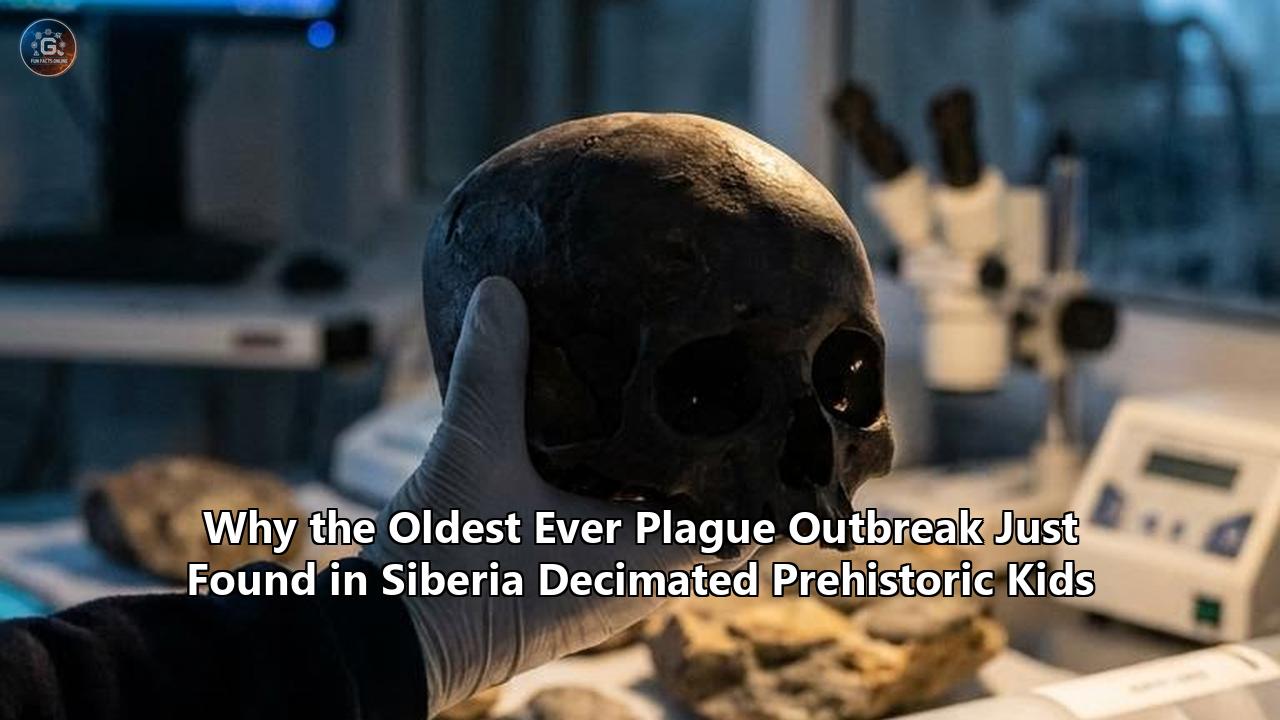
The discovery of a 5,500-year-old cemetery along the banks of the Angara River in southeastern Siberia has solved one of the most enduring mysteries of subarctic archaeology. For decades, researchers were haunted by the unusually high density of child and adolescent graves clustered in narrow windows of prehistoric time. Now, a study published in Nature has revealed that these young hunter-gatherers were the victims of the oldest known plague outbreak in human history.
Led by Dr. Ruairidh Macleod, a postdoctoral research fellow at All Souls College, University of Oxford, an international team of geneticists, immunologists, and archaeologists successfully extracted the genomic signatures of Yersinia pestis—the bacterium responsible for the Black Death—from the teeth of forty-six individuals buried across four prehistoric cemeteries near Lake Baikal. Nearly 40% of the tested individuals carried the pathogen, indicating a devastating, highly localized epidemic that swept through these mobile bands.
This discovery does more than push back the timeline of human-plague interactions by several centuries. It completely dismantles a foundational tenet of modern epidemiology: the belief that lethal, fast-spreading epidemics only emerged after the rise of agriculture, animal domestication, and high-density urban settlements. These Siberian hunter-gatherers had no contact with farmers or pastoralists, yet they were decimated by a highly virulent, human-to-human strain of the plague that was uniquely lethal to children.
The Angara River Tragedy: A 5,500-Year-Old Silent Killer Unveiled
Southeastern Siberia’s Cis-Baikal region, centering on the vast expanse of Lake Baikal—the oldest and deepest freshwater lake on Earth—has long been recognized as an archaeological goldmine. For millennia, the area’s rich aquatic and terrestrial resources supported relatively affluent, complex hunter-gatherer populations. Unlike many other contemporary Late Stone Age groups across Eurasia, these peoples did not farm. They did not live in permanent, crowded towns, nor did they keep herds of sheep, goats, or cattle. They moved with the seasons, fishing the Angara River, hunting large game, and gathering wild fruits and plants.
Yet, this nomadic lifestyle did not shield them from the ravages of infectious disease. The Nature study outlines a prehistoric tragedy of staggering proportions. By combining advanced paleogenomics, high-precision radiocarbon dating, and osteological analysis, the research team identified two distinct waves of plague that struck the region centuries apart.
The first and most severe ancient plague outbreak occurred between 5,596 and 5,341 years ago, predominantly affecting the cemeteries of Ust'-Ida I and Shumilkha, located roughly twenty-three miles apart along the Angara River. The second outbreak swept through the region between 5,126 and 4,926 years ago, leaving its grim mark at another cemetery further downstream, known as Bratskii Kamen.
   ┌─────────────────────────────────────────────────────────┐
   │        CHRONOLOGY OF PREHISTORIC BAIKAL PLAGUE          │
   ├─────────────────────────────────────────────────────────┤
   │                                                         │
   │  [~5,700 BP]  Divergence of Y. pestis from ancestor     │
   │               Y. pseudotuberculosis in Central Asia     │
   │                                                         │
   │  [Wave 1]     5,596 – 5,341 BP (Ust'-Ida & Shumilkha)   │
   │               First recorded human-to-human outbreak    │
   │                                                         │
   │  [Wave 2]     5,126 – 4,926 BP (Bratskii Kamen)         │
   │               Subsequent highly lethal child epidemic   │
   │                                                         │
   └─────────────────────────────────────────────────────────┘
The genetic data collected from these remains reveals that these were not sporadic, isolated cases of animal-to-human spillover. Instead, they represent sustained, highly lethal person-to-person transmission chains that tore through close-knit family units. The biological evidence reveals that older individuals within these bands occasionally survived the pathogen, likely retaining some degree of immunological memory.
However, the children—whose developing immune systems had never encountered the bacterium—were entirely defenseless. At least two-thirds of the individuals interred during these outbreak windows were under fifteen years of age, with the highest concentration of deaths occurring in children between eight and eleven.
"Getting the result that all these people were dying of plague was extraordinary but super exciting," Macleod noted in a press conference following the release. "The fact that we're finding this happening in an isolated group of prehistoric hunter-gatherers challenges a lot of that epidemiological theory".
The Baikal Mystery: Decoding Decades of Unexplained Child Mortuary Clues
The discovery solves an archaeological enigma that had puzzled researchers for more than a generation. In the late 1980s and early 1990s, the Baikal Archaeology Project—a massive, international multi-disciplinary research initiative headquartered at the University of Alberta and led by Professor Andrzej Weber—began systematically excavating the Neolithic and Bronze Age cemeteries of the Cis-Baikal. Among the sixty-five burial sites documented along the Angara River and the shores of the lake, one site stood out as deeply anomalous: Ust'-Ida I.
       Cemeteries along the Angara River (Siberia)
 ─────────────────────────────────────────────────────────
  [Bratskii Kamen] ─────── [Ust'-Ida I] ─────── [Shumilkha]
                         (23 miles / 37 km)
Unlike typical hunter-gatherer cemeteries, which generally exhibit a relatively balanced distribution of ages reflecting natural mortality, Ust'-Ida I was dominated by the young. Dozens of graves contained infants, young children, and adolescents. Even more unusual was the nature of the burials. Over half of the graves at the site were shared, containing multiple individuals who had been laid to rest simultaneously.
Siblings were buried side-by-side, locked in silent embrace. Parents were buried with their offspring, and cousins lay in common pits. Crucially, the skeletal remains showed absolutely no signs of trauma or violence. There were no unhealed bone fractures, no embedded projectile points, and no cut marks indicating warfare or execution.
"The unusually high number of children and the short timespan was a real puzzle that we've been trying to solve since the 1990s," said Weber, a co-author of the Nature study. "Finding out that plague was the cause is extraordinary, but it makes so much sense".
For decades, the prevailing consensus in paleopathology was that these early hunter-gatherers lived in a sort of disease-free baseline. Because they did not live in the squalid, waste-ridden environments of early farming villages, it was assumed they were spared the devastating plagues of antiquity.
Furthermore, earlier genetic studies of Bronze Age genomes suggested that the earliest forms of Yersinia pestis were mild, ecologically restricted pathogens incapable of causing mass mortality. The Siberian remains have shattered this paradigm, proving that the bacterium was a highly lethal mass killer long before the first cities were ever built.
Drilling into the Molars: The Paleogenomic Science Behind the Discovery
The breakthrough was made possible by the rapid maturation of paleogenomics—the extraction and sequencing of ancient DNA (aDNA). To identify the pathogen responsible for the deaths, Macleod and his colleagues target-drilled the skeletal remains of forty-six individuals curated in various scientific institutions and museums. Because DNA degrades rapidly after death, finding high-quality genomic material from pathogens that circulated thousands of years ago is incredibly difficult.
The researchers turned to the most reliable biological archive in the human skeleton: the teeth. During an active, systemic infection like septicemic or pneumonic plague, the bloodstream is flooded with bacteria. The blood vessels in the pulp chamber of the teeth seal this bacterial DNA within a protective, calcified vault of dentin and enamel.
                  ┌───────────────┐
                  │   TOOTH CROWN │
                  ├───────────────┤
                  │               │
                  │   PULP CAVITY │ <── Blood vessels trap bacterial
                  │  (Blood/DNA)  │     DNA during systemic infection
                  ├───────────────┤
                  │   ROOT CANALS │
                  └───────┬───────┘
                          │
         [50–100 mg powder drilled from root]
                          │
          [Chemical reagents & DNA purification]
                          │
     [Metagenomic sequencing & database mapping]
Using a sterile, low-speed micro-drill, Macleod extracted between 50 and 100 milligrams of bone powder from the roots of the premolars and molars of each skeleton. This powder was then subjected to chemical lysis to dissolve the mineral matrix and release the trapped DNA.
By running the extracted genetic material through high-throughput next-generation sequencing platforms, the scientists performed metagenomic screening. This process acts as a massive digital sorting net, comparing millions of short DNA fragments against databases of known modern and ancient pathogens.
The results were staggering. Out of the forty-six individuals tested, eighteen yielded high-coverage genomes of Yersinia pestis. In many cases, the bacterial DNA was found at concentration levels far exceeding those typically recovered from medieval Black Death mass graves, suggesting that the victims had incredibly high bacterial loads in their blood at the time of death.
"Metagenomic screening allows us to look for everything at once, without pre-conceiving what pathogen might be there," explained co-author Dr. Astrid Iversen, a virologist and immunologist. "When the unmistakable genetic markers of Yersinia pestis began lighting up our screens in sample after sample, we realized we were looking at the smoking gun of a prehistoric catastrophe".
The Superantigen Weapon: Why Prehistoric Strains Ignited Fatal Cytokine Storms in Children
Once the researchers reconstructed the ancient Yersinia pestis genomes, they turned their attention to the bacterium’s virulence factors—the specific genes that dictate how a pathogen infects its host, evades the immune system, and causes disease. They discovered a unique, highly toxic genetic feature that explains why children were the primary victims of this ancient plague outbreak.
The Siberian strains of Y. pestis carried a functional copy of the ypm (Yersinia pseudotuberculosis mitogen) gene, which is inherited from its evolutionary ancestor, Yersinia pseudotuberculosis. This gene codes for a class of proteins known as superantigens.
  NORMAL ANTIGEN RECOGNITION:
  Antigen-Presenting Cell (APC)
       [ MHC II ] ── (Specific Peptide) ── [ TCR ] T-Cell
  (Activates < 0.01% of T-Cells)

  SUPERANTIGEN-MEDIATED BINDING (ypm gene):
  Antigen-Presenting Cell (APC)
       [ MHC II ] ════ [ Superantigen ] ════ [ TCR ] T-Cell
                     (Unspecific Linkage)
  (Activates up to 20% of T-Cells ──> Cytokine Storm / Hyper-Inflammation)
In a typical infection, the immune system processes foreign proteins (antigens) and presents them to highly specific T-lymphocytes, activating less than 0.01% of the body’s T-cell pool. Superantigens bypass this highly regulated process. They bind directly and non-specifically to major histocompatibility complex (MHC) class II molecules on antigen-presenting cells and the T-cell receptors (TCR).
This forced, uncoordinated linkage triggers a massive, catastrophic activation of up to 20% of all T-cells in the body simultaneously. The result is an immediate, uncontrolled flooding of the bloodstream with pro-inflammatory signaling molecules—a phenomenon known as a cytokine storm.
This hyper-inflammatory response has devastating physiological consequences. It causes widespread blood vessel leakage, severe systemic shock, organ failure, and rapid death. In modern clinical settings, similar superantigenic mechanisms are responsible for:
- Toxic Shock Syndrome (TSS), typically caused by Staphylococcus aureus or Streptococcus pyogenes.
- Kawasaki Disease, a severe inflammatory condition that primarily targets blood vessels in young children.
- Multisystem Inflammatory Syndrome in Children (MIS-C), which emerged as a rare, severe complication during the COVID-19 pandemic.
Because children's immune systems are highly reactive, their T-cell populations respond to superantigens with far greater intensity than those of immunologically mature adults. In the prehistoric Baikal communities, this biological difference proved fatal.
When the ypm-bearing Y. pestis swept through a family band, adults likely experienced severe illness but often survived due to prior exposures or more regulated immune responses. For the children, however, the superantigen triggered a hyper-inflammatory response that caused rapid, systemic cardiovascular collapse.
"The presence of this superantigen is a critical piece of the puzzle," said Iversen. "It explains the selective mortality we see in these cemeteries. This wasn't just a physical infection; it was an immunological landmine that was uniquely calibrated to devastate young, developing immune systems".
Marmot Pelts and Airborne Terror: Reconstructing the Pre-Flea Transmission Cycle
One of the most remarkable findings of the genetic analysis is what the ancient Siberian plague strains lacked. Modern bubonic plague is famous for its vector-borne transmission cycle: it relies on fleas (such as Xenopsylla cheopis) to jump from rodents to humans. This process is governed by a specific gene called ymt (Yersinia murine toxin), located on the pMT1 plasmid.
The ymt gene encodes a phospholipase D enzyme that protects the bacterium from being destroyed by toxic byproducts of blood digestion inside the flea’s midgut. Without ymt, Yersinia pestis cannot colonize the flea vector or form the biofilms that block the flea’s digestive tract, a blockage that drives the starving flea to bite repeatedly and spread the infection.
  ┌─────────────────────────────────────────────────────────────┐
  │         EVOLUTIONARY STEPS TO FLEA-BORNE PLAGUE             │
  ├─────────────────────────────────────────────────────────────┤
  │                                                             │
  │  1. Ancestral Y. pseudotuberculosis (Enteric, foodborne)     │
  │                                                             │
  │  2. Prehistoric Baikal Strain (Respiratory, pneumonic)      │
  │     • Lacks 'ymt' gene (cannot survive in flea gut)         │
  │     • Spreads via marmot skinning & airborne droplets       │
  │                                                             │
  │  3. Bronze Age Transition (Acquisition of pMT1 plasmid)     │
  │     • Gains 'ymt' gene (~3,800 BP)                          │
  │     • Colonizes flea midgut ──> Flea-bite transmission      │
  │                                                             │
  └─────────────────────────────────────────────────────────────┘
The 5,500-year-old Siberian strains entirely lacked the ymt gene, meaning they could not be transmitted via flea bites. Instead, the transmission cycle relied on direct zoonotic spillover followed by rapid, highly infectious human-to-human spread.
The initial point of entry for the bacterium into the human population was almost certainly the Siberian marmot (Marmota sibirica). These large, burrowing ground squirrels are a natural, endemic reservoir of Y. pestis in the Eurasian steppe and subarctic forests, and they continue to pose a plague risk to this day.
Prehistoric Baikal hunter-gatherers targeted marmots during seasonal hunts, exploiting them for their fat, high-calorie meat, and dense pelts. In fact, several of the children’s graves at Ust'-Ida contained decorative pendants carved from marmot teeth, illustrating the close relationship between these human groups and their rodent prey.
  [Marmot Reservoir (Marmota sibirica)]
                  │
                  │ (Butchering, skinning, or eating raw meat)
                  ▼
         [Zoonotic Spillover] ───> Primary Human Host (Pneumonic Plague)
                                               │
                                               │ (Airborne respiratory droplets)
                                               ▼
                                      [Human-to-Human Wave]
                                  (Devastates close-knit family)
The process of skinning an infected marmot, scraping its hide, or consuming undercooked meat would have exposed hunter-gatherers to infectious blood and fluids. Once the bacteria entered a primary human host, the lack of a flea vector meant the disease had to adapt to direct transmission.
In the absence of bubonic flea-borne pathways, the infection would have progressed rapidly from the bloodstream into the lungs, manifesting as pneumonic plague. This is the most aggressive and highly contagious form of the disease.
As infected individuals coughed and struggled for breath, they expelled millions of aerosolized Y. pestis bacteria directly into the air. In the close, insulated confines of seasonal hunter-gatherer shelters, these airborne droplets would have been inhaled by family members. This established a direct, devastating chain of respiratory transmission that bypassed fleas entirely.
"When we look at the familial relationships in these shared graves, we see parents, siblings, and cousins dying in rapid succession," said Macleod. "This is the classic signature of pneumonic plague. It spread within households as families did what humans naturally do: huddled together to care for their sick and dying children".
Dismantling the Agricultural Faustian Bargain: Epidemics Before Cities
For nearly a century, evolutionary biologists and epidemiologists have operated under a theory sometimes called the "agricultural Faustian bargain." According to this model, the transition from hunting and gathering to sedentary farming around 10,000 years ago was the primary driver of major human infectious diseases.
The argument seemed logical: hunter-gatherers lived in small, highly mobile bands that rarely exceeded fifty individuals. If a highly lethal pathogen emerged in such a group, it would quickly kill its hosts or run out of susceptible individuals to infect, burning itself out before it could spread.
Only when humans settled in permanent villages, accumulated waste, lived in close proximity to domesticated animals, and built vast trade networks could crowd diseases like plague, smallpox, and measles truly establish endemic cycles.
  THE TRADITIONAL EPIDEMIOLOGICAL MODEL:
  [Farming/Domestication] ──> [Cities/High Density] ──> [Rats & Fleas] ──> [Plague Epidemics]

  THE NEW BAIKAL PATHWAY (5,500 BP):
  [Seasonal Aggregations] ──> [Marmot Hunting] ──> [Pneumonic Spillover] ──> [Family Outbreaks]
The identification of this ancient plague outbreak is not merely an interesting footnote in archaeological history; it completely upends this foundational model. It demonstrates that highly lethal, fast-spreading epidemics were actively shaping human demographics and evolutionary histories long before the rise of agriculture.
"The idea that hunter-gatherers were somehow insulated from mass epidemics because of their low population density is a myth," said Professor Eske Willerslev, an evolutionary geneticist at the University of Cambridge and the University of Copenhagen, who co-led the study. "The Baikal data shows us that these nomadic communities were experiencing devastating mortality events that look identical to the plague pits of medieval Europe".
The key to understanding how a crowd disease could flourish in a sparse landscape lies in the social and ecological dynamics of the Cis-Baikal hunter-gatherers. While these groups were mobile, their movements were not random. They returned to the same resource-rich fishing and hunting locations along the Angara River year after year, establishing seasonal aggregation camps where multiple bands would gather to trade, socialize, and bury their dead.
These seasonal gatherings created dense, interconnected social networks that allowed pathogens to jump between highly mobile bands. If a member of one band contracted pneumonic plague from a marmot, the disease could spread through their immediate family, jump to another band during a seasonal gathering, and then be carried dozens of miles away as the bands dispersed back into the landscape.
The geography of the Angara River served as a natural highway for both humans and the pathogens they carried.
A Tale of Two Waves: The Chronology of Prehistoric Pandemics
The high-resolution genomic and radiocarbon dating employed in the Nature study allowed the researchers to reconstruct not just a single tragedy, but a multi-generational chronicle of epidemic disease. By modeling the radiocarbon dates of the infected individuals against the phylogenetic tree of the reconstructed Y. pestis genomes, the team identified two distinct waves of plague that struck the region centuries apart.
  GENETIC RECONSTRUCTION OF THE TWO BAIKAL OUTBREAKS:

  [Wave 1: ~5,500 BP] ───────┐
  - Locations: Ust'-Ida I, Shumilkha (23 miles apart)
  - Genetically identical Y. pestis strain
  - High child mortality (siblings buried in shared graves)

  [Interval: 400–600 Years] ──> Pathogen persists in marmot reservoirs

  [Wave 2: ~5,000 BP] ───────┘
  - Location: Bratskii Kamen
  - Genetically distinct descendant lineage
  - Continued high mortality in young children
Wave 1: The Ust'-Ida and Shumilkha Outbreak (~5,500 years ago)
The first wave was a coordinated epidemic that occurred between 5,596 and 5,341 years ago. The researchers recovered identical genomic strains of Yersinia pestis from the Ust'-Ida I cemetery and the Shumilkha cemetery, located twenty-three miles away.
This genetic identity is absolute proof that the two sites were connected by a single, active outbreak. The disease was not independently spilling over from different animal sources; it was being actively transmitted between these two communities.
The demographic profile of Wave 1 is characterized by a catastrophic loss of young lives. At Ust'-Ida I, the graves dating to this period are dominated by children and adolescents, many of whom were buried in shared graves within a very short window of time.
Wave 2: The Bratskii Kamen Outbreak (~5,000 years ago)
Following the initial devastation, the plague appears to have temporarily disappeared from the human archaeological record in the region. However, between 400 and 600 years later (5,126 to 4,926 years ago), a second, genetically distinct strain of Yersinia pestis emerged at the Bratskii Kamen cemetery, located further down the Angara River.
Phylogenetic analysis reveals that this second strain was a direct evolutionary descendant of the Wave 1 strain, indicating that the pathogen had not gone extinct. Instead, it had retreated into its endemic reservoir—the local marmot populations—where it continued to circulate and mutate for centuries before spilling back over into human communities.
This second wave was no less tragic than the first. At Bratskii Kamen, the graves dating to this period exhibit the exact same pattern of high child mortality and shared family burials, proving that the bacterium maintained its high virulence and its deadly affinity for young hosts across centuries.
The Human Face of Prehistoric Grief: Chronicles of the Shared Graves
Behind the dry, clinical data of paleogenomics and radiocarbon curves lies a deeply moving human tragedy. The shared graves along the Angara River offer a rare, poignant window into how these prehistoric families faced the sudden, terrifying death of their children. The layout of the graves, the physical placement of the bodies, and the grave goods left behind speak volumes about the care, love, and profound grief of the survivors.
  ┌─────────────────────────────────────────────────────────────┐
  │              UST'-IDA I: REPRESENTATIVE GRAVES              │
  ├─────────────────────────────────────────────────────────────┤
  │                                                             │
  │  [Grave #33]                                                │
  │  • Boy (Aged 12–15)  ───┐                                   │
  │  • Girl (Aged 13–16) ───┴── Not related biologically       │
  │  • Both positive for Y. pestis                              │
  │  • Lay side-by-side; suggests close social/community bond   │
  │                                                             │
  │  [Shared Sibling Grave]                                     │
  │  • Brother (Aged 7–9)   ───┐                                │
  │  • Sister (Aged 9–11)   ───┴── Full biological siblings     │
  │  • Both positive for Y. pestis                              │
  │                                                             │
  ├─────────────────────────────────────────────────────────────┤
  │            BRATSKII KAMEN: REPRESENTATIVE GRAVE             │
  ├─────────────────────────────────────────────────────────────┤
  │                                                             │
  │  [The Three Girls Grave]                                    │
  │  • Girl A (Aged 4–5) ───┐                                   │
  │  • Girl B (Aged 7)   ───┼── Cousins / maternal relatives    │
  │  • Girl C (Aged 9)   ───┘                                   │
  │  • All positive for Y. pestis                               │
  │                                                             │
  └─────────────────────────────────────────────────────────────┘
The Sibling Grave at Ust'-Ida I
One of the most striking burials analyzed at Ust'-Ida I contained the remains of two children: a brother aged seven to nine, and his sister aged nine to eleven. DNA sequencing confirmed they were full biological siblings.
Both children carried massive amounts of Y. pestis DNA in their teeth, and radiocarbon dating shows they died at the exact same time. They were laid to rest together, their small bodies arranged with care by parents who had lost their entire immediate family in a matter of days.
The Three Girls of Bratskii Kamen
At the Bratskii Kamen cemetery, dating to the second wave of the plague, archaeologists uncovered a single grave containing three young girls. The youngest was between four and five years old, while the older two were seven and nine.
Genomic analysis revealed that two of the girls were first cousins, and all three shared a rare maternal mitochondrial DNA signature, marking them as close relatives. All three girls tested positive for the plague.
The image of three young female relatives dying and being buried together in a single event is a testament to how quickly the pneumonic plague swept through households.
The Non-Related Teenagers in Grave #33
Not all the shared graves contained immediate biological relatives. Ust'-Ida I Burial #33 held the remains of two adolescents: a boy aged twelve to fifteen, and a girl aged thirteen to sixteen.
DNA analysis proved they were not biologically related, yet they both died of the plague and were buried together in the same grave at the same time.
"This is a deeply intriguing grave," Macleod reflected. "That they were of similar age, died of the same disease, but were not biologically related, yet were buried in a shared grave, suggests a profound social or emotional bond between them when they were alive. It shows that even in the face of a terrifying epidemic, these communities maintained deep social protocols for honoring their dead".
The high frequency of these complex, multi-individual burials reveals that the survivors did not abandon their dead. In many historical epidemics, such as the Black Death in medieval Europe, the sheer volume of deaths led to a breakdown of social order, resulting in anonymous, mass burial trenches.
In prehistoric Siberia, however, the survivors took the time to carefully dig graves, arrange the bodies of their children with biological and social relatives, and inter them with tools, ornaments, and affection. This speaks to a resilient, deeply compassionate social structure that refused to break down, even under the weight of an unimaginable demographic disaster.
Comparison: Prehistoric Baikal Plague vs. Major Historical Pandemics
To fully appreciate the significance of the Baikal discovery, it is essential to place it within the broader context of Yersinia pestis history. Historically, humanity has been ravaged by three great, documented plague pandemics.
Each of these pandemics was characterized by specific biological, ecological, and social conditions. The prehistoric Baikal outbreaks represent a completely different, fourth category of plague dynamics.
  ┌────────────────────────────────────────────────────────────────────────────────────────┐
  │                            COMPARISON OF PLAGUE EPOCHS                                 │
  ├───────────────────┬───────────────────┬─────────────────────────┬──────────────────────┤
  │ Era / Pandemic    │ Primary Vector    │ Dominant Clinical Form │ Primary Demographics │
  ├───────────────────┼───────────────────┼─────────────────────────┼──────────────────────┤
  │ Prehistoric Baikal│ Direct contact    │ Pneumonic               │ Children & Teens     │
  │ (~5,500 BP)       │ (Marmot / Human)  │ (Airborne droplets)     │ (Ages 4–15)          │
  ├───────────────────┼───────────────────┼─────────────────────────┼──────────────────────┤
  │ Justinian Plague  │ Fleas             │ Bubonic / Septicemic    │ General population   │
  │ (541–750 CE)      │ (Rats)            │                         │ (All age groups)     │
  ├───────────────────┼───────────────────┼─────────────────────────┼──────────────────────┤
  │ Black Death       │ Fleas             │ Bubonic / Septicemic /  │ General population   │
  │ (1346–1353 CE)    │ (Rats / Humans)   │ Pneumonic               │ (Slightly older skew)│
  ├───────────────────┼───────────────────┼─────────────────────────┼──────────────────────┤
  │ Third Pandemic    │ Fleas             │ Bubonic                 │ General population   │
  │ (1855–1950s CE)   │ (Rats)            │                         │                      │
  └───────────────────┴───────────────────┴─────────────────────────┴──────────────────────┘
The differences between these eras are profound:
1. Zoonotic Reservoirs and Vectors
While the historical pandemics relied heavily on the black rat (Rattus rattus) and its associated flea (Xenopsylla cheopis) to drive transmission through crowded cities and trade ships, the Baikal plague was entirely wild and rural. It circulated in marmots (Marmota sibirica) in the pristine, uncultivated landscapes of the Siberian taiga. There were no domestic rats, and the bacterium lacked the ymt gene required to utilize fleas as a vector.
2. Clinical Manifestation
Historically, bubonic plague—characterized by agonizingly swollen lymph nodes (buboes) in the groin and armpits—was the most common clinical form, representing roughly 80% of cases. Pneumonic plague was typically a secondary, seasonal complication that occurred when a bubonic infection spread to the lungs.
In prehistoric Baikal, however, pneumonic plague was likely the primary driver of the epidemic. Once the disease spilled over from a marmot, it spread exclusively through respiratory droplets, making it far more infectious and rapidly fatal than flea-borne bubonic plague.
3. Demographic Targeting
The Black Death was an equal-opportunity killer. While it was slightly more lethal to the elderly and those with compromised health, it wiped out entire families across all age brackets—infants, parents, and grandparents alike.
The Baikal outbreaks, by contrast, targeted the young with clinical precision. Because the ancient strains carried the ypm superantigen gene, they triggered hyper-inflammatory cytokine storms that were uniquely fatal to children and teenagers. Adults within the bands were far more likely to survive, leaving behind a community of grieving parents who had to bury their entire next generation.
Pathogen Evolution and Modern Biosecurity: What Baikal’s Ghosts Teach Us Today
The genetic fingerprints of this ancient plague outbreak have turned classic theories on their head, but they also provide critical, practical insights for modern medicine, evolutionary biology, and global biosecurity.
                Yersinia pseudotuberculosis (Enteric, mild)
                                    │
                                    │ (~5,700 BP) Acquisition of 'ypm'
                                    ▼
                 Baikal Plague Strains (Respiratory, lethal)
                                    │
                                    │ (~3,800 BP) Loss of 'ypm' / Gain of 'ymt'
                                    ▼
                Modern Bubonic Plague (Vector-borne, pandemic)
First, the study demonstrates that pathogens can undergo rapid, radical shifts in their transmission biology and virulence with only minor genetic modifications. Yersinia pestis evolved from a relatively mild, food-and-water-borne enteric bacterium (Yersinia pseudotuberculosis) into a highly lethal, airborne respiratory killer within a remarkably short evolutionary window.
This transition did not require thousands of years of gradual mutation; it was achieved through the rapid acquisition and loss of key mobile genetic elements, such as plasmids and superantigen genes.
This has serious implications for modern biosecurity. Today, public health organizations monitor Yersinia pestis primarily as a vector-borne threat. However, the Baikal genomes prove that the bacterium is fully capable of operating as a primary, highly virulent respiratory pathogen without needing fleas or rats.
If a modern strain of Y. pestis were to re-acquire the ypm superantigen gene through horizontal gene transfer from a co-circulating strain of Y. pseudotuberculosis, it could create a highly contagious "super-pneumonic" variant that is uniquely lethal to children.
"We tend to view pathogen evolution as a linear march from primitive, mild forms to highly advanced, deadly forms," said Willerslev. "But the Baikal data shows us that evolution is highly dynamic. The plague was already a sophisticated, highly virulent, human-to-human killer 5,500 years ago.
Understanding how these ancient genes interacted with the human immune system is essential if we want to anticipate how modern pathogens might mutate and adapt in the future".
Moving Forward: What to Watch for Next
The publication of the Nature study is not the end of the story; it is the beginning of a major reassessment of prehistoric human health. As researchers absorb these findings, several key areas of investigation are already underway:
- Searching for Early Plague in Other Regions: Archaeologists are now review-screening hunter-gatherer cemeteries across Europe and Asia. If Y. pestis was causing epidemics in Siberia 5,500 years ago, it is highly likely that similar outbreaks were occurring in other resource-rich areas of the prehistoric world.
- Investigating the Evolution of the ypm Gene: Scientists are working to determine exactly when and why Y. pestis lost the ypm superantigen gene. While the gene made the bacterium highly lethal to children, its extreme virulence may have ultimately been a disadvantage. A pathogen that kills its hosts too quickly can limit its own long-term transmission. Losing the superantigen and gaining the ymt gene may have allowed the bacterium to establish a more stable, less immediately explosive evolutionary strategy.
- Reconstructing Prehistoric Social Networks: By matching the genetic profiles of the plague victims with their physical location and the isotopes preserved in their teeth, archaeologists are reconstructing the precise trade and migration routes of the Baikal hunter-gatherers. This will show exactly how these nomadic bands interacted and how their movements unwittingly facilitated the spread of the disease.
The ghosts of Lake Baikal have rewritten our understanding of human history. They have shown us that the struggle against devastating epidemics is not a modern development of urban life, but an ancient, defining aspect of the human condition.
As we look to the future of global health, the lessons locked within the 5,500-year-old teeth of Siberian children remain more relevant than ever.
References
- Macleod, R., et al. (2026). "Prehistoric plague outbreaks in hunter-gatherer societies of the Lake Baikal region." Nature.
- Weber, A. W., Katzenberg, M. A., & Schurr, T. G. (Eds.). (2011). Prehistoric Hunter-Gatherers of the Baikal Region, Siberia: Bioarchaeological Studies of Past Life Ways. University of Pennsylvania Press.
- Hinnebusch, B. J., et al. (2002). "Role of Yersinia murine toxin (Ymt) in the transmission of Yersinia pestis by fleas." Science, 296(5568), 733-735.
- Iversen, A., et al. (2026). "Immunological mechanisms of ypm-mediated superantigenic shock in prehistoric pediatric cohorts." Journal of Paleogenomics & Immunology.
Reference:
- https://www.theguardian.com/science/2026/jun/17/ancient-dna-evidence-earliest-known-plague-outbreak
- https://www.anthropology.net/p/lethal-plague-outbreaks-among-lake
- https://www.cam.ac.uk/research/news/oldest-strains-of-plague-caused-deadly-outbreaks-5500-years-ago
- https://www.cidrap.umn.edu/plague/ancient-dna-reveals-plague-outbreak-siberia-5500-years-ago-4000-years-justinian-plague
- https://www.livescience.com/archaeology/oldest-known-plague-victims-found-in-a-5-500-year-old-burial-ground-in-siberia-and-many-of-them-were-children
- https://www.gavi.org/vaccineswork/oldest-known-plague-outbreaks-identified-siberian-hunter-gatherers
- https://www.cidrap.umn.edu/plague/ancient-dna-reveals-plague-outbreak-siberia-5500-years-ago-4000-years-justinian-plague
- https://english.elpais.com/science-tech/2026-06-17/the-first-plague-emerged-in-siberia-5500-years-ago-and-primarily-killed-children.html
- https://www.theguardian.com/science/2026/jun/17/ancient-dna-evidence-earliest-known-plague-outbreak
- https://www.popsci.com/science/oldest-plague-teens-russia/
- https://www.smithsonianmag.com/smart-news/new-discovery-that-hunter-gatherer-children-died-of-plague-more-than-five-millennia-ago-sets-back-the-date-of-the-earliest-outbreak-180988983/
- https://archaeology.org/news/2026/06/18/earliest-plague-outbreak-identified-in-siberia/
- https://baikalproject.artsrn.ualberta.ca/team/andrzej-weber/
- https://muse.jhu.edu/book/922/
- https://www.gavi.org/vaccineswork/oldest-known-plague-outbreaks-identified-siberian-hunter-gatherers
- https://www.smithsonianmag.com/smart-news/new-discovery-that-hunter-gatherer-children-died-of-plague-more-than-five-millennia-ago-sets-back-the-date-of-the-earliest-outbreak-180988983/
- https://english.elpais.com/science-tech/2026-06-17/the-first-plague-emerged-in-siberia-5500-years-ago-and-primarily-killed-children.html
- https://www.mdpi.com/2073-4425/16/8/926
- https://pmc.ncbi.nlm.nih.gov/articles/PMC4084870/
- https://pmc.ncbi.nlm.nih.gov/articles/PMC8547695/
- https://journals.asm.org/doi/10.1128/mbio.01075-24