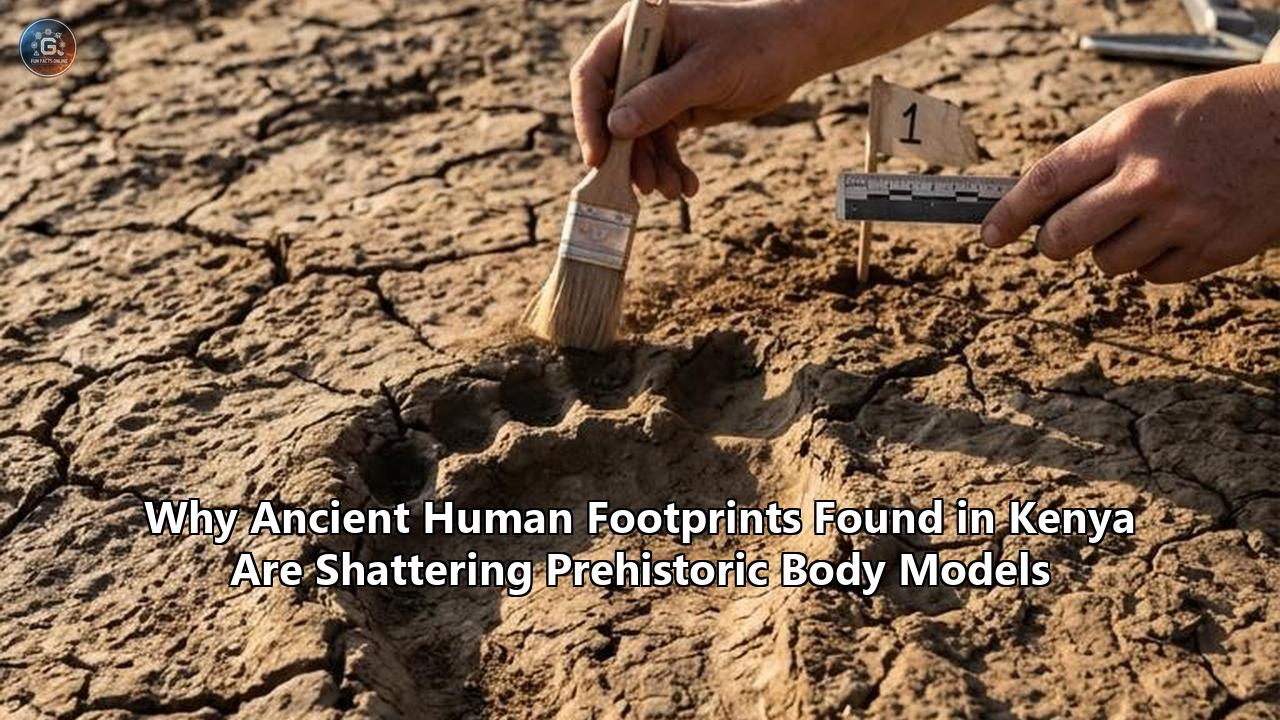
Along the sun-baked mudflats of Kenya’s Lake Turkana Basin, a team of international researchers has uncovered a set of fossilized tracks that upends half a century of consensus on early human evolution. Published in the Proceedings of the National Academy of Sciences, the study reveals that 1.43-million-year-old footprints left by Paranthropus boisei—an extinct hominin cousin known primarily for its massive jaw and heavy chewing muscles—belonged to individuals standing up to 1.8 meters (6 feet) tall and weighing nearly 75 kilograms (165 pounds).
These measurements rival the body dimensions of modern humans and contemporary Homo erectus, shattering long-held prehistoric body models that categorized paranthropines as short, stocky creatures from the neck down.
The discovery, led by paleoanthropologist Kevin Hatala of Chatham University and the Max Planck Institute for Evolutionary Anthropology, centers on 21 hominin tracks across five continuous trackways at the GaJi10 site in East Turkana. Preserved alongside the tracks of ancient hippopotamuses, antelopes, and wading birds in fine silts dated via volcanic ash, the prints record the synchronized movement of eight mostly adult male individuals traveling together without females or juveniles.
Beyond re-engineering physical models of hominin stature and mass, the finding offers rare empirical evidence of complex social behavior in a species long considered an evolutionary side-branch.
┌─────────────────────────────────────────────────────────────────────────┐
│                      GAJI10 SITE DISCOVERY SNAPSHOT                     │
├───────────────────────┬─────────────────────────────────────────────────┤
│ Geographic Location   │ East Turkana, Lake Turkana Basin, Northern Kenya│
├───────────────────────┼─────────────────────────────────────────────────┤
│ Geologic Context      │ Koobi Fora Formation (GaJi10 Site)              │
├───────────────────────┼─────────────────────────────────────────────────┤
│ Chronological Age     │ ~1.43 Million Years Ago (Akait Tuff horizon)    │
├───────────────────────┼─────────────────────────────────────────────────┤
│ Hominin Species       │ Paranthropus boisei (based on foot mechanics)   │
├───────────────────────┼─────────────────────────────────────────────────┤
│ Revised Height Range  │ Up to 1.8 meters (approx. 6 feet)               │
├───────────────────────┼─────────────────────────────────────────────────┤
│ Revised Mass Estimate │ Approx. 75 kilograms (165 pounds)               │
├───────────────────────┼─────────────────────────────────────────────────┤
│ Group Composition     │ 8 individuals (predominantly adult males)       │
└───────────────────────┴─────────────────────────────────────────────────┘
The GaJi10 footprint surface serves as a case study in how physical evidence can expose systemic flaws in evolutionary modeling. For decades, scientific understanding of ancient human relatives relied on skeletal fragments, creating an incomplete picture shaped by survival bias in the fossil record. The Kenya trackways demonstrate the power of trace fossils to correct osteological oversights, exposing how assumptions about diet, body size, and social structure can mislead paleoanthropologists when direct, real-time biological footprints are absent.
The Fallacy of Skull-Centric Reconstructions and Bone Bias
The primary reason Paranthropus boisei was historically modeled as a small-bodied hominin stems from taphonomy—the process of decay, burial, and fossilization. Since Mary Leakey discovered the first P. boisei cranium at Olduvai Gorge in 1959 (OH 5, famously dubbed "Nutcracker Man"), the species has been defined almost entirely by its cranial and dental architecture.
P. boisei possessed hyper-robust skulls featured:- Prominent sagittal crests to anchor massive temporalis chewing muscles
- Flaring zygomatic arches (cheekbones)
- Post-canine teeth up to three times the surface area of modern human molars
Because dense, thick skulls and enamel-rich teeth preserve far better in fluvial sediments than thin-walled long bones, the fossil record for Paranthropus became heavily skewed toward heads. Postcranial skeletal elements—such as femurs, humeri, and pelves—were extraordinarily rare in the East African fossil record and proved notoriously difficult to assign definitively to P. boisei when found in isolation alongside Homo erectus remains.
       TYPICAL FOSSIL PRESERVATION BIAS IN EARLY HOMININS

 High Preservation Potential              Low Preservation Potential
┌───────────────────────────┐            ┌───────────────────────────┐
│  • Tooth Enamel           │            │  • Soft Tissues           │
│  • Mandibles & Maxillae   │ ─────────► │  • Small Foot/Hand Bones  │
│  • Thick Cranial Vaults   │            │  • Femoral Shafts         │
│  • Sagittal Crests        │            │  • Epiphyseal Plates      │
└───────────────────────────┘            └───────────────────────────┘
              │                                        │
              ▼                                        ▼
    Drives Early Cranial                    Creates Postcranial
    Over-Reconstruction                    Anatomical Blindspots
In the absence of clear postcranial skeletons, researchers relied on scaling equations to estimate body mass and stature. These mathematical models derived body size by extrapolating from cranial measurements or isolated joint surfaces using modern apes and early australopiths as baseline references.
Because australopiths were short-statured (typically between 1.0 and 1.4 meters tall), scientists assumed that massive teeth and jaws were an adaptation to compress high processing capacity into a compact body frame. P. boisei was systematically modeled as an evolutionary dead-end that prioritized dietary adaptation over stature expansion.
This cranial-heavy modeling created a scientific blind spot. By assuming that dramatic body size expansion occurred exclusively within the genus Homo as an adaptation for long-distance travel and carnivory, paleoanthropology built a linear narrative: small, plant-eating australopiths and paranthropines remained diminutive, while meat-eating, tool-using Homo erectus broke the body-size ceiling.
The GaJi10 tracks dismantle this narrative. They prove that relying on skull fragments to estimate full-body dimensions risks severe structural errors—a error that ichnological science is now systematically rectifying.
How Footprints Reveal What Bones Conceal
Osteology provides structural snapshots of dead organisms, but ichnology—the study of trace fossils—captures the dynamic physics of living bodies. Bones can be transported by rivers, scavenged by carnivores, and broken over millennia, scattering individual remains across hundreds of meters and thousands of years.
Footprints are formed instantly, locked into mud within seconds, and sealed by sediment before environmental forces can disrupt them.
┌─────────────────────────────────────────────────────────────────────────┐
│                   OSTEOLOGY VS. ICHNOLOGY IN PALEOANTHROPOLOGY          │
├─────────────────────────┬───────────────────────────────────────────────┤
│ OSTEOLOGY (Fossil Bones)│ ICHNOLOGY (Trackways & Impressions)           │
├─────────────────────────┼───────────────────────────────────────────────┤
│ Accumulates over        │ Formed in seconds; preserved in real time     │
│ thousands of years      │                                               │
├─────────────────────────┼───────────────────────────────────────────────┤
│ Skeletal elements frequently │ Captures dynamic biomechanical interaction   │
│ isolated or fragmented  │ with sediment                                 │
├─────────────────────────┼───────────────────────────────────────────────┤
│ Mass/height estimated   │ Mass/height derived from directly loaded foot │
│ via scaling regressions │ surface area and depth                        │
├─────────────────────────┼───────────────────────────────────────────────┤
│ Zero direct data on     │ Direct evidence of group velocity, spacing,   │
│ social grouping         │ and direction                                 │
└─────────────────────────┴───────────────────────────────────────────────┘
When an animal walks across wet sediment, its mass exerts vertical load forces that deform the substrate. The resulting impression records the total three-dimensional contact geometry of the foot, including heel-strike pressure, arch compliance, lateral weight transfer, and toe-off dynamics.
By analyzing ancient human footprints, biomechanical researchers can reverse-engineer foot length, surface area, and penetration depth to calculate stature and weight with a higher degree of confidence than isolated skeletal fragments allow.
At GaJi10, the research team used foot-mechanics profiling methods pioneered in 2024 to differentiate trackmakers based on internal foot architecture. Modern humans and Homo erectus possess a rigid midfoot with a pronounced longitudinal arch and a non-abductable hallux (big toe) optimized for spring-like energy return during bipedal running.
In contrast, the GaJi10 tracks show a combination of traits unique to Paranthropus:
- A flatter plantar profile with flexible midfoot compliance
- A slightly more mobile big toe
- Distinctive medial pressure distribution during weight transfer
Despite these anatomical differences, the overall dimensions of the GaJi10 tracks were unexpectedly large. Footprint lengths exceeding 28 centimeters corresponded to individuals with standing heights reaching 1.8 meters and body masses hovering around 75 kilograms.
This demonstrates a foundational principle of trace fossil analysis: dynamic load-bearing metrics captured in real-time sediment impressions provide a crucial check against static skeletal extrapolations.
Parallel Giantism and the Dietary Dichotomy
The finding that Paranthropus boisei reached heights of 1.8 meters forces a deep reassessment of hominin energetics and metabolic evolution.
For decades, paleoanthropological theory tied body size expansion directly to dietary quality. The "Expensive Tissue Hypothesis," formulated by Leslie Aiello and Peter Wheeler in 1995, posited that growing a larger body and brain required switching to nutrient-dense, easily digestible foods like animal fat and meat.
Homo erectus was thought to have unlocked human-like body proportions through high-protein carnivory, stone tool processing, and eventually the control of fire. Paranthropus boisei, conversely, was framed as the ultimate herbivorous specialist. Isotopic analyses of P. boisei tooth enamel reveal a diet overwhelmingly dominated by C4 resources—primarily sedges, grasses, and tough wetland vegetation. Digesting low-quality, fibrous plant matter requires long processing times and broad grinding surfaces, which explained the species' massive molars, thick jaw bones, and heavy sagittal crests.However, standard ecological models assumed that such a low-energy diet could not support a large body mass without consuming an impossible number of hours per day in continuous chewing.
                  THE TRADITIONAL VS. REVISED BODY MASS PARADIGM

 TRADITIONAL PARADIGM (Pre-2026)
 ┌───────────────────────────┐      ┌───────────────────────────┐
 │   High-Protein Carnivory  │ ───► │  Homo erectus Expansion   │ (Large Body Size)
 └───────────────────────────┘      └───────────────────────────┘
 ┌───────────────────────────┐      ┌───────────────────────────┐
 │ Low-Quality Fibrous C4    │ ───► │   Paranthropus boisei     │ (Small Body Size)
 └───────────────────────────┘      └───────────────────────────┘

 REVISED PARADIGM (Post-2026 GaJi10 Discovery)
                                    ┌───────────────────────────┐
                               ┌──► │  Homo erectus Lineage     │ (Large Body Size)
 ┌───────────────────────────┐ │    └───────────────────────────┘
 │ Parallel Body Size Growth │─┤
 └───────────────────────────┘ │    ┌───────────────────────────┐
                               └──► │  P. boisei Lineage        │ (Large Body Size)
                                    └───────────────────────────┘
The GaJi10 footprints prove that large body size evolved independently across two radically different dietary niches in the Early Pleistocene:
- Homo erectus achieved modern body dimensions through dietary diversification, faunal exploitation, high mobility, and energetic efficiency.
- Paranthropus boisei achieved modern body dimensions by scaling up its specialized herbivorous strategy, expanding bulk gut capacity to process vast quantities of wetland flora along rich lacustrine shores.
This phenomenon—parallel giantism—illustrates that evolutionary pressure in the Early Pleistocene favored larger body sizes regardless of diet. Larger bodies provided protection against apex predators like saber-toothed cats (Megantereon and Homotherium) and giant wetland crocodiles (Crocodylus thorbjarnarsoni).
A larger body mass also improved thermoregulation in open savanna-woodland environments and reduced relative basal metabolic costs per kilogram of body weight. The assumptions that linked large stature exclusively to high-protein meat consumption are no longer valid.
Social Architecture Written in Silt
While the structural dimensions of the GaJi10 tracks alter physical hominin models, the spatial arrangement of the prints offers a rare look at deep-time social behavior.
Bones rarely yield reliable data regarding instantaneous social grouping; accumulation of skeletons in a cave or river bed often occurs over decades, centuries, or millennia through taphonomic traps or carnivore caching. Footprints on a wet mudflat, however, capture a precise window of hours or minutes.
                     GAJI10 LAKESHORE SCENE (1.43 Ma)

   [ Ancient Lake Lorenyang Shoreline / Shallow Water (2-10 cm depth) ]
  ~~~~~~~~~~~~~~~~~~~~~~~~~~~~~~~~~~~~~~~~~~~~~~~~~~~~~~~~~~~~~~~~~~~~~
    ▲             ▲             ▲             ▲             ▲
    │             │             │             │             │
  [P.b. 1]      [P.b. 2]      [P.b. 3]      [P.b. 4]      [P.b. 5]
  (Male)        (Male)        (Male)        (Male)        (Male)
   1.8m          1.75m         1.8m          1.7m          1.8m

      Together with parallel tracks of hippopotamuses, antelopes,
      and wading birds crossing fresh silt under layer of volcanic ash.
The 21 tracks documented at GaJi10 show eight individuals moving in parallel westward across a shallow water margin (2 to 10 centimeters deep) along ancient Lake Lorenyang. The depth and deformation profiles of the impressions indicate that all eight individuals crossed the surface under identical moisture conditions before fine sand filled the prints and a layer of volcanic ash (the Akait Tuff) capped the horizon.
Crucially, track size distributions indicate that the majority of these eight individuals were large adults, likely males. The total absence of smaller tracks belonging to juveniles or adult females within this synchronized group implies intentional sex-segregated or male-coalition movement.
"The fact that eight, mostly adult male, Paranthropus boisei individuals seemingly traveled together as a group, without females or children, hints at a complex social structure in this species," noted co-author Neil Roach of Harvard University. "They may have lived in large groups, where males competed for mates, but also tolerated each other at times for safety in a dangerous environment."
┌─────────────────────────────────────────────────────────────────────────┐
│                      SOCIAL STRUCTURAL IMPLICATIONS                     │
├───────────────────────┬─────────────────────────────────────────────────┤
│ Traditional Model     │ Solitary or small nuclear family harems led by  │
│                       │ a single dominant male (similar to gorillas)    │
├───────────────────────┼─────────────────────────────────────────────────┤
│ GaJi10 Evidence       │ Multi-male, coordinated group travel without    │
│                       │ female or infant accompaniment                  │
├───────────────────────┼─────────────────────────────────────────────────┤
│ Functional Advantage  │ Cooperative defense against aquatic/terrestrial  │
│                       │ predators along open lakeshore zones            │
├───────────────────────┼─────────────────────────────────────────────────┤
│ Comparative Analogue  │ All-male foraging parties/coalitions seen in    │
│                       │ modern chimpanzees and savanna baboons          │
└────────────────└────────────────────────────────────────────────────────┘
This discovery challenges the long-held assumption that complex male social alliances were unique to the human line (Homo) or modern chimpanzees (Pan troglodytes).
In traditional paleoanthropological models, high sexual dimorphism in hominin skulls was interpreted as evidence for gorilla-like gorilla harem structures, where solitary dominant males controlled groups of smaller females.
The presence of multiple large male P. boisei individuals traveling together suggests a multi-male group structure capable of cooperative behavior, tolerance, and shared landscape utilization.
Overlapping Territories and Shoreline Sympatry
The Turkana Basin during the Early Pleistocene was not a quiet, empty landscape; it was a crowded evolutionary hotspot where multiple hominin species shared the same ecological habitats.
The GaJi10 footprint surface adds critical evidence to the phenomenon of shoreline sympatry—the peaceful or spatial coexistence of distinct hominin species within the same local ecosystem.
                     TURKANA BASIN SYMPATRIC ECOLOGY (~1.4–1.5 Ma)

                       ┌───────────────────────────────┐
                       │  Lake Lorenyang Lakeshore     │
                       └──────────────┬────────────────┘
                                      │
              ┌───────────────────────┴───────────────────────┐
              ▼                                               ▼
  ┌───────────────────────────┐                   ┌───────────────────────────┐
  │   Paranthropus boisei     │                   │       Homo erectus        │
  ├───────────────────────────┤                   ├───────────────────────────┤
  │ • Stature: Up to 1.8m     │                   │ • Stature: 1.6–1.8m       │
  │ • Mass: ~75 kg            │                   │ • Mass: ~50–65 kg         │
  │ • Diet: Sedges/C4 grasses │                   │ • Diet: Omnivorous/Meat   │
  │ • Foot: Flexible midfoot, │                   │ • Foot: Rigid arch, stiff │
  │   mobile big toe          │                   │   propulsive forefoot     │
  └───────────────────────────┘                   └───────────────────────────┘
At nearby sites along East Turkana, such as Ileret, paleontologists have documented footprint horizons where Homo erectus and Paranthropus boisei tracks exist in identical sedimentary layers. This confirms that both species walked the exact same muddy shorelines within short time windows of each other.
Prior to the 2026 discovery, ecological niche partitioning between these two species was explained primarily through size and posture: Homo erectus was thought to be the tall, wide-ranging carnivore/omnivore, while Paranthropus boisei was viewed as the smaller, localized plant-grinder.
However, with both species now confirmed to have reached similar body masses (~75 kg) and heights (~1.8 meters), the nature of their coexistence must be re-evaluated.
┌─────────────────────────────────────────────────────────────────────────┐
│                     ECOLOGICAL NICHE PARTITIONING                       │
├─────────────────────────┬───────────────────────────────────────────────┤
│ RESOURCE CATEGORY       │ MECHANISM OF COEXISTENCE                      │
├─────────────────────────┼───────────────────────────────────────────────┤
│ Dietary Specialization  │ P. boisei targeted tough aquatic sedges and   │
│                         │ micro-flora; H. erectus targeted meat, roots, │
│                         │ and opportunistic fauna                       │
├─────────────────────────┼───────────────────────────────────────────────┤
│ Biomechanical Gait      │ P. boisei preserved midfoot flexibility for   │
│                         │ wetland mud navigation; H. erectus possessed  │
│                         │ rigid arches for long-distance striding       │
├─────────────────────────┼───────────────────────────────────────────────┤
│ Micro-Habitat Use       │ P. boisei operated directly in shallow lakes  │
│                         │ margins; H. erectus roamed inland savannas and│
│                         │ riparian corridors                            │
└─────────────────────────┴───────────────────────────────────────────────┘
Rather than competing directly for the same foods, these two large-bodied hominins partitioned their shared environment through specialized adaptations.
Paranthropus boisei used its powerful jaws and large digestive system to eat abundant lacustrine vegetation directly along wet lake margins. Homo erectus relied on tools, higher mobility, and animal resources to exploit open grasslands and river channels.The presence of ancient human footprints preserved in these muddy layers shows that two distinct evolutionary paths could sustain large, tall bodies in the same place at the same time without one driving the other to extinction.
Methodological Rigor and the Frontiers of Digital Fieldwork
The discovery of the GaJi10 trackways highlights a shift in paleoanthropological methodology over the past five decades.
The site was first spotted in 1978 when Smithsonian paleontologist Kay Behrensmeyer noted a series of large, rounded indentations in a trench wall that turned out to be ancient hippo tracks. When excavator Kimolo Mulwa cleared the adjacent rock surface, he uncovered the first two hominin prints.
At the time, field technology was limited to plaster casting, hand drawings, and standard photography, which lacked the precision needed to distinguish subtle differences in foot anatomy or dynamic sediment deformation.
                EVOLUTION OF FOOTPRINT ANALYSIS TECHNOLOGY

 1978 (Initial Excavation)               2026 (Modern Analysis)
┌───────────────────────────┐           ┌───────────────────────────┐
│ • Manual Plaster Casts    │           │ • 3D Photogrammetry       │
│ • 2D Film Photography     │ ────────► │ • LiDAR Elevation Mapping │
│ • Vernier Caliper Scaling │           │ • Machine Learning Gait   │
│ • Subjective Interpretation│          │   Deformation Modeling    │
└───────────────────────────┘           └───────────────────────────┘
When research teams returned to re-excavate and expand GaJi10 in 2016 and 2023, they brought a modern digital toolkit:
- High-Resolution 3D Photogrammetry: Capture sub-millimeter topographical maps of every track surface, isolating structural anatomy from post-depositional weathering.
- Sediment Deformation Modeling: Differentiate true foot shape from variations caused by soil moisture, mud consistency, and foot entry angles.
- Digital Elevation Heat Mapping: Visualize vertical weight distribution, pinpointing exactly where the heel, lateral border, arch, and toes applied force.
                  HEAT MAP BIOMECHANICAL ANALYSIS AT GAJI10

   MODERN HUMAN / HOMO ERECTUS PATTERN        PARANTHROPUS BOISEI PATTERN (GaJi10)
   ┌─────────────────────────────────┐        ┌─────────────────────────────────┐
   │ High Heel Strike  [HIGH DEPTH]  │        │ High Heel Strike  [HIGH DEPTH]  │
   │ Lateral Border    [MED DEPTH]   │        │ Broad Midfoot     [MED-HIGH]    │
   │ Medial Longitudinal Arch [ZERO] │        │ Medial Arch Contact [MEDIUM]    │
   │ Rigid Hallux Push-Off [HIGH]    │        │ Mobile Hallux     [MED-HIGH]    │
   └─────────────────────────────────┘        └─────────────────────────────────┘
These digital techniques were critical in distinguishing P. boisei tracks from those of Homo erectus. By analyzing depth profiles across hundreds of data points per footprint, researchers mapped subtle biomechanical signatures—such as midfoot flexibility and medial weight transfer—that confirmed the species identity.
Without these modern tools, the large size of the GaJi10 prints might have led researchers to automatically attribute them to Homo erectus, reinforcing old assumptions about P. boisei's small stature. Modern analytical methods turned what looked like standard prints into clear evidence of an unexpectedly large hominin species.
Analytical Lessons for Broader Anthropological Science
The revision of Paranthropus boisei's body size offers important lessons for paleoanthropology and evolutionary biology, revealing how scientific consensus can be misled by partial evidence.
┌─────────────────────────────────────────────────────────────────────────┐
│                      FIVE CORE SCIENTIFIC LESSONS                       │
├─────────────────────────────────────────────────────────────────────────┤
│ 1. Postcranial Size Cannot Be Predicted from Cranial Anatomy Alone      │
│    Massive jaws and teeth adapt to food types, not overall body height. │
├─────────────────────────────────────────────────────────────────────────┤
│ 2. Trace Fossils Provide Essential Biomechanical Context                │
│    Footprints capture live weight, height, and gait in ways bones cannot│
├─────────────────────────────────────────────────────────────────────────┤
│ 3. Large Stature Isn't Exclusive to Carnivorous Lineages                │
│    Herbivorous hominins expanded body mass using high-fiber diets.      │
├─────────────────────────────────────────────────────────────────────────┤
│ 4. Complex Social Behavior Leaves Physical Traces                       │
│    Group composition and travel patterns show early social dynamics.    │
├─────────────────────────────────────────────────────────────────────────┤
│ 5. Multiple Big-Bodied Hominins Coexisted in the Same Habitats          │
│    Different species shared land through specialized ecological niches. │
└─────────────────────────────────────────────────────────────────────────┘
Lesson 1: Skeletal Proxy Limits
Skull size and tooth area adapt to specific dietary demands, not overall body height. Using cranial fossils to calculate body weight introduces significant errors when species evolve specialized feeding traits.
Lesson 2: The Value of Trace Fossils
Skeletal remains reveal what an animal looked like when it died; trace fossils record how it moved and interacted with its environment while alive. Integrating footprints with bone fossils provides a more complete view of ancient species.
Lesson 3: Multiple Evolutionary Paths to Large Body Size
Large stature was not a unique trait reserved for human ancestors (Homo). Evolutionary pressures like predator avoidance and energetic efficiency drove body size expansion across multiple hominin lineages.
Lesson 4: Behavioral Evidence in the Geological Record
Trackways record social interactions in real time. The presence of single-sex groups provides direct evidence of social structure that bone fragments can never reveal.
Lesson 5: Ecological Niches Support Sympatry
Two species of similar size can share the same habitat if they rely on different food sources and foraging strategies, proving that environmental capacity is shaped by ecological specialization rather than body size alone.
Methodological Debates and Substrate Variables
While the PNAS study presents a strong case, the findings have sparked scientific debate regarding potential uncertainties in footprint-based body reconstructions. Reconstructing physical traits from tracks requires accounting for complex sediment interactions, leaving room for ongoing discussion.
                   SUBSTRATE VARIABLE INTERFACE
 ┌───────────────────────────────────────────────────────────────┐
 │                   SINKING DEPTH ERROR MARGIN                  │
 └───────────────────────────────┬───────────────────────────────┘
                                 │
         ┌───────────────────────┴───────────────────────┐
         ▼                                               ▼
  [ Soft Mud Substrate ]                        [ Firm Silt Substrate ]
  • Deep penetration                            • Shallow penetration
  • Enlarged footprint outline                  • True anatomical outline
  • Risk: Mass Overestimation                   • Reliable Mass/Height Data
Primary analytical considerations include:
- Sediment Sinking Effects: Walking in soft, water-saturated mud causes the foot to sink deeper, creating a larger impression than the true plantar surface area. If researchers fail to account for mud shear, body mass and stature estimates can be artificially inflated.
- Species Identification Metrics: While foot-mechanics algorithms heavily favor Paranthropus boisei, a minority of researchers suggest these prints could represent unusually large Homo erectus individuals with non-standard gaits.
- Dynamic Gait Variation: Speed changes—such as moving from a leisurely walk to a rapid stride—alter vertical impact force, changing print depth independent of body mass.
To address these concerns, Hatala and his team conducted controlled biomechanical experiments with habitually unshod Daasanach adults living near Ileret. By recording local volunteers walking across muddy substrates matching the sediment properties of GaJi10, researchers built correction factors for mud displacement, ensuring their stature and weight calculations were accurate.
Environmental Threats to Kenya's Prehistoric Record
The discovery at GaJi10 highlights the urgent need to protect the fossil sites of the Lake Turkana Basin. Climate change is rapidly degrading the delicate sedimentary layers that preserve Kenya’s early human record.
                     TURKANA GEO-ARCHIVE THREAT PROFILE

 ┌───────────────────────────┐           ┌───────────────────────────┐
 │   Erratic Rainfall &      │ ────────► │ Flash Floods & Fast       │
 │   Extreme Heat Cycles     │           │ Sedimentary Erosion       │
 └───────────────────────────┘           └───────────────────────────┘
 ┌───────────────────────────┐           ┌───────────────────────────┐
 │ High Wind Currents        │ ────────► │ Rapid Surface Abrasion    │
 │ ("Turkana Jet")           │           │ of Exposed Footprints     │
 └───────────────────────────┘           └───────────────────────────┘
 ┌───────────────────────────┐           ┌───────────────────────────┐
 │ Increasing Livestock      │ ────────► │ Trampling of Unexcavated  │
 │ Grazing Pressure          │           │ Fossil Surfaces           │
 └───────────────────────────┘           └───────────────────────────┘
Rising global temperatures have disrupted weather patterns in northern Kenya, replacing predictable seasonal rains with severe droughts punctuated by intense flash floods. These floods scour delicate mudstone and siltstone beds, destroying unexcavated footprint horizons before scientists can document them.
Additionally, strong regional wind patterns—known locally as the "Turkana Jet"—cause severe wind erosion, scouring exposed sandstone layers. Expanding livestock herds moving through search of water also risk trampling fragile surfaces.
In response, international research teams are partnering with the National Museums of Kenya and local indigenous communities through initiatives like the Ileret Footprint Project and Preserving Legacies. Using rapid digital photogrammetry, field crews are working to scan exposed surfaces as soon as they emerge, building a permanent digital archive before environmental forces erase these tracks forever.
The Next Frontier in Human Origin Research
The GaJi10 discovery marks a turning point in paleoanthropology, demonstrating that ancient trace fossils can challenge long-held models of human evolution. The study opens up new avenues for research, setting the stage for future field seasons across East Africa.
                  FUTURE MILESTONES IN ICHNOLOGICAL RESEARCH

 FIELD SEASON EXCAVATIONS ───►  ADVANCED 3D MODELING   ───► SYNTHETIC BIO-MODELS
 Expand search horizons          Apply ML algorithms to        Re-evaluate all early
 across Lake Turkana             differentiate fine substrate  hominin postcranial
 and Laetoli formations          and biomechanical signals     skeletal remains
Key priorities for upcoming field seasons include:
- Searching for Postcranial Bones: Field crews are targeting the GaJi10 horizon to locate femurs, pelves, and foot bones directly associated with Paranthropus boisei, aiming to validate footprint estimates against physical skeletons.
- Expanding Digital Scanning Networks: Researchers are applying high-resolution 3D photogrammetry across other East African trackway sites—including Laetoli in Tanzania and Engare Sero—to compare hominin gaits across millions of years.
- Refining Gait Simulation Algorithms: Using modern biomechanical computing, teams are building dynamic musculoskeletal models that simulate how different hominin species walked across soft mud, helping differentiate substrate effects from foot mechanics.
The 21 tracks preserved along the shores of ancient Lake Lorenyang remind us that human evolution was not a simple, linear progression. Long thought to be a small-bodied dietary specialist, Paranthropus boisei was actually a tall, large-bodied hominin that roamed the lakeshores alongside early Homo.
As erosion uncovers new sedimentary layers along the Turkana Basin, the ongoing excavation of ancient human footprints promises to reveal even more about how our ancient relatives lived, moved, and interacted across millions of years.
References & Scientific Attribution
- Hatala, K. G., et al. (2026). A 1.43-million-year-old footprint surface reveals large body size and social behavior in Paranthropus boisei. Proceedings of the National Academy of Sciences (PNAS).
- Behrensmeyer, A. K., et al. (2026). Geological and taphonomic context of the GaJi10 footprint site, Koobi Fora Formation, East Turkana, Kenya. Smithsonian Institution & PNAS.
- Roach, N. T., et al. (2026). Ichnological evidence for group dynamics and sex-segregated travel in Early Pleistocene hominins. Harvard University & Max Planck Institute for Evolutionary Anthropology.
- Hatala, K. G., et al. (2024). Foot-mechanics profiling and anatomical differentiation of hominin trackmakers in East Africa. Journal of Human Evolution.
- Richmond, B. G., & Harris, J. W. K. (2013/2024). Stature, body mass, and speed estimates from Early Pleistocene hominin footprints at Ileret, Kenya. National Institutes of Health & Smithsonian Human Origins Program.
Reference:
- https://thedebrief.org/the-sizes-of-the-footprints-indicate-human-like-body-sizes-origin-of-1-4-million-year-old-fossilized-footprints-stuns-scientists/
- https://arkeonews.net/1-4-million-year-old-footprints-in-kenya-reveal-surprisingly-large-early-hominins/
- https://www.mpg.de/26870451/fossil-footprints-show-large-body-size-and-group-dynamics-in-1-4-million-year-old-human-relatives
- https://www.courthousenews.com/ancient-footprints-suggest-extinct-human-relative-was-larger-traveled-in-groups/
- https://www.gmanetwork.com/news/scitech/science/996497/kenyan-footprints-shed-light-on-prehistoric-human-cousin-paranthropus/story/
- https://www.sci.news/othersciences/anthropology/paranthropus-boisei-homo-erectus-footprints-kenya-14952.html
- https://pubmed.ncbi.nlm.nih.gov/23522822/
- https://humanorigins.si.edu/evidence/behavior/footprints/footprints-koobi-fora-kenya
- https://www.eurekalert.org/news-releases/1137463
- https://www.channelnewsasia.com/business/kenyan-footprints-shed-light-prehistoric-human-cousin-paranthropus-6283416
- https://www.discovermagazine.com/ancient-footprints-reveal-eight-human-relatives-walked-together-along-a-kenyan-lakeshore-1-4-million-years-ago-49454
- https://www.smithsonianmag.com/smithsonian-institution/ancient-fossil-footsteps-found-in-kenya-may-hint-that-an-early-human-relative-was-larger-than-previously-thought-180989206/
- https://www.heritageadapts.org/sites/ileret-footprint-project-site