On October 7, 2026, a research team led by the Catalan Institute of Human Paleoecology and Social Evolution (IPHES-CERCA) and Universitat Rovira i Virgili published a monograph in Science Advances that dismantled a two-century-old archaeological assumption. For decades, popular science and academic curricula alike categorized the Middle Paleolithic exclusively through durable remnants: flint projectile points, chert handaxes, and butchered megafauna bones. But deep within the limestone gorge of Capellades, forty miles west of Barcelona, excavators working at the rock shelter of Abric Romaní documented an unprecedented collection of 597 wooden remains and mineral imprints spanning sixteen archaeological layers dated to between 62,000 and 40,000 years ago.
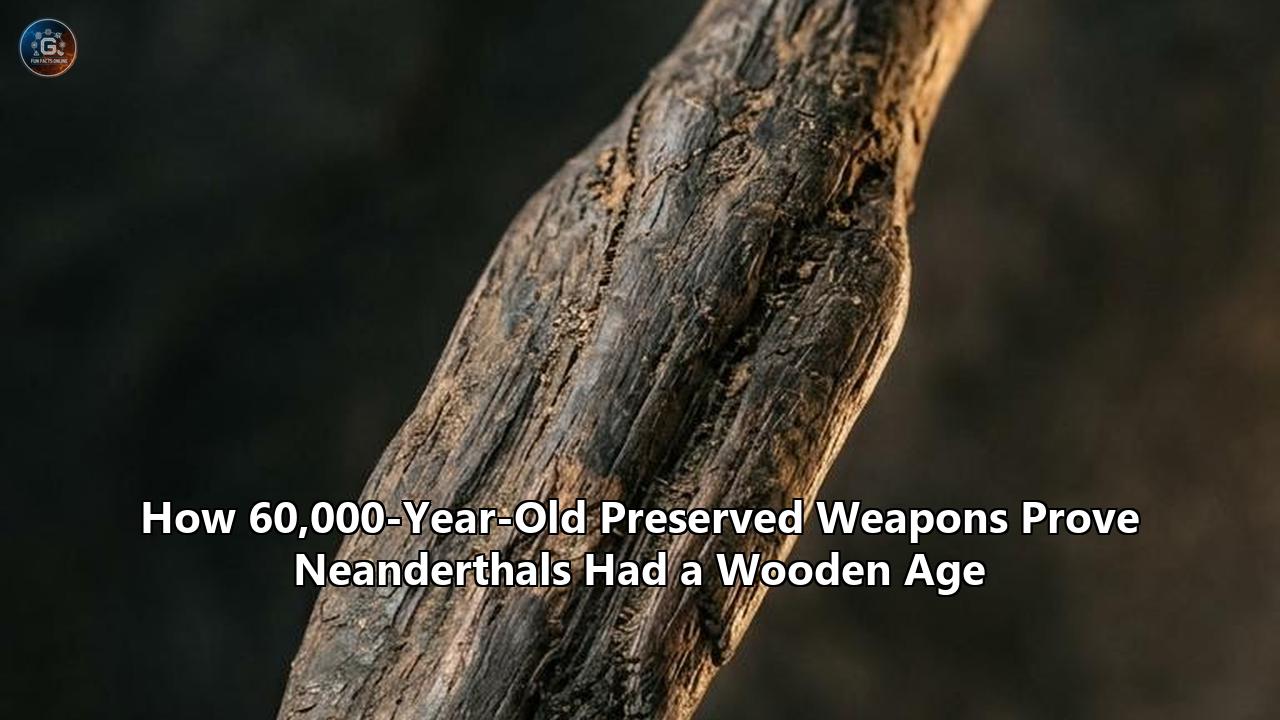
Among these specimens, cataloged across four decades of micro-stratigraphic field seasons, researchers identified thirteen fully shaped functional implements. The focal points of the study are two intact spears recovered from Level R, an archaeological horizon dated securely to approximately 60,000 years ago. The primary weapon—a sculpted timber shaft measuring 2.45 meters (over eight feet) in length—was engineered with an intentionally forward-biased center of gravity and a tapered, reinforced point. It was not a lightweight throwing dart or an opportunistic pointed stick; it was a dedicated close-quarter thrusting lance built to absorb and transfer tremendous physical force into the vital organs of two-ton herbivores.
A second weapon, measuring 1.99 meters, exhibits distinct longitudinal shaving facets and a fire-hardened distal point. Alongside these weapons lay an implement without any known parallel in the Middle Paleolithic record: an intentionally sculpted 30-centimeter wooden club carved with an ergonomic handle, a flared pommel stop, and a biconvex, pointed striking head.
These artifacts provide incontrovertible, empirical proof that Neanderthals possessed an advanced, highly specialized woodworking industry. The discovery establishes that our extinct cousins did not inhabit a world dominated purely by chipped rocks. Instead, they operated within a sophisticated "Wooden Age," where lithic implements functioned largely as subordinate processing tooling—essentially the chisels, planes, and spokeshaves used to fabricate high-performance organic weapons and architecture.
The revelation goes far beyond the headline-grabbing recovery of ancient weaponry. Behind the scenes, the discovery exposes the intense analytical, geochemical, and political struggles within Paleolithic archaeology, challenging the taphonomic biases that have warped our understanding of ancient human cognition for over a century.
+-------------------------------------------------------------------------------+
|                    ABRIC ROMANÍ STRATIGRAPHIC TOOL MATRIX                     |
+---------+--------------------+------------------------------------------------+
| Level   | Chronology (BP)    | Key Wood Artifacts & Technological Attributes  |
+---------+--------------------+------------------------------------------------+
| Level P | ~54,000–56,000     | Carved biconvex club/mace (30 cm);             |
|         |                    | 16 cm contoured handle; Levallois flaking      |
+---------+--------------------+------------------------------------------------+
| Level R | ~60,000            | Primary thrusting spear (2.45 m, tapered tip); |
|         |                    | Secondary spear (1.99 m); hunting fauna beds   |
+---------+--------------------+------------------------------------------------+
| Level J | ~50,000            | Robust digging sticks; hearth-side debarking;  |
|         |                    | Juniper bark containers and shallow trays      |
+---------+--------------------+------------------------------------------------+
| Level O | ~55,000            | Fire-planed digging sticks;                    |
|         |                    | 5.10-meter stripped architectural pole         |
+---------+--------------------+------------------------------------------------+
The Travertine Matrix: How Hydrogeology Outran Microbial Decay
Organic matter deposited during the Pleistocene faces an overwhelming taphonomic enemy: heterotrophic bacteria and saprotrophic fungi. In ordinary terrestrial open-air sites or well-aerated cave earths, the cellulose and lignin that constitute plant cell walls decompose completely within months to years. In acidic sediments, bacterial digestion operates with devastating speed. The survival of wood across tens of millennia requires immediate, persistent biochemical stasis.
At sites like Schöningen in northern Germany, wood survived because it was submerged in waterlogged, anaerobic lacustrine muds that starved decomposers of oxygen. At Poggetti Vecchi in Tuscany, thermal mineral springs saturated decaying trunks with geothermal carbonates and silenced microbial action. But the geological engine preserving the artifacts at Abric Romaní operated through an entirely different physical-chemical mechanism: high-velocity travertine encrustation.
The rock shelter sits against a massive limestone cliff formed by the Capellades aquifer system. Throughout the Late Pleistocene, waters heavily saturated with calcium bicarbonate ($Ca(HCO_3)_2$) cascaded continuously over the rock overhang:
$$Ca(HCO_3)_2 \rightleftharpoons CaCO_3 \downarrow + H_2O + CO_2 \uparrow$$
As the sheet of water plunged into the shelter, the abrupt change in atmospheric pressure, combined with physical aeration and the photosynthetic activity of bryophytes (mosses) clinging to the rock face, triggered the rapid degassing of carbon dioxide ($CO_2$). This shifted the chemical equilibrium, driving the immediate precipitation of solid calcium carbonate ($CaCO_3$) as a porous tufa, or travertine.
When Neanderthal hunting groups abandoned their living floors, hearths, discarded tool blanks, structural timbers, and weapons, the calcifying spring water did not wash the debris away. Instead, it coated the timber in a crystalline limestone jacket. The rate of calcium carbonate precipitation was so rapid that it formed a thick, durable petrographic shell around branches, carved shafts, and tree trunks before the organic interior could undergo significant physical collapse.
When the organic wood fiber inevitably broke down via slow anaerobic decay, the cellulose and lignin rotted away, leaving a structural void entombed within solid rock. The travertine preserved a high-fidelity negative mold. The resolution of this geochemical molding is astonishing: it captures not only the macroscopic contours, curvature, and dimensional mass of the original wood, but also the negative relief of the bark striations, growth rings, cut marks left by stone tools, and even the micro-cellular surface morphology of the plant tissues.
TRAVERTINE FOSSILIZATION SEQUENCE AT ABRIC ROMANÍ

Phase 1: Deposition
Neanderthal campsite active -> Spear discarded on travertine living floor
[ Wood Artifact ] -> Oxygenated open air

Phase 2: Hydrogeochemical Encrustation
Spring cascade: Ca(HCO3)2 -> CO2 degassing -> CaCO3 mineral rind rapidly encases wood
[ Travertine Mineral Rind [ Wood Artifact ] Travertine Mineral Rind ]

Phase 3: Organic Dissolution
Cellulose and lignin decay via anaerobic micro-percolation -> Gas & liquid escape
[ Travertine Mineral Rind [   EMPTY NEGATIVE VOID   ] Travertine Mineral Rind ]

Phase 4: Archaeological Recovery
Hole drilled into rock void -> Injection of dental elastomer / polyurethane cast
[ Travertine Wall [ Flexible Polyurethane Positive Replica ] Travertine Wall ]
The Dental Cast Method: Engineering Positive Replicas from Voids
Extracting data from negative voids locked within brittle travertine requires excavation protocols radically different from standard field techniques. If an excavator strikes a limestone block with a pick or trowel and breaks through a hollow pocket, the fragile internal surface of the travertine mold instantly crumbles into calcitic powder, destroying the negative impression forever.
The IPHES-CERCA team, building upon decades of methodological refinement initiated by veteran prehistorians Eudald Carbonell and Palmira Saladié, approached the travertine deposits as forensic subterranean chambers. Field technicians deployed micro-endoscopes—similar to medical arthroscopes equipped with fiber-optic LED illumination—threaded through natural micro-fissures in the rock to inspect cavities before disturbing the surrounding stratigraphy.
Once a void was confirmed to possess intentional geometric morphology or cylindrical alignment, the team executed an elaborate casting protocol:
- Cavity Evacuation: The void was flushed with low-pressure filtered air and micro-suction tubes to extract residual loose calcite sediment without scouring the interior wall.
- Elastomer Injection: Conservators injected low-viscosity, high-precision industrial elastomers—chiefly dental-grade vinyl polysiloxanes and flexible bi-component polyurethanes—into the cavity under controlled hydro-pneumatic pressure. The low surface tension of these polymers allowed them to infiltrate micro-fissures less than ten microns wide, capturing the microscopic negative relief of flint tool scrape marks.
- Curing and Matrix Dismantling: Following polymer curing, the surrounding travertine was meticulously dismantled using pneumatic micro-chisels and ultrasonic scalpels under stereomicroscopic guidance.
- Digitization: The resulting positive casts were immediately subjected to high-resolution structured-light 3D surface scanning and micro-computed tomography ($\mu$-CT) to generate volumetric digital models with sub-millimeter geometric accuracy.
The resulting casts are not approximations. They are dimensionally exact, three-dimensional physical reproductions of the working surfaces of wooden implements discarded by Neanderthals more than six hundred centuries ago.
Anatomy of the Level R Thrusting Lance
The centerpiece of the recent Science Advances analysis is the 2.45-meter wooden weapon documented in Level R, designated AR-R-Sp1. The weapon was found horizontally embedded within a stratum characterized by intensive Neanderthal hunting and butchery refuse, adjacent to combustion hearths and the articulated skeletal remains of red deer (Cervus elaphus) and wild horse (Equus ferus).
           2.45-METER LEVEL R THRUSTING SPEAR (AR-R-Sp1)
             DISTAL WEIGHTED GEOMETRIC ARCHITECTURE

Tip (Reinforced)    Forward Shaft (Massive)         Midsection            Proximal Shaft (Tapered)
   /=========\=================================\===================\-----------------------\
  <  POINT    |    Diameter: 3.8 - 4.2 cm       |  Diameter: 3.2 cm |  Diameter: 2.1 - 2.4 cm |
   \=========/=================================/===================/-----------------------/
  0 cm      25 cm                             90 cm               170 cm                  245 cm
  [---- Dense Scots Pine Heartwood ----]
  [ Center of Gravity: ~88 cm from Tip ] -------- Balance Point for Two-Handed Thrusting
To understand AR-R-Sp1, one must separate it from the well-known throwing spears recovered from the Middle Pleistocene deposits of Schöningen, Germany. The Schöningen spears—dated to roughly 300,000 years ago and likely produced by Homo heidelbergensis or early proto-Neanderthals—measure between 1.8 and 2.3 meters in length. They were engineered from straight spruce (Picea) saplings, with their maximum diameter and center of mass located strictly in the front third of the shaft, mirroring modern aerodynamic Olympic javelins. Biomechanical flight testing coordinated by University of Reading researcher Annemieke Milks proved the Schöningen spears could be hurled with lethal velocity and accuracy over distances exceeding twenty meters.
AR-R-Sp1 from Abric Romaní exhibits an entirely different aerodynamic and kinetic profile.
- Total Length: 2,450 mm (2.45 meters).
- Maximum Diameter: 42 mm at the anterior third.
- Proximal Diameter: Tapers down smoothly to 22 mm at the butt end.
- Estimated Mass: Between 1.8 and 2.2 kilograms, based on the green wood density of Pinus sylvestris (Scots pine) or Pinus nigra (black pine).
- Center of Gravity: Located approximately 88 centimeters behind the tip.
The physical dimensions preclude this weapon from functioning effectively as a projectile. At over two kilograms, the ballistic drag and parabolic drop of AR-R-Sp1 would severely reduce effective throwing range, making targeting unreliable at distances beyond seven meters.
Instead, every physical metric indicates that AR-R-Sp1 was a dedicated, two-handed close-range thrusting weapon. Its thick anterior cross-section was specifically calculated to prevent structural buckling under extreme longitudinal compressive loads.
When a hunter drives a wooden spear into the flank of a plunging animal, the shaft experiences two catastrophic stresses: axial compression (pushing directly along the length of the shaft) and severe lateral bending moments (caused by the violent flailing of the animal). A thin throwing spear will snap instantly under these transverse shear stresses. The 42-millimeter diameter of AR-R-Sp1 provided the required area moment of inertia:
$$I = \frac{\pi d^4}{64}$$
By doubling the shaft diameter from the 20 millimeters typical of throwing javelins to over 40 millimeters, the Neanderthal craftsman increased the weapon's resistance to structural bending and snapping by a factor of sixteen ($2^4 = 16$).
The second spear recovered from Level R, measuring 1.99 meters, exhibits a more uniform cross-section (approximately 30 millimeters along its preserved length) and a finely carved point that shows distinct step-wise longitudinal planing facets. These facets demonstrate that Neanderthals used stone scrapers not with random abrasive strokes, but via deliberate, sustained axial passes, stripping the sapwood away to leave the dense, structurally rigid heartwood as the penetrating core.
Biomechanics and Megafaunal Impact Physics
The architectural design of Neanderthal wooden weapons reflects a deep evolutionary synergy with the physical morphology of the hominins who wielded them. Neanderthals were hyper-robust, cold-adapted hominins characterized by broad pectoral girdles, heavily muscled torsos, and thick, curved limb bones. Their skeletal architecture supported significantly more muscular mass than that of modern humans.
       MOMENTUM TRANSFER COMPARISON AT IMPACT

===================================================================
Weapon Type          Mass (kg)   Velocity (m/s)  Momentum (kg·m/s)
-------------------------------------------------------------------
Light Javelin (Thrown)   0.4          24.0              9.6
Heavy Spear (Thrown)     0.8          18.0             14.4
AR-R-Sp1 Thrusting Lance 2.1          6.5*            13.65 (Arm Only)
AR-R-Sp1 Full Body Drive 2.1          6.5 + Body Mass 180.0+ (Full Drive)**
===================================================================
*Impact velocity derived from coordinated muscular thrust rather than ballistic flight.
**Includes kinematic linkage of Neanderthal body mass (~80 kg) driven forward behind the shaft.
In forensic wound ballistics, penetration through biological tissues depends on two variables: kinetic energy ($KE = \frac{1}{2}mv^2$) and momentum ($p = mv$). While kinetic energy dictates the extent of hydraulic shock and temporary tissue cavity formation, momentum determines actual penetration depth through dense muscular structures, thick hide, and cartilage.
When confronting formidable Middle Paleolithic fauna, momentum is paramount. Level R at Abric Romaní is dominated by the remains of Equus ferus (wild horse), Cervus elaphus (red deer), and occasional remains of Stephanorhinus hemitoechus (the steppe rhinoceros). The hide of an adult steppe rhinoceros or a large aurochs (Bos primigenius) is between 15 and 35 millimeters thick, composed of dense, cross-linked collagen bundles capable of absorbing and dispersing the kinetic energy of a light thrown projectile without catastrophic organ puncture.
To breach this dermal armor and drive a spear into the thoracic cavity to puncture the heart or lacerate the dorsal aorta, a hunter must deliver sustained, directed mechanical momentum. By grasping AR-R-Sp1 with both hands—anchored against the pectoral muscles and driven by the forward momentum of the hominin's entire 80-kilogram body weight—the weapon achieved a continuous kinematic drive that no thrown projectile could replicate.
Microscopic analysis of the distal tip of AR-R-Sp1 reveals no lithic point hafted to its end. It was an all-wooden lance (what French archaeologists term an épieu), carved directly from the trunk of a slow-growing pine sapling. The point was whittled to a tapered, acute angle rather than an ultra-sharp needle. Modern ballistic experiments indicate that needle-like wooden tips shatter upon striking cortical bone, whereas a slightly obtuse, conical wooden tip deflects off ribs, wedging between skeletal elements and plunging directly into the thoracic cavity.
The Level P Club: An Unprecedented Hunting and Combat Implement
While the Level R spears refine our understanding of known hunting technologies, Level P (dated to approximately 55,000 years ago) yielded an artifact that startled the archaeological community: a completely unique, intentionally sculpted wooden club.
                 THE LEVEL P SCULPTED CLUB / MACE
                    TOTAL LENGTH: 30.2 CENTIMETERS

  Proximal Pommel     Ergonomic Handle               Distal Striking Head
     |-----|       |----------------------|       |-------------------------|
     /-----\=======/----------------------\=======/-------------------------\
    (  STOP )     |  Diameter: 2.8-3.1 cm  |     |  Biconvex / Asymmetric    |
     \-----/=======\----------------------/=======\           Pointed Tip   /
                                                   \-----------------------/
     0 cm          4 cm                   16 cm   18 cm                   30.2 cm
     [ Pommel ]    [ Contoured Hand Grip ]         [ Dense Concentrated Mass ]
The object, designated AR-P-Wb1, measures 30.2 centimeters in length. It was carved from a single piece of dense, compact wood displaying straight, tight growth rings. The macro-morphology of the implement is divided into three distinct operational zones:
- The Flared Proximal Pommel: The base of the handle flares abruptly outward, creating a pronounced lip or pommel. In modern ergonomic engineering and ethnographic weapons studies, a flared terminal pommel prevents the implement from slipping out of the user's hand during high-velocity rotational swings or when the weapon becomes wet with perspiration or blood.
- The Contoured Handle: Spanning 16 centimeters, the cylindrical shaft of the handle averages 28 to 31 millimeters in diameter—an optimal human grip dimension, allowing the fingers to wrap fully around the circumference for maximum grip strength.
- The Distal Head: At the 16-centimeter mark, the shaft undergoes an abrupt 90-degree geometrical shift, swelling outward into an asymmetric, biconvex striking head that terminates in a robust point.
This sudden transition from an axial handle to an expanded head requires significant woodworking skill. An artisan cannot simply scrape a straight branch; they must either locate a natural branch-to-trunk junction (leveraging the high-density wood fiber that forms at anatomical branch collars) or laboriously cut, scrape, and plane down a much thicker block of raw timber to reveal the offset form.
Microscopic traceological inspection conducted by the IPHES-CERCA team revealed clusters of deep, parallel longitudinal striations along the handle and lateral faces of the striking head. These are the distinct physical traces of retouched stone flakes—likely denticulates and side-scrapers (racloirs)—used to shave away the excess wood fibers.
The structural mechanics of AR-P-Wb1 mimic the mass distribution of ethnographic throwing and striking clubs, such as the waddy or kulla used by Indigenous Australian hunters, or the rungu of East Africa. By shifting the bulk of the weapon's physical mass to the distal striking tip, the maker maximized the rotational moment of inertia ($I = mr^2$). When swung through an arc, the kinetic energy of the swing concentrates entirely at the pointed edge of the head.
The purpose of such an implement in the Neanderthal toolkit spans two primary domains:
- Dispatching Trapped or Injured Game: A close-range thrusting spear inflicts lethal hemorrhage, but an animal may thrash for minutes. A concentrated blow to the cranium from a dense wooden club delivers immediate kinetic shock to the central nervous system, dispatching the prey while conserving the integrity of the fragile spear point.
- Intra- and Inter-Group Conflict: The Middle Paleolithic archaeological record contains unambiguous evidence of interpersonal violence among Neanderthals. The classic skull of St. Césaire 1 exhibits a healed cranial fracture inflicted by a bladed or pointed weapon; the Shanidar 1 individual suffered devastating trauma to the cranium and facial bones; and the Krapina remains preserve multiple blunt-force depression fractures. AR-P-Wb1 represents the physical realization of the kind of bludgeon capable of inflicting these exact skeletal trauma patterns.
No other implement matching this morphology has ever been recovered from a Middle Paleolithic site in Eurasia. It is an unprecedented functional category in Neanderthal material culture.
The Paleolithic Wood Age: Regional Evidence
To comprehend how the Abric Romaní discoveries fundamentally alter Paleolithic archaeology, the Spanish artifacts must be placed within a broader, emerging European and African geographic continuum. Wood preservation is rare, but where unique geological conditions halt microbial decay, the Middle Paleolithic record consistently reveals sophisticated woodworking traditions.
       DEEP-TIME TIMELINE OF EARLY WOODWORKING SITES

Kalambo Falls (Zambia)        ~476,000 BP | Earliest structural joined wood
Clacton-on-Sea (UK)           ~400,000 BP | Yew spear tip; early Homo
Schöningen 13 II-4 (Germany)  ~300,000 BP | Aerodynamic throwing spears & throwing sticks
Poggetti Vecchi (Italy)       ~171,000 BP | Fire-hardened boxwood digging sticks
Lehringen (Germany)           ~125,000 BP | Yew lance inside straight-tusked elephant
Aranbaltza III (Spain)        ~90,000 BP  | Yew digging stick with fire-planed tip
Abric Romaní (Spain)          ~60,000 BP  | Heavy thrusting spears, club, structural poles
Schöningen 13 II-4 (Germany, ~300,000 BP)
Discovered in an open-cast lignite mine near Hannover, Schöningen preserves the world's most famous early wooden tool assemblage. A team re-evaluating the site under Dirk Leder and Thomas Terberger recently published a comprehensive inventory of 187 wooden specimens. Beyond the iconic throwing spears, Schöningen yielded double-pointed throwing sticks (used to target waterbirds and small game), bark-stripping tools, and 35 pointed and rounded split-wood implements used for hide scraping and plant processing. The toolmakers selected slow-growing spruce saplings, stripping the bark and centering the tip directly on the dense pith to ensure aerodynamic stability.
Poggetti Vecchi (Grosseto, Italy, ~171,000 BP)
Excavated by Biancamaria Aranguren and colleagues, this open-air site revealed wooden implements trapped alongside the carcasses of straight-tusked elephants (Palaeoloxodon antiquus) in thermal spring muds. The Neanderthals here chose an exceptionally dense, hard wood: Buxus sempervirens (boxwood). The tools recovered are digging sticks, measuring just under a meter in length and less than four centimeters in diameter. Poggetti Vecchi provided the earliest definitive chemical and traceological evidence of Neanderthals using fire as an active processing technique to char the surface of wood, making it easier to scrape away excess material with stone flakes.
Lehringen (Lower Saxony, Germany, ~125,000 BP)
Found in 1948, the Lehringen spear remains one of archaeology's most famous single associations: an intact 2.4-meter yew (Taxus baccata) spear discovered directly between the ribs of an extinct straight-tusked elephant. The weapon was accompanied by twenty-five flint flakes attributed to the Mousterian industry. The tip was fire-hardened, and the body of the spear was sculpted from an off-center yew branch, exploiting the inherent flexural strength of yew heartwood.
Aranbaltza III (Basque Country, Spain, ~90,000 BP)
In 2018, an excavation team led by Joseba Rios-Garaizar recovered a 15-centimeter yew wood digging stick fragment preserved in waterlogged estuarine clays. Luminescence dating placed the artifact at roughly 90,000 years ago. Micro-CT scanning revealed complex mechanical shaping: the tip had been repeatedly charred over a fire, scraped down with a chert tool, and polished smooth through heavy mechanical friction—almost certainly the harvesting of subterranean tubers, roots, and bulbs.
The 597 specimens from Abric Romaní do not represent an isolated technological anomaly; they are the most stratigraphically continuous expression of a pan-European technical lineage that persisted for hundreds of thousands of years.
Pyrotechnology and Material Science: The Chemistry of Woodworking
Wood is not a uniform raw material; it is a complex, anisotropic natural composite composed of cellulose microfibrils embedded in an amorphous matrix of hemicellulose and lignin. Working green timber using chipped stone flakes presents formidable physical obstacles. Green wood tears, splinters, and adheres to the cutting edges of stone tools.
To overcome these physical limitations, Neanderthals developed a sophisticated pyrotechnological process that manipulated the chemical composition of raw wood.
       THERMAL TRANSFORMATION OF WOOD FIBERS

Temperature Range    Chemical Reaction              Mechanical Effect
-------------------------------------------------------------------------------------
100°C - 150°C        Free and bound water evaporates Wood dries; shrinkage occurs
150°C - 200°C        Hemicellulose softening        Wood becomes temporarily plastic;
                                                    enables steam-bending and straightening
200°C - 260°C        Hemicellulose degradation      Fiber bonds weaken; surface chars,
                                                    making it brittle and easily scraped
260°C - 315°C        Early lignin and cellulose     Complete surface carbonization;
                     pyrolysis                      core remains structurally sound
> 315°C              Uncontrolled combustion        Catastrophic structural failure
At Poggetti Vecchi, analytical chemistry demonstrated that Neanderthals practiced controlled surface torrefaction. By passing green boxwood branches through the reducing zone of a hearth at temperatures between 200°C and 250°C, the woodworkers induced thermal decomposition of the hemicellulose. This selective heating accomplished two vital engineering goals:
- Facilitated Planing: The charred outer layer became friable and brittle. Instead of fighting the high tensile resistance of fresh green wood fibers, the Neanderthal could easily scrape away the carbonized layers using a simple retouched flint flake, shaving the shaft down to its exact intended dimensions with minimal tool wear.
- Case-Hardening: When carefully regulated, thermal treatment drives out bound moisture and polymerizes the surface lignins, creating a hardened, hydrophobic outer shell that resists impact blunting and moisture-induced rot without making the inner core brittle.
At Abric Romaní, the traceological picture shows both continuity and divergence. Many of the 597 wooden artifacts—including the digging sticks from Levels J and O—exhibit surface burning. However, lead researcher Palmira Saladié and geoarchaeologist Josep Vallverdú have pointed out a crucial analytical distinction: while some artifacts were clearly fire-planed during production, other pieces acquired their charred surfaces post-depositionally.
Because Abric Romaní was a high-density, repeatedly occupied living site featuring dozens of overlapping hearths, discarded spears, wooden trays, and structural posts were frequently exposed to domestic fires ignited by subsequent Neanderthal occupations. Distinguishing intentional pyro-engineering from incidental taphonomic burning requires scanning electron microscopy (SEM) to inspect whether scrape marks cut through the charred zone (proving fire-assisted shaping) or whether the charring overlays pre-existing lithic striations (indicating post-discard exposure).
The Domestic Toolkit: Containers, Digging Sticks, and Architecture
The media coverage of Abric Romaní has focused almost exclusively on the spears and the Level P club. This is an understandable journalistic bias; hunting weapons and combat implements are dramatic. Yet from an anthropological perspective, the most transformative data in the Science Advances study resides in the domestic artifacts.
                     ABRIC ROMANÍ LEVEL J BARK TRAY
                     FABRICATED FROM JUNIPERUS BARK

    /------------------------------------------------------------\
   /   Concave Upper Surface: Micro-Traces of Organic Scraping     \
  |    Length: 52 cm | Width: 21 cm | Thickness: 1.2 cm            |
   \   Thermal Treatment on Exterior: Flattened Under Hot Ash      /
    \------------------------------------------------------------/
Bark Containers and Gathering Trays
Within Level J, researchers recovered four distinct rectangular, flattened pieces of tree bark ranging from 30 to 55 centimeters in length. Taxonomic identification revealed these specimens were peeled from juniper (Juniperus) trunks. Juniper bark possesses unique physical characteristics: it is fibrous, highly flexible, naturally antiseptic, and resistant to fungal degradation.
The inner faces of these bark segments were scraped clean of secondary phloem, while the outer surfaces were lightly charred and flattened. The edges were clearly cut and trimmed using flint knives. These artifacts served as portable containers: shallow bowls or trays used to collect and transport foraged foods, carry fuel to hearths, or process wild plant tissues.
For over a century, prehistorians argued that containers—crucial for resource mobilization and economic planning—were an exclusive innovation of Upper Paleolithic Homo sapiens. The Abric Romaní bark trays prove that Neanderthals utilized dedicated organic vessel technology at least 50,000 years ago.
The Underground Economy: Heavy Digging Sticks
In Levels J and O, excavators recovered robust wooden implements with beveled, highly polished working tips. These are digging sticks, measuring between 35 and 45 millimeters in diameter—considerably thicker and more massive than the slender boxwood implements from Poggetti Vecchi.
These implements represent the caloric engine of Neanderthal daily survival. While big-game hunting provided essential proteins and lipids, nutritional modeling confirms that Neanderthals could not survive on lean meat alone without suffering protein toxicity (rabbit starvation). They required massive, steady inputs of dietary carbohydrates.
The Mediterranean scrublands surrounding Capellades were rich in geophytes: plants with underground storage organs (USOs) such as Asphodelus, wild carrot (Daucus carota), and starch-dense thistle roots (Cirsium). Breaching the sun-baked, rocky Mediterranean soils to pry these tubers from depths of thirty centimeters requires rigid, high-strength wooden levers. The Abric Romaní digging sticks show the classic micro-polish, grain blunting, and scratch marks caused by continuous, heavy-duty levering in sediment containing abrasive quartz granules.
Architecture in the Rock Shelter
Neanderthals did not live haphazardly across the stone floor of Abric Romaní. The spatial analysis of the travertine layers reveals sophisticated domestic spatial patterning.
In Level O, archaeologists recovered the travertine mold of an intact pine trunk measuring 5.10 meters (nearly seventeen feet) in length. Every single lateral branch along this trunk had been deliberately lopped off using heavy flint choppers or handaxes. The trunk was positioned diagonally against the rock overhang, anchored at its base by a deliberate cluster of heavy limestone blocks.
This 5.10-meter timber was a load-bearing architectural ridgepole. It formed the primary support spine for a massive, lean-to windbreak or shelter erected inside the rock overhang to shield the living floor from freezing winds blowing down the Anoia River canyon.
Nearby, researchers identified sets of crossed, carbonized sticks arranged directly above hearth features. These were not fallen fuel branches; their symmetrical, interlocking geometry indicates they were tripods or smoking racks erected directly over the embers to smoke meats or dry damp hide strips.
The interior of Abric Romaní was not a bare, primitive cave. It was an organized, built environment framed with tailored timber, complete with domestic work stations, specialized sleeping platforms, meat-smoking scaffolds, and designated refuse disposal areas.
The Lithic Hegemony: Why Archaeology Missed the Wood Age
The profound shock that has greeted the Abric Romaní publications raises a crucial historical and epistemological question: Why did it take archaeology until the mid-2020s to formally acknowledge that Neanderthals lived in a Wood Age?
The answer lies in the intellectual history of Paleolithic archaeology and an inescapable preservation filter known as taphonomic bias.
THE REALITY RATIO OF PREHISTORIC MATERIAL CULTURE
(Based on Comparative Ethnography vs. Paleolithic Survival)

TYPICAL HUNTER-GATHERER TOOLKIT:
+-------------------------------------------------------------+
| WOOD, BARK, CORDAGE, RESIN, ANIMAL FIBER (85 - 95%)         | | STONE (5-15%) |
+-------------------------------------------------------------+ +---------------+
                       |                                               |
                       v                                               v
             TAPHONOMIC FILTER                              TAPHONOMIC FILTER
       (Bacteria, Oxygen, Fungi)                       (Impervious to Biological Decay)
                       |                                               |
                       v                                               v
SURVIVES AT 99.9% OF SITES:                             SURVIVES AT 100% OF SITES:
               [ 0% ]                                              [ 100% ]
                       \                                               /
                        \                                             /
                         v                                           v
               THE ARCHAEOLOGIST'S DISTORTED CONCLUSION (1860–2020):
                  "These ancient people had a 'Stone Age' culture."
In 1836, Danish antiquarian Christian Jürgensen Thomsen created the Three-Age System: Stone, Bronze, and Iron. Thomsen's classification was not an objective reflection of how prehistoric humans lived; it was an artifact of European museum taxonomy. Bronze and iron survive well; stone survives indefinitely; wood rots. Consequently, the earliest phase of human existence was branded the "Stone Age."
For the next 150 years, prehistorians focused obsessively on flint. The great French typologists of the mid-twentieth century, led by François Bordes, developed elaborate classification systems cataloging dozens of distinct Mousterian stone flake types: convergent scrapers, transverse scrapers, limaces, denticulates, and Levallois points.
This sparked the famous Bordes-Binford debate of the 1960s and 70s. Bordes argued that varying frequencies of these stone tool types represented distinct Neanderthal cultural tribes wandering Europe. Lewis Binford countered that the differing assemblages represented varying functional tasks carried out in different seasons.
Both sides of the debate were missing the foundational truth: the stone flakes they were arguing over were not the primary tools. They were merely the tools used to make the actual tools.
Modern use-wear analysis and high-resolution residue extraction have conclusively proven this dynamic. When microscopic edge-wear on Mousterian flint scrapers, denticulates, and notches from across Europe is analyzed, the single most dominant microscopic polish is not bone butchery, and it is not hide processing. It is wood polish.
Neanderthals were not knapping flint to carry around a stone-dominated material world. They were knapping flint because a fresh stone edge is the sharpest, most effective razor for felling saplings, debarking branches, carving hardwood shafts, and planing wooden lances. The entire lithic industry of the Middle Paleolithic was fundamentally an auxiliary support technology designed to sustain a pervasive, master-craft organic industry built on wood.
By mistaking the stone chisel for the finished monument, prehistorians spent more than a century projecting an illusion of technological simplicity onto an extinct human species whose true material mastery rotted away thousands of years ago.
Operational Planning and the Neanderthal Mind
Beyond the physical artifacts, the woodworking evidence from Abric Romaní provides a direct window into the cognitive architecture of the Neanderthal brain.
In cognitive archaeology, researchers trace the mental complexity of an ancient species through its chaîne opératoire—the operational sequence of intentional, multi-step actions required to conceptualize, source, manufacture, utilize, maintain, and discard a technological implement.
OPERATIONAL SEQUENCE (CHAÎNE OPÉRATOIRE) OF A THRUSTING SPEAR

Step 1: Environmental Scouting
Locate dense, slow-growing Scots pine stand -> Identify straight, un-knotty 3m sapling
       |
Step 2: Raw Material Extraction
Fell sapling using heavy stone chopper / split wedge -> Avoid core fracture
       |
Step 3: Preliminary Debarking & Delimbing
Strip fibrous bark while green -> Remove side nodes with flint scraper
       |
Step 4: Pyrotechnological Straightening
Pass green timber through hearth coals (150-200°C) -> Steam-bend curvature out
       |
Step 5: Longitudinal Planing & Mass Calibration
Execute hundreds of axial flint strokes -> Form 42mm anterior mass; taper 22mm butt
       |
Step 6: Distal Tip Architecture
Whittle acute, reinforced conical point -> Center tip on dense heartwood
       |
Step 7: Curing & Thermal Stabilization
Slow smoke/desiccate over domestic fire -> Prevent moisture absorption and warping
       |
Step 8: Deployment & High-Impact Maintenance
Active hunting of megafauna -> Re-point tip following impact blunting
Producing a 2.45-meter close-quarter thrusting lance from Scots pine is not an expedient, opportunistic behavior. It requires extensive working memory, forward planning across expansive geographic and temporal scales, and complex mental template modeling:
- Species-Specific Silvicultural Knowledge: You cannot make a spear from just any tree. Willow or birch is too soft, weak, and brittle; oak is excessively heavy and prone to splintering along coarse grain lines. Scots pine (Pinus sylvestris) and black pine (Pinus nigra) offer the ideal biological compromise: high modulus of rupture (flexural strength), low volumetric shrinkage, and straight, parallel cellulose fibers. The Neanderthals of Abric Romaní knew precisely which botanical species to harvest, traveling into specific altitudinal zones of the Mediterranean foothills to harvest select saplings.
- Delayed Gratification and Multi-Day Curing: Green wood contains significant cellular water. If a woodworker shapes a green spear and immediately leaves it to dry in the sun, the rapid evaporation of moisture creates internal tensile stress, causing the shaft to check, twist, and warp into uselessness. Crafting a functional lance requires a staged, multi-day manufacturing schedule: harvesting, preliminary debarking, slow domestic curing in a moisture-controlled shelter, followed by careful finishing.
- Geometric Mental Templates: Carving the Level P club requires the artisan to visualize a complex, asymmetric three-dimensional form hidden entirely inside an unshaped log. The maker must subtract material along precise spatial vectors, leaving an offset striking head, a calibrated 90-degree transition, and a contoured pommel. This is identical to the spatial-cognitive processing deployed by Upper Paleolithic sculpture carvers.
This operational chain shatters the long-outdated stereotype of Neanderthals as creatures of immediate, reactive instinct who lived hand-to-mouth in intellectual squalor. They possessed deep botanical expertise, sophisticated spatial engineering capabilities, and high-fidelity cultural traditions that were transmitted down across hundreds of human generations.
Future Travertine Horizons and Analytical Frontiers
The 2026 publication of the Abric Romaní assemblage is not the end of this analytical shift; it is the opening salvo of a sweeping reassessment of Pleistocene archaeological sites across the globe.
Field teams and geoarchaeologists are now systematically re-evaluating Mediterranean karst systems and European spring basins. Travertine and tufa sites, previously treated as difficult, rock-breaking excavations where organic material was assumed to have vanished, are now recognized as prime micro-preservation reservoirs. Advanced technological suites are already transforming how these sites are investigated:
- High-Resolution Micro-CT and Synchrotron Scanning: Instead of physically casting voids with polymers, researchers are moving toward in-situ non-destructive volumetric imaging. High-flux mobile synchrotron beams and ultra-high-resolution field CT scanners will soon scan intact travertine slabs, generating sub-micron digital volumes of the empty voids directly. This eliminates the risk of mechanical damage associated with injecting physical elastomers.
- Paleoproteomic Matrix Residue Extraction: Even where ancient wood has decomposed to leave an empty cavity, organic molecules frequently adhere to the mineral walls of the travertine mold. Biochemists are applying Liquid Chromatography-Tandem Mass Spectrometry (LC-MS/MS) to extract trace organic residues from the calcium carbonate interface. This technique can identify:
Species-specific plant proteins and wood resins, confirming the exact botanical taxa.
Ancient animal blood proteins bound to spear tips, revealing the specific species hunted by an individual weapon.
* Animal collagen and plant-based pitch adhesives used to attach bindings or haft stone tools.
- Environmental DNA (eDNA) from Calcite Cavities: Water bubbling through travertine deposits traps ambient genetic material. Paleogeneticists are attempting to extract ancient hominin and faunal eDNA directly from the inner surface of these sealed, subterranean wooden molds, potentially matching specific wooden artifacts to the genetic profile and sex of the individual Neanderthal who gripped the handle.
The discovery at Abric Romaní has decisively altered the baseline of prehistoric anthropology. The long-held vision of our evolutionary cousins as crude stone-knappers clinging to survival in frozen tundras is gone. In its place stands a complex, intellectually capable human lineage that mastered forest ecology, engineered dedicated mechanical weaponry, and built a rich, dynamic material culture out of the organic fabric of the ancient European wilderness.
As future field seasons penetrate deeper into the travertine depths of Catalonia and across the limestone gorges of the Mediterranean, the true history of the Paleolithic is finally emerging: not an age carved merely out of stone, but a long, complex, and brilliant epoch forged in wood.
Reference:
- https://archaeologymag.com/2026/10/neanderthal-woodworking-was-more-advanced/
- https://phys.org/visualstories/2026-10-rare-wooden-tools-reveal-neanderthals.amp
- https://deephistory.substack.com/p/the-wood-age-how-neanderthal-carpentry
- https://greekreporter.com/2026/10/09/neanderthal-wooden-weapons-lost-side-prehistoric-technology/
- https://www.anthropology.net/p/neanderthal-woodworking-13-artifacts
- https://ground.news/article/in-spain-the-remains-of-neanderthal-truncheons-and-copies-were-found
- https://www.thebrighterside.news/post/spanish-rock-shelter-preserves-rare-evidence-of-neanderthal-woodworking/
- https://gizmodo.com/a-wooden-club-and-other-rare-finds-reveal-invisible-side-of-neanderthal-life-2000822875
- https://www.facebook.com/100091816783249/posts/-wood-almost-never-survives-60000-years-so-neanderthal-woodworking-was-a-blind-s/1059791537091396/
- https://talkwithtech.com/neanderthal-wooden-tools-spain-preserved/
- https://www.reddit.com/r/Anthropology/comments/1x0oknv/neanderthal_woodworking_was_far_more_advanced/
- https://pmc.ncbi.nlm.nih.gov/articles/PMC11009636/
- https://www.ancient-origins.net/news-history-archaeology/neanderthal-woodworking-00103244
- https://thedebrief.org/rare-60000-year-old-discovery-reveals-a-hidden-dimension-of-neanderthal-technology/