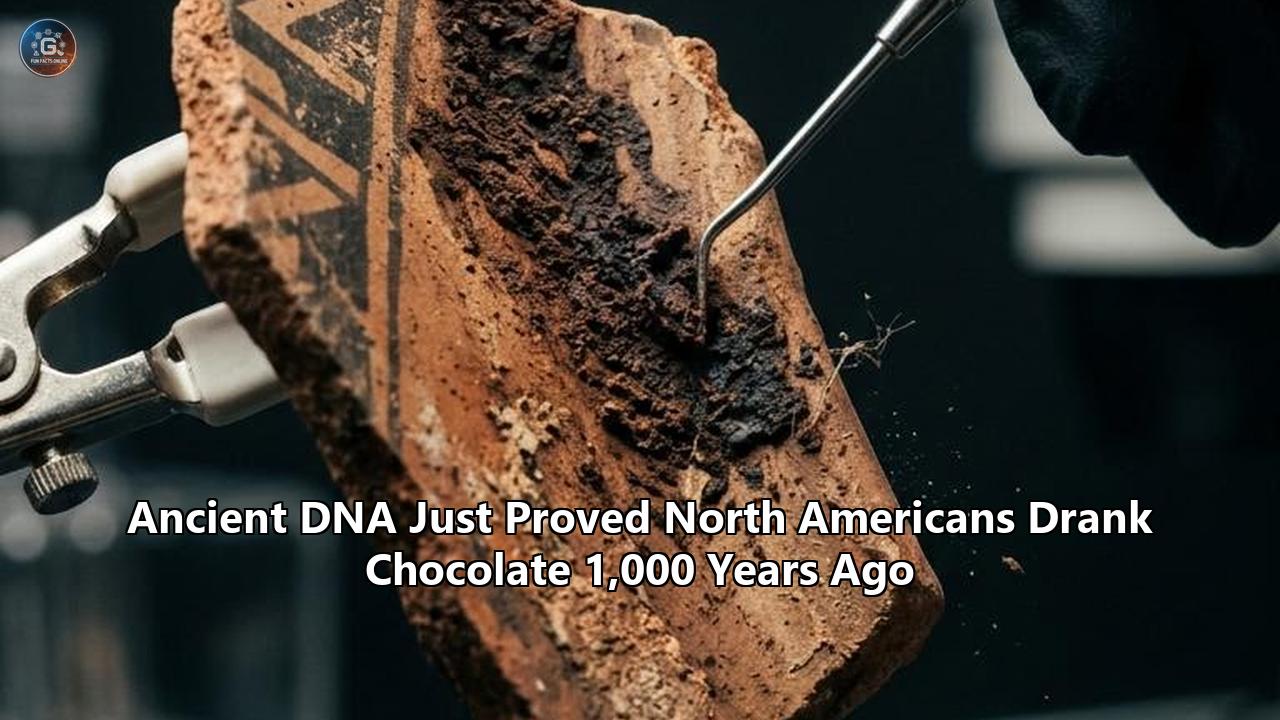
Archaeologists and paleogenomicists have confirmed the presence of ancient Theobroma cacao DNA inside 900-year-old pottery fragments from the Etowah Indian Mounds in northwestern Georgia. The study, published in PLOS One by an international team led by Dr. Adam King of the University of South Carolina and Dr. Claire Lanaud of the French agricultural research agency CIRAD, delivers the first indisputable genetic evidence that chocolate was imported, prepared, and consumed within the Mississippian civilizations of eastern North America during the 11th and 12th centuries.
For decades, scholars debated whether pre-Columbian societies east of the Mississippi River had access to Mesoamerican cacao or relied strictly on native caffeinated flora. Because previous chemical tests could not cleanly distinguish between cacao residues and local botanical stimulants, the question remained deadlocked. By extracting and sequencing authentic, degraded plant DNA directly from porous ceramic matrixes, the researchers bypassed the chemical ambiguities that plagued earlier residue studies.
The identification of tropical cacao at Etowah—a site situated thousands of kilometers north of the plant's ecological range—proves that complex, continent-spanning exchange corridors linked Indigenous communities across North America centuries before European contact. Beyond the immediate culinary revelation, this discovery serves as a case study in how paleogenomics is dismantling long-held assumptions about Indigenous isolation, refining the methods of biomolecular archaeology, and illuminating the socio-political role of exotic goods in early statecraft.
                     +-------------------------------------------------------+
                     |           THE PRE-COLUMBIAN CACAO MOSAIC              |
                     +-------------------------------------------------------+
                                                 |
         +---------------------------------------+---------------------------------------+
         |                                       |                                       |
+---------------------------------+   +---------------------------------+   +---------------------------------+
|   ORIGINS: UPPER AMAZON         |   |  MESOAMERICAN ADAPTATION        |   |  NORTHERN DISPERSAL CORRIDORS   |
|   ~3300 BCE                     |   |  ~1900 BCE                      |   |  ~900 - 1150 CE                 |
|   Early domestication &         |   |  Sacred frothy brews, elite     |   |  Long-distance transfer routes  |
|   cultivar diversification      |   |  ritual status, cacao currency  |   |  into Southwest & Southeast     |
+---------------------------------+   +---------------------------------+   +---------------------------------+
                                                                                             |
                                                     +---------------------------------------+---------------------------------------+
                                                     |                                                                               |
                                      +---------------------------------------------+                                 +---------------------------------------------+
                                      |     AMERICAN SOUTHWEST (CHACO CANYON)       |                                 |     MISSISSIPPIAN WOODLANDS (ETOWAH)        |
                                      |     Cylinder Jars at Pueblo Bonito          |                                 |     Complicated Stamped Feasting Vessels    |
                                      |     Biomarker (theobromine) confirmation    |                                 |     Definitive archaeogenomic identification|
                                      +---------------------------------------------+                                 +---------------------------------------------+
The Etowah Feasting Horizon: Archaeological Provenance and Context
The genetic samples were extracted from pottery sherds excavated from the Etowah site, a 54-acre monumental center located along the Etowah River in Bartow County, Georgia. While Etowah reached its demographic and political apogee in the 14th century, the ceramic sherds analyzed in this study date to a substantially earlier period: the late 11th to early 12th century (approximately 1000–1150 CE).
During this initial developmental phase, the inhabitants of Etowah initiated the construction of the site’s primary earthen platform mounds. To obtain the vast quantities of fill dirt required for these monuments, laborers excavated expansive borrow pits between what are now designated as Mounds A and B. Once the sediment was extracted, these deep pits were rapidly backfilled with dense concentrations of cultural refuse: charred botanical remains, butchered animal bones, and hundreds of intentionally broken ceramic vessels.
The pottery analyzed by King and his colleagues belongs to the Etowah Complicated Stamped ceramic tradition—specifically, open flaring-rim jars stamped with intricate curvilinear paddle designs. These vessels were not domestic storage cookware; their stratigraphic context and associated faunal assemblages identify them as the material remnants of large-scale, communal feasting events staged during the construction of the site's first monumental earthworks.
+------------------------------------------------------------------------------------------------------------+
|                                    ETOWAH SAMPLE CONTEXT AT A GLANCE                                       |
+-----------------------------------+------------------------------------------------------------------------+
| Archaeological Site               | Etowah Indian Mounds (9BR1), Bartow County, Georgia                    |
+-----------------------------------+------------------------------------------------------------------------+
| Cultural Period                   | Early Mississippian Period (Etowah I/II Phases)                        |
+-----------------------------------+------------------------------------------------------------------------+
| Chronological Range               | c. 1000–1150 CE (Radiocarbon and ceramic seriation)                    |
+-----------------------------------+------------------------------------------------------------------------+
| Provenance Context                | Sub-mound feasting borrow pits (Mounds A/B complex)                    |
+-----------------------------------+------------------------------------------------------------------------+
| Ceramic Typology                  | Etowah Complicated Stamped flaring-rim jars                            |
+-----------------------------------+------------------------------------------------------------------------+
| Initial Excavation Campaign       | 1954–1957 (Led by Arthur R. Kelly, University of Georgia)              |
+-----------------------------------+------------------------------------------------------------------------+
| Target Plant Taxon                | *Theobroma cacao* (Malvaceae family)                                  |
+-----------------------------------+------------------------------------------------------------------------+
| Diagnostic Biomolecular Evidence  | Ancient DNA fragments (~84 bp mean length) + characteristic deamination|
+-----------------------------------+------------------------------------------------------------------------+
Originally recovered during mid-20th-century excavations led by archaeologist Arthur R. Kelly between 1954 and 1957, the sherds spent decades in museum curation at the University of Georgia’s Laboratory of Archaeology. In 2013, researchers scraped micro-samples of the carbonized interior residues preserved within the ceramic pores, subjecting them first to mass spectrometry and later to targeted paleogenomic extraction.
The discovery that these 11th-century vessels held cacao reveals that the drink was integrated directly into the ceremonial feasting that accompanied the birth of monumental Mississippian architecture. Cacao was not an incidental luxury imported during Etowah’s mature political era; rather, it was present at the foundational moments of its socio-political centralization.
The Methodological Pivot: From Chromatography to Archaeogenomics
To grasp why this genetic identification resolves an intense archaeological dispute, one must examine the limitations of organic residue chemistry. For the past fifteen years, the biomolecular identification of cacao in ancient North American pottery relied almost exclusively on high-performance liquid chromatography coupled with mass spectrometry (HPLC-MS).
                               +--------------------------------------------+
                               |     ORGANIC RESIDUE ANALYSIS METHODS       |
                               +--------------------------------------------+
                                                     |
                    +--------------------------------+--------------------------------+
                    |                                                                 |
+----------------------------------------+                       +----------------------------------------+
|    LIQUID CHROMATOGRAPHY (LC-MS)       |                       |        ARCHAEOGENOMICS (aDNA)          |
+----------------------------------------+                       +----------------------------------------+
| * Measures chemical metabolites        |                       | * Sequences species-specific plant DNA |
| * Targets theobromine, caffeine        |                       | * Employs clean-lab extraction         |
| * Ambiguity: *Ilex* vs. *Theobroma*    |                       | * Verifies ancient deamination damage  |
| * Vulnerable to environmental decay    |                       | * Conclusive taxonomic identification  |
+----------------------------------------+                       +----------------------------------------+
The Biomarker Impasse and the Yaupon Problem
In 2009, Patricia L. Crown and Jeffrey D. Hurst made global headlines by detecting theobromine in cylindrical ceramic jars from Pueblo Bonito in Chaco Canyon, New Mexico, establishing that Ancestral Puebloan elites consumed cacao around 1050–1100 CE. Theobromine (3,7-dimethylxanthine) had long been viewed as the diagnostic chemical biomarker for Theobroma cacao, an alkaloid rarely found in high concentrations in other North American flora.
However, applying this chemical methodology to eastern North America proved deeply controversial. The American Southeast is native habitat to Ilex vomitoria (commonly known as yaupon holly), an indigenous plant consumed by Native societies for millennia in the form of a ceremonial, caffeinated infusion known historically as the "Black Drink".
Yaupon holly contains both caffeine (1,3,7-trimethylxanthine) and variable trace amounts of theobromine and theophylline. When residue analysts tested Mississippian vessels from sites like Cahokia (Illinois) and Etowah (Georgia), they repeatedly detected combinations of caffeine, theobromine, theophylline, and paraxanthine.
Critics argued that differential preservation, thermal degradation during brewing, and environmental leaching altered the relative ratios of these alkaloids. As a result, skeptics asserted that mass spectrometry could not definitively prove whether an ancient ceramic vessel held imported Mesoamerican chocolate or a strong brew of local yaupon tea. The biomarker approach had hit an analytical ceiling.
+------------------------------------------------------------------------------------------------------+
|                     BIOCHEMICAL COMPARISON: *THEOBROMA CACAO* VS. *ILEX VOMITORIA*                   |
+-----------------------------+-----------------------------------+------------------------------------+
| Parameter                   | *Theobroma cacao* (Cacao)         | *Ilex vomitoria* (Yaupon Holly)    |
+-----------------------------+-----------------------------------+------------------------------------+
| Primary Alkaloid Profile    | High Theobromine, Low Caffeine    | High Caffeine, Variable Theobromine|
+-----------------------------+-----------------------------------+------------------------------------+
| Geographic Origin           | Tropical Central & South America  | Southeastern United States Coastal |
+-----------------------------+-----------------------------------+------------------------------------+
| Historical Indigenous Use   | Ceremonial Frothy Drink / Gruel   | Ritual "Black Drink" / Purification|
+-----------------------------+-----------------------------------+------------------------------------+
| Diagnostic Chemical Residue | Theobromine + Caffeine Markers    | Caffeine + Theobromine Markers     |
+-----------------------------+-----------------------------------+------------------------------------+
| Biomarker Resolution Limit  | Ambiguous in degraded mixtures    | Ambiguous in degraded mixtures     |
+-----------------------------+-----------------------------------+------------------------------------+
| Genomic Resolution          | Distinct *Theobroma* nuclear/cpDNA| Distinct *Ilex* nuclear/cpDNA      |
+-----------------------------+-----------------------------------+------------------------------------+
The Paleogenomic Extraction Protocol
To overcome this limitation, the team turned to ancient DNA (aDNA) analysis. Conducted within dedicated, ultra-sterile cleanroom facilities at CIRAD in Montpellier and the Muséum National d'Histoire Naturelle in Paris, the researchers processed the inner-wall scrapings of three Etowah vessels that had previously tested positive for the full suite of methylxanthine alkaloids.
Extracting plant paleogenomics from unglazed earthenware is technically challenging. Unlike mammalian bones or mummified tissue, which provide dense mineralized compartments that shield DNA from nucleases and microbes, ceramic pores expose adsorbed organic molecules to moisture, soil bacteria, fungal mycelia, and chemical weathering over centuries of burial.
The researchers utilized high-throughput sequencing protocols tailored specifically to recover short, ultra-damaged nucleic acid fragments:
- Massive Parallel Sequencing: The team constructed high-density genomic libraries, yielding over 502.9 million paired-end reads across the residue samples.
- Genomic Alignment and Cross-Filtering: The sequenced reads were mapped against the high-quality Theobroma cacao reference genome (Criollo cultivar B97-61/B2). To prevent false positives caused by homologous sequence regions shared across the order Malvales, all mapped reads were subjected to BLAST searches against the entire NCBI nucleotide database. Any read matching wild relatives, such as Herrania species or other native North American Malvaceae, was systematically filtered out.
- Damage Authentication: The recovered DNA fragments displayed an average length of just 84 base pairs—a hallmark of genuine ancient DNA degradation. Furthermore, bioinformatic analysis confirmed characteristic post-mortem damage patterns, specifically cytosine-to-thymine (C-to-T) transitions at the 5' termini resulting from spontaneous nucleotide deamination over centuries.
This rigorous multi-tier verification proved that two of the three analyzed vessels contained authentic, non-contaminated ancient Theobroma cacao DNA. By providing unambiguous taxonomic identification at the genetic level, the research established that Mississippian peoples were indeed drinking chocolate nearly a millennium ago.
Revising the History of Chocolate: Macro-Scale Trade Corridors
The definitive presence of cacao in 11th-century Georgia compels a comprehensive revision of the history of chocolate, specifically regarding how widely the commodity circulated throughout the Western Hemisphere prior to European colonization.
For most of the 20th century, the established history of chocolate characterized the plant as a strictly Mesoamerican cultigen whose consumption was confined to the Olmec, Maya, and Aztec spheres, with only late, peripheral offshoots reaching the American Southwest. Discoveries in the upper Amazon basin at the Santa Ana-La Florida site in Ecuador proved that Theobroma cacao was domesticated in South America as early as 3300 BCE—more than 5,300 years ago—before spreading through inter-regional trade into Central America and Mexico.
                                  +------------------------------------------------------+
                                  |     CONTINENTAL DISPERSAL ROUTES FOR CACAO           |
                                  +------------------------------------------------------+
                                                             |
                   +-----------------------------------------+-----------------------------------------+
                   |                                                                                   |
+---------------------------------------+                                           +---------------------------------------+
|      THE TRANS-GULF / COASTAL ROUTE   |                                           |     THE INTERIOR RIVERINE CORRIDOR    |
+---------------------------------------+                                           +---------------------------------------+
| * Huasteca / Veracruz coastlines      |                                           | * Overland from Mexican Highlands     |
| * Gulf of Mexico canoe cabotage       |                                           | * Trans-Pecos & American Southwest    |
| * Mobile Bay / Apalachicola entry     |                                           | * Mississippi & Ohio River systems    |
| * Upriver transit to Etowah Valley    |                                           | * Southeast interior down to Etowah   |
+---------------------------------------+                                           +---------------------------------------+
The Etowah paleogenomic data expands this narrative further. Theobroma cacao is a strictly tropical, shade-dwelling understory tree that cannot survive the winter frosts of the North American temperate zones. It does not grow wild anywhere near Georgia, nor could it have been cultivated in local agricultural plots.
Consequently, the cacao prepared at Etowah had to travel a minimum straight-line distance of 2,500 to 3,500 kilometers from the nearest tropical cultivation zones in southern Mexico, Central America, or the Caribbean basin.
+------------------------------------------------------------------------------------------------------+
|                      CHRONOLOGY OF BOTANICAL & ARCHEOLOGICAL CACAO MILESTONES                        |
+---------------+------------------------------+---------------------------+---------------------------+
| Approximate   | Site / Culture               | Geographic Region         | Method of Confirmation    |
| Date          |                              |                           |                           |
+---------------+------------------------------+---------------------------+---------------------------+
| 3300–3000 BCE | Santa Ana-La Florida         | Upper Amazon, Ecuador     | Ancient DNA, Theobromine, |
|               | (Mayo-Chinchipe)             |                           | Starch Grains              |
+---------------+------------------------------+---------------------------+---------------------------+
| 1900–1500 BCE | Paso de la Amada / San Lorenzo| Soconusco / Veracruz,     | Theobromine / Caffeine    |
|               | (Mokaya / Early Olmec)       | Mexico                    | Chemical Residues         |
+---------------+------------------------------+---------------------------+---------------------------+
| 600–900 CE    | Rio Azul / Copán             | Lowland Maya, Guatemala/  | Glyphic Epigraphy, Ceramic|
|               | (Classic Maya)               | Honduras                  | Residue Mass Spec         |
+---------------+------------------------------+---------------------------+---------------------------+
| 1000–1125 CE  | Pueblo Bonito                | San Juan Basin,           | HPLC-MS Theobromine       |
|               | (Chaco Canyon, Ancestral     | New Mexico                | Residues (Cylinder Jars) |
|               | Pueblo)                      |                           |                           |
+---------------+------------------------------+---------------------------+---------------------------+
| 1000–1150 CE  | Etowah Mounds                | Etowah River Valley,      | Shotgun aDNA Sequencing   |
|               | (Early Mississippian)        | Georgia                   | (Etowah Stamped Jars)     |
+---------------+------------------------------+---------------------------+---------------------------+
| 1400–1520 CE  | Tenochtitlan                 | Basin of Mexico           | Ethnohistoric Codices,    |
|               | (Late Postclassic Aztec)     | (Mexica Empire)           | Tribute Lists (Matrícula) |
+---------------+------------------------------+---------------------------+---------------------------+
Potential Transport Mechanisms and Geopolitical Corridors
The presence of cacao at Etowah during the 11th century precisely parallels its documented use at Chaco Canyon. This chronological synchronization indicates that long-distance trade routes across North America were operating at peak efficiency between 1000 and 1150 CE. Archaeologists hypothesize two primary conduits for this intercontinental transmission:
- The Maritime-Gulf Coast Route: Marine trade via coastal cabotage across the Gulf of Mexico represents the most direct transit pathway. Indigenous seafaring canoes navigating the Gulf coastline could link the trading hubs of the Maya and Huastec regions with the mouths of major northern drainage basins—such as the Mississippi, Pearl, Mobile, and Apalachicola rivers. From the Gulf coast, goods moved upstream along inland river systems directly into the southern Appalachian Piedmont and the Etowah Valley.
- The Southwest-Plains-Woodlands Network: A secondary overland model posits that cacao traveled north through western Mexico into the Ancestral Puebloan world of the American Southwest, where it was integrated alongside other Mesoamerican exotics such as live scarlet macaws (Ara macao), turquoise, pyrite mirrors, and copper bells. From the Southwest, exchange systems crossing the southern Great Plains may have funneled these prestige goods eastward into the Mississippian heartland.
While current archaeological evidence cannot yet distinguish which route predominated, the Etowah discovery demonstrates that North America was not an array of isolated cultural zones. Instead, it constituted a dynamic, interlinked macro-economy where luxury perishables moved across thousands of miles of diverse ecological and linguistic terrain.
The Political Economy of Exotic Stimulants: Lessons in Early Statecraft
The recovery of cacao DNA from mound-building feasting contexts at Etowah provides a powerful lens through which to examine anthropological theories of prestige-goods economies, political centralization, and the institutional mobilization of labor.
                                  +------------------------------------------------------+
                                  |     THE PRESTIGE-GOOD REINFORCEMENT CYCLE            |
                                  +------------------------------------------------------+
                                                             |
                   +-----------------------------------------+-----------------------------------------+
                   |                                                                                   |
+---------------------------------------+                                           +---------------------------------------+
|          EXCLUSIONARY CONTROL         |                                           |          RITUAL INTEGRATION           |
+---------------------------------------+                                           +---------------------------------------+
| * Monopolization of exotic stimulants |                                           | * World-renewal feasting ceremonies   |
| * Cosmological link to distant realms |                                           | * Communal consumption during feasts  |
| * Elite status differentiation        |                                           | * Mobilization of mound-building labor|
+---------------------------------------+                                           +---------------------------------------+
                   |                                                                                   |
                   +-----------------------------------------+-----------------------------------------+
                                                             |
                                           +------------------------------------+
                                           | POLITICAL STABILITY & COHESION     |
                                           | Institutional power consolidated   |
                                           | without coercive standing armies   |
                                           +------------------------------------+
Stimulants as Vehicles of Cosmological Legitimacy
Across ancient societies, psychoactive and caffeinated plant species—including cacao, tea, coffee, coca, and kava—served as critical commodities in the establishment of political hierarchies. These substances alter consciousness, foster social bonding, and carry rich sensory associations. When imported from vast distances at immense logistical cost, their consumption becomes an overt display of political reach and cosmological favor.
In Mesoamerica, cacao held profound ideological significance. It was associated with fertility, the underworld, and sacred divine status, often depicted as a fluid substance linking ancestors to the living. In the Mississippian world, where leadership was rooted in hereditary rank and religious mediation, controlling rare exotic goods served to validate the paramount status of emerging elites.
+------------------------------------------------------------------------------------------------------+
|                       PRESTIGE GOODS AS ENGINES OF MISSISSIPPIAN STATECRAFT                          |
+-----------------------+-----------------------------+------------------------------------------------+
| Material Class        | Source Origin               | Sociopolitical Function                        |
+-----------------------+-----------------------------+------------------------------------------------+
| Cacao (*T. cacao*)    | Mesoamerica / Tropics       | Sacred stimulant feasting; elite hospitality  |
+-----------------------+-----------------------------+------------------------------------------------+
| Native Copper         | Lake Superior / Appalachians| Repoussé plates, warfare iconography, badges   |
+-----------------------+-----------------------------+------------------------------------------------+
| Marine Shell Gorgets  | Gulf of Mexico & Atlantic   | Lineage markers, ritual insignia, adornment    |
+-----------------------+-----------------------------+------------------------------------------------+
| Galena                | Upper Mississippi Valley    | Sacred white pigment; ceremonial mortuary use  |
+-----------------------+-----------------------------+------------------------------------------------+
| Mill Creek Chert      | Southern Illinois           | High-yield agricultural hoes; surplus wealth   |
+-----------------------+-----------------------------+------------------------------------------------+
Monumental Labor and the Feasting Contract
The specific depositional setting of the Etowah sherds—discarded within the borrow pits used to construct the platform mounds—sheds light on how early Mississippian elites secured collective labor. Building an earthen mound required moving millions of baskets of soil by hand, demanding hundreds of thousands of collective labor hours. In the absence of coercive state apparatuses or standing armies, political leaders mobilized this workforce through institutionalized generosity, ritual theater, and communal feasting.
Anthropologist Vernon James Knight Jr. has characterized Mississippian mound building as a "rite of intensification"—a communal ritual designed to renew the cosmos and bind disparate kin groups into a unified political body. Serving an exotic, hyper-rare stimulant like cacao during these feasting events altered the dynamics of communal labor. Cacao functioned not merely as sustenance, but as a prestigious gift that established social obligations and repaid workers with an experience they could not replicate within domestic households.
By providing a drink carried across the continent, emerging leaders at Etowah demonstrated their ability to access the furthest reaches of the known world, effectively transforming an imported botanical luxury into permanent architectural monuments.
Methodological Lessons: The Latent Value of Museum Archives
The Etowah paleogenomic discovery offers a compelling case study in the evolving methodology of modern archaeology, demonstrating that significant scientific advances frequently occur inside museum repositories rather than active excavation trenches.
                                  +------------------------------------------------------+
                                  |     THE MUSEUM-BASED DISCOVERY PIPELINE              |
                                  +------------------------------------------------------+
                                                             |
                   +-----------------------------------------+-----------------------------------------+
                   |                                                                                   |
+---------------------------------------+                                           +---------------------------------------+
|      EXCAVATION & CURATION (1950s)    |                                           |     PALEOGENOMIC RE-ANALYSIS (2020s)  |
+---------------------------------------+                                           +---------------------------------------+
| * Arthur Kelly excavations at Etowah  |                                           | * Controlled cleanroom micro-sampling |
| * Field sorting, washing, bagging     |                                           | * High-throughput target sequencing   |
| * Decades of temperature-stable       |                                           | * Post-mortem damage verification     |
|   curation at University of Georgia   |                                           | * Resolves decades of academic debate |
+---------------------------------------+                                           +---------------------------------------+
Curated Sherds as Biomolecular Vaults
The pottery sherds analyzed by King, Powis, and Lanaud were unearthed between 1954 and 1957—a period when the structure of DNA was only beginning to be understood, and decades before polymerase chain reaction (PCR) or high-throughput next-generation sequencing existed. For nearly seven decades, these ceramic fragments were washed, labeled, placed in paper bags, transferred to cardboard storage boxes, and maintained in academic archives.
This historical trajectory underscores several critical principles for archaeological conservation:
- Pottery Matrixes as Environmental Shields: Low-fired, unglazed archaeological ceramics possess high internal porosity. When organic liquids are boiled or steeped in these jars, lipids, proteins, and cellular debris penetrate deep into the microscopic voids of the clay matrix. Once dried, this mineral structure shelters ancient biomolecules from UV degradation, rapid oxidation, and microbial digestion.
- The Imperative of Archival Preservation: Legacy collections are not static historical relics; they represent biological and chemical archives awaiting advanced analytical tools. Had these feasting sherds been discarded after typological cataloging in the 1950s, the genetic proof of Mississippian cacao consumption would have been permanently lost.
- Minimally Invasive Protocols: Modern paleogenomic sampling no longer requires the complete destruction of large ceramic artifacts. By utilizing precision dental burrs to scrape micro-quantities (tens of milligrams) of powder from the interior vessel walls, scientists can harvest sufficient nucleic acids for shotgun sequencing while preserving the diagnostic morphological features of the artifact.
+------------------------------------------------------------------------------------------------------+
|                     EVOLUTION OF BOTANICAL ARCHAEOLOGICAL METHODOLOGIES                              |
+-----------------------+-----------------------------+------------------------------------------------+
| Analytical Era        | Primary Methodology         | Analytical Resolution & Limitations            |
+-----------------------+-----------------------------+------------------------------------------------+
| 1950s–1980s           | Macro-botanical Flotation   | Recovers charred seeds and charcoal; cannot    |
| (Morphological)       | & Microscopic Analysis      | identify processed, filtered, or liquid brews  |
+-----------------------+-----------------------------+------------------------------------------------+
| 1990s–2010s           | Chromatography & Mass       | Identifies trace chemical biomarkers           |
| (Biochemical)         | Spectrometry (GC/LC-MS)     | (theobromine, caffeine); vulnerable to isotopic|
|                       |                             | degradation and taxonomic overlap             |
+-----------------------+-----------------------------+------------------------------------------------+
| 2020s–Present         | High-Throughput             | Direct sequence matching against reference     |
| (Archaeogenomics)     | Metagenomic Paleogenomics   | genomes; resolves species-level taxonomy and   |
|                       |                             | evolutionary lineages unambiguously          |
+-----------------------+-----------------------------+------------------------------------------------+
Comparative Analysis: The Mississippian and Southwest Precedents
To evaluate the systemic patterns revealed by the Etowah discovery, it is instructive to compare how cacao functioned across different ecological and social contexts in North America around the 11th century.
+------------------------------------------------------------------------------------------------------+
|                  COMPARATIVE CACAO ADAPTATION: CHACO CANYON VS. ETOWAH MOUNDS                        |
+-----------------------------+-----------------------------------+------------------------------------+
| Analytical Dimension        | Chaco Canyon (Pueblo Bonito)      | Etowah Mounds (Piedmont Georgia)   |
+-----------------------------+-----------------------------------+------------------------------------+
| Chronological Climax        | c. 1050–1125 CE                   | c. 1000–1150 CE (Sample context)   |
+-----------------------------+-----------------------------------+------------------------------------+
| Primary Vessel Architecture | Tall, thin-walled Cylinder Jars   | Flaring-rim Complicated Stamped    |
|                             | (Specialized Mesoamerican form)  | Jars (Local domestic style)       |
+-----------------------------+-----------------------------------+------------------------------------+
| Primary Detection Method    | Theobromine chemical residue     | *T. cacao* ancient DNA sequencing  |
+-----------------------------+-----------------------------------+------------------------------------+
| Societal Structure          | Concentrated Great House polity   | Riverine platform-mound chiefdom   |
|                             | in semi-arid canyon environment   | in temperate forest river valley   |
+-----------------------------+-----------------------------------+------------------------------------+
| Associated Exotics          | Live Macaws, Cloisonné, Turquoise,| Native Copper, Marine Shells,      |
|                             | Pyrite Mirrors, Jet          | Galena, Exotic Lithics            |
+-----------------------------+-----------------------------------+------------------------------------+
| Cultural Integration        | Mimicking Mesoamerican ceramic    | Adapting foreign luxury into       |
|                             | forms and drinking styles        | indigenous feasting pottery shapes |
+-----------------------------+-----------------------------------+------------------------------------+
The Form of Consumption: Vessel Morphology and Cultural Synthesis
A striking insight emerges from comparing the ceramic vessels recovered at Chaco Canyon with those from Etowah.
At Pueblo Bonito, Ancestral Puebloan potters produced tall, narrow, cylindrical vessels that directly mimicked Classic Maya cylinder vases, which were specifically designed to produce the high, frothy head prized in Mesoamerican chocolate preparation. Chacoan society imported not just the cacao bean, but the associated formal drinking gear and aesthetic practices of Central America.
At Etowah, the pattern diverges significantly. Rather than replicating foreign Mesoamerican vessel forms, the Mississippians brewed and served cacao in local Etowah Complicated Stamped flaring jars—the standard vessel shape used for communal communal dining and elite hospitality throughout the region.
This morphological difference demonstrates that the people of Etowah did not simply emulate foreign customs wholesale. Instead, they integrated an exotic commodity into their own indigenous ritual grammar, drinking imported chocolate from locally designed vessels during monumental feasting ceremonies.
Remaining Questions and Future Horizons
While the recovery of cacao aDNA at Etowah resolves the fundamental question of whether chocolate reached the pre-Columbian Eastern Woodlands, it exposes a range of new archaeological, genetic, and anthropological questions:
                                  +------------------------------------------------------+
                                  |     RESEARCH FRONTIERS IN BOTANICAL aDNA             |
                                  +------------------------------------------------------+
                                                             |
                   +-----------------------------------------+-----------------------------------------+
                   |                                                                                   |
+---------------------------------------+                                           +---------------------------------------+
|      PHYLOGENOMIC PROVENANCING        |                                           |      EXPANDED SPATIAL SCREENING       |
+---------------------------------------+                                           +---------------------------------------+
| * Target high-coverage capture panels |                                           | * Screen Cahokia, Moundville, Spiro   |
| * Map Etowah sequences against 10     |                                           | * Trace chronological entry windows   |
|   major geographic cacao clades       |                                           | * Differentiate elite vs. commoner    |
| * Pinpoint exact Mesoamerican / South |                                           |   vessel access across polities       |
|   American cultivation origin        |                                           |                                       |
+---------------------------------------+                                           +---------------------------------------+
Pinpointing Geographic Provenance
The next major analytical milestone is determining the precise geographic origin of Etowah’s cacao. Modern Theobroma cacao is divided into ten distinct genetic clusters reflecting deep evolutionary divergence across the Amazon, Orinoco, Central American, and Caribbean basins.
Preliminary genomic comparisons conducted by the research team indicated affinities with South American genetic groups that had previously been identified in ancient Maya sites in Belize and archaeological contexts in Ecuador.
However, because ancient cultivars were transported and hybridized across Central America for centuries prior to 1000 CE, pinpointing the exact orchard or micro-region requires deeper genetic resolution. Future campaigns utilizing targeted hybridization capture panels designed specifically for Theobroma chloroplast and nuclear single-nucleotide polymorphisms (SNPs) will help trace the precise journey of these beans from their origin point to Georgia.
+------------------------------------------------------------------------------------------------------+
|                     MAJOR PRE-COLUMBIAN MISSISSIPPIAN SITES FOR aDNA TESTING                         |
+-----------------------+-----------------------------+------------------------------------------------+
| Archaeological Center | Geographic Region           | Target Assemblages for Cacao aDNA Testing      |
+-----------------------+-----------------------------+------------------------------------------------+
| Cahokia Mounds        | American Bottom (Illinois)  | Ramey Incised jars; Grand Plaza feasting pits; |
|                       |                             | Mound 72 elite mortuary deposits              |
+-----------------------+-----------------------------+------------------------------------------------+
| Moundville            | Black Warrior River         | Black-filmed engraved vessels; elite moundtop  |
|                       | (Alabama)                   | residential structures                         |
+-----------------------+-----------------------------+------------------------------------------------+
| Spiro Mounds          | Arkansas River Valley       | Craig Mound ceremonial deposits; engraved      |
|                       | (Oklahoma)                  | marine shell cache associations                |
+-----------------------+-----------------------------+------------------------------------------------+
| Angel Mounds          | Ohio River Valley (Indiana) | Terminal Late Woodland / Early Mississippian   |
|                       |                             | transitional ceramic feasting pits             |
+-----------------------+-----------------------------+------------------------------------------------+
Expanding the Biomolecular Census
The success at Etowah establishes a new methodological standard for investigating pre-Columbian trade. Researchers are already organizing paleogenomic testing campaigns across other primary Mississippian centers, including Cahokia in Illinois, Moundville in Alabama, and Spiro in Oklahoma.
At Cahokia—the largest pre-Columbian city north of the Rio Grande, which supported a population of tens of thousands at its peak around 1100 CE—previous residue analyses detected caffeine and theobromine in hundreds of vessels, including distinctive spouted beakers and decorated Ramey Incised pots.
Applying high-throughput ancient DNA sequencing to Cahokia's vast ceramic collections will definitively reveal whether cacao consumption was widespread across the urban center or restricted to specific elite lineages and sacred spaces.
Conclusion: A Connected Pre-Columbian Continent
The extraction of 900-year-old chocolate DNA from pottery sherds in Georgia reframes the narrative of Indigenous history across North America. It bridges the historical gap between the civilizational centers of Mesoamerica and the monumental mound-building societies of the Eastern Woodlands, showing that valuable commodities, technological ideas, and ritual practices crossed mountains, deserts, and coastlines centuries before European exploration.
By moving beyond the limitations of chemical residue analysis and embracing the resolution of ancient DNA, researchers have answered a question that divided anthropologists for decades. Mississippian peoples were not isolated observers of distant global trends; they participated in expansive exchange networks, incorporating rare tropical stimulants into the feasting and architectural rituals that shaped the history of the continent. As paleogenomics continues to unlock the biomolecular records preserved within curated museum pottery, the story of pre-Columbian America grows increasingly complex, dynamic, and interconnected.
Reference:
- https://journals.plos.org/plosone/article?id=10.1371/journal.pone.0353607
- https://www.ancient-origins.net/news-history-archaeology/mississippian-cacao-drinking-00103133
- https://journals.plos.org/plosone/article/file?type=printable&id=10.1371/journal.pone.0353607
- https://greekreporter.com/2026/08/28/ancient-dna-cacao-america/
- https://www.scribd.com/document/240652146/Science-29-August-2014
- https://studyfinds.com/ancient-cacao-dna-shows-indigenous-people-in-georgia-drank-chocolate-900-years-ago/
- https://www.reddit.com/r/science/comments/1w0ry97/traders_brought_central_american_cacao_to_georgia/
- https://www.anthropology.net/p/cacao-dna-in-etowah-pottery-puts
- https://www.livescience.com/13533-prehistoric-chocolate-trade-cacao-chaco-canyon-puebloans.html
- https://www.facebook.com/physorg/posts/ancient-dna-from-800-to-900-year-old-pottery-at-etowah-confirms-cacao-was-consum/1550985283723521/
- https://www.discovermagazine.com/chocolate-was-a-thing-1-500-years-earlier-than-thought-27827
- https://www.facebook.com/BalamSoto/posts/ancient-dna-proves-the-massive-reach-of-ancient-mesoamericaresearch-in-plos-one-/10238725143100191/