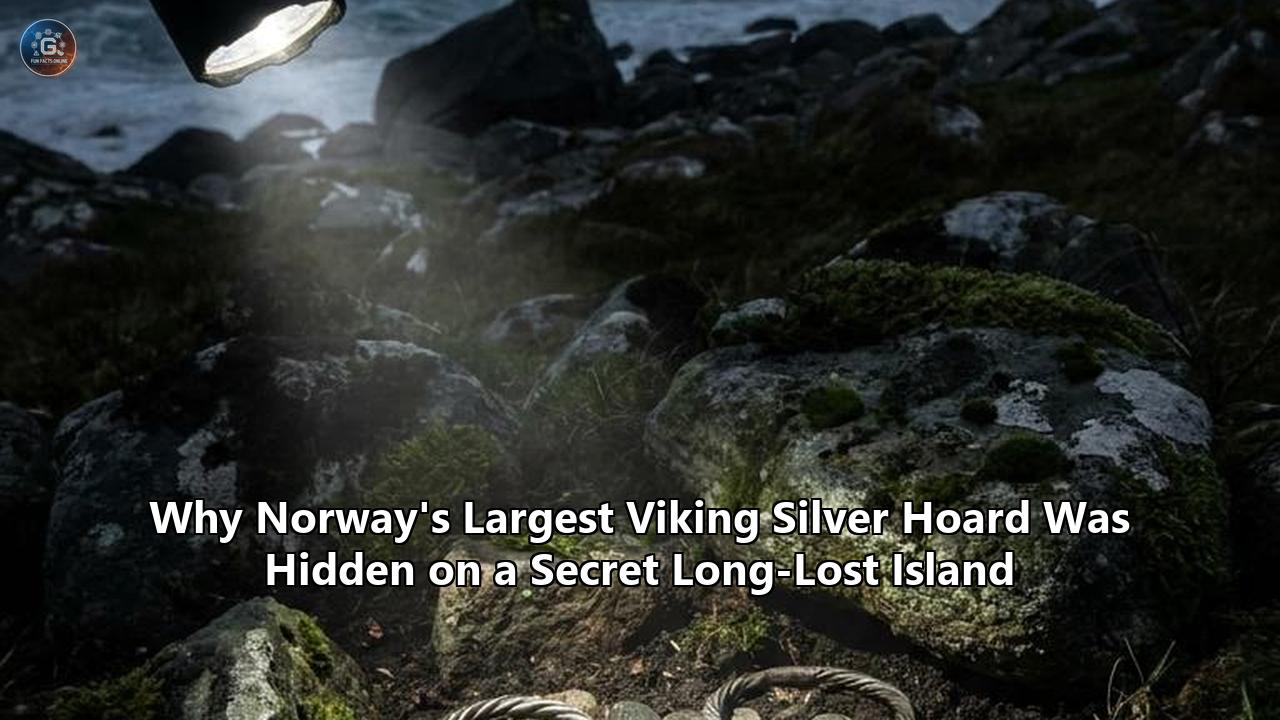
On April 10, 2026, two metal detectorists walking across a freshly plowed field near Rena, a village in the Østerdalen valley of eastern Norway, heard their machines emit a series of rapid, high-pitched signals. Rune Sætre and Vegard Sørlie bent down and brushed away the loose, stone-free soil to reveal a cluster of 19 thin, oxidized silver coins. Recognizing the historical value of what they had found, they immediately halted their search and contacted the cultural heritage authorities of Innlandet County.
By the time the initial archaeological excavation concluded a few weeks later, that modest cluster of 19 coins had ballooned into an astonishing 4,772 silver coins. It is the largest Viking Age coin hoard ever discovered in Norway, easily surpassing the legendary Årstad hoard, which had held the record since its discovery in 1836 with 1,849 coins.
The sheer volume of the Mørstad Hoard—named after the farm where it was unearthed—is staggering. It is larger than the next four largest Norwegian Viking coin hoards combined.
Yet, the most compelling mystery of this Norway Viking silver hoard is not just its size, but its highly unusual location. It was not buried beneath the floorboards of a wealthy chieftain’s longhouse, nor was it hidden near a known medieval farm or settlement.
Instead, pioneering landscape reconstruction and radar imaging suggest that this massive fortune was intentionally buried on a secret, long-lost river island that has since disappeared into the modern agricultural landscape.
To understand why such an immense fortune was hidden in this specific, isolated spot, we must untangle a complex web of medieval economics, changing river geography, and the industrial-scale trade of an unexpected commodity: bog iron.
The Ghost of the River: How Paleohydrology Revealed a Secret Island
When archaeologists from the Norwegian Institute for Cultural Heritage Research (NIKU) first arrived at the Mørstad field, they assumed the treasure was linked to an undocumented Viking settlement. Standard archaeological protocol in Scandinavia dictates that where there is treasure, there is often a home.
To map the subsurface landscape without destroying the field, NIKU archaeologist Knut Paasche deployed ground-penetrating radar (GPR). This technology transmits high-frequency radio waves into the soil; when the waves encounter buried structures, stone foundations, or ancient hearths, they reflect back to the receiver, creating a digital blueprint of what lies beneath.
The GPR scans at Mørstad, however, revealed absolutely nothing.
"This confirms that the treasure was not buried inside a house or at a farm," Paasche explained. "Someone hid it in a completely different place from where people actually lived."
[ Ancient Settlement (Higher Ground) ]
       | ~~~~~~~~~~ (Strong River Current) ~~~~~~~~~~
       |
  [ Wading Path ] ---> [ Secret Raised Island ] (Location of Mørstad Hoard)
       |
       | ~~~~~~~~~~ (Strong River Current) ~~~~~~~~~~
If the hoard was buried in the middle of nowhere, why choose this specific empty field? The answer emerged when Lars Gustavsen, a digital archaeologist and landscape analyst at NIKU, reconstructed how the local river system behaved a millennium ago.
The Østerdalen valley is carved by powerful waterways, including the Rena and Glomma river systems. These rivers are highly dynamic. Over centuries, they undergo processes known as meandering and avulsion, where the river channel shifts its course across the valley floor, driven by erosion and the violent, sediment-heavy floods of the spring snowmelt.
Using historical maps, core soil samples, and LiDAR (light detection and ranging) data to strip away modern vegetation and farming modifications, Gustavsen mapped the 11th-century hydrology of the area. He discovered that the modern flat field was once a highly complex aquatic environment.
In the mid-11th century, the river split into multiple channels at this exact point, forming a raised, dry island of land surrounded by deep, fast-moving water.
"The river has a strong current, and the spring floods can quickly overflow the area," Paasche noted. Gustavsen’s reconstruction suggests that someone seeking to secure their wealth would have had to wade out through the currents to reach this isolated island, burying the treasure on a elevated patch of land that remained dry even during high waters.
By burying the Norway Viking silver hoard on a natural island, the owner created a highly secure "safe deposit box". It was far enough from settlements to prevent accidental discovery by neighbors, yet situated on a distinct, permanent landmark that could be located again—provided the owner survived to retrieve it.
The Economic Engine: Why Inland Farmers Were Swimming in Silver
For decades, the popular image of Viking wealth has been tied to maritime raiding—longships returning from England, Ireland, or France laden with looted church silver. But the Østerdalen region is situated deep in the forested interior of eastern Norway, far from the coastal fjords where the famous Viking sea-kings ruled.
How did a rural inland community amass a silver fortune that dwarfs the treasures of coastal elites?
The answer lies in a highly lucrative, decentralized industry: the production and export of bog iron.
During the Viking Age, iron was the foundational currency of physical power. Every facet of medieval society depended on it. It was required for:
- Shipbuilding: Thousands of iron rivets were needed to hold together the hulls of Viking longships.
- Agriculture: Plows, scythes, and axes allowed for the expansion of farming in Scandinavia's harsh climate.
- Warfare: Swords, spears, chainmail, and battle-axes required high-quality, reliable steel.
Østerdalen was the industrial heartland of this production. The region’s vast peat bogs contained high concentrations of bog iron (myrmalm).
Bog iron is a renewable mineral resource formed by a fascinating biogeochemical process. Rainwater dissolves iron from surrounding soils and carries it into wetlands. There, anaerobic bacteria such as Leptothrix ochracea oxidize the dissolved ferrous iron, precipitating it out of the water as insoluble ferric hydroxide, which accumulates on decaying vegetation as orange-brown nodules.
Rainwater dissolves iron from surrounding soils
                  │
                  ▼
Feeds into peat bogs and wetlands
                  │
                  ▼
Anaerobic bacteria (Leptothrix ochracea) oxidize dissolved iron
                  │
                  ▼
Insoluble ferric hydroxide deposits onto organic matter
                  │
                  ▼
Accumulation of bog iron nodules (Myrmalm)
Viking Age farmers in Østerdalen operated a double economy. In the summer, they grew crops and tended livestock. In the autumn and winter, they transitioned into industrial metallurgists.
They harvested the bog iron, dried it, and smelted it in clay-lined bloomery furnaces built into the hillsides. By burning wood charcoal at temperatures reaching 1,200 degrees Celsius, they separated the pure iron from the rocky slag, producing high-quality, malleable iron blooms.
According to archaeologist Kjetil Loftsgarden, who has spent years researching this inland industry, the scale of production in Østerdalen during the 11th century was immense.
"We have long known that there was extensive iron production and export of iron to countries farther south," Loftsgarden said. "But until now, we have not known what values came back in return for this trade."
The Mørstad Hoard is the physical proof of that return on investment. The rural farmers of Østerdalen were exporting iron down the river systems to southern markets, and in exchange, they were receiving massive quantities of high-purity silver coinage from across Europe.
Because this iron industry was spread across thousands of small, specialized family farms rather than centralized in royal administrative hubs, the wealth stayed in local hands. The Mørstad farmer was not just a peasant; he was a highly successful industrial entrepreneur running a lucrative international trade business.
Inside the Vault: What the Coins Tell Us About a Changing World
The 4,772 coins of the Mørstad Hoard act as an economic time capsule, capturing a critical transition period in Scandinavian history: the shift from a weight-based "bullion" economy to a centralized monetary system.
                     MØRSTAD HOARD COIN COMPOSITION

     ┌───────────────────────┬───────────────────────┐
     │  English Coins        │  German Coins         │
     │  (Cnut, Æthelred II)  │  (Otto III, etc.)     │
     │  ~40-45%              │  ~40-45%              │
     └───────────┬───────────┴───────────┬───────────┘
                 │                       │
                 ▼                       ▼
     ┌───────────────────────┐┌───────────────────────┐
     │  Danish Coins         ││  Norwegian Coins      │
     │  (Sven Forkbeard, etc.)││  (Harald Hardrada)   │
     │  ~5-10%               ││  ~5% (Newly Minted)   │
     └───────────────────────┘└───────────────────────┘
Numismatist Svein Harald Gullbekk from the University of Oslo’s Museum of Cultural History has analyzed the contents of the hoard. The collection includes coins spanning from the 980s to the 1040s, originating from several distinct geopolitical regions:
- England: A massive volume of coins minted under Anglo-Saxon rulers, including Æthelred II (the Unready) and Cnut the Great. Many of these coins entered Scandinavian hands through the payment of Danegeld—taxation levied by English kings to buy off Viking invaders—or through direct trade.
- Germany (Holy Roman Empire): Silver pennies minted during the reign of Emperor Otto III and other regional German rulers, which circulated widely along the Baltic trade routes.
- Denmark and Norway: A smaller, but highly significant, selection of Scandinavian-minted coins.
The Transition to a Cash Economy
For most of the Viking Age, Scandinavia operated on a bullion economy. Coins were not valued for the face value stamped on them by foreign kings. Instead, they were treated purely as silver of a certain weight and purity.
If a Viking merchant wanted to buy something that cost less than a full coin, they would chop the coin into pieces. This is known as "hack-silver." The Mørstad Hoard contains some fragments of silver jewelry and hack-silver, indicating that this weight-based system was still in use.
However, the hoard also contains early coins minted under King Harald Hardrada of Norway, who ruled from 1046 to 1066. Hardrada, a legendary warrior who had spent years in exile as the commander of the Varangian Guard in Constantinople, returned to Norway with immense wealth and a determination to centralize royal power. One of his key reforms was establishing a national, state-monopolized coinage system.
"The newest coins in the hoard date from Harald Hardrada’s earliest years as king," says Gullbekk. "This allows us to date the burial of the hoard precisely to the years 1046 or 1047."
The presence of freshly minted, unclipped Norwegian coins alongside worn foreign silver indicates that this Norway Viking silver hoard was deposited during the exact years when Norway was transitioning into a modern, coin-using nation state.
The pristine condition of the coins is another point of scientific interest. The soil at Mørstad contains virtually no stones, and its chemistry is remarkably non-acidic. This lack of abrasive stones prevented physical scratching during centuries of agricultural plowing, while the neutral pH protected the silver from corrosive oxidation.
As a result, many of the coins look as though they were minted yesterday, preserving highly detailed portraits of Anglo-Saxon and Norse kings.
Why Was the Treasure Never Recovered?
The discovery of nearly 5,000 pristine silver coins raises a dark, haunting question: why did the owner never return to dig up their fortune?
"Something dramatic must have happened after the treasure was buried," Kjetil Loftsgarden points out. "You don't simply forget where you buried a fortune of that size."
During the Viking Age, burying silver was essentially the equivalent of putting money in a bank. It was meant to be a temporary measure. Farmers and traders would bury their surplus wealth for safekeeping during winter or before embarking on a dangerous journey, retrieving portions of it as needed.
The fact that this entire cache remained untouched for nearly 1,000 years suggests the owner met a sudden, definitive end.
Scenario 1: Caught in the Floods
The dynamic nature of the river system that created the secret island might have been the very thing that doomed the owner.
The spring floods in Østerdalen are notoriously violent, fueled by the rapid melting of mountain snow. If the owner waded out to the island to bury the silver during a period of rising waters, they may have underestimated the current on their return journey.
Alternatively, a particularly severe spring flood could have dramatically altered the landscape in a single season. If the river shifted its course or submerged the island entirely under feet of heavy silt and debris, the physical landmarks used to locate the treasure would have been erased, burying the silver forever beneath the mud.
Scenario 2: The Chaos of 1047
The years 1046 and 1047 were times of intense political volatility in Norway. Harald Hardrada’s return from the Byzantine Empire with a massive private army disrupted the delicate balance of power in Scandinavia.
Hardrada was ruthless in his attempts to subjugate local chieftains and independent inland farmers who resisted royal taxation. He waged internal campaigns to force the regional populations into submission.
It is highly plausible that the wealthy iron-producing farmer of Mørstad saw royal tax collectors, enforcers, or rival warriors approaching. Desperate to protect his family’s multi-generational wealth from confiscation, he may have run to the river, waded out to the secret island under the cover of darkness, and buried his leather pouch of silver.
If he was subsequently captured, killed in the ensuing conflict, or forced into permanent exile, the secret of the island's burial site died with him.
"If you have eight men on horseback chasing you and know they will catch you before the day is over, then burying the treasure might be the smartest thing to do," Paasche notes.
Comparing the Mørstad Hoard to Other Great Viking Caches
To appreciate the scale and historical value of the Mørstad find, it is helpful to contrast it with other world-famous Viking silver hoards.
| Hoard Name | Location | Discovery Year | Total Weight / Scale | Primary Composition | Economic Context |
|---|---|---|---|---|---|
| Mørstad Hoard | Rena, Norway | 2026 | 4,772 silver coins (and counting) | English, German, Danish, and Norwegian silver pennies | Inland bog iron trade wealth |
| Spillings Hoard | Gotland, Sweden | 1999 | 67 kg (148 lbs) of silver | 14,000 Islamic dirhams, 480 silver arm rings, bronze scrap | Central Baltic transit trade hub |
| Cuerdale Hoard | Lancashire, England | 1840 | 40 kg (88 lbs) of silver | 8,600 items: English, Carolingian, and Islamic coins, hack-silver | Viking army chest or regional war fund |
| Årstad Hoard | Rogaland, Norway | 1836 | 1,849 silver coins | Predominantly English (Cnut the Great) coins | Coastal maritime trade and raiding wealth |
While the Spillings Hoard on the Swedish island of Gotland remains the undisputed heavyweight of the Viking world by pure metal mass, it is dominated by massive silver arm rings, ingots, and Islamic dirhams from the early to mid-Viking Age.
The Mørstad Hoard is fundamentally different. It is primarily a coin hoard, representing a highly sophisticated, transactional monetary wealth rather than raw bullion.
The coins in the Mørstad Hoard are unclipped, undamaged, and remarkably consistent in quality. As coin expert Svein Harald Gullbekk remarked: "This hoard is a testimony to payment on a large scale. This smells like money."
It shows that by 1050, inland Norway was not a primitive backwater trading via simple barter. Instead, it was an economically integrated region that participated directly in the monetary systems of Western Europe, using standardized silver coinage to facilitate large-scale industrial trade.
What Happens Next: The Future of the Mørstad Site
Following the successful recovery of the 4,772 coins, the Mørstad field is being returned to its modern agricultural use. Under Norwegian cultural heritage laws, the site is strictly protected, and its exact coordinates remain a closely guarded secret to prevent looting or unauthorized metal detecting.
However, the scientific work is only just beginning.
                               FUTURE RESEARCH PIPELINE

 ┌──────────────────────────┐     ┌──────────────────────────┐     ┌──────────────────────────┐
 │    Numismatic Die        │     │     Lead Isotope         │     │     Soil Chemistry       │
 │    Link Analysis         │     │       Analysis           │     │       Profiling          │
 ├──────────────────────────┤     ├──────────────────────────┤     ├──────────────────────────┤
 │Tracing the exact mints   │     │Determining the geological│     │Searching for microscopic │
 │and dies to understand    │     │origin of the silver ore  │     │traces of the organic container│
 │the flow of coins.        │     │(e.g., Harz Mountains).   │     │(leather, wool, wood).    │
 └──────────────────────────┘     └──────────────────────────┘     └──────────────────────────┘
Numismatists at the University of Oslo are preparing to conduct die-link analysis on the coins. Because medieval coins were hand-struck using hand-carved iron dies, researchers can identify coins struck from the exact same physical die. Mapping these links allows historians to trace the precise networks through which these coins traveled from mints in London, Lincoln, or Mainz to the deep pine forests of Rena.
Geochemical testing, such as lead isotope analysis on the silver, will also help researchers identify the geological origins of the silver ore used to make the coins, which likely trace back to silver mines in the Harz Mountains of Germany or ancient mines in central Asia.
Furthermore, environmental archaeologists plan to study soil cores from the former riverbed surrounding the long-lost island. By analyzing fossilized pollen, plant macrofossils, and micro-charcoal layers, they hope to reconstruct the exact vegetation that covered the island when the treasure was buried, providing a vivid picture of the landscape as it appeared to the desperate soul who waded into the current, carrying a fortune in silver, never to return.
This spectacular discovery has reshaped our understanding of the Viking Age economy. It proves that the true wealth of the late Viking world was not always won at the edge of a sword on a distant foreign shore. Often, it was forged in the heat of a local smelting furnace, traded along meandrian rivers, and hidden safely away on a secret island that time forgot.
Key Takeaways of the Mørstad Discovery
- The Discovery: 4,772 silver coins found by metal detectorists near Rena, Norway, in April 2026. It is the largest Viking Age coin hoard in Norwegian history.
- The Secret Island: Digital landscape reconstruction revealed the burial site was once an isolated river island, accessible only by wading through strong currents—making it a perfect natural vault.
- The Source of Wealth: The treasure was likely amassed through the lucrative bog iron industry of the Østerdalen valley, which exported iron south for shipbuilding, weaponry, and tools.
- The Historical Era: Buried around A.D. 1046–1047, the hoard captures the exact moment Norway was transitioning from a weight-based silver economy to a unified national currency under King Harald Hardrada.
Reference:
- https://archaeologymag.com/2026/05/largest-viking-age-coin-hoard-in-norway/
- https://www.cbsnews.com/news/largest-viking-coin-hoard-norway-discovered-metal-detectorists/
- https://www.popularmechanics.com/science/archaeology/a71179531/viking-silver-coin-hoard/
- https://www.sciencenorway.no/archaeology-culture-the-viking-age/norways-largest-viking-age-coin-hoard-has-been-discovered-truly-exceptional/2656877
- https://www.lifeinnorway.net/buried-viking-fortune-unearthed-in-norway/
- https://archaeology.org/news/2026/05/27/coin-hoard-discovered-in-norway/
- https://www.sciencenorway.no/archaeology-culture-the-viking-age/this-may-be-why-a-viking-coin-hoard-was-buried-in-such-an-unlikely-place/2666213
- https://www.smithsonianmag.com/smart-news/see-the-largest-viking-age-hoard-ever-found-in-norway-at-nearly-3000-coins-and-counting-the-cache-is-a-once-in-a-lifetime-find-180988657/
- https://www.khm.uio.no/english/news/morstad-hoard.html
- https://www.sciencenorway.no/archaeology-culture-the-viking-age/this-may-be-why-a-viking-coin-hoard-was-buried-in-such-an-unlikely-place/2666213
- https://thevikingherald.com/article/the-moerstad-hoard-norway-s-largest-viking-hoard-unearthed/1379
- https://www.youtube.com/watch?v=-GbIm1z4AbA
- https://www.youtube.com/watch?v=-GbIm1z4AbA