The architecture of the human brain has long been described by developers, educators, and scientists in terms of pristine orchestration. In textbooks, the journey of a newly minted neuron is depicted as an elegant dance: a cell is born in the deep ventricular zone, migrates along radial glial fibers like a traveler on a monorail, and settles into its designated cortical layer to form the synapses that will eventually support thoughts, emotions, and memories.
But a study published in Nature by researchers at Kyoto University’s Institute for Integrated Cell-Material Sciences (WPI-iCeMS) has fundamentally upended this clean, mechanical image. The reality of how the brain builds itself is far more violent.
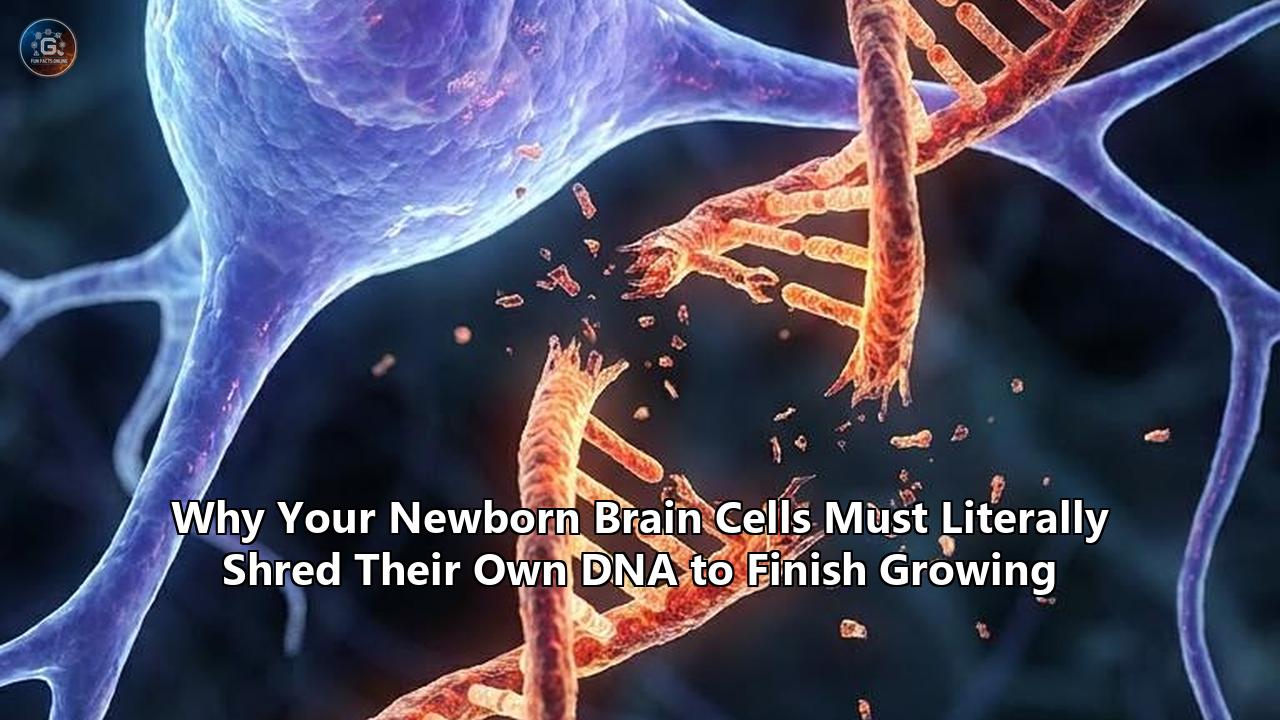
Led by Professor Mineko Kengaku, the research team discovered that as young, migrating neurons squeeze through the incredibly dense and crowded pathways of the developing cerebral and cerebellar cortices, they routinely shred their own DNA. These cells suffer widespread double-strand breaks (DSBs)—the most severe, life-threatening form of DNA damage, where both rails of the double helix are completely severed.
Instead of being a pathological anomaly or a fatal mistake, however, this genomic destruction is a routine, universal checkpoint in healthy brain formation.
To reach the outer layers of the brain and complete their maturation, newborn neurons must navigate a physically hostile environment, squeezing their nuclei through spaces narrower than the cells themselves. This physical pressure physically stalls the cell’s molecular machinery, leaving its genetic code in temporary tatters. If the cell cannot quickly stitch its genome back together within 24 hours, the consequences are disastrous, leading to permanent neurological deficits and motor disorders in adulthood.
This discovery represents a watershed moment in developmental neurobiology, establishing a direct link between mechanical forces, genomic integrity, and the very wiring of our minds. To understand how we arrived at this striking realization, it is necessary to trace a decades-long scientific detective story—one that moved from viewing DNA breaks as fatal errors to recognizing them as a fundamental mechanism of newborn brain cell development.
Phase 1: The Dark Dogma (1998–2000) — DNA Damage as a Fatal Mistake
For decades, the central dogma of molecular biology treated DNA double-strand breaks with absolute dread. In any other tissue, a double-strand break is a harbinger of doom. When both strands of the DNA backbone are severed, the chromosome is effectively cut in half. If left unrepaired, these breaks can lead to massive chromosomal deletions, translocations, cell death, or the uncontrolled proliferation that drives cancer.
Consequently, the early scientific literature on neural development viewed any evidence of DNA damage in the brain as a sign of disease, environmental toxicity, or genetic failure.
The first major crack in this perspective appeared in the late 1990s, when researchers began manipulating the genes responsible for repairing DNA. In 1998, a team led by Fred Alt at Harvard Medical School published a landmark paper in Cell investigating the role of classical non-homologous end-joining (c-NHEJ). This biological pathway is the cell’s primary emergency first-aid kit for broken DNA, utilizing a suite of specialized enzymes to grab the dangling ends of a severed double helix and weld them back together without needing a sister template.
Alt’s team engineered mice that lacked key components of this repair machinery, specifically targeting DNA Ligase IV (Lig4)—the molecular stapler that performs the final step of sealing the DNA backbone.
The results were catastrophic, but highly revealing. The mutant mice did not simply fail to grow; they died during embryonic development. When the researchers examined the embryos, they found widespread, massive programmed cell death (apoptosis) confined almost entirely to the developing nervous system. The newborn neurons of these mice were literally disintegrating as they tried to differentiate and mature.
[Progenitor Cell] ---> [Attempts Migration/Maturation] ---> [Accumulates Unrepaired DSBs] ---> [Apoptosis / Cell Death]At the time, this embryonic lethality was interpreted through a conservative lens. Scientists hypothesized that during the rapid cell divisions of early neurogenesis, progenitor cells naturally accumulated replication-induced stress, leading to accidental DNA breaks. In the absence of Ligase IV, these routine "accidents" could not be cleaned up, triggering the cell’s self-destruct sequence via the p53 tumor-suppressor pathway.
The scientific consensus remained firm: DNA breaks in the brain were accidental waste products of rapid growth. Healthy, normal newborn brain cell development was still assumed to be a process that relied on keeping the genome as pristine and undamaged as possible. The idea that a healthy, wild-type neuron might intentionally or systematically break its own DNA to function was unthinkable.
Phase 2: The Synaptic Rebellion (2015–2021) — Breaking DNA to Learn
The second major turning point in this story occurred in 2015, shifting the focus from embryonic development to the mature, adult brain.
Li-Huei Tsai, a neuroscientist and director of the Picower Institute for Learning and Memory at the Massachusetts Institute of Technology (MIT), was investigating how brain cells express genes quickly enough to form memories. When a mammal experiences a sudden threat or a novel environment, its brain must react instantly. It has to physically rewire its synapses, a process that requires the rapid transcription of "early-response genes" like Fos, Jun, and Egr1.
However, DNA in eukaryotic cells is not free-floating; it is tightly wound around histone proteins and coiled into dense chromatin structures. This supercoiling creates physical, topological barriers that prevent transcription machinery from accessing the genetic code. Under normal circumstances, unwinding these structures to transcribe a gene is a slow, methodical process.
Tsai’s lab made an extraordinary and highly controversial discovery, published in Cell in June 2015: when neurons are stimulated, they do not wait for a gentle unwinding of their chromatin. Instead, they actively and deliberately slice through their own DNA, creating double-strand breaks at the promoter regions of early-response genes.
[Tightly Coiled DNA] ---> [Neuronal Stimulation] ---> [Controlled Double-Strand Break] ---> [Instant Gene Expression] ---> [Rapid Repair]This localized destruction acts like snipping a highly tensioned rubber band. By severing the DNA backbone, the physical tension is instantly relieved, allowing the chromatin to spring open. The cell's transcription machinery can then immediately access and read the gene, producing the proteins needed to strengthen synapses and solidify a memory. Once the transcription burst is complete, the neuron quickly deploys repair enzymes to mend the break.
"Cells physiologically break their DNA to allow certain important genes to be expressed," Tsai explained at the time. "In the case of neurons, they need to break their DNA to enable the expression of early response genes, which ultimately pave the way for the transcriptional program that supports learning and memory."
The neurobiology community was stunned. The brain, it appeared, was using its own genome as a radical signaling system.
By 2021, Tsai’s lab and others had expanded on this work, showing that these activity-induced DNA breaks occur systematically across the brain. However, this high-stakes molecular strategy came with a steep cost. As the brain ages, its DNA repair mechanisms naturally degrade. The constant cycles of breaking and mending DNA eventually leave behind unresolved scars, contributing to the cognitive decline and synaptic loss seen in neurodegenerative diseases like Alzheimer's.
Despite these insights, a massive gap in knowledge remained. While the field had accepted that mature neurons might briefly damage their DNA to facilitate learning, the physical journey of a newborn neuron during early development was still viewed as a separate, highly protected process.
No one yet realized that before a brain cell ever gets the chance to learn its first memory, it must first survive a literal physical gauntlet that tears its genome apart.
Phase 3: The Mechanical Crucible (2025 – Early 2026) — Squeezing Through the Gauntlet
As the mid-2020s approached, a different field of biology began to converge with neuroscience: mechanobiology. Researchers were increasingly interested in how physical forces—pushing, pulling, squeezing, and shearing—affect the behavior of living cells.
In cancer biology, scientists had long known that migrating tumor cells experience intense physical deformation as they metastasize and squeeze through the tight extracellular spaces of surrounding tissues. When a cancer cell's nucleus—the stiffest and largest organelle inside the cell—is forced through a narrow gap, the nuclear envelope can physically rupture. This rupture exposes the genomic DNA to the cytoplasm, leading to catastrophic, chaotic DNA damage, genomic instability, and often, cell death.
But what about the developing brain?
During newborn brain cell development, young neurons must undergo a massive, coordinated migration. Born deep in the germinal zones, billions of these cells must crawl outward to form the six-layered cerebral cortex and the complex folds of the cerebellum. This journey is not a walk in an open field; it is a crawl through a dense jungle. The migrating cells must push past a thick forest of radial glial fibers, extracellular matrix molecules, and a highly congested crowd of neighboring cells.
                     [ DENSE CELLULAR CROWDING ]
[Migrating Neuron] ===>  === (Narrow Interstitial Space) ===> [Destination]
                     [ DENSE CELLULAR CROWDING ]
To navigate this congested environment, newborn neurons have evolved uniquely squishy, highly deformable nuclei. Cell nuclei are kept stiff by structural proteins called lamins, specifically Lamin A and Lamin C. Migrating neurons express exceptionally low levels of Lamin A, giving them a remarkably soft nucleus that can stretch and deform to slide through microscopic gaps.
However, this structural softness comes with an inherent vulnerability. A soft nucleus means that the chromatin inside is highly susceptible to external mechanical stress. If the nucleus is compressed, the physical strain is transmitted directly to the double helix of the DNA.
In early 2025, biophysicists and neurobiologists began to suspect that the physical act of migration itself might be inflicting structural stress on the neuronal genome. Yet, demonstrating this in a living brain was an extraordinary technical challenge. How do you peer inside the microscopic, moving nucleus of a living, migrating neuron deep within embryonic tissue to see DNA breaking in real-time?
Phase 4: The June 2026 Breakthrough — Topoisomerase IIβ and the Mechanical Trap
The answer came on June 17, 2026, when Professor Mineko Kengaku and her colleagues at Kyoto University published their findings in Nature. The study, titled "Confined migration induces non-lethal DNA damage in developing neurons," provided the smoking gun that connected the physical physics of neuronal migration with the systematic shredding of the genome.
To solve the imaging problem, Kengaku's team designed an elegant in vitro experiment that replicated the physical trials of the developing brain. They engineered PDMS (polydimethylsiloxane) microfluidic chips containing tiny microchannels measuring just 3 micrometers in width—simulating the incredibly tight interstitial spaces that migrating neurons must squeeze through in the embryonic cerebral cortex.
+-------------------------------------------------------------+
|                     Microfluidic Device                     |
|                                                             |
|  [Neuron Birth] ---> || [3µm Narrow Channel] || ---> [Exit]  |
|                         (Nuclear Compression)               |
+-------------------------------------------------------------+
They then placed cerebellar granule neurons (CGNs) into these chips and watched their journey under high-resolution, live-cell confocal microscopes. To track DNA damage as it occurred, the researchers utilized fluorescently tagged markers, specifically mNeonGreen fused to 53BP1, a protein that rapidly binds to the sites of double-strand breaks.
The results were immediate and striking.
As the newborn neurons crawled forward, their leading edges entered the 3-micrometer channels. When the large, soft nucleus was forced into the constriction, it deformed dramatically, stretching out like a piece of taffy. At that exact moment of mechanical compression, the fluorescent markers inside the nucleus lit up like a Christmas tree. Widespread, severe double-strand breaks were forming across the genome as the cells squeezed through the tight spaces.
But when the researchers looked closely, they noticed something that defied the rules of cell biology established in cancer research. In cancer cells, mechanical stress-induced DNA breaks are caused by the physical rupture of the nuclear envelope, which lets destructive cytoplasmic enzymes leak in.
In these migrating neurons, the nuclear envelope remained completely intact. There was no rupture, no leakage, and no chaotic invasion of outside enzymes. The DNA was breaking entirely from within, triggered by an internal cellular mechanism.
Through a series of molecular knockout experiments, the Kyoto University team identified the surprising culprit behind this genetic self-mutilation: an enzyme called Topoisomerase IIβ (Top2β).
[DNA Helix under Torsional Strain]
               │
               ▼
   [Topoisomerase IIβ cuts DNA]
               │
       (Squeezing Stress) <--- Mechanical pressure traps enzyme mid-cut
               │
               ▼
   [Unreconnected DNA Ends (DSB)]
Topoisomerase IIβ is a vital molecular maintenance worker. Its normal job is to relieve the extreme torsional and twisting strain that builds up in the DNA double helix during transcription and replication—like a mechanic snipping a highly twisted, tangled cable to let it untangle, and then immediately splicing it back together.
During the journey of a newborn neuron, the physical squeezing of the nucleus places the chromatin under immense, localized mechanical strain. Recognizing this torsional stress, Topoisomerase IIβ leaps into action, binding to the strained DNA and cutting both strands to relieve the twisting pressure.
But here is where the physical trap snaps shut.
The intense, external mechanical compression exerted on the squished nucleus physically deforms the chromatin architecture. This mechanical deformation physically traps the Top2β enzyme mid-process. The enzyme becomes physically stuck, unable to complete its cycle and perform the ligation step to fuse the severed DNA strands back together.
When the squeezed neuron crawls out of the tight channel, it is left with its genome peppered with severed, broken DNA ends. The physical journey has literally forced the cell to use its own untangling enzymes to rip its blueprint apart.
Phase 5: The Resilient Repair Kit and the Legacy of the Journey
If this level of genomic damage occurred in any other cell, it would trigger a biochemical alarm leading to apoptosis or cancer. But the Kyoto University team discovered that the brain has evolved an incredibly resilient, specialized strategy to survive this developmental gauntlet.
Under the leadership of Professor Kengaku, the researchers tracked what happened to the neurons after they emerged from the microchannels. Within 24 hours of completing their cramped passage, the fluorescent markers of DNA damage steadily began to fade. The neurons were rapidly and efficiently deploying the non-homologous end-joining (NHEJ) repair pathway to weld the broken ends of their DNA back together.
"The developing brain appears to have evolved to tolerate and repair the neuronal damage efficiently," says Kengaku.
A major key to this tolerance lies in where the damage occurs. By performing high-throughput genome sequencing on the migrating neurons, the researchers mapped the precise locations of these mechanostress-induced double-strand breaks.
They found that unlike cancer cells, where mechanical damage occurs randomly and destroys critical coding sequences, the DNA breaks in migrating neurons are highly localized. The breaks cluster almost exclusively in transcriptionally inactive, non-critical, non-coding regions of the genome.
[NEURONAL GENOME]
┌───────────────────────────────┬───────────────────────────────┐
│       ACTIVE GENES            │      INACTIVE REGIONS         │
│ (Protein Coding / Regulatory) │ (Heterochromatin / Non-Coding)│
│       [ PROTECTED ]           │       [ DSB CLUSTERS ]        │
└───────────────────────────────┴───────────────────────────────┘
Because these breaks are confined to genomic "wastelands," the essential genes required to maintain the neuron’s cellular identity and vital functions are spared. The cell can tolerate a bit of a genomic mess in its inactive regions, allowing it to patch the breaks back together quickly without worrying if the repairs are 100% seamless.
To confirm what happens when this delicate repair process fails, the Kyoto University team engineered mutant mice in which the key NHEJ repair enzyme, DNA Ligase IV, was deleted specifically at the onset of neuronal migration in the cerebellum.
These mutant mice survived birth and appeared to develop normally at first. However, because they lacked the molecular stapler needed to mend the migration-induced breaks, double-strand breaks permanently accumulated in their cerebellar neurons.
As these mice grew into adulthood, the unresolved genetic damage caught up with them. They gradually developed progressive motor deficits, displaying visible balance and coordination difficulties resembling human neurological ataxia.
This was the definitive proof: the DNA shredding that occurs during newborn brain cell development is not a harmless side-effect. It is a high-stakes, mandatory physical event that requires a perfectly functioning genomic repair kit to prevent lifelong neurological disease.
Summarizing the Timeline of Discovery
To see how this extraordinary scientific narrative has escalated over the last three decades, we can trace the clear turning points that led to this breakthrough:
| Date | Key Discovery & Turning Point | Primary Researchers | Scientific Impact |
|---|---|---|---|
| 1998 | Discovery that deleting DNA repair enzymes (like Ligase IV) causes massive, fatal neuronal death during embryonic development. | Fred Alt & colleagues (Harvard) | Established that genomic repair is absolutely essential for brain development, though breaks were still assumed to be accidental replication errors. |
| 2015 | Discovery that active, mature neurons in the hippocampus deliberately break their own DNA to quickly express genes required for learning and memory. | Li-Huei Tsai & colleagues (MIT) | Shattered the dogma that DNA breaks are purely pathological; proved that the brain uses controlled genomic cuts as a physiological signaling system. |
| 2021 | Expanding mapping of DNA double-strand breaks shows they occur systematically during memory formation but contribute to genomic scarring and Alzheimer's as repair mechanisms age. | Multiple international labs | Linked physiological DNA damage to long-term neurodegeneration and cognitive decline. |
| June 2026 | Discovery that the physical act of migrating through narrow interstitial spaces forces newborn neurons to systematically shred their DNA. | Mineko Kengaku & colleagues (Kyoto University) | Proved that mechanostress deforms the nucleus, trapping Topoisomerase IIβ mid-cut. Established that physical migration writes a unique genetic history into individual brain cells. |
The Concept of Somatic Mosaicism: Is Your Brain a Genetic Mosaic?
The implications of the June 2026 Kyoto University study stretch far beyond the mechanics of motor coordination. They touch upon one of the most profound and mind-bending questions in modern neurobiology: What makes every human brain unique?
Historically, we have assumed that every cell in a person's body shares the exact same DNA blueprint. Barring rare somatic mutations, the neurons in your prefrontal cortex were thought to be genomic carbon copies of the neurons in your visual cortex, your heart, or your liver.
But over the last decade, advanced single-cell whole-genome sequencing has revealed that this is simply not true. Healthy human brains are actually genetic mosaics. Individual, neighboring neurons in the same brain circuit frequently carry distinct genetic variations—including single-nucleotide variants (SNVs), insertions, deletions, and copy number variations (CNVs) where sections of the genome are duplicated or missing.
               [ SINGLE STEM CELL SOURCE ]
                           │
       ┌───────────────────┴───────────────────┐
       ▼                                       ▼
  [Neuron A]                              [Neuron B]
  Path: Long, crowded migration           Path: Short, easy migration
  Genome: Minor deletion in chromosome 4  Genome: Pristine original copy
This phenomenon, known as somatic mosaicism, means that you do not have just one genome inside your head; you have a population of thousands of slightly different genomes. These tiny genetic variations can alter how individual neurons express proteins, how they respond to neurotransmitters, and how they wire themselves into circuits.
The June 2026 discovery by Kengaku’s team provides the missing link for how this mosaicism is created.
If a newborn neuron must endure hundreds of mechanical compressions and subsequent DNA breaks as it migrates, and if it must continuously deploy the NHEJ pathway to stitch those breaks back together, the repair process is bound to introduce tiny, subtle errors. A nucleotide might be lost here; a tiny insert might be placed there.
"It shifts how we think about the neuronal genome," says Professor Kengaku. "All neurons originate from the same DNA, but DNA damage and repair can introduce small genetic differences between individual neurons through a small mechanical journey. Some of that history may be written into the genome itself."
This means that the physical path your brain cells took when you were an embryo—the tight corners they turned, the dense clusters of cells they squeezed past—permanently wrote a unique physical history into your very genetic code.
Your thoughts, your personality traits, and your unique intellectual strengths may not just be the product of your inherited genes or your upbringing. They may be the direct result of the physical hardships your newborn brain cells endured as they crawled through the microscopic wilderness of your developing embryonic brain.
Future Horizon: What to Watch Next
As this extraordinary breakthrough reverberates through the global scientific community, researchers are already looking toward the next frontiers of inquiry.
Several key areas of study are emerging as critical milestones to watch in the coming years:
1. The Limits of Mechanical Tolerance in Neurodevelopmental Disorders
If newborn brain cell development is so dependent on the delicate balance between mechanostress-induced DNA breaks and rapid NHEJ repair, what happens when this balance is slightly skewed?
Scientists are already investigating whether subtle, non-lethal mutations in DNA repair genes (such as LIG4, XRCC4, or ATM) might contribute to neurodevelopmental disorders like autism spectrum disorder, ADHD, or severe learning disabilities. A child born with a slightly less efficient DNA repair toolkit might experience normal embryonic growth, but the physical journey of migration could leave behind hundreds of unpatched genomic wounds that alter the wiring of their cortical circuits.
2. The Link to Pediatric Cancers
One of the most intriguing findings from the Kyoto University study was the stark difference between migrating neurons and migrating cancer cells. When cancer cells squeeze through narrow spaces, their nuclear envelopes rupture, causing chaotic, unpredictable DNA damage that often drives malignant transformations or kills the cell.
Neurons, however, keep their nuclear envelopes intact, confining their breaks to inactive genomic regions.
Understanding the molecular "shield" that allows a migrating neuron to deform so heavily without rupturing its nuclear envelope could open up revolutionary therapeutic avenues for treating metastatic cancers. If oncologists can strip away this protective shield in cancer cells, they could theoretically cause migrating tumor cells to self-destruct as they try to spread through tight tissue spaces.
3. Aging and the Accumulation of Developmental Scars
Does the physical history written into our neurons during development eventually come back to haunt us in old age?
As we age, our cells' ability to maintain genomic stability declines. The latent "scars" left behind by the physical journey of embryonic migration—even those patched up by NHEJ—might represent structural weak points in the chromosome. Over a lifetime of cognitive wear-and-tear and oxidative stress, these developmental scars may be the first places where DNA breaks open again, potentially triggering the onset of late-life neurodegenerative diseases like Parkinson's or Alzheimer's.
The image of the brain as a pristine, carefully programmed computer is officially dead. In its place is a far more dynamic, chaotic, and astonishing reality.
We now know that our brains are forged in a crucible of physical and genetic violence. To become who we are, our newborn brain cells had to crawl through a microscopic gauntlet, tearing their own genomes apart and stitching them back together, leaving behind a unique genetic tapestry that defines the physical limits and the infinite possibilities of the human mind.
Reference:
- https://pubmed.ncbi.nlm.nih.gov/42310452/
- https://www.sciencedaily.com/releases/2026/06/260620100422.htm
- https://www.technologynetworks.com/neuroscience/news/growing-brain-cells-break-their-dna-on-purposeand-repair-it-later-413829
- https://neurosciencenews.com/neuronal-migration-dna-damage-repair-30903/
- https://medicaldialogues.in/mdtv/neurology-neurosurgery/videos/scientists-discover-neurons-must-break-dna-to-build-the-developing-brain-173493
- https://encyclopedia.pub/entry/26682
- https://www.quantamagazine.org/brain-cells-break-their-dna-to-learn-more-quickly-20210830/
- https://pmc.ncbi.nlm.nih.gov/articles/PMC6340756/
- https://www.pnas.org/doi/10.1073/pnas.1525564113
- https://news.mit.edu/2015/dna-breakage-learning-age-related-damage-0604
- https://www.iflscience.com/brain-cells-break-their-own-dna-allow-memories-form-28980
- https://tinyproofs.com/neurons-must-break-their-dna-to-build-the-brain-scientists-discover/
- https://singularityhub.com/2024/04/08/your-brain-breaks-its-own-dna-to-form-memories-that-can-last-a-lifetime/
- https://www.biorxiv.org/content/10.1101/2025.06.10.658810v1.full-text
- https://www.researchgate.net/scientific-contributions/Mineko-Kengaku-39053636
- https://www.sflorg.com/2026/06/ns06192601.html
- https://neurosciencenews.com/neuronal-migration-dna-damage-repair-30903/
- https://www.sciencedaily.com/releases/2026/06/260620100422.htm
- https://www.eurekalert.org/news-releases/1132130
- https://www.salk.edu/scientist/rusty-gage/news/