The microscopic residue clinging to a pair of 600-year-old iron implements has yielded a discovery that rewires our understanding of medieval medicine.
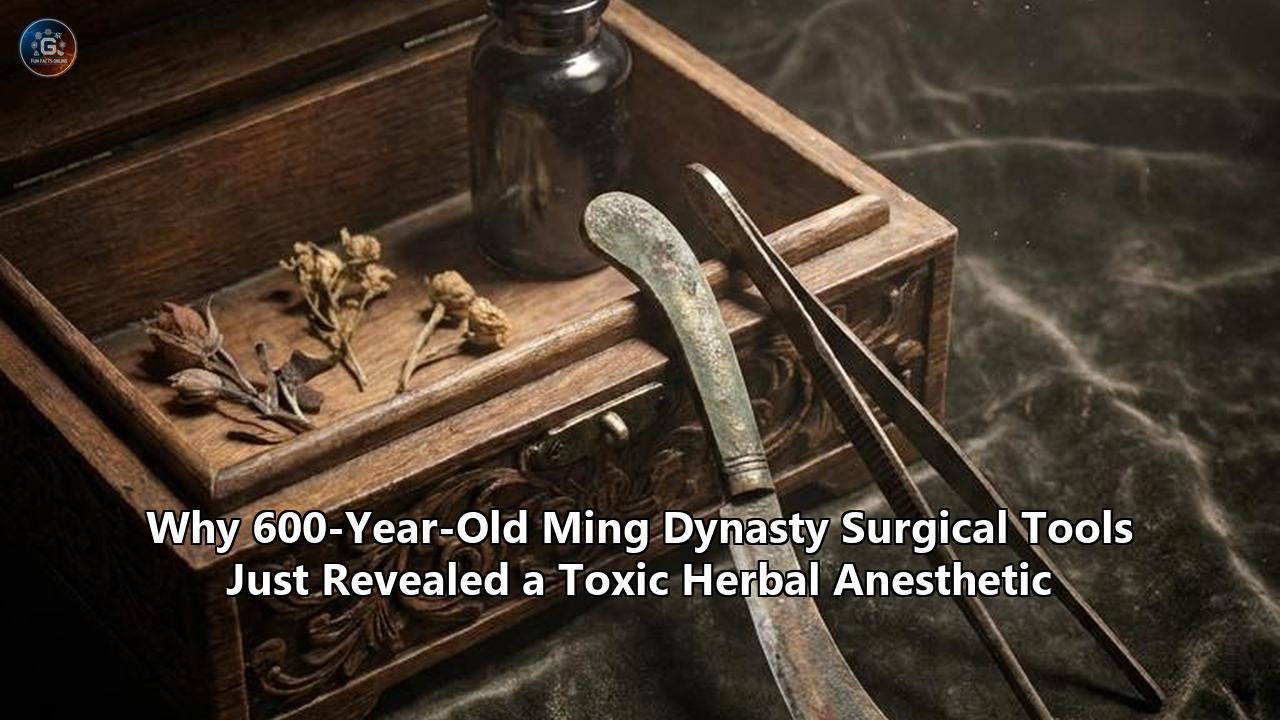
In a study published in the journal Antiquity, a research team led by archaeologists from Northwest University in Xi'an, China, announced they had detected physical traces of a highly potent, plant-derived local anesthetic on a set of Ming Dynasty surgical tools. The tools—a pair of iron scissors and tweezers—were recovered from the tomb of a prominent 14th-century physician named Xia Quan in Jiangsu Province.
Using advanced laser-based imaging, researchers identified the molecular signature of aconitine, a lethal alkaloid extracted from the highly toxic Aconitum plant family, commonly known as wolfsbane or monkshood.
The discovery represents the world's first direct chemical evidence of an anesthetic compound on ancient surgical instruments. It proves that medieval Chinese surgeons did not merely perform painful physical procedures through brute force or simple sedation; rather, they possessed a sophisticated, highly calculated pharmacological methodology designed to temporarily block localized pain using some of the most dangerous toxins found in nature.
By combining cutting-edge molecular physics with historical textual analysis, the research team has shown that Ming Dynasty medical practitioners successfully balanced extreme toxicity with therapeutic efficacy. They did so through a series of meticulous, multi-step detoxification processes that altered the molecular structure of the poison before applying it directly to patients' skin.
The Laser in the Tomb: A 600-Year-Old Secret Exposed
The scientific breakthrough began with a tiny cluster of reddish-brown spots preserved within the heavily corroded crevices of two iron medical instruments. These instruments—a pair of scissors measuring roughly 11.2 centimeters in length and a pair of delicate tweezers—had been housed in the Jiangyin Museum for over half a century. They were excavated in 1974 from the tomb of Xia Quan, an elite physician who lived between 1348 and 1411 CE, spanning the transition from the Mongol-led Yuan Dynasty to the early decades of the Ming Dynasty.
+--------------------------------------------------------------------------+
|                       THE MIAO QUAN SURGICAL KIT                         |
|                                                                          |
|   [====================]  <-- Iron Scissors (11.2 cm)                     |
|         (Aconitine residue concentrated on the blade pivot & inner edge) |
|                                                                          |
|   \====================/  <-- Iron Tweezers                              |
|         (Residue concentrated near the handle & functional tips)         |
+--------------------------------------------------------------------------+
For decades, the dark, encrusted patina on the tools was assumed to be nothing more than common iron oxide, or perhaps the organic remnants of blood and tissue from surgeries performed six centuries ago. However, the research team, co-led by archaeologist Congcang Zhao, suspected that the rust might have locked in chemical compounds that traditional extraction methods could not detect without destroying the priceless artifacts.
"Six centuries ago, a Ming Dynasty surgeon performed an operation with a pair of iron scissors and tweezers, and today we have read the traces of anesthetic medicine left on those instruments using a beam of laser light," Zhao said in a public statement.
This chemical fingerprinting on the Ming Dynasty surgical tools represents a milestone in biomolecular archaeology. While historical texts from ancient China, Greece, Rome, and India frequently describe the preparation of pain-relieving drafts, physical proof of their deployment on actual surgical hardware has remained elusive. Volatile organic compounds degrade rapidly over centuries, leaving behind only infinitesimal traces that are easily masked by soil contamination or modern handling.
To extract a clean signal from the noise of six hundred years of decay, the researchers targeted the hard-to-clean joints and inner recesses of the tools—specifically, the pivot point of the scissors and the inner gripping surfaces of the tweezers. By focusing their instruments on these sheltered zones, they isolated organic micro-residues that had been sealed away from oxygen and external moisture, preserving the fragile molecular bonds of the ancient anesthetic.
The Tomb of Xia Quan: Unearthing the Early Ming Medical Elite
To understand why these tools were coated in a lethal botanical extract, one must look to the man who was buried with them. Xia Quan was no ordinary country doctor. Born in 1348, he came of age during a period of massive geopolitical upheaval. The Mongol Yuan Empire was disintegrating, plagued by hyperinflation, administrative rot, and widespread rebellions. By 1368, the native Han Chinese Ming Dynasty had established control, initiating a sweeping cultural and scientific renaissance designed to restore and systematically document traditional classical knowledge.
Xia Quan practiced medicine in Jiangyin, a historic city situated along the lower reaches of the Yangtze River in Jiangsu Province. This region sat at the geographic and economic heart of the Ming Empire. The Yangtze Delta was home to the nation's wealthiest merchant guilds, its most prestigious academic institutions, and a thriving publishing industry that produced highly detailed medical handbooks.
+------------------------------------------------------------+
|  JIANGSU PROVINCE IN THE EARLY MING DYNASTY (circa 1400)   |
|                                                            |
|                    [Nanjing (Capital)]                     |
|                           |                                |
|                           v                                |
|                      Yangtze River                         |
|               ============~~~~~~~~~~~~~~~~~~=============== |
|                           |                                |
|                           +---> [Jiangyin]                 |
|                                 (Tomb of Xia Quan)         |
|                                                            |
|  * High concentration of medical printing houses           |
|  * Core of the regional pharmaceutical trade               |
+------------------------------------------------------------+
When Xia Quan died in 1411 at the age of 63, he was interred with the primary instruments of his profession. This practice, common among elite scholars and specialists of the era, was intended to carry the deceased’s identity and social utility into the afterlife. The 1974 excavation of his brick-chambered tomb revealed a remarkably intact assemblage of personal items, but it was his professional kit that drew the most intense scholarly attention.
Jiangsu Province was the epicenter of the Wu school of medicine, which emphasized rigorous clinical observation, regional herbology, and highly specialized external therapies. Surgeons of this region were frequently called upon to treat:
- Deep-seated carbuncles and necrotic tissue infections
- Severe dental abscesses and periodontal decay
- Traumatic injuries sustained by soldiers and laborers
- Cutaneous growths, cysts, and localized tumors
These procedures required physical intervention—cutting, scraping, debriding, and extracting. Without effective local anesthesia, patients risked dying not from the underlying pathology, but from the physiological shock induced by pain. The discovery of aconitine on Xia Quan's personal tools confirms that early Ming surgeons possessed a reliable chemical shield against this surgical trauma.
The Metallurgy of the Scalpel: Craftsmanship and Design of the Jiangyin Kit
The metallurgical analysis of the Ming Dynasty surgical tools found in Xia Quan's tomb reveals a high degree of technological sophistication that went hand-in-hand with their pharmacological expertise. Using X-ray fluorescence (XRF) analysis, the research team determined that both the scissors and the tweezers were fabricated from high-purity iron alloys, boasting an iron content of greater than 95 percent.
+-----------------------------------------------------------+
|          METALLURGICAL ANALYSIS OF THE SURGICAL KIT       |
|                                                           |
|  [=========================================] 95%+ Iron     |
|  [===] 3-4% Carbon & Silicon (cast/wrought control)       |
|  [*] Trace Manganese, Sulfur, and Phosphorus              |
|                                                           |
|  * High structural rigidity                               |
|  * Malleable enough to maintain a sharp, beveled edge     |
|  * Resistance to micro-fracturing during bone contact     |
+-----------------------------------------------------------+
This level of metallurgical purity was not accidental. The early Ming Dynasty inherited a highly developed iron and steel industry from the Song and Yuan periods, which utilized coal-fired blast furnaces and decarburization techniques to produce metals with precisely controlled carbon levels. For surgical implements, a high-purity iron-carbon alloy was essential:
- Edge Retention: The scissors needed to hold a micro-sharp, beveled edge capable of slicing cleanly through skin and necrotic muscle tissue with minimal tearing.
- Ductility and Strength: Tweezers required sufficient spring-like elasticity to grip tissues firmly without snapping at the hinge, yet remain rigid enough to apply precise leverage.
- Hygiene and Cleaning: High-density, well-polished iron alloys were less porous, making them easier to clean and wipe down between procedures, though the microscopic crevices around the hinges still managed to trap chemical residues.
While these tools lack the chrome-plated, stainless-steel aesthetic of modern surgical scalpels, their shapes show a deep appreciation for human anatomy and ergonomics. The scissors feature elongated finger loops and a short, stout cutting blade, which maximizes mechanical advantage and allows the surgeon to apply controlled, high-pressure cuts in confined anatomical spaces. The tweezers are broad-shouldered with fine, cross-hatched tips, engineered to maximize friction when gripping slippery membranes or extracting deeply embedded foreign bodies.
The intentional design of these tools indicates a mature, professionalized medical tradition. Surgeons of this era were not simple barbers or mechanics; they were highly educated specialists operating within an established scientific framework, utilizing specialized metallurgical technology specifically tailored to interact with complex organic pharmaceuticals.
The Chemistry of the Toxin: Aconitine’s Deadly Mechanism of Action
The active agent detected on Xia Quan’s surgical tools is aconitine, a C34H47NO11 alkaloid that represents one of the most lethal naturally occurring substances on Earth. Produced primarily by plants of the genus Aconitum—such as Aconitum carmichaelii (Sichuan aconite) and Aconitum kusnezoffii—this chemical serves as the plant’s defense mechanism against herbivores.
                  CH3-O    O-CH3
                     \    /
                     [Core]----O-CO-C6H5  (Benzoyl Group at C-14)
                    /      \
               CH3-O        O-CO-CH3      (Acetyl Group at C-8)
In its raw state, aconitine is an extraordinarily rapid and deadly cardiotoxin and neurotoxin. The lethal oral dose for an adult human is estimated to be as little as 1.5 to 6 milligrams. The molecule's high toxicity is a direct consequence of its high affinity for voltage-gated sodium channels in excitable tissues, such as cardiac myocytes and skeletal muscle fibers.
The Voltage-Gated Sodium Channel Blockade
To understand how a deadly poison functions as a highly effective local anesthetic, it is necessary to examine its sub-cellular behavior.
In a normal physiological state, neurons and muscle cells transmit electrical signals (action potentials) via the rapid opening and closing of voltage-gated sodium channels ($Na_V$). When a nerve receives a sensory input, such as pain from a surgical incision, these channels open, allowing sodium ions ($Na^+$) to flood into the cell, depolarizing the membrane and propagating the pain signal to the central nervous system.
Aconitine acts as a persistent activator of these channels. It binds directly to neurotoxin receptor site 2 on the alpha-subunit of the $Na_V$ channel protein. Once bound, aconitine prevents the channel from transitioning into its closed, inactivated state.
[Normal Nerve Signal]
Resting State ---> Sensation ---> Channels Open (Na+ Influx) ---> Channels Close (Reset)
                                                                       |
                                                                       v
[Aconitine Exposure]                                            (Normal Pain Signal)
Resting State ---> Sensation ---> Channels Open (Na+ Influx) ---> CANNOT CLOSE!
                                                                       |
                                                                       v
                                                                (Persistent Depolarization)
                                                                       |
                                                                       v
                                                                (Nerve Block / Numbness)
By keeping the sodium channels locked open, aconitine causes a continuous influx of sodium ions, preventing the cell membrane from repolarizing. Because the nerve cell cannot reset its electrical potential, it can no longer generate or transmit new action potentials.
When applied topically to the skin or a mucosal membrane, this mechanism has a profound local effect:
- It completely paralyzes the local sensory nerve endings.
- It blocks the transmission of pain, temperature, and tactile sensations.
- It induces a profound, localized numbness (anesthesia) in the target tissue.
However, if even a minute amount of raw aconitine enters the systemic circulation through an open wound or mucous membrane, the systemic consequences are catastrophic. The same sodium channel activation occurs in the cardiac muscle fibers, leading to a massive prolongation of the cardiac action potential, severe intracellular calcium overload, and a rapid descent into fatal ventricular arrhythmias, such as Torsades de Pointes or ventricular fibrillation.
Furthermore, systemic aconitine poisoning halts the firing of the phrenic nerve, paralyzing the diaphragm and causing death by asphyxiation within hours.
The presence of this chemical on Xia Quan's tools posed a profound historical question: How did a 14th-century surgeon safely use a substance so toxic that a fraction of a milligram entering the bloodstream could trigger cardiac arrest in his patient?
The Art of Pao Zhi: How Ming Pharmacists Hydrolyzed Lethal Poison
The answer lies in a sophisticated pharmaceutical concept known in Traditional Chinese Medicine as Pao Zhi (炮制)—the systematic, chemical modification of raw botanicals to neutralize their toxic compounds while retaining their therapeutic properties.
By the onset of the Ming Dynasty, Chinese physicians had spent over a millennium refining the detoxification of Aconitum tubers, commonly referred to as Chuanwu (prepared Sichuan aconite) or Caowu (wild aconite). They recognized that raw aconite was highly lethal, but they discovered that subjecting the root to specific chemical environments and prolonged heat exposure fundamentally altered its physiological impact.
+-------------------------------------------------------------------------+
|                    THE HYDROLYSIS PATHWAY OF ACONITINE                  |
|                                                                         |
|   Aconitine (Highly Toxic Diester Diterpene Alkaloid - DDA)             |
|        |                                                                |
|        |  (Boiled in water/vinegar, treated with alkaline/acidic agents) |
|        v                                                                |
|   Benzoylaconine (Monoester Diterpene Alkaloid - MDA)                   |
|   [100 to 1,000 times LESS toxic; retains localized analgesic effect]   |
|        |                                                                |
|        |  (Continued thermal hydrolysis)                                |
|        v                                                                |
|   Aconine (Alkanolamine)                                                |
|   [Up to 4,000 times LESS toxic; mild pain-relieving properties]        |
+-------------------------------------------------------------------------+
The Chemistry of Hydrolysis
Modern organic chemistry validates the precise mechanisms of Pao Zhi. The extreme toxicity of raw aconitine is determined by its specific molecular structure: it is a diester diterpene alkaloid (DDA) containing two highly unstable ester groups—an acetyl group at the C-8 position and a benzoyl group at the C-14 position.
When Ming physicians subjected the root to thermal processing (such as boiling or steaming) in combination with acidic or basic substances, they triggered a series of controlled hydrolysis reactions:
- First Stage Hydrolysis: The highly unstable acetyl ester bond at the C-8 position is cleaved. This reaction strips away the acetyl group, transforming the highly toxic diester alkaloid (aconitine) into a monoester diterpene alkaloid (MDA) known as benzoylaconine. Benzoylaconine is roughly 100 to 1,000 times less toxic than parent aconitine, yet it still retains significant local anesthetic properties by interacting moderately with sodium channels.
- Second Stage Hydrolysis: Under continued heat and chemical influence, the benzoyl ester bond at the C-14 position is cleaved. This removes the benzoyl group, converting the molecule into an amine alcohol (alkanolamine) known as aconine. Aconine is exceptionally safe—measuring 2,000 to 4,000 times less toxic than raw aconitine—while still exhibiting mild, localized pain-relieving effects.
The Ming Dynasty Detox Recipes
To drive these chemical reactions to completion, early Ming surgeons and pharmacists utilized a suite of household and organic reagents, as documented in contemporaneous pharmacopeias like the Bencao Gangmu (Compendium of Materia Medica) and earlier Ming medical treatises:
- Boiling in Rice Vinegar: The acetic acid in vinegar acted as a mild acidic catalyst, accelerating the cleavage of the ester bonds at the C-8 and C-14 positions during boiling.
- *Soaking in Black Soybean (Hei Dou) Decoctions: Black soybeans contain natural saponins and alkaline compounds that alter the pH of the soaking medium. This alkaline shift, combined with mild heating, destabilizes the ester linkages of aconitine, rapidly converting it to the much safer benzoylaconine.
- Treatment with Mung Beans (Lü Dou): Long valued in Chinese medicine for their broad-spectrum antitoxic properties, mung beans contain proteins and complex carbohydrates that bind to toxic free alkaloids, slowing their absorption rate and preventing systemic spikes if the drug is absorbed through the skin.
- The Use of "Young Boys' Urine" (Tong Zi Niao): While modern readers might dismiss this as a bizarre medieval superstition, it possessed a clear chemical rationale. Healthy human urine is naturally acidic (typically resting at a pH of 5.5 to 6.5) and contains urea, ammonium salts, and various organic acids. This unique, readily available organic solution acted as an effective, mild chemical buffer that helped break down the toxic diester structures during prolonged soaking or maceration.
- Peeling the Tuberous Skin: The outer dermal layer of the Aconitum root contains the highest concentration of raw, unhydrolyzed aconitine. By meticulously scraping off this outer skin before processing, Ming physicians significantly reduced the starting toxin load of their raw materials.
By utilizing these steps, the physician created a safe, controlled anesthetic powder or liquid commonly referred to in historical manuscripts as Caowu San. The analysis of Xia Quan’s tools confirms that this substance was applied topically as a liquid or paste. By rubbing this processed aconitine formula directly onto the localized surgical site, the surgeon could completely numb the skin and underlying tissues, enabling them to make incisions, extract teeth, or debride infected tissue without risking systemic cardiac arrest.
Stimulated Raman Scattering: The Physics of Non-Destructive Archaeology
The discovery of these ancient chemical residues would have been impossible without a major technological breakthrough in how scientists analyze archaeological artifacts.
Traditionally, when scientists want to identify organic residues on ancient tools, they rely on techniques like Gas Chromatography-Mass Spectrometry (GC-MS) or Liquid Chromatography-Mass Spectrometry (LC-MS). While highly accurate, these methods have a devastating drawback for museum curators: they are highly destructive. They require physically scraping a significant quantity of material off the artifact and dissolving it in chemical solvents, permanently altering or damaging the ancient object.
+------------------------------------------------------------------------+
|             DESTRUCTIVE VS. NON-DESTRUCTIVE ARCHAEOLOGY                 |
|                                                                        |
|  [Traditional GC-MS/LC-MS]                                             |
|   Artifact ---> Physical Scraping ---> Chemical Dissolution ---> Loss  |
|                                                                        |
|  [Stimulated Raman Scattering (SRS)]                                   |
|   Artifact ---> Focused Laser Beams ---> Photonic Scattering ---> Safe |
+------------------------------------------------------------------------+
Because the Jiangyin Museum operates under strict regulations designed to protect cultural relics, the research team was forbidden from using destructive sampling or removing the Ming Dynasty surgical tools from the museum premises.
To overcome this analytical bottleneck, Professor Congcang Zhao's team turned to a highly precise, non-destructive optical imaging technique: Stimulated Raman Scattering (SRS) microscopy.
The Mechanism of Stimulated Raman Scattering
Every molecule possesses a unique set of vibrational energy levels, determined by the mass of its constituent atoms and the strength of the chemical bonds connecting them. When light strikes a molecule, it interacts with the electron cloud, scattering the incoming photons.
In standard (spontaneous) Raman spectroscopy, a single laser beam is focused on a sample. A tiny fraction of the light (about one in ten million photons) undergoes "inelastic scattering," shifting its frequency as it transfers energy to, or absorbs energy from, the molecular bonds. This frequency shift produces a spectral "fingerprint" unique to that specific chemical structure.
However, spontaneous Raman signals are incredibly weak, often making it impossible to detect trace residues mixed into a complex matrix of iron rust and soil minerals.
Stimulated Raman Scattering solves this by using two synchronized, ultra-fast laser pulses:
- The Pump Beam: Excites the molecular electrons to a virtual state.
- The Stokes Beam: Coherently drives the molecular vibrations at a frequency that matches the difference between the two lasers ($\Delta\nu = \nu_{pump} - \nu_{stokes}$).
Energy Level
    ^
    |      -- Virtual State --
    |       ^               |
    |       | (Pump Photon) | (Stokes Photon)
    |       |               v
    |     ===================== Excited Vibrational Level (Vibrational Signature)
    |     |                   |
    |     |                   |
    |     v                   v
    +--------------------------------------------------------> Ground State
When this frequency difference matches a specific vibrational mode of the target molecule—such as the ester carbon-oxygen bonds or the aromatic rings characteristic of aconitine—all the target molecules in the focal volume are stimulated to vibrate in unison. This coherent action amplifies the Raman signal by up to five orders of magnitude, allowing researchers to rapidly acquire highly detailed chemical maps with sub-micron resolution.
Mapping the Residue on Xia Quan's Tools
Using a portable SRS microscope brought directly into the museum, the research team analyzed a mere 2 milligrams of reddish micro-residue trapped in the joints of the iron scissors and tweezers.
By scanning the laser over these areas, the researchers generated a high-resolution spatial map showing the exact distribution of the chemical compounds. The results were definitive:
- No Environmental Contamination: The aconitine was not distributed evenly over the entire surface of the tools, which would suggest they had been contaminated by the surrounding soil or groundwater inside the tomb.
- Functional Concentration: Instead, the aconitine residues were highly concentrated on the active, functional components of the tools—specifically the cutting edges and pivot point of the scissors, and the inner grasping tips of the tweezers.
- Splash Patterns: The spatial mapping revealed distinctive microscopic splash and droplet-dispersion patterns. This indicates that the tools had been repeatedly immersed in, or splashed by, a liquid anesthetic solution during active surgical procedures.
By reading these microscopic residues with a beam of laser light, the team successfully bridged the gap between historical literature and physical reality, confirming that the medical theories written in ancient scrolls were actively practiced at the medieval operating table.
Reconstructing the Ming Operating Table: Surgical Procedures of the 14th Century
By combining the physical evidence of aconitine residue on the Ming Dynasty surgical tools with contemporaneous medical records, historians can now reconstruct what a typical surgical operation looked like under the care of a physician like Xia Quan.
Surgery in early Ming China was classified under the branch of Wai Ke (外科), which translates literally to "external medicine." Unlike modern surgery, which heavily involves deep-cavity visceral operations, Wai Ke focused on treating ailments that manifested on the exterior of the human body or in easily accessible cavities.
+--------------------------------------------------------------------------+
|                     A MING DYNASTY SURGICAL PROCEDURE                    |
|                                                                          |
|   Step 1: Topical Application                                            |
|   * Physician rubs liquid/paste "Caowu San" (hydrolyzed aconitine)       |
|     onto the patient's skin.                              |
|   * 10-15 minutes: Nerve endings block sodium channels, inducing profound|
|     local numbness.                                                      |
|                                                                          |
|   Step 2: Grasping and Tension                                           |
|   * Tweezers are used to firmly pull back the damaged, necrotic skin, or |
|     hold the inflamed tissue steady.                      |
|                                                                          |
|   Step 3: Excision and Debridement                                       |
|   * Sharp iron scissors slice away the dead or infected flesh cleanly. |
|   * Splashing liquid anesthetic from the skin transfers aconitine traces |
|     directly onto the tools.                              |
|                                                                          |
|   Step 4: Hemostasis and Dressing                                        |
|   * Wounds washed with mild vinegar or herbal antiseptics.               |
|   * Powdered styptics applied to halt bleeding; wound bandaged.          |
+--------------------------------------------------------------------------+
The Typical Operating Sequence
When a patient presented with a severe, localized infection—such as a deep carbuncle, necrotic ulcer, or a subcutaneous cyst—the surgeon followed a strict, methodical protocol designed to minimize pain and prevent systemic infection:
- Preparing the Site: The surgeon first cleansed the affected area with warm wine or a mild herbal decoction to remove dirt and oils.
- Applying the Anesthetic: The surgeon applied a wet paste or liquid formulation of Caowu San directly to the skin. The preparation was allowed to sit for several minutes, allowing the hydrolyzed aconitine molecules to penetrate the dermal layers and bind to the local sensory nerve endings, inducing a complete loss of sensation in the immediate area.
- The Incision and Debridement: Once the skin was fully numbed, the surgeon used the tweezers to pull back and tension the skin, while using the scissors to make precise cuts and trim away the dead, decaying, or infected tissue. It was during this phase that the liquid anesthetic, mixed with body fluids, splashed onto the iron tools, embedding itself in the metal's surface.
- Dental Extractions: For severe dental infections or abscesses, Ming texts describe using similar aconitine-based pastes applied to the gums. The tweezers were then used to grip and extract the diseased tooth from the fully anesthetized socket, minimizing the agonizing pain traditionally associated with medieval dentistry.
- Hemostasis and Closure: After removing the diseased tissue or tooth, the wound was treated with natural styptics (such as powdered mineral compounds or specialized herbs) to stop the bleeding, and then carefully dressed with clean linen bandages.
This clinical reconstruction challenges the eurocentric historical narrative that effective, localized anesthesia was an invention of late 19th-century Western medicine. Instead, it reveals a highly organized, scientifically rational surgical culture operating in East Asia centuries before the development of modern chemistry.
A Global Comparative History: Anesthesia in the Medieval and Early Modern Worlds
To fully appreciate the sophistication of the early Ming Dynasty’s use of topical aconitine, it is valuable to compare it to contemporaneous surgical and anesthetic practices across the globe during the 14th and 15th centuries.
+----------------------------------------------------------------------------------+
|               GLOBAL COMPARATIVE ANALYSIS OF MEDIEVAL ANESTHESIA                 |
|                                                                                  |
|   Region            Anesthetic Agent          Method            Target Effect    |
|   ----------------------------------------------------------------------------   |
|   Ming China        Hydrolyzed Aconitine      Topical Liquid/   Highly Targeted  |
|                     (Chinese Wolfsbane)       Paste             Local Block |
|                                                                                  |
|   Medieval Europe   "Soporific Sponge"        Inhalation of     Systemic Sedation|
|                     (Opium, Hemlock, Mandragora) Vapors         (High-Risk)      |
|                                                                                  |
|   Islamic World     Cannabis, Opium           Oral / Inhaled    Systemic Sedation|
|                                                                                  |
|   Ancient India     Alcohol, Cannabis         Oral              Systemic Sedation|
+----------------------------------------------------------------------------------+
1. Medieval Europe and the "Soporific Sponge"
In 14th-century Europe, surgery was a brutal, terrifying ordeal. General anesthesia as we know it did not exist, and local anesthesia was virtually unknown.
The primary anesthetic option available to European surgeons was the Soporific Sponge (spongia somnifera), a method popularized by the medical schools of Salerno and Bologna. A sponge was soaked in a liquid mixture of highly volatile and toxic plants:
- Opium poppy (Papaver somniferum), containing morphine
- Mandragora (Mandragora officinarum), containing hyoscyamine and scopolamine
- Hemlock (Conium maculatum), containing coniine
- Henbane (Hyoscyamus niger), containing atropine
The soaked sponge was dried and stored. Before surgery, it was dipped in warm water and held over the patient's nose and mouth. The patient inhaled the damp vapors, which induced a state of heavy, systemic sedation or stupor.
However, this method was incredibly dangerous and difficult to control:
- Inconsistent Dosing: There was no way to measure how much of the active alkaloids the patient was inhaling.
- Respiratory Depression: The combination of opium and hemlock frequently paralyzed the respiratory center in the brainstem, leading to accidental, fatal overdoses on the operating table.
- Lack of Local Control: It provided no targeted, localized pain relief, meaning the patient still reflexively thrashed and went into physiological shock during deep incisions.
Because of these extreme risks, many European surgeons abandoned the soporific sponge altogether, preferring to bind patients to heavy wooden chairs or tables and perform surgeries as rapidly as possible, relying on speed rather than pain relief.
2. The Islamic Golden Age
In the Middle East, Islamic physicians like Al-Zahrawi (Abulcasis, 936–1013 CE) and Ibn Sina (Avicenna, 980–1037 CE) made massive strides in surgical techniques. They utilized oral preparations of opium, cannabis, and mandragora to sedate patients before complex procedures.
While highly advanced, their pharmacological approach was almost exclusively systemic. Patients had to ingest massive quantities of these substances, which placed immense stress on the liver and kidneys, and carried a high risk of respiratory failure or prolonged post-operative comas.
3. Ancient India and the Sushruta Samhita
In ancient India, the foundational medical text Sushruta Samhita (compiled around 600 BCE) documented advanced plastic surgery, including rhinoplasty and cataract extractions. To manage the intense pain of these operations, surgeons utilized heavy doses of wine (alcohol) and inhaled cannabis smoke.
While effective at dulling the patient's consciousness, these methods did not block localized nerve transmission. The patient remained semi-conscious and susceptible to severe cardiovascular stress induced by acute pain.
Why the Ming Approach Was Centuries Ahead
The topical use of chemically processed aconitine by Ming Dynasty surgeons represents a fundamental conceptual leap in the history of medicine:
- Anatomical Target Precision: Instead of shutting down the patient's entire central nervous system (which carries high risk of death), the Ming approach targeted only the specific patch of skin and tissue undergoing surgery.
- Preservation of Vital Functions: Because the anesthetic was applied topically and localized to the surgical site, the patient's heart rate, respiration, and protective airway reflexes remained fully intact throughout the procedure.
- Safety via Molecular Engineering: Through the deliberate use of Pao Zhi, Ming physicians transformed a highly lethal systemic cardiotoxin into a safe, localized anesthetic. They altered the molecule itself to make surgery safer—a level of biochemical control that would not be replicated in Western medicine until the isolating of cocaine alkaloids for local nerve blocks in the 1880s.
The Future of Pharmaceutical Archaeology: What Lies in the Rust
The discovery of aconitine on Xia Quan's surgical kit does more than just rewrite the history of early Chinese surgery; it showcases the immense, untapped potential of pharmaceutical archaeology.
Historically, archaeology has focused primarily on the macroscopic and structural: the dimensions of a tomb, the design of pottery, the alignment of architecture, or the identification of skeletal remains. When organic residues were analyzed, they were typically limited to common dietary staples like lipids from animal fats, wine residues in amphorae, or charred seeds in hearths.
By demonstrating that ultra-precise, non-destructive optical technologies like Stimulated Raman Scattering (SRS) can identify complex, trace pharmaceutical compounds on heavily corroded metal surfaces, this study opens a vast new horizon for museums worldwide.
+--------------------------------------------------------------------------+
|                 FUTURE FRONTIERS OF RESIDUE SPECTROSCOPY                 |
|                                                                          |
|   1. Ancient Surgical Kits Globally                                      |
|      * Roman bronze scalpels from Pompeii                                |
|      * Islamic brass cautery tools from Spain                            |
|      * Aztec obsidian blades used in ritual debridement                  |
|                                                                          |
|   2. Apothecary and Pharmacy Vessels                                     |
|      * Microscopic residue mapping on Greek alabastrons                  |
|      * Trace compound identification in Chinese porcelain medicine vials |
|                                                                          |
|   3. Mortuary and Embalming Residues                                     |
|      * Chemical profiling of botanical compounds on Egyptian linens      |
|      * Identifying psychoactive residues on Andean skull trepanation tools|
+--------------------------------------------------------------------------+
Thousands of surgical instruments, pharmaceutical jars, and medical kits sit in museum display cases across the globe. Many of these objects are covered in thin, dark patinas of rust, corrosion, or organic build-up that have never been analyzed because of the fear of damaging the artifacts.
As portable SRS and micro-Raman spectroscopy systems become more widely available to museum curators, we are highly likely to see a wave of similar discoveries. We may soon discover that:
- Roman battlefield surgeons utilized highly specific herbal cocktails to prevent wound gangrene.
- Medieval European monastic hospitals possessed far more effective topical pain-relievers than historical texts let on.
- Pre-Columbian Mesoamerican healers had sophisticated chemical processing techniques to tame toxic tropical botanicals for dental surgery.
This study proves that the rust on ancient tools is not merely decay; it is a microscopic archive of human ingenuity, waiting to be read by a beam of light.
The Continuing Search for Historical Truth
The discovery of a toxic, plant-based local anesthetic on 600-year-old Ming Dynasty surgical tools has permanently altered our understanding of the history of medical science. It bridges the gap between ancient textual theory and clinical reality, proving that the highly complex detoxification processes described in historical pharmacopeias were actively and successfully deployed on real patients undergoing painful surgeries.
As archaeologists and molecular physicists continue to point their lasers at the corroded remnants of our past, we are reminded that our ancestors were not primitive experimenters operating in the dark. They were empirical scientists, masterfully navigating the thin, dangerous line between poison and cure, and designing ingenious ways to alleviate human suffering long before the dawn of modern medicine.
Key Takeaways of the Discovery
- The News: Researchers detected aconitine, a highly toxic plant alkaloid, on 600-year-old surgical tools (scissors and tweezers) from a Ming Dynasty tomb in eastern China, providing the first direct chemical evidence of an anesthetic on ancient surgical instruments.
- The Surgeon: The tools belonged to Xia Quan (1348–1411 CE), an elite physician who practiced during the early Ming Dynasty in Jiangyin, Jiangsu Province.
- The Chemistry: The anesthetic was made from Aconitum (wolfsbane/monkshood), a highly lethal cardiotoxin and neurotoxin that blocks voltage-gated sodium channels to paralyze local sensory nerves.
- The Art of Detoxification: Ming physicians bypassed the lethal systemic toxicity of the plant through Pao Zhi*—processing the root with boiling, vinegar, black soybeans, mung beans, and urine to trigger hydrolysis, which converted highly toxic diester alkaloids into much safer monoester alkaloids.
- The Technology: To analyze the fragile, 2-milligram residue without damaging the rare artifacts, researchers used non-destructive Stimulated Raman Scattering (SRS) microscopy to map the molecular vibrational signatures directly within the iron rust.
Reference:
- https://www.livescience.com/archaeology/ancient-china/toxic-plant-on-ming-dynasty-era-surgical-tools-may-be-worlds-oldest-chemical-evidence-of-topical-anesthetic
- https://archaeologymag.com/2026/05/ming-surgical-tools-traces-of-herbal-anesthetic/
- https://www.medievalists.net/2026/05/medieval-chinese-surgeons-used-toxic-anaesthetic-study-finds/
- https://archaeology.org/news/2026/05/27/anesthetic-detected-on-ming-dynasty-surgical-tools/
- https://www.sciencealert.com/ming-dynasty-surgeons-used-poison-as-an-anesthetic-ancient-tools-reveal
- https://www.discovermagazine.com/a-15th-century-surgeon-s-tools-still-carried-traces-of-anesthetic-600-years-later-49156
- https://www.cambridge.org/core/journals/antiquity/article/surgical-anaesthesia-in-ming-china-scientific-analysis-of-aconitine-residues-on-medical-instruments/7037E2829972C3DC0206A68A916C344B
- https://biz.chosun.com/en/en-science/2026/05/27/WHBHUNEURRDD7PM3BTXL34XXPQ/
- https://www.labrujulaverde.com/en/2026/05/residues-of-a-lethal-toxin-found-in-medieval-medical-instruments-reveal-that-anesthesia-was-already-used-in-14th-century-surgeries-in-china/
- https://greekreporter.com/2026/05/27/china-oldest-anesthetic-ming-surgical-tools/