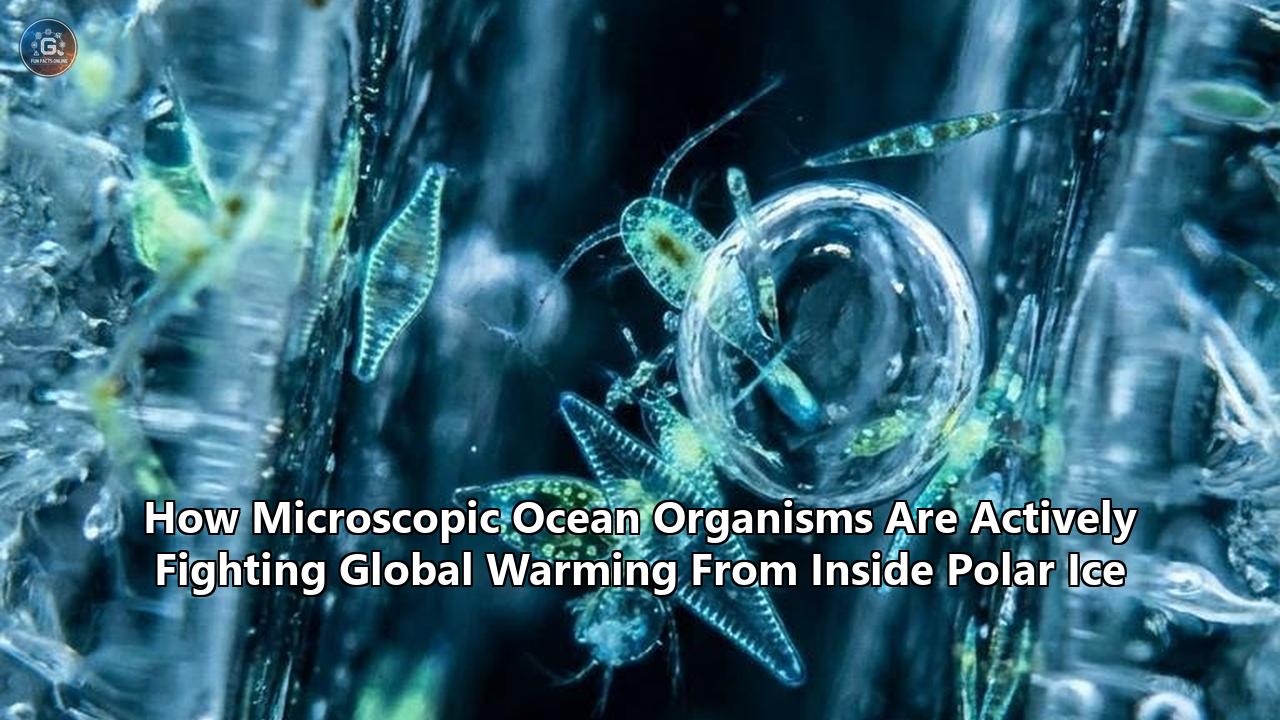
On June 18, 2026, the polar research vessel SA Agulhas II returned from a grueling austral winter expedition in the Southern Ocean, carrying data that has fundamentally upended our understanding of the polar cryosphere. For decades, the vast ring of winter sea ice encircling Antarctica—which expands to cover nearly 20 million square kilometers—was largely dismissed by climate scientists as an ecological wasteland, a sterile sheet of frozen water that remained biologically dormant during the dark, subzero winter months.
But a landmark study published in Nature Communications has shattered this assumption. Led by a team of marine microbiologists from Stellenbosch University alongside researchers from the United Kingdom and Italy, the study revealed that this frozen expanse is teeming with highly active microbial communities that are actively manufacturing massive reservoirs of a critical climate-cooling compound.
The compound, dimethylsulfoniopropionate (DMSP), serves as a biological shield for these micro-organisms, helping them survive the extreme, hypersaline brine channels inside the winter ice. When these microscopic ocean organisms climate change mitigation pathways are activated, DMSP degrades into dimethyl sulfide (DMS) and methanethiol (MeSH). These volatile gases escape into the atmosphere, where they oxidize into sulfate aerosols that seed clouds, reflecting solar radiation back into space and cooling the planet.
This discovery does not stand alone. Just months earlier, in October 2025, a parallel breakthrough by researchers at the University of Copenhagen demonstrated a similarly overlooked biological engine at the opposite pole. For the first time, scientists detected active nitrogen fixation by non-cyanobacterial bacteria directly beneath the central Arctic sea ice. By converting dissolved nitrogen gas into ammonium, these microbes are fueling massive, under-ice algal blooms. These algae act as microscopic carbon dioxide vacuum cleaners, drawing CO2 out of the atmosphere and locking it away in the deep ocean.
Together, these twin discoveries reveal that the microscopic life trapped within and directly beneath polar sea ice is not merely surviving; it is actively regulating the Earth's climate. Yet, this natural protective shield is in a race against time. As global warming continues to shrink sea ice at unprecedented rates, the very habitats that support these microscopic climate regulators are disappearing.
This reality has ignited a fierce debate within the scientific community: Should we rely on these natural, self-regulating biological systems to mitigate warming, or must we deploy highly controversial geoengineering technologies to replicate their cooling effects?
The Cryospheric Bioreactor: Antarctica's Hidden Sulfur Engine
To appreciate how microscopic ocean organisms climate change feedback systems work, one must look at the brutal environment of winter sea ice. During the polar night, temperatures within the ice can plunge to $-20^\circ\text{C}$. As seawater freezes, salt is excluded from the forming ice crystals, concentrating into a network of tiny micro-channels filled with hypersaline liquid brine.
For years, it was assumed that these brine channels were too hostile to support significant biological activity. However, the Stellenbosch University-led expedition found DMSP concentrations within the winter sea ice that were up to 38 times higher than those in the surrounding open ocean.
[Seawater Freezes] ──> [Salt Excluded into Brine Channels] ──> [Hypersaline, Subzero Environment]
                                                                        │
[DMS atmospheric release] <── [DMSP degradation] <── [Microbes synthesize DMSP as cryoprotectant]
           │
[Sulfate Aerosols form] ──> [Cloud Condensation Nuclei] ──> [Solar Radiation Reflected (Cooling)]
DMSP is a zwitterionic organosulfur compound that acts as an osmoprotectant, cryoprotectant, and antioxidant. For sea-ice diatoms and bacteria, synthesizing or importing DMSP is a matter of basic survival; it prevents their cell walls from collapsing under extreme osmotic pressure and protects their cellular machinery from freezing.
"Under stressful conditions, when organisms cannot afford to spend excessive energy for growth, they express metabolic pathways for either intercellular synthesis or extracellular import of DMSP as a buffering mechanism to survive," explained Prof. Thulani Makhalanyane, senior author of the study and holder of the South African Research Chair in African Microbiome Innovation.
The climate-cooling power of this microbial defense mechanism lies in its degradation products. When these micro-organisms die, lys, or are grazed upon by zooplankton, bacterial DMSP lyase enzymes (such as those encoded by the dddP and dddQ genes) break down DMSP. This reaction yields acrylic acid and dimethyl sulfide (DMS).
DMS is a highly volatile gas that diffuses through the ice and escapes into the marine boundary layer. Once in the atmosphere, DMS undergoes photo-oxidation by hydroxyl ($OH$) and nitrate ($NO_3$) radicals, forming sulfur dioxide ($SO_2$), which is subsequently oxidized into methane sulfonic acid (MSA) and sulfuric acid ($H_2SO_4$). These sub-micron sulfur particles serve as highly efficient Cloud Condensation Nuclei (CCN). By attracting water vapor, they facilitate the formation of low-level marine stratus clouds. This process increases cloud albedo—reflecting incoming solar radiation back into space—in a feedback loop known historically as the CLAW hypothesis.
                     +---------------------------------------+
                     |        Atmospheric Boundary Layer     |
                     |                                       |
                     |          Sulfate Aerosols (CCN)       |
                     |                     ▲                 |
                     |                     │ (Oxidation)     |
                     |              DMS / MeSH Gases         |
                     +---------------------▲-----------------+
                                           │
                                           │ (Diffusion)
                     +---------------------┴-----------------+
                     |                 Sea Ice               |
                     |  [Micro-Brine Channels (-1°C to -20°C)]|
                     |                                       |
                     |     Dunstalliella / Polar Diatoms     |
                     |     Produce DMSP (38x concentration)  |
                     +---------------------+-----------------+
                                           │
                                           │ (Melting / Grazing)
                     +---------------------▼-----------------+
                     |             Under-Ice Ocean           |
                     |   Non-cyanobacterial Nitrogen Fixers  |
                     |   Provide Ammonium (NH4+) to Algae    |
                     +---------------------------------------+
The scale of this process is staggering. At its winter maximum in September, the Antarctic sea ice forms a frozen ring between 400 and 1,900 kilometers wide around the continent.
"This is an enormous area of potentially climate-active biological activity that has, until now, been largely overlooked," said Dr. Mayi Buthelezi, lead author of the study. "Together with these high concentrations of DMSP, we found an abundance of algal marker genes associated with DMSP production, as well as diverse and previously unidentified bacterial producers."
The Arctic Nitrogen Engine: Rewriting the Carbon Equation
While Antarctica's winter sea ice operates as a massive sulfur engine, the Arctic Ocean functions as a highly specialized carbon pump. Historically, the central Arctic Ocean was thought to have very low primary productivity due to extreme nitrogen limitation. Because the region is physically isolated from major nutrient-rich ocean currents, the microscopic algae that form the base of the marine food web quickly exhaust the available nitrogen during the spring melt, halting their growth and limiting their ability to sequester carbon.
However, the October 2025 study from the University of Copenhagen completely rewrote this narrative. Researchers aboard the German research icebreaker Polarstern discovered that nitrogen fixation—a biological process once believed to be restricted to warm, tropical waters—is actively occurring directly beneath the central Arctic sea ice.
In warmer oceans, nitrogen fixation is carried out by photosynthetic cyanobacteria like Trichodesmium. In the dark, freezing waters of the Arctic, however, the researchers discovered that the process is executed by non-cyanobacterial diazotrophs (NCDs). These heterotrophic and chemolithotrophic bacteria survive by consuming dissolved organic matter released by sea-ice algae. In return, they utilize the nitrogenase enzyme complex to convert dissolved nitrogen gas ($N_2$) into ammonium ($NH_4^+$).
This ammonium is directly absorbed by the surrounding ice-associated diatoms, sparking a powerful symbiotic cycle.
[Algae Photosynthesis] ──> [Releases Dissolved Organic Matter] ──> [Heterotrophic Bacteria (NCDs)]
          ▲                                                                    │
          │                                                                    ▼
          └─────────────────── [Releases Ammonium (NH4+)] <─── [Fixes Nitrogen Gas (N2)]
"Until now, it was believed that nitrogen fixation could not take place under the sea ice because it was assumed that the living conditions for the organisms that perform this process were too hostile," said Lasse Riemann, professor at the Department of Biology at the University of Copenhagen and senior author of the study.
This symbiotic relationship has profound implications for the global carbon budget. As these nitrogen-fixing bacteria fuel localized algal growth, the algae act as highly efficient carbon sinks. Through photosynthesis, they convert dissolved inorganic carbon into organic biomass. When these algae die or are bound into fecal pellets by zooplankton, they rapidly sink through the water column, bypassing the shallow microbial loop where carbon is respired back into the atmosphere as CO2. Instead, they deposit this carbon onto the deep ocean floor.
"For the climate and the environment, this is likely good news," Riemann noted. "If algae production increases, the Arctic Ocean will absorb more CO2 because more CO2 will be bound in algae biomass."
Crucially, the study found that while these bacteria can fix nitrogen directly beneath solid ice, the process is far more efficient along the retreating ice edge, where light and organic matter are more abundant. As the Arctic continues to warm and sea ice retreats, the area of these melting ice edges is expanding rapidly.
"In other words, the amount of available nitrogen in the Arctic Ocean has likely been underestimated, both today and for future projections," said Lisa W. von Friesen, lead author of the Arctic study. "This could mean that the potential for algae production has also been underestimated as climate change continues to reduce the sea ice cover."
Mitigating Warming: Natural Feedback Loops vs. Geoengineering Technologies
The realization that microscopic ocean organisms climate change mitigation is actively occurring within polar ice has divided climate policy experts and biological oceanographers. This debate centers on a fundamental question: Should humanity focus on protecting and modeling these delicate, natural negative feedback loops, or should we actively intervene in the ocean using engineered technologies to replicate and scale up these processes?
To understand the stakes, we must compare the natural biological pathways of polar micro-organisms against two of the most prominent marine geoengineering technologies currently under development: Ocean Iron Fertilization (OIF) and Marine Cloud Brightening (MCB).
Technology A: Ocean Iron Fertilization (OIF)
Ocean Iron Fertilization is a technology designed to artificially mimic the massive diatom blooms that occur naturally at the polar ice edges. In vast regions of the world's oceans, particularly the Southern Ocean, primary productivity is limited not by nitrogen, but by a lack of iron—a micronutrient essential for the synthesis of photosynthetic enzymes. These areas are known as High-Nutrient, Low-Chlorophyll (HNLC) zones.
The concept of OIF, first proposed by oceanographer John Martin in the late 1980s ("Give me a half-packet of iron, and I'll give you an ice age"), involves intentionally dumping shiploads of iron sulfate ($FeSO_4$) into HNLC waters. The goal is to stimulate massive blooms of large, silicate-shelled diatoms. These diatoms rapidly consume dissolved CO2 and, upon dying, sink to the abyssal ocean floor, effectively sequestering carbon for centuries.
The Tradeoffs of OIF
While OIF has been tested in several small-scale experimental trials (such as EIFEX and LOHAFEX), it carries immense scientific and ecological risks that contrast sharply with natural polar microbial loops:
- Low Export Efficiency: In many artificial fertilization experiments, only a tiny fraction (often less than 10%) of the carbon fixed by the induced algal bloom actually sinks past the mesopelagic twilight zone to be permanently sequestered. The vast majority of the organic carbon is consumed by marine bacteria near the surface, which respires the carbon back into the ocean as CO2.
- Nutrient Robbing: Artificially stimulating a massive diatom bloom in one region of the ocean can deplete other essential macronutrients, such as nitrate and phosphate, in the surrounding waters. This "nutrient robbing" can drastically reduce primary productivity and collapse marine ecosystems downstream.
- Anoxia and Toxic Blooms: Massive, artificial algal blooms can lead to localized oxygen depletion (hypoxia) as the dead organic matter decays, potentially suffocating marine life. Furthermore, iron fertilization can selectively favor toxic diatom species, such as Pseudo-nitzschia, which produce the potent neurotoxin domoic acid.
Technology B: Marine Cloud Brightening (MCB)
Marine Cloud Brightening is an atmospheric solar radiation management (SRM) technology designed to replicate the natural sulfur-cooling cycle discovered in Antarctic sea ice. Instead of relying on microscopic algae and bacteria to produce volatile DMS gas that oxidizes into sulfate aerosols, MCB uses mechanical engineering.
Specialized vessels equipped with high-efficiency, micro-nozzles spray extremely fine mists of pressurized seawater into the marine boundary layer. As the water droplets evaporate, they leave behind tiny sea salt crystals. These crystals are carried upward by turbulent air currents, acting as artificial cloud condensation nuclei that increase the concentration of droplets within low-level marine stratocumulus clouds, thereby brightening them and increasing their reflectivity.
The Tradeoffs of MCB
MCB is highly controversial because of its localized nature and potential to disrupt global weather patterns:
- Termination Shock: Because sea salt particles only remain in the atmosphere for a matter of days or weeks, MCB requires continuous, uninterrupted operation. If the spraying is suddenly halted—due to war, technical failure, or political instability—the cooling effect would vanish almost instantly. This would trigger a rapid, catastrophic spike in global temperatures, known as "termination shock."
- Regional Precipitation Disruption: Climate modeling suggests that artificially altering cloud reflectivity in specific zones, such as the Southern Ocean or the sub-tropical Pacific, could shift global atmospheric circulation systems. This could disrupt monsoon cycles, potentially causing severe droughts in agricultural regions of South America, Africa, or Asia.
- Geopolitical Conflict: Because MCB can alter regional weather patterns, its deployment could lead to intense international disputes, with nations accusing one another of "stealing" rainfall or altering local climates for economic advantage.
Comparative Analysis: Natural Microbes vs. Human Engineering
To fully evaluate these competing approaches, we must analyze the tradeoffs across five key vectors: efficacy, environmental risk, financial cost, controllability, and governance.
| Vector | Natural Polar Microbial Feedback (DMSP & Nitrogen Fixation) | Ocean Iron Fertilization (OIF) | Marine Cloud Brightening (MCB) |
|---|---|---|---|
| Primary Mechanism | Natural synthesis of DMSP by sea-ice micro-organisms; symbiotic nitrogen fixation under ice. | Shipboard dumping of iron sulfate ($FeSO_4$) to stimulate diatom blooms. | Mechanical spraying of seawater aerosol to increase cloud albedo. |
| Cooling / Sequestration Potential | High, localized cloud albedo enhancement; significant, diffuse carbon sequestration. | High theoretical carbon drawdown, but highly variable in situ. | Extremely high, immediate localized cooling. |
| Environmental Risk | Low; represents a natural, homeostatic biological buffer. | High; risks of deep-water hypoxia, nutrient robbing, and toxic blooms. | High; risks of altering global precipitation and monsoon patterns. |
| Financial Cost | Free; requires only the conservation of polar habitats. | Moderate; requires industrial chemical manufacturing and research fleets. | Extremely high; requires specialized ocean-going vessels and automated spraying infrastructure. |
| Controllability | None; driven entirely by complex, autonomous biological and physical systems. | Low; biological response of marine ecosystems is highly unpredictable. | High; can be turned on or off, though subject to severe termination shock. |
| Governance Requirements | International ocean conservation agreements and marine protected areas (MPAs). | High; governed by strict international treaties like the London Convention. | Extremely high; lacks a comprehensive global regulatory framework, risking unilateral deployment. |
As this comparison demonstrates, natural polar microbial feedback systems are uniquely valuable because they are self-regulating, thermodynamically stable, and free of the catastrophic ecological side effects associated with geoengineering.
However, they are completely dependent on the physical integrity of the polar ice sheets—structures that are currently collapsing. This reality creates an ecological Catch-22: as we lose sea ice, we lose the very microscopic organisms that help cool the planet, forcing humanity to consider the very geoengineering technologies we are desperate to avoid.
Trophic Mismatches: The Double-Edged Sword of Polar Microalgae
While the carbon-sequestering and cloud-seeding capabilities of polar micro-organisms represent a powerful natural defense against warming, recent ecological studies have revealed a dark side to this accelerated biological activity. The rapid warming of the poles is shifting the timing of these microbial processes, creating severe ecological disruptions that threaten to collapse the entire marine food web.
This biological paradox was detailed in a study published in November 2025 by Courtney Payne, a postdoctoral fellow at the Institute of Arctic and Alpine Research (INSTAAR) at the University of Colorado. Using advanced modeling tools to project the state of Arctic phytoplankton blooms to the year 2100, Payne’s team discovered that summer blooms will start more than a month and a half earlier on average by the end of the century.
"Polar regions can experience rapid growth," Payne explained. "They have a pretty short window, but phytoplankton can grow like crazy over a period of weeks or months."
Historically, the explosive spring phytoplankton bloom was perfectly synchronized with the life cycles of polar zooplankton, particularly copepods and krill. These small, drifting animals rely on the lipid-rich microalgae to feed and fuel their own reproduction. However, because the sea ice is retreating much earlier in the year, the phytoplankton are now blooming during the cold, dark days of early spring, long before the zooplankton are physiologically ready to reproduce.
[Normal Timing (Historical)]
Sea Ice Melts ──> Diatoms Bloom ──> Zooplankton Multiply & Eat Algae ──> Fish/Whales Thrive

[Altered Timing (Under Warming)]
Early Ice Melt ──> Diatoms Bloom Too Early ──> Zooplankton Dormant ──> Algae Sink Uneaten
                                                                               │
[Ecosystem Collapse] <── Krill Starve <── Organic Carbon Trapped on Seafloor <─┘
The result is a severe trophic mismatch. Because the temperature is too low for zooplankton to multiply rapidly, the massive algal bloom goes completely uneaten. The dead algae sink directly to the ocean floor.
This creates a profound scientific paradox. From a pure carbon-sequestration perspective, this trophic mismatch is highly efficient: because the algae are not eaten by zooplankton, the carbon they captured is not respired back into the atmosphere. Instead, it is exported directly to the deep sea floor, locking it away from the global carbon cycle.
But from an ecological perspective, this process is catastrophic. Without a thriving population of copepods and krill to consume the algae, the entire marine food chain collapses. Whales, seals, seabirds, and commercial fish species are deprived of their primary food source, with devastating consequences for polar biodiversity and the Indigenous communities that rely on these ecosystems for sustenance.
The Southern Ocean Shift: Salps vs. Krill
A similar ecological transition is currently underway in the Southern Ocean. A 2026 study led by Tamara Schlosser of the Australian Centre for Excellence in Antarctic Science and the University of Tasmania has documented a dramatic shift in the structure of the Southern Ocean’s microscopic communities.
Schlosser's analysis of biogeochemical Argo float data revealed that the transition to a low-sea-ice regime in Antarctica is altering the physical properties of the water column, leading to deeper mixing layers and warmer, saltier surface waters. These physical changes are driving a fundamental shift in the types of micro-organisms that dominate the region.
Historically, Antarctic sea ice supported massive blooms of large-celled diatoms. These diatoms were the preferred food source for Antarctic krill, a keystone species that supports the region's vast populations of penguins, seals, and baleen whales. However, under the new low-ice regime, the plankton community is shifting away from diatoms toward much smaller picoplankton and nanoplankton.
This shift in the microbial community has triggered a dramatic ecological realignment:
- The Rise of Salps: While krill struggle to feed on these microscopic picoplankton, gelatinous, tube-like filter feeders called salps thrive in these conditions. Salps possess a highly efficient mucous mesh that allows them to vacuum up even the smallest micro-organisms.
- Carbon Export Acceleration: Salps produce large, dense, fast-sinking fecal pellets that transport organic carbon to the deep ocean floor at speeds of up to 1,000 meters per day. This makes them incredibly efficient drivers of the biological carbon pump.
- The Nutritional Void: Unlike krill, which are highly nutritious and packed with lipids, salps are composed of more than 95% water. They are gelatinous "ecological dead ends" that provide virtually no nutritional value to higher trophic levels.
[Phytoplankton Community Shifts]
        │
        ├─> [Diatoms (Large)] ───────> [Krill Prosper] ─────> [Healthy Food Web (Whales/Penguins)]
        │
        └─> [Picoplankton (Small)] ──> [Salps Prosper] ─────> [Ecological Dead End / High Carbon Sink]
Through these combined pathways, microscopic ocean organisms climate change mitigation is revealed as a highly complex, double-edged sword. While the physical collapse of polar sea ice may accelerate carbon export via trophic mismatches and salp dominance, it does so at the direct expense of polar biodiversity.
This reality underscores the danger of viewing polar ecosystems purely through the lens of carbon accounting; a highly efficient "carbon pump" can still be an ecological desert.
Overlooked and Underrepresented: The Challenge of Polar Microbial Modeling
One of the greatest challenges facing modern climate science is our inability to accurately model these complex microbial feedback loops. Despite their immense influence on the global carbon and sulfur cycles, microscopic ocean organisms climate change dynamics remain poorly integrated into the Earth System Models (ESMs) used by the Intergovernmental Panel on Climate Change (IPCC) to project future warming scenarios.
This critical research gap was highlighted in a January 2026 global synthesis led by researchers at McGill University. The review, which analyzed dozens of microbial studies across Arctic, Antarctic, alpine, and subarctic environments, warned that microbial processes are changing far faster than they are being understood.
"Cold-climate microbial ecosystems are poised for rapid change," said Scott Sugden, co-author of the study and a doctoral researcher at McGill’s Polar Microbiology Lab. "We know these changes will have significant consequences not only for the global carbon cycle, but also for human communities, food and income security, and toxin release. Yet these ecosystems are changing more quickly than they're being understood."
Sugden pointed out that polar microbiology is a relatively young field, with barely two decades of comprehensive baseline data. Unlike forestry or meteorology, where scientists can look back at centuries of documented observations, biological oceanographers only began deploying advanced metagenomic and biogeochemical sensors in the early 2000s.
This lack of historical baseline data makes it incredibly difficult to determine whether the microbial changes we are observing are temporary, seasonal anomalies or permanent shifts toward a new planetary state.
Furthermore, as the polar regions warm, terrestrial and marine microbial processes are beginning to compete in a dangerous climate tug-of-war:
- Marine Microbial Cooling: As sea ice retreats, increased light availability and localized nitrogen fixation are boosting microalgae productivity, enhancing carbon drawdown and DMSP-driven cloud seeding.
- Terrestrial Microbial Warming: Simultaneously, the thawing of polar permafrost and glaciers is waking up ancient soil microbes. As these terrestrial microbes metabolize long-frozen organic matter, they are releasing massive plumes of carbon dioxide and methane into the atmosphere, potentially offsetting any marine carbon sequestration gains.
"We do not yet know whether the net effect will be beneficial for the climate," admitted Lasse Riemann of the University of Copenhagen. "But biological systems are very complex, so it is hard to make firm predictions, because other mechanisms may pull in the opposite direction."
The Unresolved Frontiers of Polar Biogeochemistry
The discoveries of the Southern Ocean’s winter sulfur engine and the Arctic’s under-ice nitrogen pump have fundamentally changed our understanding of the cryosphere, revealing that polar sea ice is a dynamic, climate-relevant hotspot. Far from being a static barrier between the ocean and the atmosphere, sea ice is a living, breathing bioreactor, driven by microscopic organisms performing extraordinary work in the cold and dark.
Yet, this biological shield is incredibly fragile. As climate change continues to drive global temperatures higher, the physical structures that support these microscopic organisms are melting away.
The next decade will be critical for polar research. To resolve the massive uncertainties in our climate projections, scientists must rapidly scale up winter monitoring operations in the polar oceans. This will require sustained funding for advanced research vessels like the SA Agulhas II and the Polarstern, as well as the deployment of autonomous, biogeochemical Argo float arrays capable of collecting data beneath the ice year-round.
Ultimately, the choice facing humanity is not whether to intervene in the Earth's climate system—the rapid melting of the poles is already a profound, uncontrolled intervention. Instead, we must decide how to value the invisible, self-regulating biological systems that have kept our planet habitable for millennia.
Rather than rushing to deploy risky, unproven geoengineering technologies like ocean iron fertilization or marine cloud brightening, our immediate priority must be the aggressive conservation of the polar oceans. By establishing expansive Marine Protected Areas (MPAs) and drastically reducing global greenhouse gas emissions, we can protect the delicate, frozen habitats of these microscopic organisms.
In the fight against global warming, our most powerful allies may well be the smallest ones, working silently inside the ice.
Reference:
- https://novanews.co.za/study-shows-antarcticas-frozen-sea-teeming-with-climate-cooling-microbes/
- https://mg.co.za/the-green-guardian/2026-06-20-antarctic-ice-microbes-might-help-cool-the-planet-study-finds/
- https://www.eurekalert.org/news-releases/1132072
- https://scientificinquirer.com/2026/06/22/trapped-in-the-ice-antarctic-microbes-reveal-a-hidden-engine-of-climate-cooling/
- https://news.ku.dk/all_news/2025/10/important-phenomenon-discovered-in-the-arctic--could-boost-marine-life/
- https://antarctic.org.au/microscopic-shifts-global-stakes-how-antarctic-sea-ice-loss-is-disrupting-ocean-ecosystems/
- https://arctic.noaa.gov/report-card/report-card-2025/arctic-ocean-primary-productivity-the-response-of-marine-algae-to-climate-warming-and-sea-ice-decline-2025/
- https://www.eurekalert.org/news-releases/1085774
- https://www.colorado.edu/instaar/2025/11/19/scientists-predict-sea-change-arctic-ecosystems-end-century
- https://medium.com/southern-winds/the-antarctic-ocean-is-changing-the-smallest-creatures-show-it-first-bb560422f3a5
- https://www.mcgill.ca/newsroom/channels/news/polar-regions-microbes-are-influencing-climate-change-frozen-ecosystems-thaw-mcgill-review-finds-370584
- https://cordis.europa.eu/article/id/422569-microbes-response-to-climate-change-offers-a-glimpse-into-the-future-of-the-arctic
- https://www.arcticwwf.org/the-circle/stories/small-but-mighty-the-invisible-yet-serious-impacts-of-microbial-communities-in-a-warming-arctic-ocean/