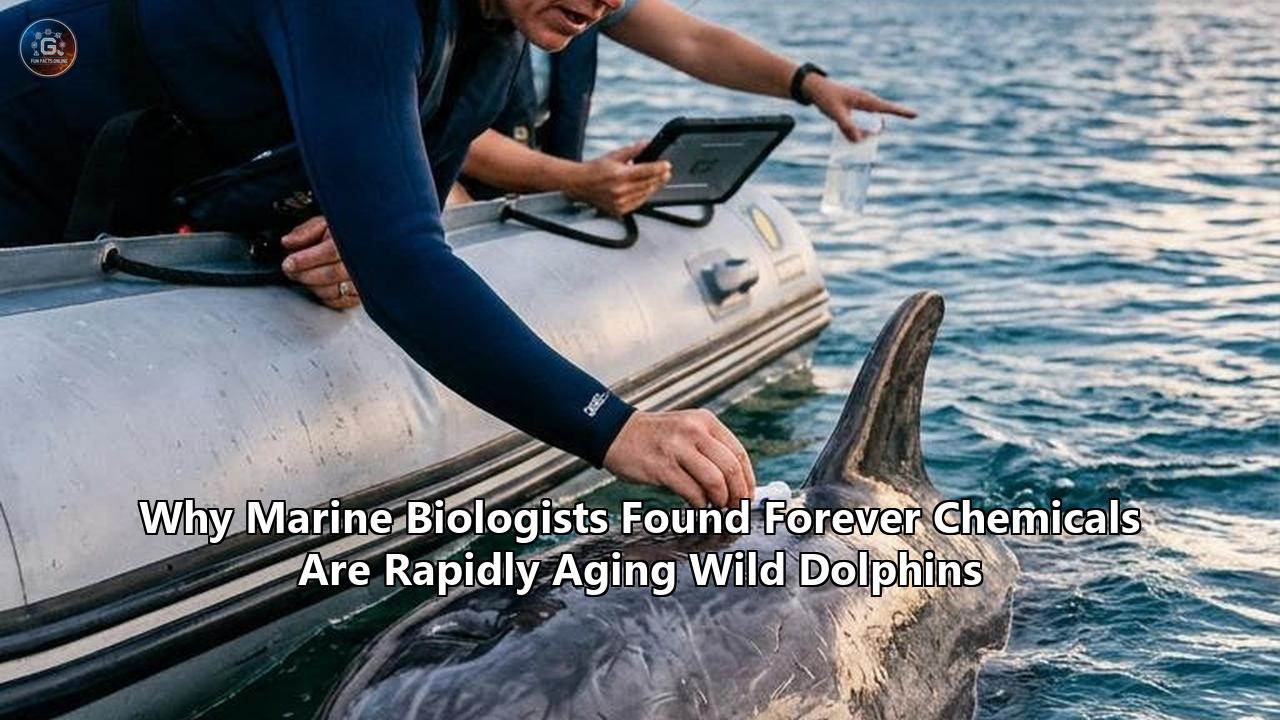
Marine biologists analyzing wild common dolphins (Delphinus delphis) off the coast of New Zealand have discovered that exposure to per- and polyfluoroalkyl substances (PFAS) actively accelerates the animals' biological aging process. The landmark study, led by Dr. Katharina Peters of the University of Wollongong and Professor Karen Stockin of Massey University, reveals that wild cetaceans are undergoing rapid, measurable cellular decay long before calendar time would dictate—a molecular phenomenon known as epigenetic age acceleration.
Published as a comprehensive multi-institutional investigation involving the University of Wollongong, Massey University, the Australian Museum, and the University of California, San Francisco, the research establishes the first direct empirical link between synthetic fluorinated compounds and accelerated biological aging in a wild marine mammal. By matching liver tissue contaminant burdens with skin DNA methylation profiles across stranded and bycaught dolphins, the research team demonstrated that for every single nanogram per gram (ng/g) increase in liver PFAS concentration, a dolphin’s biological age leaps forward by approximately 0.031 years—equivalent to nearly 12 days of extra cellular aging per unit of contaminant.
This finding fundamentally alters how ecotoxicologists evaluate chemical pollution in wildlife. Historically, environmental regulators and marine biologists assessed the toxicity of synthetic pollutants by measuring acute mortality rates, reproductive failure, or gross organ damage. The discovery of accelerated biological clock ticking in wild dolphins proves that industrial pollutants inflict deep, sub-lethal damage at the molecular level, silently eroding the physiological resilience of marine populations decades before traditional population crashes manifest.
Using this discovery as a lens, marine science faces a critical paradigm shift. The dolphin data provides a compelling case study of how ubiquitous industrial runoff rewrites the genetic software of apex predators, offering crucial lessons for environmental management, transgenerational toxicological risk, and human public health.
Decoupling Calendar Time from Cellular Aging
To understand why this discovery has reshaped marine toxicology, one must separate chronological age from biological age. Chronological age simply measures the passage of calendar years since birth. Biological age, conversely, reflects the functional state and physiological integrity of an organism's cells, tissues, and organ systems. A 10-year-old dolphin may possess the cellular characteristics of a 10-year-old animal under pristine conditions, but external stressors—such as chronic chemical exposure—can cause its biological clock to tick at a drastically accelerated rate.
                     CHRONOLOGICAL AGE
                   (Calendar Years Elapsed)
                              │
                              ▼
        ┌──────────────────────────────────────────┐
        │  Base Biological Rate of Aging (CpG)     │
        └────────────────────┬─────────────────────┘
                             │
       ┌─────────────────────┴─────────────────────┐
       │     ENVIRONMENTAL & CHEMICAL STRESSORS    │
       │  • PFAS Compounds (PFBA, PFNA)            │
       │  • Trace Heavy Metals (Zn, Cu, Se)        │
       │  • Chronic Oxidative Stress               │
       └─────────────────────┬─────────────────────┘
                             │
                             ▼
                   EPIGENETIC ACCELERATION
           (DNA Methylation Drift / Cellular Decay)
                             │
                             ▼
                      BIOLOGICAL AGE
             (Elevated Disease & Mortality Risk)
In molecular biology, the gold standard for measuring biological age is the "epigenetic clock." Epigenetic clocks measure DNA methylation—a natural chemical process where methyl groups ($-\text{CH}_3$) attach to specific cytosine-guanine (CpG) dinucleotide sites across the genome. As mammals age, these methylation patterns change in predictable, highly conserved ways, turning specific genes on or off without altering the underlying DNA sequence.
When environmental toxicologists construct species-specific epigenetic clocks, they measure methylation levels across thousands of CpG sites to build a mathematical baseline of natural aging. When an individual's epigenetic age exceeds its known calendar age, the difference is defined as Epigenetic Age Acceleration (EAA).
Dr. Peters and her team calibrated a custom cetacean epigenetic clock to evaluate wild common dolphins. What they uncovered was a clear, statistically robust correlation: animals carrying higher body burdens of synthetic chemicals were biologically far older than their chronological records indicated.
The physiological consequences of EAA are profound. In humans and laboratory rodents, accelerated epigenetic aging is associated with:
- Early-onset cardiovascular degradation and tissue fibrosis
- Premature immunosenescence (the exhaustion and malfunction of immune cells)
- Disrupted endocrine signaling and reproductive dysfunction
- Higher susceptibility to opportunistic infections and carcinogenesis
- Elevated baseline mortality independent of chronological age
For wild cetaceans, an accelerated epigenetic clock means that animals in their physical prime may suffer from the cellular frailty, compromised immune defense, and reduced reproductive output typically reserved for geriatric individuals.
The Chemical Culprits: Structural Specificity Over Total Mass
One of the most striking insights from the research team's analysis is that biological age acceleration is not driven merely by the total mass of chemicals an animal absorbs. Instead, biological damage is heavily dictated by chemical structure and compound specificity.
When assessing the health risks of forever chemicals dolphins carry in their tissues, traditional risk assessments often aggregated total perfluoroalkyl concentrations into a single metric. However, when Stockin and colleagues isolated individual chemical variants, they discovered that total chemical volume explained far less of the variation in epigenetic aging than specific compound signatures.
┌────────────────────────────────────────────────────────────────────────┐
│                        PFAS CHEMICAL CLASSIFICATIONS                   │
├───────────────────────────────────┬────────────────────────────────────┤
│ Short-Chain Compounds (e.g., PFBA)│ Long-Chain Compounds (e.g., PFNA)  │
├───────────────────────────────────┼────────────────────────────────────┤
│ • 4 Carbon Atoms                  │ • 9 Carbon Atoms                   │
│ • Historically marketed as "safe" │ • Highly bioaccumulative           │
│ • Rapid tissue distribution       │ • Long biological half-life        │
│ • Strong correlation with EAA     │ • Known epigenetic disruptor       │
└───────────────────────────────────┴────────────────────────────────────┘
Two specific perfluoroalkyl compounds emerged as the primary drivers of accelerated biological aging in the dolphins:
1. Perfluorobutyric Acid (PFBA)
PFBA is a four-carbon, short-chain carboxylic acid. Historically, chemical manufacturers championed short-chain PFAS like PFBA as environmentally friendly, safer replacements for legacy long-chain compounds such as perfluorooctane sulfonate (PFOS) and perfluorooctanoic acid (PFOA). Because short-chain molecules have shorter elimination half-lives in human blood, industry regulators assumed they posed minimal toxicological threat.
The dolphin data completely dismantles this assumption. PFBA was identified as the single strongest perfluoroalkyl driver of epigenetic age acceleration in common dolphins. Because of its high mobility in water and rapid cellular uptake, PFBA readily penetrates liver parenchyma and blood-organ barriers, interacting directly with intracellular proteins, peroxisome proliferator-activated receptors (PPARs), and chromatin-modifying enzymes.
2. Perfluorononanoic Acid (PFNA)
PFNA is a nine-carbon, long-chain carboxylic acid known for extreme persistence and bioaccumulation. Unlike short-chain variants, PFNA binds tightly to serum albumin and fatty acid-binding proteins, remaining inside mammalian tissues for years. In human epidemiologic studies, PFNA exposure has been directly linked to metabolic dysregulation, hepatic toxicity, and premature biological aging. Its strong signal in wild dolphin tissue confirms that long-chain fluorinated compounds exert conserved, cross-species toxicological damage on mammalian epigenomes.
Heavy Metal Synergies
The study further revealed that forever chemicals do not operate in a vacuum. The research team evaluated trace metals alongside PFAS, discovering that specific non-essential and essential metals in excess—notably selenium, zinc, copper, aluminum, and manganese—acted synergistically with fluorinated pollutants. Together, a select subset of these metals and PFAS compounds accounted for more than 50% of the total accelerated biological aging observed in the dolphins.
Selenium presents a striking toxicological double-edged sword. At trace levels, selenium is an essential micronutrient vital for glutathione peroxidase activity and thyroid hormone metabolism. However, when bioaccumulated to high concentrations in marine top predators, selenium turns cytotoxic. When combined with perfluorinated compounds, excess selenium amplifies intracellular oxidative stress, generating reactive oxygen species (ROS) that induce double-strand DNA breaks and trigger hyper-methylation of key promoter regions—effectively jamming the cell's epigenetic clock in fast-forward.
Molecular Pathways: How Fluorinated Compounds Shift Epigenetic Clocks
Why do synthetic fluorinated compounds cause biological clocks to accelerate? The answer lies in the unique, indestructible chemistry of the carbon-fluorine (C–F) bond and its disruptive interaction with mammalian cellular machinery.
                    PFAS Exposure (PFBA, PFNA)
                                │
                                ▼
         ┌──────────────────────────────────────────────┐
         │ Persistent Intracellular Binding & PPAR      │
         │ Activation / Mitochondrial Dysfunction       │
         └──────────────────────┬───────────────────────┘
                                │
                                ▼
         ┌──────────────────────────────────────────────┐
         │ Chronic Overproduction of Reactive Oxygen    │
         │ Species (ROS) & Unresolved Inflammation      │
         └──────────────────────┬───────────────────────┘
                                │
                                ▼
         ┌──────────────────────────────────────────────┐
         │ DNA Methyltransferase (DNMT) Dysregulation   │
         │ & Histone Deacetylase Recruitment            │
         └──────────────────────┬───────────────────────┘
                                │
                                ▼
         ┌──────────────────────────────────────────────┐
         │ Hyper/Hypo-methylation at Critical CpG Sites │
         │ (Epigenetic Drift / Premature Senescence)   │
         └──────────────────────────────────────────────┘
Per- and polyfluoroalkyl substances consist of fully or partially fluorinated carbon chains attached to functional head groups. The C–F bond is one of the strongest single bonds in organic chemistry, with a bond dissociation energy of roughly 116 kcal/mol. Consequently, natural metabolic enzymes cannot break down these molecules. Once absorbed through respiratory membranes (lung tissue) or the gastrointestinal tract (ingested fish and cephalopods), PFAS bind to circulating transport proteins and enter tissue cells.
Inside the cell, PFAS disrupt epigenetic programming through four primary pathways:
1. Peroxisome Proliferator-Activated Receptor (PPAR) Overactivation
PFAS structural analogs mimic natural fatty acids, binding directly to nuclear receptors such as PPAR-$\alpha$ and PPAR-$\gamma$. Continuous, non-physiological activation of these nuclear receptors alters lipid metabolism and transcription factor networks. This persistent transcription stress forces DNA methyltransferases (specifically DNMT1, DNMT3a, and DNMT3b) to constantly alter methylation patterns across genomic regulatory regions, accelerating epigenetic drift.
2. Mitochondrial Stress and Reactive Oxygen Species (ROS) Generation
Fluorinated compounds accumulate within lipid bilayers and mitochondrial membranes, uncoupling oxidative phosphorylation and impairing mitochondrial electron transport chain complexes. The resulting leakage of electrons creates chronic, low-grade oxidative stress. Reactive oxygen species directly damage genomic DNA, converting guanine to 8-hydroxy-2'-deoxyguanosine (8-OHdG). DNA repair machinery responding to this oxidation recruits DNMTs and histone-modifying enzymes to damaged sites, causing inadvertent, permanent changes to local DNA methylation patterns that manifest as accelerated biological age.
3. Exhaustion of Ten-Eleven Translocation (TET) Demethylases
Active DNA demethylation relies on TET enzymes, which require specific cofactors, including $\alpha$-ketoglutarate, oxygen, and reduced iron ($\text{Fe}^{2+}$). Chronic cellular inflammation and metabolic reprogramming induced by PFAS deplete cellular pools of these key cofactors. When TET enzyme activity declines relative to DNMT activity, cells lose their ability to precisely erase aberrant methyl groups, leading to cumulative hyper-methylation at development- and longevity-associated CpG islands.
4. Induction of the Senescence-Associated Secretory Phenotype (SASP)
As PFAS drive cellular stress, an increasing percentage of tissue cells enter irreversible cell cycle arrest—a state known as cellular senescence. These senescent cells remain metabolically active, secreting pro-inflammatory cytokines, chemokines, and matrix metalloproteinases (the SASP). SASP factors act via paracrine signaling to stress neighboring healthy cells, spreading epigenetic instability and accelerating tissue-wide biological aging.
Transgenerational Toxicity: The Milk-Borne Legacy
The finding that forever chemicals dolphins absorb accelerate biological aging takes on a more concerning dimension when viewed through the lens of cetacean reproductive biology.
Marine mammals face a unique toxicological vulnerability due to their reproductive physiology. Female dolphins invest immense metabolic energy into producing lipid- and protein-rich milk to feed their calves. However, milk production acts as an unintended excretion pathway for bioaccumulated lipophilic and protein-bound contaminants.
                     ADULT FEMALE DOLPHIN
             (Accumulates PFAS via Diet over Years)
                              │
               ┌──────────────┴──────────────┐
               │                             │
               ▼                             ▼
       GESTATION TRANSFER           LACTATION TRANSFER
    (Placental Translocation)   (Concentrated Milk Delivery)
               │                             │
               └──────────────┬──────────────┘
                              │
                              ▼
                     NEWBORN / JUVENILE CALF
         (Receives High Mass-Specific Chemical Dose)
                              │
                              ▼
                EARLY-LIFE EPIGENETIC REPROGRAMMING
           (Epigenetic Clock Acceleration Set at Birth)
During gestation and lactation, a female dolphin transfers a massive percentage of her cumulative PFAS tissue burden directly to her first-born calf. Research shows that nursing mothers can transfer up to 70–80% of their chemical burden to their offspring.
This creates a stark biological divergence between sexes:
- Male Dolphins: Lack a lactational or gestational mechanism to offload contaminants. Consequently, male dolphins accumulate an ever-increasing body burden of PFAS throughout their entire lifespan.
- Female Dolphins: Show fluctuating body burdens. Their chemical concentrations drop sharply after weaning their first calf, only to build back up before subsequent pregnancies.
- Calves and Juveniles: Receive an immense, mass-specific dose of perfluorinated compounds during their most vulnerable developmental windows.
The epigenetic implications of this transfer are severe. Epigenetic programming is most dynamic during embryonic development, infancy, and early childhood. When a calf ingests concentrated milk laden with PFBA, PFNA, and heavy metals, these compounds enter cells while epigenetic marks are actively being established across the genome.
Rather than starting life with an epigenetic age of zero, calves born to highly contaminated mothers experience early-life epigenetic reprogramming. Their molecular clocks are accelerated from birth, reducing their functional physiological reserve before they even reach sexual maturity. This transgenerational transfer creates a self-reinforcing cycle of cellular decay, where each successive generation inherits both a chemical burden and an already-accelerated biological clock.
The Fallacy of Offshore Refuge
A long-standing assumption in marine conservation was that pelagic (open-ocean) and deep-diving cetaceans enjoyed relative isolation from human chemical pollution compared to coastal species. Coastal dolphins, living near industrial estuaries, agricultural runoff points, and urban centers, were assumed to bear the brunt of toxicological exposure. Open-ocean species were presumed to live in relatively pristine waters.
The trans-Tasman marine research collaborations—which analyzed tissues across 16 cetacean species ranging from coastal Hector's dolphins (Cephalorhynchus hectori) to deep-diving sperm whales (Physeter macrocephalus) and oceanic beaked whales—permanently shattered this assumption.
┌─────────────────────────────────────────────────────────────────────────┐
│                     THE MYTH OF GEOGRAPHIC REFUGE                       │
├────────────────────────────────────┬────────────────────────────────────┤
│ PREVIOUS ASSUMPTION                │ DEMONSTRATED REALITY               │
├────────────────────────────────────┼────────────────────────────────────┤
│ • Offshore waters are pristine     │ • Global ocean circulation spreads │
│ • Deep-diving species protected    │   PFAS to all depths & latitudes   │
│ • Coastal habitat dictates risk    │ • Sex & age predict exposure far   │
│ • Distance = Safety                │   better than spatial location     │
└────────────────────────────────────┴────────────────────────────────────┘
The studies demonstrated that habitat location and offshore distance fail to predict PFAS contamination levels or biological age acceleration in cetaceans. Deep-diving beaked whales that forage thousands of meters below the surface in remote oceanic trenches showed contaminant concentrations and epigenetic aging trends comparable to near-shore coastal populations.
PFAS enter open-ocean food webs through two main pathways:
- Atmospheric Transport and Deposition: Volatile precursor PFAS (such as fluorotelomer alcohols) travel long distances through the atmosphere on wind currents before oxidizing into persistent perfluorinated carboxylates and sulfonates, which rain down onto pristine ocean surface waters.
- Global Oceanic Thermohaline Circulation: Water-soluble compounds like PFBA are carried by major ocean currents, sinking with cold, dense polar water masses and circulating throughout the global deep-ocean conveyor belt.
Once in marine waters, PFAS adsorb to marine snow (organic detritus) and are ingested by deep-sea mesopelagic fish, squid, and crustaceans. Through biomagnification, species that hunt in deep water absorb concentrated chemical doses. Because these chemicals persist indefinitely, there is no marine sanctuary far enough or deep enough to shield wild cetaceans from chemical exposure.
Sentinel Ecology: What Dolphin Epigenetics Warns About Human Health
Marine mammals are premier sentinel species for human public health. Dolphins and humans share a remarkable number of ecological, biological, and physiological characteristics:
- Top Predators: Both species occupy the top tier of marine-food-web consumption.
- Mammalian Biology: Both possess conserved mammalian genomes, complex immune systems, endothermic metabolisms, and identical epigenetic machinery (DNMTs, TET enzymes, histone complexes).
- Longevity: Both are long-lived species that accumulate environmental toxins slowly over decades.
- Shared Diet: Both consume high volumes of coastal and oceanic seafood (fish, squid, and crustaceans).
                  SHARED ENVIRONMENTAL EXPOSURE
             (Seafood Diet, Water, Atmospheric Transport)
                                │
               ┌────────────────┴────────────────┐
               │                                 │
               ▼                                 ▼
      WILD CETACEAN MODEL                   HUMAN POPULATION
  • Conserved Epigenetic Machinery      • Conserved Epigenetic Machinery
  • Accelerated Biological Age          • Accelerated Biological Age
  • Early Immunosenescence              • Early Onset Cardiovascular/
  • Reproductive Decline                  Metabolic Disease
               │                                 │
               └────────────────┬────────────────┘
                                │
                                ▼
                   SHARED EPIGENETIC BIOMARKER
           (Epigenetic Age Acceleration / EAA Signatures)
When marine biologists observe rapid epigenetic aging in wild dolphins, they are essentially viewing a real-time, accelerated model of human population toxicology.
Human epidemiologic studies have begun reporting parallel trends. Recent human cohort analyses evaluating industrial workers and coastal communities exposed to elevated drinking-water or seafood PFAS levels have uncovered statistically significant associations between perfluoroalkyl body burdens and accelerated epigenetic aging. In humans, this accelerated biological age manifests as early-onset metabolic syndrome, non-alcoholic fatty liver disease (NAFLD), chronic kidney dysfunction, reduced vaccine response, and premature cardiovascular disease.
Because wild common dolphins experience constant, life-long exposure without the confounding lifestyle factors that complicate human epidemiology (such as smoking, variable alcohol intake, or highly processed diets), they serve as a cleaner biological control group. The direct mathematical link established between forever chemicals dolphins carry and epigenetic age acceleration confirms that fluorinated compounds are primary drivers of biological aging in mammalian systems.
Lessons for Ecotoxicology: Extracting Principles from the Case Study
The discovery that PFAS accelerate biological aging in wild dolphins offers critical lessons for modern science, environmental policy, and conservation strategy.
┌───────────────────────────────────────────────────────────────────────────┐
│                    FIVE PRINCIPLES OF MODERN ECOTOXICOLOGY                │
├───────────────────────────────────────────────────────────────────────────┤
│ 1. Sub-lethal Molecular Damage Precedes Population Decline               │
│    Biological clocks reveal hidden physiological stress years before      │
│    demographic crashes or overt illness occur.                             │
├───────────────────────────────────────────────────────────────────────────┤
│ 2. Regrettable Substitutions Must Be Abandoned                             │
│    Replacing long-chain PFAS with short-chain analogs (like PFBA) fails   │
│    to protect biological health; chemical class bans are required.        │
├───────────────────────────────────────────────────────────────────────────┤
│ 3. Epigenetic Clocks Are the New Biomarker Standard                        │
│    Moving from destructive post-mortem toxicological analysis to          │
│    minimally invasive skin-biopsy epigenomics.                            │
├───────────────────────────────────────────────────────────────────────────┤
│ 4. Contaminant Risk Is Non-Linear and Mixture-Dependent                   │
│    Chemical toxicity must be evaluated through multi-pollutant            │
│    cocktail models rather than isolated compound testing.                  │
├───────────────────────────────────────────────────────────────────────────┤
│ 5. Marine Conservation Requires Global Chemical Control                    │
│    Spatial ocean sanctuaries cannot isolate wildlife from persistent,      │
│    globally distributed synthetic pollutants.                             │
└───────────────────────────────────────────────────────────────────────────┘
Principle 1: Sub-lethal Molecular Damage Precedes Population Decline
Traditional wildlife management relies on demographic indicators—such as birth rates, mortality rates, and population size—to assess species health. However, demographic shifts are lagging indicators. By the time a population crash is detected in a long-lived species like the dolphin, irreversible ecological damage has already occurred.
Epigenetic age acceleration provides a sensitive early-warning biomarker. It allows conservation biologists to quantify silent, sub-lethal physiological stress across a wild population long before overt mortality surges or reproductive collapse occur.
Principle 2: The Myth of "Regrettable Substitution"
For decades, regulatory agencies permitted chemical manufacturers to phase out legacy toxic compounds (such as PFOS and PFOA) by replacing them with structural variants featuring shorter carbon chains (such as PFBA, PFBS, or GenX). Industry claimed these short-chain alternatives were safe because they passed standard short-term toxicity tests.
The dolphin epigenetic data proves that short-chain substitutes like PFBA actively drive biological age acceleration. Regulatory policy must abandon single-compound replacement cycles and adopt comprehensive, class-based restrictions that regulate all synthetic fluorinated compounds simultaneously.
Principle 3: Epigenetic Clocks as Non-Invasive Diagnostic Tools
Historically, measuring deep toxicological damage in cetaceans required post-mortem tissue collection from stranded or bycaught animals. The refinement of cetacean epigenetic clocks using skin tissue opens up non-invasive monitoring possibilities.
Researchers can now collect tiny skin biopsies from free-swimming wild dolphins using remote darting techniques. By analyzing DNA methylation profiles in epidermal tissue, scientists can assess the epigenetic age acceleration of living populations in real time, mapping chemical stress gradients across ocean basins without harming the animals.
Principle 4: Toxicological Risk Is Non-Linear and Mixture-Dependent
Risk assessment models historically tested single chemicals in isolated laboratory environments to establish lethal concentration thresholds ($LC_{50}$). In nature, wildlife and humans are exposed to complex chemical cocktails.
The dolphin case study demonstrates that toxicity is non-linear. Biological age acceleration in common dolphins was driven by synergistic interactions between short-chain PFAS, long-chain PFAS, and heavy metal trace elements like selenium and zinc. Toxicological standards must evolve to evaluate multi-pollutant mixtures rather than isolated compounds.
Principle 5: Ocean Sanctuaries Are Inefficient Without Global Source Reduction
Marine protected areas (MPAs) are essential for preventing overfishing, habitat destruction, and vessel strikes. However, MPAs cannot stop atmospheric deposition or ocean-current transport of persistent synthetic pollutants. Marine conservation strategy must unite habitat protection with international chemical regulatory enforcement, such as expanding the Stockholm Convention on Persistent Organic Pollutants.
Methodological Blueprint: How Researchers Unlocked the Dolphin Clock
The technical framework used by Peters, Stockin, and their international collaborators provides a replicable blueprint for future wildlife toxicological studies.
┌───────────────────────────────────────────────────────────────────────────┐
│                      STUDY METHODOLOGICAL WORKFLOW                        │
├───────────────────────────────────────────────────────────────────────────┤
│ 1. Tissue Sample Acquisition                                             │
│    Liver & skin tissues harvested from stranded/bycaught common dolphins  │
│    (n = 30 to 75 specimens, New Zealand coastal & offshore waters)       │
├───────────────────────────────────────────────────────────────────────────┤
│ 2. High-Resolution Chemical Profiling                                    │
│    Liquid Chromatography-Tandem Mass Spectrometry (LC-MS/MS) for PFAS;     │
│    Inductively Coupled Plasma Mass Spectrometry (ICP-MS) for trace metals│
├───────────────────────────────────────────────────────────────────────────┤
│ 3. Epigenomic Sequencing & Methylation Arrays                             │
│    Mammalian Methylation Array (37k+ CpG sites) performed on skin DNA     │
├───────────────────────────────────────────────────────────────────────────┤
│ 4. Epigenetic Clock Calibration                                          │
│    Elastic Net Regression Modeling to isolate age-informative CpG sites   │
├───────────────────────────────────────────────────────────────────────────┤
│ 5. Epigenetic Age Acceleration (EAA) Residual Calculation                │
│    EAA = Epigenetic Age - Chronological Age (Residual Variance Analysis)  │
├───────────────────────────────────────────────────────────────────────────┤
│ 6. Information-Theoretic Multi-Model Inference                            │
│    Akaike Information Criterion (AICc) modeling to test PFAS-metal-EAA   │
│    interactions                                                           │
└───────────────────────────────────────────────────────────────────────────┘- Sample Selection: The team harvested paired liver and skin samples from wild common dolphins stranded or incidentally caught in fisheries around New Zealand between 2000 and 2023.
- Chemical Quantification: High-performance Liquid Chromatography-Tandem Mass Spectrometry (LC-MS/MS) measured liver concentrations of a broad panel of PFAS compounds. Inductively Coupled Plasma Mass Spectrometry (ICP-MS) quantified trace heavy metal concentrations.
- DNA Methylation Profiling: Genomic DNA extracted from epidermal skin tissue was hybridized to high-density custom mammalian methylation arrays targeting tens of thousands of conserved cytosine-guanine (CpG) sites across the cetacean genome.
- Epigenetic Clock Construction: Using penalized elastic net regression models, researchers identified a specific set of highly age-predictive CpG loci. The mathematical model yielded a species-specific clock capable of predicting known chronological age with high precision.
- EAA Residual Analysis: Epigenetic age acceleration was calculated as the residual value derived from linear regression of epigenetic age against chronological age. Positive residual values indicated animals whose cells were biologically older than expected.
- Information-Theoretic Modeling: Using an information-theoretic modeling framework (Akaike Information Criterion corrected for small sample size, AICc), the team evaluated competing hypotheses to determine which chemical variables best explained the variation in age acceleration.
This multi-tiered analytical pipeline proved that the relationship between contaminant exposure and biological aging was statistically robust, independent of animal sex, and biologically repeatable.
Global Regulatory & Policy Implications
The discovery that forever chemicals dolphins carry cause accelerated cellular aging comes at a critical juncture in global chemical governance.
┌─────────────────────────────────────────────────────────────────────────┐
│                    GLOBAL REGULATORY REFORM ROADMAP                     │
├─────────────────────────────────────────────────────────────────────────┤
│ • Complete Class-Based Ban under the Stockholm Convention                │
│   Shift from individual compound restrictions to regulating all ~14,000   │
│   PFAS variants as a single hazardous chemical class.                   │
├─────────────────────────────────────────────────────────────────────────┤
│ • Mandate Epigenetic Toxicity Testing for New Industrial Chemicals      │
│   Require chemical manufacturers to conduct DNA methylation and         │
│   epigenetic clock assays before commercial market clearance.           │
├─────────────────────────────────────────────────────────────────────────┤
│ • Overhaul Municipal & Industrial Wastewater Discharge Rules            │
│   Enforce advanced granular activated carbon (GAC) and reverse osmosis   │
│   filtration across municipal and industrial effluent facilities.       │
├─────────────────────────────────────────────────────────────────────────┤
│ • Integrate Epigenetic Biomarkers into Red List Species Assessments      │
│   Incorporate Epigenetic Age Acceleration (EAA) data into IUCN Threat   │
│   Criteria assessments for marine mammal populations.                   │
└─────────────────────────────────────────────────────────────────────────┘
The global policy framework regulating fluorinated compounds is fragmented:
The United States
The U.S. Environmental Protection Agency (EPA) established legally enforceable National Primary Drinking Water Regulations for six PFAS compounds (including PFOA, PFOS, PFHxS, PFNA, and GenX) and designated PFOA/PFOS as hazardous substances under CERCLA (Superfund). However, thousands of other perfluoroalkyl variants—including short-chain compounds like PFBA—remain largely unregulated in industrial discharges and surface waters.
The European Union
Under the REACH framework, European regulators proposed a comprehensive restriction on the manufacture, use, and placing on the market of all PFAS as a broad chemical class (encompassing roughly 10,000+ compounds). The dolphin study provides vital empirical justification for European regulators to resist chemical industry pressure seeking exemptions for short-chain alternatives.
International Treaties
The Stockholm Convention on Persistent Organic Pollutants has formally listed PFOS, PFOA, and PFHxS for global elimination. However, the slow, compound-by-compound listing process takes decades. The evidence that short-chain substitutes cause epigenetic age acceleration in marine sentinels demands that international treaty bodies adopt a comprehensive class-based prohibition on all fluorinated organics.
What Marine Biologists Are Watching Next
While the discovery that synthetic chemicals accelerate biological aging in wild dolphins marks a major milestone, it opens new, urgent scientific questions that research teams around the globe are now racing to answer.
Key Scientific Questions on the Horizon
                             FUTURE RESEARCH FRONTIERS
                                         │
       ┌─────────────────────────────────┼─────────────────────────────────┐
       │                                 │                                 │
       ▼                                 ▼                                 ▼
EVALUATING REVERSIBILITY      MULTI-STRESSOR SYNERGIES        EXPANDING PACIFIC & ATLANTIC
Can biological clocks slow   How do marine heatwaves, noise,  LONGITUDINAL COHORTS
down if chemical burdens     and microplastics interact with  Are global cetacean stocks
are reduced? PFAS to accelerate cellular decay? aging at different rates?- Is Epigenetic Age Acceleration Reversible?
In clinical human studies, dietary interventions, senolytic therapeutics, and stress reduction have shown promise in slowing or partially reversing epigenetic clocks. Marine scientists are investigating whether wild dolphin populations living in coastal zones undergoing active PFAS remediation show a deceleration in their biological aging rates over time.
- How Do Marine Heatwaves and Climate Change Intersect with Molecular Aging?
Ocean warming and marine heatwaves impose thermal stress on marine mammals, elevating metabolic rates and baseline cellular inflammation. Researchers are designing multi-stressor epidemiological models to test whether climate-driven thermal stress acts synergistically with forever chemical burdens to further accelerate biological clock decay.
- What Are the Functional Immune Consequences in Free-Ranging Cetaceans?
Researchers are combining skin-biopsy epigenetic clock assays with single-cell RNA sequencing (scRNA-seq) to directly evaluate how epigenetic age acceleration alters immune cell function. Scientists want to know if biologically older dolphins show a decline in functional T-cell receptor diversity, rendering them vulnerable to emerging marine epizootics, such as cetacean morbillivirus and novel avian influenza strains ($H5N1$).
- How Do Microplastics and Nanoplastics Act as Vectors?
Microplastics floating in surface ocean waters absorb hydrophobic PFAS compounds from surrounding seawater, acting as concentrated chemical delivery vectors when ingested by marine organisms. Scientists are examining whether microplastic ingestion amplifies the epigenetic toxicity of perfluoroalkyl compounds in mysticetes (baleen whales) and odontocetes (toothed whales) alike.
A Molecular Reckoning for the Oceans
The discovery by Peters, Stockin, and their colleagues that per- and polyfluoroalkyl substances rapidly age wild dolphins represents a profound molecular reckoning. It proves that synthetic industrial contaminants do not simply reside passively within biological tissues—they interact with the deepest regulatory machinery of mammalian cells, driving biological clocks forward ahead of calendar time.
The lesson offered by wild dolphins is unmistakable. The chemical compounds synthesized in industrial manufacturing plants leave a permanent, accelerating mark on the molecular software of ocean life.
As marine biologists expand epigenetic clock diagnostics across global whale and dolphin populations, the data collected from wild oceans serves as both an ecotoxicological warning and a public health wake-up call. Protecting marine biodiversity—and by extension, human environmental health—requires facing the reality that chemical pollution is actively altering the biological age of life on Earth. The molecular clock is ticking, and the time to reform global industrial chemical governance is rapidly running out.
Reference:
- https://www.sciencenews.org/article/forever-chemicals-aging-dolphins
- https://www.researchgate.net/publication/405500697_PFAS_exposure_is_associated_with_accelerated_epigenetic_ageing_in_a_wild_marine_mammal
- https://www.biorxiv.org/content/10.64898/2026.05.29.728902v1.full.pdf
- https://www.biorxiv.org/content/10.64898/2026.06.22.733504v1.full.pdf
- https://pmc.ncbi.nlm.nih.gov/articles/PMC9850008/
- https://australian.museum/blog/amri-news/forever-chemicals-contaminate-more-dolphins-and-whales/
- https://www.uts.edu.au/news/2026/06/levels-of-forever-chemicals-in-dolphins-and-whales-are-rising-globally
- https://www.uow.edu.au/media/2025/unprecedented-levels-of-forever-chemicals-found-in-dolphins-and-whales.php