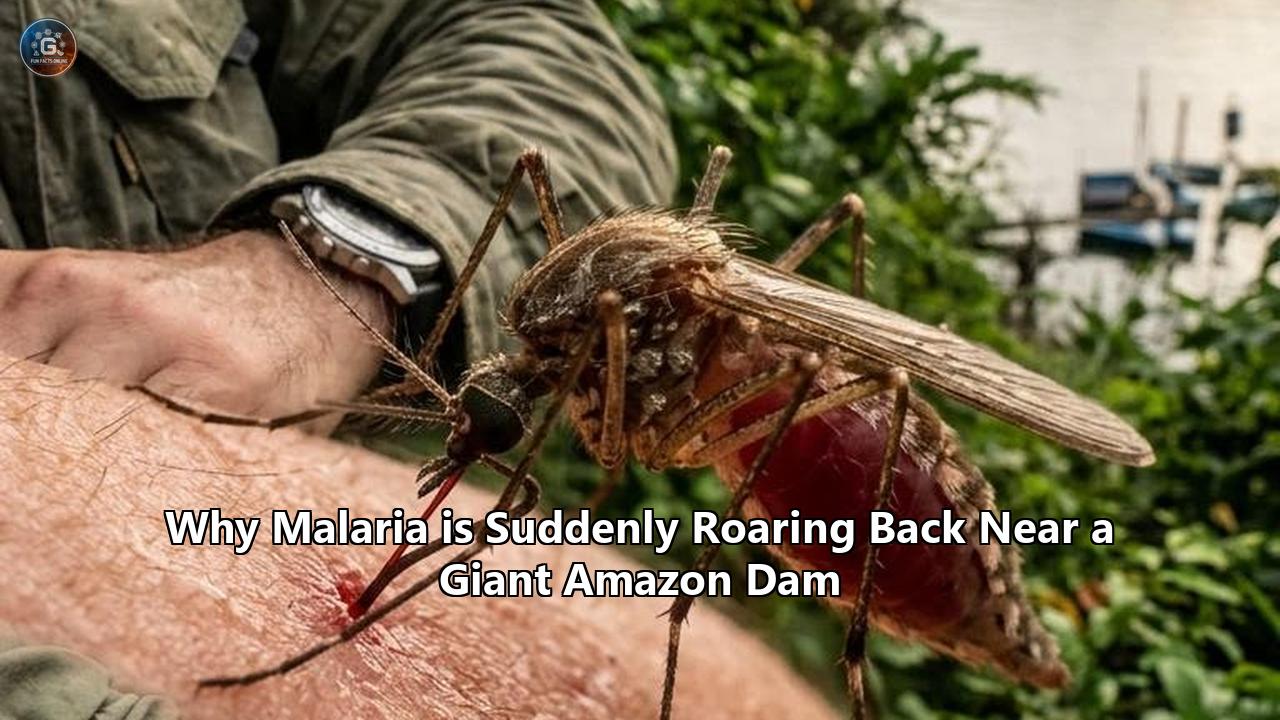
On July 9, 2026, a team of epidemiologists and spatial ecologists published a study in the journal GeoHealth that solved a quiet but devastating epidemiological mystery unfolding in the northern Brazilian state of Pará. The research, led by scientists from Stanford University, SAMA Health In Harmony Brazil, and the University of Queensland, investigated a massive, unexplained resurgence of malaria in the rural territories surrounding the Belo Monte Hydroelectric Dam—one of the largest and most controversial infrastructure projects on Earth.
The findings exposed a sobering reality: after a highly funded, corporate-backed public health campaign successfully brought malaria cases down to near-zero during the dam’s construction phase, the disease has roared back with a vengeance. In the communities bordering the Xingu River, malaria infections underwent an alarming 1,000% rebound once the temporary mitigation funds ran out and the preventative programs were dismantled.
This sudden resurgence is not a localized stroke of bad luck; it is a textbook case of an ecological and financial trap. By examining 15 years of satellite imagery alongside clinical data from 150 health centers in the municipality of Altamira, the study’s co-authors, including University of Queensland epidemiologist Eloise Skinner, revealed that the physical modifications of the Amazonian landscape caused by the dam have constructed a permanent, high-velocity engine for malaria transmission.
The unfolding crisis near Belo Monte serves as a stark warning. The physical alterations of the rainforest have fundamentally restructured the relationship between human settlements and the Amazon’s most dangerous disease vector, creating a structural health crisis that temporary, short-term corporate funding was never designed to solve.
The Landscape Trap: How the Dam Created a High-Octane Vector Ecotone
To understand why this malaria outbreak Amazon dam scenario has materialized so aggressively, one must look at the physical restructuring of the Xingu River basin. When construction of the Belo Monte Hydroelectric Dam began in 2011, it was hailed by successive Brazilian administrations as a cornerstone of green energy development. Yet, the physical footprint of the project was catastrophic. To feed the dam’s massive turbines—capable of producing 11,233 megawatts of power—the Norte Energia S.A. consortium diverted up to 80% of the river’s natural flow along a 100-kilometer stretch known as the Volta Grande (Great Bend).
The resulting environmental shifts flooded approximately 516 square kilometers of land, of which 400 square kilometers was primary, native Amazonian rainforest. This was not a uniform clearance of land; rather, it was a highly fragmented, jagged carving of the forest. The creation of roads, transmission corridors, temporary settlements, and fluctuating reservoir banks fractured the continuous forest canopy, replacing it with thousands of miles of "forest edge" habitats.
For decades, epidemiologists studying "frontier malaria" have known that deforestation increases transmission. However, the July 2026 GeoHealth study revealed a critical nuance that challenges long-held assumptions. The resurgence of malaria near Belo Monte was not closely correlated with the total area of cleared forest. Instead, the strongest, most consistent predictor of malaria transmission was proximity to the forest edge—the specific ecotone where intact primary forest meets cleared, open land.
According to the researchers' spatial models:
- For every 1% increase in the perimeter of the forest edge, local malaria cases rose by approximately 0.7%.
- For every 1% increase in the population residing at these forest edges, cases surged by 1.4%.
   [ Pristine Forest ] (Cool, dark, acidic water - low vector breeding)
           |
           v
   ===================  <-- FOREST EDGE ECOTONE (Partial shade, sunlit pools,
   ~~~~~~~~~~~~~~~~~~~                           highly productive breeding)
           ^
           |
   [ Cleared Land / Pasture ] (Hot, dry, exposed - too harsh for vectors)
This statistical correlation is rooted in the specific biology of Nyssorhynchus darlingi (formerly classified as Anopheles darlingi), the primary mosquito vector responsible for transmitting the Plasmodium parasites in the Amazon basin. Unlike other mosquito species that adapt well to completely urbanized settings, Ny. darlingi is an opportunistic, highly adaptive edge-dweller. It thrives in partially shaded, stagnant, or slow-moving bodies of water—the exact aquatic environments created when rising reservoir levels flood low-lying forest floors, or when small streams are blocked by access roads.
In deep, pristine forest, the waters of the Amazon are often too acidic, dark, and filled with organic tannins to support large populations of Ny. darlingi larvae. In contrast, completely cleared fields or cattle pastures are too hot and dry, stripping the mosquitoes of the canopy shade they need to survive the equatorial heat.
The forest-edge ecotone offers the perfect compromise. It provides the shade of the tree line, sunlit pools of standing water rich in nutrients for larval development, and immediate proximity to human hosts who live, farm, and work along the forest frontier. By carving up the Xingu Basin, the Belo Monte Dam essentially engineered a continent-scale, high-productivity incubator for the region's most efficient malaria vector.
The Human Geography of Risk: Who Is Caught in the Resurgence?
The human toll of this ecological transformation is marked by sharp geographic and social inequalities. The 2026 GeoHealth study highlighted a striking spatial divergence: while malaria cases surged by over 1,000% in the rural, riverine, and indigenous communities surrounding the reservoir, the urban center of Altamira remained almost entirely unaffected.
                                +---------------------------+
                                |  Belo Monte Dam Complex   |
                                +-------------+-------------+
                                              |
                     +------------------------+------------------------+
                     |                                                 |
                     v                                                 v
        +--------------------------+                      +--------------------------+
        |   Urban Altamira Core    |                      | Rural Frontier / Edges   |
        +--------------------------+                      +--------------------------+
        | * Sustained diagnostics  |                      | * High vector density    |
        | * Rapid treatment access |                      | * Scattered settlements  |
        | * Low environmental risk |                      | * Defunded local clinics |
        |                          |                      | * 1,000% malaria rebound |
        | ==> SAFELY PROTECTED     |                      | ==> HIGH SURGE ZONE      |
        +--------------------------+                      +--------------------------+
During the height of Belo Monte's construction, the municipality's urban core was a major focal point for malaria transmission, driven by the rapid influx of tens of thousands of migrant laborers. Today, the geography of risk has completely flipped. The urban center is protected by robust infrastructure, concrete roads, and a dense concentration of healthcare clinics that can quickly diagnose and treat the few cases that enter the city.
But in the rural hinterlands, those living along the riverbanks (ribeirinhos) and inside indigenous territories are exposed to a double jeopardy. They reside in the zones with the highest ecological risk, and they are simultaneously the most isolated from the formal healthcare system.
Displaced and Marginalized Communities
The construction of Belo Monte forcibly displaced more than 40,000 people from their traditional homes along the Xingu River. While some were relocated to planned urban neighborhoods on the outskirts of Altamira, thousands of others—especially traditional fishing families—were pushed further into the rural margins. Cut off from their traditional fishing grounds due to the permanent artificial drought in the Volta Grande, many of these riverine families had to pivot to small-scale agriculture, cattle ranching, and logging. These livelihoods require them to clear small patches of forest, bringing them into daily, direct contact with the newly created forest edges during the twilight hours when Ny. darlingi is most active.
Indigenous Territories Under Siege
For the indigenous groups of the Middle Xingu, including the Juruna (Yudjá), Arara, and Xikrin peoples, the dam has compromised both their food security and their health. The drying of the Volta Grande has decimated migratory fish populations, which previously provided up to 50% of the animal protein in local diets. Malnourished and weakened, these populations are far more susceptible to severe clinical manifestations of malaria when bitten by infected vectors.
Furthermore, the expansion of illegal gold mining (garimpo) and wildcat logging, which surged as the local economy destabilized following the construction boom, has further exacerbated the problem. Miners leave behind deep, un-reclaimed craters that collect rainwater. When these open craters sit directly beneath the forest canopy, they act as highly concentrated larval "hotspots" that accelerate the transmission cycle.
Mobile and Migrant Laborers
A significant portion of the rural population near the dam consists of seasonal agricultural workers, loggers, and miners. These populations are highly mobile, frequently traveling between deep-forest worksites, rural settlements, and urban centers. Because they lack stable housing, they often sleep in open-walled wooden shelters (barracos) or hammocks without insecticide-treated bed nets, offering no physical barrier against the nocturnal biting of Ny. darlingi.
Short-Term Impact: The Immediate Crises in the Ribereño and Indigenous Territories
The immediate consequences of the defunded malaria control programs are felt at the household and community levels, manifesting as severe health shocks, economic paralysis, and the systemic collapse of rural medical outposts.
       +-----------------------------------------------------------+
       |           COLLAPSE OF TEMPORARY CONTROL PROGRAM           |
       +-----------------------------+-----------------------------+
                                     |
             +-----------------------+-----------------------+
             |                                               |
             v                                               v
+--------------------------+                    +--------------------------+
|  Clinical Health Shocks  |                    | Household Economic Ruin  |
+--------------------------+                    +--------------------------+
| * Plasmodium vivax       |                    | * Loss of adult working  |
|   relapses (hypnozoites) |                    |   days (10-15 per bout)  |
| * Severe Plasmodium      |                    | * Diversion of scarce    |
|   falciparum anemia      |                    |   funds for transport    |
| * Under-equipped, remote |                    | * Compounding cycle of   |
|   frontier clinics       |                    |   malnutrition & poverty |
+--------------------------+                    +--------------------------+
The Clinical Reality of the Parasitic Surge
The return of malaria in Altamira’s rural frontier involves two primary parasite species: Plasmodium vivax and Plasmodium falciparum.
- Plasmodium vivax is responsible for roughly 90% of the cases in the region. While less frequently fatal than falciparum, it is highly debilitating. P. vivax forms dormant stages in the human liver known as hypnozoites, which can reactivate months or even years after the initial mosquito bite, causing repeated, grueling bouts of high fever, intense chills, and severe joint pain without requiring a new transmission event.
- Plasmodium falciparum, though less common, is the deadliest malaria parasite. In rural Altamira, pockets of P. falciparum have surged, presenting a major threat to children and pregnant women. Left untreated, it quickly progresses to severe anemia, organ failure, cerebral malaria, and death.
The Strained Frontier Healthcare Network
In the immediate term, rural health centers (postos de saúde) along the Xingu are completely unequipped to handle a 1,000% surge in cases. During the dam's construction, Norte Energia funded a network of rapid-response units equipped with light microscopes, digital diagnostic tools, and abundant supplies of antimalarial medications like Artemisin-based Combination Therapies (ACTs) and chloroquine/primaquine.
Today, those resources are gone. Many remote outposts are staffed only by community health agents who lack the specialized training to perform blood-smear microscopy. If rapid diagnostic test kits run out—a frequent occurrence due to poor supply chains along the unpaved Trans-Amazonian Highway—patients must travel up to 10 hours by motorized canoe and unpaved roads to reach Altamira’s municipal hospital. This delay in diagnosis means that infected individuals remain in their communities for days or weeks, serving as active reservoirs of the parasite from which local mosquitoes continue to feed and spread the disease.
Household Economic Ruin
For a ribeirinho family, a single case of malaria can derail an entire season’s livelihood. Subsistence farming, small-scale mandioca (cassava) cultivation, and rubber tapping require intense physical labor. When the primary breadwinner is incapacitated for two to three weeks by a malaria bout, agricultural yields plummet.
Furthermore, because malaria frequently strikes multiple members of a household simultaneously due to shared exposure, families are forced to make a terrible choice: spend their remaining savings on fuel for the boat journey to an urban clinic, or rely on ineffective, informal local remedies while the infection worsens. This dynamic drives a feedback loop of poverty, malnutrition, and disease that strips frontier communities of their economic resilience.
Long-Term Impact: Sinking Brazil’s National Malaria Elimination Strategy
Beyond the immediate suffering of the communities along the Xingu, the resurgence of malaria near the Belo Monte Dam threatens to derail decades of public health progress at the national and continental levels.
       +-----------------------------------------------------------+
       |            BRAZIL'S NATIONAL ELIMINATION TARGETS          |
       +-----------------------------+-----------------------------+
                                     |
             +-----------------------+-----------------------+
             |                                               |
             v                                               v
+--------------------------+                    +--------------------------+
|  Epidemiological Sinks   |                    | Drug Resistance Threat   |
+--------------------------+                    +--------------------------+
| * Rural reservoirs fuel  |                    | * Sub-therapeutic dosing |
|   reintroduction cycles  |                    |   fuels parasite mutation|
| * Mobile workers export  |                    | * Incomplete treatments  |
|   malaria to non-endemic |                    |   jeopardize ACT efficacy|
|   Brazilian states       |                    |   nationwide             |
+--------------------------+                    +--------------------------+
Threatening the 2035 Elimination Target
The Brazilian Ministry of Health has committed to an ambitious National Malaria Elimination Plan, which aims to reduce the country’s annual case load to fewer than 14,000 cases by 2030 and achieve complete, locally acquired elimination by 2035. In 2024, the Legal Amazon accounted for 138,000 of the nation's 142,000 cases, demonstrating that the battle for elimination will be won or lost in the rainforest.
The sudden bounce-back of malaria in Altamira highlights a fatal flaw in the elimination strategy. Even if the country suppresses malaria in major urban hubs and highly accessible rural zones, highly localized, remote reservoirs of transmission—such as the forest-edge communities around giant dams—can act as epidemiologic "sinks". These sinks harbor the parasite indefinitely, ensuring that as soon as vector control efforts relax elsewhere, the disease can easily spread back into previously cleared zones.
The Vector of Human Mobility
The long-term danger of these remote reservoirs is amplified by the high mobility of the Amazon's frontier population. A working-age male who contracts malaria while working an illegal gold mining claim or a seasonal logging plot near the Belo Monte reservoir does not stay in the forest edge. He frequently travels back to his home state—whether in the non-endemic northeastern or southern regions of Brazil.
Because secondary malaria vectors, such as Anopheles albitarsis, exist throughout Brazil, a single imported case of malaria from a highly active hotspot like Altamira can ignite localized outbreaks in states that have been malaria-free for decades. The failure to control transmission near the dam is not a localized failure; it represents a persistent, systemic threat to the biosecurity of the entire nation.
The Danger of Drug-Resistant Parasites
A prolonged, uncontrolled malaria outbreak Amazon dam scenario in a remote region is the ideal breeding ground for drug-resistant parasites. When rural patients face irregular access to public healthcare, they often obtain antimalarial drugs through informal black-market channels. These self-medicating individuals frequently take incomplete or sub-therapeutic doses, which fail to clear the infection but provide the exact evolutionary pressure needed for the malaria parasite to develop resistance to standard treatments.
If P. falciparum strains resistant to artemisinin-based combination therapies emerge in these unmonitored frontier zones, it would represent a catastrophic setback for malaria control efforts across the entire South American continent, mirroring the devastating spread of drug resistance that has crippled elimination efforts in parts of Southeast Asia.
The Funding Mirage: The Structural Failure of Transitory Corporate Mitigation
The core driver of the Altamira malaria resurgence is not a lack of scientific knowledge or medical tools, but a deep structural failure in how large-scale infrastructure projects are planned, licensed, and financed in developing nations.
                 +---------------------------------------+
                 |   Environmental Licensing Approved    |
                 |   (IBAMA sets 23 conditionalities)    |
                 +-------------------+-------------------+
                                     |
                                     v
                 +---------------------------------------+
                 |       CONSTRUCTION PHASE (2011-2016)  |
                 |   * Corporate funds pour into health  |
                 |   * Intense indoor spraying, ACTs     |
                 |   * Malaria cases drop: 1200 -> 60    |
                 +-------------------+-------------------+
                                     |
                                     v
                 +---------------------------------------+
                 |      OPERATIONAL PHASE (2016-Present) |
                 |   * Corporate funding legally expires |
                 |   * Health infrastructure defunded    |
                 |   * Forest-edge ecology remains       |
                 |   ==> MALARIA SURGES BY 1,000%        |
                 +---------------------------------------+
The "Socio-Environmental Conditionality" Trap
When Brazil’s environmental protection agency, IBAMA, granted the environmental license for the construction of the Belo Monte Dam in 2011, it did so under the condition that the consortium, Norte Energia, fulfill 23 socio-environmental "conditionalities" (condicionantes). These requirements were designed to mitigate the immense social and ecological upheaval caused by bringing over 30,000 construction workers into a sensitive, endemic rainforest ecosystem.
One of the most successful mitigation programs was the malaria control initiative. Norte Energia poured millions of dollars into Altamira’s public health network, funding:
- Massive, systematic indoor residual spraying (IRS) of homes with long-lasting insecticides.
- The distribution of tens of thousands of insecticide-treated bed nets (ITNs) to rural and indigenous families.
- The establishment of decentralized testing stations that guaranteed rapid diagnosis and complete treatment of malaria cases within 24 hours.
This intensive, vertically integrated program was a spectacular success. Between 2013 and 2017, annual malaria cases in Altamira plummeted from more than 1,200 to fewer than 60. For a brief moment, it appeared that industrial development had achieved what decades of public health campaigns could not: the near-elimination of malaria in one of its most persistent Amazonian strongholds.
The Cliff-Edge of Defunding
The fatal flaw of this model is that corporate socio-environmental funding is structurally tied to the construction phase of a project. Once the dam was completed, the concrete dried, the bulk of the workforce departed, and Belo Monte transitioned into its operational phase in 2016, the legal obligations of the consortium changed. The specialized malaria control funding expired, and the responsibility for maintaining the vast surveillance and treatment apparatus was handed back to the cash-strapped municipal government of Altamira.
This handoff created an immediate public health disaster. A municipal government whose tax base was reeling from the post-construction economic bust could not afford to run a high-intensity, helicopter-supported active surveillance network across thousands of square kilometers of riverine frontier. The indoor spraying stopped, the distribution of bed nets dried up, and the decentralized testing outposts were shuttered.
The Danger of Temporary Suppression
Epidemiologically, temporary disease suppression without permanent elimination is often more dangerous than no intervention at all. When malaria is suppressed to near-zero for several years, the local human population gradually loses its clinical immunity. In highly endemic areas, constant re-exposure to the parasite allows individuals to develop a degree of immunity that, while not preventing infection, keeps the parasite density low and prevents severe clinical illness.
When the control measures near Belo Monte were abruptly withdrawn, the disease re-entered a highly susceptible population with a heavily altered landscape that favored the vector. The result was not a slow return to baseline, but an explosive, highly localized 1,000% surge that rapidly overwhelmed the remaining public health services.
Comparative Analysis: The Historical Echoes of Frontier Malaria
The crisis at Belo Monte is part of a historical pattern of development-driven disease surges in the Amazon basin. Over the past half-century, large-scale infrastructure and extractive projects have repeatedly triggered massive public health crises.
| Historical Epoch / Project | Primary Driver of Transmission | Public Health Response | Outcome / Long-Term Impact |
|---|---|---|---|
| 1970s Trans-Amazonian Highway Colonization | Massive road construction, clearing of protective forest canopy, and influx of non-immune settlers from northeastern Brazil. | Basic vector control; deployment of chloroquine. | Initiated the concept of "frontier malaria," with national cases spiking to over 500,000 annually by the late 1980s. |
| 1980s Serra Pelada Gold Rush | Creation of millions of un-reclaimed water-filled mining pits; transient, highly mobile labor force living in open camps. | Fragmented regional interventions; lack of coordinated state response. | Fueled a massive national epidemic; malaria became entrenched across the northern Amazonian states. |
| 2008–2013 Madeira River Dams (Santo Antônio & Jirau) | Large-scale flooding near Porto Velho; construction worker influx; rapid alteration of local river hydrology. | Coordinated public-private control programs running through construction. | Successful temporary suppression; however, post-construction funding cuts led to localized resurgences in rural settlements. |
| 2011–Present Belo Monte Dam (Altamira) | Massive fragmentation of forest canopy; permanent creation of thousands of kilometers of high-productivity "forest edge" ecotones. | Intensive corporate-funded IRS and ACT deployment, which abruptly ceased post-2017. | 1,000% resurgence of malaria in rural communities, concentrated in hard-to-reach forest edges, threatening Brazil's 2035 elimination goals. |
These historical comparisons reveal that whenever the physical landscape of the Amazon is altered to increase the length of the forest edge, and whenever human populations are brought into contact with those edges without permanent, state-supported healthcare infrastructure, malaria will return. The "funding mirage"—relying on temporary, private-sector corporate mitigation schemes—consistently fails because it treats a permanent ecological change as a temporary construction inconvenience.
Policy Solutions: Bridging the Gap Between Ecology and Public Health
The sudden resurgence of malaria near the Belo Monte Dam shows that traditional, medicine-only approaches are insufficient to achieve lasting disease elimination in highly modified tropical landscapes. To break the cycle of infection, Brazil and other tropical nations must integrate environmental management directly into their public health frameworks, reform the legal structures of infrastructure financing, and deploy modern diagnostic technologies directly to the forest frontier.
                +-----------------------------------------------+
                |     REFORMED DEVELOPMENT LICENSING MODEL      |
                +-----------------------+-----------------------+
                                        |
       +--------------------------------+--------------------------------+
       |                                |                                |
       v                                v                                v
+----------------------------+   +----------------------------+   +----------------------------+
|  Legally Binding Trusts    |   |  Forest Edge Buffer Zones  |   | Satellite-Guided Targeting |
+----------------------------+   +----------------------------+   +----------------------------+
| Host-country development   |   | Mandate a 500-meter buffer |   | Utilize high-resolution    |
| banks (e.g., BNDES) must   |   | zone between new forest    |   | satellite telemetry to     |
| require developers to fund |   | edges and human housing    |   | identify larval "hotspots" |
| public health programs for |   | to isolate communities     |   | and direct vector control  |
| the entire operational life|   | from high-risk mosquito    |   | to high-risk ecological    |
| cycle of the dam.          |   | breeding habitats.         |   | ecotones.                  |
+----------------------------+   +----------------------------+   +----------------------------+
1. Reforming Infrastructure Financing: The Lifetime Health Trust
The most critical policy shift must occur at the level of environmental licensing and development finance. Currently, institutions like the Brazilian Development Bank (BNDES), which provided over 25 billion reais (approximately US$ 10 billion) in loans for Belo Monte, do not require developers to secure long-term public health funding.
To fix this, future infrastructure licenses must mandate the creation of a Socio-Environmental Health Trust Fund. Instead of funding disease control programs directly and temporarily, the private consortium must be legally required to deposit a portion of its projected revenues into an independent, state-managed trust. The interest generated by this trust would provide a permanent, ring-fenced source of funding dedicated exclusively to public health surveillance, vector control, and clinical staffing for the entire operational life cycle of the dam. This would prevent the disastrous "cliff-edge" defunding that occurred in Altamira when construction wrapped up.
2. Environmental Engineering: Forest Edge Buffer Zones
Because the forest edge is the primary driver of transmission, land-use planning must be weaponized against the mosquito. Environmental licenses for cattle ranches, agricultural settlements, and reservoirs should mandate strict forest-edge buffer zones.
Specifically, human housing and work camps must be legally restricted from being constructed within 500 meters of a forest edge. Studies of Ny. darlingi flight ranges in fragmented landscapes show that larval density and human-mosquito biting rates drop off precipitously beyond this 500-meter threshold. By creating a physical buffer of cleared, well-maintained grass or low-lying, sun-exposed crops between the forest canopy and human dwellings, planners can disrupt the vector-host interface without requiring continuous chemical intervention.
3. Satellite-Guided, Proactive Surveillance
With the predictability of malaria resurgences now scientifically established, public health agencies must shift from reactive treatment to proactive, satellite-guided intervention. By utilizing high-resolution, real-time satellite imagery from platforms like Sentinel-2 and Landsat, epidemiologists can continuously map the expansion of forest edge perimeters across the Amazon.
Using predictive algorithms based on the 2026 GeoHealth model, health authorities can identify emerging forest-edge "hotspots" before malaria cases actually surge. Instead of waiting for clinical cases to overwhelm rural outposts, mobile health teams can be deployed preemptively to these high-risk ecotones to conduct targeted larval control, distribute long-lasting insecticide-treated bed nets, and perform mass screenings of asymptomatic carriers.
The Lessons of Altamira for the Global South
The sudden return of malaria near the Belo Monte Dam is a powerful warning for the global South. In an era when developing nations are racing to build massive hydroelectric dams, highways, and extractive infrastructure to power their growing economies, the lessons of Altamira cannot be ignored.
As world leaders and climate scientists struggle with the realities of a changing climate, projects like Belo Monte are often promoted as "clean energy" solutions. But if these green energy projects are built at the cost of carving up primary tropical forests and unleashing devastating infectious disease surges upon the region’s most vulnerable populations, they cannot be considered sustainable. True environmental stewardship requires an understanding that human health and forest preservation are deeply linked.
The 1,000% malaria rebound in Altamira’s rural frontier proves that we cannot build our way out of ecological realities with temporary corporate band-aids. When we physically alter the face of the Earth, we alter the evolutionary and ecological trajectories of the organisms that share it with us.
If Brazil is to achieve its goal of eliminating malaria by 2035, and if other tropical nations are to avoid the same public health traps, they must realize that the cost of building a giant dam does not end when the turbines start spinning. The true cost of development includes the permanent, unwavering responsibility to protect the health of the people who live in its shadow.
References
"Study supported by a CIGH Global Health Seed Grant finds that malaria cases resurged rapidly in rural areas of the Brazilian Amazon after a successful local prevention program ended, and identifies proximity to forest edge habitat among the main predictors of transmission." - Stanford University Center for Innovation in Global Health, July 9, 2026.
"During the first two decades of the 21st century, Brazil carried out massive public investments on infrastructure projects... We focus on Porto Velho... and Altamira region (ATM)..." - PLOS One, March 20, 2023.
"Malaria cases among Yanomami indigenous people living in the Brazilian Amazon have soared... as illegal gold mining intensifies..." - Thomson Reuters Foundation, April 12, 2022.
"A years-long malaria control campaign in the Brazilian Amazon nearly eliminated the disease from a city — but then cases rebounded. Now, scientists think they've uncovered why." - Live Science, July 9, 2026.
"A study published Thursday in GeoHealth traces a malaria rebound near Brazil's Belo Monte Dam to the ecology of forest edges rather than deforestation alone." - Tech & Business Newswire, July 10, 2026.
"We propose a model for explaining frontier malaria in the Amazon: because of adaptation of A. darlingi to the forest fringe ecotone, humans are exposed to an increased transmission risk..." - National Institutes of Health, March 20, 2023.
"A landmark study links intermediate forest loss in Brazil's Amazon to higher malaria risk, urging integrated strategies..." - Acta Tropica study reported by Evrim Ağacı, October 24, 2025.
"The Indigenous populations of the Amazon are among those most affected by malaria... PAHO and CAF sign agreement to strengthen malaria control..." - Pan American Health Organization, April 22, 2025.
"The Belo Monte Dam has caused an environmental and social disaster in the heart of the Amazon... since the hydroelectric plant began operations in 2016." - Inter-American Association for Environmental Defense (AIDA), January 28, 2025.
"A Brazilian court has ruled that one of the world's largest hydropower dams has been operating for nearly a decade in breach of environmental and social requirements." - Circle of Blue, February 3, 2026.
"The first case presented was the expulsion of traditional communities and peoples during the construction of the Belo Monte Hydroelectric Plant..." - Mídia Ninja, November 19, 2025.
"Nyssorhynchus darlingi (formerly Anopheles (Nyssorhynchus) darlingi) is the main malaria vector in the Neotropics... representing more than 99% of the country's malaria burden." - MDPI, October 25, 2021.
"The principal vector, An. darlingi, is anthropophilic with a continuous activity cycle lasting the entire night... lower density and diversity in virgin forest than in areas modified by human intervention." - SciELO, March 20, 2023.
Reference:
- https://globalhealth.stanford.edu/bidirectional-partnerships/malaria-rebounds-quickly-when-control-programs-end-new-research-in-brazils-amazon-finds.html/
- https://www.livescience.com/health/viruses-infections-disease/malaria-had-nearly-been-eliminated-around-a-giant-dam-in-the-amazon-but-then-it-came-roaring-back-experts-just-discovered-why
- https://aida-americas.org/en/the-belo-monte-dam-xingu-river-10-years-of-impacts-in-the-amazon-and-the-search-for-reparations?page=1
- https://www.circleofblue.org/newsletter/the-stream-february-3-2026-brazils-belo-monte-dam-ruled-noncompliant-after-years-of-environmental-harm/
- https://www.techandbusiness.org/newswire/A9KxU337ELsycETkokbdsD
- https://pmc.ncbi.nlm.nih.gov/articles/PMC4703263/
- https://www.mdpi.com/2073-4425/12/11/1693
- https://media.malariaworld.org/Submicroscopic_infections_and_two_malaria_vectors_are_major_contributors_to_residual_malaria_in_an_Amazonian_village_in_Peru_5d104546c9.pdf
- https://www.scielo.br/j/rimtsp/a/xCvS8B5JnxxHtv8yXLchN3w/?format=html&lang=en
- https://journals.plos.org/globalpublichealth/article?id=10.1371/journal.pgph.0001683
- https://www.livescience.com/health/viruses-infections-disease/malaria-had-nearly-been-eliminated-around-a-giant-dam-in-the-amazon-but-then-it-came-roaring-back-experts-just-discovered-why
- https://www.paho.org/en/news/22-4-2025-paho-and-caf-sign-agreement-strengthen-malaria-response-amazon-border-regions
- https://news.trust.org/item/20220401092712-hy3sz/
- https://www.scielo.br/j/rsbmt/a/HgPmbkD98kBnvmm8tCd5ZNB/?lang=en
- https://evrimagaci.org/gpt/amazon-deforestation-fuels-malaria-surge-as-cop30-nears-513047
- https://midianinja.org/en/quando-o-lucro-viola-o-direito-ao-territorio-belo-monte-no-tribunal-dos-povos/
- https://www.gicj.org/positions-opinons/gicj-positions-and-opinions/4333-from-climate-justice-to-ecocide-missing-link-at-cop30
- https://www.annualreviews.org/content/journals/10.1146/annurev-ento-030625-035915