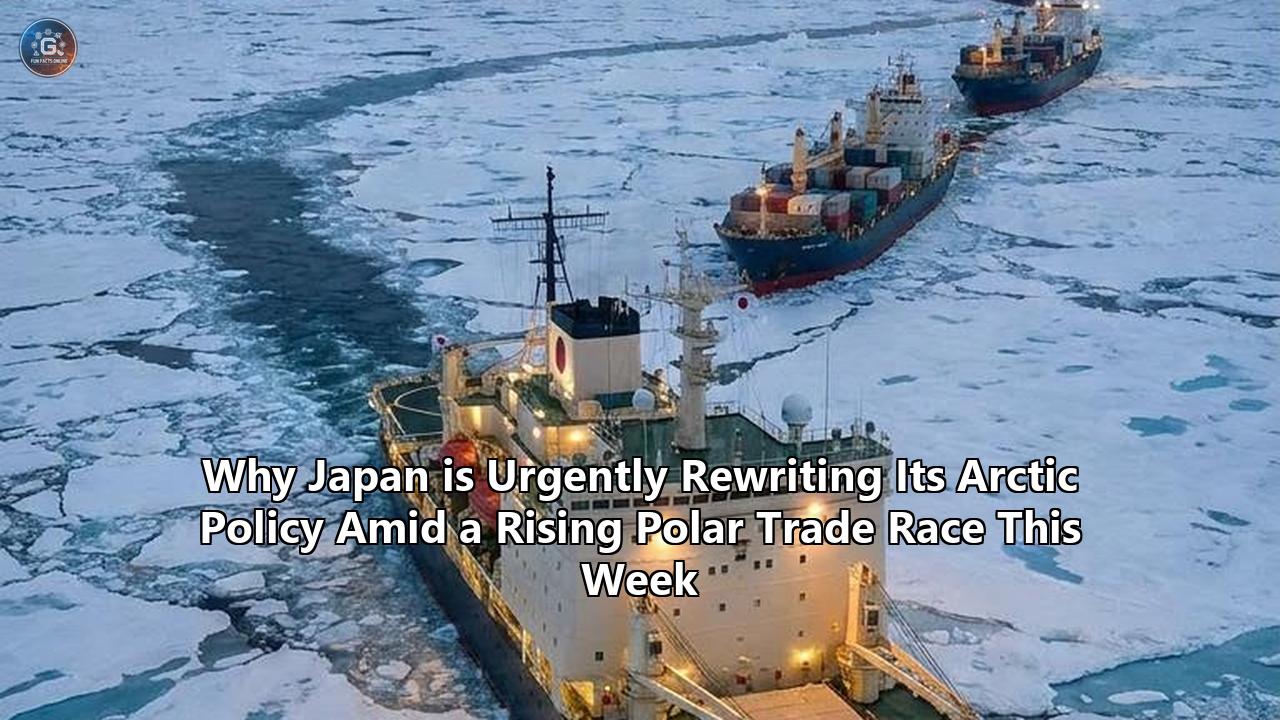
On June 29, 2026, Prime Minister Sanae Takaichi stood before a closed-door meeting of the government’s Headquarters for Ocean Policy in Tokyo and delivered a directive that will reshape Asia’s geopolitical footprint in the high north. Pointing to the compounding crises of European conflict, the rapid melting of polar ice, and the aggressive naval coordination between Moscow and Beijing, Takaichi formally instructed Jiro Akama, the Minister of State for Ocean Policy, to initiate the first comprehensive rewrite of the country’s polar blueprint since its inception in 2015.
"The significance of the Arctic is increasing in light of rising geopolitical concerns, potential resources, and waterways," Takaichi told the assembled ministers and national security advisors. Her directive was unambiguous: Japan must pivot from a passive, science-focused observer of the Arctic circle to an active, rules-shaping maritime power.
The decision to draft an entirely new Japan Arctic policy for fiscal year 2027 is a watershed moment. For over a decade, Tokyo’s polar strategy relied on the post-Cold War assumption of "Arctic Exceptionalism"—the widely held belief that the extreme north was a zone of unique scientific collaboration insulated from the raw realpolitik of the rest of the world.
That illusion has shattered. Today, the Arctic has emerged as a primary vector for great power competition. As Russia asserts militarized sovereignty over the Northern Sea Route (NSR) and China deploys heavy investments to build a "Polar Silk Road", Japan finds itself uniquely vulnerable. As an island nation dependent on imports for 90% of its energy and a massive portion of its trade, Tokyo cannot afford to let its closest northern maritime corridor fall under the exclusive dominion of an assertive Sino-Russian partnership.
But behind the standard news headlines lies a far more intricate story of scientific espionage, high-stakes corporate energy hedging, and an ingenious technological masterstroke. By utilizing a newly launched, state-of-the-art icebreaking research vessel as an international Trojan horse of soft power, Tokyo is quietly executing a strategy designed to bypass a deadlocked Arctic Council, secure its energy lifelines in Russia, and extend its "Free and Open Indo-Pacific" (FOIP) doctrine all the way to the North Pole.
The Two-Track Legal Machine: Unpacking Japan's Arctic Governance
To understand why Tokyo is rewriting its strategy now, one must first demystify the complex, often opaque administrative machinery that governs Japan’s ocean affairs. Unlike Arctic littoral states, which possess defined sovereign territory within the Arctic Circle, Japan is a non-Arctic state. It has no sovereign claim to the territory. Instead, its legal authority to act in the region is derived entirely from international law—specifically the United Nations Convention on the Law of the Sea (UNCLOS)—and its coveted status as a permanent observer on the Arctic Council, which it secured in 2013.
Domestically, Japan's maritime policy operates on a strict, legislatively mandated dual track. This institutional bifurcation is critical to understanding how the Japan Arctic policy functions in practice.
                 ┌─────────────────────────────────────────┐
                 │       Cabinet Office of Japan           │
                 │   Headquarters for Ocean Policy         │
                 │      (Chaired by Prime Minister)        │
                 └────────────────────┬────────────────────┘
                                      │
             ┌────────────────────────┴────────────────────────┐
             ▼                                                 ▼
┌─────────────────────────┐                       ┌─────────────────────────┐
│ Basic Act on Ocean Policy│                       │  National Arctic Policy  │
│         (2007)          │                       │         (2015)          │
├─────────────────────────┤                       ├─────────────────────────┤
│ • Cabinet-approved      │                       │ • Dedicated polar focus │
│ • Updated every 5 years │                       │ • Unrevised for 11 years│
│ • Fourth Plan (2023)    │                       │ • Focus of 2026 rewrite │
└─────────────────────────┘                       └─────────────────────────┘
The foundational pillar of Tokyo's maritime strategy is the Basic Act on Ocean Policy, enacted in 2007 to transform Japan into a "new maritime nation". Under this law, the Cabinet must approve a new Basic Plan on Ocean Policy every five years.
The Arctic was first introduced into this framework in the Second Basic Plan (2013) and was further elevated in the Third Plan (2018) and Fourth Plan (2023). These periodic ocean plans are broad, legally binding documents that address everything from domestic fisheries to submarine cable defense and East China Sea security.
Parallel to this, however, sits the standalone Japan Arctic Policy. Adopted in October 2015 under the administration of Shinzo Abe, this document was designed to provide a cohesive, cross-ministerial strategy specifically for the polar region. Yet, while the broader Ocean Plans were updated like clockwork, the core Arctic Policy of 2015 remained untouched for eleven years.
Why did it take over a decade to initiate a rewrite? The answer lies in the quiet bureaucratic friction between Japan’s scientific establishment and its national security apparatus.
For years, the Ministry of Education, Culture, Sports, Science and Technology (MEXT) and the National Institute of Polar Research (NIPR) held a dominant sway over Japan’s polar activity. They prioritized scientific neutrality, environmental monitoring, and meteorological data gathering. They feared that overly politicizing or securitizing Japan’s Arctic activities would alienate Russia—the absolute gatekeeper of the Northern Sea Route—and jeopardize Japan's access to vital research stations and data sharing networks.
The geopolitical shockwaves of 2022 shattered this cautious status quo. When Russian tanks rolled into Ukraine, the Arctic Council—the primary governing body for the region—collapsed into dysfunction. The seven Western members (the "Arctic 7") boycotted meetings presided over by Russia, and though limited technical-level working groups resumed in 2024, the council remains deeply fractured.
Concurrently, Tokyo’s security planners watched with growing alarm as Russian and Chinese naval forces began conducting joint patrols through the Sea of Okhotsk and the Bering Strait.
The old 2015 framework—which treated the Arctic as a peripheral, scientific playground—was suddenly dangerously obsolete. Under Prime Minister Takaichi, a politician known for her robust national defense posture, the national security faction in Tokyo has firmly seized control of the polar agenda. The upcoming 2027 rewrite represents a decisive shift in bureaucratic power, codifying a realpolitik-driven strategy that fuses science directly with defense and economic survival.
The Technical Masterstroke: Mirai II and the Battle for Central Arctic Data
The crown jewel of Japan’s updated strategy is not a newly drafted treaty or a military deployment, but a 13,000-ton vessel of white steel. Currently nearing completion at Japan Marine United (JMU) Corporation’s Isogo Plant in Yokohama, the ---Mirai II--- is Japan's first-ever custom-built, ice-capable Arctic research vessel.
                     MIRAI II: VEHICLE SPECIFICATIONS
                  ┌─────────────────────────────────────┐
                  │ • Length: 128 meters                │
                  │ • Beam: 23 meters                   │
                  │ • Draft: 8 meters                   │
                  │ • Displacement: 13,000 tons         │
                  │ • Rating: Polar Class 4 (PC4)       │
                  │ • Icebreaking: 1.2m continuous      │
                  │ • Propulsion: Dual-fuel (LNG/MGO)   │
                  │ • Total Capacity: 97 personnel      │
                  └─────────────────────────────────────┘
The ship, launched in March 2025 and scheduled for delivery in late 2026, is a technological marvel designed to operate in the most unforgiving environments on Earth. Yet to view the Mirai II as merely a scientific laboratory is to entirely miss its strategic purpose. In the high-stakes game of polar diplomacy, the Mirai II is Tokyo's ultimate instrument of power projection.
To understand how a research ship translates into raw geopolitical leverage, one must look at the specific technical requirements of polar navigation and the international legal frameworks that govern the Central Arctic Ocean.
The PC4 Engineering and Dual-Fuel Innovations
Unlike Japan’s existing oceanographic vessel, the original Mirai—which was famously converted from the decommissioned nuclear-powered ship Mutsu in 1997 but lacked any icebreaking capability—the Mirai II is built to Polar Class 4 (PC4) standards. This designation means the vessel is capable of navigating year-round in thick first-year ice, which may include old, perennial ice inclusions.
The hull is forged from specialized, high-tensile steel designed to withstand extreme low temperatures without becoming brittle, and its bow features a heavily reinforced, sloped design optimized to ride up on top of ice sheets and crush them using the vessel's immense weight. The ship's propulsion system is powered by an advanced dual-fuel configuration, combining liquefied natural gas (LNG) and ultra-low sulfur marine gas oil (MGO).
This is a critical regulatory detail: the International Maritime Organization’s (IMO) Polar Code enforces strict environmental limits on emissions and heavy fuel oil use in Arctic waters. By utilizing a dual-fuel setup, Japan not only complies with the most stringent global ecological rules, but also ensures that the ship possesses an exceptional operational range, allowing it to remain at sea for extended periods without relying on Russian refueling ports.
The Scientific Payload as a Geopolitical Tool
The Mirai II is packed with state-of-the-art sensor suites designed to fill what polar scientists call the "data gap" of the Central Arctic Ocean—the vast, ice-covered international waters beyond the exclusive economic zones (EEZs) of the Arctic littoral states.
- Atmospheric and Meteorological Monitoring: The ship is equipped with a high-frequency, dual-polarization weather radar mounted on its main mast, alongside specialized automated systems to launch meteorological balloons. This allows researchers to track real-time atmospheric dynamics, cloud formation, and heat exchange between the ocean and the atmosphere.
- Acoustic and Ice Profiling: Integrated into the hull are multi-beam sonar arrays and sub-bottom profilers capable of mapping the seabed topography beneath thick ice sheets. Crucially, the vessel serves as a mother ship for heavy Autonomous Underwater Vehicles (AUVs) and Remotely Operated Vehicles (ROVs). These underwater drones are outfitted with high-precision upward-looking sonar to measure the exact thickness, roughness, and thermodynamic decay of sea ice from below.
- Oceanographic Sampling: A massive, computerized rosette water sampler and Conductivity-Temperature-Depth (CTD) system can be deployed through a specialized, heated hangar (to prevent freezing). This allows scientists to analyze the salinity, temperature, oxygen levels, and chemical composition of water columns down to the deep ocean floor, tracking the rapid acidification of the Arctic Ocean.
┌─────────────────────────────────────────────────────────────────────────┐
│                    MIRAI II GEOPOLITICAL UTILITY MATRIX                  │
├───────────────────────────────────┬─────────────────────────────────────┤
│ TECHNICAL CAPABILITY              │ GEOPOLITICAL LEVERAGE               │
├───────────────────────────────────┼─────────────────────────────────────┤
│ Polar Class 4 (PC4) Hull &        │ Year-round independent access to the│
│ 1.2m continuous icebreaking       │ Central Arctic Ocean, bypassing     │
│                                   │ Russian icebreaker escorts.         │
├───────────────────────────────────┼─────────────────────────────────────┤
│ Dual-fuel LNG/MGO propulsion      │ Full compliance with IMO Polar Code │
│                                   │ environmental rules; extended range │
│                                   │ without Russian port dependency.    │
├───────────────────────────────────┼─────────────────────────────────────┤
│ Hull-mounted multi-beam sonar,    │ High-fidelity mapping of seabed     │
│ AUVs, and ROVs                    │ topography and sub-ice bathymetry   │
│                                   │ vital for submarine navigation.     │
├───────────────────────────────────┼─────────────────────────────────────┤
│ Meteorological balloon launch and │ Fills critical gaps in global weather│
│ dual-polarization weather radar   │ modeling; directly improves domestic│
│                                   │ extreme weather forecasting.        │
├───────────────────────────────────┼─────────────────────────────────────┤
│ International research platform   │ Soft-power diplomacy: bypasses the  │
│ with space for 63 scientists      │ deadlocked Arctic Council by hosting│
│                                   │ Western/allied researchers.         │
└───────────────────────────────────┴─────────────────────────────────────┘
Why does this matter politically? Under the Central Arctic Ocean Fisheries Agreement (CAOFA), which entered into force in June 2021, commercial fishing is banned in the high seas of the Central Arctic Ocean for at least 16 years. However, this moratorium is legally tied to a joint scientific research program. The nations that generate the foundational data regarding fish stocks, migration patterns, and ecosystem health will be the ones that write the rules when the moratorium is eventually reviewed.
Because Russia and China have historically dominated Arctic scientific expeditions, Western nations have struggled to match their physical presence in the ice. By deploying the Mirai II as an open, international research platform, Tokyo is pulling off a masterstroke of science diplomacy.
The revised Japan Arctic policy will explicitly include provisions to offer berths on the Mirai II to researchers and engineers from the United States, Canada, and European nations. By hosting allied scientists on a Japanese-flagged icebreaker, Tokyo is positioning itself as the facilitator of a parallel, democratic polar database.
If the Arctic Council remains paralyzed by geopolitical vetoes, the scientific coalition built aboard the Mirai II will become the de facto clearinghouse for the environmental data that determines future shipping regulations, environmental protection zones, and fisheries management in the high north.
The Russian Energy Tightrope: How Tokyo Plays Both Sides
While Tokyo’s long-term strategy focuses on science and international rule-making, its short-term survival is bound to a far more volatile commodity: Russian liquefied natural gas (LNG). This is where the clean, cooperative rhetoric of Japan’s diplomacy collides head-on with the dirty realities of energy security.
The Northern Sea Route, which runs along Russia’s vast Siberian coastline, is the fastest maritime connection between Northeast Asia and Europe. Navigating the NSR can slash shipping times between Yokohama and Rotterdam by up to 40% compared to the traditional southern route through the Malacca Strait and the Suez Canal.
Furthermore, the Arctic seabed contains an estimated 22% of the world’s undiscovered, technically recoverable oil and natural gas resources, with Russia's Yamal and Gydan peninsulas sitting atop colossal reserves.
               THE GEOPOLITICAL SHIPPING CORRIDORS

   Traditional Southern Route (approx. 21,000 km)
   [Yokohama] ──> [Malacca Strait] ──> [Suez Canal] ──> [Rotterdam]
   ▲ High choke-point risk (piracy, regional conflicts)

   Northern Sea Route (approx. 13,000 km)
   [Yokohama] ──> [Sea of Japan] ──> [Bering Strait] ──> [Rotterdam]
   ▲ 40% Shorter transit; controlled entirely by Russia
For a resource-starved country like Japan, these reserves are existential. This has forced Tokyo into a high-stakes, behind-the-scenes diplomatic double-game, balancing its commitments to its G7 allies against its absolute reliance on Russian Arctic energy.
The Corporate Battlegrounds: Sakhalin and Arctic LNG 2
To understand the depth of Japan's involvement, one must look at the specific corporate structures that link Tokyo to the Siberian ice:
- Sakhalin-2: Located just north of Japan in Russia's Far East, the Sakhalin-2 project is the cornerstone of Japan's energy security, supplying nearly 9% of the nation's total LNG imports. Despite immense pressure from the United States to divest, Japanese trading giants Mitsui & Co. (holding a 12.5% stake) and Mitsubishi Corp. (holding 10%) have steadfastly refused to withdraw.
- Arctic LNG 2: Located on the hyper-frigid Gydan Peninsula, this massive, three-train development operated by Russia's Novatek is designed to produce 19.8 million metric tons of LNG per year. Japan's state-owned Japan Organization for Metals and Energy Security (JOGMEC) and Mitsui & Co. hold a combined 10% equity stake in the project through a joint venture called Japan Arctic LNG BV.
When the United States Treasury Department's Office of Foreign Assets Control (OFAC) unleashed a wave of secondary sanctions directly targeting the Arctic LNG 2 project, it threw Tokyo into a panic. Under the terms of the US sanctions, any entity facilitating transactions or providing services to Arctic LNG 2 risked being cut off from the US dollar-denominated financial system.
Behind the scenes, the Japanese government scrambled to protect its assets. In late December 2023, Mitsui & Co. made the painful tactical decision to withdraw its employees from the Arctic LNG 2 site to shield them from personal liability under US law. Shortly after, both Mitsui and JOGMEC declared "force majeure" on their long-term off-take agreements from the project.
Yet, crucially, Japan did not divest its equity.
The Trump-Takaichi Confrontation
This energy tightrope became a major point of friction during a high-stakes meeting between Prime Minister Takaichi and US President Donald Trump. According to Japanese diplomatic sources, Trump urged Tokyo to immediately halt all imports of Russian gas, suggesting they replace Siberian LNG with shipments from the Gulf of Mexico.
Takaichi pushed back sharply. She informed Trump that withdrawing from Sakhalin-2 and Arctic LNG 2 was "difficult" due to immediate national security and economic stability concerns.
Takaichi's team presented a calculated geopolitical argument: if Japan were to abandon its shares in these Siberian projects, Russia would simply nationalize the assets or transfer them to Chinese state-owned enterprises, such as the China National Petroleum Corporation (CNPC) or CNOOC, both of which already hold 10% stakes in Arctic LNG 2. Divestment, Takaichi argued, would not starve Moscow of revenue; it would merely hand Beijing a monopoly over the northern gas fields and strengthen the Sino-Russian strategic partnership.
                 JAPAN'S SIBERIAN LNG EQUILIBRIUM
┌────────────────────────────────────────────────────────────────────────┐
│                        U.S. / G7 SANCTIONS                             │
│ • Demands complete divestment from Russian energy assets.               │
│ • Targets shipping, technology transfers, and dollar transactions.      │
└──────────────────────────────────┬─────────────────────────────────────┘
                                   │
                     (Friction & Strategic Waivers)
                                   │
┌──────────────────────────────────▼─────────────────────────────────────┐
│                       TOKYO'S PRAGMATIC DEFENSE                        │
│ • 9.8% of Japan's total LNG comes from Russian projects.               │
│ • Divestment risks transfer of assets to Chinese state firms.           │
│ • Secured critical Sakhalin-2 waiver extensions.                       │
└────────────────────────────────────────────────────────────────────────┘
The pragmatic argument worked. In late 2025, the US Treasury Department extended Japan’s import permit and trade waivers for Sakhalin-2, allowing Mitsui and Mitsubishi to continue procuring LNG.
The draft of the revised Japan Arctic policy is expected to formalize this policy of "pragmatic realism". While the document will loudly reaffirm Japan's commitment to G7 solidarity, the rule of law, and Western alliances, the technical annexes and implementation guidelines will preserve Tokyo’s right to engage in "selective cooperation" with Russian Arctic projects when vital to national energy security.
"FOIP Goes North": The Strategic Extension of the Maritime Order
For nearly a decade, Japan’s signature foreign policy concept was the Free and Open Indo-Pacific (FOIP). Conceived by Shinzo Abe in 2016, FOIP was designed to defend a rules-based maritime order, protect freedom of navigation, and build high-quality infrastructure connectivity across the Indian and Pacific Oceans—a direct counterweight to China’s expanding maritime assertiveness.
Yet, for years, FOIP was viewed by regional observers as a warm-water strategy, confined to the South China Sea, the Indian Ocean, and the Pacific island chains.
Now, Japan’s strategic planners are stretching FOIP into the freezing waters of the high north. Under the Takaichi administration, Tokyo is treating the Arctic Ocean not as a distant, isolated ecosystem, but as a direct geographic extension of the Indo-Pacific maritime domain.
                   THE NORDIC-PACIFIC CONNECTIVITY
┌────────────────────────────────────────────────────────────────────────┐
│                         ARCTIC OCEAN (NSR/TSR)                         │
│ • Melting ice creates accessible, non-choked sea lanes.                │
│ • Subject to potential Sino-Russian military/economic control.          │
└──────────────────────────────────┬─────────────────────────────────────┘
                                   │
                   (Strategic Link / "FOIP Northern Extension")
                                   │
┌──────────────────────────────────▼─────────────────────────────────────┐
│                          INDO-PACIFIC WATERS                           │
│ • Traditional core of Japan's maritime security.                       │
│ • Defended via partnerships (Quad, bilateral treaties, etc.).          │
└────────────────────────────────────────────────────────────────────────┘
This strategic linkage is driven by several key factors:
1. The Sea of Japan as an Arctic Gateway
Japan's Ministry of Defense has identified the Sea of Japan and the Sea of Okhotsk as critical choke points for Arctic access. In its landmark Response Strategy on Climate Change, the ministry warned that as the polar ice cap recedes, the Northern Sea Route will transition from a seasonal novelty to a heavily trafficked commercial superhighway.
This will draw Chinese commercial fleets and naval assets directly through the Tsushima, Tsugaru, and Soya straits. In effect, the melting of the Arctic ice cap directly lowers the geographic barriers that have historically kept Chinese naval power concentrated in the East and South China Seas.
2. The Sino-Russian Polar Condominium
Tokyo views the tightening bond between Moscow and Beijing as a systemic threat. Russia possesses the world's largest icebreaker fleet, including massive nuclear-powered vessels like the Arktika, but lacks the capital and high-tech industrial capacity to develop its ambitious Arctic infrastructure projects alone. China, conversely, has endless capital and advanced engineering capabilities but lacks sovereign access to the Arctic.
Their partnership is highly symbiotic: China funds Russian LNG terminals and ports, while Russia provides Beijing with cheap, secure energy and escorted access through the NSR.
Japan’s defense planners fear that without active counter-measures, the Arctic Ocean will become a closed maritime zone dominated by a Sino-Russian condominium, effectively shutting out non-littoral, democratic states.
3. The Northern European Diplomacy Initiative
To counter this, Japan is actively building a democratic counter-coalition in the north. When former Foreign Minister Yoko Kamikawa visited Sweden, Finland, Norway, and Denmark, she formally introduced the Northern European Diplomacy Initiative.
This framework seeks to align Japan’s maritime domain awareness (MDA) capabilities with those of the Nordic states, particularly now that Finland and Sweden have joined NATO, turning the Baltic Sea and the European Arctic into a solid democratic bloc.
              DEMOCRATIC POLAR ALIGNMENT NETWORK
 ┌─────────────────────────┐               ┌─────────────────────────┐
 │       Japan (JAMSTEC)   │◄─────────────►│   Nordic States (NATO)  │
 ├─────────────────────────┤               ├─────────────────────────┤
 │ • Mirai II Platform     │               │ • Svalbard/Svalbard Sat │
 │ • Deep-Sea Sonar Tech   │               │ • Ice-radar networking  │
 └────────────┬────────────┘               └────────────┬────────────┘
              │                                         │
              └───────────────────┬─────────────────────┘
                                  ▼
                     ┌─────────────────────────┐
                     │  U.S. / Canada (NORAD)  │
                     ├─────────────────────────┤
                     │ • Underwater Sonar Arrays│
                     │ • Space-based Tracking  │
                     └─────────────────────────┘
A prime example of this operationalized cooperation is the development of trans-Arctic fiber-optic telecommunications cables. Fearing that submarine cables running through the South China Sea and the Red Sea are increasingly vulnerable to sabotage and espionage, Japan, the European Union, and North American partners are collaborating on projects like the Far North Fiber.
This project aims to lay an express submarine cable system directly through the Northwest Passage, connecting Japan to Europe via Alaska, the Canadian Arctic, and Greenland. By routing critical data flows through the secure, allied-controlled waters of the North American Arctic, Tokyo is building physical redundancy into the global internet architecture.
Ultimately, the draft proposal for the new Japan Arctic policy reveals a deep understanding of these connections. By embedding the Arctic into its broader FOIP vision, Tokyo is sending a clear message: the defense of a rules-based, open maritime order does not stop at the coordinates of the Tropic of Cancer.
Whether in the warm waters of the Taiwan Strait or the frozen expanses of the Beaufort Sea, the principles of freedom of navigation, UNCLOS-based governance, and open access must be defended.
Detailed Comparison: Japan’s Arctic Policy Over Time
To appreciate the scale of the upcoming 2027 revision, it is instructive to compare how Japan’s strategic focus, technological assets, and geopolitical posture have evolved across the three major iterations of its polar planning.
| Policy Era | Strategic Focus | Primary Technological Asset | Geopolitical Stance | Key Energy/Trade Priorities |
|---|---|---|---|---|
| First Arctic Policy (2015) | Scientific exploration, environmental baseline research, and cautious economic observation. | Oceanographic vessel Mirai (strictly non-icebreaking; limited to summer voyages in open waters). | Adherence to "Arctic Exceptionalism". High emphasis on avoiding friction with Russia and China. | Exploratory feasibility studies of the Northern Sea Route (NSR); initial investments in Yamal LNG. |
| Fourth Ocean Plan Era (2023) | Strengthening of defense capabilities and maritime law enforcement; integration of polar security into broader ocean policies. | Finalized funding and initial construction of the icebreaking research vessel Mirai II. | Marked by deep concern over the freeze of the Arctic Council and the initial stages of Sino-Russian polar convergence. | Protecting existing shares in Sakhalin-2 and Arctic LNG 2 amid initial US/G7 sanctions. |
| Revised Policy (Fiscal 2027) | Active leadership in international rule-making, science diplomacy, and proactive security coordination. | Full deployment of Mirai II (Polar Class 4) as an open, multilateral international research platform. | "FOIP Goes North". Direct coordination with NATO's Nordic members to check Sino-Russian influence. | Pragmatic energy hedging. Cultivating the Transpolar Sea Route (TSR) as a long-term, multilateral alternative to the Russian-controlled NSR. |
Under the Ice: The Sub-Ice Submarine Threat
While much of the public debate surrounding the Arctic focuses on surface shipping and oil rigs, the most critical national security driver for the Japan Arctic policy rewrite is taking place deep beneath the sea ice.
For the Maritime Self-Defense Force (MSDF) and the US Navy, the melting of the polar ice cap has created a highly dangerous new submarine vulnerability.
                     THE ARCTIC SUB-ICE THREAT VECTOR

                       [ Arctic Ocean Ice Cap ]
                     - - - - - - - - - - - - - - -
                    |   Russian Borei-Class SSBNs   |
                    |   (Launches SLBMs over Pole)  |
                     - - - - - - - - - - - - - - -
                                   │
                    (Deep-Sea Bathymetric Transit)
                                   │
                                   ▼
                             [ Bering Strait ]
                                   │
                                   ▼
                             [ Sea of Japan ]
                    ◄── MSDF / USN Sonar Arrays ──►
                    (Urgent need for baseline data)
Historically, the Arctic Ocean acted as a safe bastion for Soviet, and later Russian, nuclear-powered ballistic missile submarines (SSBNs). Operating beneath thick, multi-year pack ice, these massive submarines were virtually undetectable to airborne and satellite surveillance, and the constant noise of grinding ice sheets created an acoustic environment that severely degraded the active and passive sonar of Western hunter-killer submarines. From this protected polar redoubt, Russian SSBNs could launch nuclear missiles directly over the North Pole toward North America or Europe.
However, as the ice cap thins and retreats, this acoustic environment is changing rapidly.
More importantly, the Chinese People’s Liberation Army Navy (PLAN) is actively developing its own polar submarine capabilities. Defense analysts in Tokyo warn that within the next decade, Chinese Type 094 and next-generation Type 096 SSBNs could begin conducting regular deterrence patrols in the deep basins of the Central Arctic Ocean.
By utilizing the Northern Sea Route, Chinese submarines could transit from their bases in the Yellow Sea, slip through the Tsushima and Soya straits into the Sea of Okhotsk, and pass undetected into the deep Arctic. Once positioned under the polar ice, Chinese missiles would be capable of bypassing the United States’ primary ground-based missile defense systems in Alaska, which are oriented to intercept threats coming from traditional western and southern trajectories.
This is where the scientific payload of the Mirai II becomes a vital asset for national defense. To track hostile submarines in the Arctic, the US-Japan alliance needs highly precise bathymetric data, water temperature profiles, and salinity charts.
Because sound waves bend differently depending on the temperature and salinity of the water, possessing an accurate, real-time map of the Arctic's changing oceanography is essential for submarine warfare. The side with the best data can hide its own submarines while detecting the acoustic signatures of its adversaries.
By systematically deploying the Mirai II to map the sub-ice bathymetry and water column dynamics of the Central Arctic Ocean, JAMSTEC and its research partners are generating the raw intelligence that will allow the MSDF and the US Navy to track Russian and Chinese submarine movements through the northern gateway. It is a textbook example of how Tokyo is successfully weaponizing pure science to secure its most critical national defense interests.
Looking Ahead: Key Milestones to Watch
As Japan’s policy planners begin the grueling process of drafting the new Japan Arctic policy over the next nine months, several critical milestones will determine whether Tokyo’s ambitious polar strategy succeeds or falters under the weight of escalating global tensions.
                             PROJECTED TIMELINE

        Jun 2026        Autumn 2026       Spring 2027         2027
     ┌─────────────┐   ┌─────────────┐   ┌─────────────┐   ┌─────────────┐
     │ Takaichi    │   │ Completion  │   │ Formal      │   │ Maiden      │
     │ Revision    │──►│ of Mirai II │──►│ Adoption of │──►│ Voyage of   │
     │ Directive   │   │ Delivery    │   │ Revised     │   │ Mirai II    │
     │             │   │             │   │ Policy      │   │             │
     └─────────────┘   └─────────────┘   └─────────────┘   └─────────────┘
The Expiration of the Sakhalin-2 Waiver
A critical near-term flashpoint is the status of the United States’ import permit and trade waivers for Sakhalin-2. The extension granted by the US Treasury Department allowed Japanese companies to continue procuring Russian LNG without facing secondary sanctions.
However, with the US administration maintaining pressure on Moscow, the next round of negotiations will be highly fraught. If Washington decides to tighten the screws and refuses to extend the waiver, Tokyo will face an excruciating choice: defy its most important security ally to keep its lights on, or comply with the sanctions and risk a crippling domestic energy crisis.
The Delivery and Sea Trials of the Mirai II
Currently scheduled for delivery in late 2026, the Mirai II will undergo a series of rigorous sea trials to test its Polar Class 4 hull and icebreaking capabilities in real-world conditions. The success of these trials is paramount.
Any engineering delays or structural issues would deal a major blow to Tokyo’s science diplomacy, leaving Japan dependent on foreign icebreakers and delaying its plans to establish its leadership in the Central Arctic Ocean rule-making process.
The Launch of the Transpolar Sea Route (TSR) Studies
While the Northern Sea Route remains the focus of immediate economic activity, the new policy is expected to place a heavy emphasis on the long-term potential of the Transpolar Sea Route (TSR). Unlike the NSR, which runs through Russia's EEZ and is subject to Moscow's strict regulatory control and astronomical transit fees, the TSR cuts directly across the center of the Arctic Ocean through international waters.
As the polar ice cap continues its rapid retreat, scientists estimate that the TSR will become navially viable for commercial transit. Because it bypasses Russian territorial control entirely, Japan views the TSR as the ultimate rules-based, multilateral alternative to the NSR.
The new policy will likely direct substantial funding toward mapping the TSR and drafting a multilateral legal framework to ensure the route remains "free and open" to all nations.
The Ice Has Broken
On the surface, Japan’s urgent rewrite of its Arctic policy appears to be a standard administrative update, a routine adjustment by a middle power reacting to global events. But look behind the scenes, and the true picture emerges: this is a highly calculated, multi-layered strategic maneuver.
By fusing the cutting-edge steel of the Mirai II with the diplomatic shield of science, Tokyo is carving out a major role in the polar race. It is navigating the complex waters of Russian energy sanctions with a cold-eyed pragmatism, protecting its national survival while actively preparing for a future where the high north is no longer a peripheral frozen wasteland, but the ultimate strategic corridor connecting East and West.
As the ice of the Arctic Ocean continues to melt, the traditional boundaries of global geography are dissolving with it. In this new, fluid world, Japan is demonstrating that a nation does not need a geographic border on the Arctic Circle to be a polar superpower. With high-tech engineering, sophisticated legal maneuvering, and a clear-eyed understanding of the connection between the Indo-Pacific and the frozen north, Tokyo is writing a bold new chapter for the Arctic’s future.
References
- "The Arctic Institute’s 2026 Japan Series: An Introduction", The Arctic Institute, March 2026.
- "Distinctive Characteristics of Japan’s Arctic Approach and Engagement with Arctic Governance", The Arctic Institute, March 2026.
- "Japan's Ocean Policy, Arctic Policy, and Basic Plans on Ocean Policy", Polar Record, Cambridge University Press, March 2026.
- "Rising Sun in the Warming Arctic: As Great Power Competition Returns to the Polar Region, Japan Is Positioned for Prominence", Atlantic Council, May 2026.
- "Japan's Persistent Arctic Diplomacy: Science, Cooperation, and the Fourth Basic Plan", IP Defense Forum, July 2025.
- "Japan to Revise Arctic Policy as Geopolitical Importance Grows", Nippon.com / Jiji Press, June 29, 2026.
- "Japan Agency for Marine-Earth Science and Technology's New Icebreaker Mirai II to Lead Polar Observations", The Yomiuri Shimbun, June 21, 2026.
- "Japan’s first purpose-built Arctic research vessel named Mirai II", Polar Journal, March 2024.
- "JAMSTEC Launches New Arctic Research Vessel 'Mirai II'", Maritime Executive, March 2025.
- "Construction and Tech Specs of Japan's Mirai II Arctic Icebreaker", Marine Technology News, March 2025.
- "Japan Welcomes U.S. Extension of Sakhalin-2 LNG Sanctions Waiver", The Japan Times, December 18, 2025.
- "Prime Minister Takaichi Informs U.S. President Trump of Difficulty in Withdrawing from Sakhalin-2", Arab News Japan, October 30, 2025.
- "Siberian Standoff: Mitsui Withdraws Employees from Russia's Arctic LNG 2 Project", Polar Journal, December 2023.
- "FOIP Goes Northward: Japan’s Maritime Identity and the Defense of Rule of Law in the Arctic", The Arctic Institute, April 2026.
- "The Central Arctic Ocean Fisheries Agreement and Japan's Maritime Strategy", The Arctic Institute, April 2024.
- "The Role of Russia in Japan’s Arctic Policy: Energy and Strategic Hedging", The Arctic Institute, March 2026.
- "Central Arctic Ocean Fisheries Agreement Five Years In: A Model for Polar Diplomacy", Japan Today, June 17, 2026.
Reference:
- https://www.nippon.com/en/news/yjj2026062900557/
- https://www.thearcticinstitute.org/distinctive-characteristics-japans-arctic-approach-engagement-arctic-governance/
- https://japannews.yomiuri.co.jp/politics/politics-government/20260621-334026/
- https://www.thearcticinstitute.org/the-arctic-institutes-2026-japan-series-an-introduction/
- https://www.thearcticinstitute.org/role-russia-japans-arctic-policy/
- https://www.marinetechnologynews.com/news/jamstec-launches-japan-first-646788
- https://www.thearcticinstitute.org/foip-goes-northward-japans-maritime-identity-defense-rule-law-arctic/
- https://www.cambridge.org/core/journals/polar-record/article/study-on-the-development-of-japans-basic-ocean-policy-focusing-on-the-arctic/27541B562057C8132C541DBB1FF347A3
- https://ads.nipr.ac.jp/japan-arctic-policy/
- https://www.atlanticcouncil.org/in-depth-research-reports/a-framework-for-us-japan-cooperation-in-the-arctic/
- https://ipdefenseforum.com/2025/07/japans-arctic-policy/
- https://japantoday.com/category/features/environment/this-successful-arctic-fishing-treaty-has-kept-russia-china-the-us-and-others-working-together-for-5-years-%E2%80%93-it-could-be-a-model-for-future-diplomacy
- https://www.arabnews.jp/en/business/article_158039/
- https://maritime-executive.com/article/japan-launches-its-first-dedicated-ice-class-arctic-research-vessel
- https://polarjournal.net/japans-new-research-vessel-is-called-mirai-ii/
- https://www.arabnews.jp/en/japan/article_115936/
- https://www.thearcticinstitute.org/japan-steps-up-arctic-engagement/
- https://naturalgasintel.com/news/japan-weighs-energy-security-impacts-after-us-sanctions-arctic-lng-2/
- https://polarjournal.net/arctic-lng-2-project-faces-new-problems/
- https://www.japantimes.co.jp/news/2025/12/18/japan/japan-us-extension-sakhalin-permit/
- https://www.spglobal.com/energy/en/news-research/latest-news/lng/110723-japan-sees-us-sanctions-to-have-certain-impact-on-arctic-lng-2-project-minister
- https://en.wikipedia.org/wiki/Free_and_Open_Indo-Pacific
- https://www.asean.emb-japan.go.jp/files/000352880.pdf
- https://www.jamstec.go.jp/parv/e/