The Copernicus Marine Service and Mercator Ocean International issued urgent oceanographic bulletins confirming that sea surface temperatures across European waters reached unprecedented heights. A prolonged series of atmospheric heatwaves over Western and Southern Europe pushed surface water temperatures up to 5°C above seasonal baselines across the Mediterranean Sea, the North West European Shelf, the English Channel, and the Baltic Sea.
In the western Mediterranean, the U.S. National Oceanic and Atmospheric Administration (NOAA) categorized the marine thermal anomaly as a Category 4 "Extreme" event, with coastal surface waters topping 31°C (87.8°F). Concurrently, satellite data from the ERA5 reanalysis system revealed that the daily extra-polar global ocean sea surface temperature averaged 20.96°C, marking the hottest July on record for global oceans.
2026 European Marine Heat Wave Intensity & Water Column Impacts
┌─────────────────────────────────────────────────────────────────────────┐
│ Atmospheric Heat Dome & Persistent High Pressure                        │
└────────────────────┬────────────────────────────────────────────────────┘
                     │
                     ▼
┌─────────────────────────────────────────────────────────────────────────┐
│ Extreme Sea Surface Temperature Spikes (+3°C to +5°C Anomaly)          │
└────────────────────┬────────────────────────────────────────────────────┘
                     │
       ┌─────────────┴────────────────────────┐
       ▼                                      ▼
┌──────────────────────────────┐   ┌──────────────────────────────────────┐
│ Stronger Pycnocline          │   │ Henry's Law Solubility Drop          │
│ (Stratification locks water) │   │ (Warmer water holds less gas)        │
└──────────────┬───────────────┘   └──────────────────┬───────────────────┘
               │                                      │
               └──────────────────┬───────────────────┘
                                  │
                                  ▼
┌─────────────────────────────────────────────────────────────────────────┐
│ Microbial Metabolic Acceleration & Eutrophic Bloom Decay                │
└────────────────────┬────────────────────────────────────────────────────┘
                     │
                     ▼
┌─────────────────────────────────────────────────────────────────────────┐
│ Severe Hypoxia / Anoxia (<2 mg/L O₂) & Expansion of Benthic Dead Zones │
└─────────────────────────────────────────────────────────────────────────┘
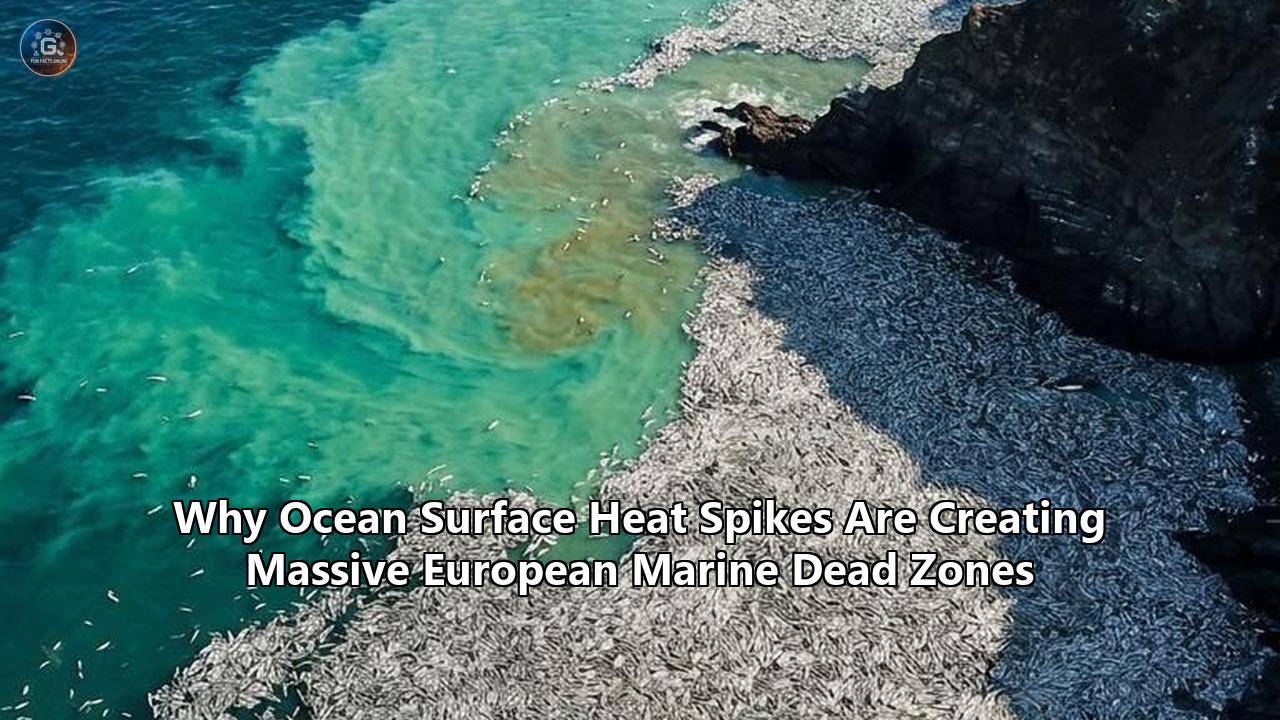
This intense surface thermal spike has triggered a cascade of oxygen depletion events, suffocating benthic habitats and expanding marine dead zones across European regional seas. In shallow coastal zones and semi-enclosed basins, rapid surface heating has suppressed vertical mixing, locked deep water layers into hypoxic (<2 mg/L dissolved oxygen) or fully anoxic states, and accelerated cyanobacterial blooms.
The European Environment Agency (EEA) reports that approximately 18% of assessed European sea areas now suffer from chronic or seasonal hypoxia. The 2026 thermal spike demonstrates how modern ocean heat waves act as primary catalysts for deep-water asphyxiation.
The crisis unfolding in European basins serves as a structural case study in marine biogeochemistry. It illustrates how rapid thermal spikes interact with land-based nutrient pollution, physical oceanography, and atmospheric blocking patterns to transform complex, biodiverse aquatic ecosystems into biological deserts.
Anatomy of the 2026 Marine Heatwave Crisis
The oceanographic crisis of 2026 developed through a confluence of atmospheric pressure systems and sea surface warming trends. Beginning in late May, a persistent omega-block atmospheric pattern settled over continental Europe. This trapped intense solar radiation, minimized surface wind friction, and elevated ambient air temperatures past 40°C across southern and western regions.
Without strong surface winds to induce turbulent vertical mixing, solar heat accumulated rapidly within the upper 5 to 10 meters of the water column.
Water Column Stratification under Extreme Surface Warming

Surface Level (0-10m)   [ Warmer Water | Low Oxygen Density | Light Wind ]
─────────────────────────────── Pycnocline / Thermocline Barrier ───────────
Deep Level (10m+)       [ Cooler Water | Isotonic Isolation | Oxygen Depleted ]
Substrate / Benthos     [ Microbial Decay | Hydrogen Sulfide accumulation ]
In the Mediterranean Sea, Mercator Ocean International observed that 95% of the basin recorded above-average sea surface temperatures during July, with 63% exceeding long-term averages by more than 1°C and 40% exceeding them by more than 2°C. The western basin bore the brunt of the heating. Near the coasts of France, Spain, Italy, and North Africa, localized surface thermal anomalies surpassed +5.5°C.
This marked the fifth consecutive severe-to-extreme thermal event in the Mediterranean within a four-year window, confirming that localized marine thermal spikes are accelerating in frequency and duration.
July 2026 European Sea Surface Temperature Anomalies (°C above 1991–2020 average)
┌─────────────────────────────┬─────────────────────┬───────────────────────────┐
│ Basin                       │ SST Anomaly (°C)    │ Heatwave Category (NOAA)  │
├─────────────────────────────┼─────────────────────┼───────────────────────────┤
│ Western Mediterranean       │ +3.5°C to +5.5°C    │ Category 4 (Extreme)      │
│ English Channel & S. North  │ +2.0°C to +4.0°C    │ Category 3 (Severe)       │
│ Baltic Sea Proper           │ +3.0°C to +5.0°C    │ Category 3 (Severe)       │
│ North Atlantic (NW Shelf)   │ +2.0°C to +3.5°C    │ Category 2 to 3           │
└─────────────────────────────┴─────────────────────┴───────────────────────────┘
Further north, the Northwest European Shelf saw sustained thermal anomalies. Scientists at the UK National Oceanography Centre (NOC) tracked a Category 1-3 marine thermal event that persisted from late winter through mid-summer across the Irish Sea, the English Channel, and the Southern North Sea. Waters in the central English Channel warmed to 3°C to 5°C above seasonal climatological baselines.
In the Baltic Sea, where surface water warming trends have averaged 0.58°C per decade since 1990—more than double the global ocean average—the summer heat wave generated surface anomalies exceeding +5°C from the Inner Danish Straits to the Gulf of Finland.
| European Marine Basin | Primary Hydrodynamic Constraint | Extent of Hypoxic / Anoxic Zone (2026 Peak) | Primary Triggering Nutrient / Driver |
|---|---|---|---|
| Baltic Sea | Semi-enclosed, shallow sill, weak tidal mixing | 65,000–70,000 km² | Agricultural nitrogen/phosphorus + surface stratification |
| Western Mediterranean | High salinity, deep basin, low nutrient input | Localized shelf & bay hypoxia; deep benthic collapse | Extreme sea surface temperature (+31°C) & thermocline trapping |
| North West European Shelf | Open shelf, tidal mixing, estuarine discharge | Patchy coastal estuarine hypoxia & sediment oxygen debt | Agricultural runoff + atmospheric heat domes & calm seas |
Three Basins in Crisis
Understanding the mechanisms behind marine dead zones requires examining how surface heat manifests across different physical marine environments.
                                 Regional Case Studies
                                          │
       ┌──────────────────────────────────┼──────────────────────────────────┐
       ▼                                  ▼                                  ▼
┌───────────────┐                  ┌───────────────┐                  ┌───────────────┐
│  Baltic Sea   │                  │ Western Med.  │                  │  NW NW Shelf  │
│ Micro-Tidal & │                  │ Oligotrophic  │                  │ Shallow Tidal │
│ Brackish Sill │                  │ Deep Basin    │                  │ Estuarine     │
└───────┬───────┘                  └───────┬───────┘                  └───────┬───────┘
        │                                  │                                  │
        ▼                                  ▼                                  ▼
Extensive Nutrients                Extreme Thermal                    Atmospheric Heat
+ Severe Pycnocline                Stratification                     + Ephemeral Hypoxia
        │                                  │                                  │
        ▼                                  ▼                                  ▼
65,000-70,000 km²                  Mass Benthic Mortalities           Bivalve & Nursery
Dead Zone Expansion                and *Posidonia* Die-Offs           Habitat Collapses
Case 1: The Baltic Sea Sinking Floor
The Baltic Sea is a brackish, micro-tidal, semi-enclosed sea connected to the North Sea only through the narrow and shallow Danish Straits. This geometry makes it naturally vulnerable to stagnation. However, anthropogenic nutrient loading—driven by agricultural runoff from intensive livestock farming in Denmark, Poland, Germany, and the Baltic states—has loaded the basin with nitrogen and phosphorus.
During the summer 2026 thermal event, calm winds and surface water temperatures reaching 23°C to 25°C created an impenetrable density gradient (pycnocline) at a depth of 10 to 20 meters. The surface layer became decoupled from the deeper waters.
Simultaneously, elevated water temperatures accelerated cyanobacteria blooms (Nodularia spumigena and Aphanizomenon flosaquae), creating thick toxic algal mats across thousands of square kilometers from Rostock to the Gulf of Finland.
Baltic Sea Oxygen Cascade
┌────────────────────────────────────────────────────────────────────────┐
│ High Surface SST (23°C–25°C) & Intense Nitrogen/Phosphorus Runoff      │
└──────────────────────────────────┬─────────────────────────────────────┘
                                   │
                                   ▼
┌────────────────────────────────────────────────────────────────────────┐
│ Massive Cyanobacteria Blooms (*Nodularia spumigena*)                   │
└──────────────────────────────────┬─────────────────────────────────────┘
                                   │
                                   ▼
┌────────────────────────────────────────────────────────────────────────┐
│ Algal Death & Benthic Microbial Decomposition                          │
└──────────────────────────────────┬─────────────────────────────────────┘
                                   │
                                   ▼
┌────────────────────────────────────────────────────────────────────────┐
│ Deep Water Oxygen Depletion (<2 mg/L O₂) & Hydrogen Sulfide Generation │
└──────────────────────────────────┬─────────────────────────────────────┘
                                   │
                                   ▼
┌────────────────────────────────────────────────────────────────────────┐
│ Spawning Collapse of Eastern Baltic Cod (*Gadus morhua*)               │
└────────────────────────────────────────────────────────────────────────┘
As these massive algal blooms reached the end of their lifecycles, billions of tons of organic matter sank into the isolated bottom layer. Heterotrophic bacteria consumed oxygen to decompose the decaying organic material, rapidly driving dissolved oxygen levels below the hypoxic threshold of 2 milligrams per liter, and in many areas down to absolute anoxia (0 mg/L).
The Baltic Sea dead zone expanded to over 68,000 square kilometers—an area larger than West Virginia or roughly the size of Ireland. The benthic substrate converted into a bacterial mat zone emitting toxic hydrogen sulfide ($H_2S$).
This completely destroyed the demersal spawning grounds of Eastern Baltic cod (Gadus morhua), whose eggs require specific salinity and minimum oxygen thresholds to remain buoyant and viable.
Case 2: The Western Mediterranean Bathhtub
Unlike the nutrient-rich Baltic, the Mediterranean Sea is an oligotrophic (nutrient-poor) body of water. Yet, it faced a severe deep-water oxygen crisis during the 2026 heatwave. The Mediterranean acts as a semi-enclosed thermal trap where heat entering through the surface layer cannot easily escape.
During July 2026, NOAA recorded sea surface temperatures hitting 31°C in coastal stretches off Tunisia, Italy, and southern France. This intense heating penetrated down the water column to depths exceeding 30 meters, creating a steep thermocline.
In shallow coastal systems, gulfs, and lagoons (such as the Mar Menor in Spain, the Thau Lagoon in France, and the Gulf of Taranto in Italy), water column stratification halted vertical oxygen exchange.
Thermocline Trapping in the Western Mediterranean Basin

[ 0m - 15m ]   Warm Surface Layer (28°C - 31°C) | Oxygen Dissolution Drops by ~15-20%
═══════════════ Sharp Thermocline Barrier (High Thermal Gradient) ═════════════
[ 15m - 40m+ ] Isolated Deep Layer | Respiration Outpaces Diffusion | Hypoxia Threshold
[ Benthos ]    Mass Mortality of Gorgonians (*Paramuricea clavata*) & *Posidonia* Loss
At water temperatures above 28°C, the metabolic rate of marine invertebrates increases exponentially, requiring far more oxygen precisely when warm water holds significantly less dissolved gas.
This physiological mismatch triggered mass mortality events across benthic ecosystems. Deep-water gorgonian forests (Paramuricea clavata), red coral colonies, and endemic bivalves suffocated in situ.
Furthermore, extensive meadows of Posidonia oceanica—the foundational seagrass species responsible for oxygenating Mediterranean coastal waters and trapping sediment—suffered widespread heat-induced leaf shedding and thermal necrosis, dismantling the basin's primary biological oxygen generator.
Case 3: The Northwest European Shelf and English Channel
The tidal waters of the English Channel and the Southern North Sea are historically considered well-mixed and dynamic, protecting them from deep-water anoxia. However, the 2026 marine heatwave demonstrated that even dynamic shelf systems are vulnerable when ocean heat waves coincide with prolonged atmospheric neap tides and low wind conditions.
In June and July 2026, sea surface temperatures across the southern UK shelf reached 3°C to 5°C above seasonal averages. In shallow embayments and river estuaries (such as the Thames Estuary, the Solent, and the Wash), high surface temperatures combined with agricultural runoff from river systems to trigger localized phytoplankton blooms.
Estuarine Hypoxic Mechanism: Shallow Tidal Basins
┌─────────────────────────────────────────────────────────────────────────┐
│ High Air Temperatures & Low Tidal Currents                              │
└────────────────────┬────────────────────────────────────────────────────┘
                     │
                     ▼
┌─────────────────────────────────────────────────────────────────────────┐
│ Surface SST Surges (+4°C above baseline)                                │
└────────────────────┬────────────────────────────────────────────────────┘
                     │
                     ▼
┌─────────────────────────────────────────────────────────────────────────┐
│ Dynamic Thermal Stratification Suppresses Benthic Oxygenation           │
└────────────────────┬────────────────────────────────────────────────────┘
                     │
                     ▼
┌─────────────────────────────────────────────────────────────────────────┐
│ Sediment Oxygen Debt Triggered: Mass Mortality of Estuarine Nursery Stocks│
└─────────────────────────────────────────────────────────────────────────┘
Because shallow shelf waters have a lower total volume, the sediment oxygen demand (SOD) from biological activity quickly consumed available dissolved oxygen in bottom waters during warm night cycles.
Fisheries monitoring teams along the English Channel recorded acute localized die-offs of flatfish (plaice and sole), brown shrimp (Crangon crangon), and juvenile gadids, revealing that ocean heat waves can induce temporary, highly lethal hypoxic zones even in turbulent, shallow shelf seas.
Biogeochemical Mechanics of Heat-Induced Hypoxia
The transition from a warm sea surface to a suffocating sea floor relies on interconnected physical, chemical, and biological mechanisms. When surface waters warm rapidly, four distinct mechanisms operate in tandem to drain oxygen from the marine environment.
                        The Quad-Coupled Oxygen Collapse Chain
                                          │
       ┌──────────────────────────────────┼──────────────────────────────────┐
       ▼                                  ▼                                  ▼
┌───────────────┐                  ┌───────────────┐                  ┌───────────────┐
│  Henry's Law  │                  │ Pycnocline    │                  │  Q10 Metabolic│
│ Solubility    │                  │ Density Trap  │                  │ Hyper-Drive   │
│ Physical Drop │                  │ Oceanographic │                  │ Physiological │
└───────┬───────┘                  └───────┬───────┘                  └───────┬───────┘
        │                                  │                                  │
        └──────────────────────────────────┼──────────────────────────────────┘
                                           │
                                           ▼
                               ┌───────────────────────┐
                               │ Eutrophic Bloom Decay │
                               │ Biogeochemical Loop   │
                               └───────────┬───────────┘
                                           │
                                           ▼
                               ┌───────────────────────┐
                               │ Deep Water Anoxia     │
                               │ Environmental Deficit │
                               └───────────────────────┘
1. The Henry’s Law Solubility Trap
The relationship between water temperature and gas solubility is governed by Henry’s Law. As seawater warms, its physical capacity to hold dissolved oxygen ($O_2$) drops predictably.
Freshwater at 0°C holds roughly 14.6 mg/L of dissolved oxygen at saturation, while seawater (salinity 35 PSU) at 15°C holds approximately 8.1 mg/L. When sea surface temperatures climb to 31°C, as observed in the Mediterranean during July 2026, the maximum oxygen saturation capacity drops below 6.2 mg/L.
This physical reduction means that warm surface water carries a significantly lower oxygen reserve into the water column before any biological consumption takes place.
Dissolved Oxygen Saturation vs. Water Temperature (Salinity = 35 PSU)
┌───────────────────┬──────────────────────────────────┐
│ Water Temp (°C)   │ Max Dissolved Oxygen (mg/L)      │
├───────────────────┼──────────────────────────────────┤
│ 10°C              │ 9.0 mg/L                         │
│ 15°C              │ 8.1 mg/L                         │
│ 20°C              │ 7.4 mg/L                         │
│ 25°C              │ 6.7 mg/L                         │
│ 30°C              │ 6.1 mg/L                         │
│ 32°C              │ 5.8 mg/L                         │
└───────────────────┴──────────────────────────────────┘
2. Pycnocline Density Traps
Vertical exchange in the ocean is driven by density differences, which are dictated by temperature and salinity. Warm water is less dense than cold water. When extreme atmospheric heat warms the upper 5 to 15 meters of the ocean without strong winds to mix the layers, a sharp thermal boundary layer—the thermocline—forms.
Because warm, buoyant water floats over denser, cooler bottom waters, vertical turbulence is suppressed. The thermocline acts as a physical barrier. Atmospheric oxygen dissolved at the surface cannot diffuse downward into the deeper water column.
Once this barrier is established, deep waters are completely isolated from atmospheric replenishment. The bottom layer becomes a closed system where oxygen levels steadily decline as aquatic organisms respire.
3. The Q10 Metabolic Hyper-Drive
Biological respiration scales with temperature. The $Q_{10}$ temperature coefficient dictates that for every 10°C increase in water temperature, metabolic rates of poikilothermic (cold-blooded) marine organisms and marine bacteria roughly double.
During the 2026 ocean heat wave, bottom water temperatures across shallow European seas rose by 2°C to 4°C above seasonal norms. This increased the metabolic rates of benthic bacteria, crustaceans, and fish by 20% to 40%.
At the exact moment when physical ocean processes reduced the available supply of oxygen, biological demand for oxygen surged, rapidly accelerating the onset of hypoxic conditions.
The Metabolic Supply/Demand Disconnect Under Marine Heatwaves

   Oxygen Saturation (Supply)              Organism Oxygen Demand
   [=============> Low (6.1 mg/L)]        [=========================> High (+30%)]
   ────────────────────────────── vs. ──────────────────────────────────────────
   Result: Extreme Physiological Stress -> Rapid Respiratory Failure -> Benthic Mortality
4. Eutrophic Bloom Accumulation and Microbial Decomposition
Elevated surface water temperatures combined with sunlight create ideal conditions for photosynthetic microalgae and cyanobacteria. Where rivers discharge industrial, municipal, and agricultural fertilizers into coastal waters, surface heat triggers explosive population growth of algae.
When these massive plankton populations exhaust their nutrient supply, they die and sink through the water column. Heterotrophic bacteria decompose this biomass at the sea floor.
Because microbial respiration scales with temperature, this decay process consumes oxygen at extreme rates. Once dissolved oxygen levels drop below 2 mg/L, aerobic life fails. If oxygen reaches zero (anoxia), anaerobic bacteria take over, utilizing sulfate for respiration and releasing toxic hydrogen sulfide ($H_2S$) into the water column.
Biogeochemical Pathway of Hypoxia & Anoxia
┌─────────────────────────────────────────────────────────────────────────┐
│ Anthropogenic Nutrient Runoff (Nitrogen & Phosphorus)                   │
└────────────────────┬────────────────────────────────────────────────────┘
                     │
                     ▼
┌─────────────────────────────────────────────────────────────────────────┐
│ Surface Solar Heating & Eutrophic Phytoplankton Bloom                   │
└────────────────────┬────────────────────────────────────────────────────┘
                     │
                     ▼
┌─────────────────────────────────────────────────────────────────────────┐
│ Plankton Senescence: Organic Carbon Sinks to Benthos                    │
└────────────────────┬────────────────────────────────────────────────────┘
                     │
                     ▼
┌─────────────────────────────────────────────────────────────────────────┐
│ Aerobic Bacterial Decay Consumes Dissolved O₂ (< 2 mg/L = Hypoxia)       │
└────────────────────┬────────────────────────────────────────────────────┘
                     │
                     ▼
┌─────────────────────────────────────────────────────────────────────────┐
│ Sulfate-Reducing Anaerobic Bacteria Produce Hydrogen Sulfide (Anoxia)   │
└─────────────────────────────────────────────────────────────────────────┘
Ecosystem Level Shifts: The Replacement Cascade
When ocean surface heat spikes trigger benthic hypoxia, ecosystems undergo predictable structural transformations. Marine dead zones rarely remain static, empty voids; instead, high-functioning, biodiverse ecosystems are replaced by low-complexity, stress-tolerant communities.
                     Ecosystem State Transition Matrix
                                     │
       ┌─────────────────────────────┴─────────────────────────────┐
       ▼                                                           ▼
┌────────────────────────────────┐               ┌────────────────────────────────┐
│ Baseline Ecosystem State       │               │ Hypoxic Shifted State          │
├────────────────────────────────┤               ├────────────────────────────────┤
│ High Biodiverse Benthos        │               │ Low Diversity Extremophiles    │
│ Pelagic Fish (Cod, Hake, Sole) │  ──────────►  │ Nematodes & Anoxic Bacteria    │
│ Foundation Flora (*Posidonia*) │ Thermal Spike │ Gelatinous Zooplankton         │
│ Biogenic Habitats & Scallops   │ & Hypoxia Shift│ Opportunistic Invasive Species │
└────────────────────────────────┘               └────────────────────────────────┘
The first phase of hypoxic displacement involves mobile species. Teleost fish (such as hake, cod, sea bass, and flounder) detect declining dissolved oxygen levels and flee the hypoxic zone. This causes compressed distribution patterns along the margins of dead zones.
Fishermen often experience temporary, deceptive increases in catch rates along these boundary zones—a phenomenon known as "hypoxic aggregation"—right before regional fisheries collapse completely.
For sessile and slow-moving organisms, escape is impossible. Scallops, mussels, clams, sea oysters, burrowing amphipods, and polychaetes experience respiratory distress.
As oxygen drops below 1.5 mg/L, bivalves open their shells and extend their siphons into the water column in a desperate attempt to access higher oxygen levels. Prolonged exposure leads to mass mortality.
During the 2026 heat event, shellfish aquaculture beds across the Thau Lagoon in France and the Gulf of Manfredonia in Italy suffered complete losses of commercial stocks.
Cascade of Hypoxic Biological Responses
Dissolved O₂ Threshold    Biological Impact / Behavior Observed
─────────────────────────────────────────────────────────────────────────
> 5.0 mg/L                Normal ecosystem function & metabolic baseline
3.0 - 5.0 mg/L            Sub-lethal physiological stress; altered growth rates
2.0 - 3.0 mg/L            Mobile fish flee (Hypoxic Aggregation at margins)
1.0 - 2.0 mg/L (Hypoxia)  Sessile bivalves extend siphons; lethargy; mortality
< 0.5 mg/L (Severe)       Mass mortality of benthic fauna; crustacean collapse
0.0 mg/L (Anoxia)         Anaerobic takeover; toxic $H_2S$ mats (*Beggiatoa*)
When benthic macrofauna die off, the physical structure of the sea floor collapses. Burrowing organisms continuously aerate sediments through bioturbation.
When these species die, bioturbation ceases, accelerating the buildup of anaerobic, toxic sediments. The ecosystem transitions from a complex food web supported by benthic invertebrates to a simplified system dominated by gelatinous zooplankton (jellyfish), opportunistic polychaete worms, anaerobic microbes (Beggiatoa bacteria mats), and stress-tolerant invasive species.
Benthic Ecosystem Degradation Sequence
┌─────────────────────────────────────────────────────────────────────────┐
│ Complex Food Web: Benthic Macrofauna, Fish, Aerated Sediments          │
└────────────────────┬────────────────────────────────────────────────────┘
                     │  (Hypoxia & Loss of Bioturbation)
                     ▼
┌─────────────────────────────────────────────────────────────────────────┐
│ Intermediate Collapse: Bivalve Mortality & Sedimentary Sulfide Build-up │
└────────────────────┬────────────────────────────────────────────────────┘
                     │  (Anoxia & Prolonged Heat)
                     ▼
┌─────────────────────────────────────────────────────────────────────────┐
│ Simplified Regime: Bacterial Mats (*Beggiatoa*), Jellyfish, Microbes   │
└─────────────────────────────────────────────────────────────────────────┘
In the Mediterranean, warmer waters have enabled over 1,000 non-native species—primarily from the Red Sea via the Suez Canal—to colonize affected habitats. Invasive species such as the blue crab (Callinectes sapidus) and silver-cheeked toadfish (Lagocephalus sceleratus) possess higher thermal tolerances, allowing them to outcompete native species weakened by low-oxygen conditions.
Economic and Socio-Ecological Cascades
The ecological damage caused by ocean thermal spikes and marine dead zones creates severe economic fallout for coastal communities.
Socio-Economic Impact Vectors
┌─────────────────────────────────────────────────────────────────────────┐
│ Benthic Collapse & Oxygen Depletion Events                             │
└────────────────────┬────────────────────────────────────────────────────┘
                     │
       ┌─────────────┼────────────────────────┬────────────────────────┐
       ▼             ▼                        ▼                        ▼
┌─────────────┐┌─────────────┐         ┌─────────────┐          ┌─────────────┐
│ Commercial  ││ Aquaculture │         │ Coastal     │          │ Atmospheric │
│ Fisheries   ││ Crop        │         │ Tourism &   │          │ Storm Fuel  │
│ Collapse    ││ Mortalities │         │ Public      │          │ Energy      │
│             ││             │         │ Health      │          │             │
└─────────────┘└─────────────┘         └─────────────┘          └─────────────┘
Commercial Fisheries & Aquaculture Losses
The collapse of demersal fish stocks in hypoxia-affected regions directly threatens fishing fleets. In the Baltic Sea, where cod fisheries were historically a primary economic driver for Denmark, Germany, Poland, and Sweden, spawning recruitment dropped to near-zero levels in 2026 due to the expansion of anoxic bottom waters over key spawning grounds.
In the western Mediterranean, coastal artisanal fishing fleets reported a 40% reduction in finfish landings during June and July 2026, forcing governments to issue emergency relief packages.
Economic Vulnerability Drivers Across Sectors
Sector                  Primary Stressor                        Economic Mechanism
──────────────────────────────────────────────────────────────────────────────────────────
Demersal Fisheries      Spawning Habitat Destruction & Migration Fleet idling & revenue loss
Shellfish Aquaculture   Thermal Hypoxia & Bivalve Mortality     Stock loss & long farm recovery
Coastal Tourism         Toxic Cyanobacteria & Beach Closures    Loss of visitor revenue
Maritime Infrastructure Extreme Convective Atmospheric Events   Port delays & storm damage
The bivalve aquaculture industry faced severe losses. Shellfish species like the Mediterranean mussel (Mytilus galloprovincialis) and Pacific oyster (Magallana gigas) cannot relocate when water temperatures soar and oxygen drops.
Farmers across southern France, Italy, and Greece reported mortality rates exceeding 70% in coastal lagoons where sea temperatures remained above 28°C for more than ten consecutive days. Re-establishing viable seed stock and growing oysters to market size typically requires two to three years, creating long-term economic hardship for aquaculture-dependent communities.
Public Health and Coastal Tourism Disruptions
The expansion of ocean dead zones directly impacts coastal tourism. In August 2026, health authorities in Rostock, Germany, alongside municipal agencies across Denmark and Sweden, issued emergency public safety alerts warning residents and tourists to avoid contact with coastal waters. Massive cyanobacteria blooms formed dense, toxic scums along popular beaches.
Coastal Impacts of Cyanobacterial Blooms
┌─────────────────────────────────────────────────────────────────────────┐
│ High Water Temperatures + Nutrient Enrichment                          │
└────────────────────┬────────────────────────────────────────────────────┘
                     │
                     ▼
┌─────────────────────────────────────────────────────────────────────────┐
│ Toxic Cyanobacteria Scum Formation (*Nodularia spumigena*)              │
└────────────────────┬────────────────────────────────────────────────────┘
                     │
                     ▼
┌─────────────────────────────────────────────────────────────────────────┐
│ Hepatotoxins Released: Microcystins & Nodularins Present               │
└────────────────────┬────────────────────────────────────────────────────┘
                     │
                     ▼
┌─────────────────────────────────────────────────────────────────────────┐
│ Public Health Advisories: Beach Closures & Loss of Tourism Revenue      │
└─────────────────────────────────────────────────────────────────────────┘
Cyanobacteria species like Nodularia spumigena produce potent hepatotoxins (nodularins and microcystins) that cause skin rashes, eye irritation, liver damage, and gastrointestinal illness in humans, and can be fatal to domestic pets and livestock.
The resulting beach closures during peak summer travel periods cost regional tourism industries millions of euros daily, illustrating how land-based nutrient management directly impacts coastal economies.
Atmospheric Feedbacks and Compound Disasters
Superheated surface waters do not only affect underwater ecosystems—they also interact directly with the atmosphere. A ocean surface acts as a massive thermal reservoir, transferring latent heat and moisture into overlying air masses.
In late July 2026, as the Mediterranean Sea surface warmed to 31°C, extreme high humidity levels exacerbated human heat stress across Southern Europe, preventing nighttime cooling and driving dangerous wet-bulb temperatures.
Atmospheric Feedback Mechanism of Warm Ocean Surfaces
┌─────────────────────────────────────────────────────────────────────────┐
│ Extreme Sea Surface Temperatures (31°C Reservoir)                       │
└────────────────────┬────────────────────────────────────────────────────┘
                     │
                     ▼
┌─────────────────────────────────────────────────────────────────────────┐
│ Enhanced Moisture Evaporation & Latent Heat Flux                        │
└────────────────────┬────────────────────────────────────────────────────┘
                     │
                     ▼
┌─────────────────────────────────────────────────────────────────────────┐
│ Amplified Atmospheric Instability & Elevated Humidity                   │
└────────────────────┬────────────────────────────────────────────────────┘
                     │
                     ▼
┌─────────────────────────────────────────────────────────────────────────┐
│ Violent Convective Fronts, Downbursts, and Severe Storm Systems         │
└─────────────────────────────────────────────────────────────────────────┘
Furthermore, this warm pool supplied thermal energy to atmospheric storm systems. When cooler Atlantic air masses collided with superheated Mediterranean air in early August 2026, it triggered violent convective storms, damaging wind gusts, and severe downbursts across Italy, Croatia, and the Western Balkans.
The oceanic crisis directly amplified extreme weather patterns on land, demonstrating the tight connection between marine thermal conditions and atmospheric stability.
Lessons and Principles from the 2026 Crisis
Analyzing the 2026 European marine crisis reveals key principles that can help guide marine conservation, climate policy, and coastal management.
Key Environmental Lessons from the 2026 Marine Heatwave
┌─────────────────────────────────────────────────────────────────────────┐
│ Lesson 1: Compound Stressors Accelerate Ecosystem Tipping Points       │
│ Thermal spikes, nutrient pollution, and physical stagnation combine to │
│ trigger rapid ecological collapse.                                      │
├─────────────────────────────────────────────────────────────────────────┤
│ Lesson 2: Land-Based Agricultural Policy Controls Marine Health        │
│ Upstream fertilizer use in pig/poultry farming directly determines      │
│ the severity of offshore dead zones.                                    │
├─────────────────────────────────────────────────────────────────────────┤
│ Lesson 3: Thermal Inertia Creates Long-Term Ocean Memory              │
│ Semi-enclosed seas absorb and trap heat, prolonging ecological stress   │
│ long after atmospheric heatwaves pass.                                  │
└─────────────────────────────────────────────────────────────────────────┘
Lesson 1: Compound Extremes Drive Rapid System Failure
The primary takeaway from 2026 is that marine ecosystems rarely collapse due to a single stressor. Baseline warming alone, or nutrient loading alone, causes gradual ecosystem degradation.
However, when an extreme atmospheric heat dome, prolonged wind stagnation, and high riverine nutrient loads occur simultaneously, the ecosystem reaches a severe tipping point.
      [ Thermal Surface Heat ]
                +
    [ Nutrient Runoff (N & P) ]    =====>   Compound Tipping Point Triggered:
                +                           Rapid Hypoxia & Benthic Collapse
    [ Stagnant Atmospheric Winds ]
As modern ocean heat waves become more frequent and severe, managing localized non-climate stressors—such as agricultural runoff, wastewater discharge, and bottom trawling—becomes essential for preserving ecosystem resilience.
While regional governments cannot immediately stop marine thermal anomalies, they can reduce nutrient pollution to prevent heatwaves from triggering widespread hypoxia.
Lesson 2: Agricultural Policy is Marine Policy
The expansion of the Baltic Sea dead zone to 68,000 square kilometers highlights the failure of historical attempts to disconnect land management from ocean health. Upstream agricultural practices—specifically intensive poultry and livestock production in northern European watersheds—export vast amounts of nitrogen and phosphorus into coastal waters.
Land-to-Sea Pollution Delivery Vector
┌─────────────────────────────────────────────────────────────────────────┐
│ Agricultural Runoff (Intensive Livestock & Crops in EU Watersheds)     │
└────────────────────┬────────────────────────────────────────────────────┘
                     │
                     ▼
┌─────────────────────────────────────────────────────────────────────────┐
│ Riverine Delivery of Nitrogen & Phosphorus (Danube, Rhine, Vistula)     │
└────────────────────┬────────────────────────────────────────────────────┘
                     │
                     ▼
┌─────────────────────────────────────────────────────────────────────────┐
│ Coastal Eutrophication & Plankton Blooms in Semi-Enclosed Basins        │
└────────────────────┬────────────────────────────────────────────────────┘
                     │
                     ▼
┌─────────────────────────────────────────────────────────────────────────┐
│ Marine Dead Zone Expansion & Deep-Water Hypoxia                         │
└─────────────────────────────────────────────────────────────────────────┘
The European Union's Common Agricultural Policy (CAP) has historically prioritized agricultural yield over watershed-level nutrient controls. The events of 2026 show that marine dead zones cannot be mitigated solely through marine protected areas (MPAs).
Without strict, enforceable limits on agricultural runoff across upstream river basins, ocean heat waves will continue to trigger eutrophic blooms and deep-water suffocations.
Lesson 3: Thermal Memory in Semi-Enclosed Seas
Enclosed and semi-enclosed marine basins—including the Mediterranean, Baltic, and Black Seas—exhibit strong thermal memory. Unlike the open ocean, where deep currents and mixing can dissipate heat, shallow enclosed seas trap thermal energy near the surface.
Heat Dissipation Profiles
Open Ocean Basin:      Heat Heat Input ──► Deep Current Mixing ──► Heat Dissipation
Semi-Enclosed Sea:     Heat Heat Input ──► Trapped Surface Layer ──► Thermal Memory
When atmospheric heat waves abate, the ocean surface temperature drops slowly. This means that successive heatwaves produce cumulative thermal effects.
A secondary marine thermal event occurring weeks after an initial heatwave encounters a pre-stratified water column with already depleted dissolved oxygen levels. This leads to longer, more intense hypoxic events that persist well into the autumn months.
Policy Mandates and Adaptive Governance
Mitigating the impacts of extreme marine warming requires updating environmental policy, monitoring systems, and coastal management practices.
               Adaptive Governance Framework
                             │
     ┌───────────────────────┼───────────────────────┐
     ▼                       ▼                       ▼
┌─────────┐             ┌─────────┐             ┌─────────┐
│ Real-   │             │ Watershed│             │ Marine  │
│ Time    │             │ Nutrient │             │ Spatial │
│ Monitor │             │ Caps     │             │ Adapts  │
└────┬────┘             └────┬────┘             └────┬────┘
     │                       │                       │
     ▼                       ▼                       ▼
Copernicus Float        Binding Nitrogen &     Dynamic Fishing
Array & Early Warning   Phosphorus Limits      Zones & Closures
Real-Time Oceanographic Early Warning Networks
Managing hypoxic events requires moving beyond static, historical water quality monitoring. The integration of satellite observations (such as Copernicus Sentinel-3 ocean color and Sentinel-6 altimetry) with autonomous biogeochemical Argo floats and moored coastal sensor networks allows oceanographers to track stratification and chlorophyll-a blooms in real time.
Biogeochemical Monitoring Infrastructure Stack
Layer 1: Satellite Constellations (Copernicus SST, Chlorophyll-a, Altimetry)
Layer 2: Autonomous Ocean Biogeochemical Argo Floats (O₂, pH, Salinity, Temp)
Layer 3: In-situ Moored Coastal Sensor Array (Continuous Benthic Sampling)
Layer 4: Machine Learning Predictive Hydrodynamic Models (7-day Hypoxia Forecast)
Developing predictive hydrodynamic models that issue 7- to 14-day advance warnings for marine dead zones gives aquaculture operators time to harvest stocks early or relocate net pens, while allowing fisheries managers to implement temporary closures before hypoxic aggregation leads to stock depletion.
Watershed Nutrient Caps and Agricultural Reforms
To prevent ocean heat waves from triggering extensive dead zones, European nations must enforce strict nutrient limits across major river basins. Regional sea conventions—such as HELCOM in the Baltic, OSPAR in the North-East Atlantic, and the Barcelona Convention in the Mediterranean—must coordinate with national agricultural ministries to set legally binding caps on fertilizer application and manure management.
Upstream-Downstream Governance Matrix
Regional Body          Target River Basins                Policy Mechanism
──────────────────────────────────────────────────────────────────────────────────────────
HELCOM (Baltic Sea)    Vistula, Oder, Daugava, Neva       Binding Country-Allocated Nutrient Limits
OSPAR (North-East Atl) Rhine, Elbe, Seine, Thames         Estuarine Runoff Threshold Mandates
Barcelona Convention   Po, Rhone, Ebro, Nile              Agricultural Non-Point Runoff Caps
Key mitigation measures include:
- Establishing mandatory, unplowed riparian buffer strips along streams and rivers to filter agricultural runoff.
- Enforcing seasonal bans on liquid manure spreading during heavy rainfall periods.
- Restructuring agricultural subsidies under the EU CAP to reward farms that maintain low nitrogen surplus balances.
Climate-Smart Marine Spatial Planning
As ocean temperatures rise and hypoxic zones shift, static Marine Protected Area (MPA) boundaries become less effective. Conservation frameworks must transition toward dynamic marine spatial management.
Static vs. Dynamic Marine Spatial Management
Static Policy:   Fixed Geographic MPA Coordinates ──► Ineffective as Dead Zones Shift
Dynamic Policy:  Real-Time Hypoxic Tracking ───────► Adaptive Fishing Closures
When monitoring networks detect expanding hypoxic zones, surrounding buffer regions should automatically trigger temporary closures for bottom-trawling and commercial fishing. Removing mechanical stress from benthic habitats allows remaining organisms to survive low-oxygen conditions and speeds up ecosystem recovery once autumn mixing restores vertical oxygen circulation.
What to Watch Next
As European seas transition into late summer and autumn, oceanographers, fisheries managers, and policy leaders are monitoring several critical indicators to assess long-term impacts and recovery trajectories.
                       Critical Monitoring Horizons
                                     │
       ┌─────────────────────────────┼─────────────────────────────┐
       ▼                             ▼                             ▼
┌───────────────┐             ┌───────────────┐             ┌───────────────┐
│ Autumn Deep   │             │ Winter        │             │ Policy        │
│ Mixing Rates  │             │ Remanence     │             │ Revisions     │
│ Sep - Nov     │             │ Dec - Feb     │             │ 2027 Onward   │
└───────┬───────┘             └───────┬───────┘             └───────┬───────┘
        │                             │                             │
        ▼                             ▼                             ▼
Is Oxygen Re-infused          Will Residual Sub-Surface      Will CAP & Water
to Benthic Layer? Heat Accelerate Next Cycle? Directives Be Reformed?- Autumn Turnover and Oxygen Re-infusion: The key short-term variable is how quickly atmospheric cooling and autumn storms re-establish vertical mixing. If mild weather persists into late autumn, stratification will remain intact, extending benthic hypoxia and delaying ecosystem recovery.
- Sub-Surface Thermal Remanence: Oceanographers are tracking heat lingering below the thermocline. Sub-surface heat traps can carry thermal anomalies into the winter months, raising baseline water temperatures for the following spring and increasing the likelihood of early-season hypoxic events.
- Fisheries Stock Assessments and Recruitment Surveys: Winter biological surveys will measure the impact of summer hypoxic events on juvenile fish recruitment. The results will determine whether international bodies like the International Council for the Exploration of the Sea (ICES) must cut harvest quotas for commercial species in 2027.
- CAP Legislative Reforms: In response to the expanding marine dead zones, environmental ministers across EU member states are pushing to incorporate strict nutrient runoff limits into the next iteration of the Common Agricultural Policy. The success of these legislative efforts will reveal whether European governance can effectively align land-use policies with ocean health.
The 2026 European marine crisis demonstrates that marine thermal spikes are no longer isolated oceanographic anomalies. Instead, they act as powerful drivers of structural ecosystem decay, converting nutrient-polluted coastal waters into expanding marine dead zones.
Restoring marine resilience requires an integrated approach that addresses both global climate change and local land-based pollution. Without decisive action to reduce nutrient runoff, modern ocean heat waves will continue to transform biodiverse marine environments into suffocating underwater deserts.
Reference:
- https://climate.copernicus.eu/copernicus-highest-july-global-ocean-surface-temperatures-exceptionally-hot-dry-conditions-fuel
- https://www.mercator-ocean.eu/non-classifiee/july-2025-marine-heatwave-mediterranean-record/
- https://eu-space.europa.eu/components/earth-observation-copernicus/image-of-the-day/ongoing-marine-heatwave-atlantic-ocean-and-mediterranean-sea
- https://www.noc.ac.uk/news/rolling-updates-inside-uks-unfolding-marine-heatwave
- https://www.miragenews.com/marine-heatwaves-threaten-ocean-ecosystems-1726290/
- https://forumdelamerbizerte.com/alert-in-the-mediterranean-marine-heatwave-classified-at-the-maximum-level-of-severity/
- https://europeancorrespondent.com/en/r/europes-dead-seas-are-running-out-of-oxygen
- https://pmc.ncbi.nlm.nih.gov/articles/PMC11315687/
- https://en.wikipedia.org/wiki/2026_European_heatwaves
- https://sp.copernicus.org/preprints/sp-2023-23/sp-2023-23.pdf
- https://climate.copernicus.eu/esotc/2023/european-ocean
- https://wwf.panda.org/es/?136602/Marine-dead-zones-a-growing-problem-globally-and-in-the-Baltic-Sea
- https://www.youtube.com/watch?v=kYiLiz_yjLg
- https://www.thecooldown.com/green-tech/western-europe-heatwaves-el-nino-hottest-july-seas/
- https://www.mercator-ocean.eu/bulletin/marine-heatwave-bulletin-15-august-2026/