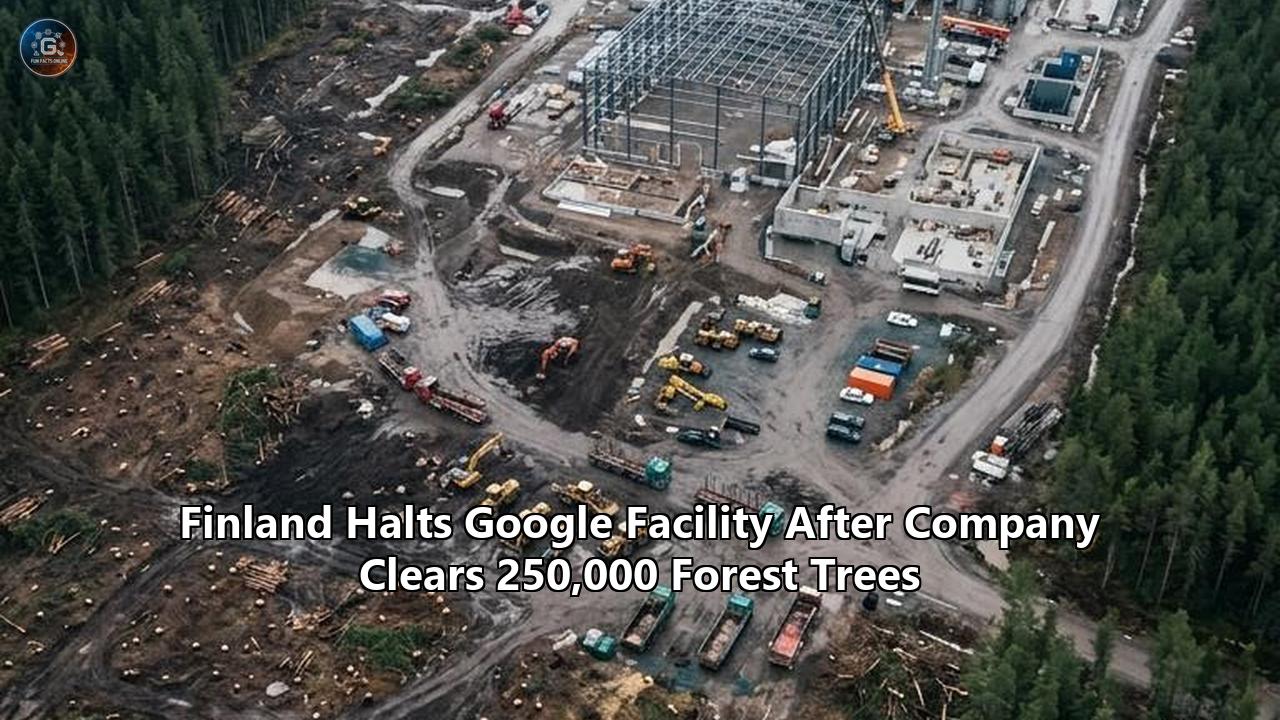
Across 330 hectares of boreal forest outside the northern Finnish municipality of Muhos, the pine and spruce canopy that once buffered the regional water table is gone. In its place lies an expanse of exposed subsoil and compacted glacial till, scarred by crawler tracks and punctuated by retention ditches. Early this month, the Finnish Licensing and Supervision Agency (Lupa- ja valvontavirasto, or LVV) intervened with an emergency administrative order, demanding that Google’s regional infrastructure subsidiary, Tuike Finland Oy, immediately cease all heavy site preparations across its planned Northern Ostrobothnia and Kainuu developments. The state intervention was triggered by a stark discovery: contractors working on the American technology company’s planned €13 billion cloud expansion had felled an estimated 250,000 mature trees in Muhos alone, alongside a further 150,000 trees across roughly 200 hectares in nearby Otanmäki, before completing the statutory Environmental Impact Assessment (EIA).
The halt marks one of the most severe regulatory confrontations between a Nordic government and an American hyperscaler. Under the terms issued by LVV, Tuike Finland Oy was forced to halt all earthmoving, blasting, quarrying, topsoil removal, and ditch drainage by October 23, 2026. Only reversible geotechnical surveys and baseline site measurements are permitted to continue. As brown sediment continues to wash from the cleared Muhos tract into tributaries feeding the Oulujoki River, local police have initiated a formal inquiry into whether the pre-emptive clear-cutting constitutes an environmental offense under Finnish criminal law.
The fallout reached the highest levels of Finland’s government, prompting Prime Minister Petteri Orpo to describe the episode as a "cold shower" for the country’s industrial strategy. Over 96,000 Finnish citizens signed a parliamentary petition demanding mandatory regulatory curbs, direct environmental compensation, and strict heat-recovery mandates on server facilities within days of the clear-cut becoming public. Google executives rushed to contain the damage. "We understand the concerns and have fallen short of our own high standards in this instance," said Sondre Ronander, Google’s communications lead for the Nordic region, echoing an apology issued by Finland Country Manager Antti Järvinen. The company maintained that its contractors had acted in "good faith" under Finnish commercial forestry statutes, believing timber extraction could proceed independently of industrial zoning approvals.
That legal defense failed to persuade regulators. As LVV’s environmental director Tommi Muilu made clear, felling an entire ecosystem prior to an environmental impact assessment effectively destroys the baseline data that the assessment is legally required to evaluate. Beyond the immediate legal freeze in Muhos, the incident provides a critical lens into the escalating collision between the physical realities of global compute expansion and the ecological and administrative frameworks of sovereign states.
The Anatomy of a Permitting Breakdown
The industrial corridor stretching between Oulu and Kajaani was planned to house the backbone of Google’s expanded European artificial intelligence operations. When Google announced its €13 billion capital allocation in September 2026, billed as its single largest infrastructure commitment on the continent, Finnish economic officials heralded the capital injection as validation of the country's clean-energy transition. The program was designed to add massive computational capacity across sites in Muhos, Kajaani, and Vaala, while scaling operations at the company’s flagship coastal site in Hamina.
The scale of the ground-level execution quickly outpaced the statutory process:
- Location and Extent: The primary violation occurred in the Leppiniemi district of Muhos, where 330 hectares (roughly 815 acres) of mature taiga forest were cleared down to mineral soil, alongside an additional 200 hectares at Otanmäki in the municipality of Kajaani.
- Vegetation Loss: Environmental monitors estimate that 250,000 trees were cleared at Muhos, with approximately 150,000 felled at Otanmäki, removing an estimated 400,000 trees across both sites.
- Administrative Status: Both locations were subject to ongoing partial master plan appeals in regional administrative courts. Under Chapter 5, Section 38 of the Finnish Land Use and Building Act (Maankäyttö- ja rakennuslaki), an active legal appeal against a municipal master plan automatically imposes a building ban (rakennuskielto), during which any landscape-altering work requires a separate, explicit landscape work permit (maisematyölupa).
- The Enforcement Action: On October 6, 2026, LVV issued formal notices demanding an immediate operational suspension. The agency gave Tuike Finland Oy until October 14 to file a defense and mandated an absolute stop to all non-reversible physical operations by October 23, pending completion of the Environmental Impact Assessment (EIA).
- Commercial Impasse: Because the felling is under active investigation for violating statutory planning rules, regional wood-processing mills have declined to accept or process the felled timber, leaving thousands of cubic meters of boreal logs stacked or decaying at the perimeters.
┌────────────────────────────────────────────────────────────────────────┐
│                   TIMELINE OF REGULATORY BREAKDOWN                     │
├─────────────────┬──────────────────────────────────────────────────────┤
│ 2024            │ Google acquires 1,400 hectares from state forestry   │
│                 │ enterprise Metsähallitus in Muhos and Kajaani.       │
├─────────────────┼──────────────────────────────────────────────────────┤
│ Early 2026      │ Tuike Finland Oy initiates contractor clearing;      │
│                 │ master plan appeals filed in administrative courts.  │
├─────────────────┼──────────────────────────────────────────────────────┤
│ September 2026  │ Google formally announces €13B Finland investment;   │
│                 │ nature conservation groups document massive clearing. │
├─────────────────┼──────────────────────────────────────────────────────┤
│ Sept 18, 2026   │ LVV issues formal inquiries to Muhos, Kajaani, and   │
│                 │ project developer Tuike Finland Oy.                  │
├─────────────────┼──────────────────────────────────────────────────────┤
│ October 6, 2026 │ LVV issues stop-work order under Environmental       │
│                 │ Impact Assessment Act; police open timber probe.     │
├─────────────────┼──────────────────────────────────────────────────────┤
│ October 23, 2026│ Absolute statutory deadline for complete cessation   │
│                 │ of landscape-altering heavy machinery operations.    │
└─────────────────┴──────────────────────────────────────────────────────┘
The friction arose from an irreconcilable conflict of legal interpretations. Tuike Finland Oy maintained that the initial clear-cutting fell under ordinary forestry operations governed by the Finnish Forest Act (Metsälaki). Under standard commercial forestry in Finland, private and institutional landholders enjoy broad latitude to harvest timber, provided basic regeneration notifications are lodged with the Finnish Forest Centre (Suomen metsäkeskus).
However, Finnish planning jurisprudence maintains that when land clearing is executed to prepare an industrial building site, the activity is governed by the Land Use and Building Act and the Environmental Impact Assessment Procedure Act (YVA-laki). By stripping the forest cover, grading bedrock, constructing haul roads, and installing deep stormwater drainage, the company was not harvesting a crop—it was initiating industrial construction.
Tommi Muilu, who directs LVV’s environmental department, was unequivocal in his assessment of the regulatory breach. "In our opinion, the measures in question change the environment and cause impacts, the identification and assessment of which are among the key objectives of the EIA procedure," Muilu said. When an infrastructure developer alters the terrain, hydrology, and microclimate of a site before completing an EIA, the developer invalidates the assessment itself. A baseline environmental review cannot analyze what has already been pulverized and hauled away.
Ecological Fallout and Soil Destabilization in Northern Taiga
The scale of tree loss in Muhos is not simply a matter of lost scenery; it represents the structural dismantling of a fragile sub-Arctic ecosystem. The boreal forests of Northern Ostrobothnia operate under severe climatic constraints, characterized by short growing seasons, low mean temperatures, and slow organic decomposition. The ecosystems cleared by Tuike Finland were not commercial pine plantations due for a routine cyclical thinning; they encompassed contiguous stands of spruce, Scots pine, and birch interspersed with paludified soils—peatlands in various stages of formation.
       TYPICAL UNDISTURBED BOREAL SOIL PROFILE
 ┌──────────────────────────────────────────────────┐
 │ O-Horizon: Thick moss, lichen & organic peat mat │ ◄── Absorbs rainfall,
 ├──────────────────────────────────────────────────┤     sequesters carbon
 │ A-Horizon: Acidic, mineral-leached eluvial zone  │
 ├──────────────────────────────────────────────────┤
 │ B-Horizon: Iron-rich, dense illuvial illite      │ ◄── Stabilizes terrain
 ├──────────────────────────────────────────────────┤
 │ C-Horizon: Glacial till & underlying granite bed │
 └──────────────────────────────────────────────────┘

       POST-BULLDOZER CONDITIONS AT MUHOS
 ┌──────────────────────────────────────────────────┐
 │ Stripped to C-Horizon: Exposed mineral subsoil   │ ◄── Rapid erosion,
 │ Indented ruts, crushed bedrock, mud basins       │     sediment plume,
 │ Drainage ditches channel runoff directly off-site│     acid run-off into
 └──────────────────────────────────────────────────┘     Oulujoki basin
When heavy earthmoving equipment strips the organic soil layer (the O-horizon) and extracts the root networks across hundreds of contiguous hectares, the hydrological equilibrium of the local watershed collapses:
- Hydrological Channeling and Siltation: The Leppiniemi site sits barely 400 meters from the main stem of the Oulujoki River, one of northern Finland's vital waterways and a historical migratory path for Baltic salmon. Without root networks to retain water, autumn rains began washing exposed mineral sediment into drainage channels and local streams. Residents in Muhos reported that feeder creeks rapidly turned brown with colloidal clay and suspended silt. This suffocates benthic organisms and blankets the gravel spawning beds required by native fish species.
- Carbon Sink Destruction and Soil Oxidation: Boreal soils store more carbon per hectare than tropical rainforest soils, primarily locked within waterlogged, anaerobic organic mats and peat layers. Removing tree cover exposes these cold, damp soils to direct solar radiation and wind, accelerating aerobic microbial decomposition. The process converts long-term carbon sinks into immediate sources of atmospheric carbon dioxide and nitrous oxide, running counter to the net-zero claims of the cloud platforms driving the projects.
- Loss of Boreal Biodiversity and Habitat Fragmentation: Tapani Veistola, chief operating officer at the Finnish Association for Nature Conservation (Suomen luonnonsuojeluliitto, SLL), observed that the Muhos tract had ceased to function as a living ecosystem: "It is not a forest anymore. It is a sand area". Ecologists monitoring the site documented severe habitat fragmentation. SLL ecologist Mari Annala pointed out that the clearing severed local biological corridors, forcing large predators and ungulates out of their interior habitats. In Muhos, residents reported wolves moving into the outskirts of agricultural villages after losing contiguous forest tracts.
- The Flaws of Corporate Reforestation Offsets: In response to the backlash, Google announced plans to mitigate the damage by financing tree planting across 130 hectares in the Muhos region. Regional forest ecologists quickly criticized this proposal as structurally insufficient. Clearing 330 hectares of mixed boreal forest and topsoil cannot be offset by planting monoculture saplings across 130 hectares of separate land. A newly planted commercial plantation takes between 60 and 90 years to develop the canopy complexity, epiphytic lichen communities, and deep fungal networks of a mature boreal stand. Planting saplings on less than half the cleared footprint creates an acute net loss of biodiversity.
Why Finland Became the Focus of AI Compute Infrastructure
To understand how a project of this magnitude evaded regulatory oversight, one must examine the fierce global competition for data center sites. The global computing footprint is undergoing an aggressive expansion, driven by the intense demands of training and running large language models and other artificial intelligence workloads. As hyperscale cloud providers exhausted electrical capacity and hit municipal land barriers in established tier-one European markets—specifically Frankfurt, London, Amsterdam, Paris, and Dublin (the FLAPD group)—their procurement teams looked north.
Finland has been described across the technology sector as the "Texas of Europe". The comparison highlights the country's unique mix of massive land parcels, grid reliability, and clean baseload electricity. When tech developers ran into brick walls in the Netherlands—which banned new hyperscale permits in 2022—and Ireland, where the state grid operator EirGrid placed a de facto moratorium on new data center connections in the Dublin region, Finland welcomed infrastructure capital with open arms.
┌────────────────────────────────────────────────────────────────────────┐
│             DATA CENTER BOTTLENECKS: EUROPEAN COMPARISON               │
├─────────────────┬──────────────────────────────────────────────────────┤
│ Ireland         │ EirGrid moratorium on Dublin connections; data       │
│                 │ centers consume >21% of national metered electricity.│
├─────────────────┼──────────────────────────────────────────────────────┤
│ Netherlands     │ National restrictions on facilities >10 hectares;    │
│                 │ intense agricultural and zoning conflicts.           │
├─────────────────┼──────────────────────────────────────────────────────┤
│ Germany         │ Frankfurt Energy Efficiency Act mandates waste-heat  │
│                 │ reuse and low PUE, limiting legacy campus expansions.│
├─────────────────┼──────────────────────────────────────────────────────┤
│ Denmark         │ Connection requests paused after pipeline reached    │
│                 │ 60 GW, roughly eight times peak domestic demand.     │
├─────────────────┼──────────────────────────────────────────────────────┤
│ Finland         │ 145 facilities in planning; vast land, nuclear grid, │
│                 │ sub-Arctic climate, but surging local pushback.      │
└─────────────────┴──────────────────────────────────────────────────────┘
The economic and geographic factors that turned Finland into an infrastructure magnet are substantial:
1. Structural Grid Stability and Decarbonized Baseload
Finland boasts one of the most reliable and low-carbon electricity grids on Earth, operated by state transmission system operator Fingrid. The commercial commissioning of the 1.6-gigawatt Olkiluoto 3 nuclear reactor, alongside steady production from the Loviisa nuclear facility, gave the country clean, predictable baseload power. Google’s broader Finnish expansion was directly linked to long-term clean energy procurement, including a 22-year Power Purchase Agreement (PPA) with state-controlled utility Fortum tied to the life extension of the Loviisa nuclear plant. Backed by an aggressive onshore wind buildout along the Gulf of Bothnia, Finland offered operators carbon-free energy without the transmission bottlenecks seen in Western Europe.
2. Climatic Cooling Efficiencies
Cooling represents a significant non-computational energy expense in data center engineering. In temperate or southern climates, chillers and evaporative cooling towers consume vast amounts of electricity and water to keep processor junctions within safe thermal limits. In northern Finland, ambient temperatures remain low for three-quarters of the year. Facilities can rely almost entirely on direct-air economizers or closed-loop air-to-water heat exchangers, slashing their Power Usage Effectiveness (PUE) ratios below 1.15 without taxing local municipal water systems.
3. Geopolitical Alignment and Physical Security
Following its accession to NATO in 2023, Finland reinforced its reputation as a safe jurisdiction for mission-critical Western infrastructure. Its stable granite bedrock, part of the ancient Fennoscandian Shield, carries almost zero seismic risk. Combined with a robust domestic legal framework, deep subsea fiber infrastructure like the C-Lion1 link through the Baltic, and ambitious Arctic fiber routing plans, the nation appeared to be an ideal refuge for enterprise data.
These advantages sparked an unprecedented surge in proposals. By late 2026, an astonishing 145 distinct data center projects were moving through local planning, grid queuing, or construction phases across Finland. Yet this rapid rush of capital created administrative friction. Municipal councils, eager to offset industrial job losses and secure property tax revenues, competed to attract foreign tech companies. They zoned vast rural properties as industrial parks and hurried through planning approvals. This momentum created an environment where corporate real estate teams felt empowered to fast-track heavy site work, assuming regular approvals would follow. The tree clearing at Muhos exposed how vulnerable that assumption was.
Analytical Lens: The Clash Between AI Velocity and Ecological Governance
The crisis in Muhos illustrates a systemic rift: the widening split between AI Compute Velocity and Statutory Ecological Governance.
Hyperscale operators are caught in an aggressive compute procurement race. Deep-learning model architectures require exponentially larger cluster sizes with every training generation. Leading AI labs and hyperscalers now deploy clusters that scale from 50,000 to over 100,000 specialized GPUs in single facilities, demanding 100 to 500 megawatts of dedicated capacity. In corporate boardrooms, securing early energization dates is viewed as an existential competitive priority.
┌──────────────────────────────────────┐     ┌──────────────────────────────────────┐
│         AI COMPUTE VELOCITY          │     │    STATUTORY ECOLOGICAL GOVERNANCE   │
├──────────────────────────────────────┤     ├──────────────────────────────────────┤
│ • Quarterly capital deployment cycle │     │ • Multi-season biological surveys    │
│ • Rapid GPU cluster obsolescence     │     │ • Multi-tier municipal public notice │
│ • "Speed to market" operational focus│     │ • Administrative appeals & legal ban │
│ • Software culture: iterate & expand │     │ • Precautionary environmental policy │
└──────────────────┬───────────────────┘     └──────────────────┬───────────────────┘
                   │                                            │
                   └───────────────────► ◄──────────────────────┘
                                        COLLISION
                        Permits trail heavy groundwork;
                        clear-cuts invalidate environmental
                        impact baselines before review.
This corporate demand for speed clashes with the statutory realities of Nordic environmental administration:
- The Precautionary Principle vs. Rapid Iteration: Silicon Valley’s development ethos relies on rapid prototyping, iterative deployment, and treating institutional pushback as a logistical hurdle to be cleared later. But European administrative environmental law operates on the precautionary principle (enshrined in Article 191 of the Treaty on the Functioning of the European Union). Under this framework, if an activity risks causing significant or irreversible ecological harm, work must be held until that harm is scientifically documented, evaluated, and mitigated through formal permitting processes. Felling 250,000 trees to stay on an engineering schedule completely bypasses this legal foundation.
- The Structural Blind Spots of Special Purpose Vehicles (SPVs): Large cloud operators rarely build international sites under their direct corporate umbrellas. Instead, they rely on complex webs of domestic shell companies and local contractors. In this case, work was directed by Tuike Finland Oy, a limited-liability subsidiary. Engineering, Procurement, and Construction (EPC) managers in these setups are typically measured on timeline benchmarks and budgets rather than civic engagement. This corporate insulation often blinds overseas headquarters to local regulatory pushback until an administrative shutdown hits their desks.
- The Baseline Destruction Paradox: The most glaring regulatory failure at Muhos was the destruction of the environmental baseline. An Environmental Impact Assessment is not just a pro forma paperwork requirement. It is a structured scientific review that must analyze pre-existing hydrological flows, soil microbiology, endangered species habitats (such as flying squirrels or red-listed mosses), and regional carbon balances. When contractors strip topsoil and level the forest before completing the review, the EIA becomes an exercise in absurdity. Regulators cannot assess the impact of an industrial installation on an ecosystem that has already been erased.
The Public Backlash and the Breakdown of Finland's Tech Social Contract
The shutdown in Muhos permanently changed Finland’s public relationship with foreign tech investment. For nearly two decades, the country viewed data centers as a clean, high-tech replacement for its declining paper and pulp industry.
When Google entered the Finnish market in 2009 by acquiring the abandoned Stora Enso newsprint mill in Hamina, the project was embraced as an industrial masterstroke. The company repurposed historic factory buildings, drew cooling water directly from the Gulf of Finland without chemical additives, and eventually returned waste heat to local district systems. That early goodwill helped cement Finland's welcoming reputation for cloud builders. The expansion of the Finland Google data center ecosystem was broad, deep, and heavily backed by municipal leadership.
That social license broke down in Muhos. In Finland, forests are central to the national identity, bound by the cultural concept of metsäsuhde (an individual's lifelong relationship with the forest) and the legal framework of jokamiehenoikeus (Everyman’s Right). This ancient public right allows any resident to forage, roam, and seek recreation across any woodland, public or private, provided they do not disturb residential homes or cause environmental harm.
Seeing hundreds of hectares of land cleared behind industrial fences triggered immediate, widespread public anger:
┌────────────────────────────────────────────────────────────────────────┐
│               THE SHIFTING FINNISH REGULATORY STANCE                   │
├──────────────────┬─────────────────────────────────────────────────────┤
│ 2009-2022        │ Uncritical Promotion: Tax breaks on electricity,    │
│ The "Hamina Era" │ industrial site marketing, streamlined approvals,   │
│                  │ celebrated repurposing of declining paper mills.    │
├──────────────────┼─────────────────────────────────────────────────────┤
│ 2023-2026        │ Hyper-Growth Blind Spots: 145 facilities planned;   │
│ The "AI Boom"    │ land deals with state agencies; local councils      │
│                  │ fast-track industrial conversions without scrutiny. │
├──────────────────┼─────────────────────────────────────────────────────┤
│ Late 2026-Onward │ Structural Resistance: Legislative petitions,       │
│ The Post-Muhos   │ mandatory heat recovery rules, grid quotas,         │
│ Baseline         │ administrative court appeals, and criminal probes.  │
└──────────────────┴─────────────────────────────────────────────────────┘
The scale of local frustration was captured by Aantti Jakonen, a resident of Muhos who voiced the anger felt across the surrounding communities: "It has been done in the wrong way. American style. No sense. No sense at all". The sentiment reflects a wider complaint heard across European communities: a Silicon Valley ethos that cuts through local regulatory systems and natural assets to hit international deployment timelines.
This popular outrage quickly found political leverage. Under Finland’s constitutional mechanism for civic democracy, a citizens' initiative (kansalaisaloite) that secures 50,000 signatures must be formally taken up for debate and legislative action by the national parliament (Eduskunta). The petition addressing data center regulation surged past the 50,000-signature mark in just 72 hours, collecting more than 96,400 verified signatures within a week.
The petition demands structural changes that threaten the traditional data center business model:
- Mandatory Grid Reservation Limits: Restricting hyperscalers from reserving grid capacity years in advance without using it, preventing them from freezing out domestic manufacturing and residential projects.
- Statutory Waste-Heat Reuse: Requiring any server campus consuming over 10 MW to capture its thermal exhaust and inject it into local municipal district heating networks, banning the practice of releasing heat into the open air.
- Ecosystem Restoration Levies: Establishing significant upfront restoration fees paid by developers to municipalities to compensate for land disturbances, soil loss, and ecological fragmentation.
- Strict Permitting Firewalls: Mandating that not a single tree can be cleared or a single drainage trench cut until all environmental impact reviews and local planning appeals have resolved their final court challenges.
The political shockwave also hit the municipal councils of Muhos and Kajaani. Local politicians who had backed the project as an economic boost suddenly found themselves on the defensive, accused by neighbors of trading long-term natural assets for temporary construction work. The incident revealed a political reality that tech companies often miss: in affluent, environmentally conscious democracies, the promise of remote infrastructure investments cannot cover up visible ecological damage.
Strategic Lessons: Principles for Hyperscale Infrastructure Development
The regulatory freeze in Muhos will become an enduring case study in international infrastructure development and corporate environmental governance. For hyperscale operators, infrastructure investment funds, and sovereign planning agencies, the event provides five clear lessons:
1. Forestry Exemptions Cannot Serve as Groundwork Loopholes
Operators cannot treat commercial forestry licenses as an end-run around infrastructure permitting. While many jurisdictions grant landholders wide latitude to clear commercial timber, administrative courts look at the ultimate intent of the work. If land is cleared to make way for a data hall, power substation, or access highway, the clearing is treated as the start of industrial construction.
Attempting to sidestep the planning queue by labeling initial earthworks as "forestry management" exposes developers to immediate stop-work orders, steep administrative fines, and criminal inquiries. Development teams must treat site preparation as part of the primary industrial project and align their construction timelines accordingly.
2. Multi-Tiered Supply Chains Require Active Compliance Governance
Corporate boardrooms cannot treat environmental compliance as an afterthought delegated down through local contracting layers. Google’s public ESG reports highlight strict environmental standards, zero-waste initiatives, and water preservation targets. Yet on the ground in Muhos, contractors clear-cut 330 hectares without a completed environmental review.
This disconnect highlights a common blind spot in corporate procurement:
- Engineering, Procurement, and Construction (EPC) contracts must link milestone payments directly to local environmental compliance, rather than focusing solely on construction speed.
- Project owners must deploy independent, third-party environmental monitors to audit site prep and enforce the terms of local land-use permits.
- The legal strategies employed by local subsidiaries must be reviewed by corporate general counsel to ensure they do not undermine international sustainability promises.
3. Artificial Offsets Cannot Replace Mature Habitats
The Muhos backlash revealed the public relations risks of relying on superficial ecological offsets. When a developer levels a functioning, mature ecosystem and offers to replant commercial monoculture saplings across less than half that footprint, communities will recognize the exchange as an ecological loss. Modern industrial planning requires true biodiversity net gain.
Hyperscalers must abandon the assumption that clear-cutting greenfield sites can be patched over with standard off-site carbon credits or sapling programs. If an operator must disturb complex woodland, its mitigation plan must prioritize genuine habitat restoration, wetland rehabilitation, and the permanent conservation of equivalent mature tracts, designed in direct collaboration with local ecological groups.
┌────────────────────────────────────────────────────────────────────────┐
│           FRAMEWORK: GENUINE BIODIVERSITY GAIN VS. PAPER OFFSETS       │
├────────────────────┬───────────────────────────────────────────────────┤
│ Surface-Level      │ • Off-site tree planting on small footprints.     │
│ Paper Offsets      │ • Commercial monoculture sapling planting.        │
│ (The Muhos Model)  │ • Treating complex ecosystems as fungible carbon. │
│                    │ • Reforestation miles from affected watersheds.   │
├────────────────────┼───────────────────────────────────────────────────┤
│ Structurally Sound │ • Avoiding mature forest and peatland soils.      │
│ Net-Positive Model │ • On-site hydrological restoration & buffer zones.│
│ (The New Standard) │ • 3:1 permanent conservation of mature tracts.    │
│                    │ • Joint oversight with local conservation groups. │
└────────────────────┴───────────────────────────────────────────────────┘
4. Municipal Goodwill Cannot Override Statutory Environmental Law
A common mistake for foreign infrastructure developers is relying too heavily on friendly relationships with local municipal mayors and city managers. Rural municipalities often welcome industrial investment and may promise quick approvals or offer reassurances that work can proceed during planning appeals.
However, in jurisdictions with robust administrative legal structures, municipal enthusiasm cannot shield a developer from regional or national regulators. Finland’s LVV intervened precisely because regional environmental standards and national building statutes supersede local boosterism. Development teams must ensure that their legal compliance is sound at every level of government—municipal, regional, national, and supra-national—before sending heavy machinery onto a site.
5. Social License Is Fragile and Hard to Recover
The trust Google built over 15 years through its Hamina facility was wiped out across northern Finland in a matter of days. A positive corporate reputation does not buy a developer the freedom to bypass domestic laws.
Once a community begins to view a tech giant not as a high-tech partner, but as an extractive corporate entity hauling away natural resources, the path forward becomes contentious and expensive. Regulatory scrutiny intensifies, appeals multiply, and operational delays mount. Protecting a social license requires complete operational transparency, early and honest public dialogue, and a demonstrated respect for local land use from the very first day of project planning.
What Comes Next: Deadlines, Inquiries, and European Policy Impacts
With the October 23, 2026, deadline for halting heavy site work now passed, the Muhos and Otanmäki projects face an uncertain administrative and legal path:
                     REGULATORY AND LEGAL ROADMAP
                                  │
       ┌──────────────────────────┴──────────────────────────┐
       ▼                                                     ▼
 ADMINISTRATIVE ENFORCEMENT                             CRIMINAL PROBE
 LVV evaluates Tuike's formal response.               Police and environmental prosecutors
 Outcome: Potential conditional fines                investigate whether unauthorized
 (uhkasakko) or permanent bans on site                logging violated the Nature
 preparations pending full EIA completion.           Conservation and Penal Acts.
       │                                                     │
       └──────────────────────────┬──────────────────────────┘
                                  ▼
                        PARLIAMENTARY DEBATE
            96,400+ signature petition triggers legislative
            hearings in Helsinki. Debate focuses on:
            • Mandatory district heating integration.
            • Electricity grid reservation quotas.
            • National restrictions on forest conversions.
                                  │
                                  ▼
                   RETROSPECTIVE EIA RESOLUTION
            EIA boards face unprecedented baseline problem:
            How to evaluate ecological impact after the
            underlying ecosystem has been stripped to sand.
The immediate regulatory steps are already underway:
1. Police Investigation and Legal Exposure
The Finnish police, working alongside regional environmental prosecutors, are reviewing evidence to determine whether contractors committed criminal offenses under Chapter 48 of the Finnish Penal Code (Rikoslaki), which covers environmental crimes. If investigators conclude that Tuike Finland Oy or its timber contractors deliberately ignored planning appeals and building bans to clear protected tracts, individuals could face criminal prosecution. In addition, the company could face substantial corporate fines and civil liability to fund the ecological restoration of the degraded tracts.
2. The Retrospective Impact Assessment Dilemma
LVV has made clear that heavy groundwork cannot resume until the Environmental Impact Assessments are officially completed and approved. But this presents the assessment teams with a fundamental legal dilemma: how do you complete a statutory EIA when the original natural baseline has already been destroyed? Environmental consultants must now reconstruct the pre-existing ecological state of Muhos and Otanmäki using historic satellite imagery, remote LiDAR data, and records from neighboring properties.
If regional authorities decide that the damage cannot be properly evaluated or mitigated after the fact, they have the legal power to reject the EIA outright, adjust the approved building footprint, or refuse to grant the final environmental and landscape permits required to build the server halls. Environment Minister Sari Multala has already acknowledged that these permitting violations will introduce long delays to the development timeline.
3. The Parliamentary Debate and National Regulatory Reform
In Helsinki, the Eduskunta must formally consider the citizen initiative that collected over 96,400 signatures. The parliamentary debate will take place under intense public scrutiny. Lawmakers across the political spectrum are drafting legislation to overhaul the regulatory framework governing large-scale infrastructure:
- The Ministry of Economic Affairs and Employment is considering rules that would require new server campuses to integrate with local district heating systems, ending the practice of venting waste heat into the atmosphere.
- The Ministry of the Environment is reviewing changes to ensure that municipal building bans apply strictly to forestry operations on planned industrial sites, closing the loophole exploited in Muhos.
- Fingrid is preparing tighter rules for grid connection requests, requiring developers to clear environmental and municipal zoning hurdles before they can reserve large blocks of power.
4. Ripple Effects Across the European Cloud Market
The regulatory freeze in northern Finland has sent shockwaves through the European infrastructure sector. Planning authorities and environmental agencies across Sweden, Norway, Germany, and the Netherlands are tracking the Muhos proceedings closely.
The incident confirms that European governments are increasingly willing to hold major tech firms accountable to domestic environmental law, regardless of the size of their promised investment capital. For technology giants, the message is unmistakable: the physical infrastructure behind the artificial intelligence boom cannot be built by cutting corners around local environmental protections.
Physical Constraints of the Cloud
The controversy in Muhos has permanently altered the narrative surrounding the Finland Google data center buildout. What was marketed as a smooth, sustainable €13 billion cloud expansion across the Nordic taiga has become a cautionary tale of regulatory overreach and environmental destruction.
The digital infrastructure of the global internet is often described in weightless metaphors—we speak of "the cloud," "serverless computing," and "virtual systems." But the reality is that compute infrastructure is deeply physical, industrial, and resource-intensive. It runs on miles of copper and fiber, draws hundreds of megawatts from regional electricity grids, and occupies hundreds of hectares of land.
When the race to deploy that hardware leads companies to strip hundreds of thousands of trees, scrape away delicate sub-Arctic soils, and alter the flow of pristine river systems before completing basic environmental reviews, the physical costs of the cloud become impossible to ignore.
The Finland Google data center shutdown demonstrates that sovereign nations can and will pump the brakes on the most powerful corporations on Earth. Moving forward, the global tech industry will have to accept that expanding infrastructure requires more than capital, hardware, and engineering speed. It requires respecting local ecosystems, following administrative processes, and honoring the civic and environmental trust of the host communities whose land it plans to inhabit. Until those lessons are learned, the clash between artificial intelligence and the natural world will continue to leave scars across the landscape.
Reference:
- https://www.theguardian.com/technology/2026/oct/06/google-datacentres-finland-temporary-halt-environmental-impact-assessment
- https://www.motherjones.com/politics/2026/10/finland-finns-angry-google-illegal-clear-cutting-trees-data-center/
- https://futurism.com/artificial-intelligence/finland-google-data-centers-forests-environment
- https://thenextweb.com/news/finland-orders-google-to-stop-clearing-forest-at-two-data-centre-sites
- https://www.tomsguide.com/ai/google-just-cut-down-250-000-trees-for-ai-data-centers-and-now-its-facing-a-major-backlash
- https://www.geekslop.com/science-and-history/science/meteorology-weather/2026/google-finland-ai-data-centers-roadblock
- https://www.2oceansvibe.com/technology/finland-freezes-google-ai-data-centres-october-2026/
- https://impakter.com/a-quarter-of-a-million-trees-gone-before-anyone-checked/
- https://www.commondreams.org/news/finland-data-centers
- https://www.arctictoday.com/finland-orders-halt-to-work-on-two-google-data-centers/
- https://economictimes.indiatimes.com/news/international/world-news/google-told-to-stop-forest-clearing-for-two-data-centres-in-finland-weeks-after-announcing-its-biggest-european-investment/articleshow/134772262.cms?from=mdr
- https://cybernews.com/news/google-finland-data-center-trees/
- https://www.datacenterdynamics.com/en/news/googles-13bn-data-center-buildout-in-finland-under-investigation-for-300-hectare-forest-removal/
- https://www.tomshardware.com/tech-industry/data-centers/finland-orders-google-to-stop-work-on-two-ai-data-centers-over-alleged-deforestation-company-admits-it-has-fallen-short-of-our-own-high-standards-in-this-instance